Author Archives: Alan Brill

Malka Z. Simkovich Responds to Rabbi Ethan Tucker Interview

Last week, I posted a widely read and discussed interview with Rabbi Ethan Tucker. This week, I will be posting several diverse responses.  Today’s response is by Dr. Malka Simkovich, who first points out a different set of Rabbinic texts than Tucker used, ones that talk about the family, mothers, and feminine qualities. She also points out the practical issues. Then she reaffirms the need for more female voices in the discussion.

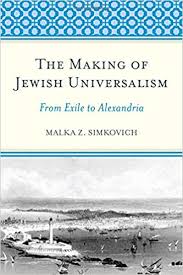
Malka Z. Simkovich is the Crown-Ryan Chair of Jewish Studies and Director of the Catholic-Jewish Studies Program at Catholic Theological Union in Chicago. She earned a Ph.D. in Second Temple Judaism from Brandeis University. She has an M.A. degree in Hebrew Bible from Harvard University and a B.A. in Bible Studies and Music Theory from Stern College of Yeshiva University. Her research focuses on universalist Jewish literature that was written in the late Second Temple period. She recently published  The Making of Jewish Universalism: From Exile to Alexandria (Lexington Books, 2016). She is currently completing a book on Second Temple Judaism that will be published by the Jewish Publication Society.

This response is not about the distinction between leadership and minyan, rather seeks to open the discussion to a broader range of issues.  I note that this essay, in contrast to Tucker’s, speaks more of system then values, responsibility than what God wants, and more about the family and private space than ritual space.

malka1

What do Observant Jewish Women Want?

Malka Z. Simkovich

Rabbi Tucker’s arguments rest on his conviction that the essential biological difference between men and women did not interest the early rabbinic formulators of halakhic practice. According to Tucker, the rabbis did not see an innate difference between genders that led them to put foundational proscriptions for men and women into place. Instead, Tucker notes, halakha was once motivated by interests in preserving “class and power.” Now that women’s positions of class and power have changed, halakhic practice must change too.

The assumption that halakha was formulated based on interests in preserving class and power is where Tucker and I disagree, and this disagreement may have substantive ramifications. If Tucker is correct, then one may naturally (and correctly, I think) argue that we need to look within the halakhic system to make changes that accommodate the changes we have seen in women’s social standing. But I don’t think any of these categories—biology, class, or power— is the main driver of the halakhic system. I think the rabbis were more concerned with preserving a stable social organism that depended on a traditional family structure with a husband and wife at the core.

Innumerable statements in rabbinic literature testify to the rabbis’ sense of responsibility when it comes to protecting and nurturing familial stability. When the rabbis ruminate in Genesis Rabbah 17:2 on what living without a wife can be compared to, for example, they are not praising a wife as one would praise an obedient servant or dutiful employee. Rabbi Joshua’s statement that a man who has no wife “lives without goodness, assistance, blessing, or atonement,” or Rabbi Levi’s statement that a man who has no wife is “without life,” can certainly be read through feminist lens that highlight the male-centricity of the rabbinic psyche, which perceives the religious experience mainly through masculine lenses. But these statements should also be appreciated for how they underscore the rabbinic belief in the cosmic necessity of marriage, the foundational connection in the marital relationship that lays the groundwork for everything else that is blessed and good.

Even the mandate in Tanakh to honors one’s parents, which is so developed in rabbinic literature, has the familial ideal in mind.  When we are told in the Talmud (b. Kid. 31b) that Rabbi Tarfon bent down so that his mother would step on him to more easily get in and out of her bed. In the story, Rabbi Tarfon physically and psychologically lowers himself to honor his mother, to allow her the senior status that her motherhood invites–and demands. We are told in the same passage that when Rabbi Joseph heard his mother approaching, he would say to himself, “I will stand before the approaching Divine Presence.” What accounts for the extreme acts of respect that these rabbis paid their mothers? It seems that underlying the emphasis on preserving and honoring parents, especially mothers, is an acknowledgment that they have had a hand in the divine act of human creation. The very act of determining how family units should live and function, moreover, required the rabbis to acknowledge how vital women were to the social system that they were creating.

Much of halakha regards family law and is based on, or hopes for, community units that comprise family units which comprise individual units. When the family unit is threatened, the halakhic system is threatened. Demanding that both husband and wife participate equally in ritual law, therefore, may have been regarded as threatening to the family unit. I am not arguing that the concept of a stable family unit needs to remain static throughout the centuries, but noting that the ideal of familial stability motivated the rabbis.

Anyone who wonders whether the halakhic system rests on the ideal of a traditional family structure should ask a single or gay friend who affiliates with the orthodox community to relay their experience of seeking to participate in public ritual life. While many congregations are moving towards finding ways to include those who do not participate in a traditional family unit, most orthodox communities are not sensitive to how isolating it is to live as an orthodox Jew outside of a traditional family. Perhaps our goal, then, should be to ask whether we can change the concept of what a stable family unit looks like.

My second point regards Tucker’s argument that he is not seeking to change halakha, but trying to “apply halakhah’s internal logic to a changing reality.” I appreciate the effort to look for spaces in halakha for women to participate alongside men, should they choose to. As the years go by, attending synagogue becomes more of an outsider experience for me. The pain of being on the outside looking in grows more acute, rather than more faded. I want my daughters to have the opportunities to participate in ritual life that I do not have. I am wary, however, of innovators’ claim to be inheriting, rather than innovating.  Yet the rabbis, who revolutionized Jewish law and made it normative, claimed in the first chapter of Abot that they were simply inheritors of an ancient tradition and nothing more. I suppose that there is nothing more “rabbinic,” then, than making major changes and arguing that you’re not making any change at all. Still, I find the insistence that the halakhic system is being preserved here rather than being remodeled unsettling.

One final point. I follow discussions about women’s ritual participation on social media and in print with interest, but also with detached bewilderment. The majority of these discussions are occurring between men, despite the fact that we are fortunate today to have plenty of women who are knowledgeable in rabbinic literature. I suspect that despite their scholarship, many women scholars have not imbued themselves with the authority to engage in these conversations as overseers and protectors of the halakhic system. I’m afraid that the most important question, Freud’s question, gets overlooked in these discussions: What does a woman want?

Unfortunately, this question has already been answered in the Haredi community in a way to shut women out. I’ve been told myself multiple times that if women were obligated to attend minyan three times a day, they would not be able to fulfill this commandment. Women don’t want, so the argument goes, full ritual equity and obligation. Despite the problems with making such presumptions, we must take into account the following question: is your equality my equality? Or is it simply placing a major burden on women, who—let’s face it—are often mothers who are doing the majority of the carpooling, laundry, cooking, and cleaning?

Again, I refuse to use the above questions as a means to justify denying women opportunities. I believe that we should seek (and perhaps create) equality and opportunity within the halakhic system. But I also want to take a step back before we move forward. Has anyone asked women what they want? Certain aspects of equal ritual participation seem intuitive, at least to me. I would love to see women being more active as leaders in the ritual sphere. But I also know that some of my friends who “have it all”—my friends who have small children and big careers—are struggling to get everything done, and struggling to find gratification in every part of their fractured lives. Or maybe that’s just me.

My suggestion, therefore, is two-fold: first, we must put women at the foreground of these conversations. Second, we should increase communal and religious elasticity for both men and women by offering more space for men in the household sphere and more space for women in the public, ritual sphere. I emphasize that this space should be offered rather than required.

As a postscript, I will add that after writing the above comments, I made note of some responses to Tucker’s piece on Facebook.  I want to specifically address Sarah Rindner’s important point there that the experiential aspect of Judaism within the home has always been where women have shone as partners alongside men (and often, I would venture to add, more than partners). Rindner indicates that by emphasizing that Jewish women should practice Judaism alongside men in the public sphere, Tucker actually runs the ironic risk of erasing a particular space that has been made for women to function as educators and leaders. If I understand her correctly, I believe that Rindner’s point correlates with my argument above regarding the rabbinic concern for protecting the family unit.

While I am not certain that Ridner’s point was fully addressed by Rabbi Tucker, I was heartened to see that Tucker clarified in his response that the goal of his book is to “open up possibilities, [and not to] dictate anything to anyone who doesn’t want it.” If this is the case, then I assume he would agree that our priority must now be to bring women into the foreground of this conversation and consider what they actually want. We should also prepare ourselves for the consequences of offering these possibilities, which may be that observant Jewish communities will continue to grow more fractured and less cohesive, as men and women forge new paths in prayer worship which involve women in different ways and employ increasingly varied structures.

I am open to Tucker’s ideas, and appreciate that he is galvanizing an effort to formally include women into the sphere of public ritual. I especially appreciate and enthusiastically agree with his point that “the moment we isolate halakhah from values, the word of God from what we think is right…we create a halakhah that is amoral, valueless and all about discipline.” But I want to hear more from Rabbi Tucker and others about why equal ritual participation is a goal in itself. I would prefer to see equal religious gratification as a goal in itself. This gratification should be used as an umbrella category which can include equal ritual participation, but does not demand it.

Interview with Rabbi Ethan Tucker

Rabbi Ethan Tucker is President and Rosh Yeshiva at Mechon Hadar. Rabbi Tucker also directs Mechon Hadar’s Center for Jewish Law and Values. Rabbi Tucker studied at Yeshivat Maaleh Gilboa of the Kibbutz Hadati movement. Tucker was  ordained by the Chief Rabbinate of Israel. He earned a B.A. from Harvard College and a doctorate in  Rabbinics from the Jewish Theological Seminary.

EthanHeadshotSmall

Rabbi Tucker recently published together with Rabbi Micha’el Rosenberg a book on egalitarian prayer called  Gender Equality and Prayer in Jewish Law (Urim Press, 2017). The book starts with the assumption that gender equality has spread even among the religiously observant traditional communities necessitating  a need to re-examine old questions.  The book presents the wealth of Jewish legal material surrounding gender and prayer as a resource for grappling with these issues. The book presents the texts on both sides of the issues, letting the texts speak for themselves. The goal of the book is not to decide law as much as clearly analysis texts.As one Amazon reviewer, aptly evaluated the book: “Whether a reader agrees with the two rabbis who authored the book or not, he or she will find a wealth of information in the book that will prompt thought.”

The presentation of the texts in the book show the use of the scholarly approaches to Rabbinics as well as the many contemporary articles on the issue. However, one of the innovations of the book is the integration of these academic writings into the textual method of the Yeshiva allowing these ideas to enter the rabbinic study hall, the beit midrash.

This interview is on the broad theological premises of Rabbi Tucker’s approach allowing the reader to see his method, which focuses on values of the halakhah. His approach is to attempt to listen to what the tradition says and then to think about what tools we might have for responding to tensions between ourselves and the texts.  Tucker honestly wants to listen to the many voices in the texts and see where that takes him. Since the book does not advocate a specific halakhic position, he is free to show the complexity of the system.

In the book, Gender Equality and Prayer in Jewish Law as well as in the interview, Tucker opens up the possibility that the root of the obligation gap in rabbinic sources is in fact about social status in a society where women would be compared to slaves and minors. Today, in Tucker’s reading, the rabbis would not have made this comparison.

Tucker explicitly rejects approaching the Rabbinic texts with an agenda to find a leniency or starting with what one desires to prove before one starts. In addition, Tucker does not believe in the “adjustment of the law” as in liberal approaches.  In fact, he states that the entire language of “halakhic change” and “authority and innovation” as anathema to the project of the book. However as amply displayed in the interview below, this leads to a certain amount of passive voice of implying that choices need to be made, law has to be adjudicated, and decisions need to be made, but purposely without discussing how this relates to issues of authority and normative halakhah.

Noticeably, Tucker actually makes an argument about the rebellious son (Ben Sorer uMorer) that justifies the original law in its original context.  He rejects the idea that the rabbis saw some divine laws as  immoral and sought to marginalize them, as claimed by many liberal approaches.

During the 2015-2016 cycle of Torah readings, Rabbi Tucker sent out a phenomenal weekly Torah email, where he developed each week a different topic clearly showing his approach and explaining it fully,  The essays and the source sheets are available here. They are worth reading and I look forward to seeing those essays as a  book. The publication of these weekly classes will provide a seminal theology and theory of a halakhah concerned with values. I posted about some of these sheets when they came out. In contrast, this book on prayer is more of a hundred-page worksheet of sources, which only begins to touch on bigger questions and  without an explicit presentation of his theory.

At times, Rabbi Tucker’s approach can seen  to be addressing a specific audience with specific reactions to their prior teachers-especially on topics of submission, community, and rationality- offering a needed corrective. (For example, the era whose religious approach was already mediated by the modernism of Peter L Berger may not see the dichotomies the way he sees them). But for many, his is the voice that resonates with them as offering the answers to their religious quest. For those who want to see how Rabbi Tucker was presenting these ideas six years ago, see this write-up of his local talks, which gives the earlier kernel of these ideas.

The interview below is on his meta-halakhah, not his actual legal positions or on the way he understands specific texts.

Tucker book

  1. What is new in the book about  Gender Equality and Prayer in Jewish Law  that is not already in the many volumes on the topic? (See appendix at end of interview for prior literature)

Well, the book indeed stands on the shoulders of prior efforts. I would say the original contribution of the book is twofold.

First, it brings together scattered discussions in one place.  The important book Women and Men in Communal Prayer—despite its title—focuses only on Torah reading.  The Frimers have addressed the topic of minyan over the years, but have mostly been focused on women’s prayer groups (that omit or modify parts of the service that require a quorum) and Torah reading.  The Conservative movement dealt with these various issues in a series of responsa over the years, but there was never a unified presentation of the whole.  We tried to unify the major discussions around prayer, Torah reading and minyan in one discussion.

Second, I think we are unusually transparent in our discussion, though that is obviously for the reader to decide.  Let’s not be coy—we obviously have a perspective on this topic.  Nonetheless, we didn’t want the book to be simply an advocate’s manual.  Rather, we wanted to lay out the issues at stake and to give credence to egalitarian & non-egalitarian positions and how they could be substantively, not just formally, grounded in the sources.  Earlier treatments of the topic, in our experience, are either advocacy pieces that are happy to ignore or steamroll over troubling evidence to the contrary, or seek to shoot down any legitimacy for an egalitarian position whatsoever.  We have tried to locate the underlying values in the texts we studied such that the debates over gender and prayer are actually substantive debates about gender and prayer rather than arguments about halakhic authority and formal precedent.

2)      Can you explain your basis for gender egalitarianism? 

I think one of the most interesting things about the book is how we often maintain two arguments in parallel for a gender-equal practice in the synagogue.  We are trying to listen to what the tradition says about gender and prayer and then to think about what tools we might have for responding to tensions between non-egalitarian ritual and our increasingly gender-equal reality.

We don’t have an agenda on this topic that stands independent of the rabbinic corpus and the halakhic tradition. In short, when you explore this topic you find that the halakhic tradition provides two main pathways for thinking about the significance of gender in the context of communal prayer: 1) notions of honor and dignity, 2) maximal obligation in mitzvot.

The honor/dignity frame turns us towards a discussion of what is now dignified in terms of gender norms and whether that is different from earlier points in time.  We make the case that those standards have shifted and thereby so has the halakhah, which is internally concerned with these sociological categories.  However, we also create space for those who claim these concerns have not shifted and that gender equal participation in communal prayer might continue to lower the dignity of the service.

Some sources point to an obligation gap in mitzvot as the source of gender hierarchy and exclusion in communal prayer.  We try both to show that this is only one branch of the tradition and need not box out the honor/dignity frame, while also taking it seriously as a legitimate and even somewhat compelling way of thinking about our topic.

In this context, we engage the possibility that the root of the obligation gap in rabbinic sources is in fact about social status (a bolder category than honor/dignity).  We argue that this too must be reevaluated in a society where women would never be compared to slaves and minors (as they have been, without angst or embarrassment, in most earlier patriarchal societies).

3)      How can the law be adjusted for gender egalitarianism?

This is perhaps the most important point in our approach to halakhah. We don’t really believe in the “adjustment of the law.”  In fact, that whole language of “halakhic change” and “authority and innovation” is somewhat anathema to the project of the book.  We are not coming with an outside critique of halakhah.  Instead, we are trying to apply halakhah’s internal logic to a changing reality.

Think of halakhah as an eternal light refracted through changing lenses of reality.  You place a light bulb on a roadway with a red lens and all drivers know to slam on the brakes.  Take the same light and put a green lens in front of it, and the same law-abiding drivers floor the gas pedal.  This is not a shifting law, but a shifting reality.  Our claim is that the halakhah never cared about biology per se when it came to public prayer.  Rather, gender was a proxy for other categories of significance, categories that are themselves grounded in social realities.  A shifting response to gender and prayer may then actually be a more faithful fidelity to the underlying values of the halakhah.

4)      How do shift in categories work, especially in regards to gender?

The notion of a category shift is that an object or type of person might signify one thing in the context of one reality and something entirely different in another.  Here are two examples: Mishnah Bava Metzia states that if you find someone’s lost sefer, you must read it or at least roll it once a month.  The commentators make clear that this is because scrolls, when left in one place for too long, begin to decay through trapped moisture and other materials.  Only by rolling them and getting air into them are they kept in good condition, and one who finds a lost object must keep it in good condition until it is returned to the owner.

By contrast, the same Mishnah says that one who finds a glass object should not even touch it, since doing so could only risk its fracture.  Now, in medieval and later times, the word sefer comes to refer not to a scroll, but to a codex.  Same word, similar cultural function of reading recorded information, but completely different technology.  If one were to apply the Mishnah’s rule of reading a lost sefer once a month to what we call a book, one would only weaken the binding!  Thus the sefer of today plausibly jumps from the “use it to keep it in good shape” category to the “don’t touch it!” category.  The value is the same: preserve the lost object for its owner, but that eternal value is filtered through shifting realities and language.

Another example: the heresh—a deaf person—is exempted from a range of mitzvah obligations and thus disqualified from performing various rituals for others.  But the Talmud already points out that these exemptions (and corollary disqualifications) only apply to a deaf-mute.  Even though a deaf person who can speak is commonly called a heresh, a speaking deaf person is not in the legal category of exemption.

The Talmud even backs this up with a textual basis/derivation: Much of the time when the term heresh appears in early sources, it is matched up with shoteh (a mentally incompetent person) and katan (a minor).  The Talmud argues that this juxtaposition is substantive: these three types of people are instantiations of the more general category of those who lack da’at, basic mental competence and responsibility for one’s actions.  By their speech, speaking deaf people reveal their mental competence and are thus plainly obligated in all mitzvot.  When we come to consider contemporary deaf-mutes who speak sign language, it is thus highly plausible—if not self-evident—to suggest that they possess da’at and thus shift categories from exempt to obligated.  Again, nothing has changed about the law—it was always about da’at and always will be—but the mapping of deaf-muteness onto lack of da’at has been destabilized and perhaps vitiated.

This is the same sort of process that can be argued for around gender.  In many areas of ritual law and practice, women are treated as exempt, marginal or excluded.  But they are almost always so classified along with slaves and minors.  This forces us to ask: what does the word ishah signify in those sources?  Is it a term pointing to those with a certain chromosomal and biological makeup?  Or is it one member of a set of three (women, slaves and minors) known to be adjuncts or second-class citizens in the larger Greco-Roman world in which the Sages lived?

Until recent decades, it was self-evident that those with XX chromosomes, as a class, were subordinate in all kinds of ways.  The category shift argument—proffered already several years ago by Rabbi Yoel bin Nun and developed further by me in a recent essay—suggests that the Sages’ original intent in these halakhot that speak about women, slaves and minors was never about biological sex per se, it was about class and power.  Now that those variables have shifted dramatically in our society, women shift from exempt to obligated.  The halakhah stays the same: those with power must subordinate themselves to serve God.  And this is the key point: according to the category shift argument, maintaining an exemption from mitzvot for contemporary women because of their biology actually risks failing to direct them to fulfill their Biblical obligations in a range of mitzvot!

5)      Can we have egalitarianism without adjuncts taking care of the family?

This is a great question, and I am frankly not sure what the answer is.  I have tried to play this out in an essay as well.

My general principles are as follows: 1) The nature of the Torah’s vision of mitzvot is democratic.  It is not a system where a select group of priests do the mitzvot; it is a vision of a mamlekhet kohanim.  We should therefore be generally biased towards more obligation not less.  And if the Torah assumes that people are meant to have children, it must be that care for a family can be fully integrated into an obligated life.  2) There is no question that mitzvot often require the support of others, or a kind of focus and presence that can be hard to attain unless someone else is creating that space for you, particularly in contexts where small children need to be cared for.  3) We can usually hit the right balance here by recognizing that most mitzvot can be performed by all without any real difficulty.  Let’s be honest: most positive mitzvot take a few seconds to perform and can be done even when caring for children.  We are mostly talking about the time consuming practices around public prayer and ritual.

A close look at rabbinic precedents on sharing obligations with more limited resources reveals some interesting models.  In some cases, balancing broad obligation was accomplished in shifts—the way all traditional communities handle the obligation of megillah, where there was never understood to a non-obligated class of adults.  In other cases, we find that participation can indeed be divided up, but the set of adjuncts is shifting, rather than permanent and essentialist.  For instance, even if all adults count in a minyan, they can’t all go at the same time.  [Truth be told, this was always understood in terms of the division between the older/retired/batlanim class and the working family units, but that is another story.]  But one can go while the other cares for the child, without making this essentially about gender.

I think this approach can get us where we need to go.  But we do need to have some culture shifting here, no question.

6)      What is unique in your method of learning? How can you look for a reason for a Tannaitic source or an early medieval commentary and then use the reason or value outside of its reception in the tradition?

Well, I don’t think we think of ourselves as using any sources outside of their reception in the tradition.

As we engage gender, we are trying to find reasons and values in our sources and to understand them.  We are actually deeply invested in understanding those sources within their reception in the tradition.  In fact, we probably make some of our readers uncomfortable when we seem to justify and explain why it might have made sense to exclude women from minyan!  We take seriously the notion that there have been and still are human societies where enfranchising women in a given activity is perceived as lowering the honor or seriousness of that activity.  While we might lament that, seek to change those realities or even preach against them, it might be that until we do, the halakhah’s concerns around honor indeed argue for a less than egalitarian regime.  We don’t think that is true of the world we are writing for, but this openness to multiple realities and to the underlying concerns of our sources is a feature of our work.

Our innovation, such as it is, is being willing to take that value-based consideration into what we see as a different reality.  But our fundamental claim—as is the claim of anyone engaged in traditional psak—is that if R. Tam or the Meiri or the Levush were to confront our reality, they would say exactly what we are saying.  (Provided, of course, that they agreed with our assessment of reality, which they might or might not have.)  So, to the extent there is something unique, it is maybe only in light of more recent tendencies towards a hyper-formalism in psak halakhahin the modern period.  But—using an example for those who have read the book—the way we talk about minyan and gender is virtually identical to how the Beit Yosef talks about a minor leading Arvit when he builds off of the Ra’avad’s value-based analysis of the Mishnah that seems to prohibit that.

7)      Are you uprooting the Shulkhan Arukh and Ahronim?

We are not interested in uprooting anything.  If we say a minyan can be gender blind, even though the Shulhan Arukh clearly does not, we are not uprooting the Shulhan Arukh.  We are claiming that when the Shulhan Arukh excludes women (along with slaves and minors) from minyan, he is not talking about biology, but is expressing, in shorthand, a value category that is either about social gravity or obligation in mitzvot (which is itself plausibly about social gravity of a higher order).

8)   How can our values influence our understanding of the tradition?

Another big question. My overarching approach is to insist that there is only one conversation: What does God want of me?  The moment we isolate halakhah from values, the word of God from what we think is right, we create religious and moral Frankensteins.  We create a halakhah that is amoral, valueless and all about discipline.  And we create a morality that is prone to being trapped in an echo chamber of self-righteousness.

A deep process of Talmud Torah is one in which two things happen in parallel:

(1) I listen deeply to the tradition and to what the tradition is saying and I challenge my preconceptions.  The values I came to the table with may only be a part of the story; they might even be wrong.  But I don’t bludgeon those values with the formal discipline of submission; instead I open myself up to being persuadedby the sources of our tradition.  This has to be an exercise in intellectual and moral curiosity and humility and is, to my mind, what any true learning is about.

(2) My deeply felt moral instincts come from somewhere, and when they stubbornly persist even in the face of honest listening to the tradition, they can be presumed to be of some worth. Our Sages said about the Jewish people: If they are not prophets, they are descended from prophets.  There is some kernel of prophecy that the Jewish people retain in their halakhic instincts even in our own time.  A true journey into the discourse of values and morality then searches the tradition for sources and perspectives that capture these values in the distinctive language of halakhah.  Sometimes a person can do this on their own, but usually they need a guide, someone who knows the territory of the rabbinic canon and who can show them the way.

The overarching goal is simple: the telos of the conversation is eliminating the perceived gap between morality and halakhah.  Angst about the conflict between the two is not to be valorized; it is an opportunity to strive for synthesis and resolution.

9)   You use the Dor Revi’i  to increase the role of ethics in our halakhic understanding. How?

The Dor Revi’i is a remarkable and fascinating Talmudic commentary by R. Moshe Glasner, the great-grandson of the Hatam Sofer.  He was an early 20th century figure steeped in deep traditional learning and asking fundamental questions about Torah.  (He was also one of the early religious Zionists.)  He is, to my mind, one of the most powerful voices for insisting on a unified conversation that incorporates our internal normative Jewish tradition and the larger framework in which the Torah embeds that tradition: the human project of stewarding God’s physical and moral world.  You can read more about him here.  I think there are some who “disagree” with the Dor Revi’i who don’t understand him, taking him to mean that universal standards of morality always trump halakhah when the two come into conflict.  I think that is incorrect.  The Dor Revi’i would have defended circumcision tooth and nail, even if he lived in an environment hostile to it as a form of barabarism.  What he would have done, however, would be to argue for circumcision’s fundamental morality within the terms of an ethical discourse, bringing the Torah’s unique perspective to the conversation.  He would not have hidden behind the Torah’s authority in order to dodge the conflict.  That distinction is critical, in my view.

Others oppose his way of thinking because they have come to see a willingness to follow seemingly immoral halakhot as the acid test of true religious devotion.  I have written about this view in the context of the Akeidah.  I think it is a misreading of the Akeidah—Avraham would not have understood the command to sacrifice (not murder!) his son as unethical—and is a very dangerous blueprint for religious life.  It buys religious obedience in the short term at the expense of the proper internalization of the values of the tradition in the long term.  Rulers who ultimately rule based on power and authority are generally considered tyrants, whose rule we escape at the fist plausible opportunity.  I don’t (want to) relate to either God or the Torah in that way.

10)   How does the study of the rebellious son help us in this ethical quest?

The rebellious son is, in my mind, one of the most misread passages on this topic.  A number of contemporary scholars see it as a classic case of a Biblical law that the Rabbis found to be immoral.  They then set to work marginalizing the law and killing it through the death of a thousand qualifications.  The law is perceived as immoral because of its execution of a juvenile, its punishment of a disposition more than a crime already committed. The famous statement of at least one Sage that “the case of the rebellious son never came to pass and never will” is taken by some as a defiant program for eliminating this blight of unjustice on Jewish law.

I think this is all wrong, and my critique is great example of playing out the method I described above.  If we really listen, and I mean really listen, to the text and context here, I think we emerge with something quite different than the above reading.

First of all, it is noteworthy that I know of not a whimper in rabbinic sources about the law that says one executes a child for cursing their parents.  I think it is very difficult to claim that Hazal were bothered by the death penalty served up to the rebellious son; they are silent in too many other parallel places where improper use of words alone condemn a person to death.  We then have to be honest that we engage in this sort of “pre-crime” enforcement all the time in areas where we are worried the basic structure of society is at stake.  If you walk on to a plane with a firearm—even though you never picked it up, threatened anyone, much less fired it—you can be locked up for 20 years.  Further probing of context should lead us to recognize that the Torah is operating in a framework in which there is no strong central government, no meaningful monopoly on violence in the hands of the state and the death penalty is a basic tool of discipline in a more unruly and violent society.  A child disobeying a parent in earlier generations is more like the assassination of a police officer in our own than we might at first realize or be comfortable admitting.  All of these hard questions and openness to learning have to be a part of the process.

Second, we have to be careful not to project our own—reasonable and moral!—misgivings about applying this law today onto those of earlier times.  Indeed, a close reading of the passage where Hazal “eliminate” this law reveals nothing of the sort.  The Maharsha (R. Shmuel Edels, Poland, 16th c.) has a great reading of that passage.  The Talmud’s formulation is: “Can it be that because this young man ate some meat and drank some wine that his father and mother will take him out to execute him?  Rather, this case never happened and never will.”  Maharsha notes the presence of the father and mother in this depiction; indeed, it is unusual that the Torah itself involves them in the due process required to execute the boy.  He sees the Talmud as noting that, once the father and mother need to sign off on the execution, there is no way any parents will actively participate in the execution of their own child.  This is not a moral critique of a law, rather a clear-eyed view of the reality of the law’s application. (In addition, perhaps the Torah’s sense that only a child whose parents have completely given up on him is really the sort of threat we should be dealing with in such an extreme way).  Beautifully, the Maharsha goes on to say that the law was nonetheless taught because of the deep values to be learned from it.  Adolescents can be dangerous and parenting is serious business.  Parents should approach their work as a life-and-death responsibility, because if their child indeed becomes a threat to society on their watch, they bear responsibility.

11)      What is the influence of your teachers at Yeshivat Kibbutz Hadati?

Rav Elisha Anscelovits taught us many things, but I will highlight two:  1) Never be afraid to try to identify what a mitzvah or practice is about, what are the values that are guiding it.  He goes further, which is essentially to reject as problematic an aversion to seeking out reasons for mitzvot.  When we both first encountered R. Elisha, we still had unreformed instincts to treat halakhah as a set of boundaries and rules, a kind of formalistic game, as opposed to a force for purpose and meaning.  R. Elisha helped us start treating halakhah less like an electric fence and more like a compass.  2) Never dismiss any source you come across.  Try to understand it on its own terms and generally don’t just overrule it with the force of more precedents on the other side or with your presumed ethical superiority.  If you really believe in the multivocality of halakhah, if you really take seriously the gemara’s injunction of aseh ozneka ka’afarkeset—make your ear like a hopper—then you have to account for all views that arise.  We hope that comes through in our effort to give full voice to the non-egalitarian sources we analyze throughout the book.

We also feel a great debt to Rabbi Bigman, not only for creating the yeshiva where we spent many years of happy study, but also for the wisdom he shared with us from his many years as a communal rav.  Rabbi Bigman’s psak is always so intrinsically humble and grounded in the facts of the people standing in front of him.  This book, by its nature, had to make general pronouncements.  But I hope we have done our teacher proud by trying to retain a humble tone that recognizes that any analysis of halakhic texts, no matter how correct, may also be bound to a certain audience with certain boundary conditions.

12)   How are you different than the Conservative Judiasm of the 1970’s and 1980’s whose egalitarianism declared women rabbis as obligated as men. And how are you different than Open Orthodoxy’s quest to read between the lines to create leniency?

Let me back up for a moment and acknowledge that none of the process we went through in this book would have been possible without those earlier iterations of the conversation.  Speaking personally, I am indebted to my rav hamuvhak, avi mori, R. Gordon Tucker, who not only taught me Torah from a young age but also went through his own journey on this topic.  He was educated and raised in observant, non-egalitarian environments in his youth and davened and practiced that way throughout college.  He arrived at JTS around the time when the issue of women’s ordination—and corollary ritual roles—was being taken up and he quickly became an advocate and a leader on that front.  It is hard to imagine how I could have arrived at my own thinking on this matter without his influence over the years.

But a closer look at the debates and arguments tossed around in the early 1980s in the Conservative movement around this topic did not really embrace an egalitarian regime of obligation.  Nor was it really a values-based discussion at all.  The most prominent papers written in favor of a more egalitarian approach were those of R. Mayer Rabinowitz, who argued that the widespread availability of siddurim rendered the formal requirements for the sheilah tzibbur obsolete, and that of R. Joel Roth, who suggested that women could electively obligate themselves in mitzvot.  These were what I would call classic workarounds: they took the exemption and exclusion of women for granted, but then pondered whether there was a way to end-run around it.  There was no claim that the underlying categories behind the gendered halakhot needed to be mapped differently onto contemporary women, much less that contemporary women might be fully obligated just by dint of their social status!  This, it seems to me, is one aspect of our own analysis that is dramatically different from those earlier efforts.

I can’t speak for Open Orthodoxy—I am not even sure what that delineates anymore—but I see what we are doing as part of a larger conversation about the interaction of a gender equal world with a rigorous commitment to and grounding in the halakhic canon.  I have heard a number of people say that they can buy the conclusions of part I of the book—full equality of leadership of the service—but not part II—full equality of citizenship through minyan.  I am not sure that is a truly principled distinction, it might just be the right next step for a whole set of communities.  I also think the category shift approach is still sinking in.  When I first taught it myself 15 years ago, I thought it was crazy and no one in the audience would buy it.  I now find that for more and more people it is the only intuitive way to think about it.  I think those of us who are honest here should recognize that there is a process at work on a spectrum.  My own bias is to see allies everywhere, not competitors or rivals.  We’ll see if I am naïve or prescient in the long run.

13)   At various points you have defined yourself in three different way: as following the 19th century Rav Bamburger about keeping the community in tact as a whole, other times as non-denominational, and other times as kibbutz Hadati? How do these relate and how does it not matter?

I think these all tie together for me, and the unifying element is taking responsibility.  Rav Bamburger remains a powerful model for refusing to relinquish a covenantal vision for the entire Jewish community; that continues to motivate me in deep ways.  The most powerful (and perhaps scary) dimension of a multi-generational covenant is that it binds everyone.  That means that every Jew is the addressee of the Torah’s mitzvot, whether they acknowledge this or not.  And a key corollary of this: every Jew is the Torah’s constituent and the Torah is accountable to them.

In many ways, I see a non-denominationalism as the American-Jewish translation of that attitude.  Yes, many communities and even religious leaders might say that they have no interest in Torah or mitzvot, only peoplehood and Jewish identity.  But a covenantal vision of Torah doesn’t really have the luxury of simply letting people opt out and then reaping the rewards (such as they are) of a smaller, tamer, more monolithic constituency.  Instead, we must ask ourselves:  How do we create a vision for Torah and mitzvot that is not that of an interest group but of a vision for national destiny and purpose?  And that will also require some respectful persuading of fellow Jews as part of that process.

Kibbutz Hadati and the wing of religious Zionism it represents captures this as well: We have to take responsibility for the entire Jewish enterprise in the modern world and we must insist that secular politics alone cannot be the answer.  I think the most interesting parts of religious Zionism in Israel right now are asking how the instincts of many self-described secular Jews are woven into a covenantal framework for all Israelis.  See Yoav Sorek’s latest book, Haberit Hayisraelit for a great example of this sort of conversation.

I think these different strands also have in common a certain irresponsible disregard for realpolitik.  That is sometimes a weakness, but the payoff in the integrity of the larger project is worth it to me.

A Jewish Reflection on Peter Berger’s theology (Part I)

I always admired the works of the sociologist Peter Berger as a formulation of religious commitment under the conditions of modernity.  Berger died two months ago and deserves a Jewish retrospective. I wavered if I should write the respective, hoping that someone else would write it first.

However, one morning, a few years ago, I woke up to discover that Peter Berger, someone whom I only knew from afar, quoted one of my articles approvingly as a springboard to discuss contemporary issues. This compliment was the momentum that resolved my indecision.

Berger praised my article for its noting the greater Jewish openness to Christianity today and how the thinkers in the 1960’s “era of dialogue” did not actually know anything about Christianity. This is unlike today where there are Jews deeply knowledgeable about Christianity, and vice-versa.  Berger singles out my statement that differences internally between certain Jewish theological positions may be greater than between Jews and Christians of like mind.

However, Berger always elided the differences between Judaism and Christianity.  I always wondered about that. I knew that he came from a Jewish family that converted to Lutheranism in 1938 when he was nine years old. However, my big surprise discovered while writing this blog post is that his family survived the Holocaust by fleeing to British-mandate Palestine until 1946. How did he spend the years?  I wonder what occurred during those years. . Berger came of age as a Jewish refugee in mandate Palestine, meaning he certainly knew basic Jewish life and practices. Surprisingly, I have not found any popular or scholarly article discussing this aspect of his life.

UPDATE: I was notified by a colleague of Peter Berger’s who saw this post that he wrote an autobiography, which was only published in German Im Morgenlicht der Erinnerung: Eine Kindheit in turbulenter Zeit (2008)  There are only 8 libraries in US that have a copy of this rare volume, yet a full copy is available online. It has not been distributed and has not made it into the secondary literature. In the volume, Berger describes how his family converted to Anglicanism for potential visa and immigration opportunities They then fled to Haifa where they assumed they would quickly get a visa to the Americas, instead they were there for eight years. When he first arrived he went to a Jewish school that used Hebrew and uncomfortably wanted to call him Yakov. Berger claims his remembers little of this Hebrew. Originally, people did not know that his family was Christian, but when people found out they shunned the family. The family was aided by other Christian Jews who found his father a job and found schools for the young Peter. He went to a Swiss mission school that instructed in German and socialized the students in traditional Lutheranism including pious visits to the Christian sites in Jerusalem. There Berger adopted their German Lutheran piety as his own. Berger was later rejected from Haifa Reali High School because of his faith and instead attended an Anglican Secondary school.  Haifa is where he first encountered Bahai, the topic of his Ph.D. thesis. The book also describes his encounter with Zionism and with American Jewish congregations upon arrival in the US.

Berger correctly credited me with bringing the gap between “intellectual religion of the books and the lived religion of the pews,” as reflected in the Saadyah dyad in the title of this blog (intellectual beliefs and lived opinions). His reading of my article shows his insight into authors he never met. However, the attempt to hold both aspects at the same time is the hallmark of Berger’s own thought. In this review, I will deal only with his theology and not his sociology; his religious vision moving from critique of suburban religion to explaining the existential value in religion, to developing his own deeply committed religious humanism.

(This is a first draft of some first thoughts on his theology growing out of decades of teaching his work. The post is subject to change. If anyone has any further Jewish applications of his thought, then let me know. maybe I should do one of these for Derrida, Zygmunt Bauman, or Tzvetan Todorov)

peterberger1

Peter Berger was born in Vienna on March 17, 1929, arriving in the United States shortly after World War II ended. In 1950, he produced a thesis on Puerto Rican Protestants in East Harlem; for his doctorate four years later, he focused on the Bahai movement in Iran. Berger served in the Army for two years in the mid-1950s and taught at schools including Rutgers University and Boston College before landing at Boston University in 1981. Four years later, he founded that university’s Institute on Culture, Religion and World Affairs, where he served as director until 2009.

The Noise of Solemn Assemblies

Berger finished his PhD in 1954. Before he embarked on his steady stream of sociological works. He produced a youthful work in 1961 of his struggle between his committed belief in Lutheranism based on the philosophic works of Soren Kierkegaard, Karl Barth and Reinhold Niebuhr, which demanded full commitment to a higher revelation and the lightness of the typical suburban congregation. This 1961 jeremiad, The Noise of Solemn Assemblies: Christian Commitment and the Religious Establishment in America is the work I think of most often when looking at Modern Orthodoxy.

Taking his cue from Amos 5:21 “I hate all your show and pretense–the hypocrisy of your religious festivals and solemn assemblies, “Berger finds suburban religion as entirely this-worldly and social without a sense of the transcendental, more concerned with political and social identity, a hypocritical solemn assembly.

Berger saw religious institutions as dedicated to American culture, sensible, tolerant, far removed from the fierce piety of Kierkegaard. Years later, Berger himself admits: “It is hardly surprising that I had difficulties coming to terms with it.” The suburban congregation was not a locale for desperate leaps of faith, rather it was the worship of the goodness of America. He “was not prepared to worship it or to equate its morality with Christian faith.” Berger quotes his contemporary colleague John Murray Cuddihy who called it the “Protestant smile.” Put sociologically, he declared the principal function of these churches was to legitimate the middle-class culture of America, to certify that the latter was indeed “OK.” They condemned or sought to explain the deviants such as the divorced, the socially rebellious, or those who left the faith, but they avoided commenting on the religious nature of marriage, community, and faith.

This analysis is of the same cloth as that of his contemporary Rav Soloveitchik, who from 1956 -1970 also worked on the tension between the happy unreflective materialism of Adam I and the Kierkegaardian faith of Adam II, especially in his Lonely Man of Faith. Soloveitchik, like Berger, coming from his study of Buber, Barth, Brunner, had abstract ideas of the covenantal community, the covenetal nature of marriage, and of faith, but these ideas hit the wall of the actual suburban Jewish congregation. However, Soloveitchik ideally envisioned repentance (teshuva) and halakhic observance as overcoming this cultural religion bringing one to the transcendental, yet empirically most of those who followed him only produced a world of Adam I, happy congregations of the communal. Followers of Soloveitchik, not Soloveitchik himself, saw the very act of joining the solemn assembly of a modern Orthodox congregation and following its norms as somehow overcoming the lightness of modern religion. Berger, in contrast, provided the sharp and personally pained observations that transcendence was missing in the life of most congregants..

Berger encouraged us to look for “signals of transcendence,” moments that pointed to an “otherness which lurks behind the fragile structures of everyday life.” A Rumor of Angels 1969. Heschel, Soloveitchik, Buber, and most religious Existentialists offered similar advice.

In 1963, Berger published his classic Invitation to Sociology  presenting sociology as a form of humanism able to teach tolerance and compassion as well as an ethic of responsibility. Social thought sharpens our religious and theological thinking. Among Jewish thinkers, there were few that fit this plan except for   Will Herberg who was already creating a sociological theology in the 1950’s and Arnold Eisen in the 1990’s. Are there others?

peterberger3

The Sacred Canopy

His most famous work was The Sacred Canopy: Elements of a Sociological Theory of Religion (1967), a classic assigned in many university religion classes and which offers important insights into modern religion, especially the ideas of worldview, sacred canopy, plausibly structure. If you never read this work, then you should immediately do so.

For Berger, in the modern age we are constantly forced to choose how to interact with the world and shape it. We want our choices to be stable, but since society is always in a state of change, it does allow the stability. Religion’s main project is to create this sense of stable predictable order and to make all of us believe in it, although in fact it is always an illusion. More importantly, society wants us to believe that those choices are not really choices. Society wants us to act as if they are necessary and inevitable; as if they are an objective reality beyond our ability to change.

Religion is the means of objectifying a stable nomos based on a fixed pattern of the cosmos, society, or in the contemporary orthodox Jewish case, the halakhah. Berger calls the interaction by the term “externalization” and the creation of stable products as “objectivating,” which means teaching us (especially when we are children) to make the same choices repeatedly as we externalize ourselves.

The ultimate threat for the religious person, however, is to lose the nomos altogether and be plunged into the chaos of anomy. Therefore, whatever we practice today as Jews is generally presented as in continuity with the past, as outside of the rapid changes of history and society, and as inviolable. Religion denies reality beyond the nomos of the community. A group of people who maintain a body of knowledge, along with the institutions they have created, is called a “plausibility structure,” which according to Berger offers a sacred canopy for understanding our lives. The nomos will seem plausible as long as it is supported by a strong plausibility structure. Since society wants to maintain its nomos, it will try to exclude or destroy every alternative nomos. Hence, Jewish ideas such as tradition, peoplehood, and mesorah are essential to maintain the stability.

Three take-away ideas from Berger’s thought. The issue of plausibility structure and reason, the disbelief in the sacred canopy, and the nature of the structure itself.

The first is that according to Peter Berger people do not decide if a religious system is logical or if the dogmas make sense or if they can be defended. Rather, they decide if it offers a working sacred canopy providing a safe worldview that makes sense of their life. People become Evangelical or Orthodox because it offers a sacred canopy, a worldview to live within its system. Religious claims are not about whether its tenets are true or false, rather people adopt an entire sacred canopy, an entire system, if it makes sense and grounds the world they live within. Peter Berger discusses how Eastern European Jews who came to the United States lost their sacred canopy. The supernatural world of the shtetl made little sense in scientific and educated America. The American forms of Judaism had to create new sacred canopies with new plausibility structures.

By extension, when people leave Orthodoxy today, it is not because of a specific doctrine; rather the sacred canopy no longer corresponds to reality. It is not an issue of defending a specific doctrine or belief, nor is it a minor repair to an idea or practice. Rather, the entire canopy no longer works since it lost its plausibility. However, as long as it still works, then no specific problem necessary matters. Answering up questions on small points or defenses on a given topic of belief do not work since people choose an entire sacred canopy. As long as it works, then minor issues don’t matter and when it cracks then the entire canopy gets replaced.

Conversely, when someone does become orthodox, it is because the sacred canopy of the family values and Shabbat observant lifestyle makes sense as a way to create an ordered reality, not because of cogent doctrine.

Second, the moral qualities of a sacred canopy are deeply important. If clergy turn out to be involved in scandal and corruption, logically, that should not tell us anything about the truth or falsity of religious truth claims. However, emotionally most of us do judge a nomos by its plausibility structure, for they are the people who represent the nomos to the public. When the plausibility structure is called into question, this can lead to both denial and changes in the nomos. Nevertheless, for many in an open society, it leads to them finding a new nomos, a new sacred canopy- leaving their denomination. The similar moral issues of politics, child abuse, or economics can also lead to the shattering of the sacred canopy.

Third, despite  widespread  acceptance  of  Peter  Berger’s   cultural  framework,  theories  of Torah  u-Madda continue  to  use  nineteenth  century  understandings in which Judaism and the world around it are separate cultures.. For  example, many modern Orthodox authors assumes  culture is produced by the surrounding non-Jewish society, in that the cultural elements of philosophy, medicine, literature, or entertainment are outside Judaism. Modern Orthodox Jews can decide to accept  or  reject these eleemnts. In Peter  Berger’s  terms, we live  in  a  single  cultural worldview and create as much “sacred canopy” as needed to maintain the plausibility structure, the coherent nomos. The encounter with “western secular  culture”  is from  Berger’s  perspective  not  an encounter  with  an  outside body of knowledge, rather a  Jewish  plausibility  structure of Torah uMadda or Shadal’s Jewish humanism, or Israeli Religious Zionism. The acceptance of   secular studies , professional life, and  popular culture by Modern Orthodoxy is part of the construction of their sacred canopy of  Judaism. Berger  discusses explicitly the  Jewish  encounter  with  modernity  as  the  breaking  of the  Eastern  European  Jewish sacred  canopy  in  the  move  to America, and the subsequent need to reformulate a new Jewish sacred  canopy.  Hence, the secular studies in Modern Orthodox was itself part of its formulation.The current lack of a need for secular studies above a high school level or for career purposes is itself part of the construction of today’s Orthodoxy.

Berger’s view of religion is existential in that we each construct our own plausibility structure, our own sacred canopy and if we choose not to then it is an act of Existential bad faith, a lack of authenticity and not taking responsibility for choices. Even though he is a sociologist, he has little tolerance for those who just go with the flow of their friends and community.  Berger’s thought opens up the abyss between ideals and community, or between modern Orthodox (or any other movement’s) theology and the lightness of the community members.

petererger2

The Heretical Imperative

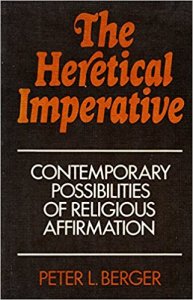
The Heretical Imperative: Contemporary Possibilities of Religious Affirmation (1980) was his theology of humanism in an age of pluralism and choice. The book made a lasting impression on many as a clear theological definition of the modern believer as educated humanist.

The main thrust of the book is that we now live in an age of pluralism, in which modern people naturally question ideas and their sacred canopies and do not just accept them by fate. Today, we choose our sacred canopy. Berger reminds us that the original etymology of the heretical (hareisis) is “to choose.“ the taking of a choice. For Berger, the necessity of choice becomes the virtue of choice. Hence, the title means the imperative to choose. By “the heretical imperative”, Berger means this radical necessity to choose.

Berger discusses three possible responses to the modern religious crisis:

The first of these involves the reaffirmation of embattled tradition, or in other words neo-orthodoxy, especially the path of Karl Barth. One reaffirms the tradition as the one true tradition avoided the new condition. This approach is higher influential in Jewish Orthodoxy. Berger points out that neo-orthodoxy can never have the pristine innocence of simple orthodoxy.

The second possible response to the modern situation is “reductive,” best exemplified by Rudolf Bultmann. This approach allows one to create naturalistic and reforming versions of religion acquiescing to the modern condition, which for Berger entails excessive concessions to it. Many rabbis who turn Judaism into pop-psych, pop-culture, or social utility fall into this category even if they are observant.

The third and final possible response discussed by Berger, and for him the only valid one, is to be open to the human experience of faith. A religion that is open to the changes in society and knowledge and to the fact that we are choosing this affiliation. In many ways, it is a new form of humanistic religion.  Whereas, Shadal said nothing Jewish is foreign to me, implying that there is a fixed body of humanistic knowledge. For Berger, this need to be modified in that we are ever needing to confront the changes of society and ever widening circles of knowledge

Berger advocates a “mellow certainty,” a moderate position. A historically oriented approach within a tradition, with the understanding that one cannot simply swallow the tradition but has to enter into a reasonable dialogue with it.  We can associate this position with William James or Charles Taylor.

Elsewhere, he quotes his colleague Adam Seligman who uses the term “epistemological modesty.” Epistemological modesty means that you believe certain things, but you’re modest about these claims. You can be a believer and yet say, I’m not really sure. I think that is a fundamental fault line. For him this is the greater dividing line than between faiths, rather it is between those who pretend we are not making choices and those who are.

For Berger, the basic fault lines today are not between people with different beliefs but between people who hold these beliefs with an element of uncertainty and people who hold these beliefs with a pretense of certitude.  However, for him, it is not a pluralism as much as I make a decision based on what is known to me. Berger stated that modern individuals are, or ought to be free and are responsible for their own. An individual’s subjective experience of the world is “real” by definition and they possess certain rights over and against collectives.  (In contrast, postmodernists do not have individual subjectivity as much as a self that is constructed by situation and society.)

Berger’s stress on individual experience of choice is reflective of modern consciousness, which turns religion into a private act, essentially individualistic and experiential. Berger welcomes the pluralism of perspectives resulting from secularization. Since all thought, including modernity itself, is shaped by plausibility structures, no thought has a cognitive privilege with reference to any other thought. The theologian Van A. Harvey (1973) in an widely-read important review of Berger pointed out: “Berger’s own attempts at theology are a reflection of this crisis rather than a cure for it because his own theology itself has no norms or criteria that govern his statements. It simply is a reflection of his own personal sensibility.”

Berger emphasizes a middle approach that balances religious submission with an awareness of the modern condition, historicism, and contingency. He represents the modernist religious situation, especially the strategy of collective bargaining in which an “internal dialogue goes on within the believer, or within the community of believers.” The believer says to himself, “There is no way of holding on to the miracles, but we won’t give up on the revelation.”

Personably, Berger rejects the notion of a decisive revelation in Christianity but retain the notion of the Biblical God. He needed to maintain this pluralistic condition and found the negotiation that worked for him.   Or the observant Jew who may accept the State of Israel as messianic but not Chabad messianism, or she accepts the efficacy of prayer but not the Breslover conversation with God. It is a constant mediation and bargaining between the modernity and the belief.  (if one is actually interested in the Hasidut, then see my follow-up post on Berger and mysticism.)

Several modern Orthodox authors in the 1980’s and 1990’s used Berger’s qualities of the modern condition -autonomy, independence, and self-aware choice as their definition of Modern Orthodoxy. One author even directly associated the ideas of Peter Berger with Rav Soloveitchik. However, Berger’s approach is much more dynamic, individualistic, and accepting of the historical and social sciences. While, in my opinion, Rav Soloveithcik and Modern Orthodoxy was more Barthian, tradition bound, and collective. Even now, there is still a core of intellectual Modern Orthodoxy who understand Rav Soloveitchik’s Existentialism in Peter Berger terms, even acknowledging the influence of Berger’s definitions of modernity, autonomy, and pluralism on their Torah uMadda thinking, yet not seeing Berger’s differences from their perspective.

For example, as an existentialist, Berger places the legitimation of the community’s practices in personal choice, not denomination, gedolim, community, or tradition. If there is a tension between the tradition and the personal choice, then one must personally resolve the tension. However, a modern Orthodox author who finds a place for personal choice is their Orthodoxy is not the same as the fundamental sociological question of legitimization.

The tension of autonomy and tradition was a widely used phrase of 1990’s Modern Orthodoxy. The first Orthodox Forum was actually on personal autonomy and rabbinic tradition as a way of staking out a modernist claim. In the volume, Lawrence Kaplan advocated for greater autonomy and a virtue of individual decision-making. (Already a harbinger of things to come, one of the papers claimed that autonomy and creativity was to be limited to Roshei Yeshiva and Torah study). A similar question was asked in an Israeli volume  Between Authority and Autonomy in Jewish Tradition, eds. Avi Sagi & Zeev Safrai [Hebrew] (Tel Aviv: Hakibbutz Hameuhad, 1997) Twenty years later, a different Orthodox Forum returned to ask a new generation about autonomy.  Yet, individual autonomy and acting according to the dictates of their conscience is still used by older observers to discuss Modern Orthodoxy in recent discussions.

The question is who is observant and Orthodox with a vision closest to Berger’s vision. Are Shadal, Levinas, Benamozegh, Hartman, or Boyarin closer to Berger’s vision? The question today is if one were to follow Peter Berger, then can Torah be open in the same way to new horizons of knowledge, of secularism and of society? Can one combine Torah with the pluralistic condition including the critiques of history and sociology? If one is already a furnished soul possessing all of the answers via the tradition, then Berger would see it as a retreat from the modern condition. Or maybe there does not have a Jewish equivalent to Peter Berger. There are enough educated lay people in the Jewish congregations who feel close to Berger’s existentialism and his heretical imperative who just use his thought by which to process and conceptualize their Torah.

I was recently at a wedding in which the person sitting next to me, an educated committed open Modern Orthodox person, pondered how the modern Orthodox world wants their children open to the world but not too open. In terms of Peter Berger, we can see that statement as  showing simultaneously that education is the key to being socialized into a community with its given plausibility structure. Nevertheless, the education should only be pluralistic enough to function in the world and attain professional success, but it should not be too open so as to break the current plausibility structure.  The education should not remove the taken-for-granted certainty provided through socialization in school.  Hence, Jewish day schools have a crucial function to both give a plausibility structure and at the same time to prevent Berger’s pluralism.

Some fault Berger for not depicting Judaism correct in his books. However, it is less accurate to fault Berger for not doing justice to Judaism because he also he does not do full justice to Islam, Catholicism, or Asian religions. He does focus at all on institutions, tradition, ritual,  authority, or study; today he would be read in conjunction with Talal Asad and others who see religion as law and authority

Later Essays

His later essays fill out many other aspects of the theological positions make up Berger’s worldview, which combined both liberal and conservative elements.  He became one of the main intellectual figures in the neoconservative movement along with his friend and First Things founder Richard J. Neuhaus.

Among the many notable points of Berger’s later work is a sustained rejection of the sociological thesis of secularization; most recent obituaries mentioned this point. His earlier works followed the majority of sociologists and assumed that religion was in decline before secularism. By the 1990’s, Berger firmly rejected that position and believed that religion was not declining or dissolving into obscurity in an increasingly secular world. Rather, religion was holding fast and even growing in some places, offering an increasing number of ways for human beings to find solace in a frightening world.  Nevertheless, rather than a reaffirmation of tradition, for Berger “Modernity is not characterized by the absence of God,” he wrote in a 2008 essay for the journal First Things, “but by the presence of many gods.”He critiqued the Fundamentalist project of the University of Chicago and even the use of the word fundamentalist as created by people who have no sense of the actual beliefs of the people.

For Berger, religion is an enduring quality and is ever returning. He often repeated that he expected a great revival in secular Scandinavia since transcendence always returns. He noted often, that the more colorful eruptions of transcendence have occurred in those places where secularization has been most aggressively enforced.  The children of the most orthodox secularists and enlightened modern homes have children who become members of Iskcon or returnees to orthodoxy (baalei teshuva).

On the other hand, the formerly pious world of rural America, which were once a bastion of religious commitment, are now in decline as portrayed in the book Hillbilly Elegy. They are now a main group of the growing number of “Nones”, without religion. Their sacred canopy was lost, in that it no longer sheltered them in their current decline and hence they gave up religion. However, for Berger they are a group that is likely to return once there is a new religious configuration speaking to them.

Second, he rejected the widespread concern about a supposed rampant individualism in the U.S., or the prevalence of an “autonomous” self.  For him, “The assumption made by Robert Bellah and Putnam that community in America has been falling apart is empirically questionable. It’s amazing to what extent Americans do in fact participate in every kind of community you can imagine–and give money and time and so on.  I don’t think Americans are all that individualistic.”

Third, he thinks that the problem with liberal Protestantism in America is not that it has not been orthodox enough, but that it has lost a lot of religious substance through the psychologizing of religion, as a therapeutic agency, and through the politicizing of religion. From his point of view, those who make their religion about culture will eventually lose their members because do not need the congregation if it lacks religious substance.

Fourth already in the 1990’s, Berger noted that the United Sates was breaking into two middle classes, a bourgeoisie, centered in the business community and a new middle class, based on the production and distribution of symbolic knowledge, whose members are the increasingly large number of people occupied with education, media, therapy and social justice.  Many of these people are on payroll, employed in bureaucracies or dependent on state subsidies. The new middle-class culture understood itself as “emancipatory” or “liberating” as against the traditional bourgeois virtues, most visible in the areas of sexual .and gender behavior. For Berger, this creates two conflicting middle class approaches to religion. Many of the issues dividing Modern Orthodoxy can be linked to this distinction of two cultures.

A Weak Skeptical Pluralistic Faith

If Berger advocates a pluralistic softer faith, then how can one build institutions on such a fragile basis? According to his own theories, there is a sociological need for institutions to preserve the faith. Viable institutions require a strong foundation of taken-for-granted verities, which exude an air of self-assured certainty that the pluralistic lack. If one constructs institutions on the basis of skepticism will these institutions not be extraordinarily weak, associations of individuals with no deep commitment? Can such institutions survive?

According to Berger: Yes, such institutions may be “weak”; the commitment of their members may be rather unreliable; but, yes, they can survive—and sometimes they show a surprising vitality.

Can permanent reflection be institutionalized?” By “permanent reflection”, he meant precisely the sort of skepticism and self-questioning that is created when the world is no longer taken for granted. Yes, such institutions are possible, but they differ from the older institutions built on the foundation of taken-for-granted verities. Such institutions are, by definition, voluntary associations. The same voluntariness by which people choose to join them may later allow them to leave. In this sense, these institutions are “weak.”

According to Berger, one  can convey values to children without pretending a fanatical certitude about them. There is a viable middle ground between fanaticism and relativism, in which one can build a community of people who are neither fanatics nor relativists.

The reason for his conclusion as to why a moderate faith will survive is his personal theological belief that at the core of his Christian tradition is truth, and this truth will reassert itself in every conceivable contestation. To be sure, he acknowledges, that no one who honestly enters into such a contestation emerges the way one entered; if one did, the confrontation was probably less than honest. In the act of reflection, every honest individual must be totally open, and this also means open-ended. Berger’s faith allows him to affirm that the church will survive until the Lord returns.  Jews, on the popular level, usually dont have such confidence and predict the downfall and death of Torah unless one capitulates to ignoring the modern condition.

Seeking Certainty

Does everyone have this pluralism? Can people retreat back into the position of certainty? Berger acknowledges that some seek refuge in the certainty of institutions and the tradition. Others, seek for certainty on the basis of an absolute understanding of the biblical text.  And third, one can seek certainty on the basis of one’s own religious experience, especially in the ever present the American revival movements.

Nevertheless, Berger always assumed that pluralism was our modern condition. For Berger, to pretend that one has certainty, in most cases, is a self-delusion. He never fuller appreciated the return of Christian Evangelicals and Orthodox Judaism in the 1990’s and first decade of 21st century who sought certainty, eternal values, textual and institutional absolutes.  (I posted a few years ago about how he was just discovering the paranoid style of contemporary Judaism, which focuses on the Holocaust.)

Some Centrist modern Orthodoxy authors decry the contemporary condition of pluralism and choice, a key feature of 20th century modernism from Virginia Wolf and William James onward to the existentialists as what they polemically and pejoratively mislabel as post-modernism relativism.

When looking at 21st century congregations, Berger saw that the face of suburban congregants “now has a set and sour mien, an expression of permanent outrage,” in which a Protestant scowl has replaced the Protestant smile. Feminism more than anything else has set this tone in recent years for the displeasure among believers. According to Berger, this grimly humorless ideology has established itself as an unquestioned orthodoxy throughout the mainline churches. They still do not have transcendence or a serious relationship with God, but they have replaced their pleasantness with disdain for others, especially on gender issues.

Berger’s student James Davison Hunter wrote the classic Culture Wars: The Struggle to Define America (1991), showing how the United States divided into conservatives and progressives, in which Evangelicals and Orthodox Jews are on one side and Liberal Christians and Jews are on another. In 1991, this was a new alliance limited to a few hot issues such as abortion. A quarter of a century later, a large plurality of Modern Orthodox has taken on much of the politics, values, theology, and style of the Evangelicals proving Hunter’s thesis.

In sum, Berger always held both his ideal belief in faith, piety, and personal commitment as a benchmark by which to judge sociological patterns. He was both a believing theologian and descriptive sociologist. As noted by many, the various positions Berger assumes and identifies are not always in perfect harmony with each other and sometimes they seem to operate at cross-purposes. Many faulted his sociology for having an implicit theology and conversely many faulted his theology for its sociological orientation.  Yet, this was the attraction of combining Existential theology with the lived religion of the pews useful for many clergy and religious thinkers to  make sense of the tensions of their religious communities.

To be continued with a follow-up post covering Peter Berger on Eastern Religions and Mysticism

Theology of Absence- Interview with Yishai Mevorach, an editor of Rav Shagar’s writings.

The students and colleagues of Rav Shagar each developed different aspects of his thought. Rav Yair Dreyful, his co-founder of Yeshivat Siach Yitzhak emphasizes the emotive and personal existential value of Torah and mizvot. Some of his students, emphasize the need to re-integrate mysticism and meditation, of Rebbe Nachman, Chabad, Zohar, Rav Zadok, and Rebbe  Kalonymus Kalman Shapira. Others prefer intellectual discussions of post-modernity, language games, paradox, and Israeli society. Some of his students learned from him a need to be open and found paths in psychotherapy, poetry writing, film-making, and scholarship. Yishai Mevorach, one of the editors of the Rav Shagar’s writings, looked where he was pointing and went forward into the chaos.

Mevorach recently published a book called Theology of Absence: On Faith after Chaos (Resling Publishing, 2016) 171 pp, [Hebrew] where he is developing a post-secular, post-modern theology from Rav Shagar. (Resling publishes translations of works of literary and philosophic theory.)

מודעה ישי

Yishai Mevorach was born in Gush Etzion and after two years in Yeshivat har Etzion switched to become a devoted follower of Rav Shagar. He teaches in various locations.  Mevorach is in the midst of writing a trilogy about faith after the abyss. This book was the first; the second book will appear next year.  He is also still involved in editing Rav Shagar’s homilies.

Below is an interview with Mevorach based on his Hebrew book. We have to thank the translator Rabbi Josh Bolton, director and Senior Jewish Educator of the Jewish Renaissance Project at Penn Hillel. A graduate of the Reconstructionist Rabbinical College, Rabbi Josh also holds and MFA in poetry from UMass, Amherst. His new book, 100 Suggestions for Seekers and Spiritual Activists, Alternadox Press (forthcoming).

The most exciting part of this book is that it is a reflection of what is considered legitimate discussion and free exchange of ideas in the world of Rav Shgaar’s students and within certain parts, albeit rarified and narrow, of the religious Zionist world.  Mevorach has a really good collection of lectures and shiurim on Youtube, they are worth listening to, including one on Rav Shagar’s views about the first and second Temples. In the shiur, the First Temple represents certainty and the cherubs on the Ark behind the curtain, while in the Second Temple there is nothing behind the curtain, grasping toward the unknown.

Mevorach follows his teacher Rav Shagar in looking for new modes of study and new juxtapositions in Torah and new methods of study beyond what he considers the spiritual dryness of the Yeshivat Har Etzion method. He is original in formulating this as post-secular, in that the secular has already won. We now live a faith that bears both deep Godliness and simultaneously deep acknowledgement of the post-secular condition. Mevorach uses models of Torah after the destruction, Torah from the abyss, and Torah as post-Holocaust. Those who want to deny this condition are psychologically seeking a fundamentalism even if they live a modern life. At one point in the interview, he sees this need for Orthodoxy as the castration anxiety from the fear of losing the guarded object.

What is Torah in this new era? Mevorach gives theme and variations ranging from considering Torah as our linguistic discourse, to our existential commitment of love, to our surplus enjoyment and jouissance, in the language of Slavoj Zizek and Jacques Lacan.

Other points, he frames this attachment in more minimal terms of the sign of circumcision, our naming ourselves Jews or the remnant that remains after everything, the way Freud identified with Judaism. Rav Shagar himself played with these ideas, in claiming that Jewish  nationalism  is  a  world  unto  itself –based on a citation from Zizek that the  Jews  “have  no  place  in  the  order  of  nations,” which for Shagar meant represents  the remnant, the sheerit, a particularistic,  of  attachment  to  the Jewish people and the  land. (Shagar, BeTzel  HaEmunah 126, edited by Mevorach).

Mevorach’s book is short, only 177 pages total, and a quick and enjoyable read. But only for those comfotable with Lacan, Derrida, Zizek, and Rosenzweig as well as the requisite knowledge of Talmud, Rav Zadok of Lublin and Rebbe Nachman. The first chapter jumps right into his thesis of a post-secular condition and the third chapter deals with the premises of the thesis surrounding Torah as described in this interview. When I asked Mevorach why he did not place chapter three first, he said that in an earlier draft it was first. You may want to skim it before the first chapter, and then read it in its current sequence. The second chapter was its own post-secular homily on love in Torah. The last part of the book on prayer as a simple necessity as a surplus of being was a good application of current theology to Torah. The book returns a humanism and an engagement with critical thought that many of the interpreters of Rav Shagar lack. Overall, Mevorach is quite optimistic and passionate about his project and its positive potential for a meaningful and energized Torah.

The book received a glowing review as a “celebration” and  “true and direct interpretation,” yet another review claimed he misread Rav Shagar and Rav Zadok but the review spends most of the review arguing about his application of Zizek. But notice, how telling is it that we now have a group of teachers of Torah that get  into public disputes over Zizek. As one comment on the review asked: “Who are the intended readers of such a review and this discussion?”

For those not familiar, here a few technical words that will help one in this interview. One should properly study these thinkers, but as a help to reading the article here are a few points as used in the interview. Bear in mind that Rav Shagar read Eric Santner’s  On the Psychotheology of Everyday Life (2001), which put Franz Rosenzweig in dialogue with Jacques  Lacan connecting two thinkers who originally had no intrinsic connection. (Free free to skip the next few paragraphs and get right to the interview if you wish.)

Loosely based on Franz Rosenzweig: Existence means the true existence of the subject confronting his or her human condition directly. It does not mean as it often does in the Jewish world, the deep points of experience or connection found in prayer or human life. Rather, we are being who have to confront our finite existence and the horizons, in this case post secular, in which we live.  For example, Rosenzweig created an institution of adult education, a lehrhaus, where the goal is not to start with expertise or erudition but with a confrontation of the human condition, including finitude and secularism.  “A learning, no longer out of the Torah into life, but out of life, out of a world that does not know about the law, back into the Torah.” For Mevorach, we are creating Torah out of the depths of the post-secular condition.

The second concept needed for this interview are the 1970’s ideas of the French psychoanalyst Jacques  Lacan in which we use pieces of language and culture as a signifier, which is a sign without any referent. It does not refer to anything; rather absence is its fundamental feature.

Lacan thinks we recognize a signifier by reference to its place among other signifiers. For example, if we take a signifying system such as the Dewey decimal system in a library, I know that a book should be at a certain place on a shelf even if that place is empty and the book is not there. What Lacan calls here “the place where it has been effaced” remains even if the book itself is missing. For Mevorach, our Torah study is like the system by which we understand everything.

The third term needed for this interview is the concept of surplus and excess as well as the concept of remnant, as found in the thought of Lacan and Zizek.  The former term is what Mevorach seeks in religion and the remnant is what Mevorach thinks we have. For Lacan a surplus is always produced of jouissance-, an enjoyment that has no value but exists merely for the sake of the enjoyment. The remnant is what is left over after our signifiers, a residue, or remnant of the symbolization process.For example, when looking at an old photograph we are being touched by the remnant of the self, and this left over remnant.

Žižek talks about excess as surplus enjoyment, or what Lacan called jouissance. For Zizak, excess always corresponds with some lack, which creates a fetish as a substitute for something missing that saves us from having to confront the full impact of it’s absence. The power of any ideological structuring of reality lies in it’s ability to transform the source of its weakness, whatever is lacking, into a source of strength, its “excess”.

20170724_205951

Interview with Yishai Mevorach

Translated by Rabbi Josh Bolton, revised and edited by Alan Brill

  1. What was your vision in editing Rav Shagar’s lectures?

This is actually a difficult question for me because I don’t know to what extent I had a clear vision at the start of the whole project. The work was done with a lot of uncertainty. Uncertainty as to whether I would edit it correctly, and an even greater uncertainty as to its reception and even whom its readership would be – a readership not even really “born” as I edited the books.

I can say that my original motivation was to be in touch with that important moment in my life in which I met Rav Shagar.  The editing the books was a type of havruta with Rav Shagar.

While he was still alive, I merited to sit and listen to his Torah. After his passing, fulfilling his request that his writings be published, a number of us were brought in to do this work. I was given the opportunity to create new juxtapositions (tzerufim hadashim) with Rav Shagar – even after he had passed. This task was something different from just editing. It was a type of cleaving (devekut) between two souls. To a certain degree, it was an experience of spiritual conception and I don’t possess an adequate enough perspective to describe its meaning for me – and for him.

As I worked, the words of Rav Shagar stood before my spirit: “It is impossible to grasp religion without its mystical core. Not mysticism in the sense of a “mystical experience” – but a mysticism that overwhelms one’s entire existential reality”. A type of “solid point” as he would say, which necessitates religious existence.

Again in his words, “To understand oneself in a radical way”. That is to say, there is no possibility of grasping religion without its radical core. It is impossible to engage religion without tapping into the radical foundation that enables and necessitates the mystical engagement. Religious engagement is a radical act, connected to the religious situation of “the surplus or excess.”

All this was included in my intentions as I edited the work – to implant Shagar’s radical foundation into the Religious Zionist world, with the understanding that this may be the only possibility for its revival.

  1. Can you tell the story of how you left Har Etzion and came to Rav Dreifus?

I had begun studies at Yeshivat Har Etzion where I learned for two years, completely immersing myself in a life of Torah. Nevertheless, during that whole period and especially after my entering the army, I felt like the Torah I was learning had become secondary or incidental to my life.

I’ll be more specific. The Torah offers great assurances for this life. Rebbe Nachman describes this “double portion” (pi shenayim) in several teachings. However, the musar and religious books (seforim) that I was studying did contain the elevation and tension as promised in the texts that I was beginning to explore, but it was not being taught to me.

I felt emptiness and disappointment. It made no difference how hard I attempted to learn Torah, even with a totality akin to the manner of Hasidut (in its original sense), I still never tasted that “God is Good”(Psalm 34:9). I want to emphasize that I have never sought any type of spiritual experience. I have only sought an elevation in my life of faith, such that the Torah would be a catalyst to challenge my religious life through unexpected magnitude and elevation.

During my army service, began to feel like very little stood between me and pursuing a life outside the Torah world. Truthfully, it made me very sad. So when I finished my service, I really didn’t know what direction to take. Back to Har Etzion? Somewhere else? My sense at the time was that there were no other places for me outside Har Etzion, so I had resigned to return there and basically to wait for the flickering flame of Torah to die out.

Yet. three years earlier, I had been present for one single shiur of Rav Shagar’s – a fact that changed everything for me. I didn’t understand a single word he had said and actually his lack of charisma left me with a sense of discomfort. Nevertheless, for some reason as I sat in this shiur I knew with certainty that I was going to be his student. It’s that experience that brought me three years later to stand at the doorway of Yeshivat Siach, the yeshiva of Rav Shagar and Rav Yair Dreifus.

Rav Dreifus greeted me, sitting me down for a conversation that I remain grateful for until this day. As we spoke, I described to him my feelings of emptiness and disappointment with my studies until then. That I had not found my place in the Beit Midrash. Rav Dreifus lowered his gaze and told me how he completely understood all the things I was describing. However, he asked that I try Yeshivat Siach for one month. If it did not work, then he would give me a blessing to pursue a life outside of the Torah. Nevertheless, he was certain, so he claimed, that Rav Shagar would change my life – which is indeed, what happened.

In retrospect, I believe that what changed my life was encountering the radical core, which Rav Shagar made possible. Not a radicalism in the sense of radical content like the Torah of Ishbitz or Rebbe Nachman. Rather, the radical quality of religious existence. A quality found in the teachings of Rav Shagar.

  1. Why is the passage from Rav Shagar’s, “Remnant of Faith (Shaarit HaEmunah)” describing faith as “excess” or “surplus” so important in his thinking and in yours? 

This question is at the foundation of my entire book and touches on something essential in the thought of Rav Shagar. I contend that our faith today exists in a modality of “what remains”, or surplus.

Various scholars describe our period as “post-secular”; a period in which religion and religious faith have found their way back to the center of the stage after the secularism of modernity. Nevertheless, this faith comes after secularism. It is not the same religion and knowledge that once was dominant in the world, taken for granted, and at the core of human identity. Rather, what we are talking about today is a religiosity that has appeared in the world even though God had already died in – a religion that has appeared as a ghost.

The post-secular age does not mean that people who were discrediting religion and scorning faith are now suddenly donning tefillin, observing Shabbat, and praying for the rebuilding of the Temple in Jerusalem. Rather, post-secular means that people are sobering up to the reality that for some reason the project of secularism did not necessarily succeed. What was thought to be a reliable solution, ended up leading to the stubborn return of a repressed religiosity.  After science and technology completely dominated the reality of life, and after the smoke of the chimneys of Auschwitz and Maidanek, religious faith should have faded into nothingness – and in some ways it did. Nevertheless, we find that it constantly remains, though in a different form.

Today, accord to Rav Shagar, faith is present as “a psycho-theological symptom of unexplainable stubbornness”. It is in this spirit that one can read the works of Rav Shagar. They were written in the state of being of the Tribe of Dan, the tribe that according to tradition was comprised of the stragglers who traveled toward the rear in the journey from Egypt to the Land of Canaan. The rabbis of the Talmud teach that the tribe of Dan collected all the stragglers and all the lost items of the tribes that proceeded them in the journey. One might say, the tribe existed in a modality of “what remained”; of “remnants” – a “remnant of faith”.

  1. What does it mean to be “Orthodox but not Orthodox”

This expression “Orthodox but not Orthodox” is an expression of Rav Shagar’s from his essays, “On Translation,” “Multiple Worlds,” and “In the Doorway of Academia”.

In these essays, Rav Shagar tries to conceive of a religious existence that is not wrapped up in the attempt to guard an object of faith as an object. For just as one tries to guard that object it slips from the hands of the believer for any variety of reasons: outside influences, the evil inclination, secularism, and other various forces.

Rav Shagar attempted to describe a believer who does not guard against anything. He wrote, “[This religiosity] is in tension with the impulse within religious society to “guard [or keep]” the [observance of the] kippah, prayer, tzitzit, tefillin, etc. – an attempt to change religiosity into something artificial, lacking a spine and independence, which is one of the reasons for spiritual superficiality within the religious community. Religion that conceives itself as a manager in a battle for survival is a religion that lacks roots and depth”.

If this is true, then who is the believer who does not guard against the object and objects of faith? Rav Shagar envisioned a believer who regards these deeply imbedded objects as a type of “remnant”. That is, they are not elements added to the believer’s life, but rather are elements that are impossible to erase from his experience. No matter what he becomes, they remain within him. This is a believer who sees faith and the commandments as a surplus of his being, and as such, they are constantly present, wherever he goes. Therefore, the verse states, “For what great nation is there that has a God so close at hand as is Hashem our God whenever we call upon Him?” (Deut 4:7).

Even when the believer passes through experiential contexts (outer and inner) that reject religion, he remains entirely religious. He is not a particular type of religious person – he and the religious experience are one.  As Talmud Kiddushin speaks about a scholar for whom the Torah is “his Torah” – that is to say, there is no space between him and Torah/Faith.

Here Franz Rosenzweig’s idea comes to mind: “The word believing does not here mean a dogmatic self-commitment, but a total obligation embracing the entire person. In this sense, the heretic too can be a believer, and the Orthodox an unbeliever.” (Letter to Rosenheim)  The nearness of the subject to faith causes faith to include also its negation in the lack of faith, though faith remains ultimately inerasable. Elsewhere, Rosenzweig portrays the authentic religious person as both “disbelieving child of the world and believing child of God in one” (Star of Redemption 297.)

If this is so, a religious existence stands before us that is gripped by faith and the commandments, but does not grasp them. This is the difference between the Orthodox and the “Orthodox but not Orthodox.” The Orthodox grasp the objects of faith as objects, while the “Orthodox but not Orthodox” are gripped by them, and they do not release him.

Parenthetically, from a psychoanalytic perspective, this religious existence is in opposition to the usual tune of religious believers, the tune of persistent fear of loss of the object of faith.  Think of it as a fear of a castration (one formulated by Freud, the father of secularism) of the guarded object: faith. This fear of castration emerges because this religious perspective conceives of faith as just another object to be grasped. There is a fear of losing the additional object, which in reality does not belong to the individual in the first place.

Rebbe Nachman would refer to this relationship between this kind of believer and the object of faith as “another thing”. Faith becomes another thing, another object, which I grasp very tightly so that it does not slip away or disappear. I must present a claim of ownership. From this perspective, religion falls into an uncompromising and violent fundamentalism. Opposed to that relationship, Rav Shagar suggests another possibility in which faith exists as “a bit more” – an excess. Not as another object but rather as something extra in my being. This is a faith that does not work to guard itself because, in any event, it exists.

The difference between an existence that grips and an existence that is gripped seems at face value to be small and insignificant. The generational struggles between the various Jewish denominations – liberals and conservatives – have left us with the mistaken perspective that the place of meaning from a religious perspective is in political questions of “yes mechitza” or “no mechitza”, the position of women (yes or no), and many other things that distract us from questions of greater significance.

Definitely, there will be a political difference between the Orthodox and the “Orthodox but not Orthodox”. But this difference is less important than the essence of their different points of relationship to the world in general and to the religious world in particular.

  1. How is the Torah a doorway to God in the postmodern age? How does Rav Zadok haKohen fit in?

From a certain perspective, I think this question might be leading us in the wrong direction. The basic assumption of the question is that the Jew requires a doorway in order to enter towards God. This assumption is founded on a particular theological conception and I would go so far as to suggest that the Jew has no need for a doorway because he is already there with God. In this sense, the Torah is not a doorway, rather it is something else that sustains our religious existence. The question is whether this “something else” is unique to the Torah or not. I don’t think that Torah is the only doorway – but for me it is the most meaningful one, and in that sense it is singular.

I will explain, having already arrived at a postmodern perspective. An individual is not a singular coherent existent or being, developing from the inside out. Rather, being is decentralized and begins from without.

The individual and the world are composed of many “letter permutations” (according to the language of Hasidut) of a symbolic order. These permutations create a system of identity for the innerness of the subject. [AB- Lacan argues that the subject is “the subject of the signifier”.] The individual is a creation of discourses and utterances, which compose who he is. In connection to our subject, we can say that faith in God is not born from the recognition or experience of the subject, but rather comes about as a result of the discourses and realities from which a person is composed.

As Jews the matter is clear to us because first of all, God has a name and he is identified with this name. Secondly, faith as a name is engraved into our bodies – through circumcision; and even more so, through our origin. As the verse states, “My people, upon whom My name is called” (Chronicles II 7:14).

Faith, the divine encounter, is within the very letters that sustain our being as Jews. This is the deep essence of Hazal’s statement, “Israel – Even if he sins, he is still Israel”. God and faith in God are not concepts – Name and names are engraved in the Jews existence.

The Torah for me is not a doorway, it is a language, a discourse – the words and names that are bound to my body. As Levinas’ writes concerning this point, the Torah is “the first words, spoken, words that had to be spoken in order to give meaning to human existence, and these words were spoken in a form open for interpreters to reveal their deeper dimensions”(Ethics and Infinity: Conversations with Philippe Nemo by Emmanuel Levinas). What is the meaning of Levinas’ statement here? What does it mean that the Holy Scriptures are “the first words”? Is this a historical statement akin to “the Torah proceeded the world”? Or let us ask further: Levinas states that the Torah is what imbues life with meaning. Does he mean essentially that the Torah is the reason for the creation of the world? Anyone who is familiar with Levinas would know that is not what he means to suggest. What he means is that consciousness in the religious dimension anticipates reality from an analytical and not an historical perspective. The religious dimension is ascribed a priority over reality, over “what occurs”. As Jews, the religious dimension is placed before our own existence. It is engraved within our origin.

This is addressed in the second part of your question concerning Rav Zadok. He is one of the thinkers who reflects deeply on this issue of faith as “name”. For example, his beautiful statement in Tzidkat Hatzaddik: “The essence of Judaism is in the calling of the name Israel”. It is a radical statement. The essence of Judaism is the very naming of a person as Israel. Judaism is not keeping the commandments, or faith, or beliefs. Rather, only my being “ba’al shem”, having the name of Israel.

  1. What are “tzerufim chadashim” —new letter permutations?

“New letter permutations” is a concept that Rebbe Nachman (and following him Rav Shagar) dealt with at great length. Rav Shagar believed that religious language has the capacity to change its permutations, the way letters can be rearranged. Primarily, these permutations can interweave themselves and jumble themselves, creating new permutations and fashioning new vessels for the divine presence in this world.

And so sometimes language that is misconstrued as flawed or confused may in actuality be a new type of vessel, one conveying a different divine presence in reality. In his writings about these emerging permutations, Rav Shagar spoke about new and provocative religious images, ones that cause us to reconsider the assumptions we hold with regard to what we consider religious or not. In the same vein, Rav Shagar also experimented by integrating philosophical and scholarly modalities into his own Torah study, which he shared with his students.

“Letter permutations” is a concept from classical Kabbalah teaching that the individual and entire world are composed of letters. In the words of Rebbe Nachman, “Everything contains various permutations of letters through which everything comes into being”. The Kabbalah scholar Yosef Avivi claims that one of the Besht’s main innovations to Lurianic Kabblah was that while Ari (Rabbi Isaac Luria) spoke of divine sparks of light that are scattered throughout existence bringing everything to life, the Besht spoke of scattered letters.

For example, the Admor Ha’Zaken (Rabbi Schneur Zalman of Liady) writes in Sha’ar Yichud Ve’haEmunah concerning the verse in Psalms (119: 89), “Forever, O LORD, your word is firmly fixed in the heavens”. He cites the Besht who explains the verse as, “The words that you spoke.”   Is the “heaven in the midst of the water” (Genesis). The words and the letters of the Torah stand firm in the heavens and are forever enclothed in all the heavens giving them vitality.

Unlike sparks of light, every letter is different. A reversal of their order can cause changes in meaning and bring about dissonance. When the inner order of the letters is arranged optimally the inner life force corresponds. But when that order is flawed, then, in the words of Rebbe Nachman, “they are mixed up into alternative permutations”. That is to say, the words create a different unique type of life force, thereby forming the matter into something different. This is important to note because I think we are wrestling with something of great depth.

In the classical Kabbalistic concept of sparks of light, the flow (shefa) of divine light remains identical in every moment and place. Only the garment changes. That is to say, the sparks bring life both to the world of holiness as well as to the world of impure shells (klipot). A spark forever remains a spark, for light is light. The divine flow (shefa) of letters is essentially different. Not only can the letters change, the life force itself can also change. If a flaw is present in letter permutations causing them to be mixed up and disrupted, then we have a damaged divine flow (shefa). There remains the divine flow (shefa), but it is damaged. The dichotomy between perfect divine light and damaged shells (klippot) is shattered. After the innovation of the Besht, the divine life force itself can function flawed, mixed up and disordered.

If we push this just a bit more, we can see that before us is an analysis of religious language more generally. Religious language can exist in a flawed way, yet nevertheless function as a religious language. According to Rebbe Nachman, it still conveys divine flow, but of “shattered letters”.

We can apply these concepts in describing the religious subject as composed of permutations of letters, only now the letters are creating an “identity fusion” making the person one with them.  The subject’s own permutations of letters may create a sense of disorder and confusion, yet do not fully prevent the person from being a vessel for the religious divine flow. Perhaps this the situation for the “Orthodox-non-Orthodox”, who knows?

  1. How does the Torah have infinite deconstructive meanings? What are we looking for when we create new Torah?

There is a letter attributed to Nahmanides entitled, “Discourse on the Inner Meaning of the Torah”, in which he responds to a student’s question: What is the inner essence of the Torah?The Ramban’s answer is surprising. We would think that a kabbalist like the Ramban would answer that the inner essence of the Torah was some type of mystical experience. But the Ramban chooses a different path.

For him, the inner essence of the Torah is the fact that it is without vowels, for, “if the Sefer Torah included vowels it would have a limit and a measure (like things of matter have known forms) and it would not be possible to interpret it except according to the particular vocalization of a word. But because the Sefer Torah includes multiple possibilities of meaning and because in each and every word there is an abundance of connotation, it was composed without vowels, permitting its maximum interpretation”. That is to say, the essence of the Torah is that it is composed without vowels, creating the need to return to interpret and to bestow meaning.

Afterwards he comments: “Always pursue her, and be concerned over what you do not understand and happy with what you do understand. For thus it is written, ‘It is no empty thing for you’ (Deut. 32:47). The Torah is not empty beyond its simple meaning. The Torah has a soul that God breathed into it, and this soul is its essence. If you find emptiness in the Torah it is only on account of your own short comings, as the verse states, ‘It is no empty thing for you”.  As the rabbis have interpreted, if it is empty, it is on account of you.”

In other words, the essence of the Torah and what defines its soul is its constant shedding of signified reading of the signs. Therefore, this essence, that which is the “root and essence of faith,” according to the Ramban, is not some specific content but rather its structure of linguistic dynamism.

For the Torah commentator, Rabbi Bahye ben Asher, this issue is even more pointed:

The Sefer Torah is composed without any vowels in order to allow each individual to interpret in a way that he desires. Letters without vowels can carry multiple intentionality and be divided into several sparks of light. Thus, we do not vowelize the Torah, for the meaning of any word with vowels is limited to a single matter, but without vowels, many wondrous and awesome things can be inferred.

The Torah as an unvoweled text invites a multiplicity of interpretations, issues, intentionality, and differentiations. To vowelize and punctuate the Torah would constitute a type of violence against the text, constricting it in the direction of particular understandings and definitions. Vocalization reveals itself as an attempt to domesticate and tame the savage creativity hidden within the restless text of the Torah.

Another Kabbalistic-Hasidic tradition related to the vocalization of the Torah describes the Torah as initially composed of a “mound of unarranged letters” (“tel shel otiot”); Or, in the language of the Ba’al Shem Tov, “All the words of our holy Torah were jumbled in a mixture.” Only later was the Torah separated into words when it came to earth: “The meaning of its order – according to the ways of the world”. This description of the Torah as being founded on a mixture of letters (or, more intensely, a “ruins of letters”, which is what tel actually means), suggests that there is something within the Torah that stands in tension with the meaning we ascribe to the Torah; in tension with its meaning and understanding. In other words, the heart of the Torah is [in the language of Lacan] an enigmatic signifier, a “mound of letters”.

The truth is that these traditions that touch upon the text of the Torah are related to the questions you asked previously. When I speak about the “name Israel” or about the names and syntactical elements that are engraved in my being, I can understand it two ways. Either as a signified particular verbal definition, which one could refer to as a Haredi perspective: a perspective that suggests that it possesses the specific understanding of the substance of the “name Israel” already with assigned vowels and vocalization.

Or, and in contrast, in the spirit of the esoteric sages I referenced, it’s possible to see that the name “Israel” does not in fact possess assigned vowels and vocalization. The name requires every individual to come and give it vocalization and meaning – a vocalization and meaning that the name constantly shakes off because the Torah does not permit itself to be ensnared by specific meaning. The Torah constantly creates tension with regards to the existing vocalization. That is to say, the name Israel creates a type of fundamental tension that demands a solution.

Of course, a more radical possibility exists, in which this name that appears as a “mound of letters” may also be a destructive foundation that has played out in the lives of Jews– both religious and secular – destroying all frameworks, destroying all that one thought he or she understood about this life.

The non-esoteric Torah considers anything that rejects or challenges its immutability as a something bad that a believer must guard against and resist.  However, the Kabbalist, person of secrets, internalizes that the Torah enforces itself, even the elements of destruction within it. The mixture and jumble are present in the very heart and structure of the Torah.

In one of the chapters of my book dealing with the Torah as an unvocalized text, I cite Freud in the introduction to the Hebrew edition of “Totem and Taboo”:

Anyone reading this book cannot easily place himself in the spiritual position of the author, who doesn’t understand Hebrew and is totally alienated from the religion of his forefathers…but who nevertheless never denied his belonging to his people and felt that his essence was Jewish and never sought it to be otherwise. Were they to ask him: What yet remains Jewish within this, considering you have given up on connection with your people? He would answer: A great deal remains, apparently – the essence.

Freud has no connection at all to the religion of his fathers, he is alienated from the national ideals, and nevertheless he feels that the essence of Judaism is within him. He is unable to know what it is and he is incapable of explaining it – but he is a Jew. He is a Jew even though his Judaism completely contradicts his identity: the identity of a Viennese scholar without religious (or any particular context), a man of the entire world.

Freud’s Judaism is nothing other than a disorder – a mound of letters – rejecting his identity.

He embodies what we could call “The Non Jewish Jew”. Judaism is present as a subversive foreignness within the Not Jewish. Therefore, it is understandable why Freud wrote his introduction in the third person. It was impossible for him to have written it in the first person because it attends to the stranger in his world. Following the emergence of a “remnant of Judaism”, he becomes a stranger in relation to his own self.

  1. Why is Franz Rosenzweig so important for today?

Rosenzweig’s personal story, out from which his ideas emerge, enables us to build anew the religious world as “what remains”. Rosenzweig lived within an assimilated family, far from Judaism and actually quite close to the Christianity of his friends’ lives. And yet through the arch of his life, he experienced a return to Judaism.

What is so interesting about this return is that it never erased his perspective as an assimilationist. He had returned to a Judaism that had dissipated and yet nevertheless remained. Rosenzweig was never a returnee (hozer ba’teshuvah) who gave up on the fundamental experience of his life without Judaism. In some sense he never gave up on the “death of Judaism” all the while returning to it. He possessed a “remnant of faith” (as discussed in question 3). He never disregarded the “Death of God” even while God penetrates into his life. This dimension in Rosenzweig’s thought, found primarily in his letters, contains great contributions for those of us trying to sustain a religious, post-secular experience.

Rabbi Eliezer Sadan (Rav Eli Sadan) – His Hands Remained Steady

There is a trend of Americans rabbis going to Israel for a few weeks and upon return exclaiming: “how come we don’t have a Rav Shagar world here? Think of what our educational institutes would look like.” They imagine that Religious Zionist institutions, rabbis and youth are following Rav Shagar. It is somewhat akin to an Israel visiting Drisha, Mechon Hadar, and the 92nd St Y, then proclaiming that the lectures he heard are what is being preached by the RCA-OU.  In actually, one of the leading intellectual influence of the Religious Zionist world is Rabbi Eli (Eliezer) Sadan (b. 1948) the architect of the religious military preparatory programs, Bnai David, which in turn became a model for the others. There are many other important figures including the heads of the yeshivot. I am offering this blog post as somewhat of corrective. (I will correct any errors as they are pointed out.)

Eli Sadan

In 1988 , Rabbi Eli Sadan together with Rabbi Yigal Levinstein set up the first pre-military preparatory program, Bnei David  in the community of Eli Shvat Shomron , which encouraging them to serve in combat units and officers. Rather than studying Talmud at a Hesder Yeshiva or going straight to the army, the yearlong program in the preparatory program get the the HS graduates for success in the army and a religious Zionism world view.

Sadan was a paratrooper and then studied for 15 years at Mercaz Harav Yeshiva , where he studied for 15 years under Zvi Yehuda Kook and Rabbi Zvi Israel Tau. His worldview is basically part of the world of the Yeshivot Hakav, that avoid secular culture, avoid academics, and would reject everything the liberal Orthodoxy of Israel represents. This yeshiva world has been aggressive in the placement of their graduates and the average school principal or teacher is a product of his worldview.

More significantly, the graduates of the preparatory programs have entered in large numbers the military and command echelons of the Israeli government including the Israel Defense Forces, the Mossad Intelligence Agency, the ISA (Israel Security Agency – Shin Bet) and the State Prosecutor’s Office. This ideology has become part and parcel of the current Israeli leadership

Rabbi Eli Sadan major work is His Hands Remained Steady (2001, reprinted in a new edition 2013) [Hebrew] is an essential book to understand todays religious Zionist work. A translation is a desideratum. His work is easy to digest and quite lucid.

I am summarizing the book to let my American readers understand the backdrop against which Rav Shagar and all the New Religious Zionists are working. I am not interested in discussing the political implications of this work, which are more significant than can be imagined. Please do not start sending me emails of your political views. I am interested in his view of Judaism.

The main purpose of Sadan’s preparatory program and of his teaching is to mediate the tension between the ideal Torah view and the requirements of the State, the government and the army (described here in a prior post by Elisheva Rosman-Stollman). To do this, Sadan invests the government and the army with messianic import as the realistic arm by which God’s providence takes place, similar to the kings in the Bible. The two other related goals is to apply the messianic teachings of Rav Zvi Yehudah Kook to the politics of the last 25 years as well as decrying the there media, liberals, the arts, and academic as entirely false and the enemy of religious Zionism.

In his vision, there is never a heresy in the authority of the state. Religion and Torah scholars define democracy. Unlike like Rabbi Tau who teaches that one can disobey orders. for Rav Sadan, one is not to disobey orders.  In Rav Sadan’s conceptualiztion, the basic values of secularism and non-Merkaz Torah are the individualism of self-realization and fulfillment of personal desires. (This would condemn Rav Shagar.) In contrast, the ideal Religious Zionist knows they are part of a collective messianic destiny.

The approach has come into the news recently with their condemnation of the LGBT community, his attacks on accuses the army’s Education Corps as trying to “re-educate” religious soldiers, and with Rabbi Yigal Levinstein’s condemnation of women in the army.  On a broader level, some critics feel that his disciples are attempting to create a religious army and establish a halachic state.

Rav Dreyfus, the head of Yeshivat Siah Yitzhak carrying on Rav Shagar’s legacy, stated in an offhand biting comment that most Religious Zionist Jews are only interested in the ideas of Minister of Education Naftali Bennett (Jewish Home) and not those of Rav Shagar. In 2016, Bennett awarded Rav Eli Sadan the Israel Prize for Lifetime Achievements. The summary of the book below will explain his importance and the connections.

The most important chapter is chapter four where he defines democracy as the collective work of the Jewish people to realize the messianic vision. He is against any form of minority rights, civil rights or liberal democratic principles. Additionally, since the government is like the kings of ancient Israel, he affirms Divine right of Prime Minister and he thinks the military police advance humanity. The message is that the current state is the Divine presence on earth and we have to study the current events through Torah eyes. This is a very strong exceptionalism outside of all secular and liberal understandings of politics and in which everything in the world and in Israel revolves around religious Zionism.

It is worth comparing this pre-millennial dispensation model to the Evangelical versions in the United States  or the anti-liberal democratic Muslim thinkers. How does this compare to American dominionists like pastor Hagee or Islamic democrats like  Yusef Al-Qaradawi. My own interest is what does this make of the Jewish religion? Torah study, prayer, ethics, and mizvot take a back burner to realizing the millinarian vision. One should compare this Torah to other recent formulations of Torah, either spiritual or intellectual conceptual.

eli sadan

His Hands Remained Steady

Rabbi Eli Sadan major work is His Hands Remained Steady (2001, reprinted in a new edition 2013) is a ten-chapter book that includes his own ideas, expositions of the classic positions of Rabbi Zvi Yehudah Kook and Rav Tau, and question and answers on contemporary issues. One can hear in the background the original setting as lectures to eighteen year olds. One should note that the Hebrew word Emunah is translated as steadiness (as in Exodus 17:12), not faith, belief, or trustworthiness.  The goal is to remain steady in the messianic vision. I acknowledge again that this book is quite political but my interest is in its pre-millennial dispensations of current event and its vision of Torah. I apologize in advance to all those will offended by reading this ideology, but it should be better known.

Chapter One is an educational vision on the importance of understanding our Messianic age; we need to study inner process of history as known through the writing of Rabbbi Zvi Yehudah Kook, Maharal, and the forged Kol HaTor ascribed to the students of the Vilna Gaon. We have to devote ourselves to studying this order of redemption and then to actually sense it in our lives. We also need to see where current events fit into this pre-millennial dispensation scheme. Once we know the meaning of history, then we respond without vigilante actions or personal overstepping of the state, we respond with nerves of steel, and with a self-sacrifice for the entire people of Israel.  You will notice how far this agenda is from those of the past that stressed Talmud, halakhah or Jewish thought.

Chapter Two is on loving every Jew. But there is a strong paternal and judgmental sense of the need to love them even if they go to movies, watch TV, and go to theater, all of which destroy and make their souls impure. The removal of these cultural deviations is as important for our messianic future as settlement and security. Nevertheless, the non-religious are our brothers in building the state even if they are leftists, especially since many of them have left have done good things for the state at earlier points in their lives.

In this chapter, he also sets out that baseless hatred destroyed the Second Temple, it was not destroyed   because the Romans defeated the Jews militarily. Our success today is through all working together- religious and secular. When Rabbi Yochanan ben Zakai asked for Yavneh and her sages, he was not a pacifist or accepting political realism as often preached, rather he knew the baseless hatred of brothers was going to lead to the downfall of the Temple.

The Religious Zionists are being falsely accused as an act of baseless hatred of killing Prime Minister Rabin, but that was a political, not a religious, act. Besides, Oslo was terrible.

Finally, chapter two brings up a theme that reoccurs often in the book that all Arabs and all Palestinians are terrorists who teach their children to be martyrs. They are entirely outside of the State of Israel, which is only for Jews as their messianic destiny. (For more on this see later chapters, especially on what he calls democracy.) He does acknowledge that we all know fine Arabs who are decent people in the sense of “some of my best workers are wonderful Arabs.” Nevertheless, his negative generalizations stand in his mind.

The Third Chapter is on the ideological battle his students will face. For Sadan, there is no freedom of thought in Israel because the left controls everything. Liberal pluralism is entirely wrong and nonsense. We need truth and justice of the Torah to be stressed in the public sphere. Pluralism is not tolerance but against truth and the Torah. For example, didn’t Bibi Netanyahu’s  “Terrorism: How the West Can Win”  1986  already prove that all Palestinians are terrorists but this truth does not matter to the Israeli pluralists and the media who ignore the truth.  Bibi’s book becomes part of the secrets of the redemption.

Chapter Four is the major innovation of the book and the most theoretical chapter offering his view of politics and democracy. I would assign this chapter to a class to understand his views. For Sadan, democracy means partnership (shutafut), a partnership of Jews only. For him, the original meaning of democracy of the Greeks was only a polis of Greek citizens they excluded others. Fpr Sadan, Jewish Israelis don’t and should not accept the liberal democracy of minority rights at all. Nor any other Western ideas of democracy. Rather for us, democracy means that since the coming to be of the Jews as a political nation in 1948, we are to work as one nation, a partnership of all Jews and we will agree to work out of differences by political means despite our differences.  We are the nation of Jews as a state and no longer just the Jewish people.

This is where Sadan makes effective use of questions and answers.

Question: But isn’t much of our agenda religious coercion?

Answer: Absolutely not! Coercion is only when you throw rocks at car on Shabbat but if we decide as a people that a law is needed as a nation for the nation then it is not coercion. Liberals think that there should be civil marriage to avoid coercion but it would break up the nation with potential mamzerim and non-Jews.  Hence, is not coercion because the law is needed or else it would break up the nation, the partnership. Even though the Knesset has atheists and anti-religious members they are all nevertheless working for the Jewish people and we listen.

The liberal world would claim such a law is not moral because it violates individual rights to make decisions but we as Religious Zionists have no interest or concern with being an American style democracy. We are a democracy only in the sense that we collectively work out the destiny of the Jewish people as a collective.

In fact, Western democracy is really religious coercion because I am put upon and have to tolerate decisions against my beliefs. In contrast, our democracy is working out the best for the people and they should be strong and accept it.

Question: Should we have a king? Answer: This is a debate of Maimonides and Abarbanel, but we restore a king only if and when the people want it and they do not want it yet.

There is no objective media. They are biased against religious Zionism. The left stirs up the other nations against us. The media supports our worst enemies.  Their ideas are dead. They are like the woman in the book of Kings whose baby died and claims the others baby as her own.

Question: What do we do if the Torah contradicts the state? Answer: The ethics of the Torah comes first, that is why the prophets often rebuked the king.

Chapter Five is on the need to learn Emunah meaning steadiness. We need to see clearly the stages of the unfolding of redemption from the 16th century to today, and how our politics is miraculous.

Question: Aren’t we mixing religious mysticism with topics that should be approached rationally and as human events? Saying the “dawn of the messianic age” make me worry!

Answer: The concept “dawn of the messianic age” is not mystical or nebulous but is exactly defined. It is the removal of our subjugation and living as a free people. It started as a miracle in 1948 but is now a natural process. We follow a natural political process. When we say that this is the dawn of the messianic age it is to not evaluate the state now as a messianic state, rather it is on steady on how it will be in the future. You cannot call the prophets of Herzl mystical. They were rational and so is our vision.  (150)

Chapter Six is on the holiness of the State. The building of the state is a mizvah of Torah. The centrality of inheriting the land is the pillar of the Torah. Statements in the Bible such as being a “nation of priests”  or “one nation” and all other statements are about nation building. The whole Torah and its very essence is about state building.  The State of Israel is God’s presence on earth.

State building is a supernal holiness in the eyes of all the nations. It is also a rebuke to the Christians who stole our scripture and gave it a different meaning based on the claim that God left the Jews.  Everyone in the world will see how God keeps his promise to return the Jews to the land.  There is an inner sublime holiness to the state guided by the spirit of God. Yet we still see its human faults.

Question: But isn’t Israel a secular state with secular leaders, how is it divine? How do we work with secular if our goal is holiness and the presence of God’s spirit?

Answer: It still has Torah values, since (1) Most even secular Jews want Jewish values (He quotes newspaper surveys to prove this.) (2) We are confident that in time everyone will return to religious observance (3) Their inner soul and their decisions are part of the divine plan for the coming to be of the state even if they don’t consciously know it.

Question: But arent security, economics, health, transportation and other governmental departments secular realms and you make them sacred? Maybe we should separate the holy from the secular?

Answer: This is true about every other nation but Israel, which is not to be treated like other nations like France or the USA.  We are not a state in the Western liberal sense. We are a holy nation and a kingdom of priests living according to a divine promise. We don’t want to rule others either by Jihad or religious mission, like other nations, but we just want the fulfillment of the biblical promise to the patriarchs. We are the unfolding of the messianic age. I even dress for a religious holiday on election day because I rejoice in our becoming a nation.

Chapter Seven is the importance of honoring the State in all its branches as fulfilling the Biblical promise. Responsibility toward maintaining the public sphere is holiness. “The military police advance humanity” because they create a presence of the state. Providence is shown in through the natural workings of government.

Chapter Eight is on the possibility of tensions between religious Zionism and the State. He answers that there are not any tensions if everyone is working for the collective. The Prime minister should be treated as an angel of God; he is like a king of ancient Israel given by God. There is a divine right of prime Ministers as God’s chosen leader. We are not to change what most people want.  We need to pray for the success of the Prime Minister.

Chapter Nine presents the need for protest when governments go against God’s will and the need for rabbis to act as prophets to stand up to the Prime Minister the way the prophets stood up to the Biblical Kings. Sadan does not go into details.

Chapter Ten is the capstone of the book on how redemption is making itself manifest. He considers the use of rationalism as limited to what is now seen in the country, but emunah –steadfastness is the firm knowledge of the future, an optimism that the vision will be realized.. We believe in evolution not just in the physical realm but also in the realm of the spirit and the meaning of life. For us the evolution is the Jewish national revival to create a Jewish state. The state building is an inner redemption by natural means.

All of humanity will be raised by means of the Jewish nation. We are approaching the end of history when  God will be revealed to the world in the nation of Israel.

We should not hasten the redemption and take it into our own hands by individual action outside the government. The Jewish underground in the 1980’s of Gush Emunim did not fully recognize the importance of the State. One should not go against the state because (1) It is easier to break than to build, the state army and the concept of citizenship cannot be broken. (2) When you break things, you also destroy the positive forces. (3) You are not truly grappling with the problematic and impure when you destroy rather than raising it.  (4) We don’t want anarchy.

Redemption is a natural process, arising from free will. When we do what is right, God will help us.

Question: Is Zionism faith or rational?

Answer: The authors Amnon Rubinstein, Gadi Taub, and long ago Yehoshafat Harkavi all wrote books about the Settler’s movement and Gush Emunim  in which they each portrayed religious Zionism as irrational dreamers and a religious faith. They all wrote that the settlements are against rationality, against security and against what the state needs. They presented the settlers as chasing an illusion of messianic mysticism.

However, everything they say is complete nonsense. The Settlers are entirely rational. The country was founded with Divine guidance and miracles. We are destroyed as a nation if we do not see this country as an unfolding of redemption.

Question: Doesn’t the messianic vision make us do immoral acts and then legitimates these actions in the name of a higher holiness. Aren’t we like radical Islam?

Answer: This is also nonsense. This question is only from a lack of understanding. Yigal Amir was political and Baruch Goldstein was worried about attacks against Jews. You cant compare us to other religions, in that, we are all ethics, love, compassion, justice and uprightness. They In contrast are crusades, inquisition, programs, and Holocaust. The entire process of redemption is the victory of the good over the bad.

Interview about Reb Dovid Din with Rabbi Eliezer Shore

At the end of the 1970’s and start of the 1980’s there was a moment of Neo- Chassidic counter culture in NYC. The list included Reb Shlomo Carlebach, Reb Zalman, Reb Meir Fund and the Flatbush Minyan, Reb Aryeh Kaplan was teaching at his home in Kensington, and Reb Dovid Zeller formed the Network of Conscious Judaism. There were Ruach Seminar retreats, the Caldron restaurant by Marty Schloss was a frequent hangout, and Rabbi Meir Nissim (Michel) Abehsera gave classes on Torah and macrobiotic diet.  There was also Jeff Obler who had a weekly radio show Yedid Nefesh & a Center for Young Jewish Artists trying to bring all this to a wider audience. Lex Hixon, the universal Sufi of Tribeca ran a  universal Mosque and had a radio show featuring many of the aforementioned teachers on his show. One of the unique teachers of the period was Reb Dovid Din offer of classes in Manhattan & Brooklyn who died at the age of 46 in 1988. (Bear in mind that for other seekers, this era was the NYC of CBGB’s, Patty Smith and the Ramones.)

ruach-din
(Reb Dovid Din)

According to Eliezer Shore, Reb Dovid Din himself had come to Judaism late in life. At first, he had been a student of R. Shlomo Carlebach, living for a while in the House of Love and Prayer in San Francisco. Afterward, he studied at Rabbi Shlomo Freifeld’s yeshiva Sh’or Yoshuv in Far Rockaway. He was also a student and friend of Rabbi Zalman Schachter, though he differed with Reb Zalman regarding Orthodox practice and commitment. After leaving Sh’or Yoshuv, he moved to Boro Park and gathered a small cadre of talmidim around him. There are almost no essays of his that remain. There were, at one point, hundreds or recorded lectures. (A number of his students are attempting to track down any remaining tapes and digitalize them. If anyone has tapes of R. Dovid, they should please be in touch Reb Shore.

Rabbi Eliezer Shore was one of his closest students whose life was transformed by Reb Dovid. Eliezer Shore narrates his life as having grown up in a secular, Jewish home in Great Neck, NY, and attended Sarah Lawrence College majoring in religious studies, and minored in music and the performing arts.  He engaged in an intense spiritual search, which took him to England and Scotland, over mountains and into Zen monasteries, and eventually, to a small cabin in the Blue Ridge Mountains of North Carolina. In 1982, he met Rabbi Dovid Din and became one of R. Din’s closest students for the next four years. Shore obtained Rabbinic Ordination and a Ph.D. in Jewish Philosophy from Bar-Ilan University with a thesis on language  in the teachings of Rabbi Nachman of Breslov. Since then, Shore has taught at numerous institutions around Israel. Most notably, the Rothberg School at Hebrew University.

For many years, Shore wrote articles for Parabola, published by The Society for the Study of Myth and Tradition a not-for-profit organization devoted to spiritual quest and the dissemination and exploration of materials relating to the myths, symbols, rituals, and art of the world’s religious traditions.  Recently, he  collected the best of these pieces, as well as a number of stories that he wrote — both original and retellings — and personally republished them in a single volume, called The Face of the Waters: Chasidic Teachings and Stories for the 21st century.  Available on Amazon and Createspace (20% discount with Code:  TVASZVMW.)

For those who want a few more sample pieces of Shore’s writing, then see his writings page and especially this short account of his spiritual quest and his application of the writings of Rav Zadok Hakohen of Lublin to education. If you like his writings, then buy his book or better yet, hire him as a freelancer for your journal (dont offer less than .40-.50 a word.)

This account of the relationship of Reb Dovid Din and Reb Eliezer Shore is quite a story of spiritual quest and devotion to Reb Din as a saint and Chassidic Zaddik. Shore recounts how Reb Din taught him that “Torah is a spiritual discipline. It is a practice that requires intensity and concentration no less than any other practice or meditation. I saw how he put avodas Hashem over everything; his money, his time, his health. Rather, these other things simply did not take up any authentic space in his life.” Din also taught Shore how to relate to the Haredi world:

Don’t ask from them more than they can give, and don’t give them more than they can take.” In other words, appreciate what the haredi world has to offer in terms of commitment and piety, but don’t ask them to discuss Buddhist philosophy with you! And don’t offer them that either, since they do not necessarily have the tools or interest to deal with it. In other words, don’t lose yourself there, either. Be true to that other part of yourself, and keep it separate

The psychologist Erich Neumann called the Zaddik, following Carl Jung’s terminology, a mana-personality, the archetype of the ideal integrated saint. Yet, Shore’s account shows that Reb Din was not integrated as much as single focused. Reb Din’s mystical fasting is worth comparing to the literature of holy fasting of mystics starting with  the two 1987 books on the topic: Caroline Walker Bynum’s Holy Feast and Holy Fast as well as Rudolph M. Bell’s Holy Anorexia.

For those who want to know more about Reb Din, there was a 1984 interview with Reb Din himself by Howard Jay Rubin On the cover is a picture of Reb Dovid together with Reb Eliezer. More recently, there was an article by Shaul Magid of his own reminiscences of Reb Dovid Din, which is definitely worth comparing to this account There are also radio interviews with Reb Dovid Din from the Lex Hixon Show In the Spirit available for purchase.

Reb Dovid’s yarhzeit is next week 25 Tammuz. In commemoration, Reb Eliezer will give an online class: “The Fluid Soul: Everyday encounters as a setting for enlightenment. A class on Hasidut in memory of Rabbi Dovid Din”. The class will be this Sunday, at 12pm EST. They can watch it on Facebook Live: https://www.facebook.com/eliezershore or participate by signing into Zoom by computer or by phone. Here is the link info: https://zoom.us/j/176930764
Or iPhone one-tap (US Toll): +16465588656,800218559#

I never met Reb Dovid Din nor attended any of his teachings, although I knew he was teaching since he came up in conversations. However, Reb Din was studying mysticism at Fordham University at the time of his death. When I arrived at Fordham the following year form my doctoral studies, the other students in the mysticism program asked: Am I also like the Rabbi Dovid not looking at women by staring at the floor instead? According to them, he was working on a dissertation connecting esoteric Christianity to Kabbalah as having a common essence.

(Update- Yes, Reb Dovid’s son is Shulem Deen. It does not play a role in this blog post. So, I originally left it out. However, I am compelled to add the connection in this updated note since a swarming number of people, more than I thought, felt an urgent need to contact me in their belief that they were informing me about that point.)

One final note before the spiritual journey of this interview. Notice that during those years the goal of outreach Judaism was to give spiritually and compete with the other spiritual teachers. Unlike later decades, where the goal was to offer a good lifestyle, family values and communal heritage. The goal was for ultimate meaning in life, not conservative moral order. This was looking for a path of spiritual discipline, not the current self-indulgence and isolationism of American Neo-Chassidus. For those who want more first person accounts of the era, see David Zeller’s The Soul of the Story: Meetings With Remarkable People  who presents a story that includes his meetings with Gurus and Swamis, and the classic Ellen Willis essay about her brother, Next Year in Jerusalem.

ruach1
(Front row of teachers from right to left: Dovid Din, David Zeller, Shlomo Carelbach, Meir Fund. Back row, man without jacket behind Fund is Eliezer Shore.)

Interview with Rabbi Eliezer Shore about Reb Dovid Din

  1. How did you met Reb Dovid?

I met R. Dovid in the spring of 1982. I was a senior at Sarah Lawrence College, in New York, taking a course in Philosophy of Religion. I was at that point majoring in Eastern Religions. Throughout the semester, we met various religious figures – Buddhists, Christian Monks, Sufis. One night, we traveled into Manhattan to hear a famous Rabbi speak at a synagogue in New York. It turned out to be R. Zalman Schachter. I had never heard of R. Zalman before, or even had any particular interest in Judaism as a spiritual path. My parents are both Jewish – my mother is a Holocaust survivor – but they both abandoned any religious affiliation they had after moving to America, and my connection to Judaism was little more than nominal. I had been searching for spirituality for several years – since I was twenty – and practiced Buddhist meditation, martial arts, wilderness survival. I was studying Japanese and had plans on traveling to Japan or entering an American Buddhist monastery after graduation.  However, it was also around this time that I felt an unusual stirring in me toward a relationship-based form of spirituality, what I understand today as a shift from a non-theistic to a theistic view of G-d.All of this was still very latent, and it was actually R. Zalman that evening who opened the first door.

I don’t recall the details of his lecture, but I believe he was speaking about the importance of approaching prayer as a personal expression. He illustrated this with an exercise. He told the entire audience to rise and put their feet together “as if” they believed in G-d. Then he told us to hold our hands “as if” we believed in G-d. And then he said to us “Now, if you believed in G-d, what would you say.” At that moment, I found myself praying for the very first time. It was a powerful experience. However, as much as I appreciated the exercise, I wasn’t particularly drawn to R. Zalman’s form of presentation, which was a bit to showy for me.

After R. Zalman finished, another Rabbi stood up. He was tall and thin, had long peyot, wore a long hasidic coat and a round flat hat, in the style of Yerushalmi hasidim. But when he spoke, it was with an Oxford English. He eloquently explained why he disagreed with R. Zalman, why prayer is not merely a matter of self-expression, but a discipline that one must follow, like any spiritual practice. That the words of prayer in the prayerbook pull a person out of themselves and put the focus elsewhere – on G-d, not on the self. His voice was rich and sonorous, he gestured gracefully as he spoke, and there was an air of holiness around him. This was Rabbi Dovid Din, and meeting him that night was certainly one of the turning points in my life.

There is a saying among spiritual seekers: “When the student is ready, the teacher appears,” and I do not think it could have been more true. I was in total shock when I saw him; for I heard from him everything I had been looking for in Eastern religions, though in the garb of an Orthodox Jew, with G-d at the center of presentation. I was mesmerized.

After the lecture, I went up to him to ask him a question, and from close up, he was even more frightening. R. Dovid was a true ascetic, and it reflected in his gaunt face, his threadbare clothing, his unkempt peyot. At the same time, the light that emanated from his face and eyes was astounding. I was certainly not the first to be drawn to him. R. Dovid was a magnet for spiritually seeking young men and women. Thus, when I approached him my question, he knew that he had a “live one” on the hook, and was not going to let me get away so easily. Even when he turned to address someone else, he made sure that he kept his hand on my shoulder, so that I didn’t run away. (I should note that over the next year, as I slowly became observant, I wanted to run away many times, but was unable.) Afterward, he invited me to his weekly class on 21st Street in Manhattan.

Actually, I did not reconnect with him until the next Fall – he went to Israel for the summer, and I continued on my Buddhist trajectory, working as a camp counselor at Japanese summer camp in the Catskills. Actually, even when I started attending his classes, I was still investigating various Buddhist monasteries around the States. It was not until things came to a critical turning point that I changed my direction. But that is another story.

2) How did you become his student?

It is an interesting story how I became his student. As I mentioned previously, I first met him on a class trip. I took his phone number and even called him for a meeting some weeks afterward. However, he was not available then, and soon after, he and his family traveled to Israel for the summer, so he wasn’t available at all.

Even though I was very impressed by him and wanted to keep up the contact, I was still deeply involved in Eastern religions, both in terms of practice and study. In fact, in the month after I graduated college, I spent the first week doing sesshin (an eight-hour a day meditation retreat) at the Zen Community of New York , run by Bernie Glassman Roshi. Afterward, I spent a week in Washington DC at a martial arts center practicing Kung Fu), and then a week learning wilderness survival in the New Jersey pine barrens, with Tom Brown – a famous survivalist. After that, I worked the entire summer as a camp counselor in a camp for Japanese children in the Catskills. I was studying Japanese at the time, and was one of the only American counselors there.

It was during that summer that I decided that I would enter a Buddhist monastery full time when summer was over. When I returned to my parents’ house, I contacted several Buddhist monasteries around the US. At the same time, I started attending R. Dovid’s weekly classes, and speaking with him privately. One day, in early autumn, I received a letter from the Zen Mountain Monastery in Woodstock, NY, inviting me to join their program. I could meditate half a day, work in their food shop in Woodstock half a day, get room and board and even $100 a month. Paradise! What more could I ask for?

The same day I received that letter, I went to R. Dovid’s class. After class, he called me over: “Eliezer,” he said. “I know that you want to get out of your parents’ house and immerse yourself in a fully spiritual environment. Well, we are opening an outreach center in Manhattan, called ‘Sha’arei Orah: Gates of Light,” where we will be giving weekly classes, communal meals, etc. We need someone to live there and be the caretaker. Maybe you would like to do it.”

I was in shock. In one day, I received two invitations to deepen my spiritual practice and commitment. One, from the path I had been following for several years, and the other, from a new path offered to me by R. Dovid. I didn’t know what to do. I went up to the monastery for a couple of days and found it a beautiful place, but when all was said and done, I realized that I couldn’t follow that path, that I had to return to New York to become Reb Dovid’s disciple. I even discussed it with the monastery head – John Daido Roshi – and he was very encouraging. “Follow the path of your heart,” he told me.

Reb Dovid knew of my visit to the monastery, and when I returned to New York and told him that I had decided to commit myself to being his student, he gave a knowing smile. I imagine he knew that he had me the entire time.

Ironically, the offer to live in the New York Center never materialized. Soon after, we learned that it was forbidden for anyone to live in the building – which was an old synagogue – due to zoning laws. So that offer never actually panned out. However, at that point, I had already decided on my path, and wasn’t going to change it.

I should also point that I didn’t automatically become Torah observant at this point. The prospect actually terrified me, and I fought it fiercely. I rented an apartment in Queens, and maintained some distance from Reb Dovid’s community. Many times, I felt that I had to run away, though I never could. There was a deeper force pulling me in, which I could not deny. Eventually, after about half a year of struggle, I took on Torah observance and moved into the apartment next to the Din family, and became Reb Dovid’s secretary and assistant. I lived there for the next three years, until I moved to Israel.

3)  What did you learn about the Spiritual Path from him?

This is a difficult question. On the one hand, he changed my life in myriad, unthinkable way. On the other hand, it was a long time ago, and much of what I learned has now become integrated in my life in a way that I am no longer as aware of it as when it was new. It’s also become combined with things I have subsequently learned, so that I’m not sure what comes from him, and what I added on my own later. In addition, I am no longer the same person I was back then. My drive for spirituality and devekut has mellowed. I’m not on fire for it, as I once was, and as I remember R. Dovid to be.

But let me find something… The obvious thing is that he brought me close to Judaism, to Torah observance, “under the wings of the Shechinah.”

More specifically, I learned from him that the Torah is a spiritual discipline. It is a practice that requires intensity and concentration no less than any other practice or meditation. I saw this in R. Dovid’s own life, and, like many other things I learned from him, it wasn’t only a verbal communication, but the result of real teacher-student apprenticeship. I saw how he put avodas Hashem over everything; his money, his time, his health. And yet, it wasn’t like there was a contest between these things, or any tension. Rather, these other things simply did not take up any authentic space in his life. I’ll mention something that Shaul Magid, who was a student of his before I came around, experienced (and wrote about in an article). He was traveling with Reb Dovid somewhere by plane. Dovid used to pray for a very long time. It turned out that because of Reb Dovid’s lengthy prayers, they missed the plane. However, Dovid didn’t flinch at all. He didn’t even show any regret. It was like nothing had happened. Because, after all, how could one compare catching a plane to praying to G-d. The latter expresses one’s commitment to ultimate reality, while the former is just a transient event. On another occasion, I once saw Reb Dovid put himself in a life-threatening situation, all in order not to transgress a Jewish custom – not even a halacha! This is how he approached every religious act – Torah study, charity, mitzvot. It’s the idea that serving G-d is more important than everything – than life itself. Obviously, this wasn’t always so easy for his family, but it was extremely inspiring for his students.

On another note, I also learned from him how to navigate in the haredi world. On the one hand, he taught us to deeply appreciate the haredi world for its strong points. We prayed each Shabbat at a Hungarian synagogue – Krasna hasidim – sort of an offshoot of Satmar. The congregation were simple, pious and deeply committed Jews. This appreciation of the average haredi individual, whether they are hasidim or litvaks, working people or learners, has stayed with me until today. There was never any criticism of “Oh, well, they are too religious, or not worldly enough, or too backward.” I think that this also connects to the earlier point – of putting G-d in the center. When serving G-d is at the center, then one doesn’t fault other individuals for not being worldly. Worldliness is one path to serving G-d, appropriate for some people, but simple faith is a path that everyone can travel, and should be appreciated.

At the same time, he taught me not to forget myself. Not to try to fit in or reduce my own past and values to some rather constricted haredi model, as I have seen many ba’alei teshuva try to do – at least at the beginning, until it usually backfires on them. (The truth is, I did this too, but much later, in a different context.) I recall R. Dovid telling me a statement that kept me in good stay for many years. When I first started going to yeshiva in Israel, he said: “Don’t ask from them more than they can give, and don’t give them more than they can handle.” In other words, appreciate what the haredi world has to offer in terms of commitment and piety, but don’t ask them to discuss Buddhist philosophy with you! And don’t offer them that either, since they do not necessarily have the tools or interest to deal with it. In other words, don’t lose yourself there, either. Be true to that other part of yourself, and keep it separate.

I think that above and beyond any of these things, the main thing I learned from him was not in the realm of content – one teaching or another – but of context. What it’s like being in a deep, loving relationship with a spiritual mentor – the idea that two souls can join in absolute commitment to the pursuit of something that transcends both of them. I know that in other religious traditions, Christian monasticism, for instance, total devotion to the spiritual mentor becomes an avenue to the total devotion to G-d, and I felt something like that here. I can imagine that people get scared when they hear the terms “total devotion” and “selfless service” of another individual. It sounds like a cult, and I’m sure that cult leaders can manipulate these feelings. But when it works, as I felt that it did for me, one’s life become framed within a context of humility, service, love, giving and selflessness.

I learned many things from R. Dovid. The path to G-d through silence, introspection, honesty, compassion, deep listening to oneself and others, selfless service, love, giving, patience. All of these things have made me who I am today.

4) Can you describe one of his classes?

  1. Dovid’s classes were brilliant. He was a masterful teacher. His oratory style was slow, clear, delivered in an Oxford English and with a rich vocabulary. At the same time, he told personal stories and humorous anecdotes. He was a keen perceiver of human foibles, and would often jokingly discuss traits and actions we all take that are less than enlightened – always including himself in the description. I recall that he would weave myriad points into his classes, discussing an issue philosophically, psychologically, historically, and ultimately, he would tie it all together by showing the Kabbalistic root of the issue, which brought the discussion to an entirely new depth and shed light on all the previous elements together.
  2. Dovid gave several weekly classes – as well as occasional lectures here and there in different forums. When I first started attending, he was giving one class a week at a synagogue on 21st Street in Manhattan. Soon afterward, he opened an outreach center on the Upper West Side of Manhattan, called Sha’arei Orah – Gates of Light, where he taught several nights a week, and hosted all sorts of events. That lasted for about two years, until the center closed down. Afterward, he began teaching in the Village, downtown. His classes were attended by spiritual seekers of every religion, and not just Jews – people of all ages and denominations.

He had, however, a core group of close students, such as myself, who lived near him in Brooklyn. Several of us rented an apartment right next door to his, in Boro Park. These were young men and women who had committed themselves to Orthodox practice. At one point, he started giving us private classes on a deeper level than what he was teaching in public. Many of these classes, as best as I remember them, were deep analysis of fundamental issues in life and Judaism: What is the enlightened consciousness, what is the deepest purpose of the Torah, what is a human being? I remember coming out of these classes totally blown-away.

I don’t recall any specific path of study appointed by Reb Dovid. I learned a lot of hasidut, went to yeshiva half a day and studied Talmud. In addition, I worked my way through all the mainstream seforim – Chumash, Tanach, Midrashim, etc. Reb Dovid was always studying, which was a big inspiration to us. Reb Dovid studied a lot of Breslov hasidut. He wasn’t a Breslover, but was very close to R. Nachman (in personality too, it seems). If people needed to label him, he would say he was a Breslover, but it was only nominal.

5) What did you discuss with him?

One of the most powerful things that drew me to Reb Dovid, and which I remember vividly until today, was the fact that he was a genuine mystic – in the sense of someone who is having a direct, experience of G-d. It was simply awe inspiring to be around him, especially when he prayed. He would go into a sort of trance. His eyes would roll up into his head half-way and go completely blank, losing all light and life, as though his consciousness had retreated from the empirical world and was totally absorbed inwardly, in some immense and mysterious space. In Hasidic terms, he was in a state of total self-annulment. Then, when he would come out of prayer, there would be a sparkling light emanating from his eyes, as though he had just emerged like water from a crystal-clear spring. Furthermore, he was not only a master of entering deep states of self-annihilation, he was brilliant enough to understand and explain what such states of consciousness meant – for the individual, and for the cosmos, for G-d.

I have met and seen many holy people and tzaddikim since being a student of R. Dovid’s, and I have seen some examples of ecstatic prayer — I once saw the Amshinover Rebbe pray the Amidah, and his entire body shook like electricity was pulsing through it. However, I have never seen anyone who seems to go to that place where R. Dovid used to go to.  He used to tell us that when one learns how to enter these states of consciousness, it could be done as easily as flicking a switch. When I once asked him, “What are you doing when you go to that other place?” he replied, “I’m removing the distinction between me and G-d.”

In the four years I was with him, I accompanied him to several interfaith gatherings, where there were teachers from other religious traditions, as well as recognized and accomplished mystics (Christian contemplatives, Buddhist teachers). None of them seemed to come close to R. Dovid in the depth of his experience, not to mention his brilliance and piety, his eloquence and his poetry. More than once, I saw spiritual teachers from other traditions approaching him and asking to learn from him. Everyone understood that this was a human being whose consciousness was not rooted in this world, but rooted in G-d, was for me absolutely awe inspiring.

6) How long did you study with him?

Altogether, I studied with Dovid for about four years. When I was 27, I accompanied him to an interfaith conference in France, and from there, to Israel for the summer. The plan was for me to study in a yeshiva for a few months, and then return with him to New York, where we were going to open a Jewish retreat center in the Catskill Mountains. I was going to be the caretaker during the week, and Reb Dovid and his family would come up on weekends to hold meditative and silent retreats. However, it didn’t exactly work out that way. I became enchanted by Jerusalem and extended my stay through the holidays, and then extended it again, and then again. In the end, I remained in Jerusalem for two years straight, and during that time, Reb Dovid became sick and passed away. He was only forty-seven years old.

In retrospect, however, I think it had become time for me to move on. I had actually gained all that I could from Reb Dovid’s teachings, and needed to devote myself to full time yeshiva study. Unfortunately, I never learned those meditative techniques for achieving devekut that he wanted to teach me, but I manage to absorb his overall approach to Torah, which has been with me ever since.

I’ve also had the good fortune to be connected to other great chasidic teachers – R. Yaakov Meir Schechter of Breslov, R. Tzvi Meir Zilbergberg, R. Mordechai Zilber of Stutchin, R. Yochanan Shochet of Lutzk. However, as I mentioned above, I never met anyone like Reb Dovid, nor have I ever since had such an intense teacher-pupil relationship. I imagine that in many ways, I am carrying on his work, trying to bring the teachings of authentic Jewish mysticism out beyond the border of the Orthodox community. When I teach classes in Jewish mysticism to the young people at Hebrew U., I feel like I am speaking to myself forty years ago, and I recall the impression that Reb Dovid made on me back then. It’s very fulfilling.

7) Did you feel that you live up to his teachings?

There are two areas that I do not feel that I have lived up to Reb Dovid’s accomplishments. For instance, his absolute commitment to the smallest iota of halacha and ritual observance – to the point that he was ready to die for it. For the many years that I was single (I married at age 37), I was certainly strict in halacha. However, after marriage, I found it impractical, and did not want to burden my wife and family. I recall making a conscious decision not to be strict with them, which resulted in an overall lenient approach in my life.

The second area is in the contemplative dimension. I have never been able to go to that place of self-annihilation that I believe Reb Dovid went to. That was a unique, and perhaps unparalleled aspect of his soul. I do feel, at times, that I know which side of the room the “light switch” is on, and I have even dimmed the lights a couple of times, but I’ve never learned to flick the switch off completely, as he was able to.

I think of Reb Dovid often, and miss him each time I do. Everyone who ever met him was touched by his personality, and those of us who were fortunate enough to be his students were transformed forever. I am in loose touch with some of his old students, and we speak about his influence over our lives with a freshness that has not been dimmed by the thirty years since his passing. He was truly a unique individual.


Interview with Yuval Harari- Jewish Magic before the Rise of Kabbalah

The Talmud is chock-full of magic and ways to ward off demons. Rabbi Hai Gaon claimed that the belief in demons was widespread in the Babylonian academy of Sura as a continuity of the ancient magic of Babylonia court of Nebuchadnezzar, a world filled with spirits who inhabited the air, the trees, water, roofs of houses, and privies.

The Talmud taught that are invisible. “If the eye could see them no one could endure them. They surround one on all sides. They are more numerous than humans, each person has a thousand on his left and ten thousand on his right”. Yet, if you want to see them, “bring the tail of a first born black cat, that is the daughter of a first born black cat. Burn it in fire, grind it up, fill your eyes with the ashes and then you will see them.” (Ber. 6a). This topic has not been given the attention it deserves.

Most ignore this topic because Modern Jews feel they have evolved beyond the past and Orthodox Jews ignore it because they cherry pick this material out as folklore or the ideas of the common people irrelevant to the their reading of the halakhic project. Historians, however, seek to understand the thought patterns of the past and to comprehend the cultural construction and the discourse on the topic at that time.

Harari

Yuval Harari has recently written a tome entitled Jewish Magic before the Rise of Kabbalah, (Wayne State Press, 2017) dealing with this understudied aspect of rabbinic thought.  Harari did his PhD at the Hebrew University under the supervision of Professors Shaul Shaked and Moshe Idel. Currently, he is professor of Jewish Thought and the head of the Program of Folklore Studies at Ben Gurion University. (Not to be confused with the current bestselling author Yuval Noah Harari of Sapiens & Homo Deus).

Yuval Harari’s book appeared a few months ago in English offering an comprehensive overview of the topic. The first part of the book reviews the scholarship on magic, on Rabbinic magic, and on the role of magic in ancient Judaism. Then it presents the types of ancient Jewish magic as various typologies, categories and types of discourse, The book can be the basis for an entire course, almost a Germanic textbook of the field of Jewish magic.  His book focuses on magic in the Second Temple and Rabbinic era as well as Heikhalot literature, Geonim and Karaite writings.

Harari has also translated and annotated Harba de-Moshe the Sword of Moses (2012)a wide-ranging Jewish treatise of magic compiled in Palestine during the third quarter of the first millennium. In addition he has articles on magical love spells, on magic to gain knowledge,  magic to harm and kill people, and magic for economic success. 

Harari is not the only recent book in the field, a similar and complimentary work by Gideon Bohak Ancient Jewish Magic: A History (2011) gives a historian’s perspective. And recently, Naama Vilozny wrote a book on the pictorial representation of demons. Read together, these works will give one a complete overview of the current state of the field. Two basic texts available in translation that would serve as a basic for discussion are the Sefer ha-Razim, which reflects deep influence of contemporary Greco-Roman magic and a typical Jewish celestial hierarchy of firmaments and angelic hosts and Harari’s edition of  Ḥarba de-Moshe, which is contains a long list of magic recipes of Jewish Babylonian origin.

We have some surviving amulets from Jews from the rabbinic era but thousands of magical bowls. – see here and here. The need to warn off demons was a major Jewish concern of both common people and learned rabbis.

Personally, I know an elderly educated Christian who when confronted with the magic in New Testament replies that it is only metaphor or it was folk believe and not really part of New Testament’s binding message. He has no historic sense that they truly believed in it. Many Evangelicals (and Orthodox Jews) take this anti-historic approach, thereby denying that rationality includes historical consciousness. They also do not sense that the term “magic” is problematic, because it has generally been used to describe the religious and ritual practices of people whom the speaker disapproves of their practice. In the sense, that what I do is ritual, but what other people do is magic or idolatry.

Harari seeks to understand the worldview and discourse on ancient Jewish magic that was widespread during this time.  Since magic was part of an entire worldview, he does not draw hard lines between magic and ritual or halakhah. Harari’s book (together with Bohak’s) shows that Jews truly believed in magic.  This is in contrast to the 19th century rationalist Rabbi Zvi Hirsh Chajes or the Talmudic historians Shaul Lieberman and EE Urbach, who made it disappear from significance.

Harari emphasizes that magic is a pre-scientific technology, and does not devote much attention to the other dimensions, the functional and symbolic aspects. Hence, the book does not serve as a detailed reading of individual formula. Hence, it does not discuss the language and structure of magic formula. But he does note that ancient Jewish magic was not to become a wizard in the Harry Potter sense, rather these works offer pragmatic actions for specific practical goals such as healing or as a hex.

He also notes that these works assume that God gave us this power to do magic, just as He gave us the ability to farm or heal as doctors,  and therefore it does not detract from God’s providence.  The power is in the Hebrew alphabet itself, so that Jewish charms are less performances like the enunciation  of hocus-pocus and more an actual power in the language. In the terminology of the philosopher of language, J. L. Austin- the formula are more perlocution than illocution.

We await similar volumes for Jewish magic in medieval and modern times. A book on the the worlds of Jewish astral magic, kabbalistic magic, amulet writing, and baalei shem is a desideratum. The 1939 classic Jewish Magic and Superstition by Teaneck Reform Rabbi Joshua Trachtenberg is woefully inadequate at this point.

Harari is beginning to document more recent phenomena, such as his forthcoming article entitled  Three Charms for Killing Adolf Hitler: Practical Kabbalah in WW2. On the older segulot books available in most Israeli book stores, Harari gives a short introduction.

In our own time, magic has returned after a 200 year hiatus.  The scholar of religion Amanda Porterfeld (2001) notes that there was a steady decline and eradication of magic due to the Enlightenment project of rationality from 1780 to 1980’s. Now, we have witness an upswing in magic in which she claims there was more magic in the 1990’s than the prior 200 years. In the Jewish world, there are now many new Haredi works on magic and discussions of how Jewish law permits any form of magic needed for healing.

But now in the 21st century, we do not refer to demons and magical bowls anymore, nor do we generally write amulets the way RabbI Yonatan Eybeshutz did. Rather, we give magical powers to ordinary activities. For example, a local Teaneck Orthodox –distributed for free –throwaway paper this month had an ad for how to cure the medical condition of depression using Psalms. The weekly paper usually presents a colorful gallery of upper middle class educated Orthodox Jews returning to magic including various donations to rabbis who will perform these practices just for you or how donations to a specific cause has magical powers.

Other common example of contemporary magic are the use of dollars given by the Lubavitcher Rebbe, visits to Rebbes Ohel, going to Galilee holy trees and graves in order to find a spouse, or the many recent segulot associated with weddings. We call them segulot but they are magic nevertheless.

The academic historian or scholar of religion does not dismiss these phenomena; rather they seek to understand the worldview and discourse of 21st century magic. What functions does it have? and how does it shape their theology? Even the theologically inclined rabbi should ask: What need does the community have for these practices? This would serve as a window into their culture and thinking about theology. What are the critical points of weakness in life that need extra help? Where does the power come from? and what are their views of providence? Conversely, what is the power gained in condemning these practices and are the current condemnations similar to ancient Jewish debates with Christians and pagans saying what I do is religion and what you do is magic?

Harari’s goal is to try and answer these questions of the rabbinic age, late antiquity and the early Islamic period. The interview below gives the reader a good sense of his approach.

ashmedai
(A bowl to bind Ashmodai, King of the demons)

 1) Is sorcery and magic important for Rabbinic discourse?

Magic and sorcery are discussed in rabbinic literature in various contexts and are of great significance for the rabbis’ discourse on ritual power. It is evident that Jewish culture admits the idea of human ritual power and is reluctant to give it up.

Moses and Aaron, Elijah and Elisha are the most prominent biblical figures in this regard. Stories about them, as well as about other biblical and later outstanding figures, teach that God’s agents are capable of backing the truth they promote by means of ritual power which they possess and employ at need.

In antiquity, this kind of power had a major role in the marketing of the truth and in pointing out its possessed real agents. The problem arises when other agents also seem to control such power and to use it for backing other truth so as to undermine both the monopoly of God’s agents on truth and the social order associated with it.

From biblical time to our day, there is an unclear and sketchy borderline, between the prophet (or the rabbi or the ḥasid) and the sorcerer, between miracle and magic, and between prayer and incantation.

Since the insider available evidence of Jewish magic culture is now broad, we are not anymore dependent on the rabbis’ prism for understanding what that culture looked like in their time. The significance of the rabbinical magic discourse on magic is thus found more in the discourse itself than in the magic.

Traditions dealing with ritual power at the hands of the rabbis, accusation of women in performing witchcraft along with stories on conflicts between rabbis and witches and sorcerers (in which the former have, of course, the upper hand), point at the essentially political coping of the sages with the existence of ritual power outside their circles.

2) How is early Jewish magic a cultural system?

Magic is may be considered as pre-scientific technology, a scheme of technical practices founded on the belief in the way reality is run. Given the traditional premises concerning what forces that reality, magic behavior was rational.

Jewish magic is founded on a belief in human aptitude to affect the world by means of rituals, at the heart of which is execution of oral or written formulas. It is not different from Jewish normative religious view, which ascribes actual power to sacrifice, prayer, ritual, and the observance of law. Magic also does not differ from the normative views regarding God’s omnipotence or the involvement of angels and demons in mundane reality. It has elaborated as a system parallel to, and combined with the normative-religious one, a system that seeks to change reality for the benefit of the individual, commonly in order to remove a concrete pain or distress or to fulfill a certain wish or desire.

Books of magic recipes from antiquity as well as from later periods show that magic was pragmatically required in every aspect of life. Magic fantasy of the kind of One Thousand and One Nights or Harry Potter is missing almost all together from recipe books, which usually offers assistance in achieving targets that may be achieved also without magic. According to these Jewish books, magic power can be implemented personally or by an expert. Expert magicians offered their help in choosing and performing the right ritual and in preparing adjuration artifacts and other performative objects, such as amulets of roots and minerals.

Jewish performative artifacts from late antiquity, mainly amulets and incantation bowls, attest to the use of magic techniques for various aims including healing, protection, social and economic success, exorcism, love, sex, and harm. Recipe books also present the elements of the magic ceremony, which includes use of various materials – minerals, plants and animal (or human) organs, gestures on the side of the performer, and execution, either orally or in writing, of an adjuration formula. As noted, the goal of the ceremonial acts is to bring upon a certain result, desired by the beneficiary of the charm.

3) How is your approach different than Lieberman and Urbach and different than Nuesner, Gruenwald and Idel?

When it comes to magic, both Saul Lieberman and Ephraim Urbach seem to have had a pre-perception of the kind of religiosity the Sages had assumed and what could or could not have been part of it. They treated the rabbis as the founding fathers of Orthodox Judaism of the kind they themselves assumed. Their image of the Sages had a significant role in the self-image of these scholars.

It seems to me that in spite of their profound acquaintance with rabbinic literature they found it difficult to admit that rabbis not only believed in the actual power of magic but also carried it out. They both had a view of what real Judaism is and magic had no part in it. Thus, if we find expressions of magic belief and action in Judaism they certainly result from “foreign influence,” alien element that penetrated from the outside and stained it. Surely, there was no room for magic among the true founders of rabbinic Judaism. The problem is that this is not an easy claim to make about Rabbinic literature (Lieberman was actually more flexible than Urbach in this regard). Both scholars, however, made great effort to “clean” the rabbis from real involvement in magic either in thought or practice.

Jacob Neusner, Ithamar Gruenwald, and Moshe Idel presented a different picture. In their mind, there is no chasm between magic and religion, so they did not see a problem in assigning magic to the rabbis. They did not consider magic a superstition that stains the religiosity of those who believe in and practice it. Therefore, unlike Urbach and Lieberman, they did not abstain from pointing exactly at those sources that attest to the existence of magic in rabbinic thought and action.

I myself perceive rabbinic literature as a polyphonic corpus, which from the outset does not reflect monolithic thought, faith or stance. No wonder then that we find in it a prohibition against sorcery together with stories about rabbis who make perfect use of it. I also do not think that Halakha should receive priority over Aggadah in the investigation of the rabbis’ cosmology reflected in this corpus. This was a world where all peoples believed in and practiced magic.

Furthermore, why would ancient Jewry need influence from the outside in order to develop its own magic culture? Could not they do it on their own? Were they not capable or intelligent enough to create their own magic belief and praxis? I’m sure they were.

My own discussion on magic in rabbinic literature (and other ancient treatises from Second Temple and Heikhalot and Merkavah literature) differs from that of the scholars who preceded me because I approach it with a profound acquaintance with Jewish magic culture itself from the early Jewish magical texts.

In my book I aim at introducing the entire evidence of rabbinic magic discourse, or better occult discourse, for I also deal with demonology, divination, dream interpretation and astrology.

4) Why do we have to control demons? How do we do it?

Many peoples in antiquity believed in the existence of demons and Jews were no exception. Jewish cosmology ascribed to demons all kinds of misfortune – from illness and death to personal disasters and failures.

The significant role of demons in Jewish weltanschauung in late antiquity is attested by the many terms used for denoting the various kinds of these hidden entities: zika, mazika, nidra, barukta, tulin, deivin, shedim, lilin and many more. According to that view, demons can infiltrate one’s house, body, thoughts and dreams and cause harm. Exorcistic knowledge is thus required in order to treat illness, troubles and distresses. The Talmud discusses demonological issues and details a few spells against demons. The magic evidence attests to the use of exorcistic objects – amulets and bowls, empowered by spells and holy names that were written on them. These objects and spell had one goal: to prevent demons from harming the beneficiaries named in them and to expel them had they already penetrated into his or her body and life. In a few rabbinic stories, however, demons are domesticated and subordinated by rabbis and sometimes even act in their service.

 5) What are the types of Jewish magical artifacts? Can you give examples of the formula?

Two major types of ancient magic artifacts remained to our day: metal amulets and a few clay tablets from Palestine and its surrounding, which were produced for healing, exorcism, protection, success, and subduing others in order to gain their love or to control them; and Babylonian incantation bowls, which were used mainly for protection against demon and exorcising them (and in rare cases for cursing a rival or for returning evil sorceries upon their sender).

Whereas only a few dozens of amulets have so far been uncovered, the corpus of Jewish incantation bowls includes more than fifteen hundred items. Beside these two types we should note a handful of magic jewels (striking in their relative absence given the popularity of magic gems in the surrounding Greco-Roman world) and the remnants of five human skulls covered with spells.

These objects were mainly produced in the 5th-7th centuries CE. Dozens of hide and paper amulets, mostly from the 10th-13th centuries were found in the Cairo Genizah. All of these objects survived because of the material of which they were made or, in the case of the Genizah, because of the dry climate in their place of storage. Magic recipes from late antiquity and the early Islamic period indicate many other strata, such as leather, cloth, eggs, and leaves for producing written charms and there is no reason to suspect their use by contemporary charm writers. Other objects of performative nature such as roots, knots, bells, a grasshopper egg, a fox tooth and a nail from the crucified, are mentioned in Rabbinic literature.

Performative (magical) artifacts are identified as such by scholars through the linguistic components of the text. Here is an example of an adjuration text from an amulet which was probably produced at the beginning of the 7th century CE. It was written for Yose, son of Zenobia, to rule over the inhabitants of some village and was found in Ḥorvat Marish (near Tel Ḥazor):

“For your mercy and for your truth” (Psalms 115:1; 138:2). In the name of YHWH we shall do and succeed. Strong and mighty God! May your name be blessed and may your kingdom be blessed. Just as you have suppressed the sea by your horses and stamped the earth with your shoe, and as you suppress trees in winter days and the herb of the earth in summer days, so may there be supp[ressed…    ] before Yose son of Zenobia. May my word and my obedience be imposed on them. Just as the sky is suppressed before God, and the earth is suppressed before people, and people are suppressed before death, and death is suppressed before God, so may the people of this town be suppressed and broken and fallen before Yose son of Zenobia. In the name of ḤṬW‘‘ the angel who was sent before Israel I make a sign. Success, Success, Amen Amen, Selah, Hallelujah.

6) Why are you personally interested in magic?

Some ten years ago, when I was sitting in an Oxford coffeehouse and pondering about the book I was about to complete, the following sentence came to my mind: magic is a rather boring matter. I knew immediately that these were going to be its opening words. And indeed, in itself, “magic is a rather boring matter: practical action, supernatural technology. In its simple version, a few words are uttered, some of them meaningless. In more developed versions, some acts are performed and then the words are uttered.”

I’ve studied philosophy, Jewish thought, Early Christianity, Gnosticism, Kabbalah and comparative religion. I encountered profound thinking, ideological systems, myths, ethics and sophisticated means of expression. Magic technology is very far from that. It was like turning to the study of Ritual Engineering. Nevertheless, as I also wrote there, something in it captures the imagination. But there is much more than that.

First, there are people behind the praxis. Magic recipe literature is a broad map of human fears and anxieties, distresses and needs, aspirations and desires. It is a practical literature that, focusing on daily needs of the individual, slips beneath the radar of social supervision and reflects life itself in a fascinating way.

Second, magic is highly democratic. It focuses of the individual and, indifferent to religion, race or gender, takes personal needs of all kinds very seriously. It supports the individual at times of crises and assists him or her in fulfilling personal wishes. Bronislaw Malinowski viewed magic as ritualization of human optimism and I totally agree with him. Belief in magic is an expression of human optimistic decision to act rather than to despair and give up.

Unfortunately, power always involves potential aggression and the promise of magical power also has a destructive facet. Books of magic recipes reflect that facet with instructions of how to harm and abuse the other. Painful as it is, here too magic literature mirrors life itself.

Finally, because of the vague borderline between magic and the power of “true religion,” magic discourse is political by its very nature. It concerns knowledge and power, ideology and hegemony, exclusion and reproduction of social structures.  That is true concerning all times – past and present.

7) Can you explain love charms and how they work? Give examples.

In Jewish magic literature the term “love” denotes a broad spectrum of relationships, from emotional attachment and marriage to sexual loyalty and abuse. In many cases, it is hard to separate these aspects from one another.

Here are a few examples. First, a cloth amulet that was found in the Cairo Genizah, written for arising feeling of love in a man’s heart toward a certain woman: “You, all the holy knots and all the praiseworthy letters, kindle and burn the heart of Tarshekhin son of Amat-Allah (in longing) after Gadb daughter of Tuffaha.”

The second example is a “tested and proven” recipe also from the Genizah. It aims at the same target but through different means:

“For love. Tested and proven. Take an egg and draw out what is in it through a small piercing and when the egg will be empty, take the blood of a man and of a woman and fill the entire egg and seal the hole in the egg with wax and write [on the egg] with the [mixture of the] bloods the names of the man and the name of the woman and bury it in the ground. And immediately there will be great love between them, so they will not be able to separate from one another.”

The third example is from the opening of a recipe in the early magic book entitled Sefer ha-Razim (The Book of Mysteries): “If you wish to turn (to your favor) the heart of a great or wealthy woman, or the heart of a beautiful woman…”

Sexual abuse of a woman is hinted in two close recipes in another old magic book, Ḥarba de-Moshe (The Sword of Moses). The first suggests: “For a woman to follow you.” The aggressive sexual meaning of this title is exposed through the following recipe, “For untying her,” which aims at untying the poor woman of the binding love charm when she is no longer desired.

8) What are the major magical recipe books? Why is Harba de Moshe important?

Two magic books have survived from antiquity: Sefer ha-Razim (The book of Mysteries) and Ḥarba de-Moshe (The Sword of Moses). Both were probably composed in Palestine in the second and third thirds of the first millennium CE respectively.

Sefer ha-Razim reflects deep influence of contemporary Greco-Roman magic, whereas Ḥarba de-Moshe contains a long list of magic recipes of Jewish Babylonian origin. These compilations, in which the recipes are enveloped by a theoretical, cosmological framework, are expressions of an advanced stage in the process of assembling and organizing written magic information.

Sefer ha-Razim is structured according to the seven firmaments and leads the reader from bottom to top. It specifies the names of the ruling angels in each firmament, their character and their area of authority, and guides him or her how to gain control over them and force them to act. Jewish cosmology typical of apocryphal treatises and Hekhaloth literature and (at times Judaized) Greco-Roman magic practices are firmly interwoven in this book.

Ḥarba de-Moshe points at a hierarchy of 13 arch angels who rule endless battalions of angels and who possess the magic sword of holy names as well as the Torah. The book starts with a description of a three-day complicated ritual, which prepares the performer to rule the sword of holy names. It then presents the sword itself and details some 130 recipes which use it (actually parts of it) in various magic rituals that target an array of goals. It is in this book that magic literature first shows itself as a map of human fears and distresses, needs and desires and proposes itself as a systematic solution.

9) What is the theology of these works? Did God give this power to humans? Can humans control angels?

Both treatises, Sefer ha-Razim and Ḥarba de-Moshe tie magic power with human capability to gain control over angels by means of rituals and adjurations and to force them to fulfil their adjurer’s will, and both exclude God from the influence of human magic.

As noted, Sefer ha-Razim is structured according to the seven firmaments. Six of them are described as inhabited by angels who are appointed over various aspect of life: healing, harm, success, love etc. Typically of this cosmology, God is located in the seventh heaven. The “seven heaven” is entirely dedicated to the description of God’s heavenly praise and worship and no recipe is proposed.

The Sword of Moses, which also distances the Lord from the influence of human magic, presents him as the patron of this art. The book opens with an explicit connection between the magical sword and the Torah and echoes the well-known tradition about Moses’ heavenly struggle with the angels and his return to earth with the Torah that God gave him and the heavenly secrets, “names by which the world is run” in the book’s words, which he received from the angels. It tells that God commanded the angels to honor his names, which were reviled to Moses, and to obey him or anyone else who would adjure them by these names.

The author of The Sword of Moses did not think there was a contradiction between God’s omnipotence, in which he faithfully believed, and human magic power, which he enhanced. According to him, performative use of God’s names became possible because God himself enabled it and supported it.

10) Do you believe in magic?

I’m an atheist. I was raised in a non-religious family and in a non-religious community. I do not believe in the existence God, angels, demons, or ghosts, let alone in their intervention in the mundane world. I highly esteem the significance of human rites and ceremonies and their influential power on the individual and society but I do not believe in their power to change the non-human world in a direct cause-affect manner. From this point of view, the distance between Jewish magic and religion shrinks. In many cases it is reduced to social questions of hegemony and margins.

I’m striving though to avoid judgmental attitude toward the many who do believe in magic, segulot, and “practical Kabbalah.” I’m also not part of the campaign against agents of magic and practical Kabbalists who are often accused of being charlatans. A charlatan is a person who pretends to do or to sell something he or she know they cannot supply. In the field of practical Kabbalah services the practitioner’s self-belief is crucial. Those who are in need of the ritual service and seek it undoubtedly believe in its potential value and are willing to give up time and money for it. If the expert also believes so, who are we to denounce this trade?

On the other hand, when it comes to a person who consciously takes advantage of others’ distress and deceives them, is magic service really differs from one through religious prayers, and blessings? I myself would not rely on any of them but who am I to decide for others what is and what is not real in this world.

11) Is magic perlocution according to J.L Austin’s categories?

Magic language is a performative language. It does not aim at describing the world but at acting in it. Many scholars consider magical speech act an illocutionary act in terms of Austin’s theory—that is, ascribing to the act of speech in itself, if performed in the right circumstances by the right person, the power to make a change in the world—and explain magic language in various cultures, including Judaism, by means of that theory.

I, on the contrary, believe that we should be careful about that. Austin’s theory approaches utterances within a consensual language. All the illocutionary speech acts he points at are dependent for their performative power on social consensus and generate results in the human, interpersonal sphere. Jewish magic, on the contrary, is based on recognition of the inherent power of (Hebrew) language, which can change every aspect of reality, human as well as non-human (God himself created the entire world through speaking!).

Now, can we really mix the two approaches? If we understand a magic incantation as a speech act à la Austin are we also willing to admit its actual performative result in the world?

But if we deprive the magical speech act from its performative results, what is use in explaining it in terms of a modern theory that aims precisely at explaining the performative character of human utterances?

Exorcistic spells and adjurations of angels could have been considered perlocutionay utterances in Austin’s terms—that is, utterances that affect other persons and make them do something—had the incantations themselves attested to their view as such in the eyes of their performers. But rather than driving these entities to act on the basis of a consensual inter-personal consensus, magic formulas aim at compelling them to do so in the same pseudoillocutionary manner in which they impose their performative power on the world in general.

Whereas Austin’s speech act theory does not seem to be productive in the context of Jewish magic, I find Wittgenstein’s view of language and especially his famous concept of “family resemblance” highly beneficial for the theoretical move I develop in the book, a move which I believe leads us to a better understanding of ancient magic and its place in Jewish culture and society.

12) What are your next projects?
—I’m currently working in three main directions:
(a) Jewish dream magic. For example, dream inquiry (she’elat halom), dream divination through the dead, demonic dream divination, harmful magic by means of dreams and so on.
(b) Visual aspects of medieval and early modern Jewish magic manuscripts.
(c) Magic in Modern Israel. This includes an article on Jewish magic used  by Jerusalem Kabbalists during WW2 entitled Three Charms for Killing Adolf Hitler: Practical Kabbalah in WW2.

demons

(A photo gallery of Rabbinic Demons, the sort the Talmud was worried about)

Shavuot – Rav Shagar- Face to Face

We return with yet another Rav Shagar translation, this one for Shavuot (Hebrew here). We have once again to thank Levi Morrow for his translation. For those who want prior posts on Rav Shagar, see herehere. here, here, and here.  (There are at least 16 in total at this point, I know this is becoming a single focus, but please wait for the return of other topics.)  I put this one up quickly, a little less edited, so that everyone can print it out to study on Shavuot, or even to give classes on it. Please let me know of any errors.

This essay on Shavuot is one of the best places to start with Rav Shagar in that it deals with the basic Existential & post-modern issues in a non-technical way along with an immediate application to one’s religious life.  This is the one to judge if you find Rav Shagar meaningful for today.

shagar4

The basic question is what do we mean by revelation and commitment to Torah in a non-foundational age? The basic answer of the essay is to study Torah as a means for holiness in our lives and to ward off meaninglessness. Torah study is creative and individualistic, in that, anyone can make his or her own meaning in Torah. This Torah study is the empty void (halal panui), described by Rav Nachman, serving as a place to meet the infinite. (Not as a place of doubt.) Torah is the means by which we come to accept oneself and one’s specific condition, which Rav Shagar discusses in many of his other homilies.

The essay opens with the fundamental questions of revelation in our age. Rav Shagar starts by working within a Hasidic framework citing Chabad Hasidism, that Sinai was a direct encounter with God. But going beyond Hasidism, Rav Shagar asks, if revelation is given as a human experience and always processed through human concepts then how is it an infinite experience? For the original Hasidic texts, enthusiasm connects one directly to the infinite. However, in our current view of reality, how is it infinite? Rav Shagar also asks the classic question, of how can we see God Face to Face, yet “a man cannot see my face and live”. The essay has five sections. I am providing guideposts for the five sections on the specific question of revelation.

Section I- Experience of God as a Transcendental Experience of one’s own Existence

Sinai is a revelation of an unmediated knowledge of God’s existence as presented in Maimonides first chapter of the Mishnah Torah, that is, Rav Shagar reads Maimonides as a Hasidic identity with the divine.

But in a non-foundational era along with the traditional statement that we cannot see God face to face, this intimacy and identity with the divine is a non-verbal depiction in the soul. To which Rav Shagar, gives an Existential understanding. “This intimacy created the intimacy of a person with himself, the truth and calm of faith. Encountering the truth of existence grants a believer his own existence.” Meaning that unlike Heschel where one encounter God, here one encounters one’s own self. The answer to the possibility of revelation is that it is a transcendent experience that gives life meaning. He return to this later in the essay.

Section II Revelation as the Receiving of God by the Self in a moment of Love

Maimonides counts faith as a commandment, which for Rav Shagar means commandments should be fulfilled for their own sake, meaning out of love. A commandment is not a law. The command should be understood as the truth of God’s existence turning toward the individual and toward the truth in him, “face to face.” It is an I-Thou moment in which God turns toward man in order for man to receive God’s kingship with love, for man to receive God’s address and thus create man as existence. He uses Franz Rosenzweig’s description that this is the lover’s call, “love me. That simply happens in the present moment of revelation, and therefore it cannot held onto and posited as law. (For Rosenzweig on love as applied to prayer, see this article, Shagar applies it to Torah study.)

Section III Revelation as Inner Reality; Torah as our Inwardness

Rav Shagar moves from his Hasidic reading of Maimonides applied to Rosenzweig to an alternate approach to Sinai found in Sefat Emet (Yehudah Aryeh Leib Alter (1847-1905), which focuses on the inner vitality of all things. For the Sefat Emet, speaking face to face means the revelation of this inner vitality. Rav Shagar takes this in an Existential direction. People are trapped in isolation and inauthentic experience.  “In order to be freed from this state a person needs revelation.”  However, the revelation is transitory and returns to concealment amidst ordinary life.

This is the place where Torah study becomes essential for creating the space for holiness and the divine presence. “This is the Jew’s refuge from the alienation and estrangement of the outer world, and it is here that he finds his place and feels at home.”   This form of Torah is available to every Jew and shines alike on each person. Eventually, most things are again concealed in routine and repetition, Revelation is the starting point, the openness to the concealed innerness, renewing the connection from an old-new place.

Revelation is experienced foremost as fear (yirah), which Shagar defines as the terror of the nothingness of existence. “The revelation at Sinai does not grant human ethics support from an absolute and transcendent source” and ”is not evaluated based on an external fact.” In short, Torah is about inwardness and does not depict, represent, or refer to external things.” Yet, it gives great pleasure in its ability to help a person transcend.

Section IV Torah must be studied in Covenant, defined as our Commitment and Personal Meaning

Mount Sinai is about the deference of  “we will understand” by “we will do,” understanding is based on doing. “A Jew finds his Jewish identity in the Torah, and through that his connection to God.” Torah must be studied in love not as an outsider; “anthropologists claim something similar. Can a Western researcher ever understand the culture of tribesmen living in an entirely different existential space?”  Not only do you have to be a participant in the covenant in order to understand the Torah, but also the whole sense of it is just this revelation.

But what is Torah in a non-foundational world? “The Torah is not representation, and does not describe the world of the covenant but creates it…  The Torah in its entirety is a revelation of the “I am,” a speech that reveals reality rather than depicting it.” It is out commitment, our creativity, and our finding meaning in Torah is the revelation. Thereby, blurring “the lines between discovery and creation”  and by extension God and human. In the encounter with Torah, the student  gains the truth of existence, and the inner unity that rests in the declaration “I am who I am.”

Section 5 Revelation as an Outside Transcending Event Shaping Our Lives-Opening us up to Personal Inwardness

What is the place of compulsion (kafiah) in revelation? For Rav Shagar, “If the Torah shapes the Jewish world, then it must be a personal acceptance and not compulsion.  The important new point here is that for Rav Shagar even if the source of revelation is in man’s innerness, it is still experienced as transcending him.” Even in an age of autonomy and even more so an age of non-foundationalism, religion is experienced as an outside revelation even if it comes from within. And because of this he lives a scrupulous religious life. (This is not the same as his Lacan justification elsewhere.)

Revelation is treated as compulsion and externality, but the individual chooses to accept them, in that, he “opens himself to being shaped; gives up his hold on the way things are in order to enable the creation of the plane of holiness.” In addition, the “fear of returning to the primordial chaos, reflects man’s inability to create his own existence, and the fear of our familiar world crumbling away.”

In conclusion, he states, “when inner truth is revealed as an available option, man’s freedom to choose himself, to accept himself as he is… is revealed. Choosing that which is compulsory for him brings a person to inner oneness; it opens him up to the existence that rests within him.”

In this section, he also rejects Rav Kook’s sense of a natural inner nature of the Jew. He also considers apologetics as making “a person stubborn and militantly heroic” and “actually strengthens the nihilism.”

© 2017 Alan Brill and Levi Morrow, all rights reserved.

Face to Face

From Rav Shagar’s teachings for Shavuot 2007. Edited by Eitan Abramowitz in advance of the conference organized for the sake of Rav Shagar’s recovery. Translation by Levi Morrow

“God spoke to you face to face on the mountain from within the fire.” (Deut. 5:4)

What is the meaning of revelation, which stands at the center of the experience at Sinai?The Baal Hatanya (Shneur Zalman of Liady 1745- 1813) sees this question as particularly pressing when it comes to the content of revelation:

The first thing to understand is the meaning of “the giving of the Torah,” for our forefather Abraham fulfilled the whole Torah before it was even given… the verse says, “so that you will command your sons…” meaning that the Torah was something they would receive from their ancestors. Further, you must understand what it means that, during the Ten Commandments, God descended on Mount Sinai with thunder and lightning, and that the people’s souls left their bodies upon hearing each commandment. Further, the commandments say “do not kill, do not commit adultery, etc.” and these are banal matters that are necessitated by human intellect itself.1

What value did the experience of Sinai add, if it only revealed things we already know? It seems that, as opposed to the things that occur in our regular existence, revelation is not evaluated based on the content that it transmits but based on the very fact of revelation, on the disruption of normal existence. According to the verse that we opened with, revelation is a revelation of the face, a direct encounter with God. This makes the question of the relationship between the finite and the infinite quite urgent.

What significance could revelation have if it must always be processed through human concepts and ideas? What connection could revelation create, when the very idea of a connection is a human idea? Furthermore, Moshe was told, “a man cannot see my face and live… you shall see my back but you shall not see my face.” What then was the face that the Israelites saw from within the fire

1.

Maimonides reads the first verse of the revelation as a commandment, and this is how he explains its meaning:

The foundation of foundations and pillar of wisdoms to know that there is a first existent, that brought into existence everything that exists, and everything that exists, the heavens and the earth and everything between them, exists by virtue of the truth of its existence… This is a positive commandment, as per the verse “I am the Lord your God.2

The fundamental term of faith is “the truth of its existence,” and from this true existence, all things receive their existence. The truth of existence is the assertion that God truly exists, while what we think of as existence does not necessarily exist. What we think of as existence is really just a possible, incidental, existence, in contrast to the true existence that is a deeper layer than existence itself. The revelation at Mount Sinai was an encounter with this layer, with the truth of existence that transcends the existence with which we are familiar. This faith gives us our existence, without it we lack substance; our lived existence is flawed and transient. Faith gives a Jew his place – he exists in God.

Already in Maimonides’ depiction of Moshe’s request, he describes knowing the truth of existence as seeing a face:

What did Moshe want to comprehend when he asked: “Please show me Your glory?” He asked to know the truth of God’s existence to the point of internalizing it in his mind, the same way you know a particular person whose face he saw and whose form has been engraved within your mind. This person is distinct within your mind from other men. Similarly, Moshe asked that God’s existence be distinct within his mind from the existence of other entities, to the extent that he would know the truth of God’s existence as it is. God replied to him that a living person, body and soul, does not have the ability to comprehend this matter in its entirety.  God revealed to him that which no man had known before him or would ever know afterward, until he was able to comprehend from the truth of God’s existence distinctly in his mind, as a person is distinguished from other men when one sees his back and knows his body and his clothing. This is alluded to by the verse, “You shall see My back, but you shall not see My face.”3

Knowledge of the face is knowledge of the essence; recognition is unmediated. In contrast, knowledge of the back, such as Moshe merited, is the ability to understanding characteristic movements, how the unique essence is reflected in walking, clothing, or writing. Both of these types of knowledge involve some degree of unmediated contact with the essence. This is what distinguishes between them and the normal ways we talk about God, which connect with neither God’s essence nor its reflection.

To use different language, we might say that unmediated knowledge is a knowledge of direct recognition, distinct from theoretical knowledge, which is indirect knowledge. The difference between them is like the difference between an exact description from a matchmaker and a direct encounter with a partner. An unmediated encounter reveals “the thing itself,” everything that escapes description. A person’s uniqueness is only revealed in such an encounter, while a description can always be applied to another person. According to Maimonides, any descriptions of God in the prophetic books are mediated descriptions; they don’t clarify God’s essence but only teach about God’s existence.4 The revelation at Sinai in this regard – only at Sinai was there knowledge of God’s unmediated presence. Only such knowledge can give faith its certainty, because it touches substance, the divine reality, itself. This is also what gives Mosaic prophecy its absolute quality.

This is the voice that Israel heard, “for hearing the voice without the mediation of an angel is called ‘face to face.”5 Revelation of the face cannot be repeated, as it is not a superficial knowledge but an intimacy (yihud), an illumination, or in Maimonides’s language, “the unity of knower, knowing, and known.” Can we encounter God’s face? Can we know God intimately, to the point of “if I knew God, I would be God?” As we said, already in the biblical text there is a contradiction between the description of the revelation at Sinai and the assertion that “a man cannot see me and live.” The sages said that the souls of Israel left their bodies and they had to be brought back to life.

The commandment of faith that springs from the revelation “is not something expressed verbally, rather it is something depicted in the soul when you believe in it as depicted.”6 Depiction in the soul, rather than intellectual knowledge, gives substance to the faith that God really exists and is present, exists truly and not just possibly. This knowledge is a connection to the thing itself, it is the encounter with the face that Israel saw at Mount Sinai. As is clear from Maimonides’s description of Moshe’s request, experiencing God’s uniqueness is a recognition that distinguishes between the layer of what is common to others and a revelation of what cannot be conceptualized. Uniqueness is not a philosophical assertion to be affirmed but a divine intimacy that is bared before the believer. This intimacy created the intimacy of a person with himself, the truth and calm of faith. Encountering the truth of existence grants a believer his own existence.

2.

As mentioned previously, Maimonides counts faith as a commandment, as opposed to all other early commentators. The statement “I am the Lord your God” should therefore be read not as God’s declaration presenting himself but as a command. However, Maimonides elsewhere taught that the commandments should be fulfilled for their own sake, meaning out of love. A commandment is not a law, enforced by violence, but it is also not a request, made from a position of inferiority. A declaration is not addressed to the listeners present; there is no turn toward them. The command should be understood as the truth of God’s existence turning toward the individual and toward the truth in him, “face to face.”

The command is a distinct type of speech. When a person enters a room and presents himself before those present with the words “I am Reuven,” he is not reporting on or depicting something but creating with his words, with constructive speech. However, such a person is not shouting into empty space. He needs the response of those present, for them to turn toward him in return; he needs their faces. If they turn away from him, he and his address remain incomplete, cut short and rejected. In the statement “I am,” God turns toward man in order for man to receive God’s kingship with love, for man to receive God’s address and thus create man as existence.

The force of a commandment is not a force of violence, it does not use strength, but rather its force comes from its origin. The address comes from the truth of God’s existence, from the depth of God’s intimacy (yihud). Rosenzweig describes this as the lover’s call, “love me.”7 In this address the lover turns toward his beloved with his essence, and it is impossible to ignore. This is an absolute demand that is not attempting to shape the future but simply happens in the present, in the moment of revelation, and therefore it cannot held onto and posited as law. In theory, it can be refused, but on the other hand there is no choice: if you don’t accept it, the world will return to chaos.

3.

In Sefat Emet (Yehudah Aryeh Leib Alter (1847-1905) we find another approach to the revelation at Mount Sinai.

For God created the world using the Torah. The inner vitality of all creatures is the primordial force from the Torah… but this innerness (penimiyut) was created hidden. On the day of the revelation of the Torah, however, it was revealed and each thing attached to its root, as depicted in the verse, “face to face God spoke to you”… for then the all-enlivening power of the Torah was revealed… and the primary aspect of receiving the Torah is this revelation.8

We can understand the words of Sefat Emet by using Existentialist concepts. In a person’s initial state they live in concealment and isolation. The vitality and meaning that rests in the world, its “innerness” in the language of “Sefat Emet,” is hidden from him. As a result of this, a person is trapped in inauthentic existence, which is, practically speaking, a lack of existence. In order to be freed from this state a person needs revelation, the disruption of this opaque existence and the revelation of reality. However, since we are talking about revelation and not an intellectual idea, the innerness must return to its concealment, submerged in the world of facts and generalizations.

In order to maintain itself, revelation requires a space within which to occur, a plane which will replace the existing plane. The Torah fills this role, creating the space where reality can be revealed, a space ready for holiness and the divine presence. The words of the Torah and the fulfillment of the commandments shape a world of holiness, the substance of which transcends the day-to-day world of facts. This is the Jew’s refuge from the alienation and estrangement of the outer world, and it is here that he finds his place and feels at home. This is not the holiness of time, space, or any object, but the holiness of speech, where a language itself becomes a holy language.

The revelation of the Torah is not tied to any special insight or deep understanding; it is readily available to every Jew that is involved in Torah for its own sake, conscious of the divine command. He lives in the spoken words, in the open book, in understanding. As opposed to forms of understanding and experience that are an inner light, and therefore vary from person to person, this light is an instance of “surrounding all worlds” (sovev kol almin), beyond the emanated world, and it therefore shines alike on each person.

Sefat Emet describes this revelation as a return to the beginning and as a source of renewal. Initially, you can encounter the substance of a thing clearly and directly. Eventually, most things are again concealed in routine and repetition, interactions dull and faces are no longer revealing, as if after many years of marriage. Revelation is the starting point, the openness to the concealed innerness, renewing the connection from an old-new place. What is revealed and renews is not some external object, but reality itself.

The revelation of reality is experienced first and foremost as fear (yirah), as Baal Hatanya explains in the continuation of the teaching with which we began: “The purpose of the Torah and the commandments is to reveal God’s will within the lower world, as the verse says, “God commanded us to follow all of these laws, to fear God.”9

 The fear that accompanies revelation is not fear of something, but rather a terror that overcomes a person without any clear cause. It flows from the revelation of the nothingness of existence, the laying bare of the substantive reality behind our existence. Existence loses its material quality, its factual concreteness, it is spiritualized and appears as oneness (ahdut) and innerness. This is the response to the Baal Hatanya’s question about the very human nature of the Ten Commandments: the revelation at Sinai does not grant human ethics support from an absolute and transcendent source, but rather ethics itself appears as “nullified” (bevhinat habitul sheyesh bo), as a revelation of the infinite. The revelation is specifically in the banal statements, the superficial words.

This requires changing how we think about the truth of revelation. As the creation of a space wherein reality is revealed, the revelation of the Torah, like the creation of the world, is not evaluated based on an external fact. The Torah is speech that creates, rather than depicting or representing. The words construct their meaning, which is not evaluated based on exacting adherence to existence but rather based on internal coherence, on being substantive and not artificial.

This distinction can be put in terms of the Baal Hatanya’s distinction between greater knowledge (Da’at Elyon) and lesser knowledge (Da’at Tahton): in lesser knowledge, truth is about speech matching reality, and the concrete stability of the fact is an important part of truth. In greater knowledge, truth is about speech corresponding to its own inner reality, the substance that gives it its innerness. The constructive speech of the Torah does not refer to external things; such a speech would duality, on an external existence rooted in the sefirah of Malkhut.

The Torah is a revelation of “I am who I am,” speech that is one with itself and therefore disrupts the familiar frameworks of existence. Of course, identifying the truth and revelation of the Torah is not a function of deep understanding or study. Therefore it is accessible to people beyond just Torah scholars: “there is a bit of this in every Jewish soul… this is what we see practically with every Jew, when he learns any idea regarding God’s immanence or transcendence, or the like… his soul is excited and he becomes entrenched in the idea and pursues it.”10

A Jew has a sense for divinity, for distinguishing between holy and mundane, between full and empty, and sometimes this sense is strongest of all in the simple Jew. The divinity in the Torah gives him great pleasure, not because of the content but transcending it. This pleasure is a manifestation of inner connection, of intimacy with the giver of the Torah who is present in it, of the covenant that is the Torah’s words. 11

4.

The first expression of the covenant at Mount Sinai is the preceding of “we will understand” by “we will do,” an order considered “the mystery used by ministering angels.”12 This mystery is the dependence of understanding on doing, which is [behind] the familiar assertion that no one who is not part of the covenant can understand the Torah. This assertion requires clarification, however: What is the connection between comprehension, covenant, and deed? Why can study not stand on its own?

The sages understood the Torah, first and foremost as God’s covenant with Israel. The primary meaning of Torah study is partaking in that covenant. The Oral Torah, which the sages called “the mystery,” is the intimacy between God and Israel. The sages expressed this in many homilies on their love of the Torah expressed through metaphors taken from marital life. A Jew finds his Jewish identity in the Torah, and through that his connection to God. That is how it was in the days of the Sages, and so it is today. Anyone devoted to the Torah experiences this, whether he is a student in yeshiva or a layman who gets up early to study a daily page of Talmud.

The bottom-line halakhah is therefore that a person can fulfill the requirement of the blessings on the Torah by saying the blessing of “Love,” [the 2nd blessing of the twice daily recitation of the Shema] for both the basis and the content of learning is love. This affects the form Torah study takes. Not every form of study can be covenantal, just as not every student can partake in the covenant. A non-Jew who learns Torah receives the death penalty, not because he lacks the intelligence necessary to understand it but because he does not belong to the covenant and its meaning will not be revealed to him anyway. Even regarding an ignorant person the sages taught, “one who teaches Torah in front of an ignorant person is like someone who has sexual relations with their fiancé in front of an ignoramus,” a sensitivity that reveals but a fraction of the intimacy of the scholar with his bride-Torah.

A number of anthropologists claim something similar. Can a western researcher ever understand the culture of tribesmen living in an entirely different existential space? Simply translating the language and customs into another language is not enough; in order to understand the culture you have to live within it and be a part of it. The sense of texts and actions cannot be abstracted or described objectively; it derives from the cultural context and the way of life that they are rooted in, and therefore must necessarily change in the transition to another culture. This was also the claim of the Musar masters against academic Talmud study, and this lay behind their demand that the study of ethics (musar) precede Torah study.

Regarding the Torah the claim is even more far-reaching. Not only is there no Torah without covenant, which, as we have seen, is also true regarding other forms of understanding, but the Torah itself is the language or the speech of the covenant. Not only do you have to be a participant in the covenant in order to understand the Torah, but also the whole sense of it is just this revelation, the creation of the covenant through the learning. Here we return to an idea we mentioned previously about revelation: the Torah is not representation, it does not belong to the dualistic world and its meaning does not transcend it. The Torah does not describe the world of the covenant but creates it. The covenant rests in, and is realized by, learning.

Accepting the yoke of heaven by putting “we will do” before “we will listen” is the only way to escape the external way of looking at things, the stance that evaluates things based on external criteria. Sealing a covenant enables entrance into the world shaped by the Torah, a world that cannot be known before you enter it, a world in which holiness dwells. Some people want to justify the casuistic style of learning (pilpul) based on this. They claim that casuistry is like a work of art: not to be evaluated based on physical or philosophical truth, but also not just intellectual aesthetics.  Freed from practical learning, such as the exactitude of abstract research, which adheres to the words of the text, the imagination can create the vacuous space (halal panui) necessary for divine truth, which is infinite and unbounded.

The covenant creates a different type of learning and understanding, shaping the personality of the student in its image. The Torah in its entirety is a revelation of the “I am,” a speech that reveals reality rather than depicting it. Its truth is measured in its ability to be expressed; speaking Torah constructs it, without any dualism. Torah knowledge is not manifest in the ability to compare it to other areas, to identify similarities between it and some other meaning or value. Torah knowledge is manifest in the ability to speak it from the same place where it originated, in the ability to identify and unite with the intimacy it bears within it. “If I knew him, I would be him,” and the Torah can only be known by “being it.” This is how you understand a sermon, which is independent and constructive speech, by deeply studying the words until you feel that you could have given the sermon yourself. This unity blurs the lines between discovery and creation, and the student understands, interprets, and creates all at the same time.

This changes the position of the student, as Rav Hillel of Paritch taught:

“God spoke all these words to say, I am the Lord your God.” The word “saying” seems redundant, for throughout the Torah the word “saying” is said to Moshe as an instruction to convey the message to the Israelites… at the Ten Commandments all of Israel heard directly from God, so why was the word “to say” added?

This all makes sense in light of “The Giving of the Torah” (matan torah). This does not refer to the giving of the commandments of the Torah specifically, for they were given later at both Mount Sinai and the Tent of Meeting.

Instead, the intent is that the capacity for Torah was given to each and every Israelite, enabling him to create Torah by speaking and reveal “I am who I am” (this refers to God’s essence and nature) by performing the commandments, causing it to dwell within the Israelite… This is the meaning of “and he spoke to say I am,” for he drew these words into the souls of Israel so that each Israelite would be able “to say: I am,” revealing “I am who I am” within his soul.13

 In encountering and uniting with the divine speech that is in the Torah, the student receives its absoluteness, the truth of existence, and the inner unity that rests in the declaration “I am who I am.” The ability to speak the speech of Torah, the word of God, frees a person from the incidental and the possible in existence and enables him to encounter the substantive existent.

5.

Rav Hillel of Paritch’s words raise another point regarding the covenant of “we will do and we will understand.” Much has been written about the tension between the Israelites’ putting “we will do” before “we will understand” and the sages understanding of the revelation at Sinai as “overturning (kafiah) the mountain like a barrel.” What is the place of compulsion (kafiah) in revelation, when at its basis stands the absolute consent of “we will do and we will understand”?

We celebrate the giving of the Torah, and not the receiving of the Torah. However, as we said, the acceptance of the yoke of heaven, as expressed in the declaration “we will do and we will understand,” is critical. Without it, the revelation is just an unconvincing spectacle, a pyrotechnic display. In order to be a convinced, you have to be ready to be convinced.

If the Torah shapes the Jewish world, then there must be a process of contract entering a Jew into this world, where the Jew accepts it as his existence. Compulsory rules do not create a world. Ultimately, however, the flaw in freedom is in subjectivity itself, in its being a possible existent. The Tosafists expressed this distinction in their words about the preference of a person who performs commandments while being commanded over someone who performs commandments without being commanded.

The reason someone who is commanded is preferable seems to be because he is more concerned and distressed about accidentally transgressing than someone who is not commanded, who can simply forget about the commandment if he so chooses [lit., “he already has bread in his basket, so he can put this down if he desires” -LM]. (Kiddushin 31a)14

The greatness of a command is exactly the worry and distress that maintain the duality and the difference between limited human capabilities and the absoluteness of the command. The divine is not revealed to us as part of a natural process or as an inner nature.

Even if the source of revelation is in man’s soul and innerness, it is still experienced as transcending him and his concepts. The duality that we live in does not enable us to understand free will as creating itself outside of any external context. We constantly experience freedom from an external perspective, as a response to the causal frameworks in which we live. This stance creates nihilism, because there is nothing in our existence that contains absolute, non-relative, meaning.

In such a state, the need to justify the unjustifiable, to turn the external into the internal by way of apologetics that deny duality, arises. This process receives its meaning fromthe effort involved, and makes a person stubborn and militantly heroic. It rarely achieves its goal, because its lack of integrity actually strengthens the nihilism. The path to freedom is not in ignoring duality but in accepting it, as the Tosafists taught, for tension that is one with itself ceases to be tension.

Duality requires the compulsion and externality of revelation, but the individual chooses to accept them. The individual opens himself to being shaped; gives up his hold on the way things are in order to enable the creation of the plane of holiness. The compulsion, accompanied by the fear of returning to the primordial chaos, reflects man’s inability to create his own existence, and the fear of our familiar world crumbling away. In the affirmation “we will do and we will understand,” a Jew enters a world he did not create, the rules of which are not tailored just for him, and only there can he feel the holiness and achieve oneness. This is the meaning of the ability to say “I am who I am,” which Rav Hillel of Paritch says was granted by the revelation of the Torah.

When inner truth is revealed as an available option, man’s freedom to choose himself, to accept himself as he is and where he is, is revealed. Choosing that which is compulsory for him brings a person to inner oneness; it opens him up to the existence that rests within him. The “nullification” involved in putting “we will do” before “we will understand” lets a person hear the speech that creates the Torah, the letters whose roots start beyond conscious thought and external significance. The power of hearing creates a space for holiness, inspiration, and revelation.

© 2017 Alan Brill and Levi Morrow, all rights reserved.

  1. Lekutei Torah Bemidbar 12:3.
  2. Maimonides, Laws of the Foundation of the Torah 1:1-6. [Translation taken from org and edited for clarity. ~Levi Morrow].
  3. Ibid, 10.
  4. Maimonides, Guide for the Perplexed 1:46.
  5. Ibid, 37.
  6. Ibid, 50.
  7. Franz Rosenzweig, The Star of Redemption, p.209.
  8. Sefat Emet, Bemidbar, Shavuot 5631, p.22.
  9. Lekutei Torah,
  10. Kuntrus Hahitpa’alut of the Mittler Rebbe, p.58.
  11. “Normally if a person takes an object home from the market, has be purchased its owners? But God gave the Torah to Israel and said to them, ‘It’s as if it is me that you are taking,” Shemot Rabbah 33:6.
  12. Bavli Shabbat 88a.
  13. Pelah Harimon, Shemot, p.240.
  14. Bavli Kiddushin 31a.

Love and Law- Rav Shagar on Religious Zionism 2005

One hundred years ago, Rabbi Abraham Isaac Kook, the metaphysical seer of Religious Zionism wrote that the land of Israel is the very soul of the Jewish people. Judaism’s diaspora orientation  was displaced by Rav Kook for a messianic vision of the ingathering of all Jews to the land, where they will find a renewal of their souls and a sense of completeness lacking in prior centuries. In his vision, the land will radiate all that is good, and holy. Through the land Jews will attain “unity, collectivity, idealism, holiness in nature, freedom, universalism, and harmony” and from their attainment these ideas would spread to the world with Israel serving as a spiritual beacon. For Rav Kook, Religious Zionism was to be all love and mystic light. But now, how should one relate to the current 21st century State of Israel based on authority, secularism, violence, and rejection of this vision?

Rav Shagar (d. 2007) sought to tackle directly this gap between ideal and reality, what he calls the post-modern breakdown of the Zionist narrative.  My American readers may not agree with his answer, but his questions are unasked by others.

This blog has published many translated essays written by Rav Shagar, nine in total and three posts about him and one TV movie about him. One of our main translators is Levi Morrow, a rabbinical student in Jerusalem, see here and here. As noted before, if anyone else has translations of Rav Shagar, then I will post them. Here are some of the prior ones- here, here, and here. If you have already had enough of Rav Shagar, then be patient for other topics.
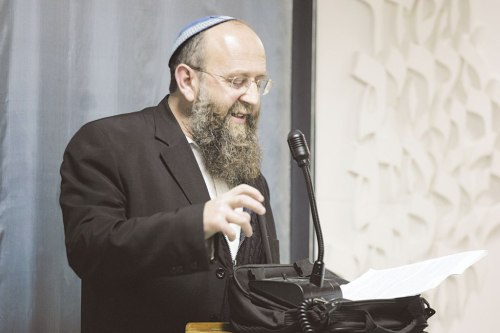
shagar4

In this 2005 essay, Rav Shagar opens his discussion of contemporary Zionism, with the  impending withdrawal of Israel from the Gaza strip. In his eyes, this place called  Gush Katif, one of the most densely populated places on earth was a barren land without a people, if not for the Israeli settlers. To him, this settlement project was the height of showing immense true love of the land. The disengagement was a setback to this Zionist love of the land. (He had no sense of the large native Arab population of 1.8 million or the centuries of Arabic Jews and Mustarab Rabbis who made Gaza their home.)

The forthcoming disengagement leaves him in a state of oscillation between seeing the state as violence due to the government’s evacuation and the original dream of lights and holiness. Does this violence show the end of the dream?  No, we have to continue to love of the state through obedience even if the Israeli government is not what we wanted or expected. Even paying taxes to the government is an act of love.

This dialectic allows the settlement project now to be one of seeking peace and a new liberal Zionism.

For Rav Shagar, the State of Israel remains redemptive and messianic, as well as providentially exceptional compared to other states. The state still draws down lights because the state is not a based on a “historical-factual material process” rather Religious Zionism is a specific transformative spiritual teaching of redemption.

In the middle of the essay, where Rav Shagar discusses how obedience to the State of Israel is one of love, he makes an interesting riff on a famous idea of Franz Rosenzweig. In Rosenzweig’s important essay Die Bauleute (The Builders, 1923), he discusses the attitude of the Jew to the commandments. Unlike the Orthodox Jew, Rosenzweig did not accept all of the commandments, but distinguished between the subjective “commandment” (Gebot), which addresses the lived life of the individual in the present, which he could readily accept, and objective Law (Gesetz), which he could “not yet” accept.  (American Modern Orthodox obedience to an objective law is exactly what Franz Rosenzweig rejected.)

Rosenzweig used this distinction to defend ritual law before the critiques of Buber, now Rav Shagar uses it to defend Religious Zionism and its laws before the disillusion of the disengagement. The laws of the state are not done as law but as an act of love of the law. The relationship to state for Rav Shagar is an “unmediated relation” of love.  We love the state and the traffic rules and income tax as a fulfillment of Rosenzweig’s subjective commandment (gebot).

Franz Rosenzweig paints Judaism as a life of following mizvot as a sheltered a-historic family space immune from history and public life. Rav Shagar quotes Rosezweig and considers Religious Zionism as the reversal of this valence though a renewed attachment to land, territory, state, and architecture.

For Rav Shagar, this new embodied life is not an integration of secular philosophies with Judaism nor is it a Neo-Hasidic raising of sparks because in both of those models the embodied culture remains outside of the Torah. Rather, the embodied Judaism of Religious Zionism is like love where one becomes one with the beloved, Judaism now grounds itself in land and nature.  (He has no sense of cultural theory in which we are all embedded in culture).

Rav Shagar proclaims a new religious Zionist as Israelness, and not just Jewishness. All life in Israel is one of love, even following the secular law.

Is Israel still a utopian vision redemptive light? Has it been reduced to force and violence?

To answer this, he turns to the distinction between the Messiah son of Joseph and the Messiah son of David. The older Zionist forms were the temporary Messiah of Yosef and now in the Post-Zionist age (and Post-Modern age) we are in the era of the Messiah of David.

In conclusion, we should not rebel against the state, rather we should embrace it with abandon, the same complete abandon that is the the essence of Purim. To live a life of abandon is the true messianic option.  He compares himself with the old liberal Meimad approach, which he faults for being benign, here he advocates a renewal of prophecy, messianism, and love- a shattering of the status quo. For him, we need to choose the pleasure of the love relationship over reality.

In other words: How I learned to stop worrying and love the state- with abandon and apocalyptic messianism

Translator’s Introduction-Levi Morrow

This sermon (see here for the Hebrew original), which was given by Rav Shagar around Yom HaAtsma’ut in 2005 during the lead-up to the Disengagement, is of a pair with the last sermon that I translated, given for Purim of that year.

This sermon tackles the problem of the violence inherent in the law. Its starting point is the passionate redemptive love of the land that Rav Kook enshrined into Religious Zionism. Love of the land contrasting with the violence law of the current nation- state forms a tension deep in the heart of Religious Zionism. The Disengagement threatened to tear the movement apart, into those following the state and those the redemptive vision. Shagar attempts to overcome this problem by proposing two complementary reimagined visions of the state and its law as based on love, not violence, one based on Rosenzweig and one on Rav Kook.

In discussing Rosenzweig, Shagar contrasts his understanding of the unique nature of commandments with that of law (as presented by Eric Santner). As opposed to law, which is always ultimately a matter of force, commandments are derived from the revelatory encounter between two individuals, and fulfilling a commandment re-enacts that encounter in the present moment. To perform a commandment, then, is to do something for your lover because you love them.

Shagar extends this logic to the state. What if we regard the state as a lover? Suddenly, filing tax returns becomes an act of love, as does obeying the speed limit and deciding to walk all the way to the cross-walk instead of just crossing in the middle of the street. Lovers don’t have to be perfect, they’re allowed to be flawed. All we really want of our lovers is that they love us back. So too the state does not have to be perfect, it just has to love us back.

Herein lies the crux Shagar’s vision: what happens when your lover kicks you out of your home? Or asks you to help kick out other members of your family? Is there a point where you stop responding with love? Shagar says no. Even though the lover, or the state, has shifted from acts of love to acts of force, you must continue with acts of love.

The second approach renews Rav Kook’s project. First, Shagar argues for a passionate love of the land as an important part of Religious Zionism. This is in contrast to the way Religious Zionism has come to focus largely, perhaps even exclusively, on the political entity of the state. This presents an opportunity for non-Israeli Jews in particular, who often find themselves at odds with the politics of the state to be wildly in love with the land itself.

Second, Shagar tackles the way Israeli Religious Zionism sees the state as the beginning of the process of redemption, yet he state has done much to contradict this understanding. Resolving this tension requires reconceptualizing the process of redemption itself, such that developments like Post-Zionism and the Disengagement do not actually contradict it. Shagar does this by exploring one of the more neglected aspects of Rav Kook’s messianic teachings, the death of Mashiach Ben Yosef as the death of nationalism, and the current Post-Zionist age as Maschiah ben David. Shagar consciously taking up Rav Kook’s project of interpreting history and carries it beyond where Rav Kook even went.

 Law and Love

Between the Love of the Land and the Sovereignty of the State[i]

(Translated by Levi Morrow, edited by Alan Brill)

The Song of Songs

In the writings of Rav Avraham Yitzchak Hakohen Kook, the land of Israel is above all love, and more specifically, falling in love. His sentences of light and splendor are the sentences of a love-drunk lover, repeating himself again and again in almost every paragraph.

“In the land of Israel the letters of our souls expand, they reveal a torrent… the air of the land of Israel manifests the refreshing growth of these letters of life, in their splendorous beauty, with pleasant niceness and joyous power full of the influence of holiness.”[ii]

With his immigration to Israel, the man of God, student of the Volozhin Yeshivah, fell in love with the land and its pioneers. Like a beloved revealing herself to her lover, the land of Israel revealed its secrets to Rav Kook. There the broad expanses that he had never before known in his life in the exile, in the time when he yearned for the land, opened up before him, expanses that became primary aspects of his teachings: the ideas of all-inclusive unity, collectivity, idealism, holiness in nature, freedom, universalism, redemption, harmony, and ascending development – all of these are the love songs of his encounter with the land. The lover and the beloved reveal themselves to each other. “I am my beloved’s and his desire is for me” (Song of Songs 7:11).

The lover is illuminated and enveloped in a delightful world of grace. Everything shines, everything is full of radiances and enveloped in wondrous harmony. He feels free and liberated. Not for nothing did mystics of every generation describe their mystical experiences in terms of falling in love, which is an experience of altered consciousness; intense oneness, transparency, grace, and salvation. “How much does the heart yearn to love everything, all beings, all of the works, all of creation.”[iii]

Rav Kook brought this love into the core of Religious Zionism. The love of the Song of  Songs is a fundamental experience in the life of the Religious Zionist; the intimacy between lover and beloved that the Song of Songs projects is the intimacy of two who are connected to their environs, and the setting of the land of Israel is an integral part of this intimacy. The intimacy between lovers occurs in the land’s natural setting, with nature involved in their love. This love has absorbed the vistas of the land and the seasons of its year. The shulamit whose hair “is like a flock of goats streaming down from the Gilead,” whose nose is like “the Tower of Lebanon” looking down on Damascus, whose eyes are “pools in Heshbon,” and whose neck is “like the tower of David, built to talpiyot,” this is the beloved in the land of Israel. Nature, time, the individual, and love all come together in this wondrous song, and this connection is the basis of the spiritual world of Religious Zionism.

The sages who explained this song as a love song between the people of Israel and her lover, God, understood that a different sort of religious language was present in this song. It was not exilic, but was connected to and deeply involved with the land, derived from a relationship with it. Nature itself becomes a different nature, a divine nature; nature that resonates with the song of Hannah Senesh: “My God, may it never end/the sea and the sand/the plash of the water/the brilliance of the sky/the prayer of man.”[iv]

Law Versus Love

 There’s no doubt that Gush Katif is one of the clear manifestations of Rav Kook’s Song of Song’s style love. This desolate piece of land began to bloom after the encounter with its lovers. This is a reciprocal love story, both the loved and the beloved are not distant and aloof. Rather, she reveals her love – the land blooms. This is how one of the lovers put things:

For a generation we have been living in a magnificent settlement project in this beloved strip of land. The project was set up on virgin soil that had known no man since the creation of the world, and yet it miraculously responded to us, as if we were chose, as if it knew how much we loved it.

In the course of a generation, our souls have become connected to this beloved land, and to each other. With great effort and integrity, we have set up beautiful towns and splendid communities… No evil and no impurity, only goodness and grace. Doors that have never been locked and open hearts are our symbols… A place of Jewish and Zionistic pride, a place that is the dream of every proud Jew… The spirit of man is what turned a barren desert into a blooming garden and a band of strangers into the most wondrous of communities.[v]

Against this youthful love full of grace and trust – “I accounted to your favor the devotion of your youth, your love as a bride… in a land not sown” (Jeremiah 2:2) – the Disengagement stands like a heavy cloud. The state decreed on this strip of land the decree of the Disengagement, and revealed, painfully, the foundation of sovereignty, the violence that underlies its laws.

What manifests itself as the law’s inner decay is the fact that rule of law is, in the final analysis, without ultimate justification or legitimation, that the very space of juridical reason within which the rule of law obtains is established and sustained by a dimension of force and violence that, as it were, holds the place of those missing foundations.At its foundation, the rule of law is sustained not by reason alone but also by the force/violence of a tautological enunciation—“The law is the law!”[vi]

More than anything, the Disengagement symbolizes the crime of the legislation of the law itself, the violence that it bears within it, the recognition that, in truth, violating the law is less serious than the crime of making the law. The inner decay that exists in the rule of law is expressed in the claim heard constantly in the mouths of those who support the disengagement law: This is the law, and the law is the law! – And therefore, it must be respected. The arbitrariness of its legislation strengthens the tautology of the law. A justifying “judicial wisdom” is entirely lacking. Its justification is simply the legality of the process: the process is legal, it is confirmed and organized in the Knesset.

The law is justified not by ethics or judicial wisdom but by the simple fact that its legislation is the hands of the majority. The violence required to enact this law, removing people from their land, is not the extraneous remainder of the process but the very heart of law: the violent claim that the law is law. This violence, “the fearfulness of the government,”[vii] implanted in the very heart of sovereign existence that justifies itself with brute force, is what motivates the prophet Samuel to rebuke the nation with “the law of the king” that he lays out before them.[viii]

If so, then the love of the land and the sovereign violence of the state are tragically clashing before our very eyes – law versus love. For us, as Religious Zionists, this clash is incredibly harsh. Just as Rav Kook implanted love of the land within Religious Zionism, he similarly implanted it with the understanding and the faith that the state is the greatest manifestation of, and pathway to, redemption. “Our state, the state of Israel, is the foundation of God’s throne in the world.”[ix] According to him, this is a state “that bears within its existence the greatest idealistic content.”[x] He saw the state as a necessary and decisive step in redemption, and his teachings of redemption deal with it and its ongoing at length.

Faced with the Disengagement, it is impossible not to ask: Is the State of Israel really the beginning of redemption? Can it, or any state, really take part in salvation? The threat of exile that hangs over the residents of Gush Katif, the roots of which lie in the forcefulness of the state, present us with the sharp contrast between the “idealistic content” full of light and love from the teachings of Rav Kook, and the opaque and unmoving law of the state.

From Law to Commandment

Rav Kook undoubtedly recognized the violence hidden within the idea of the state, and he even wrote about it;[xi] if so, what led him to teach that the state of Israel “is actually the greatest happiness of man”[xii]? Is there a depiction of the state, “an ideal state,” that does away with sovereign violence? That presents a state where law does not impinge on love? I intend to depict here two possibilities of such a state, one that arises from the thought of Franz Rosenzweig and one that can be derived from the teachings of Rav Kook himself.

What happens when God stands at the top of the pyramid and is the one who justifies the rule of the king or the law? In such a case, the laws turn into commandments. Does this remove their violent sting? According to Rosenzweig – yes, and this in light of his principled distinction between a law and a commandment:

To me as well, God is not a law-giver. He is a commander. Only a person in his laziness devolves the commands… into laws – well ordered… without the urgency of being commanded, without the “I am the Lord.”[xiii]

The imperative of the commandment makes no provision for the future; it can only conceive the immediacy of obedience. If it were to think of a future or a forever, it would be, not commandment nor order, but law. Law reckons with times, with a future, with duration. The commandment knows only the moment; it awaits the result in the very instant of its promul­gation.[xiv]

A commandment is not an instruction or a law. It does not support itself with external force, rather it receives its support from the fact that it itself is a holy act. The “command” aspect is an inherent part of it. For example, just as two objects in space bear a relationship to “the law of gravity” and act according to it, moved as part of their very existence rather than being forced artificially, so too there is an intrinsic, immanent, connection between the commander and the commandment that cannot be severed. This connection is not a function of the past, just as gravity is not a function of the past, rather it is an event that happens in real time.

According to Rosenzweig, a commandment is fundamentally an unmediated relationship between two individuals, and therefore the heart of the commandment is revelation. A person who performs the same actions “without the urgency of being commanded” therefore cannot encounter God through them. “In that moment we only know the moment itself, and we know it with all the greatness of the divine-human substance of the commandment, from which we can say: ‘Blessed are you’… only from the unmediated state of the commandments can we speak to God… a person hears the voice of the commander only within the commandment.”[xv]

That is to say, whereas the law bears no relevance for those under its authority, rather it just attempts to force on the present that which is past, that which is written in a book, a commandment bears within it significant meaning for the commanded – there is an active relationship and encounter between the commander and the commanded. In other words: the commandment is the way the Torah organizes the falling-in-love of revelation. The commandment carries with it the ongoing revelation of the lover, God, to the Jew, and the outcome of this – the statement, “love me”: “No third party can command [love] or extort it. No third party can, but the One can. The commandment to love can only proceed from the mouth of the lover. Only the lover can and does say: love me!”[xvi]

A commanded person experiences the command as directed to him personally, an experience that is lacking in the alienated law that anchors itself in self-referential tautology – the law is the law. The sovereign does not turn towards his servants but rather imposes laws upon them. What, then, would an ideal Jewish state, with commandments rather than laws, look like?

Let me clarify with an example: imagine a driver at an intersection in the dead of night. There are no other drivers on the road, but the traffic light is red. The driver knows that no one is watching him and he could safely cross the intersection, without fear of accident or police. I know many people who even in the middle of the night, with no one watching, would not drive through a red light, because of the religious framing of “governmental law” (“דינא דמלכותא”); from their perspective, crossing the intersection would be “a religious prohibition” (“איסור”). Just as they would never consider eating pig even in a hidden room in the dead of night, so too they would not illegally run a traffic light. The applicability of the divine law come from its divine commander rather than its content, and therefore it applies in all contexts.  The commandment is not a function of content but of relationship. The same person stops at the red light not because of fear of the law but because of inner connection, identification, not with the content of the action but with the action itself – you don’t drive when the light is red.

A state whose laws do not rely on violent power to enforce their fulfillment but are exchanged for commands, will lead, in psychological terms, to “release from the punishing pressures of the superego [that] is a form of grace… a grace internal to those rigorous imperatives… rather than one that suspends the law in its ‘fulfillment.’”[xvii] Thus, for example, a father does not care for his children because of the law but as a manifestation of his intention and his freedom. He is not driven by an external force which compels him but from internal compulsion, from the obligation he finds in the very fact of his being the father of his children, an obligation that is his very freedom.

Similarly, would an ideal state not collect income tax, for example, by compulsion but rather it would be paid as a commandment? Would a person who fills out the assessment for his income tax feel the same feelings that he feels when he gives charity to the needy? A person gives charity as part of his relationship with the need individual, a relationship that is parallel to his relationship with God, who commanded him to give charity; income tax would be paid from the place where a person forms an internal relationship with the state, a relationship that requires the assessment.[xviii]

A State of Falling-In-Love

An in-depth study of Rav Kook’s teachings on redemption, and understanding what is so novel in them, enables us to learn about another possible avenue for sovereignty without violence.

The redemptive teachings (התורה הגואלת) of Rav Kook are not just a depiction of the end of days or of the spiritual greatness of the land of Israel; they are a drawing down (המשכה) of lights. This teaching is itself an act of drawing out the lights of the land of Israel, lights that to a certain degree did not exist in our world before their revelation, and Rav Kook was the one who drew them into the world. Rav Kook’s teachings create a different religious mindset, innovating over everything that preceded them – “religious Israeliness,” and not just “religious Jewishness.”[xix]

Parenthetically, I would say that even with the difficult events that are threatening us and disturbing our Yom HaAtsma’ut (Israeli Independence Day) celebration, we must celebrate this teaching, the teaching of the redemption of the land of Israel, a teaching to which we are bound and that is bound to us.[xx]

In the deepest sense, Rav Kook’s teachings about the drawing of lights did not just identify the process of redemption; they also enabled it. It blazed a path for the Jews from exile to the land of Israel, one that was not simple, and according to many was impossible and undesirable. Redemption is not a historical-factual, material process; rather it is not separate from the specific teaching that lays out and enables the process.[xxi] Without the spirit of its interpreters, a spirit that grants the process its sensibility and its unique “light,” the redemption cannot happen. Hence, the vitality of the teaching, Rav Kook’s teaching, for redemption.

What was the spiritual situation before Rav Kook’s teachings? What was that “religious Jewishness” that we mentioned?

Rabbi Elazar said: What is the meaning of that which is written: “And many peoples shall go and say: Go and let us go up to the mountain of the Lord, to the house of the God of Jacob; and He will teach us of His ways, and we will walk in His paths” (Isaiah 2:3)? The Talmud notes that Jacob is the only Patriarch mentioned and asks: Is He the God of Jacob and not the God of Abraham and Isaac?

Rather, the verse specifically mentions Jacob to allude to the fact that the Temple will ultimately be described in the same way that Jacob referred to it. It will not be referred to as Abraham referred to it. It is written of him that when he prayed at the location of the Temple mountain, he called it mount, as it is stated “As it is said on this day: On the mount where the Lord is seen” (Genesis 22:14). And it will not be referred to as Isaac referred to it. It is written of him that he called the location of the Temple field when he prayed there, as it is stated: “And Isaac went out to meditate in the field” (Genesis 24:63). Rather, it will be described as it was referred to by Jacob, who called it house, as it is stated: “And he called the name of that place Beth-El” (Genesis 28:19), which means house of God.[xxii]

Jewish space is not a space connected to the earthly and external, rather it is a space anchored within itself. “The inner point” [described by the author of the book] Sefat Emet [of the Hasidic author Rabbi Yehudah Alter of Gur] is a clear expression of this type of existence. Jewishness is the home (הביתי) – “Jacob who called it a house,” not the mountain or the field of Avraham and Yitzchak, the mountain and field that are integral parts of the Song of Songs. Jewishness resides in the family, in “the children of Jacob” whose “bed was complete.”[xxiii]

Rosenzweig taught that the expressions of Jewishness are commitment and being rooted in the covenant, which are the fundamental acts of Judaism. According to this definition, the Jewish exile is the creation of a sheltered a-historical, family space, without concern for surroundings or engaged in the rules of history.[xxiv]

The Jews “lack the passionate attachment to the things that constitute the primary… ‘objects’ of other historical peoples and nations, attachments that ultimately constitute their vitality and endurance as peoples and nations: land, territory, and architecture; regional and national languages; laws [=state laws], customs, and institutions.”[xxv]

Their land exists only as a holy land for which they yearn, and their holy language is not their first language, not the language that they speak in their daily lives. Jewishness connected only and entirely in itself. “Our life is no longer meshed with anything outside ourselves. We have struck root in ourselves.” “And so, in the final analysis, [the Jewish nation] is not alive in the sense the nations are alive: in a national life manifest on this earth, in a national territory, solidly based and staked out on the soil. It is alive only in that which guarantees it will endure beyond time, in that which pledges it ever­ lastingness, in drawing its own eternity from the sources of the blood.”[xxvi]

The meaning of the Jew being connected only in himself is that the nation in its very being is that the “outside,” other nations and cultures, either do not exist from the Jew’s perspective, the “outside” does not enter his horizon at all, or is brought inwards into the “house” via “hospitality” (“הכנסת אורחים”).[xxvii] For example, the body – it either doesn’t exist, in which case the Jew is not involved or bothered by it, or it is ignored as irrelevant; or it is internalized as a medium for delighting in God, such as in the Hasidic worship via “raising up the sparks.” This is hospitality – the “outside” ceases to play the role of “outside” and behaves like “inside,” as part of the home.

The gaping difference between Jewishness and Israeliness is the difference between the images of the mother and the lover, that same lover depicted in the Israeli love song of the Song of Songs.[xxviii] The primary female image in the world of the Jew is the maternal-familial image; “Happy are all who fear the LORD, who follow His ways… Your wife shall be like a fruitful vine within your house; your sons, like olive saplings around your table. So shall the man who fears the LORD be blessed… and live to see your children’s children. May all be well with Israel!” (Psalms 128). This is not the figure of the lover who descends from the hills of Gilead to see the flowering vines. For sure, the vine – a fruitful vine – and the olive saplings are present here, but they are organized around the familial table of the home.

The image of the lover expresses revelation and the happiness of encounter, while the image of the mother expresses the womb, familiarity without encounter; no stranger is, or could be, present in its light. This difference is not simple, and it demonstrates the innovative nature of the Song of Songs in the Jewish world, and the boldness of Rav Kook’s teaching; he returned us to the lover and the beloved, he took us out of the home and into the field, he returned us to history. Not only the lover and the beloved show themselves to each other, but also the land reveals itself to them, they are enveloped in it and it in them, and all of this in strong contrast to the disconnect of the exilic Jew from all external connection to the world.

The teachings of Rav Kook, then, return us to the outside world, to nature, to the land, as an embodied nation. The Jew no longer yearns for the land and grounds himself internally, but reaches the lands and delves into it, into its environment.

Our original question thus returns in full force: Does Rav Kook return us to the violence that is in the outside world, to the forcefulness of the body, to the compulsion of state institutions and the arbitrariness of law?

We could probe further and challenge. Is Rav Kook’s vision of redemption, the vision that returned us to nature and naturalness, the same as the Zionist vision of normalcy, of “the house of Judah like all the other nations” (Ezekiel 25:8) – a nation alongside other nations, a culture alongside other cultures? Is giving up on Jewishness [in favor of Israeliness ~LM] the same as normalcy? Furthermore, does not the lover, caressed by God’s grace, prefer to escape from the world and delight in his love? Does not returning to the world contradict the love that gushes within him,[xxix] and doesn’t Rav Kook, the great lover, return us to this world?

Rav Kook describes an abnormal redemption,[xxx] a redemption of falling in love, of man and nation “sick with love,” a redemption where existence itself shines with a different light. Existence itself shines with the light of falling in love. Rav Kook’s utopia is a miraculous world, a world that shines with the unending light of miracles. In this utopia, existence does not just look different, it is different on an essential level. The state and its institutions ascend and shine with a different light. This is a mystification of material being (היש). Like the kabbalists, Rav Kook thinks that redemption is an ontological shift in existence – the very material of the world will change and be purified. The State of Israel as the foundation of God’s throne in the world is an ideal state that shines. At its center lies not force but light: “through the strength of Israel, their expansion and the revelation of their lives, in whatever form this takes, reveals the light of the highest level of non-being (האין העליון), revealed as tangible existence (יש), and illuminates the whole world with the light of life, sustaining and improving and elevating everything.”[xxxi]

I will attempt to sharpen this idea. The land of Israel, as presented in the Song of Songs, is the living background for the love of the lover and the beloved; it is present in their love, which paints it with blazing colors of beauty and desire. The land simply seems different, aromatic, blossoming, loving, and full of plentiful waters from flowing rivers. Rav Kook’s land is where human life shines with the light of God’s love, with divine vitality behind the growth and pleasure of all things.

The  lenses (כלים) by which the lover grasps reality are different from those of a regular person, and these different vessels grant lenses a different meaning. However, this is not just a matter of understanding. Kabbalah teaches that the lenses (כלים) affect the light itself – enabling it and shaping it;[xxxii] the world of the lover is really a different world.[xxxiii]

Just as a lover eating in the presence of his lover experiences the food differently, seeing the eating itself as a gesture of love and closeness, so too Rav Kook living in the land of Israel lived constantly in shabbat, his weekday meals were shabbat meals. For him, the land of Israel and the state of Israel were lit up with the light of shabbat. A

Imagine a shabbat-style state. I don’t means a state where no one works, where there are no police or banks, but a state where the days of the week shine like shabbat: the cops will smile, the faces of the clerks will beam, and the store-owners will sing… this is a state where love and grace, not force, are at its center.

New Lights

Rav Kook saw great purpose in the land and the Zionist institutions in his lifetime. In the continuing development of the state and its institutions he saw the lofty goal of a shining utopia, of a time when force will disappear, replaced by love, solidarity, and brotherhood. This was how he experienced the beginning of redemption. He identified the Zionist settlement of the land of Israel as part of a process leading to utopia. Without the consciousness that a certain degree of utopia is realized already in the present, creating a feeling that it could come at any moment – that it is coming now, waiting just behind the door. If so, Rav Kook’s utopian redemption would be no different from the faith of every other Jew in an eventual messiah.[xxxiv]

Can we also relate like this to the State of Israel as it is today, without a fundamental change in how we think of utopia? In my opinion, we cannot, and this is the hopeless situation that we are confronted with today and that we cannot deny.B The State of Israel does not scintillate light and love but force and law, so how should we relate to it? Should we shrink away from understanding it to be the beginning of redemption? This understanding as the beginning [of redemption] is what gives the state its meaning, explaining that what is happening is part of a utopian process, and the utopia is already partially realized with the process being well underway.

We have to consider the present reality. We cannot decide in advance our interpretation of events and be caught up in dogmas regarding redemption. It is possible that the events of our time demand of us, as the events of Rav Kook’s time demanded of him, to construct new lenses, to formulate new concepts, in order to be able to properly grasp and understand them. The possibility of taking up Rav Kook’s project, of identifying holiness in historical processes, is in our hands. Rav Kook stood before secular Zionism, knowing how to elevate its holy sparks by formulating new religious concepts through deeply and innovatively interpreting old concepts.

The process of redemption may be different from how Rav Kook foresaw it, and we may not yet understand this process as it should be understood. Perhaps everything happening now can, and should, be understood in light of Rav Kook’s famous words regarding the nullification of nationalism:

With the Mashiach Ben Yosef, the messiah descended from Joseph, the nation of Israel rediscovers its sense of nationalism. However, the ultimate purpose is not isolationist and elitist nationalism but rather the attempt to unite all members of the world into one family, under God… When the world needs to transition from nationalism to universalism, then the things that developed out of a narrow view of nationalism will need to be destroyed, for they demonstrate a corrupted and particularistic love. This is why Mashiach Ben Yosef  is going to be killed, and the true and lasting reign will be that of Mashiach Ben David.[xxxv]

In light of these words, the process of redemptions may not be held up at all, in fact just the reverse, it is happening even faster than Rav Kook could have foreseen or than we normally think. The feeling of not being at home (איבוד ביתיות) that is welling up within us even more forcefully due to the Disengagement Plan flows from the rapid pace of the changes. Perhaps the crude destruction is actually progress, and perhaps Post-Zionism is actually the killing of Mashiach Ben Yosef to make way for Mashiach Ben David.

A person feels comfortable with the world and accustomed to his understanding.  Therefore he feels violently shaken by drastic shifts that happen, or could happen, to him. However, he can see these changes as processes that announce the coming of the messiah. A person feels, rightly, that his old world will be destroyed, and who knows what will be with the new one? What is its nature, and what will it bring with it? To this, Rav Yosef responded in his famous statement: “He will come, but I will not see him.”[xxxvi]

Indeed, the Talmud depicts the “week” wherein the messiah will come as consisting of harsh and terrifying events. “On Friday – disharmonies, on Saturday – wars, – on Saturday night – the arrival of the messiah.”[xxxvii] The Maharal taught that the arrival of a new world, a world of redemption, is bound up with the destruction of the old, and therefore anarchy and war must precede the arrival of the messiah.[xxxviii] The birth pangs of the messiah in our day are opinion wars and cultural revolutions.

Disobedience to Force

In conclusion, I want to say a few words about disobedience (הסרבנות).[xxxix] Disobedience manifests itself specifically in the same place where we find the violent basis of the law. Disobedience is not disobedience to the law but to the forceful element that is its foundation. In this context, justifying disobedience means making peace with the position that says the only response to the fundamental violence of the law is a corresponding act of force. Is that what we want, that force should overpower force? The true rebellion is not force but its abandonment. The ability to abandon the game of force and violence is truly a messianic option. We do not dream of a time when the right power will win out, but for a time when power and might will not make right at all. We seek pleasure (עונג) and not reality (מציאות)[xl] – this is the true messianism.[xli]

The prophet, describing the arrival of the messianic king, used these images: “Rejoice greatly, fair Zion; Raise a shout, fair Jerusalem! Lo, your king is coming to you” (Zekhariah 9:9). As readers of this verse we expected a monarchical appearance full of pathos and strength, but to our surprise all of the shouting is simple over this. “He is victorious and triumphant, yet humble, riding on an ass, on a donkey foaled by a she-ass” (ibid.). The humble man riding on a donkey is the one who destroys the bow of war and speaks peace to the nations unto the ends of the earth. “He shall banish chariots from Ephraim and horses from Jerusalem; the warrior’s bow shall be banished. He shall call the nations to peace; his rule shall extend from sea to sea and from ocean to land’s end” (ibid., 10).

Does the messianic process that we are living in contain the possibility of creating a religious avant garde that is not politically right or center but left, that refuses (מסרב) to grab for power, calling us to rebel against force? Will a non-right religious Zionist political party arise that will truly be a prophetic party? I am not talking about a party like “Meimad,” with its “bourgeoisie” (“בעלבתית”) relaxedness and its unconditional devotion to consensus, but about a party that will shatter the status quo of existing political options and lead us to new territory. Perhaps the path there is already being paved. The claims of the right against the Disengagement are essentially drawn from the humanistic discourse of the Israeli left.

In our situation, force inevitably triggers an opposing force, drawing itself into the constraints of force and wallowing in them. We must break this vicious cycle, as a step toward redemption.C

For he has grown, by His favor, like a tree crown, like a tree trunk out of arid ground. He had no form or beauty, that we should look at him; No charm, that we should find him pleasing. He was despised, shunned by men, a man of suffering, familiar with disease. As one who hid his face from us, he was despised, we held him of no account. Yet it was our sickness that he was bearing, Our suffering that he endured. We accounted him plagued, smitten and afflicted by God; (Isaiah 53:2-4)

Thus he shall judge the poor with equity and decide with justice for the lowly of the land. He shall strike down a land with the rod of his mouth and slay the wicked with the breath of his lips. Justice shall be the girdle of his loins, and faithfulness the girdle of his waist. The wolf shall dwell with the lamb, the leopard lie down with the kid; The calf, the beast of prey, and the fatling together, with a little boy to herd them. (Isaiah 11:4-6)

Appended Notes

A These words remind me of a debate that arose in a class I where I taught Rav Kook’s famous words on the holiness of eating, “the very essence of easting… and all movements and sensations of life are full of light and holiness” (Shemoneh Kevatzim, Collection 2, #65, p.271). One of the students claimed that he wanted to eat an “ordinary steak” and not a “holy steak.” This claim reveals the gap between Rav Kook’s approach and that of Haredi Judaism. Haredism does not seek to replace the outside world. It leaves a neutral world, outside the Jewish home, and even when it is drafted – from time to time – for the sake of holiness, its neutrality remains and the indifference toward it does not change. In contrast, Rav Kook’s Israeli (ארצישראלית) demand is total: he desires to eliminate any neutrality of the outside, and to turn it into holiness despite its being “outside.” How does this happen? Does a beloved who eats “ordinary ice cream” in the company of his beloved feel anomalous because of what the act represents? Is he interested in “ordinary ice cream” or in the act of eating ice cream with her, an act that turns into a deep gesture of love – without overriding its ordinariness?

B There are those who deny and attempt to ignore the chasm above which we are standing. For example, not too long ago I sat at a table at a bar mitzvah with two important Jerusalemite rabbis, a kollel student from “Har HaMor,” and a relative of Haredi appearance. The latter told us all woefully about how he had been a major in the IDF: “For thirty years I faithfully served the state, year in and year out, doing long stints of reserve duty, and here the state has gone and turned into a state like all the nations;” he was referring to the ruling of the High Court on the topic of Reform conversions. He continued, asking: “Can anyone still believe that the state is the beginning of redemption?” The rabbis joined in angrily, lamenting the destruction of the religious councils and the Kashrut system by the Prime Minister’s son. The kollel student did not take long to respond – he spouted the normal line about delays in the process of redemption; the safety net is already spread out in case the Disengagement should actually happen.

C This, too, is a form of battle, because it turns the gaze towards the other and reveals his violence. See also the words of Ami Shaked: “As a community, without innocents and after years of struggle have taken even the good out of us, we are obligated to fight in a way fitting for our way of life, for our nature, for the goodness of our hearts and for our commitments to the fate of our community. Despite this, our destiny commands us to wear our garments white and our heads anointed. We are committed to a painful battle, one that will shake the nation of Israel in its nobility and its uniqueness, its concern for the collective despite the danger to its own project” (above, note 4).

[i] Quotations from Rosenzweig’s “Star of Redemption” and Eric Santner’s “On the Psychotheology of Everyday Life” are taken from English volumes rather than being original translations from the Hebrew sermon. Unbracketed footnotes are Shagar’s, bracketed footnotes are from the original editors of the Hebrew volume, and italicized brackets are mine.

[ii] Orot (Hebrew), Jerusalem 1993, p.12. There is a famous story about Brenner, the elder writer, who joined Rav Kook for the third meal and left quickly, saying: there is too much light there, and I cannot stay.

[iii] Shemoneh Kevatzim (Hebrew), Jerusalem 2004, Collection 3, Paragraph 20, p.366. [Translations of Rav Kook by this author.]

[iv] “Walking to Caesarea,” Diaries, Songs, Testimonies, Tel Aviv 1994, p.221. [Translated from Hebrew by Vivian Eden.]

[v] A. [Ami]  Shaked, Security and Military Coordinator of Gush Katif – http://www.katif.net/art.php?id+1273&table=art. [Translation by this author.]

[vi] Eric Santner, On the Psychotheology of Everyday Life: Reflections on Freud and Rosenzweig, Chicago, University of Chicago, 2001, pp.56-57.

[vii] Bavli Avodah Zarah 4a.

[viii] I Samuel 8:11-20.

[ix] Orot HaKodesh (Hebrew), Jerusalem 1985, III, p.191.

[x] Ibid.

[xi] Orot, ibid., p.14, #3.

[xii] Orot HaKodesh, III, ibid.

[xiii] Selected Letters and Diary Excerpts [Hebrew], Jerusalem 1987, p.326. [Translations from this text are by this author.]

[xiv] The Star of Redemption, trans. William Hallo, New York Chicago San Francisco 1971, p.177.- zzz not original

[xv] Selected Letters and Diary Excerpts, p.336.

[xvi] The Star of Redemption, p.176.

[xvii] On the Psychotheology of Everyday Life: Reflections on Freud and Rosenzweig, p.109.

[xviii] Regarding this it is said, “God desired to give merit to Israel, therefore he gave them expansive Torah and commandments” (B. Makkot 23b)…

[xix] We can learn about the difference between Jewishness and Israeliness from the fact that there were sages who wanted to physically hide the Song of Songs which, as we saw, expresses the Israeli (ארצישראלית) relationship, which Rav Kook drew out, between man and God, and attempted to prevent its inclusion in the canon (m. Yadayim 3:5).

[xx] See Bayom Hahu, p.250 and forward.

[xxi] See Bayom Hahu, p.143.

[xxii] B. Pesahim 88a. [Translation from sefaria.com.]

[xxiii] Shir HaShirim Rabbah 4:17. [The correct citation seems to be 4:7.]

[xxiv] See Bayom Hahu, p.176 and forward.

[xxv] On the Psychotheology of Everyday Life: Reflections on Freud and Rosenzweig, p.110.

[xxvi] The Star of Redemption, pp.305, 304.

[xxvii]  See On the Psychotheology of Everyday Life: Reflections on Freud and Rosenzweig, p.116; Shagar, B’Tsel HaEmunah (Hebrew), p.106-11.

[xxviii] For a different understanding of these images, see Bayom Hahu, pp.123-127.

[xxix] See “Mered V’Hesed,” B’Tsel HaEmunah (Hebrew), p.43 and on. Regarding Rav Kook, see “Az Nedaberu Yirei Hashem,” Zeman Shel Heirut (Hebrew), pp.179-186.

[xxx] On the views of the Maharal and the “Sefat Emet,” who greatly influenced Rav Kook, see Bayom Hahu, pp.193-199.

[xxxi] Shemoneh Kevatzim, ibid., Collection 2, #319, p.339. [Translation by this author.] Also see, ibid., #189, p.299. In these words Rav Kook departs from a central theme in the teachings of Hasidut – discovering the divine as the nullification of the world as opposed to its construction.

[xxxii] As we saw regarding Rav Kook’s teachings about redemption.

[xxxiii] [“The world of a happy person and the world of a depressed person are different worlds.” (L. Wittgenstein, Tractatus Logico-Philosophicus, Tel Aviv 1995, paragraph 6.43) -Yeshai Mevorach]

[xxxv] See Bayom Hahu, p.140.

[xxxv] Orot, ibid., p.160, #6. Famously, Rav Kook identified Mashiach Ben Yosef with the Zionists.

[xxxvi] B. Sanhedrin 98b.

[xxxvii] Ibid., 97a.

[xxxviii] Hiddushei Aggadot (Hebrew), 3, Sanhedrin, p.204. See also Bayom Hahu, p.204.

[xxxix] [This is regarding the call by many Religious zionist rabbis for IDF soldiers to disobey orders that have to do with removing settlers in the Disengagement Plan. -Y.M.]

[xl] Ibid., p.150, 160.

[xli] Ibid., pp.138-139.

Infinite Jihad: Rabbi Shagar on the Disengagement

Are Religious Zionists in Israel as fundamentalist and against secular culture in the same way Hezbollah and Islamists are fundamentalists? Rabbi Shagar sees similarities, especially their animus toward the secular. But concludes that Rav Kook shows a way of integrating the challenge of the secular into the religious. Rav Kook integrated nationalism, openness and freedom, none of which was part of the religious tradition, into a new form of Torah called Religious Zionism.  Now, the 2005 disengagement from Gaza shows the need for Religious Zionism be the guiding light for Israeli society by integrating peace and politics.

Once again, Rabbi Josh Rosenfeld of Lincoln Square Synagogue worked on a draft of an essay of Rav Shagar, this time on the disengagement from Gaza.  (For prior posts on Rav Shagar, see some here,  here, and here, ). This is a long essay longer than the others, it can be downloaded as Word – Machloket and Growth – Rav Shagar Translation. This should be my last Rav Shagar post for a while as I return to my regular fare.

shagar photo

Readers are likely to either love or hate this piece. If one identifies with Rav Kook and identifies as a fundamentalist who wants to be an open fundamentalist, an open dos (religious dati- in Israel slang) then this is for you. If the idea of seeing divine causality in the news and providence in political news is your worldview, then you will like this. If this God of the current events is not your theology or you find this a myopic theodicy, you will not like this. If you are a religious humanist engaged in synthesis with the wider culture, such as Maimonides or Levinas then this is also not for you. But if you want to open up Religious Zionist thought to  new questions by the use of Hasidut, then you will find this very meaningful.

Rav Shagar’s essay opens with the famous quote from Bahye ibn Pakuda on the need to fight not just the military battles, but also the greater battle (al-jihad al-aqghar) of fighting the spiritual challenges. As noted by many scholars, Bahye is quoting the 11th century Sufi commentary of Ali Hujwri on the Hadith about spiritual jihad in the Quran (29:69). At the end of the essay, Rav Shagar returns to the importance of spiritual battle by referencing the essay on war by Rav Kook, well known to his audience. In that essay, Rav Kook follows 19th century thinkers, such as Hegel, who envisioned actual war with its carnage and death as good for pruning society and thereby allowing for greater growth the way pruning is good for shrubs.  Rav Shagar puts these two ideas together. Religious Zionism, which in its spiritual vitality is the world historic force carrying civilization forward, needs to engage in battle with secular thought.

But, the innovation of Rav Shagar is to connect Rav Kook’s ideas on actual battle to Rav Nachman’s idea on the need to engage in debate and controversy as a means of growth. Since Shagar’s Purim essay was entitled Infinite Jest, then this piece can be called Infinite Jihad. We need to continuously confront the battle of debate and disagreement as our means of growth.

The start of this process of growth through battle is the religious community feeling in tension with the 2005 Disengagement from Gaza and from secular Israel. Rav Shagar surprisingly compares Religious Zionism to Hezbollah in its critique of the secular realm.  He sees himself as opposed to secular Israel and treats the secular as a foreign culture. He sees the events of the Disengagement and the Lebanon War as causes as a punishment for secular politicians, in that there is a providential force within history guiding current events.

Nevertheless, Rav Shagar, thinks that his community is not really similar to Hezbollah because it can learn from the secular as it’s challenge. (He has no concept that there are Hezbollah and Daesh who say the same thing as they write romantic poetry and quote Existentialism in the name of a sophisticated fundamentalist position.) Rav Kook saw the challenge of nationalism and socialism and integrated them to create a nationalist Torah. Shagar thinks the alienation from the secular will lead to a new integration and growth for Religious Zionism.

Rav Shagar even views Religious Zionism as the spiritual driving force of the country and the key to future peace.

The essay is best when Rav Shagar takes the Lurianic idea of “surrounding light” (or makif) as ideas and understanding that we do not yet possess the cultural and emotional vessels to accept and to live with, with the concurrent exhortation to learn to internalize them to transform our faith. Or his reading of Sukkah as integration and Lulav as the expansion of our inner facilities.

Rabbi Josh Rosenfeld gives his own introduction by answering two questions.

Why did you choose to translate this essay?

The Disengagement and the Lebanon war are important topics for me, personally. I lived in Gush Katif for two months before the Hitnatkut I remember ideological debates in my shiur at the time about what exactly to call the disengagement plan, some simply called it ha-Gerush, the expulsion).

We slept in caravillas, basically prefab cabins without running water or electricity, in Netzer Hazani. We learned in the shul with our Rebbe, and forged relationships with the good people there, what one might describe “salt of the earth”, farmers. I think sugar of the earth describes them better, everyone was so genuine and sweet. The other American student with me there were sort of embraced by the resident Olim in Netzach, the Hilbergs. Their son Yohanan was a commando killed during an IDF operation.

After the living were uprooted, the dead were moved as well, including Yohanan’s kever. At the time, I couldn’t remember crying like I did watching that moment. A teacher I very much respected once told me that in his mind, Messianic Religious Zionism came to an end with the Hitnatkut. This was where one could see miracles on the ground, the biggest tomatoes you ever saw growing right out of beach sand.

Religious and secular communities almost effortlessly coexisting. People in Netzach seemed like real peace-loving people, always talking fondly of the days where they would do Shabbos shopping in the Khan Yunis shuk. To the Teacher’s mind, this was b’davka (specifically) the place that was decreed to be lost, the first dimming of the messianic lights because this is where they shined brightest. Perhaps a humbler, pragmatic Religious Zionism is called for in this era. I don’t know. Those beaches, wow. I keep a picture of the now-destroyed Synagogues of Gush Katif in my Lincoln Square synagogue office. It has a grounding effect on me. I don’t think I’ve come close to fully processing what happened and what that means for my Zionism.

Similarly, I saw the Lebanon war up close – the other central topic Rav Shagar addresses in the essay. I was a Combat Engineer in the IDF for about two years as a ‘lone soldier’, and we made a small knissah (entry) into Lebanon toward the end of the 2006 summer war (my unit was barely out of basic training at the time). Even though we did not engage in direct combat there, I felt the strangeness of the not-quite-victory in the aftermath in an acute way as we spent a month after the war guarding the fences’ rebuilding and wondering what just happened to Tzahal and the country.

 The feeling in Israel at the time was that the whole country was engaged in prolonged debate during the lead up and aftermath of these two major events. From my perspective, 2005-06 will probably be looked back as pivotal years in Israel’s history, with the one-two punch of the Disengagement and the Lebanon War. It was a really intense and tense time. I found this piece very therapeutic.

I’ve been trying recently to address current events in shul without actually mentioning the current events themselves. I don’t know if that makes me a coward, but it helps me feel like I’m doing something. I don’t have nearly enough confidence to speak in an overt way, so I speak and teach about what I feel are the underlying Jewish issues, what I’ve heard some people call prophetic Jewish values.  In this case I had turned to Rav Shagar for language and a way of thinking about machloket, dispute. Rav Shagar found something redemptive in machloket.

What do you like about it?

Rav Shagar’s writings always offer something new, illuminating, and exciting. More importantly, they offer something challenging. This is the same way I felt when I first read his more standard derashot (Torah discourses) in “Panecha Avakesh”. There is something new and to my mind, authentic and authoritative in his oeuvre.

I once started gushing to a person I had met when found out was a close student of Rav Shagar’s. Telling him how into the writings I was, I guess I expected some sort of validation. That person, someone I look up to very much – instead told me with a smile “listen, it wasn’t always such a special kavod to be a student of Rav Shagar.” I had been familiar with the various controversies and differences of opinion Rav Shagar had with leading Rabbinic figures and educators in Israel, but I think I’d been a little naïve. Only later did I fully appreciate how complex and problematic a figure Rav Shagar was for dati leumi (National Religious) society, and to be honest, I think it drew me even deeper into his teachings, even when I personally didn’t like what he was saying.

I admire that Rav Shagar could dive right into the most confusing and fraught issues in Israel, dati leumi society in particular – with near complete freedom of thought and expression. I felt that you could disagree with Rav Shagar but you could not ignore him.

This essay yields more comparisons than contrasts between Hezbollah and the IDF than I am comfortable with, but I trust that Rav Shagar is doing so to help serve his pedagogical point, and not that he somehow thinks there actually are deeper affinities between the two.

I also still don’t know what to make of Rav Shagar’s impressions of the secular world. Especially in this essay, the impression I get is that Rav Shagar approaches secular Israel as a kind of monolithic binary to the Religious Zionist world.

I have used parts of this in a drasha at Lincoln Square Synagogue that I think some received well. My intention was to speak about machloket, dispute and controversy in general terms, relating to the very real ways we are experiencing them as American Jews.  I think Rav Shagar’s usefulness here lies within his ability to fully see the other- secular, Arab and Western- as essential to getting the full picture, even if they’re presented on Rav Shagar’s terms.

Many Orthodox internal debates suffer from a kind of myopia, the narcissism of small differences, with a tendency to get very shrill and intense quite quickly. Sometimes, we can get perspective by considering our internal issues in a larger global context. In this way, debate (machloket), when we let it breathe, can lead to growth.

Dispute & Growth

Shimon Gershon Rosenberg, Luhot ve-Shivrei Luhot, pp. 383-404 (Yediot Books, 2013) translation by Josh Rosenfeld,  edited version by Alan Brill

  1. Two Wars

I was asked to speak about growth achieved though the trauma of the war. The war in question that the organizers had in mind is certainly the [Second] Lebanon War. However there is no doubt that their intention is also to discuss another very difficult recent event: the Disengagement.

Bahya ibn Pakuda wrote in Duties of the Heart  (Hovot ha-Levavot), quoting the words of the hasid to the returnees from battle: “you have returned from the minor war…, now prepare yourselves for the great war.”[1] The smaller war has run its course, and now a more significant war has begun – the Jewish people’s internal dispute as revealed by the Disengagement.

One who connects these two events – the Disengagement and the Lebanon War – is correct. The connection is not simply on the military or political sense, but societal. I wish to discuss this in the framework of faith.

The words of Maimonides in the Laws of Fasts are well known:[2]

  • It is a positive Torah commandment to cry out and to sound trumpets in the event of any difficulty that arises which affects the community, as [Numbers 10:9] states: “[When you go out to war… against] an enemy who attacks you and you sound the trumpets….”
  • This practice is one of the paths of repentance, for when a difficulty arises, and the people cry out [to God] and sound the trumpets, everyone will realize that [the difficulty] occurred because of their evil conduct, as [Jeremiah 5:25] states: “Your sins have turned away [the rains and the harvest climate].” This [realization] will cause the removal of this difficulty.
  • Conversely, should the people fail to cry out [to God] and sound the trumpets, and instead say, “What has happened to us is merely a natural phenomenon and this difficulty is merely a chance occurrence,” this is a cruel conception of things, which causes them to remain attached to their wicked deeds. Thus, this time of distress will lead to further distresses.

This is implied by the Torah’s statement [Leviticus 26:27-28]: “If you remain indifferent to Me, I will be indifferent to you with a vengeance.” The implication of the verse is: When I bring difficulties upon you so that you shall repent and you say it is a chance occurrence, I will add to your [punishment] an expression of vengeance for that indifference [to Divine Providence].

According to Maimonides, we are commanded to emulate God’s actions within history, to study difficult events, delve into them, and thus to understand the Divine message that is being communicated to us.

This understanding works for Maimonides on two planes

The first level is the simple understanding of reward and punishment – searching for the mechanical causality between sins of the individual or community and the subsequent punishment.

The second, deeper, level is the understanding of the inner process of history. Maimonides describes this in Moreh Nevukhim as ‘the wisdom of God and his ways’. According to Maimonides, God does not operate in history from afar, rather, He adheres to the internal logic and rules of history. These rules themselves are the Divine providence of this world, giving expression to the inner meaning of reward and punishment![3]

In our scenario – the Lebanon War and the Disengagement – two contradictory messages emerge:

From the perspective of the first level, the simple understanding of reward and punishment, the war was the resulting punishment, as the fate of a number of politicians and military officials in the wake of the Disengagement. There were even public statements to this effect emanating from Haredi society. For example, the Bostoner Rebbe said that the flight of many Haredim from the North during the Second Lebanon War was punishment for Haredi parties’ support of the Disengagement.

However, in my eyes these explanations fall short. This is not because they are necessarily wrong, but because as believers, we should not be intimidated from speaking in the simple terms of reward and punishment. This is especially so when the causality concerning the events that we speak of cry out, plain to see without too deep an analysis.

However, this is not the deeper perspective that Maimonides gestured to. We must ask: what is this deeper connection – as seen from a societal and historical perspective – between the Disengagement and the Lebanon War? The profounder point where these events intersect is the very kernel of Divine providence.

The second perspective raises challenges and confusion, while the first perspective points an accusatory finger mainly toward the architects of the Disengagement. The second and deeper appreciation of the processes raises a substantial question on its victims, namely: our own National-Religious community.

To be sure, from a cultural and spiritual perspective, both the War and the Disengagement revealed deep weaknesses in all of Israeli society. At the same time, they also brought to the fore the inherent paradox’ of the National Religious community, which sees itself as a leading demographic in Israeli society, yet is continuously pushed around by it.

The Lebanon War improved the political standing of the Right, yet it did not change the fundamental positions of Israeli society’s relationship to Religious Zionism. This is despite the wide participation of the National Religious community in the war, and the profound revelations of its heroism.

To my distress, this is true because in the eyes of many, Religious Zionism (or depressingly, the militancy within certain settler factions) is perceived as cut from the same cloth as the fanatics of Hezbollah. We can say what we want about the organizers of the Disengagement, finding them guilty of corruption (and there is truth to these accusations), but we cannot escape the fact that most of Israeli society did not oppose the illegitimate Disengagement, including many present and former members of the so-called Nationalist Camp.

The reason for this is clear: there are deep apprehensions regarding the combination of religious and national fundamentalism. To our dismay, many observers here and abroad draw a direct connection Gush Emunim and Radical Islam, seeing both groups as obstacles to peace with the potential to inflame the whole region.

This is another connection between these two events that we must not ignore: The destruction of Gush Katif, which received wide support in Israel, and the Second Lebanon War, which received widespread legitimacy in the world, were both aimed at the same threat – the connection between religious and nationalistic political extremism.

I will try to illustrate the contradiction in the lessons of the war through a discussion regarding who is our enemy.

The Lebanon War was waged against a religious enemy Nasrallah, the Radical Islamic fundamentalist. In this regard, at least externally, we would agree that religious extremism endangers us, being that the secular Arab governments of Jordan and Egypt have signed peace treaties with us.

Yet, conceptualizing the enemy in this way presents a challenge for us, because, as we’ve mentioned above, in the eyes of many secular people, our religious community, at the very least, parts of it, suffers from the same religious extremism. They hold that the resolution to the conflict lies in a movement of secularization that may allow for tolerance and openness, two prerequisites for peace. In truth, those secular pockets of the Arab world are perceived as more moderate and open to the concept of peace.

From this perspective, the connection between the Disengagement and the Lebanon War is the open and inner struggle against secular Israel, which enjoys the support of the secular west in their perceptions of religious extremism.

Yet, it is not so simple to get the full picture here. To wit, for Nasrallah, the state of Israel does not represent a rival religion, but rather the supremely hated secular, colonialist West. As religious people, where do we locate ourselves in all this?

Do we not identify somewhat with Nasrallah’s critiques?

If true, perhaps our enemy is actually secularism? If this is so, the connection between the Disengagement and the war is different. The war is the punishment for the Disengagement. We may rightly ask here if it was not a kind of secular extremism that employed its systems of power against the settlers of Gush Katif and their faith? We may relate to the perpetrators of the Disengagement as agents of a foreign culture ourselves. For many of us, they evince the feeling of “…and we have been exiled from our land and distanced from its [holy] ground”[4] – whether from a practical (the Disengagement) or metaphysical perspective (secularism).

Surely these mixed feelings are quite confusing, and a crucial question that stands before us now is whether the real battle is external – Iran and its proxies, Hezbollah and Hamas, or internal – the struggle against the secular left, and those on the right who have been ensnared in its positions. It is possible that this question stands behind the dispute between the statists (mamlachti’im), who say that we should continue to draft without question and are opposed to disobeying military orders, and those objectors (=sarvanim) who refuse to forget what has happened and for whom joining the army in defense of the state is not automatic.[5]

I think that specifically from this great paradox that a tremendous religious blooming may sprout forth. This contradictory situation is such that on one side Nasrallah depicts a negative, cruel, and perverted religious vision, and yet on the other we stand before a totalizing globalization lacking roots and identity (this too yields tragic results, even if they are generally hidden, and in many ways no less cruel than the fruits of radical religious extremism)

This situation must lead us to a third way, a combination of both messages. We must understand both the failings of secular Israeli culture and the failings of one-dimensional religious fundamentalism that has flourished in our world as well. This will bring us to the ability to transmit a new religious message.

In order to cultivate this message, it is incumbent upon us to break down the dichotomy of choice between warmongering religious extremism and westernizing peace-seeking which is built upon forfeiture of identity and roots. Religious must redeem the message of peace. A new kind of religiosity must develop. On the one hand, rooted in values and on the other hand, prepared to achieve real peace.

To me, it is beyond the shadow of a doubt that at the end we will indeed achieve a ‘religious peace’. This is because the left does not found peace upon deep respect for the religious other, but rather upon a total discount of religion, with the claim that it is the source of the war. The paradox here is that in doing so, the left actually intensifies the conflict. It is specifically here that the Muslim feels threatened, because the peaceniks approach him from the perspective of liberalism and globalization. [The Muslim] senses in this a sophisticated attempt to subjugate his values with western values, including the hegemony of their representative in the region – the State of Israel.

Conversely, if the State of Israel were to transmit a message of peace from a truly and deeply Jewish-religious standpoint, it would rearrange the systems of power in our region. It would also change the attitude of the secular world to religion (for now, a negative attitude that stems from a perception of us as warmongers without responsibility), and would create a sea change in religious interactions with the Muslims in our region, who themselves identify ‘peace’ with unstable secularism and loss of identity.

  1. Dispute & Growth

In my estimation, it is from these battles and contradictions themselves that development and growth may arise. We may learn this from the torah of Rebbe Nahman of Breslov, who personally experienced many disputes. As his student, Rebbe Natan wrote:

Once, our people were complaining to him about how they could no longer handle the suffering born of all the disputes and ostracization… He answer them as follows: believe me, I could make peace with the entire world, so much so there would no one who argued with me, but what can I do, as there are many realms and levels impossible to achieve if not for dispute… just as a tree will grow more when water is splashed all around it…[6]

Rebbe Nahman uses a metaphor of watering and growing in connection to dispute to indicate that dispute engenders growth.

“[but] I need there to continually be disputes about me, because I am constantly going from one level to another… If I could know that I am standing now just as I was the previous moment, I would not want to be in this world at all”.[7]

Thus, dispute is the water which allows for growth and flourishing. In order to understand his contention, we must first understand what we mean by growth.

First, and foremost, we are not discussing a growth in number, but rather a qualitative change in development. As the tree grows, it is able to absorb and combine many different raw materials and to turn them into a part of itself. A human being is similar to this. Growth means my ability to encounter places where I have not yet been. For faith and religion to flourish, they must be able to accommodate and integrate points of view that were not traditionally within their purview.

In connection to this, I want to mention the Kabbalistic intentions of the Arizal for the sukkah. According to the Arizal, one should ideally take the lulav in the sukkah itself before hallel prayers, because in Kabbalistic terms, the function of the sukkah is to transform ‘surrounding illumination’ into ‘internal illumination’. ‘Surrounding illumination’ are ideas and understanding that we do not yet possess the cultural and emotional vessels to accept and to live with. We perceive them as something external, but we cannot internalize them. We still lack the ability to transform them into a part of our encompassing faith, our inner identity.

The Arizal explains that the sukkah, called the “canopy of faith” (zela d’mehemnuta) the place where the presence of God dwells and surrounds us. The sukkah immerses us in an unusual world of spiritual illumination. Through the lulav, shaken in all directions toward the heart, we demonstrate our desire to draw these illuminations inward, so that they may become an integral part of who we are. The role of the lulav symbolizes the expansion of our faculties of understanding in such a way that the light of our faith will be more expansive and introspective.[8]

I also believe that this is the main idea of Rav Kook’s teachings, the redemptive Torah  of the Land of Israel. It specifically developed on the backdrop of the controversy regarding secular Zionism, and R. Kook’s own engagement and struggle with it. As religious Zionists, we see in this a flourishing of Torah; a gesture of Torah unleashed which now includes many values that were not traditionally part of it. In essence, this is the great project of R. Kook.

A classic example: R. Kook took the concept of freedom not usually identified as a religious value (as religion was seen to be predicated on commands, the acceptance of a yoke), and located it directly heart of a religious outlook. Despite R. Kook’s battle with the secular world, he drew upon many of its values in a dialectical fashion, incorporating them into the world of faith. In this way, R. Kook enriched and expanded the palace of Torah. [9]

I believe this is what should be occurring in our times. Similar to R. Kook, our spiritual flourishing must develop as a result of the struggle with the secular world of today. However, the contemporary secular world is very different than the one R. Kook faced.

In many respects, the encounter with secularism is today much more problematic. Nowadays, we are up against ideas of critique and negation, and not movements like Socialism and Nationalism that still retained elements of religious pathos. Nevertheless, it is up to us to realize that the depth of the dispute intensifies the potential for growth to arise and the possibility to draw down the Divine presence; a chance for a more real encounter with Godliness. This growth is especially possible through contact with the strange world beyond us.

I will quote once again from Rebbe Nahman:

Know, that dispute is an aspect of the creation of the world. The main part of the world’s creation is through the eternal void, for without that void, everything would be only infinite, without room for our created world to exist. Thus, God contracted the [Divine] light to the margins, leaving a void between, and within this void. All of creation exists – time and God’s manifestations – by way of the Divine word: “by the word of God, the world was created” (Ps. 33).

The concept of dispute is similar, because if all Torah scholars were in unified agreement, there would also not be room for creation. Only through their many disputes, and the divisions between them, each one pulling to their ‘side’ is a kind of void, an empty space created between them – an aspect of the Divine contraction, which the world was created by (Divine) speech…[10]

According to the Arizal, God contracted Himself in order for a world apart from Him to be created. Prior to creation, the Divine light filled every possible space, illuminating all of existence. Rebbe Nahman utilizes and expands upon this as a metaphor for dispute between sages.

It is possible to explain this further through an insight drawn from the philosophy of Leibniz.[11] In general, we perceive the void as a space within which entities are contained. In distinction, Leibniz contends that the void is the space between those entities. That is, the distance between them creates that space, and that space is not the container that preceded those entities, but rather the distance between them itself. This is why we would never be able to describe a space completely devoid of anything. The void is instead actually the result of the entities, which give it structure. If there were ever an absolutely empty space, it would not exist.

Rebbe Nahman explains the concept of dispute in a similar fashion, transforming dispute into a metaphysical concept, which created the world. Dispute is what enables the void in which our world took form. From this perspective, homogeneity is not something positive, because it shrinks the space of existence. So long as there is a multiplicity of divergent opinions, the plane of existence is broad, and in turn, the world makes room for it.

Some have sanctified war because of this view. In war, they saw the possibility for the development and progression of culture. In their opinion, a harmonistic worldview that strives for universal peace ignores the singular, unique, and exceptional qualities possessed by each nation or way of life.

Peace whitewashes all of these with a broad brush, delimiting the possibility of for diversity. Even if such a harmony preserves the individual and the details, it is still under the rubric of a totalizing and encompassing philosophy. According to Rebbe Nahman, the ability to maintain diversity is specifically located within dispute, struggle, and argument.[12]

Even R. Kook himself affirmed this in his essay “On War”.[13]  For him, “wars serve to amplify the unique values of every nation, until their form stands out and all the deep details of [their values] find practical expression… the national nature of ecclesia Israel is revealed…”   This is essentially the same idea we saw from Rebbe Nahman: flourishing in this regard is a product of opposition. Only dispute and struggle create that wider space wherein every perspective can expand and develop.

[1] See Hovot ha-Levavot, Gate 5, ch. 5

[2] Mishnah Torah, Laws of Fasts 1:1-3.

[3] See Moreh Nevukhim, 3:32, and R. Shagar’s essay “History and Messianism According to Maimonides”, Nehalekh be-Regesh, pp. 75-90

[4] From the Festival liturgy.

[5] See R. Shagar’s essay in Nehalekh b’Regesh on לא נשכח ולא נסלח

[6] Hayyei MoHaRaN, 402. See now Likkutei MoHaRaN, 1:161 – “dispute raises and uplifts a person, because ‘man is a tree of the field’ (Deut. 20), and when a tree on the ground cannot raise itself up unless water is poured all over it, it is the water which raises and uplifts the tree, and dispute (=mahloket) is called water, as it is written: “They came round about me like water all the day; They compassed me about together” (Ps. 88:18);

Rebbe Nahman could have picked a much more obvious verse, cited in the Talmudic sugyah about compromise in judgement (b. Sanhedrin 6b): “The beginning of strife is as when one letteth out water; Therefore leave off contention, before the quarrel break out” (Prov. 17:14), however may have opted for a different prooftext because of the more negative valence of dispute in the latter verse, which actually argues for ‘stopping up’ the dispute before it boils over. [JR]

[7] Hayyei MoHaRaN, 401

[8] See R. Hayyim Vital, Peri Etz Hayyim, the gate of lulav no. 2. See further R. Shagar’s discourse on “the hug of the sukkah” in be-Tzel ha-Emunah, pp. 93-94 and “I, too, have praised joy”, ad loc., pp. 139-144.

[9] That is, in the Hegelian understanding, made up of negation, assimilation, and elevation.

[10] Likkutei MoHaRaN, 1:64(4).

[11] See A. Weinrib, From Rationalism to Empiricism: Trends in Philosophy of the 17th and 18th Centuries [Heb.] (Tel Aviv, 1990), pp. 164-170.

[12] See “Peace and Covenant” in R. Shagar’s A Time for Freedom [Heb.], pp. 57-61. There, too, R. Shagar deals with tension between religious faith and peace. See further “A Dispute for the Sake of Heaven”, in The Shadow of Faith [Heb.], pp. 209-225.

[13] See Orot (Jerusalem: Mossad Harav Kook, 1985), pp. 13-18, esp. p. 15, and see Orot ha-Kodesh (Jerusalem: Mossd Harav Kook, 1985), vol. 1, p. 15.

On the Joke of the Megillah by Rav Shagar

Franz Kafka saw the law as an alienating fetishized political practice to which we are disciplined despite our not agreeing to this arrangement. In his novel The Trial, Kafka presents the law as an unwieldy arbitrary force driving us to determinism and absurdity. Rav Shagar treats King Achashverosh as the personification of the law and the Book of Esther as showing the absurdity of the law. In its place, Rav Shagar advocates a releasement to the absurd, which paradoxically does not provide meaning or release us from the absurd predicament.

I just posted an Adar essay of Rav Shagar To Jest for Liberation but Levi Morrow in his earnest quest to devour Rav Shagar delivered another translation to me this morning. I am posting it quicker than usual in order to get it out before the holiday. Levi Morrow is studying for a Bachelor’s degree at Herzog College in Tanakh and Jewish Philosophy as well as for rabbinic ordination at the Shehebar Sephardic Center.  As noted before, if anyone else has translations of Rav Shagar, then I will post them.  I have two more in the pipeline. Here are some of the prior ones- herehere, and here. If you have already had enough of Rav Shagar, then be patient for other topics.

rabbi-shagar

This essay  “On the Joke of the Megillah” by Rav Shimon Gershon Rosenberg (Shagar) was published in שארית האמונה (Remainder of Faith), a collection of postmodern sermons for the Jewish holidays of the Jewish calendar. (Original Hebrew text-Rav Shagar – On the Joke of the Megillah)

Rav Shagar offers in this essay a deep critique of the law (hok) as a represented in Israeli law and Israeli government as meaningless and absurd. But the essay also has an undertone of critiquing the law of Jewish law (halakhah), which is further developed in other essays. With echoes of Rav Nachman of Breslov’s ability to reduce civilization to the absurd, Shagar sees all the palace intrigue in the book of Esther as edicts issued solely as legislating the trivial and self-evident. In fact, Shagar points out how the legal minutia in the book stands in contrast to the King’s “caprice and hedonism that appear throughout the megillah.”

“The megillah’s theater of the absurd is life and death leads us to existential anxiety. Where does it lead us to? “To laughter, or perhaps despair.” Rav Shagar preaches that out attitude should be “a sense of security that secures nothing,” Beyond this, he thinks that our serenity of trust in God is only after the dark night of grasping the terror and absurd, then and only then, can we make peace with the trust in the meaninglessness and chance of life.

The joke is fully aware of fate, leading to an ecstasy in which negativity, bitter despair, and suffering are lived as they are. In the extreme experiences of life, a person discovers that there’s no way to deal with the events of life. But there’s also no need to deal with them, since life happens for itself, entirely for itself. Man’s activity as chance

Rav Shagar was speaking about Israeli politics but Americans probably can easily apply it to own unique situation of Presidential elections and capricious policies. Yet, Rav Shagar’s approach does not advocate resistence to immoral executive orders, rather a change in our attitude.

Rav Shagar also compared the absurdity of meaninglessness of the political to the halakhah.

In light of this ironic character, the serious way in which halakhah relates to the megillah is basically a second-order joke. In order to notice this joke, one simply has to look at people sitting in shul, with me among them, reading and listening to the megillah, terrified of missing a single word and thereby failing to fulfill their obligation, for “it is a mitsvah to read all of it” (Rambam, Mishneh Torah, Hilkhot Megillah, 1:3).

For Shagar, we should maintain irony and not reduce the halakhic regiment to unironic concern.

In typical Rav Shagar style, everything is then connected to a playing out of an infinite Divine and expressed using a Hasidic text. He uses Habad ideas of divine immanence as a manifestation of the unknown infinite Divine Will. “The fickle caprice of this world, the baseless and meaningless rises and falls, merge with the  absolute Divine decree.” Everything should be considered as a Divine decree. Yet, one that does not have “a lofty meaning that is hidden from human eyes” just the decree of the King of the Universe. Habad hasidut says regarding Divine  reason for creating the world:-“you can’t interrogate a desire.

It is interesting to compare Rav Shagar’s moral of the happenstance of life with several other modern readings. For the Malbim, the story is very realistic, similar to Austiran-Hungary Empire. The message is about not assimilating. For many Religious Zionists, the message is that even if the Divine name is not mentioned in the book, the secular story is still a historical unfolding of Divine providence. For liberal thinkers, such as Rabbi Yitz Greenberg, the point is the need for an appropriate amount of acculturation and that the assimilated may be our saviors. In a secular age  we have to destiny into our own hands. For several Haredi Yeshivish authors, the message is to listen to Mordechai as a prototypical gadol hador who knows what to do even if it does not make sense to you. For Rav Shagar, in contrast, we have to come to “a trust that does not guarantee anything.”

Political Appendix

The appendix is directly on the disengagement from Gaza as a Religious Zionist disengagement from identity with the Israeli government and the rule of law and politics. Rav Shagar  considered the Israeli policy of disengagement as absurd. Like many in the religious Zionist world, he saw the disengagement as delegitimating the government and an act of violence and as a demonstration of the absurdity of the inner decay of the government.  In this process of delegitimation of the government and disengagement as violence, he finds a deep inner decay. In addiiton, the act goes against the will of the people.

To make his case, Rav Shagar quotes one of his favorite works during these years, Eric Santner, On the Psychotheology of Everyday Life. Santer used Lacan to discuss how the decay of our ideals results in violence and force, which remain as the only legitimation of the law. He considers the Israeli government as showing this decay. His students have both right and left wing interpretations of this anti-government position.

What manifests itself as the law’s inner decay is the fact that rule of law is, in the final analysis, without ultimate justification or legitimation, […] At its foundation, the rule of law is sustained not by reason alone but also by the force/violence of a tautological enunciation—‘The law is the law!

To explain Haman’s antisemitic hatred of Mordechai, Rav Shagar  views Jews as an “other” as outside the natural order, as disrupting the normal core of politics. Hence, the extreme need for others to hate the Jews. There is an deep exceptionalism of Jews as an “other” that Haman was compelled to destroy.

In general, we see a profound hollowing out of politics and society, non-humanist or attempting a synthesis of religion and the secular. (I already have another translation being edited where these issues are the central focus.)

Levi Morrow Introduction

1) Shagar’s approach to Tanakh is to look for larger themes, in this case irony and parody. He’s willing to see non-traditional themes in biblical texts, such as irony and parody. He does have an awareness of contemporary Israeli religious articles on the passage.

2) Shagar’s novel understanding of bitaḥon (trust in God) is one of his unique concepts, known among his students as “a trust that does not guarantee anything”. This is the idea that trust in God does not promise or guarantee anything  about the events that will happen to us. In order to capture the paradox inherent in this phrase, I have translated it in the somewhat awkward formulation “a sense of security that secures nothing,” sacrificing the more common English terms “trust” and “guarantee”.

3) Shagar’s struggled with his perception of the disengagement from Gaza as absurdity.  As the original editors note in footnote #1, this sermon was originally composed and given around the holiday of Purim in 2005, when the Israeli Knesset decided to disengage from the Gaza strip and parts of northern Samaria. This sermon is thus one of several of Shagar’s sermons from that period and the two years thereafter that show his struggles with Zionism and the contemporary state of Israel, as well as with issues of government and law more generally.

On the Joke of the Megillah[i]

A Sermon for the Days of Purim

A Sharpened Critique

The megillah is unquestionably a parody. The author shoots the sharp arrows of his irony in every direction.[ii] They are aimed, first and foremost, not at Haman but at Aḥashverosh. There are many examples of this, such as the exaggerated description of Aḥashverosh’s feast that opens the megillah:

At the end of this period, the king gave a banquet for seven days in the court of the king’s palace garden for all the people who lived in the fortress Shushan, high and low alike. [There were hangings of] white cotton and blue wool, caught up by cords of fine linen and purple wool to silver rods and alabaster columns; and there were couches of gold and silver on a pavement of marble, alabaster, mother-of-pearl, and mosaics. Royal wine was served in abundance, as befits a king, in golden beakers, beakers of varied design. And the rule for the drinking was, “No restrictions!” For the king had given orders to every palace steward to comply with each man’s wishes. (Esther, 1:5-8)

The mocking description of the feast reaches its crescendo when the king is not satisfied with “displaying the vast riches of his kingdom and the splendid glory of his majesty for one hundred and eighty days” (1:4), for half a year, no less, and his ostentatious urges lead him to command: “bring Queen Vashti before the king wearing a royal diadem, to display her beauty to the peoples and the officials; for she is beautiful” (1:11).

At the center of the megillah’s critique stands the law (חוק), “the procedure (דת) of Shushan the capital,”

This critique first arises in the narrative of Vashti. Drawing on the Purim-esque spirit of the megillah, the event can be described thusly: An urgent cabinet meeting gathered in the palace of Aḥashverosh with the highest legal forum of the seven officers of Persia and Medea, all well-versed in the laws and procedures, in order to determine “what the correct procedure is for dealing with Queen Vashti” (1:15). Aḥashverosh acts, of course, exclusively within the framework of the law. The conclusion of the legal debate is almost too meaningful; “that every man should wield authority in his home and speak the language of his own people” (1:22). Such an important decision, made by such important people and of such great significance, of course had to be distributed via all means of communication available to the empire. “Dispatches were sent to all the provinces of the king, to every province in its own script and to every nation in its own language” (ibid.). The dramatization here is ridiculous and makes fun of itself. They are legislating something so trivial and self-evident. The Persian empire was multi-national, “a hundred and twenty-seven provinces from India to Ethiopia” (1:1), such that linguistic pluralism was a present reality, and the time was well before the feminist era.

The author of the megillah mocks and derides Aḥashverosh’s devotion to the law, devotion that stands in total contrast to his caprice and hedonism that appear throughout the megillah. The hedonism of the king, of course, is shown in the ridiculous description of the young women being brought to Shushan and waiting in line, cleansing in “the twelve months’ treatment prescribed for women.  That was the period spent on beautifying them: six months with oil of myrrh and six months with perfumes and women’s cosmetics” (2:12), and this in order to pleasure the king.[iii]

In the Theater of the Absurd

Exacting in law and acting exclusively via legislation and government, Aḥashverosh enthrones exaggeration, lack of proportion, and kitsch alongside caprice and unrestrained indulgence. The book repeats this depiction throughout the book, this exactingness is combined with the famous Persian bureaucracy, which itself does not escape the irony and joke of the megillah unscathed. The runners and riders of the king’s steeds go to-and-fro, carrying messages from Haman one time and from Mordechai the next; this state is a state of law and “an edict that has been written in the king’s name and sealed with the king’s signet may not be revoked” (8:8).

Only this joke is not at all funny. A deep terror lies at its foundation. Aḥashverosh’s caprice, anchored in law, is lethal to the point of absurdity. The scariest piece of it all is that the different actors in the megillah – Mordechai and Esther, the youths and the gatekeepers – don’t seem to notice how absurd it all is; they think that the law is as serious and as logical as it gets. The megillah’s parodic depiction only ramps up the dread. A story about a feast, an exiled queen, another crowned in her place, and a man who will not bow yields a cost so heavy and disproportionate to the frivolity and mundanity of the story itself: the decree, enshrined in law, “to destroy, massacre, and exterminate all the Jews, young and old, children and women” (3:13).

The joke of the megillah is a response to a deep, bitter, despair over an absurd situation: the author of the megillah discovers that what ought to be serious (the law) is a parody, and the parody, incredibly, makes it all the more funny and absurd. The cost of entry to the megillah’s theater of the absurd is life and death. Where does this lead? To laughter, or perhaps despair.[iv]

So Shall Be Done

On its own, the story that the megillah tells is not at all funny. On the contrary, the threat of genocide inspires fear more than laughter, even if we were ultimately saved. So why does the megillah make all of this into a joke? The danger is tangible and serious; Esther’s fear, Mordechai’s cries, the mourning and the sackcloth, these aren’t nothing. Where did the author get the ability to turn the frightening into the funny? To tear away the mask and reveal the ridiculous in the foolish?

The megillah seems to provide a clear answer.[v] The ability to laugh at all of this comes from the knowledge that the actors are just puppets controlled by a hidden puppeteer, shaping the performance according to his own intentions.

This knowledge does not override the awful human experience of chaotic happenstance and of the total absence of any guiding hand behind events that arises from the megillah. In fact, the reverse is true. Paradoxically, the Divine  decree highlights the human happenstance rather than erasing it.

The story teaches about the incidental and unstable nature of Jewish existence in specific and of human existence in general. For example, regarding Mordechai the Jew who sits at the gate of the king: who is the “man whom the king desires to honor” (6:11), Haman or Mordechai? The clear answer would seem to be Mordechai. He wears the king’s royal clothing, he is led around on a horse, and he is ultimately chosen to be the king’s right hand. However, is he guaranteed a secure and redeemed existence after he rises to greatness? Various verses indicate a parallel between Haman’s position before his fall from grace and Mordechai’s position after his rise, suggesting that he is anything but.

Furthermore, the phrase “So shall be done for the man whom the king desires to honor” (ibid.), describing Mordechai as he rides on the king’s horse, shows up in only one other place in Tanakh[vi]: “his brother’s widow shall go up to him in the presence of the elders, pull the sandal off his foot, spit in his face, and make this declaration: So shall be done to the man who will not build up his brother’s house” (Devarim 25:9). In light of this, should we not read “This is what is done for the man whom the king desires to honor” as spit in Mordechai’s face?… “Here today, gone the next” as they say; yesterday Haman, today Mordechai, and tomorrow who knows?!

Indeed, Hasidic texts see the phrase “Just so” (ככה) as standing at the center of the megillah. “‘So shall be done for the man whom the king desires to honor’ – the use of “so” is not accidental.”[vii] They further expounded: “The word “so” (ככה) should be read with ‘the holiness of the crown’[viii] in mind – “so” (ככ״ה) is an acronym for “the crown of all crowns (כתר כל הכתרים).”[ix]

The fickle caprice of this world, the baseless and meaningless rises and falls, merge with the absolute Divine  decree. There is no attempt to explain the different steps of the narrative individually, rather the entire story is shifted to a different plane. Human happenstance does not reigns in the story, nor a lofty meaning that is hidden from human eyes, but the decree of the king of the universe: “a king’s command is authoritative, and none can say to him, ‘What are you doing?” (Kohelet 8:4). Why does he do what he does? “Just so” (ככה), because this is what he wants. Citing their founder,[x] Habad hasidut says regarding Divine  meaning of, and reason for, creating the world: “Oyf a tayvah iz kain kashya nit” – you can’t interrogate a desire.[xi]

Opposite the kingdom of Persia, ruled by the capricious Aḥashverosh, stands the kingdom of God. As Rabbi Yoḥanan taught: “anywhere [the megillah] says “king” without clarifying, it is referring to the king of kings.”[xii] The writer of the megillah is not thinking of the happenstance that reigns in the kingdom of Persia but the absolute “just so” of the king of kings.

How does this focus lead to the unrestrained joke about the terrifying situation of the megillah? Isn’t the only laughter possible in this situation the laughter described in the verse, “He who is enthroned in heaven laughs; the Lord mocks at them” (Tehillim 2:4)? God sits and laughs, for from heaven the events really are funny. However, “the heavens belong to the Lord, but the earth He gave over to man” (Tehillim 115:16), and here on the earth the joke is not at all funny!

For the writer of the megillah, the events happen in a different plane, that of the absolute Divine  decree, and the joke also exists on that level. This is an ecstatic joke, in which our awareness is opened to the possibility of its liberation, and the individual accepts the arbitrary “just so” quality of his life. Deep pessimism leads a person to the ecstasy of liberation from the need for proof, liberation from teleological support for reality. Pessimism can liberate us from dependency, because we have despaired of everything.

The pain in the megillah’s joke is not lessened, for the Divine  decree does not comfort; it does not explain or grant meaning to the events that happened or will happen, and it cannot guarantee (להבטיח) that in the future Haman’s plans will not come pass. The joke is fully aware of fate, leading to an ecstasy in which negativity, bitter despair,  and suffering are lived as they are. In the extreme experiences of life, a person discovers that there’s no way to deal with the events of life. But there’s also no need to deal with them, since life happens for itself, entirely for itself.

If I Am To Perish

The religious feeling of security (בטחון), like the joke, bears within it arbitrariness and dread: Hasidut teaches that this sense of security is the result of passionate commitment (מסירות נפש) and sacrifice. In other words, the sense of security comes after the terror and fear of the incidental and the absurd, not before, it cannot be achieved without them. Moreover, the sense of security is not a support that lends a person strength, turning the whole game into something predetermined; from a certain perspective, this sense of security is the terror itself: “if I am to perish, I shall perish” (4:16), says Esther. What she does not say is “I am certain (בטוחה) of my success;” On the contrary, she expects to die because of her sense of security in her passionate commitment. This sense of security is not free of terror; it is present in the terror itself, since it is open to anything that might happen.[xiii]

Mordechai also does not promise Esther anything. He does not say, “I am certain (בטוח) that you will succeed,” but “who knows, perhaps you have attained to royal position for just such a crisis?” (4:14). He is certain (בטוח) that salvation will come for the Jews from somewhere, but in his and Esther’s personal attempt at salvation he is not at all secure. “Who knows?!” he says, and not, “I know.”

Mordechai and Esther’s responses inspire astonishment, and perhaps even a challenge: should they not have believed fully based on the Divine  providence that they could see before their eyes? Esther, beyond surprisingly, was selected as queen at exactly this moment. Everything that was happening pointed to the fact that God “gives the medicine before the disease” and enthroned her in order for her to save the Jews, and despite this the doubt persists – “who knows?!” This is because “who knows” is the flip side of “just so;” in a place where things happen “just so” persists the “who knows.”

The human response to the Divine  “just so,” the response that provides a sense of security, is the human “just so.” This, in short, is the secret of Purim: passionate commitment without any security that has nothing to rely on is in fact what creates the religious sense of security. The sense of security in God does not come from tangible protection and goodness that he gives. On the contrary, the lack of security that people flee from provides an individual with the opportunity to commit and to feel secure in God in anything that he does.

The midrash says, “Why does everyone flee from the apple tree during a heat wave? Because it does not have any shade in which to sit. Similarly the nations of the world fled from sitting in the shade of God at the time of the revelation of the Torah.”[xiv] The lack of security that comes from the Divine  “just so” is what creates the human ability for passionate commitment, for a sense of security in God that does not give any security regarding the future, nor any sense of meaning or ultimate purpose. This is because the Divine  is beyond human comprehension; not because a person has such a narrow perspective that it cannot encompass the Divine , but because the Divine  Will itself lacks meaning. Correspondingly, security in and devotion to God are illogical processes.

The passionate commitment that life in its arbitrariness invites enables a person to escape the human frameworks that bind him and to cling to the Divine essence. A person who accepts the Divine  “just so” overrides his conceptual, human, consciousness that demands explanation and justification. He accepts his life as it is, in its arbitrariness. Why? Just so!

Appendix: The Law and the Jew

The author of the megillah emphasizes how Mordechai’s position within the space of the narrative is in direction relationship with the law of the procedures of Persia and Medea. For example, the scene that motivates Haman’s genocidal plot:

All the king’s courtiers in the palace gate knelt and bowed low to Haman, for such was the king’s order concerning him; but Mordecai would not kneel or bow low. Then the king’s courtiers who were in the palace gate said to Mordecai, “Why do you disobey the king’s order?” When they spoke to him day after day and he would not listen to them, they told Haman, in order to see whether Mordecai’s resolve would prevail; for he had explained to them that he was a Jew. When Haman saw that Mordecai would not kneel or bow low to him, Haman was filled with rage. (3:2-5)

Why do the king’s servants get involved? If Haman himself did not notice Mordechai’s disobedience, or if he just was not bothered so much by this behavior, why was it so important for the king’s servants to direct his attention to this critical problem? Moreover, if they are motivated by their commitment to the dignity of the king’s decree, then they should turn to the king himself.

The explanation for the servants’ process is explicit in the text: “they told Haman, in order to see whether Mordecai’s resolve would prevail; for he had explained to them that he was a Jew.” Mordechai disrupting the order of the kingdom is what bothers them. He tells that that he is a Jew and therefore does not obey and bow, and in this, the Jew functions as one who disrupts the law and the proper order.

Not by accident is the term “Jew” is repeated throughout the megillah; this is the first development of the place of the Jew, his identity and his role in relation to the world. Here we find the roots of anti-semitism. The Jew is the remainder than cannot be accommodated, because by his very appearance, he represents that which does not enter the symbolic order and in this, he destroys and undermines it.[xv] Indeed, why did Mordechai endanger the Jews by refusing to bow? Why didn’t he just leave the king’s gate? Did he have provocative aims? Either way, this is his identity as a Jew, and in this Haman and the king’s servants are correct: Mordechai has a loyalty that precedes his loyalty to the king.[xvi]

To be clear: Mordechai’s disloyalty is a complex disloyalty, and he thus appears as a pure disruption of the order of the kingdom. On the one hand, Mordechai is loyal to the king and reports on Bigtan and Teresh, the two servants of the king that attempted to assassinate Aḥashverosh. On the other hand, Mordechai ultimately has a greater loyalty to his nation and his God, and in this he shatters the law. This is a disloyal loyalty, something that disturbs more than anything else a law and order that attempt to determine “Are you one of us or of our enemies?” (Yehoshua 5:13).

Esther also manifests this sort of existence, validating Haman’s claim to Aḥashverosh “There is a certain people, scattered and dispersed among the other peoples in all the provinces of your realm, whose laws are different from those of any other people and who do not obey the king’s laws; and it is not in Your Majesty’s interest to tolerate them” (3:8). She enters the court of the king without receiving the king’s permission. Vashti refused to come, and Esther came uncalled; Vashti is entirely outside, while Esther is simultaneously inside and out.

In general, the Jew who does not bow disrupts the orderly world of “servants of the king,” and Haman chief among them – they are devoted to the law of the kingdom by virtue of it being law. They cannot tolerate the anomaly of Jewish existence; this is actually Haman’s basic claim: difference and lack of obedience threaten and reject the decree of the king.

“That day Haman went out happy and lighthearted. But when Haman saw Mordecai in the palace gate, and Mordecai did not rise or even stir on his account, Haman was filled with rage at him. And Haman controlled himself and went home” (5:9-10). Haman’s serenity is disturbed not because the Jew does not obey but because the Jew rejects the entire principle upon which his happiness is based: the king’s decree. This is why it was not enough to just get rid of Mordechai alone; the problem is the very presence of the Jew – “he disdained to lay hands on Mordecai alone; having been told who Mordecai’s people were, Haman plotted to do away with all the Jews, Mordecai’s people, throughout the kingdom of Ahasuerus” (3:6).

Further, the megillah notes that Haman “controlled himself.” As angry as he was with Mordechai, he did not respond immediately. Why was it important to the writer of the megillah to note this? Was Haman afraid that if he killed Mordechai in anger he would be punished? Seemingly, Haman  knew that if he did that, he would not succeed in freeing himself from the Jew, and Mordechai’s death would chase after him.[xvii] Only if he arranges Mordechai’s destruction in the framework of the law will he succeed in ridding himself of Mordechai and the disruption that he embodies. Law fights by way of the law itself, via legislation. One cannot ignore the violence inherent in legislation. The megillah reveals, in a painful and sarcastic form, the very basis of sovereignty, the violence that founds its laws:

What manifests itself as the law’s inner decay is the fact that rule of law is, in the final analysis, without ultimate justification or legitimation, […] At its foundation, the rule of law is sustained not by reason alone but also by the force/violence of a tautological enunciation—‘The law is the law![xviii]

As far as I am concerned, the mindset of the writer of the megillah lays bare the foundation that underlies the events we will undergo this summer. The disengagement plan symbolizes for me, more than anything else, the crime that is in legislation, the violence subsumed within it; the recognition that the violence of transgressing the law is less than the crime of legislating the law. The inner decay that exists in the rule of law comes to the fore in the claim heard constantly in the mouths of the supporters of the law of the removal: this is the law, and the law is the law! – and therefore it must be respected. The tautology of the law is strengthened by the arbitrariness of its legislation; the “judicial wisdom” that would be able to justify it is entirely lacking, and now its justification is simply the legality of the process: the process is legal, it is confirmed and organized in the Knesset. The law is justified not by ethics or judicial wisdom but by the simple fact of its legislation at the hands of the majority. The violence required to enact this law, removing people from their land, is not the extraneous remainder of the process but the very heart of law: the violent claim that the law is law.

If he was with us today, how would the author of the megillah write the story that we are a part of? Where would he aim the sharp arrows of his irony?

[i] [These words were written in 2005, against the background of the decision of the government, headed by Ariel Sharon, to enact “The Disengagement Plan” from northern Samaria and the Gaza Strip. The plan brought the meaning of law and justice and their validity to the fore of communal debate.]

[ii] In light of this ironic character, the serious way in which halakhah relates to the megillah is basically a second-order joke. In order to notice this joke, one simply has to look at people sitting in shul, with me among them, reading and listening to the megillah, terrified of missing a single word and thereby failing to fulfill their obligation, for “it is a mitsvah to read all of it” (Rambam, Mishneh Torah, Hilkhot Megillah, 1:3).

[iii] The irony is expressed in the comparison alluded to between the verses of the megillah and their parallels in the Torah. David Henkesheh finds a playful example in the formulation “for that was the full period spent on beautifying them” (2:11), which shows up only one other time in Scripture, in the story of the death of Yaakov in Egypt: “for that was the full period of embalming” (Bereshit 50:3).; The women are embalmed in their perfumes. See David Henkesheh, “Megillat Esther: Literary Disguise” (Hebrew), in Amnon Bazak (ed.), “Hadassah is Esther: Essays on Megillat Esther” (Hebrew), Alon Shevut: Tevunot, 1997, pp.93-106.

[iv] Here we must ask, is it possible to look at the Nazis with a parodic gaze? To turn them into the object of a joke? Is it possible that, despite the terror that wells up within us when we remember them, they are simply ridiculous, and that this ridiculousness heightens the absurd and the terror in their actions?

[v] Particularly after its combination with the holy books that make up the Tanakh.

[vi] This was also noted by Henkesheh.

[vii] Rabbi Menachem Mendel Schneerson (The Tzemach Tzedek), Yahel Ohr Al Tehillim (Hebrew), New York: Kehat, 1953, ch.144, p.533.

[viii] [The ‘holiness of the crown’ is a prayer said on Shabbat and holidays by the community as it prays and is considered one of the peaks of prayer. “We will crown you, Lord our God; the angels, the hosts above, with your nation Israel, the masses below.”]

[ix]Said in the name of the Baal Shem Tov. see “Things I Heard from my Teacher,” in “Rabbi Yaakov Yosef HaKohen of Poland, Toldot Yaakov Yosef (Hebrew), Warsaw 1941, p.209.

[x] Rabbi Shneur Zalman of Liadi (1745-1812). Involved in halakhah and kabbalah, founder of Habad Hasidut.

[xi] Quoted in Rabbi Menachem Mendel Schneerson (The Lubavitcher Rebbe), Torat Menachem: Hitvaaduyot (Hebrew), 1953, Brooklyn: Otzar HaHasidim, p.31.

[xii] “Anywhere in Megillat Esther where it says “King Aḥashverosh,” the text is referring to Aḥashverosh; anywhere it simply says “king,” the text is referring to the king of kings” (Midrash Aba Gurion [Buber edition], 1, on the verse “like the joy of a king after wine”).

[xiii] If we turn this discussion to the actual situation that crouches by our door, Esther would not have said “I am certain, the “disengagement” definitely won’t come to pass”…

[xiv] Midrash Shir HaShirim, 2:1.

[xv] See also the sermon “On the Remainder and the Exile.”

[xvi] Similarly, Esther remains loyal to Mordechai and follows his commands even after she marries Aḥashverosh.

[xvii] Just like the oedipal killing of the father, that traps the son through guilt.

[xviii] Eric Santner, “On the Psychotheology of Everyday Life: Reflections on Freud and Rosenzweig,” Chicago, University of Chicago, 2001, pp.56-57. See also Walter Benjamin, “Critique of Violence” (Hebrew), trans. Danit Dotan, Tel Aviv: Resling, 2006.

Rav Shagar on Adar- Infinite Jest- English Translation

Martin Buber perceptively noted that the early Hasidic masters were no longer theoretical Kabbalists, rather many of them were using the Kabbalah of 250 years prior as the only language they knew in order to express their new ideas of enthusiasm and ecstasy. In a similar manner, 21st century Jews are using Hasidic texts of 250 years prior to discuss the psychology of contemporary religious experience. Rav Shagar uses Hasidism as a language to address 21st century issues of personal meaning and transience. He offers us thoughts on Adar as a discussion of the transience of life using Rav Nachman of Breslov.

The first draft of this translation was done by Levi Morrow, who is studying for a Bachelor’s degree at Herzog College in Tanakh and Jewish Philosophy as well as for rabbinic ordination at the Shehebar Sephardic Center. (I only knew him from Facebook, but in a coincidence, he sat next to me at a weekday morning service.) Levi Morrow has a summery on his blog of several other of Rav Shagar’s Purim homilies; they will help fleshing out the meaning of this one. As noted before, if anyone else has translations of Rav Shagar, then I will post them. I think I have two more in the pipeline. Here are some of the prior ones- here, here, and here. If you have already had enought of Rav shgar, then be patient for other topics.

rabbi-shagar

As we read in a prior post, Rav Shagar considers Chanukah as a chance to see the our lives as a playing out of an infinite meaning, our creating our Real from the details of well-lived life. Purim, in contrast, is when we realize that our in reality the vessels are broken and that all of our plans and projects are naught and empty. During the year we are repaired vessels that embody the beyond, but on Purim we are broken vessels shining the infinite light

Adar is the acknowledgement that the true nature of reality is that the vessels are broken and that we need to have an experience of ecstasy during Adar to give an infinite perspective to the rest of the year.

For Freud, the transience of the everyday lead to a sense of melancholy and the need to make peace with our impending death. Mindlessness causes pain. In contrast, for Rav Shagar the realization that everything in our lives is transient turns it into an ecstasy.  Transience lets us live in the moment, to be free, and to be reach infinite beyond the finite rules of the rest of the year.  It is an infinite love and lack of security that breaks all bonds. In broad definition, akin to Lacan’s ecstatic pleasure (jouissance).

Be Ecstatic, It’s Adar.

The question for the validity of this Adar homily is whether our reactions are closer to those Freud or Rav Shagar? Freud and Rilke had profound sadness on the transience of things, Rav Shagar finds in transience a post-modern ecstasy as beyond our normal concerns.

For Rav Shagar, the destruction of our plans and projects is vital to creating a sense of being at home in the world, so that the home should not become a prison. Like the end of the movie, Zorba the Greek, when his grand project failed, Zorba danced in ecstasy of the moment. Rav Shagar considers Purim as a chance to acknowledge that our plans will simultaneously come to naught and at the same time the plans of our enemies will be negated and come to naught.

Rav Nahman of Breslov dreaded the upcoming loss of the Shabbat as soon as he ushered it in. The yearning from this impending loss allows the attainment of ecstasy. So too the potential loss and death of Purim, leads to a greater jest.

In the language of Kabbalah, the infinite divine has shattered in the destruction of our world and the repair allows us to just point to a divinity beyond, which for Rav Shagar means that “God exists without existing” allowing us to believe without actually believing.

Purim is when we were destined to be destroyed and instead we turned it into a celebration a jest. It is only exile and negation that can reveal what is usually hidden. The lack of security and survival of potential negation brings ecstasy.

During the year, the fullness of our plans and ideals leads to kindness and charity, but on Purim we give indiscriminately to show that it is not kindness but a surrender to the infinite.

Neo-Hasidic Purim Torah of the late 20th century, such as that of Shlomo Carlebach, was about reaching the most menaingful, the deepest or most hidden parts of the soul, which are deeper than my conscious self. The act of being drunk is beyond the conscious mind, lotteries show we are not in rational control, and giving gifts to everyone shows that we are all one. The goal was to reach a deeper point. Here, in Rav Shagar’s homilies we give indiscriminately give gifts to show that we outside of any value, lotteries shows that we all is transient and we accept fate, and being drunk is outside of any meaning. The goal is lightness, joy, and overcoming nihilism, which yield a revelation of the unbounded.  By the double negative of negating the negative forces in life, it is a positive.

However, to return to the opening of this post, on his differing with Freud in an Adar sermon. The concern with Freudian (and Lacanian) transience was not an Adar coincidence. Rather, Rav Shagar read and recommended to his students as a monumental work On the Psychotheology of Everyday Life: Reflections on Freud and Rosenzweig by Eric Santner (Chicago:2001) available in Hebrew in 2005.

One of the major editors of Rav Shagar’s works, Yishai Mevorach mentions this in the introduction to his own work, Theology of Absence [Hebrew] (Resling, 2016). I will review Mevorach’s book later this season, but I want to point out that Mevorach did not reduce Rav Shagar to a Hasidic Purim homily or a tisch-torah, rather the true student used it as an opening for further reading and study in order to move beyond Hasidism to construct what Mevorach calls a post-secular theology of God’s absence. The question is what is the need for the 18th century Neo-Hasdic language if we can read Lacan and Santner? It seems to be the need to bring it into the synagogue and study hall.

To Jest for Liberation: Talk for Rosh Hodesh Adar – Rabbi Shagar

Translated by Levi Morrow and Alan Brill

The happiness of Purim is an ecstatic happiness, different from the happiness associated with the other Jewish holidays.

Hasidic texts explain that the happiness of the holidays is joy (ששון), the word used many times throughout Tanakh. Those verses make clear that joy is bound up with eros, with the happiness of a bride and groom:

“As a youth espouses a maiden, Your sons shall espouse you; And as a bridegroom rejoices (משוש) over his bride, So will your God rejoice (ישיש) over you” (Isaiah 62:5);

“Who is like a groom coming forth from the chamber, like a hero, eager (ישיש) to run his course” (Psalms 19:6). Similarly, the expression “The sound of joy and the sound of happiness, the sound of a groom and the sound of a bride” that is common throughout the prophecies of Jeremiah, as well as in the context of salvation.

The Mittler Rebbe of Habad differentiated between the happiness of the other holidays and the happiness of Purim as the difference between happiness contained within a vessel and happiness that is beyond and above any vessel (Sha’arei Orah 99).

The happiness of the other holidays is the happiness of commandment, a Jewish happiness that flows from a sense of security in Jewish existence and its value. I am secure in what will happen to me, but also in the value of what I do. A deep happiness that contains fullness and satisfaction, faith and security in the value of my life.

The classic expression of this happiness is in acts of kindness. We are truly happy not when we are receiving but when we are giving. Because giving willingly is a gesture that expresses a deep faith in its own value. Through this giving, we establish our existence as a worthy existence, of infinite value. This satisfaction comes from doing good acts, the faith in Jewish destiny, and the value of his life. The happiness of the holidays is the happiness of commandment and kindness, happiness based on fullness and actuality, a happiness of existence in its very existence and the Jew in his Jewishness.

In contrast, [the joy of Purim,] is ecstatic, which is based on loss (אובדן), “and if I am to perish (אבדתי), I shall perish! (אבדתי)” (Esther 4:16), and on the discovery that within this loss and absence, there is an unlimited presence, even more than in the fullness of presence itself. The source of ecstasy is the foundation of terror that lies at the basis of the jest of the Megillah, the ability to turn this capricious and frightening story into a joke.

Ecstasy is ignited by an encounter. A person is confronted by strong mutual presence, which always appears as a present reality; an experience of “Whom else have I in heaven? And having You, I want no one on earth” (Psalms 73:25).

More than anything else a person desires presence itself. A presence that is an uncontainable intangible now, beyond restraint. He wants to dissolve in love that is as strong as death. The nature of the event is an instantaneous encounter, [illuminating] how today we are here and tomorrow we are not, without a sense of security. In this lack of security, there is an existence much deeper and infinite.

The happiness of the encounter occurs against its fleeting background and its basis in loss. In overcoming these factors as well as accompanying naught (אין) and terror, a person arrives at ecstasy. The discovery of the ability to turn arbitrariness into fate and accept it. This ecstasy reveals the infinite nature of human existence, exactly because of its transient nature and lack of a need to be anchored.

In the writings of the Arizal, Purim is depicted as an exceptional situation, which occurs specifically against the background of the crisis of exile. The word “Megillah” (“מגילה”) alludes to revelation (“התגלות”), the happenings and chance [of the Purim story] enables temporary and transitory revelation of what is generally concealed and hidden.

A happiness of a life that draws on the naught, turning it into joy. A revelation that “we are here,” in the presence of the fleeting moment. After this, when the present turns into the past, joy will turn into your home, into being-with-yourself. However, in the moment of the encounter there is an unlimitedness beyond the home, which, in turn, sanctifies the home. Correspondingly, the ecstasy of the death of Aharon’s sons was the condition for the creation of the Mishkan.

Similarly, Rebbe Nahman wrote regarding the holiness of Shabbat, which is stronger for our awareness of its temporary nature, of the loss that threatens it. “Due the immense pleasure of the extra soul that arrives on Shabbat, we immediately begin to feel pain and yearnings over the loss of the soul with Shabbat’s exit” (Lekutei Moharan I:126)..

Ecstasy reveals in me an ability to be free and independent. The discovery of this very real possibility is enough to ignite us with “darts of fire, a blazing flame” (Song of Songs 8:6), with the rejoicing of a groom over a bride. Overcoming the self by way of the joke is the greatest form of   self-sacrifice, thereby creating a center of lightness not weightiness.

In this manner, the chaotic lights of destruction (tohu) are gathered in the vessel of repair (tikkun), which are not understood as independent entities, rather the [repaired vessels] embody something beyond them. A belief in God without believing, God exists without existing.

This destruction is vital to the creation of a sense of being at home, so the home should not become a prison. Only then will be built a Tabernacle into which the Shekinah could descend, thereby satisfying the desire of He that spoke and there was the world.

The joke of Purim is a joke of negation and nullification, the complete opposite of the affirmative fullness of the rest of the year, which stresses the positive and discussable. Normally, mockery is wickedness and nihilism, and mocking is therefore forbidden (except for the mocking of idolatry, Megillah 25b). On Purim, however, the mockery is turned towards the Amalekite mocker himself, becoming a negation of negation, a joke about Haman’s joke. In overcoming the self and in this double-negation is formed a positivity, a saying yes that takes as its own the strength of the negativity of the naught.

Interview with William Kolbrener- The Last Rabbi: Joseph Soloveitchik

What would a literary critical approach look like if applied to Orthodox Jewish texts? What if the texts chosen for a critical theory treatment were the writings of Rabbi Joseph Soloveitchik (1903-93)? William Kolbrener attempts such a reading in The Last Rabbi: Joseph Soloveitchik and Talmudic Tradition (Indiana UP, 2016), using psychoanalysis, gender, and 17th century literature to read Soloveitchik as a literary text.

last-rabbi

William Kolbrener is professor of literature at Bar Ilan University, and was educated at Oxford (MA) and Columbia University (BA, PhD.).  His first book was Milton’s Warring Angels: A Study of Critical Engagements, (Cambridge University Press, 1996). His current work  The Last Rabbi: Joseph Soloveitchik and Talmudic Tradition is an application of his literary studies to a contemporary Jewish thinker. Despite writing on Soloveitchik, his classes at Bar Ilan University are currently populated mainly Arab students, both Muslim and Christian. He has also recently started writing in the public forum at Haaretz on timely topics such as “The Moral Failure of pro-Trump Orthodox Jews” and “The Cartoon God of Israel’s Settler Rabbis.”

In this new volume, Kolbrener paints Soloveitchik as an irreconcilably torn personality and as a complex pluralist.  Soloveitchik writings, in this reading, become texts of pluralism, creativity, modernity, and self-creation, instead of the more popular presentation of his writings as geometric, analytic, and halakhic. Kolbrener admits that his method as a literary critic, allows him to interpret freely outside of Soloveitchik’s original meaning and context. He is certainly not attempting a conventional archival based biography or interviews. Hence, Soloveitchik, using critical theory, becomes a window on contemporary pluralism, gender studies, and psychoanalysis, not the more often used Centrist Orthodox lens of mesorah, submission, and anti-feminism.

Kolbrener deeply admires John Milton’s religious vision, which combines religious commitment and intellectual freedom.  Counted among his other literary heroes are Mary Astell, 18th century author who combined Tory politics, and conservative religion with a proto-feminist vision. He also admires John Donne’s use of comparisons and paradox. Kolbrener finds all of these intense poetics of synthesis and complexity resonating with the writings of Rabbi Soloveitchik.

(For insights into Kolbrener and his method, here is an illustrative Youtube lecture of his on Milton and Milton’s midrash. I would recommend comparing Kolbrener’s synthesis of complexity to the synthesis of “two worlds” of the poet Yehoshua November.)

Kolbrener also draws on recent psychoanalytic authors, Adam Phillips, for example, who writes about ‘voices in the plural,’ to illuminate the sometimes conflicting voices in Soloveitchik. The psychoanalyst Julia Kristeva, as another example, points out how melancholy moderns, failure to capture the essence of the Real (associated for her, with the feminine) leads to embracing the compensation of the masculine Law (language, culture, law).

The Last Rabbi focuses on a vignette that Soloveitchik shares in And From There You Shall Seek, in which he recounts that as a child, Soloveitchik was torn between the rational intellectualism of his father and the emotional support offered by his mother. According to Kolbrener, Soloveitchik idealizes the halakhic man who relies exclusively on reason and Talmudic study.

Yet, Soloveitchik cannot fully accept his father’s masculinity and for this reason, he runs into the arms of his consoling mother who provides an outlet for his emotive self. It is with his mother that he finds “sympathy in the presence of the feminine”. The imagery of Soloveitchik running back and forth between his father and mother, according to Kolbrener, reverberates throughout his theological teachings. Soloveitchik confronted a constant psychological need to choose between his father and his mother.

Kolbrener’s own narrative arc moves from secular graduate student to living a haredi life in Israel, and now a tempered modernity writing about Modern Orthodox thinkers.

When he was a graduate student, Kolbrener fell in love with the religious writings of John Milton and Mary Astell, which led him to discover Ultra- Orthodox Judaism as a fulfillment of his religious quest.

Only when I began to study Paradise Lost, John Milton’s epic re-writing of Genesis, did it to occur to me that being religious was not a sign of neurosis or flaky otherworldliness. In graduate school at Oxford and later at Columbia, for me and many of my fellow Jewish students, Milton was a safe way, without the risk of embarrassment, of experiencing the poetry of a religious sensibility. In earnest discussions of Christian redemptive history, the relationship between free will and divine providence, I lived, through Milton, the possibility of religious engagement.

Kolbrener was deeply bothered by the weight of the modern age, which represents a loss of a common set of shared languages, with the growth of individual subjectivity leading to the loss of opportunity for meaningful community. Ultra-Orthodoxy was the rediscovery of a community of a shared language and meaningful community.

But the Haredi world was not the return to John Milton’s world of community. “Over years of living in ultra-orthodox neighborhoods and studying in their institutions, I realized that the fantasy of an isolated community with a single set of impervious languages was just that, a fantasy.  Communities are porous: the Haredi world in many ways is  – whether recognized or not – in conversation with the surrounding secular world.” In addition, Kolbrener was surprised to discover that they lacked the essential need for creativity and self-creation. Instead, they were fundamentalists expecting rigid conformity to social norms and having inability to tolerate complexity thereby reducing knowledge to a single and absolute meaning.

In a subsequent narrative turn, Rabbi Solovetichik and his son-in-law Rabbi Aharon Lichtenstein offered Kolbrener his needed creativity and self-creation. They offered a cure for the potential fundamentalism of Orthodoxy, in that they celebrate complexity, pluralism, and self-creation. Nevertheless, here too he discovered that ideals, as Kolbrener understood them, of Torah uMadda were ever receding aspirations.   Kolbroner wrote a piece on Rav Aharon Lichtenstein’s ideal of the synthesis of Torah and literature, finding it precarious. Not that Kolbrener was, God forbid, questioning the indispensable need for literature and critical theory, rather that the path of synthesis was not a safe reproducible method.

When I first became religious, I thought that Judaism and literature were incommensurable, their synthesis impossible, in any case, entailing too many risks.   Today, I still think ‘synthesis’ is an overly optimistic goal, but also understand that without taking the ‘risk’ – of reading literature and philosophy – Judaism itself would become, for me, an impoverished thing.

Kolbrener does indeed take this risk of synthesis by reading The Lonely Man of Faith as a confessional diary. His captivating analysis of Soloveitchik’s psyche is projected and speculative, yet it offers a complex synthesis of contemporary critical theory and Torah.  Kolbrener has an uncanny ability for projection of ideas onto a religious system, followed by idealization and personal identity with the object of idealization, and eventual melancholy when it does not live up to his projections.  This fascinating journey merging the personal, the interpretive, and the community offers us not a return to the pre-modern shared language and community, rather a methodology of taking risks to live in a fragmented subjective interpretive age.

william-kolbrener

1)   What were you hoping for in the study of the Soloveitchik tradition?

I first encountered Soloveitchik’s work in graduate school while working for my PhD in English Literature.  I had never considered taking Judaism seriously – as an intellectual enterprise – until I read Halakhic Man and Halakhic Mind, both written during the 1940s. Soloveitchik’s advocacy of methodological pluralism (or what he describes as different interpretive perspectives) seemed to anticipate so much of the critical theory that I was then studying at Columbia.

Unlike my professors in the academy, and strangely for me, Soloveitchik was able to advocate this pluralism in the context of both belief and commitment.  Pursuing my interest in theories of interpretation, I went on to write several articles on pluralism in the Talmud and in Soloveitchik’s works.  Several years back, I decided to put together a volume on pluralism and interpretation – a composite collection of those early articles.

The book that I found I was not able to write would have reflected the ideals of an earlier integrated self, mirroring the integrated image of Soloveitchik and the tradition of which he was said – especially by his students – to be the foremost modern exemplar.  But re-reading Soloveitchik, instead of dialectic – the word so often invoked by students to describe Soloveitchik’s thought – I found contradiction. Instead of continuity between the Talmudic tradition and Soloveitchik, I saw rupture. My elegiac tone in The Last Rabbi, is for a pluralism not fully pursued.

 2) What is your melancholy or disillusion with the Soloveitchik tradition?

Rabbinic interpretation performs, what I call following Freud, a hermeneutics of mourning, producing, in the face of loss or death, multiple possibilities of meaning. This version of interpretation acknowledges loss, indeed recognizes loss as intrinsic to the process of tradition, always offering partial interpretations in the plural.

Soloveitchik’s mourning, however, resembles more ‘melancholy,’ as Freud described it, where the devastation of loss (for Soloveitchik, personal, historical, existential) leads to a desire for a full compensation for loss. Unlike Talmudic ‘mourning’ which accommodates difference and merely good-enough interpretations, Soloveitchik’s ‘melancholy’ interpretive perspective shows him vacillating between a knowledge imagined as full conquest and the despairing realization that such knowledge is tragically insufficient.

Ironically, Soloveitchik acknowledges multiplicity in his ethics (the multiplicity of different perspectives) and in his conception of repentance (the multiplicity of different psychic voices or agencies); but in his representation of the Talmudic tradition, he usually emphasizes the certainty of a singular voice.

A further irony in his work: while Soloveitchik embraces the innovations of quantum physics to justify methodological pluralism, when it comes to justifying the interpretive perspective of halakhic man, he relies on older Newtonian conceptions of science and scientific truth. The melancholy, but still optimistic, tone of my book is for Soloveitchik’s abandonment of a pluralism that he cultivated in so many other realms, but not in his representations of Talmudic interpretation.

3)    How is Soloveitchik a self-construction but also a failure?

Soloveitchik writes in Halakhic Man of what he considers to be the primary Jewish imperative, for man to ‘create himself.’  From this perspective, Soloveitchik’s philosophical writings serve as a kind of spiritual memoir, the means by which he creates himself through writing.  Halakhic Man, for example, is about his father, his uncle, but also himself, as he at once declares allegiance to his ancestors, but also asserts independence from some of the traditions they represent. Repentance or teshuva is critical for Soloveitchik – throughout his works – as a form of story-telling about the self, one which allows for constant self-critique and continued self-construction.

Recognition of failure plays an important role in Soloveitchik’s emotional journey, and in the stories he tells about himself.  Where in childhood memories, failure is embarrassing even shameful, later in his life, both failure and suffering, are transformed, becoming retroactively a mark of distinction, indeed of existential chosenness.

By contrast, the older halakhic man – from whom he distinguishes himself – does not pursue the emotional life, and only sees failure as devastating loss.  Soloveitchik, however, through with a particular kind of memory – a ‘timeless event memory,’ what he calls both ‘blessing and curse,’ associated with the feminine – pursues his own story of self-creation.  In the end, Soloveitchik emphasizes existential authenticity, failure and suffering, the preconditions for ethical success, and full personal development.

4)    What does your title “last rabbi” mean?

Soloveitchik came to America in the early thirties when many Orthodox leaders in Europe forbade it: if you want to live a religious life, they said, you had better stay put. In this sense, Soloveitchik was one of the first rabbis in 20th century America, certainly the foremost innovator in Jewish thought and practice. To achieve this, Soloveitchik had to embody the traditions that his father represented, but also to create, innovate. In my reading, Soloveitchik has to kill off his father – in a version of his oedipal battle with his forbearers – to become fully himself, that is, a new version of the halakhic man who incorporates within his psyche, the ‘Torah of the heart’ associated not only with Brisk masculinity, but also with the feminine.

Indeed, I call him ‘last rabbi’ because of this self-perceived (and self-represented) failure as a teacher, his ostensible inability to communicate that ‘Torah of the heart.’  While engaging his students intellectually, he was not able, he confesses, to solicit ‘growth on the experiential plane,’ nor to bestow his ‘personal warmth on them.’ That is, Soloveitchik may have emphasized creativity and self-creation to such an extent, become so much the individual that he transformed himself into the last rabbi. Though perhaps Soloveitchik’s representation of his own failure implies as well a disappointment with his students who were unable to receive his personal legacy.

From my literary perspective, Soloveitchik in the Jewish tradition shows an emphasis on subjectivity that I first encountered reading John Milton, the great individualist of the English Renaissance, described by one literary critic as ‘a Church of one, a sect unto himself.’  Milton spent the last days of his life, however, as he writes in Paradise Lost ‘in darkness and solitude.’ Soloveitchik of course defines himself in similar solitary terms towards in his late writings.  Soloveitchik, however traces his ‘lonely and forlorn’ sensibility to the Biblical figure of Moses, who lived out, according to him, in obviously autobiographical terms, ‘the tragedy of the teacher who is too great for his disciples.’

5)      What is the importance of Milton for your thinking?

While still in graduate school, I wrote my first scholarly article on Areopagitica, Milton’s 1644 tract against censorship.  Looking back now, I can see how it anticipates my subsequent research into questions of modernity, community and interpretation.

In Areopagitica, written, at the beginning of the English Civil War against Parliamentary policy to re-institute royalist publication policies, Milton argues against censorship, while also elaborating his ideal for the perfect republic, a commonwealth in which different perspectives and opinions multiply. Milton imagines a community strengthened through discourse, a political ‘discordia concors’ – or discordant harmony – where differences, or what he calls brotherly ‘dissimilitudes’ preserve the whole.

Aharon Lichtenstein, Soloveitchik’s son-in-law, often wrote often about the emotional power of Milton’s poetry. For me, Milton’s Areopagitica has always been most resonant, preparing me to understand a parallel ‘discordia concors’ of rabbinic thinking, where difference – encapsulated in the phrase about rabbinic disputes ‘these and these are the words of the living God’ – is essential to the dynamics of a vibrant interpretive community.

6)      What is the importance of Mary Astell for your thinking?

Mary Astell was an 18th century Tory proto-feminist, a descriptive phrase which might be construed as an oxymoron.  Astell was conservative in both her political and theological thinking: she embraced church ritual and royal authority in a time of dissent, arguing vigorously for older models of government and community. With those commitments, however, she was also among the first writers to articulate a program for education and rights for women – pointing out the corruption of a masculine culture that excluded women from the public sphere.

Astell’s simultaneous emphasis on a conservative theology with an emphasis on individual agency provides an antecedent parallel to Soloveitchik.  But more than that, Astell’s methodology – reading gender as a marker of historical change – provides a methodological precedent for The Last Rabbi.  Astell understands modernity after 1649 in relationship to the impoverishment of masculinity (as well as a concomitant abandonment of the feminine). Soloveitchik’s embodiment of a certain version of the masculine – what I call ‘Brisk masculinity’ – marks him in my readings as a ‘melancholy modern,’ a distinction he shares with others like Freud and Walter Benjamin. From the point of view of psychoanalysis and Astell’s gender-inflected historical analysis, Soloveitchik emerges in my book as a fraught figure with his ambivalent affinities to masculine and feminine (as well as the paternal and maternal) impacting his representation of cognition, interpretation, and tradition.

7)      Why do you think of your book on Soloveitchik – with its emphasis on pluralism, gender, and psychoanalysis – as an outgrowth of your earlier work on Milton, Astell and psychoanalysis?

When, as an undergraduate I began to explore questions of pluralism, interpretation and community, I did so within the context of Western, particularly, Christian thought.  My study of Milton and the discord of the English Revolution – and his version of an idealized commonwealth in Areopagitica – had prepared me to better understand the rabbinic pluralism of the Talmud.

My work on the eighteenth-century proto-feminist Mary Astell – with her emphasis on the relationship between concepts of gender and the modern – allowed me to see the importance of gender roles in Soloveitchik’s family reminiscences, and how they impacted his conceptions of interpretation.  My more recent interest in psychoanalysis has enabled me to see how Soloveitchik’s representation of trauma – both personal and historical – came to inform both his conceptions of interpretation and ethics.  Further, from a psychoanalytic perspective, Soloveitchik’s work was charged, I argue in The Last Rabbi, even from its beginnings, with an anxiety about Freud, and the attempt to distinguish his own ‘halakhic’ project from that of the founder of psychoanalysis.

One plan for my future personal memoir would be structured in relationship to the literary and philosophical texts that most influenced me. Reading Milton marked the personal discovery of the theological languages that were never made compelling to me in the Long Island Hebrew School of the 1970s.  In many ways – and perhaps this is a paradox – my Jewish commitments emerged from my scholarly engagements with Christianity.  Reading Astell, again from a scholarly perspective, marked a personal awakening, to the importance of gender and particularly the feminine (in the world of the Haredi yeshiva, I bracketed, or perhaps even repressed, questions of gender).  Further, Astell showed me, as did Milton, that religious commitment and a commitment to individual freedom are not incommensurable.  My engagement with Freud – and especially the neo-Freudians Jonathan Lear and Adam Phillips – started as a personal inventory that turned into my book Open Minded Torah, but then helped inform the methodology of The Last Rabbi.

I should also add that Soloveitchik would occupy a central chapter in that hypothetical memoir – for only through reading his writings did I realize that Judaism did not have to be watered-down, apologetic and clichéd.  Indeed, reading Soloveitchik’s Halakhic Man and Halakhic Mind showed me that Jewish languages could be as nuanced, sophisticated and complex as the languages I was encountering in graduate school.  No matter how critical the methodology of The Last Rabbi, it is largely because of Soloveitchik and his students that I am the person I am today.

8)   Does modern mean Niebuhr, Cassirer, and Dostoevsky which are  Soloveitchik’s own historical canon and context or is it your canon of Adam Adam Philips, H. G. Gadamer, and Quintin Skinner?  

My book takes the risk of placing myself both inside and outside of Soloveitchik’s hermeneutic circle.  There is a part of me, privileged, grateful to be inside the circle that still reveres the figure referred to as ‘the Rav.’ But the literary critic in me, outside of the hermeneutic circle – never exposed to the charismatic brilliance of Soloveitchik’s presence – elicits a different more complicated, even divided, figure.

The hermeneutics of suspicion should never be a starting point for any kind of study of texts, but it can complement different interpretive approaches. Adam Phillips, for example, a British psychoanalyst, who writes about ‘voices in the plural,’ provides an external set of language for reading the sometimes conflicting voices in Soloveitchik, who himself embodies many of the ‘types’ about which he writes: ‘halakhic man,’ ‘lonely man,’ ‘homo religiosus.’  Soloveitchik marshalled dozens (even hundreds) of different voices to explain Jewish thought; I aspire to a similar methodology in reading Soloveitchik’s work.  Moreover, Phillips recent literary biography of Freud, ‘Becoming Freud,’ became a model for The Last Rabbi – which charts Soloveitchik’s own drive towards individuation in relation to his predecessors as he becomes ‘The Rav.’

Hans Georg Gadamer, one of the founders of contemporary hermeneutics, and Quentin Skinner, a leading historian in the Cambridge School, are an odd couple in themselves.  But for me the former, who typically emphasizes the role of subjectivity in interpretation, and the latter, who emphasizes intention and objectivity, provide a productive gloss when read together on Soloveitchik – who throughout his life was interested in breaking down the often rigid distinction between subject and object.

For Soloveitchik the exclusive emphasis on subjectivity led to the extremes of either relativism or fascism. The belief in objectivity, by contrast, for Soloveitchik, was just an illusion, leading to misunderstandings about the nature of both knowledge and interpretation.

Gadamer and Skinner, like Phillips, provide a set of external tools for showing how, for Soloveitchik (like many of the quantum physicists whom he celebrates in Halakhic Mind) subjective perspectives or constructs are indispensable in eliciting the truth of the object.

9)       How can you psychoanalyze Soloveitchik from a vignette? 

The psychotherapist Christopher Bollas writes of ‘small details of the past’ that are resonant with unexplored, even unconsciously unintended, meanings.  Soloveitchik’s reminiscences of his family living room in Pruzhna can be simply appreciated, as some suggest, as a charming account of the family dynamics of Soloveitchik’s extraordinary rabbinic family.  From this perspective, Soloveitchik’s memories of his youthful self simply provide two accounts of his father’s approach to study.  In the first ‘Rabbi Moses’ confronts an interpretive problem raised by Maimonides and solves it; in the second, however, faced with a parallel interpretive problem, he fails.

From the psychoanalytic perspective that I adopt, however, the young Joseph’s response to his father’s interpretive endeavors (as well as his mother’s response) help to elaborate his future representations of both gender and interpretation.  In the first instance, when his father resolves the interpretive crux, he is described, in unambivalent terms as triumphant, a man of conquest (indeed parallel to the description of the typological halakhic man whose knowledge is achieved through a process of acquisition and conquest).

The young Joseph, who conceives himself in these stories as standing apart from the gathering of young men in his grandfather’s study, runs off to his mother’s room, to share the triumph of his father.  In Joseph’s eyes, his victorious father Rabbi Moses rescues ‘Moses ben Maimon,’ and by extension the prophet Moses, an intergenerational conquest, allowing for the continuation of Jewish tradition.

The heroic version of the conquest of Rabbi Moses has its opposite in the account of his father’s interpretive failure – which is treated as a near catastrophe by both Joseph and the gathered men.  Subsequent to this, the young Joseph is figured as sitting on a bed together with Maimonides, together crying, with the boy again running to his mother’s room, but this time for consolation.  She tells Joseph that one day he may surpass his father, but that in the meanwhile, he should learn to live with uncertainty.

Soloveitchik’s later representations of interpretation, in my reading, emerge from out of the reference points established in these earlier stories.  For Soloveitchik, like for his father in his grandfather’s living room, interpretation means either absolute conquest or utter failure, anticipating the vacillation between triumph and melancholy prevalent in his later works.

Only in the feminine realm, outside of the gathering of men and their legal discourse, is the young Joseph able to express uncertainty as well as emotion. Throughout his writings, Soloveitchik’s conceives of interpretation as an all-or-nothing affair – interpretation as total conquest, or completely ineffective in the face of a resistant world. The feminine, by contrast, allows for the expression of uncertainty, and promises comfort outside of the strict and often uncompromising realm of interpretation associated with his ancestors.

Soloveitchik tells his story, not in the traditional terms of autobiography, but often in relationship to the masculine and feminine, and the different, contradictory values that they represent.  Much like Adam Phillips sees Freud in his recent biography, I see Soloveitchik as both ‘scientific thinker’ attached to the rigorous methods of Brisk learning, but also ‘radical skeptic’ as he charts a course away from ‘halakhic men,’ a path only made possible through his detour through his mother’s room and the feminine.

10)  How do you understand midrash or “midrashic poetry” using John Donne, Quentin Skinner and Hans Georg Gadamer?

John Donne helps in understanding the homiletic method of R. Elazar – for both embrace a poetic stance that elicits unexpected resemblances in both world and texts.

Donne went out of fashion for generations because critics like Samuel Johnson felt that the metaphors in Donne’s poems were inappropriate over-the-top, and the forceful yoking together of unconnected realms, such as compasses and lovers or sex and religion. Donne, in suggesting such comparisons, emerges, when read sympathetically, as the great poet of paradox.

Elazar as interpreter elicits the paradoxical poetry of the divine word. When R. Elazar reads a verse from Ecclesiastes – the subject of chapter 2 of my book – he pulls out multiple and seemingly contradictory meanings, where the Torah is compared to both ‘nails’ and ‘flowers,’ inorganic and organic matter, seen as both temporal and eternal. Reading R. Elazar through the lens of Donnean poetry shows the Biblical verse asserting paradox, a metaphysical conceit avante la letter, creating a poetry in which opposites are both asserted and maintained. In my readings, midrash should be read as Wittgenstein conceived of poetry, ‘the highest form of philosophy’ – rendered only in philosophical language as impoverished paraphrase.

Wittgenstein once wrote that poetry is the highest form of philosophy, that poetic insights can only be paraphrased through different – sometimes contrary – philosophical perspectives.

I turn to the Gadamer who emphasizes subjectivity in interpretation, and the historian Quentin Skinner, who by contrast emphasizes original intention to help explain midrash and the poetics of rabbinic dispute. The dual emphasis on objective intention and subjective perspectives – Skinner and Gadamer -help provide a philosophical gloss on the paradoxical divine pronouncement ‘these and these are the words of the living God’ – in which different subjects elicit opposed but still valid perspectives on the divine law. Indeed, a method combining Skinner’s injunction to be receptive to the text, with the Gadamerian emphasis on interpretation as a creative act provides a corollary to R. Elazar’s assumptions about the ideal interpreter, both passive and active, receptive and creative.

11)   How do you use Kristeva and Winnicott to understand Soloveitchik?

Throughout his writings, Soloveitchik writes about loss: for him, even the greatest quantum scientists acknowledge with ‘despair’ that their conceptions only approximate reality, never getting to its essence. The psychoanalyst Julia Kristeva associates this outlook with melancholy moderns, where failure to capture the essence of the Real (associated for her, with the feminine) leads to embracing the compensation of the masculine Law (language, culture, law).

From this perspective, Soloveitchik’s yearning for a full connection with the Real, often associated for him with the comforts of the feminine and the maternal, leads to an always ambivalent embrace of the Law.  Kristeva’s Law for Soloveitchik, the halakha, is only partially satisfying, indeed, manifests itself as opposed to the feminine – impersonal, dry and even punishing. Soloveitchik in the end chooses the Law of his father, quite literally, though he remains ambivalent about the stringencies and exclusions of the law, as well as the feminine and the experience of existential union it offers.

The memory of a pre-linguistic union with the feminine, as the child psychologist D.W. Winnicott explains, lingers in the adult psyche as an echo of a lost feeling of existential wholeness. That echo always remains for Soloveitchik, as a possibility both tempting and potentially dangerous, promising organic unity, but threatening to undermine his agency, and subsume him entirely.

12) How has  repentance (teshuva)  and self-creation been critical in your own life & thinking?

In his poem, ‘The Hollow Men,’ T. S. Eliot laments ‘20 years largely wasted,’ referring perhaps to two decades of an attitude born by a religious pursuit (he became an Anglican in the 1920s) –  which he after came to regret.

My own life narrative – in retrospect – may look like a reverse version of modern Jewish history: where modernity is a progressive narrative of reform and enlightenment, my narrative began in the university, and ended, or perhaps looked like it was going to end, in a kollel in Mea Shearim.

Mine however was not a story that included body-snatching outreach rabbis at the Western Wall, but my decision to be part of the ultra-orthodox world was educated, informed by my readings of Western literature and philosophy.  Not T. S. Eliot’s poetry, but his essay, ‘Tradition and the Individual Talent,’ was a major influence, asserting that being part of a tradition involved, ‘a constant surrender,’ a ‘continual self-sacrifice.’

Gaining entrance to the world of Jewish ‘tradition,’ required, I thought, only an unequivocal and uncompromising immersion in Talmudic languages  At the same time, I was reading the historian of science Thomas Kuhn who wrote about the incommensurability of different worldviews, how religious and enlightenment paradigms were necessarily in conflict with one another.

As a result, coming to Jerusalem in the early 1990s, I saw Western and Jewish worlds as opposed, even antagonistic, and thought the best way to be part of the latter tradition was a kind of surrender to it.

Over years of living in ultra-orthodox neighborhoods and studying in their institutions, I realized that the fantasy of an isolated community with a single set of impervious languages was just that, a fantasy.  Communities are porous: the Haredi world in many ways is  – whether recognized or not – in conversation with the surrounding secular world.

Further though tradition does require receptivity, even surrender of a sort (an obviously over-stated ideal of the ultra-orthodox world in which conformity to social norms is such a powerful force), it also requires, indeed is founded upon, as Soloveitchik always emphasizes, creativity.  The Brisk Haredi world, I found, values the ‘hiddush’ in the Beit Midrash, but there only; for Soloveitchik, by contrast, the highest realization of creativity is the creation of the self.

Part of the challenge of the modern world, I think, is breaking out of the manic oscillation between authority and personal freedom, finding not so much a middle ground, but a balance, however fraught, between the two.

I hope I don’t show the same unhealthy zeal and close-mindedness of an earlier self, I also don’t consider those years ‘wasted,’ no more so than I think the years of skeptical questioning in the university wasted.  Living with modernity, I have come to realize, means combining skepticism and commitment, however difficult that may be.


Adam Afterman Interview-Mystical Union in Judaism  

What is Kabbalah? Are you still having trouble understanding how it came to be? This post may help you. In short, kabbalah is the name given to the 13th century texts which were able to synthesize ancient Jewish theosophy images and visions with medieval  philosophic language and conceptual framework.. The visions of God in the Aggadah with its angels, divine names, and images of the Divine chariot are retold in the fixed organized system based on medieval cosmology and philosophy, especially mystical union.

The work of Professor Adam Afterman, chair of the Department of Jewish Philosophy and Talmud at Tel Aviv University is dedicated to this synthetic process of ancient Jewish visions and philosophic mystical language.  His Ph.D was from Hebrew University of Jerusalem (2008) , and he serves as a senior research fellow at the Shalom Hartman Institute in Jerusalem. His most recent excellent book:And They Shall Be One Flesh: On the Language of Mystical Union in Judaism(Leiden: Brill, 2016) is on this subject providing a wonderful overview of the issues of this synthesis along with a lucid exposition of the texts on mystical union in Judaism.  (Unfortunately, it is not available at a reasonably priced edition).

one-flesh

Now, that the senior scholars of Kabbalah, Moshe Idel and Yehuda Leibes has both retired, there is a new generation of scholars of Kabbalah chairing the departments and who have recently put out works (and were kind enough to send me copies).  I expect this interview with Prof Afterman to be the first of a series.

For those who still need a little more background about his project, let us look at the well-known Talmudic passage.

It was taught: Rabbi Yishmael b. Elisha said: I once entered into the innermost part [of the Sanctuary] to offer incense and saw Akatriel Yah, the Lord of Hosts, seated upon a high and exalted throne. He said to me: Yishmael, My son, bless Me! I replied:” May it be Thy will that Thy mercy may suppress Thy anger and Thy mercy may prevail over Thy other attributes, so that Thou may deal with Thy children according to the attribute of mercy and may, on their behalf, stop short of the limit of strict justice!’ And He nodded to me with His head. (TB Berachot 7a)

In the eyes of a traditional medieval thinker concerned with the divine, this text provided information that God has a right and left side and has a part that appears in visions called Akatriel. It also describes how prayer affects God and if read with aspiration to follow the Talmudic exemplar, it encourages one to seek visions similar to those of Rabbi Yishmael.  When these ideas met Neo-Platonic, Aristotelian, and Sufi mystical language then the vision and prayer takes on sharper contours of sefirot and mystical union, which we now call kabbalah, in that, it preserves as a revived tradition the ancient descriptions of God.

Much of 13th century kabbalistic texts written were commentaries on the commandments or on prayer.  The kabbalists saw reality as a chain of Being, what Moshe Idel calls an enchanted chain. The goal of prayer and the commandments were to activate this chain or to merge with it.

Adam Afterman’s first book, based on his dissertation,  was on an anonymous 13th century guide to mystical visualizations to be done during prayer that combines many separate strands of mystical language. Then he published several articles on Rabbinic esoteric traditions concerning prayer including enclothing God during prayer, visualizations of the Temple, the knot of tefillin, and various other antecedents to medieval kabbalah. This new book teases out the various languages of union separating the Rabbinic era texts from those exposed to philosophic language.

Afterman’s approach is disjunctive, viewing the world of Rabbinic Judaism as distinct from medieval Judaism. He considers the new philosophic language of mystical union as making medieval spirituality into a separate new project, unlike Idel who sees continuity with the Rabbinic sources. Yet, Afterman’s own studies on Rabbinic ideas and techniques and their use in Kabbalah shows continuity in esoteric matters not related to mystical union.  Alternately, Afterman finds the Zohar as closer to Rabbinic ideals than medieval philosophic ideals because it does not have mystical union.

Afterman separates out the approaches of different Kabbalists including Rabbi Isaac the Blind, Yaakov Bar Sheshet, Abraham Abulaifa, parts of the Zohar corpus and Isaac of Akko. The book has a long first section devoted to the synthesis of the Bible and philosophy among Middle-Platonists such as Philo of Alexandria. Afterman shows the integration of philosophy and esotericism, more than one would understand form popular works on the topic.

A note on terminology. The original Greek word mysticism meant mystery, related to the idea of secret (sod). The word emerged in the 20th century as a broad category for all forms of Oneness with the Divine, including visions, emotional enthusiasm, letter magic, feelings of intoxication, cosmic consciousness, and contemplation. All of these diverse phenomena were identified and conflated with each other and with reaching a oneness with God, a unio mystica, During the 20th century, there were theological debates about whether this was the essence of religion or totally opposed to religion, and about whether Judaism had this peak experience.

Afterman adeptly separates out the concept of union in Philo of Alexandria from rabbinic esoteric practices and both from later medieval developments.  Afterman carefully defines and differentiates the nature of union of each text. Therefore, the book could have avoided the overarching term mysticism altogether thereby producing a cleaner work.

The next stage in this analysis would be to analyze within given thinkers the complexity of the identities with the divine. The next question: how do the parts of prayer, various festivals or calendar of holidays generate different experiences and different instructions? Finally, it is a shame that Isaac of Acre’s, Ozar Hayyim is still in manuscript since it is a very important work.Someone should produce an edited text.

The interview is much longer than I generally post. But, I left the length since these interviews have become regular assignments on many syllabi and this one is a nice summery of many issues and also because his book is not readily accessible.

intention-of-prayer

  1. How is communion with God a medieval innovation in Jewish thought?

The ideal of contemplative or mystical communion with God, I argue, is an innovation of medieval trends of Judaism all functioning under the influence of Hellenistic-Muslim theology and philosophy and in particular Neoplatonism. This innovation goes along with the transformation of Judaism into a religion of love – the two usually go together as intensified and realized love of God is reached through spiritual communion with God.

Although the terms and commandments to love and “cleave” to God are biblical, their spiritual interpretation was articulated first only in medieval Judaism with the important exception of the first century Jewish philosopher Philo.

Philo represents in many ways a form of Judaism that is very different from rabbinical Judaism of his time and in fact quite similar to medieval Judaism – but instead of synthesizing Judaism with Neoplatonism, he offered a synthesis with middle Platonism.

The two biblical commandments – “to cleave to the Lord” and “to love the Lord” that become the main axis of medieval Judaism, both for the philosophers and mystics. The synthesis of Judaism with Plato or Aristotle gives birth to a religion that is fundamentally different from the Judaism of the rabbis in the Talmud. I view this as fundamental revolution in which rabbinic Judaism after encountering forms of Hellenistic philosophy (medieval forms of Platonism and Aristotelianism) transformed into a religion of spiritual love and mystical communion and union with God. These are fundamentally new religious values and perhaps experiences were projected back into the biblical terminology of “devequt” and “love”.

In contrast, the Talmud and Mishnah created a religion that did not emphasize spiritual and abstract forms of religious perfection and indeed did not allow or demand the human to spiritually love God and practically denied the possibility to actually “cleave” to Him. The rabbis rather emphasized the communal and physical aspects of the religious life. Rabbinical Judaism is not in any way a spiritual religion, rabbinical Judaism transforms into a spiritual religion much later with medieval Jewish thought and even more so in kabbalah.

I view the question of union with God as part of this fundamental change in Judaism and that is way I consider, kabbalah to be ultimately a medieval phenomenon and not an ancient or rabbinic phenomena; this is in contrast to Moshe Idel, Gershom Scholem and Yehuda Liebes.

2) How is the approach to union found in the Kabbalah different than that of Philo of Alexandria?

Mystical union for Philo is the ultimate experience of coming close to God, standing in his “place” or becoming one with him. This experience is the most intimate experience of friendship with God, achieved by the movement of the human soul that not only escapes the body but also transcends the created world in order to stand where God does.

This might sound as a contradiction how can union be a form of intimacy? That’s exactly why Scholem argued that Judaism is a religion of intimacy therefore it cannot allow for full mystical union, which by definition does not allow some kind of gap or “space” for intimacy. I argue that some Jews did not recognize such contradiction in terms; in fact for Philo union is the ultimate form of intimacy.

Within philosophical kabbalah with a philosophical God i.e. static abstract and transcendent God- for example Abraham Abulafia and his ecstatic kabbalah. Mystical union is achieved through a radical and rather violent move of the human soul or intellect that breaks free from the body and material existence and becomes one with God and eternal life.

In classic sefirotic kabbalah uniting with God is part of a more complex and richer movement of acting upon the Godhead, unifying it, or participating in its inner dynamics of union and only then uniting with the united Godhead or the core of the Godhead the Tetragrammaton. In this sense that main trend of kabbalah developed a much more complex religious path in which union is a component in a complex dynamic in which the Godhead itself must first unite in itself before the mystic can unite into that unity. The integration in to the Godhead is part of a dynamics that serves God and not only man!

3) What is new in your approach to mystical oneness (henōsis) in Philo of Alexandria?

Most scholars deny that Philo developed a theme of mystical union with God (See David Winston and Andrew Louth) rather they think that there is only a mediated return to God via and through the Logos or an ecstasy. I read Philo as a union with the personal God, the same God we are commanded to “love” and yet at the same time to develop a direct relationship, unmediated union with the God of Abraham etc.

My hidush (insight) was very simple indeed – I checked all the places Philo refers to the biblical commandment to “cleave” or “unite” to God. I found several discussions that if you read them together it is possible I argue to reconstruct a theory of mystical union as the fulfillment of a commandment given to the Jews – and this practice is somewhat different from all the other discussions about visionary mysticism and logos based mysticism in Philo.

Thus I argue that mystical union as a theistic ideal grew out of the synthesis of middle Platonism and the Greek Torah, as a natural and logic outcome of philosophical monotheism itself. Once you develop the idea that religious perfection and love is to come close and transform into God– the religious ideal of becoming one with the One becomes the most fundamental religious experience and ideal or religious perfection.

This has not been presented this way although Idel and McGinn have pointed out that Philo does promote some form of union and that he stands at the background of the henōsis tradition in Neo-Platonism, which later impacted all three monotheistic traditions creating the ideal of western mysticism as the union with the One God.

Most text books grant Plotinus the credit of being the first to articulate the idea of mystical union without its theistic values and without the mystery of encountering a persona.

In contrast, Plotinus’ experience of the One is a “philosophical ecstasy” in which one experiences the absolute One but not the God of that one must love.  I claim that mystical union is a Jewish idea, the result of a synthesis between middle Platonism and the Greek Bible- the biblical verses calling upon Israel to “cleave” and “love”, a monotheistic idea that is the natural outcome of theological monotheism.

4) What is Ancient Jewish mysticism?

In ancient forms of Jewish mysticism the encounter with God is through mystical vision and gnosis, through translation to paradise or the higher mythical realms. Ancient Jewish mysticism was through ideals such as apotheosis and theosis, enthronement and coronation. All of them indicate a form of transformation and even participation in Gods being and hierarchy of power but still part of a mythical setting, not abstract and spiritual “enough” to allow for mystical integration to take part. In these ancient settings mysticism is about empowerment and ascension in knowledge as participating in the divine power and knowledge – but no mystic or angel integrates himself into God Himself!

On this, I follow Elliot Wolfson who makes a clear distinction between forms of mystical henōsis and other forms of ancient Jewish mysticism. My study explores how medieval Jewish mysticism interprets and uses the ancient forms of vocabulary and symbolism in its new setting. For example the idea of apotheosis of Enoch into the arch angel Metatron is now understood as a form of mystical integration in an abstract spiritual and in fact internalized form.

Other symbols such as coronation that symbolized a transformation in hierarchy are now interpreted in terms of cleaving or uniting to the mystical light. Another idea is the midrashic idea that the patriarchs served as a “chariot” to God (based upon the biblical theme that God raised “above” Abraham and Jacob) – now in the mystical tradition of integration, in which, man and God integrate. God can even now dwell in the perfected person the same way He dwelled in the patriarchs.

5) How does Maimonides influence early Kabbalah?

Maimonides more than any other medieval Jewish thinker was instrumental in the development of forms of mystical paths that end in mystical union.

Maimonides internalized into his vision of Judaism the basic Aristotelian formula of knowledge and union, which was used to explain contemplative transformation of the human intellect into an angelic intellect or to explain of the human agent can become a metaphysical agent – then this was adopted further to explain how the human agent can integrate or assimilate into the Godhead.

The idea of spiritual transformation in this life leads to integration into spiritual realms associated with the world to come and eventually with the Godhead itself. The noetic mechanism of Maimonides helped the kabbalist explain how a human can integrate into God and how God may integrate in to the human.

I must stress that I don’t think Maimonides himself was a mystic! And I don’t think he thought that man can unite with God! But Maimonides developed a worldview that divided the universe into two realms – the material and the non-material metaphysical realm. The metaphysical realm is considered to be unified in itself as pure thought. Thus the religious path that leads us from material existence to noetic existence as angels – is at the same time a movement from multiplicity to unity a transformation from the corporal to the union of intellect.

6) What was mystical union in early Kabbalah?

In thirteen-century kabbalah we find the development of two mystical axis. (1) An axis of human integration into God through the human thought and another spiritual components that can cleave, integrate and unite with specific elements in the Godhead– usually the divine wisdom. (2)The opposite dynamics of the integration of the divine in to the human psyche, body and flesh.

The dynamics of mystical integration, where the divine and the human are living not separately but integrally– the human on a collective basis as the Jewish people (the “Assembly of Israel”) and on a personal basis (the kabbalist or mystics) participate in the inner life of the divine.

The fact that the Jewish collective was consider now to be a fundamental organ of the Godhead explains mythically the idea that the Jewish people are part of the divine, the participate in the divine life, affect it, experience it and integrate into it on different levels sometimes on a unitive basis. Gershom Scholem identified that the two key terms of early kabbalah are “devequt” and “kavvanah” meaning mystical integration\union and theurgy through intention respectively.  They are both part of a mystical life mediated through a by the commandments and the Torah.

The early kabbalists of the 13th century developed the idea of uniting with God through several philosophic forms.

First, in Neoplatonist forms of kabbalah human thought and will are capable of uniting with their divine correspondences, the Divine Thought and Will. In turn, the human agent can then tap into Gods Will or Thought act upon it, help the divine integrate itself, and draw light from the higher forms of the Godhead to the lower forms or vessels of the Godhead. At the same time, the union allows for divine energy in the form of light to descend from the divine to the human.

Second, the neo Aristotelian language of “knowledge as union” (via Maimonides) explained how integration might lead to union even in the life.

Later Sufi images further enriched the path of integration and mystical union towards the end of the thirteen century.

Kabbalah developed there are two fundamental vectors: the integration of man into God–and the opposite integration or embodiment of the divine into the human.

Isaac the Blind, the first kabbalist in Europe in the 1190’s, used Neoplatonic ideas to develop a theory of contemplative union of the human thought with the divine wisdom. Then the contemplative unified the divine components and concluded by drawing down light into man, The performance of any ritual and blessing that mentions the Tetragrammaton, allows cleaving to it, uniting to it and then drawing it down to the concrete realms.

One of his students Jacob Bar Sheshet  writing in the middle of the thirteen century drew on Judah Halevy’s Kuzari to develop a different trend of mystical embodiment – that of the human becoming a vessel for the Tetragrammaton to dwell in – as a level of union.

7) What was unique about Isaac of Acre?

Isaac of Acre (late thirteenth century), synthesized different trends of kabbalah including the ecstatic kabbalah of his teacher R. Nathan, philosophical discourse of union through knowledge and also powerful Sufi images. These diverse strands allows Isaac of Acre to present the most articulated descriptions of mystical union in classic kabbalah.

For example he describes the moment of unio mystica as following:

On that day, I saw the secret of the fire that consumes fire. The secret of fire is Form, and the consuming here is when one thing is swallowed by another, and “[man] shall cleave to his wife becoming one flesh”(Gen. 2:24). The intellectualizing Hasid allows his soul to ascend and to properly cleave to the Divine Secret, which cleaves to her and swallows her [the soul]. […]

The secret of this consumption is the true devequt. If the soul is consumed it will consume, […] i.e. if she will pursue the Intellegibilia she will perceive them and they will be held and engraved [upon her]. Truly the secret of consumption.

Of this consumption and devequt it is said [Ps. 34:9] “taste and see that God is good”. [The soul shall] cleave to the Divine intellect and He will cleave to her- for more than the calf wants to suckle, the cow wants to nurse (BT Pesahim 112). She and the Intellect become one entity, as one who pours a pitcher of water into a flowing spring, all becoming one entity. This is the secret intention of our Rabbis of blessed memory when they said: “Enoch is Metatron”, which is the secret of “a fire that consumes a fire”.(Ozar Hayyim, fol. 111a see: Afterman, And they Shall Be, pp. 177-178).

Here we find images and symbols enriched with Sufi symbols of unio mystica such as the drowning and swallowing. “His soul shall cleave to Ein Sof and will return to the complete universal (klali gamur) after being particular when she was imprisoned in her vessel. She will return to become universal in her true secret source.” (Isaac of Acre, Ozar Hayyim, fol. 112a)

What’s new in my analysis is that I put together all of the elements that he uses about reaching union while still in the body. This is a rather rare and very risky state, acknowledged as possible by the theological system of Nahmanides and his followers, typified by the ascent of Enoch into an archangel Metatron. Following Nahmanides, Isaac saw mystical union as achievable in the life at the risk of mystical death.

Also following the ecstatic  Kabbalist R. Nathan he thinks that the union of man and God provides a fuller Being that before i.e. that God desires the union no less than human and that the result of the union of man and God is more than just God himself.

8) What are the types of mystical union in the Zohar?

There exist a major dispute among scholars about the mystical nature of the Zohar.

On the one hand, we have Melila H. Eshed and Moshe Idel who consider the Zohar as a relatively mild form of mystical path not promoting ecstatic and unitive forms of mysticism. The Zohar does not use “strong” techniques and does not describe ecstatic and unitive moments. In addition, the Zohar does not employ philosophical phrases of “knowledge as union” that was so common and important in other kabbalists. In fact the Zohar almost does not use the language of “devequt” in a mystical sense. The mystical path of the Zohar is rather mild and especially not ecstatic and not unitive.

The Zohar continues the rabbinic and ancient forms of mysticism that did not promote integrative mysticism, yet at the same time it does promote a complicated theory of integration – most clearly on the collective level where the “assembly of Israel” is now, at times, untied with the Godhead.  In addition, the individuals of Israel integrate, to different extents, into the Godhead. This integration leads to the participation in the inner light and holy spirit descending from above on the collective being of Israel and into each one of Israel..

Eliot Wolfson reads the Zohar as describing powerful mystical forms of integration leading indeed to mystical union. He reads the theosophical dynamics of union within the divine as referring also to human processes that describe parallel human process of integration.

The best example to discuss the issue is the way that the Zohar perceives the Shabbat as a special time in which the Godhead undergoes a dramatic change, it unifies itself and the collective of Israel are part of this unification, they participate and unite with the mystery of the one that is undergoing every Shabbat evening.

The question is this: when the Zohar describes the Godhead unifies into the secret of the One on Shabbat evening – does this indicate that the Jewish people participate, experience, or even become one with this state?

The following Zoharic source known as “Kegavanah” incorporated in the Hasidic “qabalat Shabbat” is very representative both of the participatory modus and of the embodied manner in which unification is taking place:

The Mystery of Sabbath: She is the Sabbath – united in mystery of the one, so that mystery of the one may settle upon Her. At the beginning of the prayer of Shabbat evening (maariv) the Holy Throne is united in mystery of the one, arrayed for the supernal Holy King to rest upon Her. When Sabbath enters She unites and separates from the “Other Side”, all judgments removed from Her. She remains unified in the holy radiance, adorned with many crowns for the Holy King. All powers of wrath and masters of judgment all flee; no other power reigns in all the worlds. Her face shines with supernal radiance, and She is adorned below by the Holy People, all of whom are adorned with new souls.     (Zohar Terumah, 2:135b, my translation)

The time of the arrival of Sabbath is depicted first not as an event of a unification but as a process of separation, an overcoming of a state of being grasped by “the Other Side”, a process that is concomitant with the prayer for the entrance of the Sabbath. Only once this movement of separation is completed can the mystery of the One “settle upon her” – that is, upon the Shekhinah, who is identified with the Sabbath – and allow for a rejuvenation that is taking place by the adorning with new souls of the congregation of the Holy People and a descent of an effluence from the supernal source.

The initial integration of the collective of the “assembly of Israel” into the Godhead that takes part every Shabbat allows for the collective to participate in the mystery of the One. This is symbolized by the crown and Holy Spirit that adorn each of the individuals, which function now on a higher level of unity and integration with the Godhead than throughout the six days of the week. The crown and the Holy Spirit, or the additional soul received on Shabbat, is an ontological extension of the mystery of the One bestowed by the higher elements of the Godhead on to the feminine Shekhinah, which is identified with the community of Israel. In that way, all of Israel on a collective basis participates in the inner union and unity of the godhead. In the latter part of the passage, the Zohar explain that the Holy Spirit is the extension of the point of union and unification, the mystery of the One that is the Shabbat.

I argue that on Shabbat and other unique times the collective of Israel is partially integrated into the Godhead– this is symbolized through the union of the feminine persona of the assembly of Israel that “unites” with God. The result is spiritual or mystical integration of the divine into Israel experienced as the Holy Spirit descending unto the people of Israel.

On the Sabbath, the dynamics of “theosophical union” i.e. union taking part in side the Godhead apply to kabbalist symbolically through the crown of light that is on his head and the Holy Spirit that is enveloping him.

Primarily the dynamics of union in the Zohar apply to the Godhead and not to the human realm. Wolfson does not accept this distinction in the Zohar and considers all dynamics above in the Godhead reflect and participate in those below.  I believe that this is true only sometimes when the Godhead absorbs the assembly of Israel then they are part of the Godhead and experience the dynamics of union above – other times they witness those dynamics from distance.

9) Is your book just a defense of Idel’s challenge to Scholem on Unio Mystica?

I hope not! The question is not if there is Mystical Union in Judaism (you have shown it also in your book Thinking God: The Mysticism of Rabbi Zadok of Lublin) but in what ways was this idea and practice developed in Jewish sources. How did Jews articulate the language the phrases and symbols to refer to such idea? How did they transform ancient forms of mysticism into the medieval forms of integrated mysticism of cleaving and union?

By the way, there are many people that continue arguing about this not willing to accept that this idea, ideal and experience is expressed in Jewish sources.

My method was to forget about the theological debate if and why “Judaism” can or not allow union and examine what different Jews actually wrote about the topic. My focus is on the language, that express the idea that man unties with God or with the Godhead. I say if a Jew writes that he united with God. I believe him and have no desire to interpret him differently. I’m not interested in trying the define the difference between Christian and Jewish mysticism by articulating a false criteria – I mean that Christians unite and Jews only reach partial dynamic communion, as Scholem argued.

I said if some Jew chooses to write about his integration with God using unitive vocabulary I will follow up on that. I’m interested what does he mean? Personally I have no problem with such claims and much of my work is to demonstrate that such claims for union are not necessarily pantheistic – and even if they are so what?

Idel and others started by opening a new perspective on the place of union as a theological apriori criteria (see also what Idel wrote in his first chapter of his book Enchanted Chains) and I offer a systematic investigation into the topic.  I’m trying to investigate further the ways the kabbalist talked about mystical union and integration with God in the body (embodiment and even incarnation), the language they used, the symbols the used (like the kiss and crown).

I wrote it primarily out of personal interest and I needed to investigate this matter – especially because of what I read and knew about Hasidism and Kabbalah. I wrote on earlier article on dvekut and my interest grew from there.

The fact that Scholem wrote that there categorically no unio mystica- but I came from a place that thought there is unio mystica – so this contradiction I found worth investigating even though some of my conclusions might be similar to Idel’s and Wolfson’s ideas.

I focused in this study on both the dynamics of human integration into God and the opposite integration of God into man at the extremes of both dynamics when both become unitive.  I found that the Jewish sources are loaded with unitive experiences and expression much more than I imagined at the beginning. I’m writing now about 16th century kabbalah and the same is true – I view Judaism now as a religion of union or unitive integration with God promoting this idea freely without almost any constraints or objections.

In a way, because Jews were much less theologically orientated they felt rather free to write about union with God without sensing it to be problematic. They had less constraints upon their thinking so they could easily develop unitive practices without feeling they are doing something wrong.

It was only much later under the influence of the great Jewish philosopher Herman Cohen that Jewish intelligentsia started to think that union with God cannot be a Jewish idea or experience exactly differing Judaism from Christianity. For Cohen, such language leads to Spinoza’s pantheism- defined by them as the theological borderline for Jewish heresy.

The sources themselves tell us a totally different story- that Judaism is the religion of union – that the desire for union with God is a natural outcome of monotheism and the development of integrative ideals of love and devequt.

10) Do you strive for mystical union? Why is this important to you?

Personally I’m not a mystic but a scholar of Jewish literature. I’m personally very interested in “radical” forms of religious mysticism.  I view myself as focusing on the mystical moments and mystical vocabulary and imagery in the Jewish literature. One can focus on many other elements in this literature.

The idea of mystical integration and fusion between man and God I think is the most exciting idea that exists in all religions I mean what is more exciting than the idea that man and God can fuse or integrate and even unite? I view most of kabbalah and Hasidism as exploring this idea. I’m interested in all forms of integration unitive or not – and there is wide spectrum and I’m now investigating some forms of mystical embodiment that are not qualified necessarily as unitive.

In addition the fact that my father the poet Allen B. Afterman Z”L was a kabbalist and mystic very much interested in the phenomena of mystical union (see his poetic exposition of kabbalah  Kabbalah and Consciousness in which he dedicated an entire chapter to mystical union.) did have its impact on me – and that’s natural.

11) Can you tell me about the prayer technique of the anonymous 13th century work that you edited.

The text I analyzed and offered a critical edition is a unique synthesis of ecstatic techniques of letter permutation with prayer, as the content of prayer. The anonymous text was written around 1250 in Spain and it’s an ecstatic manual to the prayers. It is rather similar to Abraham Abulafia’s mystical techniques which are not part of the prayer – here they are used as mystical manual for the performance of the daily liturgy in which the mystic uses a very sophisticated technique of letter permutation during the daily prayer leading to ecstatic experiences.

The anonymous 13th century kabbalist used a neural ecstatic technique as a prayer technique to draw down power, light and voice in the human consciousness and into the world. The practice leads to the revelation of angels and divine lights and voices.

The work foreshadows the later synthesis in the sixteen-century between ecstatic kabbalah and prayer and other forms of kabbalah like the Zohar were possible from the beginning- Abulafia represents only one possibility in the history of ecstatic kabbalah.

This commentary is a very important example of how early kabbalists added on to the daily liturgy mystical practices, associating them with a rabbinic term of kavvanah (intention) and the biblical tern of devequt (cleaving to God).

12) Why was Enclothing God important for the development of Jewish prayer?

There is a very ancient Jewish tradition that views God as enclothed with clothes of lights and colors in particular the color of the rainbow. God’s revelation was in in light and colors as is prayer. For them, collective prayer affects God’s appearance. When he receives prayer he becomes luminous. His appearance reflects his relationship with his people.

Later a fundamental step was taken in which the energy of prayer, which is the voice of prayer of the community of Israel transforms into lights and colors thereby clothing God. In a third phase, the collective spiritual of Israel becomes those cloths, in particular the crown and the tefilin that are on God reflecting his erotic relationship with his people. A classic example of the mutual crowning of Israel as a collective and God is to be found in Shir hakavod (Hymn of Glory) and is fundamental in the Zohar and kabbalah.

13) How was the myth of the knot of God’s tefilin important for early Kabbalah?

The knot represented the fundamental Kabbalistic notion that God is a halachic agent: based upon BT Brachot describing God putting on tefilin, tallit and praying. They envisioned God performing the rituals and not only demonstrating their details to Moses. These ideas were then used as by the medieval kabbalist to show that the commandments are divine. They are not only given by God, but they are also performed by God.

In addition, the Godhead contains the commandments and the Torah in their spiritualized
form. Given to the Jewish people as an extension of God they are now the main vehicle to connect or integrate with God. Reaching God through the commandmentsis a fundamental insight articulated by the Bahir and followed by the early Kabbalists.

God’s wearing tefilin is the heart of Moses’ personal revelation on the mountain. At the most intense moment in which the prophet tried to comprehend the divine nature he experienced the commandments. This becomes symbolic of the apotheosis of the Torah and the commandments into the Godhead. Moses that desired to view God’s face viewed the knot of the tefilin instead. The knot is the visible icon of the invisible God.

14) What was the technique of envisioning of the Merkavah?

In the body of literature known as Hechalot and Merkavah there are many techniques and practices used to induce trance and elevate the human agent to participate in the heavenly liturgy undergoing at the same time.

Generally speaking Merkavah mysticism and liturgy go hand in hand in context, technique and content. I mean by this that reciting a prayer, a poem, was considered as a main technique to ascend to heaven and then participate in the heavenly liturgy.

It seems that by chanting the same songs that the angels are singing at the same time in heaven the transports the mystic to participate together or in communion with the angels. Many of these prayers were memorized by the mystics that heard them in heaven and then introduced them into the daily liturgy. In all of the Jewish world besides the rabbis for example in the apocrypha, in Qumran, in Hechalot and Ashkenazi forms of Judaism and later forms of medieval Jewish spirituality there is fundamental link between visionary mysticism and prayer.

In the Talmud, the rabbis instituted the formal public liturgy and made all efforts to create a non-mystical prayer. They severed the link between Merkavah and prayer in both ways – when the rabbis write about entering the Pardes of Merkavah speculations there is almost no mention of prayer and prayer itself is almost totally detached from Merkavah mysticism. The qedusha, the sanctum is considered as a kind of compromise of the rabbis with the mystical circles to give something, some form of recognition of the heavenly liturgy but again without any mystical inclinations.

In my article I examined two rabbinic discussions that nevertheless suggest some “lost” contact between some technique of envisioning the chariot or Merkavah speculations and prayer.

I suggest that the discussions in BT Brachot 21b and Mishnah Megilah 4:6  reflect a practice of contemplative envision of the chariot during the public prayer while citing the qedushah (sanctum) There was some sort of mystical practice of contemplation of the chariot practiced in the content of reading the qedusha in the public institutionalized prayer.

Rabbi Shagar- Values and Faith in the Postmodern Age

Rabbi Shagar (d. 2007), was a Torah scholar and a contemporary religious thinker who left a deep mark on the educators and students of the last generation. Here is a translation of one of his  essays called “Values and Faith in the Postmodern Age” which is chapter 1 in his book Kelim Shevurim: Torah ṿe-Tziyonut-Datit bi-Sevivah Posṭ-modernit : derashot (Broken Vessels: Torah and Religious Zionism in Postmodernity) (Jerusalem: Yeshivat Śiaḥ Yitsḥaḳ, (2003). This essay is translated here for the first time into English. It is available below as a blog post and as a Word document. Print this out and read it over the next week.

The translation was beautifully done by Rabbi Roy Feldman, rabbi of Congregation Beth Abraham-Jacob, Albany NY. Rabbi Feldman received rabbinic ordination from the RIETS and from Rabbi Zalman Nechemia Goldberg.  A graduate of Columbia University and he studied at Yeshivat Petach Tikva in Israel.   If anyone else has made personal translations of essays by Rav Shagar, I would be glad to post them. (Also if you find errors in this translation, please let me know).

In the last few months, I posted two other essays by Rav Shagar in translation (Hanukah and postmodernism) and have had several posts on his postmodernism. I have several other translations of Rav Shagar essays coming that are still in the pipeline.

shagar photo

To understand this essay on what Shagar calls post-modernism, it is important to bear in mind the difference between Post-modernity and Postmodernism. Post-modernity is the sense of our era when there is a breakdown of modernism. In contrast, Postmodernism is a specific moment in 20th century thought when the assumptions of modernism- in philosophy, art, architecture and literature- gave way to the post-modern assumptions.  Post-modernity is a sense of an age, a zeitgeist. postmodernism is a philosophic movement, similar to Pragmatism, Existentialism, and Kantian. The former is spirit of the age, the latter is an academic movement with a canon.

Postmodernity, the contemporary cultural era of the last 25 years is a breakdown of the objectivity of modernism, there is a questioning of rationality, science, ethics, progress, and secularism.

Postmodernism, the philosophy, deals with the current theoretical issues in hermeneutics, cultural theory, literary theory, psychology, and social science.

During the modern era, in both the phases of Enlightenment and Modernism, Judaism had to agresively defend itself against secularism especially those who thought religion is outdated, but the defense to be effective had to be on the turf of modernity. Rabbi Soloveitchik dealt with modernism as a philosophy, discussing Kantianism, and Existentialism. He did not generally discuss the cultural mood of modernity; however there were scores of books with titles on Jews and modernity dealing with the mood of modernity

In the era of postmodernity, when all values are questioned and there is no longer belief in progress and rationality, religion has come back with vengeance. Evangelicals, Mormons, and Orthodox Jews can all say that the modern critiques of religion do not really exist, or do not have to be taken seriously. Many 21st century religious works present the modern critiques of religion as just personal editorial opinions, which can be easily dismissed by believers. They can also cite popular critiques of academia as affirmations that they don’t have to answer the critiques of modernity. Orthodox op-ed writers are part of post-modernity in that they think the Orthodox perspective trumps Hume, Locke, and Kant, but at the same time they grab whatever they like in modern science, psychology or sociology. But these anti-intellectual religious figures are part of postmodernity, they are not postmodern.

Rav Shagar deals with postmodernity as a cultural social moment and not as a philosophy of postmodernism. He also uses the term post-modernism to mean postmodernity and with a dash between post and modern, contra US style.

Rav Shagar opens his article quoting a Hebrew University sociology professor, an archetype of the challenges of this era, as saying that we cannot condemn honor killing by a Druze clan since that would be subjecting them to Western liberal values rather than respecting their own values.  (There are sociologists who present such views such as Saba Mahmood who justify burkas, honor killings and polygamy as a critique of the secular-liberal assumptions by which some people hold such movements to account).

Shagar uses this topic to explain how in the Post-modern world there are no universal values. In his caricature of post-modernism, he states that they hold the impossibility of condemning honor killing since it would be just another act of “European white male” hegemony.  So he asks, when do I abandon my relativism for moral values?

Soft Justice

Shagar introduces a distinction from the important philosopher Richard Rorty  ofSoft Justice”. We may no longer be able to ground our ethical distinctions in foundational moral realism, yet we believe in ethics even though it is not absolute. For Rorty, we do not discover the truth of our beliefs, rather they are an invention and self creation.

Shagar asks: If we have soft justice, then can also have soft religion?

He gives a political application. The left says religious Zionist can never achieve peace because of its foundational absolute claims of homeland and Holy Land  To which Shagar asks: What do we do with the Religious Zionist claim if there is no absolute truth and religion is nothing but language games?

Here is the crux behind most of his writings. What do we do when we realize that the absolute claims of Merkaz haRav, Religious Zionism, Gush-Brisker halakhah, and the Kuzari cannot be affirmed in a post-modern age?

As in many of his essays, the sections end on a question.

The Contradiction of Experience

Shagar turns the essay to several of Rav Nachman of Breslov ideas: (1) in this world we always have problems without answers. (2) that we live with an unresolved  paradox of the absence of God in the world and that His glory fills the earth (3) that the world is a contradiction of experience – tzimzum, contractions, un explained suffering.

As a good point of contrast, Art Green in all his books used these same Rav Nachman building blocks to say that we live in a world of modernist doubt and silence from God. We are disconnected from the theistic God of the past, now we consider God as a spiritual voice in our inner selves, as well as a panentheism of God in the world. We may not have belief in the modern age but we still have spirituality.  Green states clearly that, after the modernism of Darwin, Freud, Wellhausen and the tragedy of the Holocaust,we cannot believe  in theism anymore only a panenetheism,

In contrast, Shagar will use these passages to create a postmodernity view, a way to live after cultural relativism.

The Right to be Silent

Shagar asks: How  does Rav Nachman realted to postmodernism? To which he answers with his thematic statement that post-modern means to “have no answers.”  Which he takes to mean no grand narrative or foundational knowledge.

Hence, he asks: Can we ban unethical murder in honor killings and impose our ethical values. To which he answers: I trust my human finite truth.  We can trust our own personal judgments. My truth exists as a personal revelation of God; God exists in everything including my personal truth. We are all seekers for a path. God and ethics are part of our personal existential quests.

Here is where Shagar goes off the post-modern rails and returns to Existentialism as we noted in prior blog posts. For a post-modern, we have no access to the self, everything, including the self, is decentered in signs and constructions.   The personal self is a constructed category in postmodernism.

As a modern Existentialist, Shagar in the next paragraph proclaims that a personal truth is so valid that I can be willing to devote myself my life to the personal meaning and even kill and die for it.  The fact that we cannot substantiate our values and can always doubt our values should not hinder our faith This is Existentialism 101, from an introduction class on Sartre who says the exact same thing in his Existentialism as a Humanism (1946). But whereas the modernist Sartre placed the emphasis on the firmness of decision-making, personal resolution, and commitment. Shagar places the emphasis on silence, contradiction, and the inability to have an absolute. A Postmodernism form of Existentialism.

For Sarte, there are no universals because we are isolated beings thrown toward our own finite existences and ultimate deaths. In contrast, for Shagar, there are no answers because the narrative of truth has broken down as described in Lyotard. Meaning, for him, the religious Zionist narrative has broken down.

Why stop an honor killing?  Because we still believe eternal value to goodness. Yet, this value is based on faith, our personal revelation and paradox.

Shagar even reads Maimonides based on this framework.  Maimonides write that God has no final goal for the world after creation. God is unknown and not known through history. This is clearly a rejection of the Rabbi Kook and Religious Zionist view of god’s plan for history. In Shagar’s hands, Maimonides’ negative theology becomes post-modern; Maimonides’ unknowability of God is explained as no meaning  or grand narrative or even meaninglessness.

Positive Faithful Pluralism

What is the difference between secular “postmodern pluralism” as presented by the Hebrew University professor, and our aspiration to a religious “faithful pluralism”? The former has no divine inspiration and the latter has divine inspiration.

A faithful pluralism will still use the modernist metaphor of discovery but acknowledge the believer has contradictory personal revelations. Shagar elevates and glorifies personal religious decisions as a form of divine revelation.

Our personal decisions are substantive creation of Torah. It is not an empty game of post-modernism, rather the religious person opens himself up to the possibility of creation and revelation. (I need someone to translate one of his essays on mesirat nefesh and emunah, an important category of his).

In a “Postmodern Faithful Pluralism”, the encountering of a diversity of believers and non-believers with contradictory positions will not weaken the believers faith. Rather, it will strengthen the faith. Furthermore, similar to Hasidim, we find God in everything. The awareness of contradictions makes us more sensitive, moral, and modest.  We see our boundaries.

Nobody’s faith is preferable to another’s faith. We all have our faith and individual inspiration allowing this diversity to strengthen human fraternity. “Postmodern pluralism denounces the violence of the “enlightened individual” who tries to coerce his values on reality and also that of the believer who wants to impose his faith on the whole world.”

Hence, the religious man is not a primitive being rather one who possesses a genuine option for human existence. (I am not sure if this line is more reminiscent of Rav Soloveithcik’s defense of the dignity of Halkahic man or a defense of cultural relativism).

A student of mine, who is now  a major pulpit rabbi, recently reminded me why was I less interested in Rav Shagar when this book first came out in 2003.  First, I lean more to classical moral realism of Saadiah Gaon, Maimonides, or Rav Kook. Second, the way to overcome fundamentalism is not with treating relativism as revelation but with returning to a rational culture that can temper religion. Scholars of fundamentalism such as Oliver Roy (II, III, IV) point out that fundamentalism thrives on the hollowing out of mainstream culture as immoral and relativistic. His answer is to strengthen the moderate rational cultural world with multiple sources of truth including both religious and secular  Third, as a professor of religion/theology I prefer the more rigorous postmodern philosophy-  Foucault, Lacan, Bauman, Caputo -than the pop postmodernism. The philosophers have religious responses by Christians akin to what Rav Soloveitchik attempted with modernism. Finally, I think Shagar’s post-modernism in the 2013 volume is better worked out than this 2003 essay.


rabbi-shagar

Values and Faith in the Postmodern Age (here)

From Kelim Shevurim: Torah ṿe-Tziyonut-Datit bi-Sevivah Posṭ-modernit : derashot  (Jerusalem: Yeshivat Śiaḥ Yitsḥaḳ, (2003). Part I, chapter 1. Translated by  Roy Feldman

 Judaism and Postmodernism

There are countless articles appearing about the murder of Ikhlas Knaan in her home in the Druse quarter of Kfar Ramah in the Galilee region.  The murderer was her brother, a regular service soldier in the Israeli Defense Forces, fifteen years younger than his victim. . .  Her family hinted that it was dissatisfied with her lifestyle and activities in the United States; it was even less satisfied with her manner of dress and self-expression while she was in Israel. I offered to write an editorial in the Opinion section of HaAretz discussing the cultural context that could allow, and at times even require, a man to kill a woman in his family.  My offer was gladly accepted.  The essay deals with what I term, “The Liberal Dilemma.”  On the one hand, murdering women contradicts our value of the sanctity of human life; on the other hand, interfering in the world of a different group and imposing dominant group’s values on the minority’s culture contradicts the liberal tendency to leave alone those who do not bother us, and to respect them.  Viewing the other as exotic—as cultured, but part of a different culture, long ago replaced the alternative, paternalistic view of the White cultured European.

I have selected the above excerpts from an essay by Danny Rabinowitz, of the Sociology and Anthropology Department at Hebrew University.  Rabinowitz attempts to present a point of view from which one can understand the murder as it was committed for the sake of “family honor.”  He was surprised by the raging responses he received from feminists and others who opposed the notion that he would even consider justifying a cultural context in which such a murder could take place.

The attacks come first and foremost against my propriety; and to a certain extent against the propriety of traditional anthropology to offer coherent and functional explanations for shocking phenomena.  Many of the critics assume that there is a connection between investigating for the sake of explanation legitimizing a crime and its culprit.

The discussion highlights the dilemma of the postmodern world, a world that cannot talk about “universal values” because, as far as it is concerned, such values do not exist.  Truth does not exist, and “the truth” surely does not exist.  In this world, “truth” is a social construct—it is only “politics of truth,” as Nietzsche explained: “Values and their changes are related to increases in the power of those positing the values.”

What can we do in such a world?  Must the Knesset, for instance, impose laws on the Druse to prevent these murders, blood redemption, or other traditions that seem immoral to us?  Our moral values oblige us to prevent and eradicate such shocking phenomena from happening, but our historical, sociological, and anthropological consciousness teaches us that, from the Druse point of view, the murderer not only defended his society and its moral values—but he did the right thing.  As a man of values, can I ignore the second point of view, a critical approach that rejects the imposition of “European White Male” values on a world that seems primitive to his condescending eyes?

This story highlights more than anything the fact that the central question of “values in the postmodern world” is the question of limits: At what point do I abandon my relativist awareness in exchange for my moral values?  There are values for which even the most extreme relativist—enlightened to and fully aware of the fact that all values are relative and contextual– would put his foot down, rebel, and declare: “That’s IT!”  If not, we would arrive at a paradox, as Rabinowitz himself explains in his essay:

English city governments with large communities of people of African descent, specifically those that customarily circumcise babies and young girls, face a difficult dilemma.  The citizens (in this case Muslims), who possess inexorable electoral power, demanded that their practical religious needs be included in the list of surgeries covered by the state health insurance. . .  Thus, they would save a great deal of money and prevent the inherent danger of circumcising their daughters without any medical attention or hygienic conditions, and most importantly– they would have the opportunity to openly maintain their culture and traditions in their glory.  At least one city has added this operation to its list of surgeries that are subsidized by public funding.

Similarly, we must ask, what is our position regarding the burning of Indian widows?  From our point of view, this is the most despicable of immoral acts, but the Indian man believes he is doing the widow a great favor.  The perplexed postmodernist has a predicament:  He will object to the phenomenon, but he can also see the Indian man’s perspective.  As far as he is concerned, the notion of a general moral decree, one devoid of a socio-cultural context, is baseless.

The Postmodern Solution: “Soft Justice”

If so, what is justice in a relativist world?  David Gurevitz has coined an apt phrase: “Soft Justice.”  Again, we do not expect complete justice which, as we have established, does not exist; our expectations are lowered to a soft, local justice, that is derived through discourse and consent among people.  There are many models of “soft justice,” but they are all characterized by conceding the pretense of absolute rulings.  Nonetheless, as Gurevitz remarks, soft justice has its own boundaries; it is guided by non-relativistic rules, namely, the dogmatic belief in human rationality without which fruitful discussion and consent are impossible.  These values are formulated in terms different from those of traditional justice.  Richard Rorty, a contemporary American philosopher, suggests just that: we must abandon the metaphor of discovery, and adopt instead a metaphor of self-creation and self-founding.  The metaphor of discovery causes man to believe he has discovered “the truth,” and there is therefore no room for other truths.  The metaphor of invention and self-creation, on the other hand, encourages the outlook that each value is produced from and by its society, and, if so, it does not contradict values of other societies.  Only through such compromise can we have harmony within a society and outside it.

In this context, we develop a fascinating question: Is it possible that, like “soft justice,” we can also have “soft religion,” or are faith and religion naturally forced into decisive truths?

In order to achieve peace, the secular left says, we must abandon our traditional sense of “home.”  Only the cosmopolitan, who feels at home everywhere in the world, can bring peace.   Religious Zionist society, therefore, is incapable of establishing peace: concepts of “homeland,” “my home,” necessarily displace the Other, and lead to a perpetual struggle.  Therefore, says the left, in order to achieve peace, we must abandon—even through suffering—the sense of home, and stop thinking in terms of “homeland” in order to prevent the constant spilling of blood.  Religious Zionism, says the left, can never achieve peace, since the belief in “homeland” and the “holy land” lead to an unending conflict.  Nevertheless, the connection the left makes between the “social revolution” and the question of peace cannot be severed so simply.

Is a Religious Zionist solution, one that does not give up and resort to Haredi insularity, possible?  How can we establish truths in a world that no longer believes in them and maintains that the concept of “truth” in and of itself no longer exists, that discourse cannot represent reality and is simply composed of “language-games?”

The Contradiction of Existence

I would like to claim that this problem is unresolvable; its source is a ‘programming failure’ of the human experience.  Furthermore, understanding this failure and its role as an origin opens a religious option far more exciting than the accepted one.

In one of his famous teachings, Rebbe Nachman of Bratzlav teaches that there is a contradiction at the core of the human experience.  He terms this phenomenon, “problems that have no answer.”  Rebbe Nachman opens the teaching with the assertion that “the Blessed Lord created the world in light of his mercifulness since he wanted to reveal his mercifulness, and if not for the creation of the world—on whom would he have mercy?”

This is a difficult assertion.  On such an assertion, Yehuda Amichai wrote: “If God were not full of mercy, there would be more mercy in the world.”  If God had created the world as better, He would not need to have mercy on us, nor would we on Him.

To my understanding, Rebbe Nachman is not claiming that God created the world to have an object for his mercy; rather, the creation itself, its resonance, that which it reveals, is mercy.  He is not discussing mercy as a concrete status; mercy is embedded in the contradiction of experience, specifically the human experience (and they come to include the concrete expression of suffering).  Rebbe Nachman explains this rift as the concept of tzimtzum (lit. “constriction”) in the Kabbalah.

According to him, tzimtzum is a paradox: On the one hand, in order for a world to exist, God must disappear from the world.  On the other hand, a Godless reality opposes the infiniteness of God, for the concept of God’s unity comes not only to negate cooperation, but also to assert that there is no entity other than He, for “His glory fills the earth.”  And so, Rebbe Nachman continues:

And so tzimtzum, the contraction of empty space, we cannot understand or deduce until the future.  For we must say two opposites, existence and nothingness, for the empty space exists through the tzimtzum, that God, as it were, contracted his Godliness from there, and there is apparently no Godliness there, for if it were not so, it would not be empty, and all is infinite, and there is no room whatsoever for the creation of the world; truthfully, however, there is certainly Godliness even there, since there is surely no life without Him, and so we cannot have any element or aspect of empty space until the future…

Reality in general, and the human experience specifically, is absurd, but absurdity is an abyss, and it itself is the origin of the great mercy at the heart of creation.

The Right to be Silent

How is this related to postmodernism?  The postmodern contradiction is one of the problems that Rebbe Nachman said “have no answer.”

Let us return to the morality example we discussed earlier: Do we have the right to interfere and impose our moral values on the Druse murdering the young woman?  As we have said, the possibility of reflective observation, that places all matters in their context and in their place, always exists and we may not escape it.  However, in the end, I am indeed human, finite, with my own truth, and I believe in that truth, and I cannot and will not deny it.

Rebbe Nachman’s notion of tzimtzum is latent in this paradox.  My truth, indeed, exists as a revelation of God.  God exists in everything—“leit atar patur minei,” say the hassidim.  It’s translation: “There is nothing from which God is absent,” including the existential and ethical domains, and so, they exhibit certainty.  We can always pose the question: do other people not have other values?  But this possibility should not destroy the notion that a certainty exists which I would not renounce, in truth, I am willing to devote myself to it, to die for it or even to kill for it.

How can both of these ideas exist together?  Rebbe Nachman recommends silence.  He cites the midrash in which Moses asks about Rabbi Akiva’s destiny: “Is that Torah, and is that its reward?”  And he is answered, “Be silent; this is how we advance thought.”  In other words, the solution is not found at the theoretical level; the solution is a response, or, to be precise, abstention.  Abstention which is not evasion but rather a unique response to a human situation that knows itself and rejects the denial of any of its components.

The fact that we cannot substantiate our values, and that we can always doubt them, should not hinder our faith.  Rebbe Nachman’s greatness lies in his ability to turn problems into devotion.  Take for example the unjust event we have described: if any of us were to encounter this situation, he would not sit aside and allow the Druse to murder his sister.  He would implement any measure necessary—including killing—in order to prevent the murder of the young woman.  But why?  Rebbe Nachman teaches that we can respond to these questions, questions of faith, in three ways: (1) a positive response, (2) a negative response, and (3) not asking the question in the first place.  There are questions that cannot be answered, and there is no need to answer them.  That is faith, paradoxical as it is (and Rebbe Nachman was correct to express paradox), and as such its strength and intensity are hidden.

Such a response answers not only the question of moral values, but we can broaden it to the general question of human existence: Everyone asks himself whether his life has value.  If he helps someone—even if that day he was to die, and the person whom he helped would also die, and nothing would be left, we still believe that there is eternal value to such actions.  Similarly, Rebbe Nachman knows that the final questions, the metaphysical questions, are beyond the capacity of language.  Unlike the postmodernist, however, who concludes from this that they lack meaning, that they are “nonsense” as Wittgenstein claims derisively (and maybe even despairingly), for Rebbe Nachman, this knowledge opens the possibility of faith.  He knows, as many before him also knew, that absolutes deviate from the “language games” possible in a given language, and that silence is a human potential no smaller than speech.  In effect, only a meaningless environment can create true meaning.  Maimonides writes that God does not have one absolute, final goal—that exists only in the world, after its creation, and not outside it.  God is One unto Himself, and that is also the nature of faith.

Positive Faithful Pluralism

The difference between faithful pluralism and postmodern pluralism is the difference between relativism which lacks inspiration and relativism which is open to inspiration, between the claim that the postmodern game is an empty one and a stance that ascribes meaning to it.  Faithful pluralism does not hesitate to use the metaphor of “discovery.”  Even if it knows that there are many different and even contradictory “revelations,” these contradictions do not paralyze it.  It would certainly admit that “truth” is a social construct, but it is still a substantive creation and not simply an empty game.  Am I willing to open myself to the possibility of this creation, and to see within it divine inspiration, full of faith, even if I am aware of other possibilities?

We therefore arrive at Positive Faithful Pluralism.  Encountering different types of believers and nonbelievers will not weaken my faith, it will strengthen it.  Like the hasidim, I will be able to recognize the Godliness in everything.  The theological question of “which faith is preferable” loses meaning in the postmodern world, however, this does not disrupt my allegiance my Jewish heritage.  What remains is the existence of faith and inspiration, and these serve to strengthen human fraternity.

This will not eliminate the possibility to have faith and to live ourselves, but know to set boundaries.  The awareness of contradictions will balance us and make us more sensitive, moral, and modest.  The Muslim will remain Muslim and will live in his faith, but if he also adopts for himself the western perspective and is reflective and rational, he will be able to accept me as a Jew.  And, certainly, vice versa—the Jew…

Only then can fraternity be created.  Postmodern pluralism denounces the violence of the “enlightened individual” who tries to coerce his values on reality, and also that of the believer who wants to impose his faith on the entire world.  The faithful individual will be forced to adapt a rational but uncertain approach, without hurting his faith; so too, the others must relate to the religious man not as a primitive being, but rather, as one who possesses a genuine option for human existence.