
Sunday is the 91st yahrzeit of Rabbi Abraham Isaac Kook. In 1904, Rabbi Kook penned a notebook where he addressed what he thought were the leading theological challenges of his day. He addressed evolution, atheism, Biblical literalism, religion and science, as well as many chapters on morality. He was not entering those fields; rather, he was offering a view of a deeper unity of the religious and secular realms. The speculations in the book push many boundaries about the Bible, science, evolution, and other religions. The manuscript has an evolutionary vision more direct, more open, and more universally utopian than the later edited volumes of his. The book remained unpublished until 2010, when it began to circulate in manuscripts. Here was my blogpost when it became known. It was later formally published as Le-Nevukhei ha-Dor.
Aryeh Sklar has done the English reader an immense service by translating this important book into English as Rav Kook’s Guide for Today’s Perplexed (Kodesh Press, 2026) as a source for contemporary Jewish thought. Rabbi Aryeh Sklar teaches Talmud and Jewish philosophy in yeshivot in Israel. He holds a BA in English Literature from Yeshiva University, and an MS in Jewish Philosophy from BRGS. He lives in Jerusalem with his wife Michal and their two sons, Avichai and Itai.
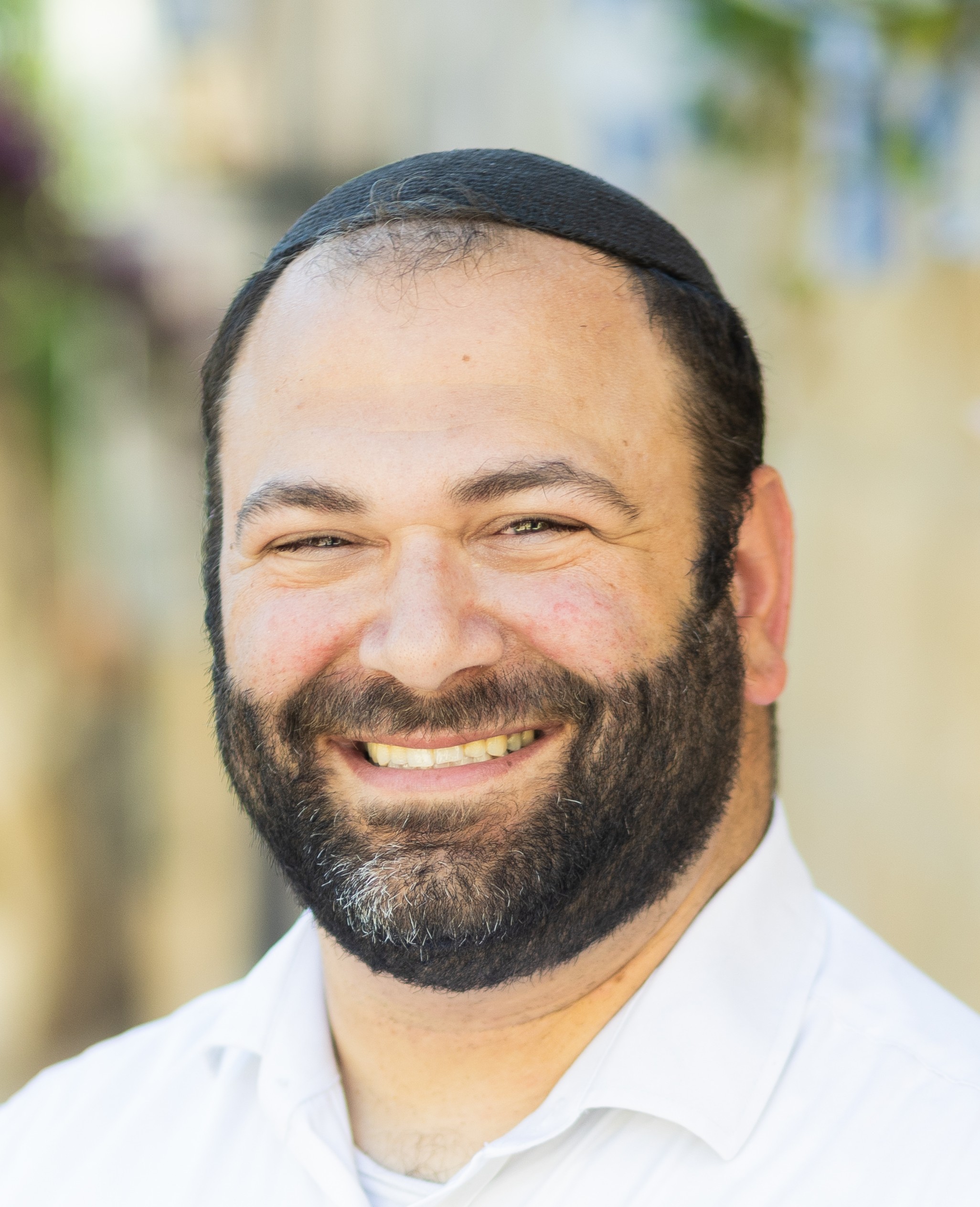
What is striking in Sklar’s translation Rav Kook’s Guide for Today’s Perplexed is that Sklar is grappling with the content of the book for the contemporary world. Sklar is asking big questions about the morality of Torah in order to create a ethical resource for today. Without being overtly political, Sklar hears in the text a strong call for morality and ethics, even an evolutionary goal of a higher morality.
The translation and notes show the enthusiasm that Sklar brings to the project. I am sure his students love the discussion he is opening. You can hear his excitement in the interview, and he is now working on translating Rabbi Kook’s Afikim ba-Negev, written in the same year.
Sklar’s moral presentation contrasts with that of Marc Shapiro’s book Renewing the Old, Sanctifying the New (see our blogpost here), who was motivated by being “deeply intrigued by his unconventional views, but also because I thought others, particularly those within the Modern Orthodox community, would find them of great interest.” There, the goal was unconventionality and broadening supposed intellectual limits. Here in Sklar’s translation, the goal is to use it for a moral worldview.
Rabbi Eliezer Melamed, the author of the widely accepted Peninei Halakha, series of Halakhic works, has already made this new volume of Rabbi Kook a pillar of his thinking on many topics, especially the acceptance of other religions and part of God’s plan. I have posted on Melamed’s approach. One of the weaknesses of the book is its English and Anglo focus, debating minor American opinions about Rav Kook without fully integrating the major Hebrew interpreters, both scholarly and rabbinic.
There were originally footnotes comparing Rabbi Kook to Rabbi Soloveitchik as well as notes providing parallel passages elsewhere in Rabbi Kook. They were editorially removed; let us hope for a second expanded edition. One pet peeve, the Henri Bergson term Lebensphilosophie (philosophy of life) was translated as Existential; it has been corrected in this interview)
This is a long interview, well worth printing out and reading. More importantly, the translation should enter the curriculum of Orthodox educational institutions, especially gap year programs, HS classrooms, and rabbinical training. The translation should be a required starting point for those grappling with the Jewish morality of the state. We should thank Sklar for his passion for the topic.
- How did you get interested in Le-Nevukhei ha-Dor ?
I was introduced to Le-Nevukhei ha-Dor by a close teacher of mine, Rabbi Pesach Wolicki, in 2010, soon after the work had been leaked onto the internet. I had been dealing with some religious perplexity in my own life, and Rabbi Wolicki offered to study it closely with me for a full year in Israel. That was one of the most important years of my life. Through Rav Kook, I came to see that truth is larger than any single approach, and that all sides point to a center, a core, of deep unification.
I was truly impressed with Rav Kook’s willingness to confront and even accept what seemed to be unacceptable notions to Judaism and religious belief in general. Rav Kook in Le-Nevukhei ha-Dor advocates turning away from complex philosophy and turning more toward ethics.
“We need to make fundamental something that is eternal and of which no person of human character can deny; and that is morality and justice (ha-yosher ve-ha-tzedek). Morality and justice are the depth of wisdom and its foundation. Only through them can we enter into a conversation with all people, for you will not find a person who does not [feel] obliged to give morality and justice their due.” (Chapter 3)
This was a rich foundation for me to unite the varieties of religious experience I found in Orthodox Judaism. What encourages moral growth? Who focuses on it as an ideal? Can even discordant ideas, regardless of their literal “truth,” bring man closer to a higher moral plane? Eventually the book mattered to me so much that I set out to translate it and annotate it, a project that ended up taking over a decade to complete.
Rav Kook’s overarching approach was to unite all planes of existence, to hold past, present, and future together, and to insist that morality and peace are standards that must be understood and explained according to our religious outlook. Our differences, says Rav Kook, should actually be a cause for unity, not factionalism.
On Morality
2. How does he resolve the tensions of natural morality and Torah morality?
Rav Kook believed that there was really no conflict between what he called “natural morality” – the intuited ethical feelings produced by a spiritually and emotionally healthy individual, derived from the divine soul in man – and the Torah’s morality. The only conflict is practical. Sometimes, the Torah makes demands that in the short-term compromise the natural moral feeling, in pursuit of a long-term moral outcome.
Rav Kook does express concern regarding a related tension. Immanuel Kant had raised the distinction between autonomous morality, that which is internally created and self-enforced, and heteronomous morality, that which is thrust upon a person from without, often laws of society. Kant felt that heteronomous morality was a kind of enslavement. Rav Kook formulated this as a problem when “legislative morality” – Torah law – runs contrary to the internal will for natural morality. Rav Kook spends considerable time in his early writings on this (see particularly Le-Nevukhei ha-Dor, ch. 22).
Rav Kook believed that this could be resolved by creating a two-tiered approach to Torah. Judaism wants to bring out the inner morality in all people, and it uses external laws to arrive at that eventual societal destination – what we might call the messianic age. Even if the individual person has already realized within themselves a high moral understanding, they must submit to the needs of building a society and not “push the end” and “cut the shoots,” to use the rabbinic terminology.
Rav Kook believed that there was really no conflict between what he called “natural morality” – the intuited ethical feelings produced by a spiritually and emotionally healthy individual, derived from the divine soul in man – and the Torah’s morality. The only conflict is practical. Sometimes, the Torah makes demands that in the short-term compromise the natural moral feeling, in pursuit of a long-term moral outcome.
Rav Kook does express concern regarding a related tension. Immanuel Kant had raised the distinction between autonomous morality, that which is internally created and self-enforced, and heteronomous morality, that which is thrust upon a person from without, often laws of society. Kant felt that heteronomous morality was a kind of enslavement. Rav Kook formulated this as a problem when “legislative morality” – Torah law – runs contrary to the internal will for natural morality. Rav Kook spends considerable time in his early writings on this (see particularly Le-Nevukhei ha-Dor, ch. 22).
Rav Kook believed that this could be resolved by creating a two-tiered approach to Torah. Judaism wants to bring out the inner morality in all people, and it uses external laws to arrive at that eventual societal destination – what we might call the messianic age. Even if the individual person has already realized within themselves a high moral understanding, they must submit to the needs of building a society and not “push the end” and “cut the shoots,” to use the rabbinic terminology.
3. You mention that many of his ideas on ethics and morality contained in this book have been available for many decades in his other books and have had little effect. So what power does it have if it had 122 years with no effect?
I’m not sure how we measure the effect here. Who knows where we would be without Rav Kook’s philosophy informing the ideas of the religious Zionist world? Maybe in the alternative history we would be much worse off. But I would say that too often those who claim to follow Rav Kook in Israel follow their own beliefs instead.
- 4. What does Rav Kook think is appropriate speech about Arabs in Israel?
There is a letter regarding this that had a very big impact on me, so much so that back when personal blogs were a thing I translated it and put it there. The scholar Yehudah Mirsky told me in response to my post that he doesn’t think there is one word from Rav Kook that is hateful about Arabs, in all his writings.
This important letter (Igrot ha-Rayah II:398) was written in 1911 and sent to Meir Bar-Ilan, son of Rav Kook’s former rabbinic mentor, Rabbi Naftali Tzvi Yehuda Berlin. Meir Bar-Ilan was the editor of a popular newspaper in the Land of Israel, Ha-Ivri, and Rav Kook contributed articles there. In the letter, Rav Kook complains that the newspaper printed a literary story that painted Arabs in an unflattering light:
“My friend, I find it a sacred duty upon myself to arouse your honor’s attention regarding the style of the depiction ‘Judah Guards the Orchard’ in issue No. 44 of ‘Ha-Ivri.’”
He talks about how descriptions of “hatred” towards “the Arab enemy,” and “rhetoric filled with a revolutionary spirit” should not be printed in the newspaper, for “it does not align with our aspirations and is not suitable for the situation at all!”
In making his case, Rav Kook focuses on practical concerns, in that there are people who read the Hebrew-language newspapers in order to find this kind of material and go on to castigate the Jews in the Land of Israel, and others will also pass it along to the Ottomans and cause political trouble for the Jews in the Land of Israel.
He concludes the letter:
Please, my friend, for the sake of the Lord, God of Israel, chosen in the Desired Land, who has begun to show us sparks of His light, from His kindness and truth, to remember His holy nation, to give it a boundary in Judah (cf. Ezra 9:9); please do not grant space in your noble newspaper for things like these, whose benefit is zero, and whose harm is immense beyond measure. On the contrary, as much as possible, we ought to describe the pleasant situations of the ways of peace and brotherhood that we find between the best of the Yishuv who act in truth, and the Arab inhabitants of the land – of course, the noblest of them.
A few months later, in 1912, Rav Kook sent another letter (Igrot ha-Rayah II:411) to Meir Bar-Ilan recommending that he speak to his friend Alexander Ziskind Rabinowitz, who could relate to him stories of “peaceful sentiments” between the Jews of the settlements and Arabs of the region.
In 1921, Rav Kook wrote a letter (Igrot ha-Rayah, vol. 4, p. 84) about how “even with the kind view (ayin tova) we take in relation to our cousins and neighbors who dwell in the land – the Arabs,” how much more so we should love our brothers, the Jews helping to build the land. The kind perspective toward their “Arab cousins” was a given for Rav Kook.
Even if someone wants to read Rav Kook’s letters here purely in pragmatic and diplomatic terms, I will respond: Well, if only the followers of Rav Kook would write letters to newspapers decrying racist descriptions of Palestinians or other groups, even just to be diplomatic! Even more so if some of them would see these letters and not engage in this kind of rhetoric themselves!
I understand that a lot of history, painful history, has happened since Rav Kook wrote those words. Would he view the situation similarly today? I believe that Rav Kook, as understood in his totality, as someone who saw true unity of all things, understood how to relate to his Arab neighbors much better than his son’s followers today. Those who disagree and think Rav Kook was naive, or too idealistic, should just come out and say it: they have a fundamentally different worldview than he did.
- 5. Rav Kook postpones ideal morality until the messianic age? Why do you find it satisfactory?
There are two ways to answer this. First, Rav Kook has an idea (see especially Le-Nevukhei ha-Dor, chs. 10, 16, and 31) that in some generations, a certain Torah law will be difficult to grasp, especially regarding its moral nature, but a time will come when it makes perfect sense. An example he gives (in Le-Nevukhei ha-Dor, ch. 16) is regarding the obligation to procreate. He writes that life in his time was extremely difficult, and it seemed in the short term that having children was an immoral act. Why, someone could argue, should we subject new life to these terrible conditions? However, he argues, if you believe in a glorious messianic future, it would be immoral not to have future generations that could take part in that fortune.
Secondly, in Le-Nevukhei ha-Dor (ch. 13), Rav Kook presents a view of the authority of the Sanhedrin that he believes even the Orthodox should accept. After all, the Sanhedrin was the Supreme Court of its time. It had tremendous power to decide the law. Rav Kook argues: if Orthodox Jews believe the Sanhedrin will be brought back in the messianic age, and it will have the ultimate power to decide the law, why wouldn’t they “update” or “reinterpret” the law where necessary according to the modern circumstances?
Thus, Rav Kook ingeniously claims, the Orthodox have the same belief as the Reform – the laws of the Torah should be subject to changing generations. The only difference is timing and authority. In the future Sanhedrin, these differences will become null and the two factions will unite, because surely the Sanhedrin will be able to see the changes of circumstances and redefine the laws as they see fit.
This theory of law and authority opens the floodgates. It’s dangerous stuff. I understand why the publishers of Rav Kook’s writings at the Institute of Rav Tzvi Yehudah (Kook), when they published Le-Nevukhei ha-Dor in Pinkasei ha-Rayah, vol. 2, decided to remove the chapter entirely. I don’t agree with doing that, but I understand the motive behind it. On the other hand, it also gives us a new way to answer questions of morality and the Torah:
If you have a problem with the morality of the law, you should eagerly await the return of the Sanhedrin. The future Sanhedrin, Rav Kook believed, would have to consider new circumstances, new understanding, and decide which laws were meant to be understood differently or limited severely. He believed this to be embedded in the Torah itself, and could not happen without interpreting it accordingly for the era.
In a letter to Moshe Zeidel, he denies that this should be called “development of the law.” In the letter (Igrot ha-Rayah I:90), Rav Kook explains at length his theory of hermeneutics. He writes that if the Sanhedrin and the rabbis have the capability of interpreting the Torah in a different way than it had been interpreted before, and it is accepted by the people, that interpretation must have been latent in the Torah all along (he writes similarly in his introduction to Ein Aya).
Interestingly, there is a flipside to this. The Sanhedrin could also institute even stricter laws and interpretations where they see the need. There is a balance, for Rav Kook, and they won’t please all the people all the time.
- 6.How and why does he acknowledge that Judaism is not the inventor of the world’s “moral and righteous laws”?
Rav Kook writes: “The Jewish people never claimed any credit as the inventors of the world’s moral and righteous laws, or even as the inventors of the principle of monotheism.” (Le-Nevukhei ha-Dor, ch. 32)
For Rav Kook, the discovery of ancient documents, such as the Code of Hammurabi, which bear striking resemblance to the stories and legal traditions of the Torah, does not mean the Torah is a non-divine document. Rather, he believed that the Torah is the continuation and the purification of ideas that started from the earliest days of the human species.
Great people all over the world have the capacity to uncover lofty moral and philosophical truths, Rav Kook argued, so why would the Torah be bereft of them? The Bible itself reports the existence of early prophets, figures like Methuselah, Enoch, Shem, and Eber, whose character teachings, customs, meditations, and true narratives remained with the ancient nations and were engraved in their writings. This, he says, is precisely why modern researchers keep finding parallels between Torah concepts and the relics of ancient civilizations. He even adds that many commandments are of the sort that individuals would naturally incline toward from man’s inner nature, since human intellect is itself a spark of the divine light.
So, all nations have people who find the truth. Judaism’s distinction is not invention but clarification and mission: the prophecy of Moses refined these universal ideas from the confusion and error that had crept into them, and the Jewish people were chosen to carry, purify, and disseminate them as an eternal covenant. That is why he can conclude, remarkably for his time, that archaeological research uncovering these parallels should be used “for honor and splendor, and for strengthening faith,” rather than feared, and he believed that with greater archeological knowledge, there would be greater faith in the historical legitimacy of the Torah in the world.
Rav Kook combats the idea too prevalent in some Jewish circles, even today: “There are people who think that one can only have perfect faith in the true Torah of Moses so long as one also believes that other faiths are all ‘false and foolish’ (Lamentations 2:14), and that there is nothing positive in holding fast to them. This is not true… There is much evil that comes from this view if it is not corrected.” (Le-Nevukhei ha-Dor, ch. 14a)
In chapter 36, Rav Kook describes the problem of Jews who abandon Judaism because they find positive aspects and even advancement in other cultures and religions, which they had been brought up to believe could not possibly exist. “How terrible is this error, to hang the uniqueness of the Jewish people upon the lowliness and degeneracy among the nations, when all of our hopes and dreams are to spread authentic knowledge of God, and refined moral laws throughout the entire world! Could it really be that we should, God forbid, hope for a hindering of our national existence?”
On Biblical Literalism
- 7. How is the account of Genesis not literal?
Rav Kook writes in many places that books need to be written by rabbinic scholars explaining how the Torah can be upheld even according to whatever popular theory is going around at the time. He saw this as a continuation of the methodology of Maimonides in the Guide for the Perplexed, where Maimonides defended Judaism within the philosophy of Aristotle (see Le-Nevukhei ha-Dor, ch. 2-3). Rav Kook writes that if a certain philosophical concept, ideology, or social movement fails, the Torah stays the same and can be interpreted according to the newer or more accepted theory of that time (see Ein Ayah, Shabbat, vol. 1, 2:5).
If so, you never know with Rav Kook if he is telling you how the Torah could be interpreted to align with a certain idea, or how the Torah should be interpreted. That makes his actual position difficult to ascertain.
Does Rav Kook believe the creation narrative of Genesis 1-4 is largely literal? He spends entire chapters of Le-Nevukhei ha-Dor explaining that narrative allegorically. With the background of his belief in providing interpretations that he knows could be later disproven, I think we can say that the answer is, he doesn’t much care whether or not a given passage is literal, particularly regarding the first four chapters of Genesis. The main thing is that if someone is bothered by a cosmological theory such as Aristotle’s theory, or a biological theory such as Darwin’s, then it is the rabbi’s obligation to take it head on, accept the premise of the theory, and then “build a palace of Torah above it” (Igrot ha-Rayah I:134).
Thus, Rav Kook is known for his relatively uncommon rabbinic support (at the time) for the theory of evolution, and wrote that it does not present a problem in reading the biblical story. In Le-Nevukhei ha-Dor, Rav Kook writes that evolution doesn’t make us dismiss God’s involvement in creation, but rather that evolution should astound us even more, that God set into motion a creation in such a way to evolve like this and end up here – and beyond.
- 8. What about the specifics of the stories of creation and of Adam and Eve in the Garden?
Firstly, the story of creation, he writes, is so dense and esoteric that we don’t understand the simple meaning of it anyway. He cites a midrashic passage that Maimonides and Nahmanides also cite: “To relate what happened at Creation to beings of flesh and blood is impossible. Therefore, Scripture concealed it, ‘In the beginning God created.’”
Once you realize this, the text itself is fair game for any way you want to understand it, because the Sages already told us the true meaning is basically impossible to understand.
Secondly, he states that it’s possible that God took the genre and narratives of contemporary cultures because the Jewish people would accept it. God just purified the ideas so that they were kosher, so to speak. In Le-Nevukhei ha-Dor (ch. 52), he writes:
“There is no problem whatsoever even were we to say that the prophecy took as its lesson a vision of creation as was widespread in those days, making it into the foundation of the standard conception of the relationship of the Creator to creation, so that man would recognize his Master…”
Third, he also describes a fascinating approach that allows for a kind of literal interpretation of creation, just from a different point of view: what if the story is being told in a simplistic way like notes of someone on the surface as the process of formation happened over the course of hundreds of millions of years? How would that be described? This allows for a large part of poetic license.
Then there’s the story of Adam and Eve. As background to this, it is important to note that according to Rav Kook, human beings possess an innate, divine understanding of truth. What blocks us from truth is our over-complicated intellect. The intellect is of course important, but not the ultimate source of truth; the soul is.
This, to Rav Kook, is the foundational story of the Torah. Adam and Eve and their story are a metaphor about the human condition and the distance created by being more intelligent than the animals. How could man evolve to forget God? The answer is intelligence. Now, did God speak to a particular person? Did Adam and Eve sin? Did God actually cast them out of the Garden? For Rav Kook, the command not to eat from the tree is an allegory for man realizing his connection to the divine and the problems of overcomplicating his intellect. The story as a whole is a metaphor for the developing problem of the God-Man relationship and it being ironically torn asunder by the complications of becoming human, an, of a higher order than the animal kingdom.
Rav Kook writes that we live in a world of rationality and intellect. And we are worse off for it. That isn’t to say that we should shun the intellect, but only to realize we lost something, a knowledge from deep inside, because of our emergence as human beings from the animal kingdom.
Now, what about all the genealogy that occurs in Genesis 5? Isn’t Adam at the top of that list? Interestingly, Rav Kook writes (Le-Nevukhei ha-Dor, ch. 5):
“This transition was passed through by an individual who had reached a perfected state making him fit to be called ‘Man’ (Adam). Through these psychological causes, a great breach was created between him and life. This individual is ‘Historical Man.’ From here onward, the Torah will tell mankind’s history in precise detail.”
In my opinion, Rav Kook is still talking within the metaphor: as if Adam were a single person. Others who I’ve discussed this with tended to see in this a concession that the story is somewhat historical, in that it actually happened to a particular individual. I don’t think that is necessary.

Rav Kook with the mayor of New York John F, Hylan 1924 (Rav Moshe Mordechai Epstein on the left)
Morality of War
9. What are Rav Kook’s ideas on morality of war?
Rav Kook saw war itself as a moral evil, but sometimes practically necessary to achieve moral ends.
“And as for war: it would have been utterly impossible, at a time when all the neighboring peoples were literal ‘wolves of the night’ (cf. Habakkuk 1:8), for Israel alone not to make war. For then they would have gathered together to destroy them completely, God forbid. On the contrary, it was very necessary to cast fear upon these savages, even through harsh conduct, but only with a view toward bringing humanity to what it ought to be, not to force the hour before its time.” (Igrot ha-Rayah I:89)
The Torah’s intent was that by establishing the Israelite nation as a stable and respected entity, then they would have the ability to shine the light of morality and righteousness upon the world. Eventually, that would result in everyone laying down arms and realizing that war is never truly moral.
In one of his notebooks (Kevatzim mi-Ktav Yad Kodsho I:34), Rav Kook argues that the Torah’s rules of war themselves point us in this direction. Particularly, the law of the “beautiful captive” (Deuteronomy 21:10-14), which directs a soldier on what to do if he wants to take a woman home from the battlefield. The Talmud (Kiddushin 21b) already saw fit to probe the morality of this law, declaring that “the Torah only speaks counter to the evil inclination.” Rav Kook writes there that the Torah was written to include a time where people had not yet completed their moral education. Thus, he states, “it is impossible for one nation to actually raise itself to a moral state of refraining from war while all the other nations still grasp the sword with full force.” However, the law of the beautiful captive is a signal. The Torah expects us to rise above the law of the captive woman, because it is motivated by the “evil inclination.” Once society achieves that realization, he says, the Torah hopes we will go further and realize “that it is not right to spill blood even for political ends… and we will recognize that every weapon is nothing but a thing of shame (cf. Talmud Shabbat 63a).”
It’s worth noting that during WWI, Rav Kook set his mind to write about what war represents, its positives and negatives, and these entries were edited and published in the beginning of Orot. I had the extreme displeasure of reading an article recently where the author claimed Rav Kook was enthusiastically militaristic, since Rav Kook wrote in Orot, “When a great war comes to the world, the messianic power is awakened.” The author had to ignore everything else Rav Kook wrote on war to have this position. These passages in Orot are not Rav Kook glorifying war, but finding purposes and positives in everything, even in seemingly negative things.
Rav Kook’s early writings emphasize the knowledge that comes from two “impulses”: the moral impulse, and the revelational impulse (originating in Bachye ibn Pakuda’s Hovot ha-Levavot, “Service of God,” 3). For Rav Kook, we all begin with the moral impulse. We know it in our hearts, naturally. The revelation of the Torah, however, demands certain actions as part of a long-term program to help lead all of humanity toward a path of moral enlightenment. Not always will these two impulses align in the short-term. It is the job of wise people to show how the Torah/revelational impulse is working toward the same agenda as the moral impulse. (See his essay “Afikim ba-Negev,” as well Le-Nevukhei ha-Dor, ch. 51).
Many have also discussed Rav Kook’s view of Amalek. Since Rav Kook doesn’t believe in absolute, irredeemable evil, he writes (Middot ha-Rayah, “Ahava”) that we must love even Amalek, despite the Torah command to utterly destroy them.
10.How do you reconcile Rav Kook’s vision of an ethical messianic age with current religious Zionist rhetoric?
Rav Kook was ultimately a person of love. That isn’t to say he wasn’t harsh when he had to be, but it was all with the goal of unity. Do current religious Zionist leaders focus on the idea of unity of disparate parts playing their role? It seems to me that too many religious Zionist leaders seem to encourage friction: against secular Israelis, against “the left,” against the ultra-Orthodox, and more than anyone else, against the Arabs within Israel and without; everyone who is not them. This is not what needs to happen. Rav Kook’s posture was conciliatory and peace-loving. Many stories are reported of the love and kindness he extended to those who insulted and denigrated him. Unfortunately, this version of Rav Kook (the true one) has been buried by a single focus: land, war, and us-vs-them mentality.
The followers of Rav Kook, and in particular the followers of his son, Rav Tzvi Yehuda Kook, have often overly emphasized the importance of messianic thinking, of the value of the land, of nationalism. Now, all of these were of course values for Rav Kook Sr. as well, but they were hardly the most important in his thought – Rabbi Yehuda Amital once pointed out that Rav Kook uses the word “mussar,” ethics and character development, far more than he does the phrase “eretz yisrael,” the land of Israel.
But because these “grand-followers” focused on particular aspects of this great leader, they seem to have felt the need to repress or de-emphasized writings and ideas from Rav Kook that might steer away from that religious-national project. It is my belief that this is why we find some Israeli Jews who identify with the camp of Rav Kook and his followers, yet act in ways which are clearly contrary to Rav Kook’s vision of morality and justice. That is another reason why bringing Le-Nevukhei ha-Dor and other writings of his forward is so important.
On History and Other Religions
11. What is his vision of communal and human progress?
Rav Kook believed in the upwards progress of history, which he sometimes called “hishtalmut.” This was likely influenced by the ideas of Hegel and other philosophers – Rabbi David Cohen (the “Nazir”, his close student) wrote that Rav Kook’s later thought was influenced by Henri Bergson and the idea he had of an “elan vital,” some kind of force driving history toward constant evolutionary improvement (Rav Kook adds the divine to this force).
To Rav Kook, history is divinely orchestrated. Just as the original “shattering of the vessels” (to put it in kabbalistic terms) from an absolute unity resulted in the fractured existence we experience, so too the universe is engaged in an extremely slow return to that unity. It is man’s job to play a role in that return. Rav Kook takes this kind of idea to the next level in Orot ha-Teshuvah, arguing that repentance is not changing one’s core, but returning to it.
When we talk about a return to unity, we should note that Rav Kook had a peculiar notion of unity. To him, unity was not conformity. Instead, it was precisely through differences of mind and action that we could achieve true unity. Similar to how every piece of a puzzle is different, yet when connected they form one picture, so too every individual should use their talents and abilities to connect and help others connect toward building the overall picture of humanity and ultimately the universe.
What is true for the individual is also true for the nation. Just as national unity is everyone in the nation working toward the national agenda with their unique talents, so too every nation has its unique characteristics and talents that should be used to unite nations internationally. This idea, in turn, he likely derived from 18th-19th century philosophers such as Montesquieu, Herder, and Hegel.
12. How do the other religions reflect the spiritual development of humanity? How is this different than his work Orot?
In Le-Nevukhei ha-Dor, Rav Kook’s agenda was to show the good in every major movement and ideology. Repeatedly, he cites the Mishna in Avot that states, “There is nothing that doesn’t have its place.”
So, although idolatry and polytheism are abhorrent to the Torah, the practitioners of those religions are better off than with no beliefs, he writes, because at least they fear their gods, making their society more civilized than one under pure nihilism.
The next level above that is monotheistic religions. These are not perfect, writes Rav Kook. Certainly not as perfect as the divinely given Torah. But they are better because since monotheism is true, their moral compass therefore will tend to be better, and there is hope of unity through the belief in a unified God.
The next level above that is monotheistic religions based on Torah. Rav Kook calls these “branched off” religions from Judaism. Christianity and Islam carry something genuine from the source, and Rav Kook believes we should treat them accordingly. In fact, we should want pagans to become Christians and Muslims, he writes, if the other choice is paganism. He even says the fact that Christianity turned Jesus into a God can be justified because the “brilliant light” could only be accepted by people inclined toward paganism in that form (Le-Nevukhei ha-Dor, ch. 39a). In other words, it was a stepping stone out of paganism toward true monotheism, and necessary.
He remains in his conviction that Judaism is special. It alone can unite all nations and religions, since it alone is religion built upon a specific place and a specific nationhood, and therefore has a spiritual center that no other religion has in its essence. It alone can be the heart of the metaphorical “man with many body parts, or to be clearer, like a family with different kinds of people,” as he puts it.
Additionally, he critiqued Christianity for the idea of supersessionism – “the underlying conviction… that Judaism has been superseded, God forbid” – since for him, only Judaism can succeed in achieving for the world “the highest perfection of all humanity.”
To Rav Kook, the popularization of these higher forms of monotheistic religions is part of God’s plan. In his writings, Rav Kook derives this idea from Maimonides in Mishneh Torah, Laws of Kings 11:40 (which was ironically censored by Christian printers in earlier printings). Maimonides there writes that even though “there is no greater stumbling block than Christianity,” still, “ultimately, all the deeds of Jesus of Nazareth and that Ishmaelite who arose after him will only serve to prepare the way for the Messiah’s coming and the improvement of the entire world, motivating the nations to serve God together as it says, ‘I will transform the peoples to a purer language that they all will call upon the name of God and serve Him with one purpose’ (Zephaniah 3:9).” This statement by Maimonides was accepted by Nachmanides in Torat Hashem Temimah, and Rav Kook cites this source in Metziot Katan, 80 and 180, and Midbar Shur, Drush 21.
Other sources Rav Kook may have had in mind are Rabbi Judah ha-Levi in Kuzari 4:23, where he talks about God’s plan that the “seed” of Judaism should produce fruit of its tree like Christianity and Islam. Likely a major source for Rav Kook was 19th century German rabbinic scholar Rabbi Samson Raphael Hirsch, who writes (Nineteen Letters, Letter 9) that Christianity was a great boon for mankind, teaching pagans morality, monotheism, and paving the road toward the messianic future.
It would seem that Rav Kook changed his tone once he came to the Land of Israel. Rabbi Bezalel Naor writes that Orot is a “sustained intellectual battle… [that] hammers away, piece after piece, at the moral turpitude, hypocrisy, and spiritual inadequacy of the Church…. If anything, ‘Christophobia’ would more likely be the word to describe Rav Kook’s attitude toward Christian civilization.” (Naor, Introduction to Orot, Koren/ Maggid, 2015, 67–68)
In one of Rav Kook’s early essays when he came to the Land of Israel, “The Way of Renaissance,” Rav Kook called Jesus a “charismatic individual.” This caused a great deal of consternation among members of the Old Yishuv, a very conservative bunch. It is indeed possible that Rav Kook, or his son who edited Rav Kook’s notebooks to produce Orot, intentionally sought to downplay Rav Kook’s views on other religions to combat the suggestion that Rav Kook was tolerant toward Christianity.
I would suggest the contradiction may be answered in a different way. Rav Kook often distinguishes between the ideal and the practical. In Le-Nevukhei ha-Dor itself (chapter 10), he treats vegetarianism as a moral ideal that is simply not livable in the present world. Its value can only be seen in future time periods, when the time is right. Similarly, other religions: they hold objectively positive values – but those cannot be recognized fully by the Jewish people until the Messianic future. In a letter (Igrot ha-Rayah IV:1276), Rav Kook writes that the Jewish people will appreciate Christianity and Jesus, even to praise Jesus, only when the messianic age arrives and Christians admit to the truth of Judaism: “Only then at that fortunate time will our writers be able to say something positive concerning this personality – but only then, not now.” In another letter (Igrot ha-Rayah I:112), Rav Kook writes that Judaism does not seek to destroy other religions, but, based on Zechariah 9:7, to purify them and bring the “drops of light” they have been divinely granted to bring them to the fore in messianic times.
If so, I suggest the following: In Le-Nevukhei ha-Dor and other early writings, Rav Kook was willing to express the positive formation and progression of Christianity and Islam. Later, after arriving in the Holy Land, he preferred to discuss their present, practical negatives, believing wholeheartedly that the positives latent in those religions could be expressed in the quick arrival of the messianic age.
13. How does he acknowledge the potential for miracles and prophecy in other religions especially Christianity and Islam?
This is absolutely astounding. Rav Kook is willing to grant that perhaps Jesus did indeed receive divine prophecy, walk on water, and turn water into wine. For why not, if these religions ultimately represent positive progress in humanity? He writes:
“No one should view those ‘branched-off’ religions, in and of themselves, in a negative light. It is possible that there was divine impulse in this, on the part of the founders [of those religions], that they strive to improve an impressionable portion of humanity, to whatever extent was proper” (Le-Nevukhei ha-Dor, ch. 8).
In other words, he believes that since Christianity and Islam are helping to prepare the world for perfection and steering people away from polytheism, God may have even given their founders – Jesus and Mohammed – prophecy. He goes even further than that. He is willing to grant that perhaps these founders actually performed miracles divinely “prepared” for them:
“It is possible that some perceptible wonders were prepared for them, if it was necessary to encourage them, since this is relevant to humanity’s improvement, over which the hand of God stretches from the beginning of existence to the end.”
14. Why does he think nationalism is not enough?
Rav Kook gives several distinct reasons why nationalism alone cannot suffice, at least not for the Jewish people (see particularly Le-Nevukhei ha-Dor, chapters 13 and 37).
First, nationalism is emotion, not reason. “For ultimately, nationalism is based only on feeling, and when a person is called upon to explain its purpose, ‘he will find no reply.’” A people that was so severely forbidden from idolatry, which was itself “feeling based merely on consensus and delusion that filled the entire world,” has been constitutionally trained to reject anything built on “delusive feeling.” Rav Kook argues that anyone who wishes to establish “a nationalist feeling within the Jewish people, but in a less idealized form than that which has already been clarified to them, will never succeed.”
He writes that Jewish nationhood is unlike any other because it was created by its religion, not merely accompanied by it. Among the nations, “when the power of nationalism grows strong among the peoples, religious feeling weakens,” since “the nationalist feeling has already come to take their place.” Other nations, Rav Kook writes, can absorb their nonobservant members without damaging their core, for “their religion does not encompass their entire lives,” but Judaism is unique as a religion built on nationalism, and nationalism built on religion. Strip away the religion, Rav Kook writes, and you have stripped away the very glue of the nation.
He also believed pure nationalism is too particularist. Zionism, unmoored from a universal ethic, is actively dangerous. He observes that in his day “a life-will has begun to beat in the hearts of many peoples. From this has emerged the foundation of nationalism, which breaks down the boundaries of ethics, justice, and morality” (chapter 46). Jewish nationalism, he writes, must therefore be tied to its universal mission (Judaism the religion), to bring the moral unity represented by one God.
Rav Kook saw in the secular pioneers a life-force and a self-sacrifice that much of the pious world had let go slack. He believed that they were unconsciously “sparking” their religious inner selves. His argument is about what an ideal must contain if it is to sustain a people, not about who is entitled to belong to it. A nationalism that knows only itself, that can name no purpose beyond its own survival and strength, will in his opinion eventually turn narrow and then cruel, because nothing within it sets a limit on what may be done in its name. Judaism, Rav Kook believed, states that this particular nation exists for the sake of justice, compassion, and the moral unity of all humanity under one God. Israel’s return to its land is supposed to be part of its overall universal mission of justice, compassion, and morality.
Next Project
15.Why is Afikim Banegev your next project? What is it? What is interesting in that work?
Afikim ba-Negev is really a fascinating document. Rav Kook had published it in a series in the journal Ha-Peles, over the years 1903 and 1904. It is the last and longest of three essays Rav Kook published there, and contains some of Rav Kook’s core ideas that he would maintain for the rest of his life, regarding Zionism and religion, nationalism, politics, the importance of Torah observance even for ostensibly secular Jews, the importance of clarifying and refining Jewish philosophical and theological ideas, including understanding the rationale for the Torah commandments, and the concept of putting moral truths at the center of religious and intellectual life.
What Afikim ba-Negev is mostly known for, when it is known at all, is its section on vegetarianism. This section was excerpted and reprinted in Maamarei ha-Rayah vol. 2, and collected by Rav Kook’s disciple Rav David Cohen into the standalone volume Chazon HaTzimchonut VeHaShalom (“A Vision of Vegetarianism and Peace”).
I had read it in the course of translating Rav Kook’s Le-Nevukhei ha-Dor, focusing on what everyone else already did: the similar ideas regarding vegetarianism present in both works. Scholars Rabbi Eitam Henkin and Rabbi Shachar Rachmani, in their analysis of Le-Nevukhei ha-Dor, each note not just the conceptual similarities, but the word-for-word copying that occurred between Afikim ba-Negev and Le-Nevukhei ha-Dor in certain sections. Because of this, it allows us to place Le-Nevukhei ha-Dor in the time period either concurrently or after Afikim ba-Negev – i.e., around 1904.
It’s really too bad that I didn’t look into this essay enough while translating Le-Nevukhei ha-Dor, because I’ve found over and over again that there is almost no idea that appears in Afikim ba-Negev that doesn’t also appear in Le-Nevukhei ha-Dor. In fact, sometimes, a turn of phrase in the essay has cleared up a confusing idea in Le-Nevukhei ha-Dor I never understood before. I believe this essay deserves to stand on its own and become better known in the study of Rav Kook’s thought.

