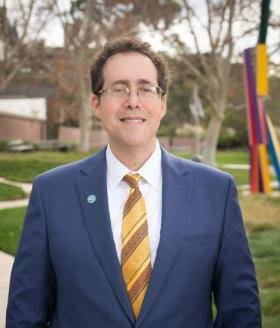
I posted an interview with Rabbi Prof Sam Lebens here, and then had a response by Rabbi Prof Bradley Artson here. Below is Lebens response to Artson. If anyone else has something to add to this conversation, then please contact me.
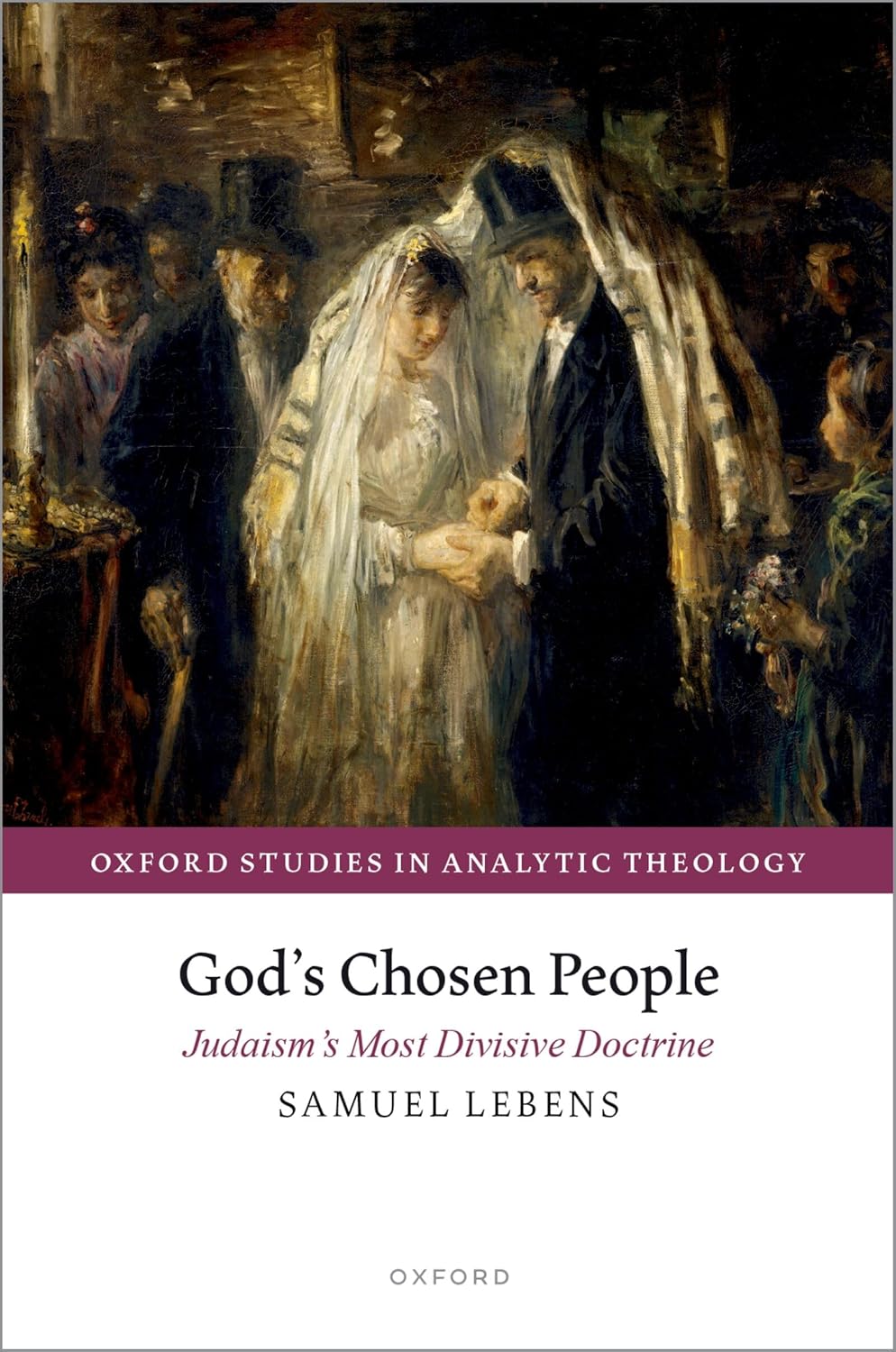
A Response to Rabbi Prof. Bradley Artson
I am grateful to Rabbi Prof. Artson, in equal measure, for his kind words and for his probing critique.
The print edition of my book is not yet available in North America (although digital versions are already available on Amazon and through university libraries). Accordingly, Artson concentrated his attention on my interview with Rabbi Prof. Brill, not having had the chance to see the book itself. I do hope that many of his concerns receive thorough answers in the body of my book. Even if he might disagree with some of those answers.
Religious Language
Having said that, many of Artson’s worries are addressed in my current book; there is one important exception. Artson fears that I adopt a somewhat naive account of religious language. And I must confess that a reader of my book might come away with the mistaken apprehension that, on my view, language and logic have no issue probing into the deepest mysteries of theology. And yet this is a topic that I have written about in other venues, not least in the first chapter of my book, The Principles of Judaism.
In that work, I explore, scrutinise, and develop numerous arguments in favour of the contention that language systematically fails to express all that it might want to express about the Divine. Engaging with the Rambam and others, I develop two complementary Wittgenstein-inspired accounts of the function and limitations of religious language. The take-home conclusion of those meditations is that: in our theology, we cannot and should not hope to attain to exhaustive truth, but we can and should hope to attain towards ever greater verisimilitude.
Verisimilitude is a notion developed by Karl Popper that measures both the comprehensiveness of a theory, and – so to speak – its closeness to truth. And thus, when I say – in my book on chosenness – that God is a person, I should only be taken to assert that the most verisimilar theology available to us, at this point in time, presents God as a person. Everything that I ever say, when doing theology, should be taken as aiming towards verisimilitude rather than truth.
The Case for Personalism
Artson worries about “subjective opinions” and “invisible assumptions” underlying my personalism. I can see why my interview might give the impression that these forces are at work. But in the body of the book, I make every effort to declare and to foreground each and every assumption I make, and to give at least some account as to why I’m making it.
Moreover, when it comes to my theological personalism, I would argue that my subjective preferences are doing much less work than Artson alleges. Just as he has sound philosophical reasons for thinking that becoming is the most ontologically primitive notion we possess, I argue that personhood, or at least some elements of personhood, such as consciousness, are still more primitive. I would ask Artson to review those arguments before rejecting them out of hand. They were first developed here and here, but they also form the background of chapter 17 of the current book.
Artson comes away from my interview under the impression that my conception of personhood is insufferably wishy-washy and peppered with “invisible assumptions” to the extent that “somehow God lacks a body yet can impact the physical, has personal attributes of emotion, consciousness, and will, yet doesn’t get angry, moody, or have favorites.”
I can only hope that he wouldn’t come away from my book with those same concerns. I’m sure he’d have other concerns, as is only natural. Again, the key point of difference is that where Artson wants to place becoming at the foundation of his ontology, I argue (at length, and in various places) that mentality and consciousness are even more basic. If mentality is ontologically primitive, then it turns out to be more basic than bodies. And thus, I come away with the conclusion that God is likely a mind who stands prior to all physical bodies. His being a mind won’t entail that He must be prone to anger, temper fits, or caprice – unless there are some hidden assumptions that Artson is smuggling into the dialectic.
Wyschogrod
I claim that Wyschogrod’s theology renders God capricious. Artson claims that I’m trying to have my cake and eat it. I must either accept that God is a person, and therefore entitled to a dollop of capriciousness, or that God isn’t capricious and is therefore not a person. I don’t accept this disjunction. I happen to know some persons who aren’t at all capricious.
Moreover, my rejection of Wyschogrod’s theology is rooted in my conception of revelation. That theory is laid out in the first chapter of the current book, but it’s justified, at least in part, by the arguments of part II of my book on The Principles of Judaism. The basic idea should be, in broad brushstrokes, amenable to a process theologian like Rabbi Artson. That key idea is that the revelation is a process that unfolds over time. I then use various literary, hermeneutical, and philosophical tools to discern, over the course of time, where the thrust of the revelation is pointing. On the basis of this process of investigation, I think that, despite isolated passages to the contrary, the general thrust points to a God “without iniquity.”
Caprice, I would suggest, is an iniquity. That, I admit, is an assumption. Does Artson disagree with it?
Sanitization
Next, I turn to Artson’s concern that my “sanitized chosenness” still implies a degree of superiority. Here I’d like to make a number of points:
As I find the “Two-Track Model of the Election” in the pioneering work of the Tiferet Yisrael (Rabbi Yisrael Lifschitz), it includes the bold and startling claim that Jews miss out on a certain closeness to God, and on certain opportunities for ethical innovation, that only gentiles have. This can be the case even as gentiles miss out on a different sort of closeness to God that only Jews have. I leave the details of this picture to those interested to read the book. But I promise that it delivers a result much less trite than, “You Gentiles get French cuisine and the Parthenon. We, Jews get intimacy, firstborn status, the Holy of Holies, and a verbal transcript of God’s love.”
In chapter 29 of the book, I develop my own wacky Hassidic metaphysics, one which I don’t foreground too often in the book because it tends to be orthogonal to my work on chosenness. I argue that my metaphysics can accommodate the following, seemingly paradoxical claim: for any nation or community, N, God exclusively choses N to the exclusion of all other nations or communities. Making sense of that incoherent-sounding claim does more than just a passing justice to Amos 9:7, and other verses of its ilk.
Moreover, like Artson, my considered case for chosenness is entirely wedded to an understanding of Jewish history, and to a sense of mission, calling, and responsibility. I wager that my account is no less sanitized than his.
The Tables Turn
Artson attributes to me a claim – about “God allow[ing] the people of the world to see, just a sample of the saving grace and love that He has in store for all human beings in the eschaton.” That was actually my attempt to summarise Prof. Gellman’s position. Not mine. It’s a position that I think is consistent with my own, but it would be wrong to attribute it to me without qualification.
In that quotation, as elsewhere, I use male pronouns in my description of God. Artson responds: “Oh, and God is somehow still a male. Boy, that part of personhood sticks, unquestioned!”
Though I’m sure that those to my right might question this, I define myself as an Orthodox theologian. Accordingly, I relate to the Five Books of Moses as the supreme expression of the word of God. I treat every letter as if God had dictated it personally to Moses at Mount Sinai (even as I agree wholeheartedly with the Rambam that this can only be a metaphor for a process of Divine self-disclosure that will forever be a mystery to us). Be that as it may, I have argued in two of my previous books that we have reason to believe that God wants us to relate to the Pentateuch as His inerrant word, to be interpreted through the prism of the ongoing revelation of the Oral Torah.
That assumption, even if it’s one that I’ve argued for at length elsewhere, will obviously get me into lots of hot water. How can I render all of the parts of Scripture into a coherent whole? How can I reconcile the descriptions of God’s justice with the heinous things He seems to demand of us in our various wars against Amalek, the Midianites, and the seven nations inhabiting the land of Canaan? What about slavery? I’m well-aware of these difficulties. I deal with them, at length, in this book.
One thing that emerges from Scripture is that God, more often than not, describes Himself in male terms. He may have had specific time-bound considerations for revealing Himself in this way. And since I don’t think that God has a sex, because I think that God is the cause of biology rather than a biological being, I don’t think it makes sense to think that He’s literally a man.
Even if sex and gender come apart, the whole issue can get no traction with a transcendent being. For instance, God would be neither cisgender nor transgender. Accordingly, I have no issue with people describing God with female pronouns – a deviation from the norm that has its own Scriptural basis. I have no issue with people trying to adopt gender-neutral language to describe God. But to the extent that God has most often disclosed Himself to us in male-gendered language, that is the convention I adopt. Indeed, in my relations with humans, as in my relationship with God, I use whichever pronouns the person uses to describe themselves. That seems like the most respectful way to go.
That convention, which I adopt, may have been a Divine accommodation to an ancient patriarchy, but I stand with Prof. Tamar Ross, when she says: “It is only natural that I, as a cumulativist, attach religious importance not only to the circumstances precipitating interpretations of the primary revelation of Sinai, but also to the fact that it was the Sinaitic revelation that came first and that was accorded foundational value (Expanding the Palace of Torah, p. 208).”
I take her to be saying that, even if the Torah takes a certain form in compromise with a given situation, we must still see a religious significance in the form that it took. And thus, whatever the reason for God’s choosing male pronouns, that choice became an integral part of the fabric of revelation; at that foundational stage.
Artson accuses me of picking and choosing between the parts of personhood I want to attach to God and the parts that I don’t. I hope I’ve done enough, in this response, to show that I have more to say on these issues, and that only after reading the whole book would it be fair to level such an accusation at my feet. But, interestingly, in my comfort and Artson’s discomfort with male pronouns attaching to God, I feel that the tables are turned.
Indeed, Ross accuses some Conservative theologians of writing, “as if one could go through the Pentateuch and tick off such passages as the commandment to wipe out the Amalekites as a human and not a divine element” (ibid., p. 297). In a similar vein, Artson seems to embrace the poetry of Scripture that suits his moral intuitions, whilst recoiling from those, like the gendering of God, that grate with his intuitions. In truth, I’m sure that all philosophical theologians are guilty of this from time to time, and I appreciate Artson’s invitation for me to be on my guard against it.