I am grateful to Rabbi Prof. Artson, in equal measure, for his kind words and for his probing critique.
The print edition of my book is not yet available in North America (although digital versions are already available on Amazon and through university libraries). Accordingly, Artson concentrated his attention on my interview with Rabbi Prof. Brill, not having had the chance to see the book itself. I do hope that many of his concerns receive thorough answers in the body of my book. Even if he might disagree with some of those answers.
Religious Language
Having said that, many of Artson’s worries are addressed in my current book; there is one important exception. Artson fears that I adopt a somewhat naive account of religious language. And I must confess that a reader of my book might come away with the mistaken apprehension that, on my view, language and logic have no issue probing into the deepest mysteries of theology. And yet this is a topic that I have written about in other venues, not least in the first chapter of my book, The Principles of Judaism.
In that work, I explore, scrutinise, and develop numerous arguments in favour of the contention that language systematically fails to express all that it might want to express about the Divine. Engaging with the Rambam and others, I develop two complementary Wittgenstein-inspired accounts of the function and limitations of religious language. The take-home conclusion of those meditations is that: in our theology, we cannot and should not hope to attain to exhaustive truth, but we can and should hope to attain towards ever greater verisimilitude.
Verisimilitude is a notion developed by Karl Popper that measures both the comprehensiveness of a theory, and – so to speak – its closeness to truth. And thus, when I say – in my book on chosenness – that God is a person, I should only be taken to assert that the most verisimilar theology available to us, at this point in time, presents God as a person. Everything that I ever say, when doing theology, should be taken as aiming towards verisimilitude rather than truth.
The Case for Personalism
Artson worries about “subjective opinions” and “invisible assumptions” underlying my personalism. I can see why my interview might give the impression that these forces are at work. But in the body of the book, I make every effort to declare and to foreground each and every assumption I make, and to give at least some account as to why I’m making it.
Moreover, when it comes to my theological personalism, I would argue that my subjective preferences are doing much less work than Artson alleges. Just as he has sound philosophical reasons for thinking that becoming is the most ontologically primitive notion we possess, I argue that personhood, or at least some elements of personhood, such as consciousness, are still more primitive. I would ask Artson to review those arguments before rejecting them out of hand. They were first developed here and here, but they also form the background of chapter 17 of the current book.
Artson comes away from my interview under the impression that my conception of personhood is insufferably wishy-washy and peppered with “invisible assumptions” to the extent that “somehow God lacks a body yet can impact the physical, has personal attributes of emotion, consciousness, and will, yet doesn’t get angry, moody, or have favorites.”
I can only hope that he wouldn’t come away from my book with those same concerns. I’m sure he’d have other concerns, as is only natural. Again, the key point of difference is that where Artson wants to place becoming at the foundation of his ontology, I argue (at length, and in various places) that mentality and consciousness are even more basic. If mentality is ontologically primitive, then it turns out to be more basic than bodies. And thus, I come away with the conclusion that God is likely a mind who stands prior to all physical bodies. His being a mind won’t entail that He must be prone to anger, temper fits, or caprice – unless there are some hidden assumptions that Artson is smuggling into the dialectic.
Wyschogrod
I claim that Wyschogrod’s theology renders God capricious. Artson claims that I’m trying to have my cake and eat it. I must either accept that God is a person, and therefore entitled to a dollop of capriciousness, or that God isn’t capricious and is therefore not a person. I don’t accept this disjunction. I happen to know some persons who aren’t at all capricious.
Moreover, my rejection of Wyschogrod’s theology is rooted in my conception of revelation. That theory is laid out in the first chapter of the current book, but it’s justified, at least in part, by the arguments of part II of my book on The Principles of Judaism. The basic idea should be, in broad brushstrokes, amenable to a process theologian like Rabbi Artson. That key idea is that the revelation is a process that unfolds over time. I then use various literary, hermeneutical, and philosophical tools to discern, over the course of time, where the thrust of the revelation is pointing. On the basis of this process of investigation, I think that, despite isolated passages to the contrary, the general thrust points to a God “without iniquity.”
Caprice, I would suggest, is an iniquity. That, I admit, is an assumption. Does Artson disagree with it?
Sanitization
Next, I turn to Artson’s concern that my “sanitized chosenness” still implies a degree of superiority. Here I’d like to make a number of points:
As I find the “Two-Track Model of the Election” in the pioneering work of the Tiferet Yisrael (Rabbi Yisrael Lifschitz), it includes the bold and startling claim that Jews miss out on a certain closeness to God, and on certain opportunities for ethical innovation, that only gentiles have. This can be the case even as gentiles miss out on a different sort of closeness to God that only Jews have. I leave the details of this picture to those interested to read the book. But I promise that it delivers a result much less trite than, “You Gentiles get French cuisine and the Parthenon. We, Jews get intimacy, firstborn status, the Holy of Holies, and a verbal transcript of God’s love.”
In chapter 29 of the book, I develop my own wacky Hassidic metaphysics, one which I don’t foreground too often in the book because it tends to be orthogonal to my work on chosenness. I argue that my metaphysics can accommodate the following, seemingly paradoxical claim: for any nation or community, N, God exclusively choses N to the exclusion of all other nations or communities. Making sense of that incoherent-sounding claim does more than just a passing justice to Amos 9:7, and other verses of its ilk.
Moreover, like Artson, my considered case for chosenness is entirely wedded to an understanding of Jewish history, and to a sense of mission, calling, and responsibility. I wager that my account is no less sanitized than his.
The Tables Turn
Artson attributes to me a claim – about “God allow[ing] the people of the world to see, just a sample of the saving grace and love that He has in store for all human beings in the eschaton.” That was actually my attempt to summarise Prof. Gellman’s position. Not mine. It’s a position that I think is consistent with my own, but it would be wrong to attribute it to me without qualification.
In that quotation, as elsewhere, I use male pronouns in my description of God. Artson responds: “Oh, and God is somehow still a male. Boy, that part of personhood sticks, unquestioned!”
Though I’m sure that those to my right might question this, I define myself as an Orthodox theologian. Accordingly, I relate to the Five Books of Moses as the supreme expression of the word of God. I treat every letter as if God had dictated it personally to Moses at Mount Sinai (even as I agree wholeheartedly with the Rambam that this can only be a metaphor for a process of Divine self-disclosure that will forever be a mystery to us). Be that as it may, I have argued in two of my previous books that we have reason to believe that God wants us to relate to the Pentateuch as His inerrant word, to be interpreted through the prism of the ongoing revelation of the Oral Torah.
That assumption, even if it’s one that I’ve argued for at length elsewhere, will obviously get me into lots of hot water. How can I render all of the parts of Scripture into a coherent whole? How can I reconcile the descriptions of God’s justice with the heinous things He seems to demand of us in our various wars against Amalek, the Midianites, and the seven nations inhabiting the land of Canaan? What about slavery? I’m well-aware of these difficulties. I deal with them, at length, in this book.
One thing that emerges from Scripture is that God, more often than not, describes Himself in male terms. He may have had specific time-bound considerations for revealing Himself in this way. And since I don’t think that God has a sex, because I think that God is the cause of biology rather than a biological being, I don’t think it makes sense to think that He’s literally a man.
Even if sex and gender come apart, the whole issue can get no traction with a transcendent being. For instance, God would be neither cisgender nor transgender. Accordingly, I have no issue with people describing God with female pronouns – a deviation from the norm that has its own Scriptural basis. I have no issue with people trying to adopt gender-neutral language to describe God. But to the extent that God has most often disclosed Himself to us in male-gendered language, that is the convention I adopt. Indeed, in my relations with humans, as in my relationship with God, I use whichever pronouns the person uses to describe themselves. That seems like the most respectful way to go.
That convention, which I adopt, may have been a Divine accommodation to an ancient patriarchy, but I stand with Prof. Tamar Ross, when she says: “It is only natural that I, as a cumulativist, attach religious importance not only to the circumstances precipitating interpretations of the primary revelation of Sinai, but also to the fact that it was the Sinaitic revelation that came first and that was accorded foundational value (Expanding the Palace of Torah, p. 208).”
I take her to be saying that, even if the Torah takes a certain form in compromise with a given situation, we must still see a religious significance in the form that it took. And thus, whatever the reason for God’s choosing male pronouns, that choice became an integral part of the fabric of revelation; at that foundational stage.
Artson accuses me of picking and choosing between the parts of personhood I want to attach to God and the parts that I don’t. I hope I’ve done enough, in this response, to show that I have more to say on these issues, and that only after reading the whole book would it be fair to level such an accusation at my feet. But, interestingly, in my comfort and Artson’s discomfort with male pronouns attaching to God, I feel that the tables are turned.
Indeed, Ross accuses some Conservative theologians of writing, “as if one could go through the Pentateuch and tick off such passages as the commandment to wipe out the Amalekites as a human and not a divine element” (ibid., p. 297). In a similar vein, Artson seems to embrace the poetry of Scripture that suits his moral intuitions, whilst recoiling from those, like the gendering of God, that grate with his intuitions. In truth, I’m sure that all philosophical theologians are guilty of this from time to time, and I appreciate Artson’s invitation for me to be on my guard against it.
Rabbi Prof Bradley Artson offers a response to my interview with Sam Lebens. Here, the discussion is kept brief, but the issues could be debated in much longer form. Artson has written extensively on chosenness from a very different perspective than Lebens, offering us a solid contrast. Artson reacts to the analytic premises as hiding Lebens’s subjective viewpoints. He also singles out the rejection of the apersonal God as not sufficiently defined or delineated. Finally, he points out there is still too much superiority in Leben’s approach. For Artson, choseness is a fact-supported theory calling for responsibility, calling, and distinction.
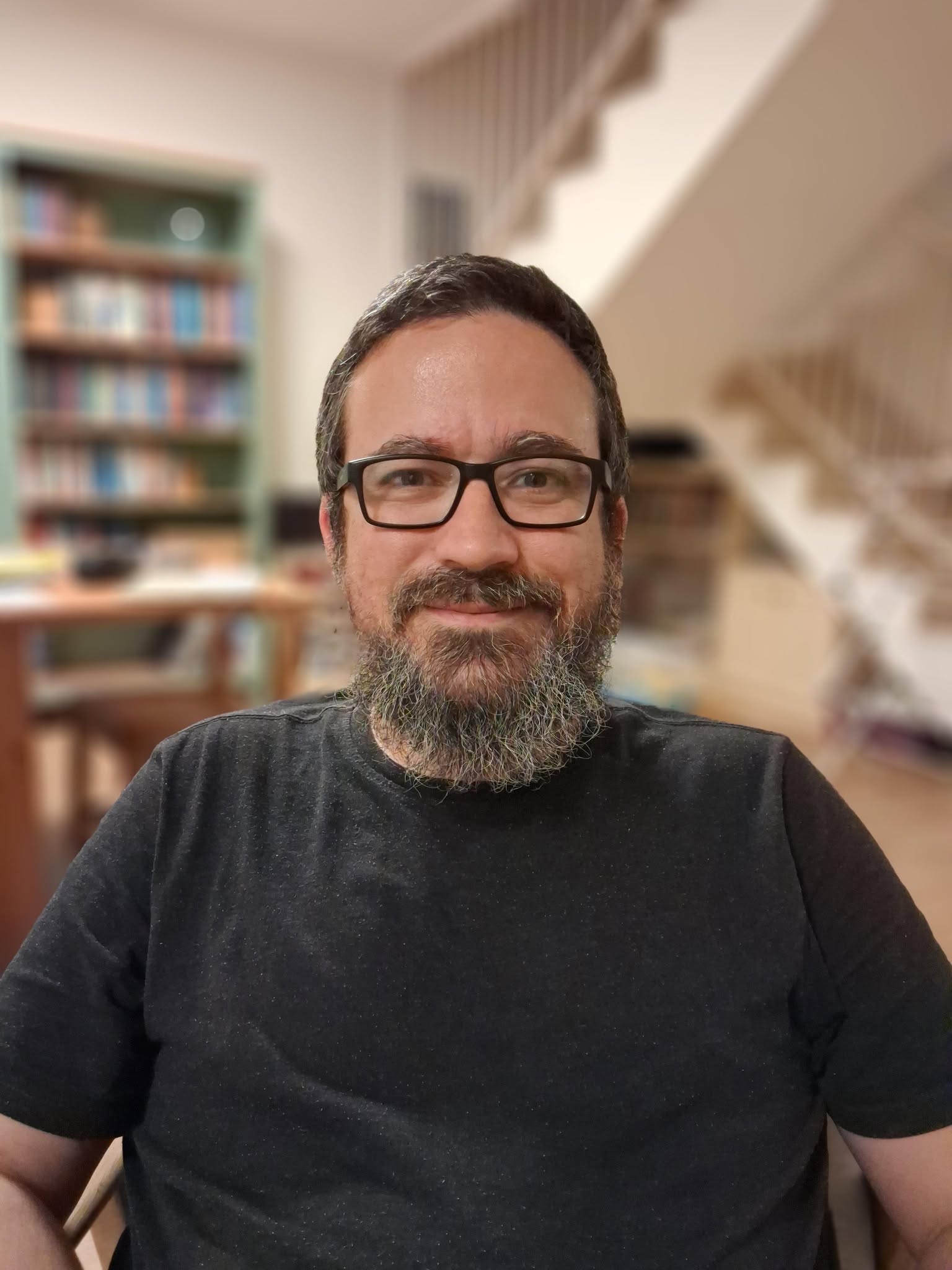
Dr. Rabbi Bradley Shavit Artson is the AJU Goldstine Distinguished Scholar and previously served as the Abner and Roslyn Goldstine Dean’s Chair of the Ziegler School of Rabbinic Studies since July, 2000, while also serving as Vice President of American Jewish University in Los Angeles. Rabbi Artson is the author of 12 books and over 250 articles. He is currently publishing a new book, Judaism Beyond Belief: Wisdom for People who Simply Want to Thrive (Monkfish Book Publishing).
As background to the discussion, I did a long and thorough interview with Artson a few years ago. I just reread it and it remains a comprehensive introduction to Artson’s theology.
As a direct taste of Artson’s views, here is a nice quote from one of his earlier books God of Becoming and Relationship:
In the dominant theology with its either/or dichotomies, either the Jews are chosen, hence superior, or all peoples are equal, and none are chosen. If God is the active choosing partner, then Israel must be the passive recipient of God’s choice. But Process Theology’s dipolarity allows us to transcend these binary dichotomies. Israel is an active partner in the process of chosenness … . Jews choose/are chosen to live Torah in the world, both to build communities of justice and inclusion and to model that it is possible to embody such a life. But other peoples choose/are chosen, too, in ways that match their particularity and distinctiveness . … Jews choose/are chosen for Torah and mitzvot, although most emphatically not because of intrinsic superiority. Other peoples are chosen/choose their own paths to holiness and righteousness (104f).
Bradley Artson, Choseness, Personhood, and Metaphysics: A Response to Samuel Lebens
It is a pleasure to engage the thought of Professor Samuel Lebens, and the invitation to respond to his interview with our colleague/teacher, Professor Alan Brill, is a privilege. I approach the task with some concern: it is patently unfair to judge a person or their thought based on a single interview or even a review of his most recent book. Indeed, going online and sampling a few of his interviews reveals a thinker of great passion, breadth, and depth. Lebens is a thinker worth engaging, even in those points of particular curiosity or dissent. So, in that spirit, having pondered his interview, here are some places where my questioning crystallized.
Lebens begins by explicating five central Biblical models of closeness, which is a helpful fleshing out, but creates a false impression that these are distinct and separate categories. Yes, he notes that they are not “exhaustive” because there are instances of choseness that do not neatly fit one of the five. But he doesn’t note that these are not so much categories as emphases — the Bible does not seem to think of them as separate entities. Particular instances mix and blend, perhaps emphasizing one facet of chosenness over others, but they are not hermetically sealed from each other, as Lebens also acknowledges when he says, “my aim is to trace all of the major lines of development and to find, where possible, the best fit between them all; without pretending that all of the sources are in agreement.” I would only add, also without pretending that there are hardened categories in Biblical or Rabbinic thought on the topic.
That recognition raises a larger concern I often have with so-called “analytical” thinking: the pretense to scientific objectivity, while surreptitiously smuggling in deeply subjective opinions, often with invisible assumptions, often retrojecting the contemporary perceptions of the viewer to recontextualize the more intuitive organic thinking/feeling of the original work itself.
So with the very important, to Lebens, matter of God being a personal being, which he strongly advocates: The main consequence of this insistence, from his perspective, is that God can enter into particular relationships with any individual or community and his rejection of the “apersonal theology that motivated it.” But an inkling of his subjectivity (he’s fine saying Rambam is 100% on the apersonal side), is to criticize Wyschogrod for taking the personality thing “too literally. His God seems capricious.”
It turns out that Leben’s invocation of a personal vision of God isn’t scientifically or linguistically objective and precise. Apparently one can be too hot or too cold, and he means to distinguish an intuited subset of what “personality” normally evokes. In this case, the invisible assumptions are that somehow God lacks a body yet can impact the physical, has personal attributes of emotion, consciousness, and will, yet doesn’t get angry, moody, or have favorites (despite his choosing of Abraham and family as being biblically contrasted to God’s assessment of everyone else! Despite the predictable invocation of Amos 9:7, the Biblical more than once frames Israelite choseness as being in contrast to (and above) all other peoples or nations). Apparently, the tools of the analytic philosopher allow one to dope out the parameters of God’s personhood even at odds with the Peshat of Biblical verses. Which attributes of personality remain and which are dropped is never made explicit, systemic, or distinguished from the predilections presupposed by the individual philosopher.
I find it difficult to understand how even Lebens’ sanitized choseness doesn’t imply superiority, despite his sensitivity to this challenge. In his own words, his Two-Track Model (Jews be Jews, Gentiles be Gentiles) still shows “equal love” through “God allow[ing] the people of the world to see, just a sample of the saving grace and love that He [sic] has in store for all human beings in the eschaton.” You Gentiles get French cuisine and the Parthenon. We Jews, get intimacy, firstborn status, the Holy of Holies, and a verbal transcript of God’s love. That sounds co-equal, doesn’t it?
Oh, and God is somehow still a male. Boy, that part of personhood sticks, unquestioned!
Finally, there is the way language, properly understood, needs to be employed to address this core challenge. My reading of Rambam diverts a bit from Lebens, influenced no doubt by Solomon Schechter, Mordecai Kaplan, Alfred North Whitehead, John Cobb, and Catherine Keller among others. Turns out that not only God, but every “thing” (what Whitehead would call an occasion) is in process, dynamic, and on some level ineffable. Certainly any human description of God falls short from the literally true, even if it points toward some deeper reality. And I would add that this limitation of language remains accurate for descriptions of any of us or any other creature or occasions within Creation. We are all of us on the way, changing across time and retaining continuity with our former selves.
There is no Being (an abstraction from a series of becomings), there is only becoming. That is true for God no less than for the rest of us.
That being the case, it isn’t a choice between personal and apersonal, as the analytic thinkers would have us believe. God can have attributes we experience as personal and attributes we experience as apersonal, both. God is, literally, neither a person nor an aperson (monstrous term!), just as there is no literal North north of the North Pole. The concept simply is poetry at that point, but not literally real. If so, the poetry of personhood illumines crucial experiences of the divine, as do images of apersonhood. Lebens acknowledges Biblical images of God as fountain, mountain, Life of the Cosmos, etc. Are those literally true or false too?
If we recall that language can only point toward a reality that lies just beyond language, then we can crawl out of the constricting dichotomy of either or to a more nuanced and embracing both. Jewish precedent for this insight is found, as Lebens notes, in the grand thinking of Rabbenu Saadya Gaon, Rabbi Nathaniel bin Fayumi, and to my reading, the Rambam himself. That metaphysical claim (really, Process Thought) opens us to a broader understanding and articulation of these apparently-conflicting claims, to a better hermeneutic for the welter of biblical language and portrayals, and a reconciliation with much of contemporary philosophy and science.
For my own take on Choseness, I invite the reader to check out my presentation on the subject at the lecture I gave; here is the YouTube video.
In that discussion, I present a Process-influenced demonstration that the Biblical/Rabbinic assertion of chosenness is no longer a theological claim, but the best explanation and integration of the facts of Jewish and world history. No longer a faith-based creed, Choseness is a fact-supported theory (like evolution or the Big Bang). And then I flesh out what choseness entails as responsibility, calling, and distinction.
Conclusion
I am not here meaning to doubt that Lebens isn’t both a serious thinker and a good, compassionate leader. He is both of those and he is struggling to articulate a Jewish theology of God that is both authentic to the central impulses of the sacred sources and at the same time responsive to a contemporary philosophic critique. Kudos to him on both scores. I have lots of concerns and questions about what strikes me as a false dichotomy (either a person or not, as though that is a literal claim that is mutually exclusive) and a brute method of analysis that holds reason to be a separate distillate from feeling, and one that precludes poetic metaphor, with its attendant sloppiness, not to mention what appears to me to be an inadequate appreciation of the way language both reveals and masks and renders (as Rambam alerts us) every event/occasion and instance ineffable in some important ways. The gap between description and what is described, between systemic speculation and the reality itself, is built in. We can only use reason and experience to grow asymptotically closer. But, as the British remind us, we still need to mind the gap.
The concept of a chosen people preferred by God challenges core ideas about fairness, divine love, and human equality. If God loves everyone equally, singling out one specific group for a special covenant or status appears to contradict that fairness. If God is over all of humanity, then how could God pick one people? It seems to imply a capricious deity or one closer to Greek myths. More importantly in our era, the concept generates arrogance, racism, chauvinism, or violence. It implies that one group is inherently better than the rest and often demeans the humanity of the other group. However, the concept of the Jewish People chosen from among all the people is a substantial part of the Bible and Jewish everyday liturgy.
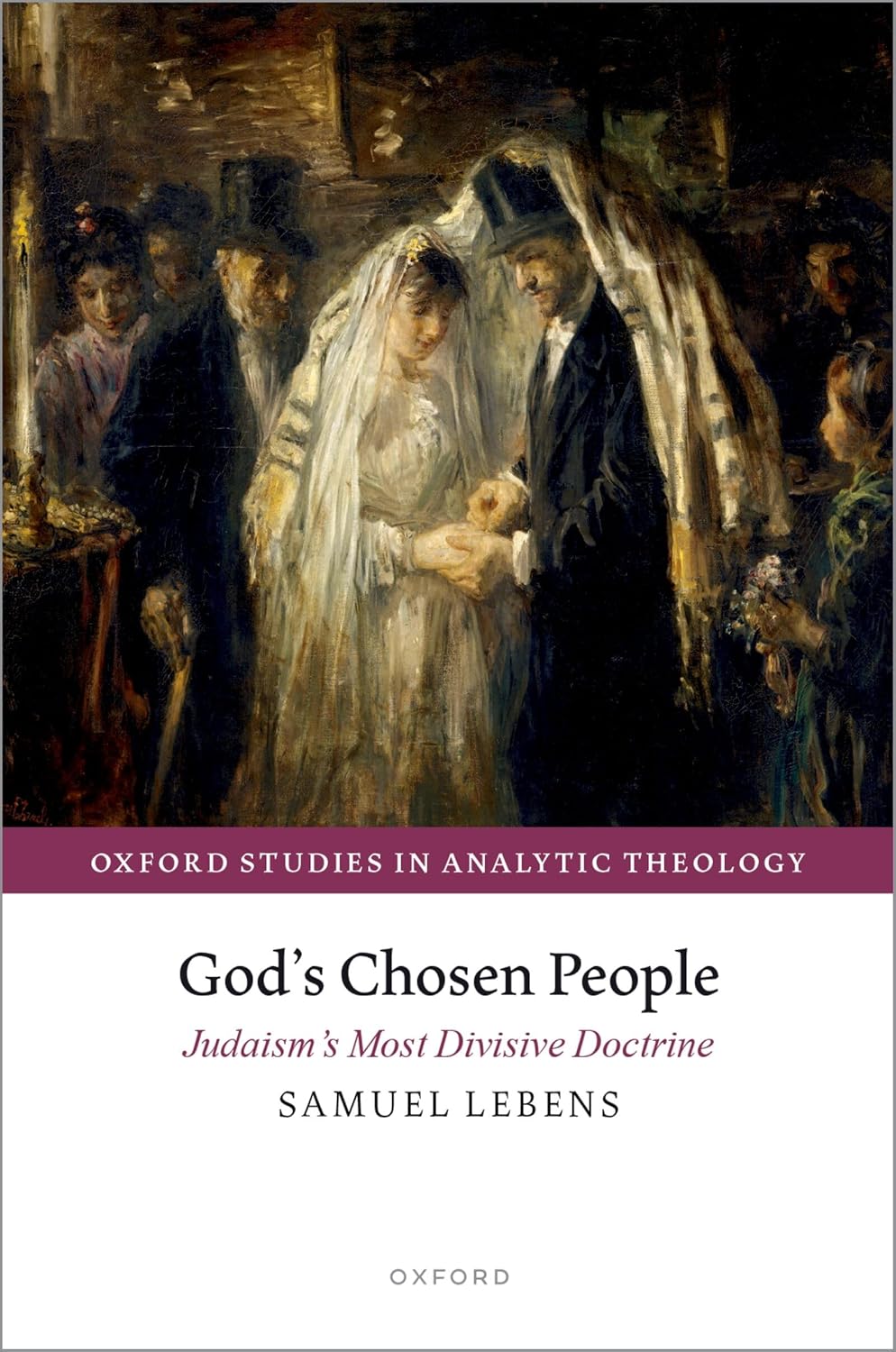
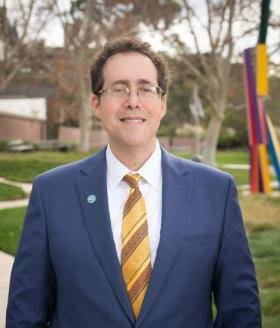
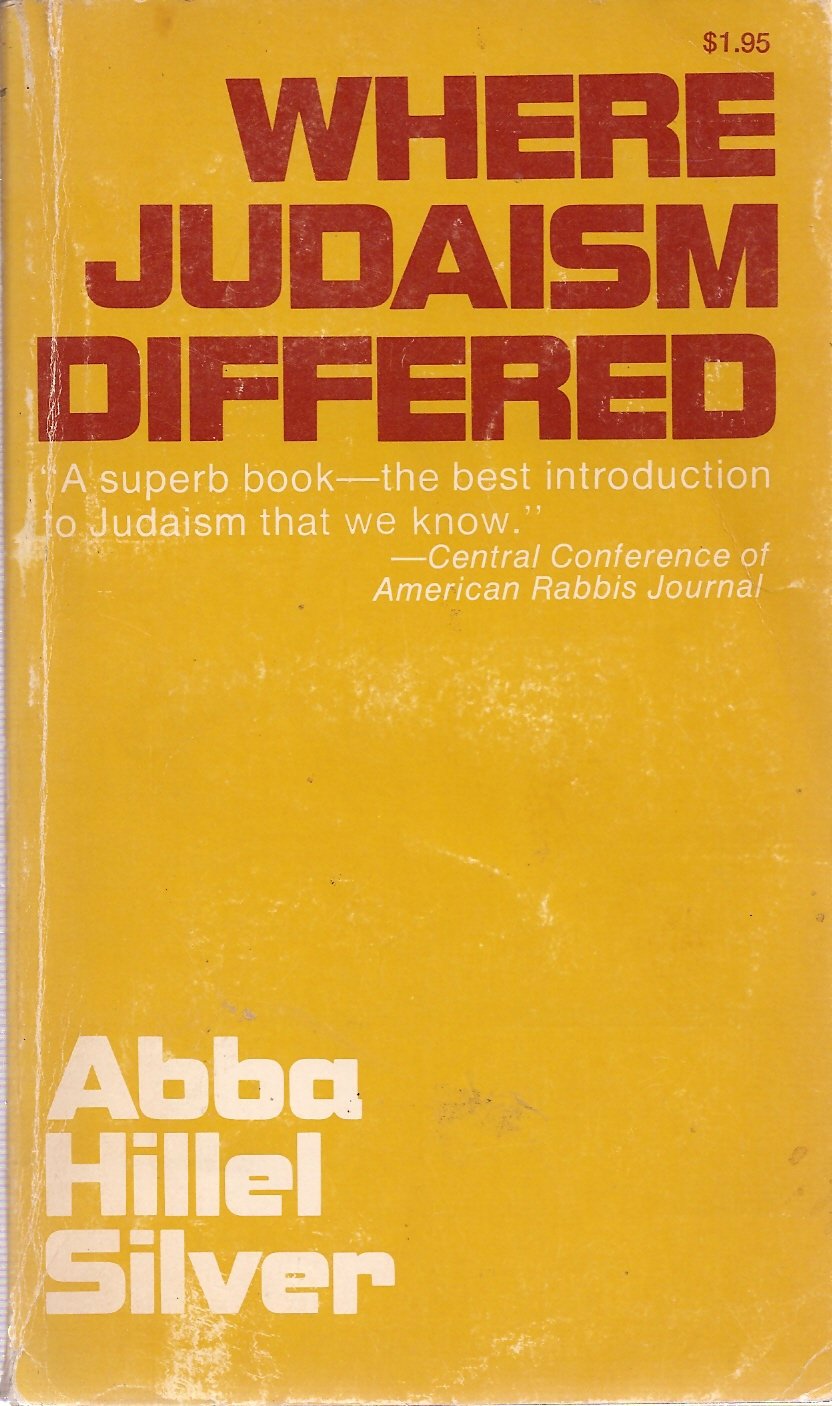
The latest volume to offer a solution to this problem is an excellent new book by Rabbi Dr. Samuel Lebens, God’s Chosen People: Judaism’s Most Divisive Doctrine (Oxford, 2026). Lebens is an associate professor of philosophy at the University of Haifa specializing in early analytic philosophy especially Bertrand Russell, the nature of propositions, the nature of fiction, and writes widely on the analytic philosophy of Judaism. His PhD is from Birkbeck College, University of London, and he completed post-doctoral fellowships at the University of Notre Dame and at Rutgers University with Rabbinic Ordination from Rabbi Zalman Nechemia Goldberg.
Leben’s method takes as a fundamental given the tenets of Judaism, which, for him, include existence of God, revelation, and Bible interpreted through Rabbinic method. He does not argue for these, rather they are his starting premises. Like many Evangelical analytic theologians, who Lebens studies, the goal is to formulate a position that he can live with, a Judaism with enough analytic philosophy defense to be cogent and defensible.
However, Lebens is more Biblically based than Gelman, analyzing five Biblical models of choseness of the Jewish people. You can read about the models in the interview. This is analytic presentation of materials is Leben’s strong suit; his collecting the data from a broad range of materials: Biblical, Talmudic, Medieval Philosophic, Rosenzweig, and Modern Orthodox thinkers. This extensive range is unique to this book compared to his predecessors.
In addition, Lebens emphasizes his belief in a personal God as the Jewish view. He rejects all abstract views of God and all impersonal views. His belief in this is strong enough for him to discount medieval Jewish thought and all Jewish views of an abstract God. Therefore, despite his broad historical reach, mainly of the thinkers he discusses are presented for him to reject them.
Lebens makes good use of Chief Rabbi Lord Jonathan Sacks’ ideas. And Lebens is part of a growing trend to follow the thought of formerly obscure thinker Rabbi Nathaniel ibn Fayumi who taught that God sends a prophet to every nation. (See my prior posts on the use of Nathanel ibn Fayumi by Rabbi Yaakov Nagen and by Rabbi Eliezer Melamed). Lebens, however, is original in how he presents ibn Fayumi as a continuity of Rabbi Saadiah Gaon.
In the 1948 debate between Bertrand Russell and Frederick Copleston, on the nature of God and philosophy, Russell argued for modern analytic logic thereby rejecting the medieval classics and Copleston argued for the classic scholastic theism. It was exemplar in showing two methods for reading texts from prior centuries, are they treated as objects for analytic analysis or as traditions received. Lebens is clearly on the side of Russell. I am much less comfortable rejecting Maimonidean positions. And Lebens chapter on Jewish mysticism, was unnecessary in its current form.
Since the book only sporadically dips into the scholarship, it missed a few books that would have help develop his arguments such Chosen and Unchosen: Conceptions of Election in the Pentateuch and Jewish-Christian Interpretation (2009)by Joel N. Lohr. The book directly deals with the Biblical models of choseness and election in both Jewish and Christian thought, and specifically deals with Wyschogrod, Novak, and Jon Levenson.
My bigger issue is how his book relates to actual Jews and Jewish opinions. I tried pushing these issues in several of my questions. In 1983, Prof Arnold Eisen, wrote a book The Chosen People in America: A Study in Jewish Religious Ideology where he states: “A Jewish ethnic identity was illegitimate in democratic America; in clinging to the illusion of chosenness which demanded such an identity, Jews brought their sufferings upon themselves.” Eisen quotes the Conservative Rabbi Milton Steinberg who observed in 1934: “Only a people of acrobats could preserve a semblance of poise on a footing so unstable.” Based on this, does Leben’s book speak to a reader who does not accept his premises?
I think it does. It offers for Jews an exemplar example of Evangelical analytic theology based on Biblical truth. The rigor, extensiveness, and overview of many positions make it almost a basic reader on the topic. Most prior analytic works were articles arguing for a single position. Lebens offers range and depth. The book would make an ideal book for an introduction to Jewish thought especially in Modern Orthodox high schools or in gap year program. The book would raise the level of discussion to sophisticated levels. I make this recommendation, with the caveat that the instructor should complement the book by arguing for their own positions including those of Halevi, Maimonides, or Kabbalah, as well as modern thinkers who are not modern Orthodox.
Finally, even though the book is being published by Oxford University Press, an earlier draft is also available on the Virtual Beit Midrash of Yeshivat Har Etzion as forty-five digestible lectures as Choosing a Theory of Chosenness. I emphasize this because the list price for the new book is $165. The book is worth reading, worth arguing with, and stay tuned for some responses here.
Why did this topic interest you?
My children had some disturbing experiences in the religious school system in Israel. On numerous occasions, they were witness to hateful and racist statements, not merely from their peers, but even from their teachers. Those experiences cemented my opinion that Jewish supremacism is growing steam in the rank and file of the Religious Zionist community in Israel. My decision to excavate and thoroughly explore the notion of chosenness was my attempt to do the intellectual heavy lifting required to challenge that supremacism, using the sources of the Jewish tradition itself.
2. What are the Biblical models of choseness and why did you pick two as best?
I found there to be five central Biblical models of the election of Israel:
One- The Genesis Model: The main notions within this model are that the choice of Abraham and his progeny was somewhat arbitrary (in that there may have been other individuals, no less qualified than Abraham); the choice of Abraham was intended to bring blessing to all of the families of the world – such that the election is a means to that universalistic end; the chosen are called upon to showcase and embody the political virtues of justice and equity (i.e., tzedek and mishpat); the chosen are to be liminal, and to utilize that liminality as a counter-cultural voice in the conversation of humanity; and they are called upon to struggle with man and with God.
Two- The Marriage Model: This refers to the idea that the chosen were not chosen for any mission in particular. Instead, they were chosen because God had fallen in love with them. The Torah and its laws, on this construal of the relationship, function like a marriage contract.
Three- The Priesthood Model: The guiding slogan of this model is that we are to be a “kingdom of priests, and a holy nation.” Whatever the Levitical priests are supposed to provide to Israel, the Israelites are called upon to provide for the nations of the world.
Four- The Zechut Avot Model: “Zechut Avot” refers to the merit of the ancestors. On this model, the Jewish people have a special status, not in virtue of their own achievements, but merely in virtue of the merit of their illustrious ancestors.
Five- The Name-bearing Model: On this model, the Jewish people are to be witnesses to the existence of God, and to carry His name, or His reputation, among the peoples of the world.
These models aren’t exhaustive, since they neglect various other metaphors: God is the farmer and Israel is His vineyard; God is the shepherd, and Israel are His sheep; God is the potter, and Israel are His clay; God is the King, and Israel are His subjects; we are the allotment of land that He inherits, and He is our inheritor. But none of these metaphors are developed as extensively as the five models I’ve identified.
I found that Models iv and v are easily subsumed into the other models. For example, you might think that the Marriage Model is true, but that God didn’t fall in love with us so much as with our ancestors. Alternatively, you might think that bearing God’s name in the world is part of the mission of a global priesthood, or part of the mission bestowed upon Abraham. That leaves us with three main models.
In later stages of the book, I argue that the Genesis Model and the Priesthood Model can be combined into one coherent picture.
The Marriage Model can’t be taken too literally, for Biblical reasons, if we’re to reconcile it with other models of the election. Theologically, when taken too literally, the Marriage Model renders God guilty of favoritism and caprice. Accordingly, I would say that the relationship between Israel and God is aptly described as a passionate marriage, but only in some respects. It is the first two models that must take the lead.
3.How do you deal with difficult Rabbinic texts on this topic?
Many of the most difficult Rabbinic texts, ones that reputedly dehumanize non-Jews, have been well dealt with already by others. To that end, I lean heavily upon (and embellish) Rabbi Eliezer Berkovitz’ masterful early work, What is the Talmud?
But more than that, I discover two potentially surprising data points.
First: with a proper understanding of their etiology and underlying symbolism, the Rabbinic laws known as eiva and darkei shalom – which prohibit actions that would cause animosity between Jews and non-Jews, and mandate various acts of kindness towards non-Jews – are not to be understood as political exigencies, or compromises. On the contrary, they are motivated by central ethical convictions of the Rabbis.
Second: the Rabbis take the most problematic Biblical model of the election – the Marriage Model – and entirely recalibrate it. Instead of portraying Israel as the bride of God Himself, they portray Israel as the bride of God’s daughter – the Torah. God is then recast as our heavenly father-in-law. This means that we only occupy any sort of special status to the extent that we’re living our lives in accordance with the Torah. To the extent that we’re not, the status will be attenuated.
This Rabbinic Model nevertheless has to rub shoulders with other conceptions of the election. And thus, it isn’t fair or possible to flatten the Rabbinic data and to pretend that there was always consensus. On the contrary, my aim is to trace all of the major lines of development and to find, where possible, the best fit between them all; without pretending that all of the sources are in agreement.
4.The liturgy states repeatedly that God chose us- asher bachar banu mi kol Haamim- how do you deal with this?
The fact that we were chosen “from among all of the nations,” doesn’t ipso facto entail that other nations haven’t also been chosen for other purposes. To that end, see Amos 9:7.
The fact that we have been exalted over other “tongues” and above the “uncircumcised” has nothing to do with our ethnicity or race, but with the language that we’ve been co-opted into speaking – i.e., the language of Torah – and her rituals, such as circumcision.
To the extent that we’ve been sanctified as a people, the liturgy tends to insist that it’s only because we have been given the Torah and holds only to the extent that we cleave to that Torah.
There’s no doubt that Jewish supremacists will nevertheless find lots of phrases in the liturgy to cleave to, but I argue that a closer reading of those texts always falls short of endorsing any one particular model of the election. In fact, the relevant liturgical texts tend to manifest a studied neutrality when it comes to the various competing Biblical and Rabbinic models of the election. A proper understanding of the etiology of even the most offensive sounding liturgical formulations inevitably undermines their offensive appearances; or so my study has found.
5. How do you both accept and reject the approach of Maimonides?
I endorse Maimonides’ goal of articulating an entirely non-racial construal of Jewish identity. I also hope to preserve an inspiring detail of his understanding of the Priesthood Model. On his account of that model, it isn’t only the non-Levitical tribes of Israel who are invited to share in the overall mission of the Priesthood to the world; but that:
Each and every person of all the inhabitants of the world whose spirit generously motivates him, and who understands with his wisdom, to separate himself and stand before God to serve Him and minister to Him and to know God, proceeding justly as God made him, removing from his neck the yoke of the many reckonings which people seek, he is sanctified as holy of holies (Mishneh Torah, Hilkhot Shemitta VeYovel, 13:13).
But there are two related respects in which I think we should diverge from the Rambam. The first is that his theology entails that God is not a personal being and that, as such, God can enter into no particular form of relationship with any individual or community.
That theology is alien to the Bible’s presentation of God, and alien to much of the Rabbinic movement’s conception of God, such that Jewish believers in revelation should be very reticent to embrace it. He was operating with an Aristotelian conception of how metaphysical explanation is supposed to work. Once that background has been removed, the argument that pushes Maimonides to his apersonalist theology is no longer compelling at all.
Secondly, and as a consequence of his apersonalist theology, one finds that Maimonides basically rejects the entire notion of chosenness. To the extent that anything remains chosen, on his conception of things, it is the religion of Judaism, but not the Jews. This is a highly revisionary conception of the election.
6.Why do you reject a non-personal or abstract God?
My rejection of the abstract God stuff can be boiled down to this: Given the Biblical and Rabbinic data, and the extent to which a great deal of Judaism is built upon the notion that God is the sort of being with whom a nation can have a covenantal relationship, I think that there’s a burden of proof upon the apersonalists. I accept that if you swallow a wholly Aristotelian conception of how metaphysical explanation is supposed to work, then you end up almost automatically with a very abstract God. But I don’t swallow that metaphysics. In my book, I go through every argument that supposedly entails that God isn’t a person, and I show them to be wanting. This leads me to think that, with no working argument against a personal God, we should lean into the tradition and revelation and accept that God is a person; albeit a perfect person. So, I argue. That part of the book is inspired in part by Rabbi Heschel, and also, in part, by contemporary analytic theology, where it’s increasingly common to think of God as a person.
7. How do you solve the issue of chosenness for Yehudah Halevi?
Despite Halevi’s presentation of himself as an opponent to Aristotelian philosophy, he nevertheless contends that God is entirely above description, and so entirely apersonal. The central challenge for a Jewish philosopher who embraces an apersonalist theology is this: how can an apersonal God enter into a personal relationship with a particular people at a particular time?
Maimonides answers this question by denying that God enters into such a relationship. Judaism might be chosen, but not the Jews.
Halevi answers our question by supposing that the Jews are a species set apart from all other human beings; possessed of a special “divine influence.” By making this move, Halevi can say that God didn’t have to make a choice in revealing His Torah to just one people. Instead, there was only one people who were at all qualified to receive it.
This was a massive innovation on the part of Halevi. In fact, Ehud Krinis argues that Halevi’s whole conception of an elevated form of human being was a foreign import gleaned from Shi’ite Islam (Krinis, God’s Chosen People: Judah Halevi’s ‘Kuzari’ and the Shi’i Imam Doctrine). I reject this innovation, not least because I reject the apersonal theology that motivated it.
And yet, despite my rejection of the Rihal’s conception, my reading allows us to defend him against the accusation of out-and-out racism.
Rabbi Dr. David Novak, is his book The Election of Israel: The Idea of the Chosen People, contends that Halevi was never motivated by racist animus. As Novak details: Halevi recognizes the existence of righteous gentiles, just as he recognizes the existence of wicked Jews. Accordingly, Halevi doesn’t think that we Jews enjoy a “moral superiority over the rest of humankind.” The capacity for prophecy is the one and only advantage that Halevi thinks to be innately and uniquely possessed by the Jew. Moreover, Halevi seems to think that, in the end of days, all people will become Jewish. Indeed, on Novak’s well-reasoned reading, Halevi even concedes that the child of two converts, despite having no genealogical link by which to inherit the “divine influence,” will inherit it anyway.
To Novak’s defense, I would add just two further points. First: perhaps the central conceit of Halevi’s book was supposed to communicate to us that he still held non-Jews in the highest regard. Second: once we realize that Halevi was forced into his otherwise unsightly position by the shackles of an apersonalist theology, we can better understand the predicament that he was in; even if it isn’t one that we share.
8. How do you deal with the approach of Rabbi Menachem Mendel Schneerson?
The Rebbe was heir to the intellectual tradition, within the tapestry of Jewish thought, that seems most wedded to ethnocentrism and supremacism. There are approaches in the Kabbalah according to which non-Jewish souls derive from the dark side of reality – the sitra achra. They are repeatedly described as impure, such that Jews shouldn’t even approach them. This gave rise to a mystical tradition in which Jews and gentiles were said to have different sorts of souls. Indeed, Rabbi Chaim Vital says that Jews have two souls, whereas gentiles only have one. Despite Talmudic assurances to the contrary, these traditions often imply that only the Jews have a share in the world to come. This tradition arguably finds a firm hold in the Tanya, which was the founding text of the Lubavitch movement.
Rabbi Menachem Mendel Schneerson, by contrast, seems to have been animated by a profound concern for the physical and spiritual welfare of non-Jews. Accordingly, when one looks through his writings, one sees various ingenious attempts to utilize the strident monism of the mystical tradition, in an effort to dislodge from that same tradition the appearance of xenophobia.
My hope is that, against the backdrop of my book’s intellectual history, people will be better placed to appreciate what it is that the Rebbe achieved in his conception of the election. His theory manages to combine elements of (1) all of the Biblical models; (2) the incarnational elements of certain Rabbinic models of the election; (3) Maimonidean universalism; (4) the notion that God’s choice of Israel was supra-rational (since God’s choice of Israel, for the Rebbe, remains a mystery); and (5) the Two-Track Model (pioneered by certain German rabbis, according to which Israel and the gentiles are both called upon to serve God, but to do so in different co-equal ways).And yet, despite his best efforts, the resulting view still contains a residue of supremacism. Religious philosophers not so tightly wedded to the Tanya, I argue, will be better served elsewhere.
9. How do you use and then modify Prof Michael Wyschogrod’s thought?
Wyschogrod’s defense of a personalist theology is one of the most stridently formulated in the literature. How dare we be ashamed, he would ask us, to describe God in the terms that God Himself deploys in the Bible? My own personalist theology is in his debt.
But his conception of the election, though it may have been motivated by a desire to protect the spirit of Biblical theology, and to combine that spirit with a rejection of supremacism, remains deeply unattractive to me because Wyschogrod ultimately insists and defends the claim that we are, without being inherently better than others, literally God’s favorites.
His defense of God’s special love for the Jews is built upon the notion that any father, if sufficiently honest, will admit that he has a favorite child. Doubtless, Wyschogrod would accuse me of dishonesty, but – as the father of three children – I insist that I don’t have favorites. On the contrary, the three loves that I bear to them are entirely incommensurate.
In order that humankind should be able to understand God’s love for us all, God chose to love us in a distinctively human way; and – according to Wyschogrod – human love always has favorites. The non-favorite nations, like any non-favorite child, should at least take solace from the fact that God’s love for each of us is real. How do we know that it’s real? Because, like human love, it has favorites. If it didn’t, he claims, it would be more like the “love” of a faceless bureaucracy. If we want something more discerning, passionate, and personal then we’ll have to accept that it will have favorites.
Because I disagree with its central premise – that fatherly love always has favorites – I find myself entirely rejecting Wyschogrod’s conception of the election. If anything, I would argue that he’s taking the Bible’s Marriage Metaphor too literally. His God seems capricious.
10. How do you use and then modify Prof. Yehuda Gelman?
Yehuda Gellman’s work on the election is excellent. I would be proud if my work could be seen as an attempt to enfold his own conception of the election into something broader; on the basis of a more extensive survey of the relevant source material, from the Bible until today.
My own conception of the election is a version of what I call the Two-Track Model. It’s a model that I find articulated first by Rabbi Yisrael Lipschutz (the Tiferet Yisrael) and Rabbi Samson Raphael Hirsch; later to be developed further by Rabbi Lord Jonathan Sacks. On the Two-Track Model, and for reasons I develop in the book, God calls upon humanity to serve Him in two complementary and co-equal ways: the Jews on a Jewish track, and Gentiles on a gentile track.
Gellman adds to this that the love that God explicitly showers upon the Jews, in His acts of revelation and providence, is a figuration for the love that God actually has, equally, for all people. Were God to reveal this love in equal measure to all people, they would be rendered paralyzed by it. Accordingly, in His relationship with Israel, God allows the people of the world to see, just a sample, of the saving grace and love that He has in store for all human beings in the eschaton. This view is entirely consistent with the theory I develop.
11. Rabbi Mordecai Kaplan famously wrote that modern Jews cannot accept the concept of the chosen people anymore. How would you respond?
Mordechai Kaplan is absolutely right to worry that, any attempt to cast ourselves as a light unto other nations, “smacks of arrogance.” Indeed, that worry accompanies me throughout the book as I look to articulate a version of the doctrine – deeply rooted in the relevant source material – but immune from the accusation of arrogance or cultural imperialism.
On the other hand, Kaplan’s efforts to purge the Jewish faith of this doctrine were doomed to fail. That’s because the Jewish faith walks a delicate line between, on the one hand, the belief that we have something sufficiently valuable to add to the world that it would be a shame if we were to assimilate and disappear; and, on the other hand, the belief that we have no obligation to convince gentiles to become Jewish. In other words, we neither want to assimilate nor to proselytize; and it’s hard to hold onto both of those positions unless we believe that we have been called upon (either by fate, or destiny, or God) to play a role that does not need to be played by others. That’s the job of the doctrine of the election.
12. This may be all well and good for analytic theology, but most see in real life an ethnocentric, tribal form of chosenness writing off anyone not Jewish. On the street, I would not get anything like your theology. Now what?
A Jewish theology is not automatically invalidated by the fact that it isn’t embodied in the faith of a particular Jewish community. Indeed, it might be the job of a Jewish theologian to criticize communities and to argue that, given their own theological axioms, their current form of life stands to be corrected.
To address this issue, I adopt a radical argument of Rabbi S. R. Hirsch. On his view, the mechanisms of cultural transmission and providence can be trusted to pass down an accurate presentation of what God demands from us, in each generation, formally or externally – literally, in terms of how we should behave, in order to discharge legal obligations – but they cannot be equally well trusted to make us understand how to perform those laws with the right spirit. The logic and textual basis for such a position needn’t detain us here, but it does allow me to maintain that many of the models of piety that can be found among truly sincere communities of God-fearers, might – despite their many virtues – stand in need of correction.
13 What happened to all your discussions of excreta and dreams from prior works? This work seems so much straighter.
I am a product of my upbringing in the analytical tradition of philosophy. I think it’s fair to say that – especially among the more metaphysically inclined of the analytical philosophers – our tradition is one that celebrates weird and wacky ideas. David Lewis, for example, was legendary for using his belief in an infinite number of entirely real and concrete universes to solve all sorts of philosophical quandaries. The only objection that he knew he couldn’t defuse was the so-called “incredulous stare” that his work inspired.
So too, when it comes to the metaphysics of religion, I’ve been happy to explore and to occupy the most peculiar sounding terrain, from my discussion of omnipresence, and whether it problematically locates God within so-called filthy places, to my discussion of the nature of creation, that places all things – including you and me – within the mind, or even the dream, of God.
That wacky streak isn’t entirely missing from this book – but it’s only wheeled out when absolutely necessary.
This book was written to address a particular moment in Jewish history, in the hope that it might move hearts and minds towards a more open and even pluralistic form of Judaism. To that end, I try, whenever possible, to base my arguments only upon assumptions that I think will be widely shared by the audience I would most like to move. Consequently, I keep the wackiness to a minimum.
14. How do you rely on Nathaniel ibn Fayumi? How and why do we give him such deference?
I suppose one could lean upon the fact that the Rambam lauded him so effusively in his Epistle to Yemen. That constitutes quite an approbation! But, notwithstanding the Rambam’s praise, the fact that his work made so little impact upon subsequent thinkers, such that his ideas were never assimilated into the warp and woof of Jewish thought, suggests that he isn’t owed particular intellectual deference, unless and to the extent that his arguments stand on their own two feet.
However, I give him a degree of attention in my book for two reasons. First, he stands as an interesting example of a medieval sage embracing a far-reaching and seemingly quite extreme form of pluralism. That, to my estimation, makes his work noteworthy. Moreover, his thought can help us to extend Saadya Gaon’s theory of the election to its logical extreme. And Saadya Gaon’s position as a fountainhead of Jewish thought, I think, is in no doubt.
Saadya Gaon embraces a radically reductive account of our chosenness. He seems to think that God gave a true religion to multiple nations – each one with their own public and miraculous Sinai-like event. All that renders the Jewish people special – in Saadya’s eyes – is that we have better retained our God-given religion than any of those other nations, who have largely been lost to history. Rabbi Netanel, who seems to have been a great admirer of Saadya Gaon, can be seen as extending the radical seed of Saadya’s picture to argue that God hasn’t stopped sending prophets to other nations. Moses remains our guide, but – as far as Rabbi Netanel was concerned – Mohammed may have been sent by God to guide the Gentiles of the Arabian Peninsula.
15. How do you rely on the thought of Chief Rabbi Jonathan Sacks?
Rabbi Sacks developed a communitarian theology that, in turn, gave rise to an interesting and often misunderstood form of religious pluralism. Rooted against the background of those views, Rabbi Sacks developed an account of our chosenness.
I argue that, in light of the Biblical and Rabbinic data, and in light of the weight of the Jewish tradition, as it has unfolded from the days of Saadya Gaon until today, Rabbi Sacks’ theory of chosenness – suitably unpacked and embellished – stands out as the most robustly supported, and philosophically attractive articulation of the doctrine to date.
Rabbi Sacks grapples with the internal conflict that Judaism hosts between the universalism of its monotheism, with its creed that all human beings were created in the image of God, and the particularism of its mission for the Jews. What emerges is a complex view that can’t give a simple “yes” or “no” answer to the question, as to whether the Jews are somehow special. The reason that it can’t be answered simply is that, according to Rabbi Sacks, we were chosen precisely so as to be the ambassadors of this notion called the dignity of difference. In his words:
God, the creator of humanity, having made a covenant with all humanity [in the covenant with Noah], then turns to one people and commands it to be different inorder to teach humanity the dignity of difference. (53)
We are chosen to be different, so to speak, in order to showcase to the world that God values cultural and even religious diversity.
Notice how this gels with Yehuda Gellman’s view, since something about our election helps to illustrate how God values every culture, so long as that culture continues to respect the moral code of the Noahide covenant. And thus, as long as polytheism, atheism, or unjust forms of monotheism exist, on the one hand, and as long as totalizing cultures continue to exist that would seek to bulldoze over cultural diversity, and refuse to recognize the varied and authentic relationships that multiple peoples can have with one God, on the other hand, the election of the Jews will still have a distinctive role to play. That is the Jonathan Sacks heart of this book.
Sunday is the 91st yahrzeit of Rabbi Abraham Isaac Kook. In 1904, Rabbi Kook penned a notebook where he addressed what he thought were the leading theological challenges of his day. He addressed evolution, atheism, Biblical literalism, religion and science, as well as many chapters on morality. He was not entering those fields; rather, he was offering a view of a deeper unity of the religious and secular realms. The speculations in the book push many boundaries about the Bible, science, evolution, and other religions. The manuscript has an evolutionary vision more direct, more open, and more universally utopian than the later edited volumes of his. The book remained unpublished until 2010, when it began to circulate in manuscripts. Here was my blogpost when it became known. It was later formally published as Le-Nevukhei ha-Dor.
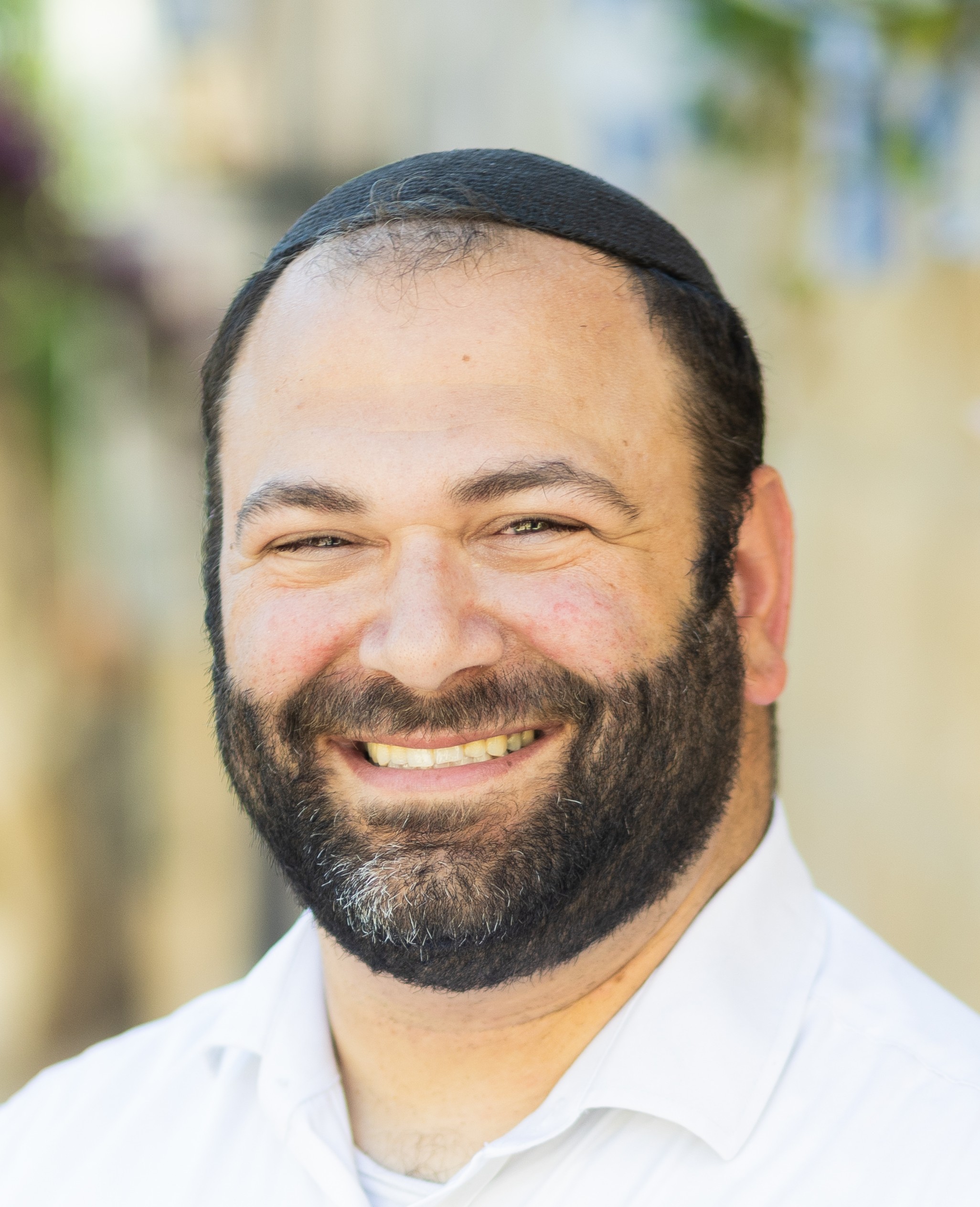
Aryeh Sklar has done the English reader an immense service by translating this important book into English as Rav Kook’s Guide for Today’s Perplexed (Kodesh Press, 2026) as a source for contemporary Jewish thought. Rabbi Aryeh Sklar teaches Talmud and Jewish philosophy in yeshivot in Israel. He holds a BA in English Literature from Yeshiva University, and an MS in Jewish Philosophy from BRGS. He lives in Jerusalem with his wife Michal and their two sons, Avichai and Itai.
What is striking in Sklar’s translation Rav Kook’s Guide for Today’s Perplexed is that Sklar is grappling with the content of the book for the contemporary world. Sklar is asking big questions about the morality of Torah in order to create a ethical resource for today. Without being overtly political, Sklar hears in the text a strong call for morality and ethics, even an evolutionary goal of a higher morality.
The translation and notes show the enthusiasm that Sklar brings to the project. I am sure his students love the discussion he is opening. You can hear his excitement in the interview, and he is now working on translating Rabbi Kook’s Afikim ba-Negev, written in the same year.
Sklar’s moral presentation contrasts with that of Marc Shapiro’s book Renewing the Old, Sanctifying the New (see our blogpost here), who was motivated by being “deeply intrigued by his unconventional views, but also because I thought others, particularly those within the Modern Orthodox community, would find them of great interest.” There, the goal was unconventionality and broadening supposed intellectual limits. Here in Sklar’s translation, the goal is to use it for a moral worldview.
Rabbi Eliezer Melamed, the author of the widely accepted Peninei Halakha, series of Halakhic works, has already made this new volume of Rabbi Kook a pillar of his thinking on many topics, especially the acceptance of other religions and part of God’s plan. I have posted on Melamed’s approach. One of the weaknesses of the book is its English and Anglo focus, debating minor American opinions about Rav Kook without fully integrating the major Hebrew interpreters, both scholarly and rabbinic.
There were originally footnotes comparing Rabbi Kook to Rabbi Soloveitchik as well as notes providing parallel passages elsewhere in Rabbi Kook. They were editorially removed; let us hope for a second expanded edition. One pet peeve, the Henri Bergson term Lebensphilosophie (philosophy of life) was translated as Existential; it has been corrected in this interview)
This is a long interview, well worth printing out and reading. More importantly, the translation should enter the curriculum of Orthodox educational institutions, especially gap year programs, HS classrooms, and rabbinical training. The translation should be a required starting point for those grappling with the Jewish morality of the state. We should thank Sklar for his passion for the topic.
How did you get interested inLe-Nevukhei ha-Dor ?
I was introduced to Le-Nevukhei ha-Dor by a close teacher of mine, Rabbi Pesach Wolicki, in 2010, soon after the work had been leaked onto the internet. I had been dealing with some religious perplexity in my own life, and Rabbi Wolicki offered to study it closely with me for a full year in Israel. That was one of the most important years of my life. Through Rav Kook, I came to see that truth is larger than any single approach, and that all sides point to a center, a core, of deep unification.
I was truly impressed with Rav Kook’s willingness to confront and even accept what seemed to be unacceptable notions to Judaism and religious belief in general. Rav Kook in Le-Nevukhei ha-Dor advocates turning away from complex philosophy and turning more toward ethics.
“We need to make fundamental something that is eternal and of which no person of human character can deny; and that is morality and justice (ha-yosher ve-ha-tzedek). Morality and justice are the depth of wisdom and its foundation. Only through them can we enter into a conversation with all people, for you will not find a person who does not [feel] obliged to give morality and justice their due.” (Chapter 3)
This was a rich foundation for me to unite the varieties of religious experience I found in Orthodox Judaism. What encourages moral growth? Who focuses on it as an ideal? Can even discordant ideas, regardless of their literal “truth,” bring man closer to a higher moral plane? Eventually the book mattered to me so much that I set out to translate it and annotate it, a project that ended up taking over a decade to complete.
Rav Kook’s overarching approach was to unite all planes of existence, to hold past, present, and future together, and to insist that morality and peace are standards that must be understood and explained according to our religious outlook. Our differences, says Rav Kook, should actually be a cause for unity, not factionalism.
On Morality
2. How does he resolve the tensions of natural morality and Torah morality?
Rav Kook believed that there was really no conflict between what he called “natural morality” – the intuited ethical feelings produced by a spiritually and emotionally healthy individual, derived from the divine soul in man – and the Torah’s morality. The only conflict is practical. Sometimes, the Torah makes demands that in the short-term compromise the natural moral feeling, in pursuit of a long-term moral outcome.
Rav Kook does express concern regarding a related tension. Immanuel Kant had raised the distinction between autonomous morality, that which is internally created and self-enforced, and heteronomous morality, that which is thrust upon a person from without, often laws of society. Kant felt that heteronomous morality was a kind of enslavement. Rav Kook formulated this as a problem when “legislative morality” – Torah law – runs contrary to the internal will for natural morality. Rav Kook spends considerable time in his early writings on this (see particularly Le-Nevukhei ha-Dor, ch. 22).
Rav Kook believed that this could be resolved by creating a two-tiered approach to Torah. Judaism wants to bring out the inner morality in all people, and it uses external laws to arrive at that eventual societal destination – what we might call the messianic age. Even if the individual person has already realized within themselves a high moral understanding, they must submit to the needs of building a society and not “push the end” and “cut the shoots,” to use the rabbinic terminology.
Rav Kook believed that there was really no conflict between what he called “natural morality” – the intuited ethical feelings produced by a spiritually and emotionally healthy individual, derived from the divine soul in man – and the Torah’s morality. The only conflict is practical. Sometimes, the Torah makes demands that in the short-term compromise the natural moral feeling, in pursuit of a long-term moral outcome.
Rav Kook does express concern regarding a related tension. Immanuel Kant had raised the distinction between autonomous morality, that which is internally created and self-enforced, and heteronomous morality, that which is thrust upon a person from without, often laws of society. Kant felt that heteronomous morality was a kind of enslavement. Rav Kook formulated this as a problem when “legislative morality” – Torah law – runs contrary to the internal will for natural morality. Rav Kook spends considerable time in his early writings on this (see particularly Le-Nevukhei ha-Dor, ch. 22).
Rav Kook believed that this could be resolved by creating a two-tiered approach to Torah. Judaism wants to bring out the inner morality in all people, and it uses external laws to arrive at that eventual societal destination – what we might call the messianic age. Even if the individual person has already realized within themselves a high moral understanding, they must submit to the needs of building a society and not “push the end” and “cut the shoots,” to use the rabbinic terminology.
3. You mention that many of his ideas on ethics and morality contained in this book have been available for many decades in his other books and have had little effect. So what power does it have if it had 122 years with no effect?
I’m not sure how we measure the effect here. Who knows where we would be without Rav Kook’s philosophy informing the ideas of the religious Zionist world? Maybe in the alternative history we would be much worse off. But I would say that too often those who claim to follow Rav Kook in Israel follow their own beliefs instead.
4. What does Rav Kook think is appropriate speech about Arabs in Israel?
There is a letter regarding this that had a very big impact on me, so much so that back when personal blogs were a thing I translated it and put it there. The scholar Yehudah Mirsky told me in response to my post that he doesn’t think there is one word from Rav Kook that is hateful about Arabs, in all his writings.
This important letter (Igrot ha-Rayah II:398) was written in 1911 and sent to Meir Bar-Ilan, son of Rav Kook’s former rabbinic mentor, Rabbi Naftali Tzvi Yehuda Berlin. Meir Bar-Ilan was the editor of a popular newspaper in the Land of Israel, Ha-Ivri, and Rav Kook contributed articles there. In the letter, Rav Kook complains that the newspaper printed a literary story that painted Arabs in an unflattering light:
“My friend, I find it a sacred duty upon myself to arouse your honor’s attention regarding the style of the depiction ‘Judah Guards the Orchard’ in issue No. 44 of ‘Ha-Ivri.’”
He talks about how descriptions of “hatred” towards “the Arab enemy,” and “rhetoric filled with a revolutionary spirit” should not be printed in the newspaper, for “it does not align with our aspirations and is not suitable for the situation at all!”
In making his case, Rav Kook focuses on practical concerns, in that there are people who read the Hebrew-language newspapers in order to find this kind of material and go on to castigate the Jews in the Land of Israel, and others will also pass it along to the Ottomans and cause political trouble for the Jews in the Land of Israel.
He concludes the letter:
Please, my friend, for the sake of the Lord, God of Israel, chosen in the Desired Land, who has begun to show us sparks of His light, from His kindness and truth, to remember His holy nation, to give it a boundary in Judah (cf. Ezra 9:9); please do not grant space in your noble newspaper for things like these, whose benefit is zero, and whose harm is immense beyond measure. On the contrary, as much as possible, we ought to describe the pleasant situations of the ways of peace and brotherhood that we find between the best of the Yishuv who act in truth, and the Arab inhabitants of the land – of course, the noblest of them.
A few months later, in 1912, Rav Kook sent another letter (Igrot ha-Rayah II:411) to Meir Bar-Ilan recommending that he speak to his friend Alexander Ziskind Rabinowitz, who could relate to him stories of “peaceful sentiments” between the Jews of the settlements and Arabs of the region.
In 1921, Rav Kook wrote a letter (Igrot ha-Rayah, vol. 4, p. 84) about how “even with the kind view (ayin tova) we take in relation to our cousins and neighbors who dwell in the land – the Arabs,” how much more so we should love our brothers, the Jews helping to build the land. The kind perspective toward their “Arab cousins” was a given for Rav Kook.
Even if someone wants to read Rav Kook’s letters here purely in pragmatic and diplomatic terms, I will respond: Well, if only the followers of Rav Kook would write letters to newspapers decrying racist descriptions of Palestinians or other groups, even just to be diplomatic! Even more so if some of them would see these letters and not engage in this kind of rhetoric themselves!
I understand that a lot of history, painful history, has happened since Rav Kook wrote those words. Would he view the situation similarly today? I believe that Rav Kook, as understood in his totality, as someone who saw true unity of all things, understood how to relate to his Arab neighbors much better than his son’s followers today. Those who disagree and think Rav Kook was naive, or too idealistic, should just come out and say it: they have a fundamentally different worldview than he did.
5. Rav Kook postpones ideal morality until the messianic age? Why do you find it satisfactory?
There are two ways to answer this. First, Rav Kook has an idea (see especially Le-Nevukhei ha-Dor, chs. 10, 16, and 31) that in some generations, a certain Torah law will be difficult to grasp, especially regarding its moral nature, but a time will come when it makes perfect sense. An example he gives (in Le-Nevukhei ha-Dor, ch. 16) is regarding the obligation to procreate. He writes that life in his time was extremely difficult, and it seemed in the short term that having children was an immoral act. Why, someone could argue, should we subject new life to these terrible conditions? However, he argues, if you believe in a glorious messianic future, it would be immoral not to have future generations that could take part in that fortune.
Secondly, in Le-Nevukhei ha-Dor (ch. 13), Rav Kook presents a view of the authority of the Sanhedrin that he believes even the Orthodox should accept. After all, the Sanhedrin was the Supreme Court of its time. It had tremendous power to decide the law. Rav Kook argues: if Orthodox Jews believe the Sanhedrin will be brought back in the messianic age, and it will have the ultimate power to decide the law, why wouldn’t they “update” or “reinterpret” the law where necessary according to the modern circumstances?
Thus, Rav Kook ingeniously claims, the Orthodox have the same belief as the Reform – the laws of the Torah should be subject to changing generations. The only difference is timing and authority. In the future Sanhedrin, these differences will become null and the two factions will unite, because surely the Sanhedrin will be able to see the changes of circumstances and redefine the laws as they see fit.
This theory of law and authority opens the floodgates. It’s dangerous stuff. I understand why the publishers of Rav Kook’s writings at the Institute of Rav Tzvi Yehudah (Kook), when they published Le-Nevukhei ha-Dor in Pinkasei ha-Rayah, vol. 2, decided to remove the chapter entirely. I don’t agree with doing that, but I understand the motive behind it. On the other hand, it also gives us a new way to answer questions of morality and the Torah:
If you have a problem with the morality of the law, you should eagerly await the return of the Sanhedrin. The future Sanhedrin, Rav Kook believed, would have to consider new circumstances, new understanding, and decide which laws were meant to be understood differently or limited severely. He believed this to be embedded in the Torah itself, and could not happen without interpreting it accordingly for the era.
In a letter to Moshe Zeidel, he denies that this should be called “development of the law.” In the letter (Igrot ha-Rayah I:90), Rav Kook explains at length his theory of hermeneutics. He writes that if the Sanhedrin and the rabbis have the capability of interpreting the Torah in a different way than it had been interpreted before, and it is accepted by the people, that interpretation must have been latent in the Torah all along (he writes similarly in his introduction to Ein Aya).
Interestingly, there is a flipside to this. The Sanhedrin could also institute even stricter laws and interpretations where they see the need. There is a balance, for Rav Kook, and they won’t please all the people all the time.
6.How and why does he acknowledge that Judaism is not the inventor of the world’s “moral and righteous laws”?
Rav Kook writes: “The Jewish people never claimed any credit as the inventors of the world’s moral and righteous laws, or even as the inventors of the principle of monotheism.” (Le-Nevukhei ha-Dor, ch. 32)
For Rav Kook, the discovery of ancient documents, such as the Code of Hammurabi, which bear striking resemblance to the stories and legal traditions of the Torah, does not mean the Torah is a non-divine document. Rather, he believed that the Torah is the continuation and the purification of ideas that started from the earliest days of the human species.
Great people all over the world have the capacity to uncover lofty moral and philosophical truths, Rav Kook argued, so why would the Torah be bereft of them? The Bible itself reports the existence of early prophets, figures like Methuselah, Enoch, Shem, and Eber, whose character teachings, customs, meditations, and true narratives remained with the ancient nations and were engraved in their writings. This, he says, is precisely why modern researchers keep finding parallels between Torah concepts and the relics of ancient civilizations. He even adds that many commandments are of the sort that individuals would naturally incline toward from man’s inner nature, since human intellect is itself a spark of the divine light.
So, all nations have people who find the truth. Judaism’s distinction is not invention but clarification and mission: the prophecy of Moses refined these universal ideas from the confusion and error that had crept into them, and the Jewish people were chosen to carry, purify, and disseminate them as an eternal covenant. That is why he can conclude, remarkably for his time, that archaeological research uncovering these parallels should be used “for honor and splendor, and for strengthening faith,” rather than feared, and he believed that with greater archeological knowledge, there would be greater faith in the historical legitimacy of the Torah in the world.
Rav Kook combats the idea too prevalent in some Jewish circles, even today: “There are people who think that one can only have perfect faith in the true Torah of Moses so long as one also believes that other faiths are all ‘false and foolish’ (Lamentations 2:14), and that there is nothing positive in holding fast to them. This is not true… There is much evil that comes from this view if it is not corrected.” (Le-Nevukhei ha-Dor, ch. 14a)
In chapter 36, Rav Kook describes the problem of Jews who abandon Judaism because they find positive aspects and even advancement in other cultures and religions, which they had been brought up to believe could not possibly exist. “How terrible is this error, to hang the uniqueness of the Jewish people upon the lowliness and degeneracy among the nations, when all of our hopes and dreams are to spread authentic knowledge of God, and refined moral laws throughout the entire world! Could it really be that we should, God forbid, hope for a hindering of our national existence?”
On Biblical Literalism
7. How is the account of Genesis not literal?
Rav Kook writes in many places that books need to be written by rabbinic scholars explaining how the Torah can be upheld even according to whatever popular theory is going around at the time. He saw this as a continuation of the methodology of Maimonides in the Guide for the Perplexed, where Maimonides defended Judaism within the philosophy of Aristotle (see Le-Nevukhei ha-Dor, ch. 2-3). Rav Kook writes that if a certain philosophical concept, ideology, or social movement fails, the Torah stays the same and can be interpreted according to the newer or more accepted theory of that time (see Ein Ayah, Shabbat, vol. 1, 2:5).
If so, you never know with Rav Kook if he is telling you how the Torah could be interpreted to align with a certain idea, or how the Torah should be interpreted. That makes his actual position difficult to ascertain.
Does Rav Kook believe the creation narrative of Genesis 1-4 is largely literal? He spends entire chapters of Le-Nevukhei ha-Dor explaining that narrative allegorically. With the background of his belief in providing interpretations that he knows could be later disproven, I think we can say that the answer is, he doesn’t much care whether or not a given passage is literal, particularly regarding the first four chapters of Genesis. The main thing is that if someone is bothered by a cosmological theory such as Aristotle’s theory, or a biological theory such as Darwin’s, then it is the rabbi’s obligation to take it head on, accept the premise of the theory, and then “build a palace of Torah above it” (Igrot ha-Rayah I:134).
Thus, Rav Kook is known for his relatively uncommon rabbinic support (at the time) for the theory of evolution, and wrote that it does not present a problem in reading the biblical story. In Le-Nevukhei ha-Dor, Rav Kook writes that evolution doesn’t make us dismiss God’s involvement in creation, but rather that evolution should astound us even more, that God set into motion a creation in such a way to evolve like this and end up here – and beyond.
8. What about the specifics of the stories of creation and of Adam and Eve in the Garden?
Firstly, the story of creation, he writes, is so dense and esoteric that we don’t understand the simple meaning of it anyway. He cites a midrashic passage that Maimonides and Nahmanides also cite: “To relate what happened at Creation to beings of flesh and blood is impossible. Therefore, Scripture concealed it, ‘In the beginning God created.’”
Once you realize this, the text itself is fair game for any way you want to understand it, because the Sages already told us the true meaning is basically impossible to understand.
Secondly, he states that it’s possible that God took the genre and narratives of contemporary cultures because the Jewish people would accept it. God just purified the ideas so that they were kosher, so to speak. In Le-Nevukhei ha-Dor (ch. 52), he writes:
“There is no problem whatsoever even were we to say that the prophecy took as its lesson a vision of creation as was widespread in those days, making it into the foundation of the standard conception of the relationship of the Creator to creation, so that man would recognize his Master…”
Third, he also describes a fascinating approach that allows for a kind of literal interpretation of creation, just from a different point of view: what if the story is being told in a simplistic way like notes of someone on the surface as the process of formation happened over the course of hundreds of millions of years? How would that be described? This allows for a large part of poetic license.
Then there’s the story of Adam and Eve. As background to this, it is important to note that according to Rav Kook, human beings possess an innate, divine understanding of truth. What blocks us from truth is our over-complicated intellect. The intellect is of course important, but not the ultimate source of truth; the soul is.
This, to Rav Kook, is the foundational story of the Torah. Adam and Eve and their story are a metaphor about the human condition and the distance created by being more intelligent than the animals. How could man evolve to forget God? The answer is intelligence. Now, did God speak to a particular person? Did Adam and Eve sin? Did God actually cast them out of the Garden? For Rav Kook, the command not to eat from the tree is an allegory for man realizing his connection to the divine and the problems of overcomplicating his intellect. The story as a whole is a metaphor for the developing problem of the God-Man relationship and it being ironically torn asunder by the complications of becoming human, an, of a higher order than the animal kingdom.
Rav Kook writes that we live in a world of rationality and intellect. And we are worse off for it. That isn’t to say that we should shun the intellect, but only to realize we lost something, a knowledge from deep inside, because of our emergence as human beings from the animal kingdom.
Now, what about all the genealogy that occurs in Genesis 5? Isn’t Adam at the top of that list? Interestingly, Rav Kook writes (Le-Nevukhei ha-Dor, ch. 5):
“This transition was passed through by an individual who had reached a perfected state making him fit to be called ‘Man’ (Adam). Through these psychological causes, a great breach was created between him and life. This individual is ‘Historical Man.’ From here onward, the Torah will tell mankind’s history in precise detail.”
In my opinion, Rav Kook is still talking within the metaphor: as if Adam were a single person. Others who I’ve discussed this with tended to see in this a concession that the story is somewhat historical, in that it actually happened to a particular individual. I don’t think that is necessary.
Rav Kook with the mayor of New York John F, Hylan 1924 (Rav Moshe Mordechai Epstein on the left)
Morality of War
9. What are Rav Kook’s ideas on morality of war?
Rav Kook saw war itself as a moral evil, but sometimes practically necessary to achieve moral ends.
“And as for war: it would have been utterly impossible, at a time when all the neighboring peoples were literal ‘wolves of the night’ (cf. Habakkuk 1:8), for Israel alone not to make war. For then they would have gathered together to destroy them completely, God forbid. On the contrary, it was very necessary to cast fear upon these savages, even through harsh conduct, but only with a view toward bringing humanity to what it ought to be, not to force the hour before its time.” (Igrot ha-Rayah I:89)
The Torah’s intent was that by establishing the Israelite nation as a stable and respected entity, then they would have the ability to shine the light of morality and righteousness upon the world. Eventually, that would result in everyone laying down arms and realizing that war is never truly moral.
In one of his notebooks (Kevatzim mi-Ktav Yad Kodsho I:34), Rav Kook argues that the Torah’s rules of war themselves point us in this direction. Particularly, the law of the “beautiful captive” (Deuteronomy 21:10-14), which directs a soldier on what to do if he wants to take a woman home from the battlefield. The Talmud (Kiddushin 21b) already saw fit to probe the morality of this law, declaring that “the Torah only speaks counter to the evil inclination.” Rav Kook writes there that the Torah was written to include a time where people had not yet completed their moral education. Thus, he states, “it is impossible for one nation to actually raise itself to a moral state of refraining from war while all the other nations still grasp the sword with full force.” However, the law of the beautiful captive is a signal. The Torah expects us to rise above the law of the captive woman, because it is motivated by the “evil inclination.” Once society achieves that realization, he says, the Torah hopes we will go further and realize “that it is not right to spill blood even for political ends… and we will recognize that every weapon is nothing but a thing of shame (cf. Talmud Shabbat 63a).”
It’s worth noting that during WWI, Rav Kook set his mind to write about what war represents, its positives and negatives, and these entries were edited and published in the beginning of Orot. I had the extreme displeasure of reading an article recently where the author claimed Rav Kook was enthusiastically militaristic, since Rav Kook wrote in Orot, “When a great war comes to the world, the messianic power is awakened.” The author had to ignore everything else Rav Kook wrote on war to have this position. These passages in Orot are not Rav Kook glorifying war, but finding purposes and positives in everything, even in seemingly negative things.
Rav Kook’s early writings emphasize the knowledge that comes from two “impulses”: the moral impulse, and the revelational impulse (originating in Bachye ibn Pakuda’s Hovot ha-Levavot, “Service of God,” 3). For Rav Kook, we all begin with the moral impulse. We know it in our hearts, naturally. The revelation of the Torah, however, demands certain actions as part of a long-term program to help lead all of humanity toward a path of moral enlightenment. Not always will these two impulses align in the short-term. It is the job of wise people to show how the Torah/revelational impulse is working toward the same agenda as the moral impulse. (See his essay “Afikim ba-Negev,” as well Le-Nevukhei ha-Dor, ch. 51).
Many have also discussed Rav Kook’s view of Amalek. Since Rav Kook doesn’t believe in absolute, irredeemable evil, he writes (Middot ha-Rayah, “Ahava”) that we must love even Amalek, despite the Torah command to utterly destroy them.
10.How do you reconcile Rav Kook’s vision of an ethical messianic age with current religious Zionist rhetoric?
Rav Kook was ultimately a person of love. That isn’t to say he wasn’t harsh when he had to be, but it was all with the goal of unity. Do current religious Zionist leaders focus on the idea of unity of disparate parts playing their role? It seems to me that too many religious Zionist leaders seem to encourage friction: against secular Israelis, against “the left,” against the ultra-Orthodox, and more than anyone else, against the Arabs within Israel and without; everyone who is not them. This is not what needs to happen. Rav Kook’s posture was conciliatory and peace-loving. Many stories are reported of the love and kindness he extended to those who insulted and denigrated him. Unfortunately, this version of Rav Kook (the true one) has been buried by a single focus: land, war, and us-vs-them mentality.
The followers of Rav Kook, and in particular the followers of his son, Rav Tzvi Yehuda Kook, have often overly emphasized the importance of messianic thinking, of the value of the land, of nationalism. Now, all of these were of course values for Rav Kook Sr. as well, but they were hardly the most important in his thought – Rabbi Yehuda Amital once pointed out that Rav Kook uses the word “mussar,” ethics and character development, far more than he does the phrase “eretz yisrael,” the land of Israel.
But because these “grand-followers” focused on particular aspects of this great leader, they seem to have felt the need to repress or de-emphasized writings and ideas from Rav Kook that might steer away from that religious-national project. It is my belief that this is why we find some Israeli Jews who identify with the camp of Rav Kook and his followers, yet act in ways which are clearly contrary to Rav Kook’s vision of morality and justice. That is another reason why bringing Le-Nevukhei ha-Dor and other writings of his forward is so important.
On History and Other Religions
11. What is his vision of communal and human progress?
Rav Kook believed in the upwards progress of history, which he sometimes called “hishtalmut.” This was likely influenced by the ideas of Hegel and other philosophers – Rabbi David Cohen (the “Nazir”, his close student) wrote that Rav Kook’s later thought was influenced by Henri Bergson and the idea he had of an “elan vital,” some kind of force driving history toward constant evolutionary improvement (Rav Kook adds the divine to this force).
To Rav Kook, history is divinely orchestrated. Just as the original “shattering of the vessels” (to put it in kabbalistic terms) from an absolute unity resulted in the fractured existence we experience, so too the universe is engaged in an extremely slow return to that unity. It is man’s job to play a role in that return. Rav Kook takes this kind of idea to the next level in Orot ha-Teshuvah, arguing that repentance is not changing one’s core, but returning to it.
When we talk about a return to unity, we should note that Rav Kook had a peculiar notion of unity. To him, unity was not conformity. Instead, it was precisely through differences of mind and action that we could achieve true unity. Similar to how every piece of a puzzle is different, yet when connected they form one picture, so too every individual should use their talents and abilities to connect and help others connect toward building the overall picture of humanity and ultimately the universe.
What is true for the individual is also true for the nation. Just as national unity is everyone in the nation working toward the national agenda with their unique talents, so too every nation has its unique characteristics and talents that should be used to unite nations internationally. This idea, in turn, he likely derived from 18th-19th century philosophers such as Montesquieu, Herder, and Hegel.
12. How do the other religions reflect the spiritual development of humanity? How is this different than his work Orot?
In Le-Nevukhei ha-Dor, Rav Kook’s agenda was to show the good in every major movement and ideology. Repeatedly, he cites the Mishna in Avot that states, “There is nothing that doesn’t have its place.”
So, although idolatry and polytheism are abhorrent to the Torah, the practitioners of those religions are better off than with no beliefs, he writes, because at least they fear their gods, making their society more civilized than one under pure nihilism.
The next level above that is monotheistic religions. These are not perfect, writes Rav Kook. Certainly not as perfect as the divinely given Torah. But they are better because since monotheism is true, their moral compass therefore will tend to be better, and there is hope of unity through the belief in a unified God.
The next level above that is monotheistic religions based on Torah. Rav Kook calls these “branched off” religions from Judaism. Christianity and Islam carry something genuine from the source, and Rav Kook believes we should treat them accordingly. In fact, we should want pagans to become Christians and Muslims, he writes, if the other choice is paganism. He even says the fact that Christianity turned Jesus into a God can be justified because the “brilliant light” could only be accepted by people inclined toward paganism in that form (Le-Nevukhei ha-Dor, ch. 39a). In other words, it was a stepping stone out of paganism toward true monotheism, and necessary.
He remains in his conviction that Judaism is special. It alone can unite all nations and religions, since it alone is religion built upon a specific place and a specific nationhood, and therefore has a spiritual center that no other religion has in its essence. It alone can be the heart of the metaphorical “man with many body parts, or to be clearer, like a family with different kinds of people,” as he puts it.
Additionally, he critiqued Christianity for the idea of supersessionism – “the underlying conviction… that Judaism has been superseded, God forbid” – since for him, only Judaism can succeed in achieving for the world “the highest perfection of all humanity.”
To Rav Kook, the popularization of these higher forms of monotheistic religions is part of God’s plan. In his writings, Rav Kook derives this idea from Maimonides in Mishneh Torah, Laws of Kings 11:40 (which was ironically censored by Christian printers in earlier printings). Maimonides there writes that even though “there is no greater stumbling block than Christianity,” still, “ultimately, all the deeds of Jesus of Nazareth and that Ishmaelite who arose after him will only serve to prepare the way for the Messiah’s coming and the improvement of the entire world, motivating the nations to serve God together as it says, ‘I will transform the peoples to a purer language that they all will call upon the name of God and serve Him with one purpose’ (Zephaniah 3:9).” This statement by Maimonides was accepted by Nachmanides in Torat Hashem Temimah, and Rav Kook cites this source in Metziot Katan, 80 and 180, and Midbar Shur, Drush 21.
Other sources Rav Kook may have had in mind are Rabbi Judah ha-Levi in Kuzari 4:23, where he talks about God’s plan that the “seed” of Judaism should produce fruit of its tree like Christianity and Islam. Likely a major source for Rav Kook was 19th century German rabbinic scholar Rabbi Samson Raphael Hirsch, who writes (Nineteen Letters, Letter 9) that Christianity was a great boon for mankind, teaching pagans morality, monotheism, and paving the road toward the messianic future.
It would seem that Rav Kook changed his tone once he came to the Land of Israel. Rabbi Bezalel Naor writes that Orot is a “sustained intellectual battle… [that] hammers away, piece after piece, at the moral turpitude, hypocrisy, and spiritual inadequacy of the Church…. If anything, ‘Christophobia’ would more likely be the word to describe Rav Kook’s attitude toward Christian civilization.” (Naor, Introduction to Orot, Koren/ Maggid, 2015, 67–68)
In one of Rav Kook’s early essays when he came to the Land of Israel, “The Way of Renaissance,” Rav Kook called Jesus a “charismatic individual.” This caused a great deal of consternation among members of the Old Yishuv, a very conservative bunch. It is indeed possible that Rav Kook, or his son who edited Rav Kook’s notebooks to produce Orot, intentionally sought to downplay Rav Kook’s views on other religions to combat the suggestion that Rav Kook was tolerant toward Christianity.
I would suggest the contradiction may be answered in a different way. Rav Kook often distinguishes between the ideal and the practical. In Le-Nevukhei ha-Dor itself (chapter 10), he treats vegetarianism as a moral ideal that is simply not livable in the present world. Its value can only be seen in future time periods, when the time is right. Similarly, other religions: they hold objectively positive values – but those cannot be recognized fully by the Jewish people until the Messianic future. In a letter (Igrot ha-Rayah IV:1276), Rav Kook writes that the Jewish people will appreciate Christianity and Jesus, even to praise Jesus, only when the messianic age arrives and Christians admit to the truth of Judaism: “Only then at that fortunate time will our writers be able to say something positive concerning this personality – but only then, not now.” In another letter (Igrot ha-Rayah I:112), Rav Kook writes that Judaism does not seek to destroy other religions, but, based on Zechariah 9:7, to purify them and bring the “drops of light” they have been divinely granted to bring them to the fore in messianic times.
If so, I suggest the following: In Le-Nevukhei ha-Dor and other early writings, Rav Kook was willing to express the positive formation and progression of Christianity and Islam. Later, after arriving in the Holy Land, he preferred to discuss their present, practical negatives, believing wholeheartedly that the positives latent in those religions could be expressed in the quick arrival of the messianic age.
13. How does he acknowledge the potential for miracles and prophecy in other religions especially Christianity and Islam?
This is absolutely astounding. Rav Kook is willing to grant that perhaps Jesus did indeed receive divine prophecy, walk on water, and turn water into wine. For why not, if these religions ultimately represent positive progress in humanity? He writes:
“No one should view those ‘branched-off’ religions, in and of themselves, in a negative light. It is possible that there was divine impulse in this, on the part of the founders [of those religions], that they strive to improve an impressionable portion of humanity, to whatever extent was proper” (Le-Nevukhei ha-Dor, ch. 8).
In other words, he believes that since Christianity and Islam are helping to prepare the world for perfection and steering people away from polytheism, God may have even given their founders – Jesus and Mohammed – prophecy. He goes even further than that. He is willing to grant that perhaps these founders actually performed miracles divinely “prepared” for them:
“It is possible that some perceptible wonders were prepared for them, if it was necessary to encourage them, since this is relevant to humanity’s improvement, over which the hand of God stretches from the beginning of existence to the end.”
14. Why does he think nationalism is not enough?
Rav Kook gives several distinct reasons why nationalism alone cannot suffice, at least not for the Jewish people (see particularly Le-Nevukhei ha-Dor, chapters 13 and 37).
First, nationalism is emotion, not reason. “For ultimately, nationalism is based only on feeling, and when a person is called upon to explain its purpose, ‘he will find no reply.’” A people that was so severely forbidden from idolatry, which was itself “feeling based merely on consensus and delusion that filled the entire world,” has been constitutionally trained to reject anything built on “delusive feeling.” Rav Kook argues that anyone who wishes to establish “a nationalist feeling within the Jewish people, but in a less idealized form than that which has already been clarified to them, will never succeed.”
He writes that Jewish nationhood is unlike any other because it was created by its religion, not merely accompanied by it. Among the nations, “when the power of nationalism grows strong among the peoples, religious feeling weakens,” since “the nationalist feeling has already come to take their place.” Other nations, Rav Kook writes, can absorb their nonobservant members without damaging their core, for “their religion does not encompass their entire lives,” but Judaism is unique as a religion built on nationalism, and nationalism built on religion. Strip away the religion, Rav Kook writes, and you have stripped away the very glue of the nation.
He also believed pure nationalism is too particularist. Zionism, unmoored from a universal ethic, is actively dangerous. He observes that in his day “a life-will has begun to beat in the hearts of many peoples. From this has emerged the foundation of nationalism, which breaks down the boundaries of ethics, justice, and morality” (chapter 46). Jewish nationalism, he writes, must therefore be tied to its universal mission (Judaism the religion), to bring the moral unity represented by one God.
Rav Kook saw in the secular pioneers a life-force and a self-sacrifice that much of the pious world had let go slack. He believed that they were unconsciously “sparking” their religious inner selves. His argument is about what an ideal must contain if it is to sustain a people, not about who is entitled to belong to it. A nationalism that knows only itself, that can name no purpose beyond its own survival and strength, will in his opinion eventually turn narrow and then cruel, because nothing within it sets a limit on what may be done in its name. Judaism, Rav Kook believed, states that this particular nation exists for the sake of justice, compassion, and the moral unity of all humanity under one God. Israel’s return to its land is supposed to be part of its overall universal mission of justice, compassion, and morality.
Next Project
15.Why is Afikim Banegev your next project? What is it? What is interesting in that work?
Afikim ba-Negev is really a fascinating document. Rav Kook had published it in a series in the journal Ha-Peles, over the years 1903 and 1904. It is the last and longest of three essays Rav Kook published there, and contains some of Rav Kook’s core ideas that he would maintain for the rest of his life, regarding Zionism and religion, nationalism, politics, the importance of Torah observance even for ostensibly secular Jews, the importance of clarifying and refining Jewish philosophical and theological ideas, including understanding the rationale for the Torah commandments, and the concept of putting moral truths at the center of religious and intellectual life.
What Afikim ba-Negev is mostly known for, when it is known at all, is its section on vegetarianism. This section was excerpted and reprinted in Maamarei ha-Rayah vol. 2, and collected by Rav Kook’s disciple Rav David Cohen into the standalone volume Chazon HaTzimchonut VeHaShalom (“A Vision of Vegetarianism and Peace”).
I had read it in the course of translating Rav Kook’s Le-Nevukhei ha-Dor, focusing on what everyone else already did: the similar ideas regarding vegetarianism present in both works. Scholars Rabbi Eitam Henkin and Rabbi Shachar Rachmani, in their analysis of Le-Nevukhei ha-Dor, each note not just the conceptual similarities, but the word-for-word copying that occurred between Afikim ba-Negev and Le-Nevukhei ha-Dor in certain sections. Because of this, it allows us to place Le-Nevukhei ha-Dor in the time period either concurrently or after Afikim ba-Negev – i.e., around 1904.
It’s really too bad that I didn’t look into this essay enough while translating Le-Nevukhei ha-Dor, because I’ve found over and over again that there is almost no idea that appears in Afikim ba-Negev that doesn’t also appear in Le-Nevukhei ha-Dor. In fact, sometimes, a turn of phrase in the essay has cleared up a confusing idea in Le-Nevukhei ha-Dor I never understood before. I believe this essay deserves to stand on its own and become better known in the study of Rav Kook’s thought.
Wuhan University! I was a visiting scholar in the religion department of Wuhan University, China, this past May-June. Six years ago, in 2020, it was a research university that I did not expect to ever visit. There are many Western faculty members and many international students, with many courses in English. The school has 60K students and covers 3000 acres, but the campus also has 4000 acres of parks and lakes. It is a beautiful, wooded campus over many hills and ravines.
The campus is a modern campus like UCLA, MIT, or Rice, a huge secular campus amidst the skyscrapers of the modern city. They focus on ambitious science projects and count the many billionaires they have produced in the last 20 years. The campus boasts the most billionaires among their graduates. Some of the parents visit in BMW’s and Porsches. I stayed in a dormitory apartment building of visiting faculty who teach Humanities, most of them in languages such as French or Spanish.
The religion department is large, offering many courses in Christianity such as Aquinas, scholasticism, Neoplatonism, medieval Christian mystics, and the history of contemporary Christianity in China. They also teach methods in religion and Buddhism. One professor is trained at Fordham University.
Jewish Studies at Wuhan and Jewish Mysticism is of interest to the students. One of the students, whom I will call J, just graduated with a PhD in religion at Wuhan University. He wrote his dissertation on Maimonidean Jewish mysticism and Kabbalah. His goal is to translate the Zohar into Chinese. To use the Pritzker edition as a base but write a commentary geared for a Chinese reader. We discussed how he should start with a book of 20 or so passages. As I discovered in Indonesia and elsewhere, many drawn to Jewish studies start with an affiliation with Protestantism. Their study of the Bible leads them to Rabbinic and medieval Judaism. He has already done the Yad Vashem foreign scholars’ program and is interested in attending other workshops abroad to increase his knowledge of Jewish Studies.
Another Graduate student, G, is a female graduate student pursuing a doctorate on the Zohar. She says she spent a fortune to acquire a full set of the Pritzker Zohar. She admires the work of Daniel C. Matt and Arthur Green. She has also already done the Yad Vashem program and is also looking for programs to apply to attend.
Their mentor is the professor of Jewish studies at Wuhan University, AI Luming, a billionaire, entrepreneur, and philanthropist. He started in philosophy and went on to engineering and founded corporations in technology and pharmaceuticals. (Like USA billionaires, a web search will give you many of his business exploits- good and bad) He is of Kaifeng Jewish descent, as shown in his patrilineal surname. For a good summary of Kaifeng Jews, see the article here. He encourages these students to pursue Jewish Studies. He donated a million yuan of seforim and Jewish studies books to the library.
We went out for drinks and were joined by Prof Z, who was the former head of the religion department. The religion department is only about 20 years old and was developed within the philosophy department. He is the one who made this a niche department by focusing on Thomism, medieval Catholic thought, Christian mysticism, Mahayana Buddhism, and Judaism. They do not have courses on Taoism as a religion; hence, for a degree in Taoism or Chinese folk religions, one of the graduate students was about to journey to Europe for a PhD. Lao Tzu and Confucius are studied as political and social philosophers.
The entire Summa Theologica was translated into Chinese. Maybe the Zohar next.
Pictures of book covers. Gershom Scholem’s Major Trends in Jewish Mysticism is in Chinese. The students say that the English version is better; the translation seems to have skipped sections. There are no available translations of the scholarship of the last forty years. Another book, A Guide to Jewish Mysticism by Prof Liu Jingzhong (Nanchang [Nanjing] University). The book, according to my students is an eclectic mix of old theosophic society translations, combined with Scholem, Aryeh Kaplan, Ashlag, Michal Laitman, as well as snippets of Idel and Wolfson, The author is a professor of Judaism and has also published in Chinese an introduction to Judaism as well as a three volume work of selections of the Zohar, seemingly part of the Soncino translated by AI. I have never met the Nanjing professor, and it seems he is a holder of an endowed chair in Jewish studies as part of an academic center funded by Jews from abroad.
Before you go OY, oh no! realize that most Taoist religious texts or Tibetan Buddhism only had this level of translation and presentation in the USA as recently as the late 1980’s.
Another center is in Shandong University, which has regular classes, translations, and visiting scholars. They focus on Mishnah, Jewish history, exegesis, and modern Jewish history. I have been told their translation of two orders of the Mishnah and Avot is very good.
Maimonides’ Guide of the Perplexed has been translated into Chinese from the English by Dr. Fu Youde with Guo Peng and Zhang Zhiping. Prof Fu Youde has also supervised the translations of Buber, Rosenzweig and some of the Mishnah. He is the founder and director of the Center for Judaic and Inter-Religious Studies at Shandong University. He has visited Tel Aviv University and Yeshiva University. I have not met him.
Another Professor, Dong Xiuyuan, has written on Maimonides’ Cosmogony-Prophetology Puzzle: Revisiting the Traditionalist Approach; he was scheduled to speak this week in Wuhan, but I missed him as I was on my flight home. Dong Xiuyuan is the translator of Maimonides’ Sefer Hamada into Chinese.
I did a search using a Chinese search engine to see what they can get from the web. They get the Jewish encyclopedia, Sefaria, and many public domain books from the first half of the 20th century.
Back to Wuhan, people asked me what Prof. Ai Lummi teaches in his Judaism class, it seems a sample class looks something like this: Mishnah, Bahye, Maimonides, Crescas, Zohar, Abulafia, Heschel, Hasidism, using Scholem, Idel, and Green. Some of the Mishnah was translated at Shandong, and a graduet of the Wuhan program translated some of Crescas.
They wish there were a formal Classical Hebrew class to read Rabbinic and medieval Hebrew. They asked me how many Jews in the USA can read classical Hebrew, and I just sighed, having to say fewer than we want.
Besides my formal lectures, I sat for hours in a campus version of Starbucks where they play old mid-20th century jazz in the background- Charlie Parker, Dave Brubeck. It is what is in with the younger crowd here. Every coffee shop and café is playing old USA music, and many of the students love K-Pop.
They have trouble making a timeline or a clear conceptual map of Western scholarship in Jewish studies. Most of them have a VPN at this point to access everything needed for business and scholarship, but they remain conceptually separated from the Western sites. They had trouble sorting out when Scholem wrote (they did not realize how long ago it was), and where Moshe Idel fits in. Where did all these new, younger scholars of Kabbalah and Jewish Studies fit in? I took a yellow pad and kept giving them charts, genealogies of scholars, and names of books.
I outlined for them the history of kabbalah scholarship, Zohar scholarship, Kabbalah main texts, Sefer Yetzirah, and 20th-century Kabbalah. They know Ashlag material since it is online. I also walked them through the contemporary debates over Zohar authorship- Ronit Meroz vs Avishai Bar Asher, discussion of the Idrot, as well as Melilah’s Hellner-Eshed’s book on the Zohar, which they had seen but could not place in a conceptual framework.
In addition, I drew them a little map of Spain in order to identify the regions of Castile and Gerona, things we take for granted. As I did this, they told me about the Song dynasty, contemporaneous with the Kabbalists, when the capital was in this region, and they invented gunpowder and movable type, and it was a great age of the synthesis of Neo-Buddhism and Neo-Confucianism with Taoism
At one of my talks, one recent Wuhan PhD graduate wrote on commonalities between Martin Buber, Zen, and Tao. After we went outside, he confided that he is a Korean Protestant Minister. Before returning to his home country and after the submission of his thesis, he is running a pop-up Korean restaurant in town.
When I give a public lecture, I get broad questions on the comparisons to Neoplatonism, the use of images of trees and water in all traditions, and the common use of light imagery. Specific question: Did Aquinas know kabbalah? Does it have a tradition of magic and superstition? And even the old chestnut: What is mysticism?
One of the members of the department said they only teach the major world religions here: Islam, Buddhism, Taoism, Protestantism, and Catholicism. Notice how different this is from the Protestant World religions list in a basic survey text. They know Jews as the ethnic group that wins Nobel prizes, has success, and produced Einstein, an ethnic group not as a World Religion. They also do not include Hinduism. Confucianism is seen as a social-political philosophy of beneficence and well-ordered society, not a religion. (In contrast, in other countries, such as Indonesia or Singapore, it is listed as a religion.)
The word for religion in general is zongjiao and was developed in the 19th century for Christianity. According to the recent Pew survey, most Chinese claim to not have zongjiao even if they regularly worship Buddhism or Taoism. Hence, the very terms of discussion of religions in a religion department have a Christian influence even when speaking of Buddhism or Taoism. The faculty are writing articles on how Chinese religion does not fit the established Christian categories in the field.
Wuhan University needs a center for Jewish Studies similar to Shandong University. It would need a foreign professor to get it started. I was living in the faculty housing of foreign professors, mainly from Europe, who have all been here 3 years, 5 years, 9 years, and they love it. They offer large salaries, faculty housing, and moving expenses. But there is no Jewish life here; to attract a qualified instructor to build a center, you would need to be in a city that has a solid ex-pat Jewish community. This is not the city.
One of my talks was on AI and Kabbalah, with a background on how Leibniz turned to the Tao/I Ching as well as the Cabala to create a modern binary representational system. It also let me speak of Ashlag and communism, as well as new age versions allowing for comparisons to recent secular and materialist versions of Buddhism.
One of the professors suggested to the students to market kabbalah to wealthy Chinese businessmen and sell it like Yoga, Japanese forest bathing and Vipassana. This would fund the research.
We also discussed how to translate. If the Mishnah gets translated into social harmony terms of Confucianism, does one translate Zohar in the same Confucian terms or switch to Taoist terms? What is the goal? Prof Fu Youde compares Judaism to the Confucian Sages. But should Kabbalah be translated into Confucian or more relgious-spiritual Taoist/ Buddhist terms?
The word Li in Confucian thought is social well-being, blessing for the group, and propriety.
In contrast, in Taoism, the emphasis is on Keyi – ritual rules, Zhai -purification and repentance, and Jiao- offerings. Taoist religion is Zhai Jiao
Last week, I saw a sign at a local attraction that defined Buddhism as a stable society, living in peace, and blessing for the community. Pure land Buddhism of chanting, offerings, and appeals to the various Buddhas and bodhisattvas is the social norm expressed in Confucian terms of social stability.
Prof Shaul Stampfer, in his dissertation on Voloshin Yeshiva, compares the 19th-century yeshiva training at Voloshin Yeshiva to Confucian training. A training that created an educated leadership. It was not to produce rabbis. One spent 4 years of one’s adolescence becoming educated for leadership. For many, the most important Volozhin graduate was Kalman Zev Wissotsky who was the leading importer of tea from China to Russia and who funded Volozhin yeshiva. His company had offices not just in Harbin but even in Wuhan.
The Buddhism we think of in the USA is about meditation and wellness, which is basically Taoist (or Indian) in origin. The Pure Land Buddhism here is translated using Confucian terms, while the US wellness meditations would need to be translated using Taoist terms. This brings me back to the question of how to translate Kabbalah and Jewish spirituality into which of the two languages. Your purpose would determine it.
Taoism, is about a fall of humanity and the goal to become an immortal or to produce a messianic redemption of humanity. The transcendents get there by fasting, visualization, gymnastics, alchemy, and seeking health and wholeness. Pure Land Buddhism is about the afterlife, to be reborn in the “Pure Land” (a realm free from suffering and distractions) to achieve enlightenment more easily. This is attained through devotion, chanting the name of Amitabha Buddha (Nianfo), and cultivating faith. It is the most widely practiced tradition for both monastics and laypeople in China
Which religious language is closer to the Kabbalah? Sufism has been translated into Taoist and Buddhist terms for a millennium. There are many great books that came out recently on how medieval Islam was translated into Chinese terms.
The department treated me well and took me around to tour Wuhan in detail. I would definitely go back for a few weeks, especially since I now know the ins and outs of the university. But I would definitely need to go in a cooler month. Wuhan’s climate is like Houston’s or Baton Rouge’s in the summer.
This post was originally three posts on Facebook, which is still my first audience.
In the upcoming months, my blog will be back in full swing. The first post will be tonight on China.
I will post discussions, many of them relating to my travels and interfaith work, as well as selections that will help me in my upcoming two books. Blogging is always a sign that I am at the writing stage and not the editing stage. There will be posts coming from projects that I am working on. I have posts on China and India as well as on my prior book, A Jewish Trinity.
I also have new interviews with authors about their recent books in Jewish thought, Kabbalah, Jewish spirituality, and interfaith. People have been sending me their books. I do not post on self-published books, or on Bible, halakhah, or politics. There are other blogs for those topics.
This blog turns 17 years old this September, so in addition I will post some of the classic posts from the early years.
One of the activities that kept me busy was making our Master’s program into an online MA
ONLINE MA in Jewish-Christian Studies or Certificate in Jewish -Christian Studies or a Certificate in Interfaith. As of Fall 2026, our graduate programs will have both asynchronous online courses and hybrid courses with students who are both in-class and on Zoom. The entire degree will be available online. There are full scholarships from our Sister Rose Thering Fund for anyone who can, however loosely, present themselves as an educator. For those over 65 years of age, the program is $100 for two courses.
Finally, as I say every year. If you enjoy these posts, then the best way to show appreciation is to repost them on social media, discuss them on social media, and give credit.
For those interested in AI and/or kabbalah, I just finished a first draft of a paper from a conference. Comments via PM welcome
In the new global age of AI, the world is informational. For some thinkers, Kabbalah offers conceptual models for understanding the operation of this new informational world. I will look at four diverse authors: Mitchell P Marcus, head of Computer Science at the University of Pennsylvania, Avinoam Frankl, a product developer in an Israeli high-tech firm, Asher Crispe, who has worked as a Chief Technology Officer, and the entrepreneur Eduard Shifrin who has a degree in science and supports Jewish causes. All four of them seem to be independent of each other. All four authors start with Sefer Yetzirah to explain creation in AI terms, several of them turn to the emanation scheme of Lurianic Kabbalah. Most notably, one of the thinkers considers transhumanism as the messianic era when knowledge will flourish. I also present Arthur Green’s recoiling from these positions.
My book, A Jewish Trinity: Contemporary Christian Theology through Jewish Eyes, has finally appeared. I thank my generous colleagues for some amazing blurbs for the book.
A Jewish Trinity: Contemporary Christian Theology through Jewish Eyes is a groundbreaking study that signifies a new development in the relation of Jews to Christianity. Alan Brill should be commended for the breadth and depth of his scholarship, as well as for his openness of mind and respectful approach to Christian tenets of faith. This is a unique achievement, and both Jews and Christians will greatly benefit from reading it. Yaakov Ariel, professor of religious studies, University of North Carolina–Chapel Hill
This book brims with generosity to Brill’s Christian interlocutors, grounded in his lifelong serious study of Christian texts and theologies and in his mastery of Jewish traditions. That such a book exists is a cause for rejoicing. Too often, Jewish and Christian thinkers avoid talking together in a constructively comparative way, due to a paralyzing fear of getting things wrong or being criticized by the other. This book is a treasure trove for future conversation, undertaken in a spirit of respect while avoiding a false syncretism. Matthew Levering, James N. Jr. and Mary D. Perry Chair of Theology, Mundelein Seminary, and author of Engaging the Doctrine of Israel
Alan Brill is central to the new age of Christian-Jewish theological dialogue and cooperation. Here, he shows his unique mastery of the greats of modern Christian theology. Brill reviews traditional Jewish and Christian background materials to modern positions to reveal fascinating parallels and important differences between Christian and Jewish theology. The book will be of great interest to Christians interested in comparisons between Jewish and Christian theology. In addition, it holds deep resources for work in constructive Jewish theology and contemporary Christian theology. Steven Kepnes, professor of world religions and Jewish studies, Colgate University
Brill’s approach to Christian and Jewish theologies as two vibrant, diverse, and constantly evolving traditions makes this book a true tour de force in comparative theology. Brill compellingly demonstrates that these two traditions coexist in a shared theological “neighborhood,” at times intersecting and at times diverging, without ever renouncing their common intellectual and spiritual milieu. A Jewish Trinity offers an inspiring, illustrative, and delightful journey into the multidimensional relationship between Christian and Jewish theologies, through which one can learn much about both oneself and the other. Karma Ben Johanan, Department of Comparative Religion, The Hebrew University of Jerusalem, and author of Jacob’s Younger Brother: Christian-Jewish Relations after Vatican I
Alan Brill is a master of Jewish and Christian sources, and this is a breakthrough book. He examines key Christian doctrines, showing commonality, difference, and intriguing unanswered questions arising from his comparative exercise. Brill keeps the conversation open and avoids any facile assimilation. Gavin D’Costa, professor of interreligious theology, Pontifical University of St Thomas Aquinas, Rome, and emeritus professor of Catholic theology, University of Bristol
The work of theological reflection in Jewish-Christian dialogue too often has been lop-sided, with Christian theological perspectives dominating. In this book, Alan Brill offers a Jewish counterweight, indicating new pathways for Jewish comparative theological reflections on core Christian doctrines. Such work is needed in order to propel the dialogue further. Daniel Joslyn-Siemiatkoski, Kraft Family Professor and director of the Center for Christian-Jewish Learning at Boston College, and author of The More Torah, the More Life: A Christian Commentary on Mishnah Avot
Alan Brill’s direct engagement of Christian systematic theology helps advance the profoundly important but neglected area of theological study in the dialogue called for by the Second Vatican Council. The book significantly deepens the theological dimension of contemporary Christian-Jewish dialogue. Matthew Tapie, associate professor of theology, and director of the Center for Catholic-Jewish Studies, Saint Leo University
What are the Lurianic Kabbalistic intentions? How do Lurianic kavvanot work and how does one read the baroque pictorial notations of a Lurianic siddur? This is a very technical interview, very detailed, geared for those in the know. This is my second interview with Jeremy Tibbetts on Lurianic Kavvanot. It is a continuation of his contribution from 10 months ago introducing the kavvanot in Siddur Torat Chacham, a Siddur Rashash by R. Yitzchak Meir Morgenstern
This great article was written by Jeremy Tibbetts, a rabbi, who is the co-director of OU-JLIC for Anglos in Jerusalem and is the Director of Education for Yavneh, an intercampus leadership program. He is a student at Hebrew University in Jewish Thought, intending to focus on the Rashash and kavanot.
In this introduction, he walks us through the conceptual development of the kavvanot, starting the journey with Rabbi Isaac Luria (The Arizal, 1534-1572) who moved to Safed in 1569, where he lived and taught for three years. In those final years, R. Chaim Vital (1542-1620) learned from him and devoted the rest of his life, spent largely in Damascus, to developing a proper exposition of Lurianic Kabbalah.
A century after Vital died, R. Shalom Shar’abi or the Rashash (1720-1777) head of the Yeshivat Beit El became a new link in the chain of Lurianic transmission, focusing on divine names and pictorial representations of the kavvanot. In addition, he focused on the immanence of the Eyn Sof in the practice. Finally, the Hasidic rabbi R. Tzvi Hirsch of Ziditchov or the Ziditchover (1763-1861) focused more on the human experience, more on the human transformation, and how we become transformed into the divine qualities.
What are kavvanot?
Kavvanot are intentions to concentrate on when reciting the words of prayer or performing commandments (mitzvot). Often they focus on intangible realms and their particularities which are impacted by the kavvanot. The instructions are described in theoretical works or depicted in specialized prayer books. The Kabbalistic worldview hinges on the idea that the devotional mind can change the cosmos and the self at the same time.
Most people do not know about the kavvanot, due to access and accessibility. Regarding the former, the full set of Lurianic writings did not leave the land of Israel for over a century after Vital’s passing. As for the latter, Lurianic Kabbalah is extremely complex. Kavvanot necessitate erudite expertise in it and the ability to apply the most generalized principles and specific details of the system at once. Gershom Scholem considered Lurianic Kabbalah to be one of the most complex systems of thought in existence.
Kavvanot are not meant to undo or replace the simple meaning (pshat) of the supplications of prayer. Though one’s kavvanot take them to other realms, the practice must remain prayer fundamentally for it to work. Kavvanot work on the principle that as one gets to the peak of the experience, the more intentions there are to perform. The amount of kavvanot per word increases dramatically the more one prays.
2. For Hayim Vital, why do kavvanot?
Rabbi Isaac Luria told R. Chaim Vital that his kavvanot should focus on completing the worlds, yet at the same time, Luria understood the positioning of the worlds to directly impact human cognition and comprehension. These two aspects of completing the cosmos and attaining comprehension together are considered the fulfillment of humanity’s purpose.
For Vital, the ultimate outcome of kavvanot is to connect the light of the Infinite (Ein Sof) to our world, and then we need to draw it into vessels that can allow for non-overwhelming contact with infinite divine. Hence, “reducing the light is the ultimate intent of fixing the worlds (tikkun)” (Etz Chaim 9:4).
Kavvanot rectify the shattering of the vessels (shevirat hakeilim), whose broken pieces constitute our imperfect physical and spiritual reality. Our world is fundamentally broken, and as long as we do not do the fixings (tikkunim) necessary to fix it, evil and injustice will remain manifest. The tikkunim create partzufim, an infinite vessel made of ten sefirot which each contain ten sefirot and so on ad infinitum. These vessels, being infinite, can capture the light of the Ein Sof. Repairing these shattered vessels through kavvanot is the necessary prerequisite to making the light of the Ein Sof manifest within them.
This process of rectification followed by revelation also occurs within the individual. One grows spiritually as they perform the kavvanot, even in a semi-literal sense: they can fix and shine the light of holiness into the soul, and in their most idealized form, add completely new layers to it. Vital writes in Sha’ar haGilgulim that “when a righteous individual intends a complete and good intention (kavvanah), they can draw down a new soul” (Sha’ar haGilgulim Hakdamah #6).
There is a synchronicity between the completion of the worlds and of the self because the macrocosmic structure of the worlds and the microcosmic structure of the self mirror and influence each other. The fact that one of the names that Vital gives for the influx of Divine light into the partzufim is consciousness (mochin) is not coincidental. Corresponding to the upper sefirot of Chochmah, Binah, and Da’at, the mochin fill the “heads” of the partzufim before permeating the lower vessels too. As we strengthen and fill the partzufim, there is a direct impact on our consciousness in kind: “all of the forgetfulness that a person has is drawn from these lesser mochin. Whoever can, through their actions, draw them down below [to their proper place] by drawing in the greater mochin which push them… will have wondrous recollection in Torah and will understand the secrets of Torah.” (Etz Chaim 22:3).
This passage describing the interconnection between the ontological level of mochin and the commensurate mental outcomes of drawing them in was already considered extremely consequential in the early reception history of Lurianic writings.
3. For Vital, what is the difference between Intention (kavven) and envision (letzayer)?
Vital states explicitly that “one should intend” (veyikhaven) when describing daily prayer kavvanot. However, in a few places, such as in the intentions for the blessing after meals (birkat hamazon), he deploys a different term: “in the first blessing, from start to finish, envision (yetzayer) before your eyes [the Hebrew letters] aleph, lamed, hey” (Sha’ar haKavvanot Drushei Shabbat Seder Erev Shabbat) For each of the four blessings, one envisions one of the letters of the name ADNY spelled out. Letzayer is extremely uncommon in writings on kavvanot and extremely common in writings on yichudim. Both can be contrasted in Vital’s writings with changes in the worlds which occur without our intention automatically (mimeileh).
Lechaven is a specific type of intention. Vital writes that “you should intend and think in your thoughts” (Sha’ar haKavvanot Drush Kabbalat Shabbat #1). It occurs in the mind. These kavvanot are focused and thought-based but not imagistic. Kavvanah is an applied form of thought.
In normal waking life, thoughts pass in and out of our mind quickly with little perceivable consequence for the world around us. Kavvanot are the practice of taking thought and using it to affect the spiritual worlds like our hands would affect the physical world around us. As one contemporary commentator writes, “one must intend actively, not just think in their thoughts that the matter occurs of its own accord (me’eilav)” (Sha’ar Ruach haKodesh Im Peirush Sha’arei Chaim by R. Chaim Asis, Vol. 2 pg. 561).
The experiential impact from this focused type of kavvanah has two aspects. First, as discussed above, the actual technique of utilizing the focused intentional mind as an experiential component linking between the worlds’ spiritual states and our own cognitive states. One finds oneself at the bottom of a chain of divine illumination.
There is another aspect though, discussed in the recitation of the Kedusha, when many of the tikkunim of the daily prayers have been completed: “When saying ‘the world is filled with God’s glory,’ which is a secret of Malchut, intend [vatechaven] that we are the children of Malchut and we receive holiness from our mother. Therefore, intend to absorb yourself within Malchut to receive the holiness drawn onto her” (Sha’ar haKavvanot Drushei Chazarat HaAmidah #3). The ultimate type of kavvanah is not visual revelation but absorptive transformation. At its peak, one is no longer acting on the worlds as something external but as something internal.
We reclaim our place in the constellation of worlds and “when drawing the supernal holiness to the Blessed One,” one can “draw an aspect of this holiness onto themselves as well… they are sanctified and God is sanctified with them and within them” (ibid.). The focus on fixing the upper realms, in particular the lower partzufim and Malchut above all, is not a blockage to experience but a gateway to experience, a reveling in the intangible effusion of the divine.
4. Are Kavvanot individualized?
Kavvanot must be individualized. Vital writes that he was instructed to intend based on where his “soul is drawn from,” and so he must intend through one kavvanah particularly, and not the others” (Sha’ar haKavvanot Drushei Pesach #11). So too, the practice of meditating on combinations of divine names (yichudim) requires that one intend “according to their soul root” (Sha’ar Ruach haKodesh Yichud #12), expressed by punctuating the names differently.
This elevated type of knowledge, to identify the roots of different people’s souls, is exceedingly rare: R. Chaim Vital records that even great Kabbalists such as the Alshich, R. Eliyahu de Vidas, and Vital himself relied on the Arizal to inform them of their soul’s root. This could be conveyed in very basic terms, as one of the ten sefirot; more complexly as corresponding to a body part of Adam haRishon, who contained all souls in his pre-sin state; or more convoluted still, as part of a chain of prior reincarnations whose challenges in life recur and contour the tikkunim incumbent on them, such as when Vital writes that “the spark of Rabbi Akiva is closest to me out of all, and everything which happened to him happened to me” (Sha’ar haGilgulim Ahavat Shalom ed. pg.157).
In addition, the practice of kavvanot necessitates attention to our situational context and the world outside of us. If we do not pray with people who we are close to and whose challenges in life are understood intimately by us, the Arizal states that our prayers “will not bear fruit” (Sha’ar haKavvanot Drushei Birkot haShachar). Time and locale affect the mystical formulae of kavvanot.
5. What is the role of simchah in kavvanot?
Joy (simchah) has a central role in the efficacy of kavvanot. Vital writes at the beginning of Sha’ar haKavvanotDrushei Birkot haShachar that “it is forbidden for one to pray in sadness, and if they do so, then their soul (nefesh) cannot receive the supernal light which is drawn down to them at the time of prayer… the essential benefit and wholeness and attainment of the holy spirit depends on this matter.” One’s emotional state directly affects their soul’s ability to receive divine light.
Vital calls prayer the fulfillment of the mitzvah to “love your neighbor as yourself.” In particular, “if a person has knowledge and comprehension to know and be familiar with their fellow’s soul (neshama), and if there is something that is troubling their fellow, each one must join into their pain.”
6. Explain the three classes of kavvanot: perceptions, illuminations, and tikkunim.
Vital delineates three main classes of kavvanot and yichudim: hasagah (perception), he’arah (illumination), or tikkun. Yichudim of all three of these types are integrated into the practice of kavvanot,
The yichudim “to perceive some perception [hasagah]” (Sha’ar Ruach haKodesh Ahavat Shalom ed. pg. 39) center on a variety of prophetic practices and experiences that one can undergo. For example, these yichudim allow one who “has an awakening due to a soul which speaks with them… and doesn’t have the strength to bring out words from potentiality to actuality” (ibid., pg. 14). In another yichud in this section based on the name of the angel Metatron, Vital proscribes one to “close and shut their eyes and to isolate themselves [titboded] for one hour, and then intend to this yichud” (ibid., pg. 16). This also includes yichudim performed on the graves of righteous individuals to allow for “the cleaving of your soul to their soul” (ibid., pg. 33). At the height of this technique, one intends to sacrifice their soul, “raising up your soul combined with the soul of that righteous one” (ibid., pg. 34). When the hasagot of the Arizal are discussed in this work, they relate to his access to supernatural knowledge, such as the appearing of Hebrew letters on individual’s faces which indicate their merits or iniquities, dream interpretation, or the ability to learn secrets from the chirping of birds and the beating of a person’s heart (ibid., pgs. 51-61).
The second class of yichudim “clarify and illuminate [ta’ir] one’s soul to be a ready vessel to receive the supernal light continuously” (ibid., pg. 39). These yichudim are introduced by discourses on perfecting one’s character traits and ritual observance. These techniques strengthen the connection a person has to their individual soul, such as yichudim in which one contemplates being made in the tzelem Elohim [divine image] and how the body is constructed from divine names (ibid., pgs. 43-44). These yichudim utilize the soul as a bridge to greater experiences of spirituality and sanctity, like intentions to draw the sanctity of Shabbat into each weekday (ibid., pg. 45).
The third class “were given to human beings to repent” (ibid., pg. 61) and delineate the cosmic and individual impact of one’s transgressions. In these yichudim, Vital often records both an explanation of the disrepair caused in the worlds by a given transgressive act and then prescribes a series of penitential practice like fasting or rolling in snow alongside yichudim that one must perform. Gematriot [alphanumerical values of letters] feature prominently. For example, the tikkun for anger requires undertaking 151 fasts, the gematria of anger in Hebrew. During these, one intends to a form of the divine name Ehyeh which has a gematria of 151 as well (ibid., pg. 73).
7. How are Kavvanot arranged?
There is an inner lexicon, logic, and grammar to the kavvanot. They flow sequentially one into the next and cannot be performed out of order or be changed. Texts on kavvanot enumerate a variety of cognitive acts that are acceptable. The intentional mind can do a number of acts. It can draw effusion down (hamshacha), raise up (Aliyah)nitzotzot from among the kelippot, integrate (lichlol) its own soul with a given spiritual structure to elevate oneself spiritually, and much more. For the Arizal, their transformative potential lay specifically in how they change the worlds, a byproduct of which is a shift in human cognition.
One should nor pick single kavvanot out of theit logic and grammar. However, there is a machloket (disagreement) between Sephardi and Ashkenazi Kabbalists: the former say that whenever one learns a kavvanah they should begin to utilize it, while the latter say that one should only start practicing after having covered the entire system (Rav Morgenstern’s Netiv Chaim pg. 34). But both would look down upon any method of learning which focused exclusively on meditating on the self and which would exclude the change to the worlds. The Arizal himself maintains that one’s essential intention should be to the upper realms rather than the lower.
8. For R. Shalom Shar’abi, the Rashash, what is the purpose of kavvanot?
The Rashash looked down on attempts by other authors to speak about divine worship in an experiential register, as he believed that their attempts to do so effaced the Torah and did not reflect its true depth. The experiential is so lofty that it’s purposefully excluded from an esoteric work which plumbs the secrets of the universe and the nature of divinity. The Rashash intentionally wrote tersely. He states “I was brief regarding divine service in places where it would have been fit to expand a bit. This statement is true, for I made it brief purposefully (lechatchila).” (Nahar Shalom 34a).
Yet, he states that the work of kavvanot, focused on external cosmic worlds, gives way to an experience of connection and divine service because they are one and the same.
“All of our prayers are to the Ein Sof… according to the measured amount of clarification (birur) that one clarifies and raises up [of the sparks of divinity]… from partzuf to partzuf until the highest heights where they are fixed and return to be drawn down as mochin… then the ohr Ein Sof encased within, the spark and intermediary, is present and descends into every partzuf, from level to level to the end of all levels… then relative to us, we are justified in using names (kinuyim) [to address the Ein Sof directly]… and so too in the souls [narancha”i]” (34a).
The righteous individual is the vessel made physical; humanity is the partzuf which is trying to reconstitute itself, through a descent of the cosmic into the physical which causes it to “mitaveh” [congeal] (Etz Chaim 5:2). Our physical world is spirituality congealed.
Based on Vital’s Sha’arei Kedusha, the Rashash hints further at the inner world cultivated through kavvanot. He calls the state of being where we cannot perceive the Ein Sof “slumber,” but through the devotional life of kavvanot, one can “awaken” the soul and perceive the Ein Sof (Nahar Shalom 39a). This state of wakefulness is one where the individual is attentive to the presence of Ein Sof in all things through their soul.
Rabbi Shalom Sharabi -Rashash
9. How is the Rashash different than Vital?
For Vital, the journey of the kavvanot of prayer is relatively linear: as one progresses from the beginning of the siddur to the peak of it at the Amidah, one is ascending in the worlds, and tachanun marks the inflection point where one begins to descend back towards our lived reality. Ein Sof is relevant in a theoretical sense to the entire project as we strive to connect to Ein Sof, but the essence becomes the medium of spiritual structures which we can tangibly access.
For the Rashash there is an immanent experience of Ein Sof which is possible because of prayer and that continues beyond it. Vital’s writings and the siddurim produced before the Rashash rarely, if ever, deal with Ein Sof directly.
The Rashash saw all of Vital’s writings as one fully unified corpus. Even concepts like the divine self-contraction (tzimtzum) with which creation began, largely beyond the scope of kavvanot in Vital’s conception, return to the foreground in the Rashash’s system.
Vital writes that the ultimate intent for creation was for the Ein Sof “to be called ‘compassionate’ and ‘gracious” (Etz Chaim 1:2). However, these terms which come up at the beginning of creation rarely recur in Vital’s writings on kavvanot or yichudim. Some commentators took these to be primarily of philosophical import alone for understanding the nature of reality and Being.
For the Rashash, even these seemingly theoretical statements are eminently practical understandings of kavvanot. Understanding the creation of the world as driven by the desire of the Ein Sof to acquire names is necessarily part of the contemplative practice of kavvanot, to experience Ein Sof within us, allowing us to recognize its attributes and to channel that into our prayer.
This difference influenced many of the innovations of the Rashash in laying out his siddur. Unlike previous versions of the Lurianic prayerbook, which formulated the kavvanot primarily as instructions, the Rashash’s siddur depicts each instruction with a series of divine names that symbolize the different layers of light affected throughout kavvanot. The deepest layer is “light (Orot)… the names of the lights are the souls (narancha”i) and are always the same… and never change at all… and the blessed Or Ein Sof is encased within them” (printed in Rav Yaakov Moshe Hillel’s Sfat Hayam Sefirat haOmer pgs. 276-277).
10. Are the Rashash’s kavvanot tikkun or hasagah?
For Vital, hasagah can be considered a consequence of tikkun. What we get from fixing the worlds allows us to continue to fix them even better.The system is cyclical. For the Rashash, the two could almost be said to be identical.
The Rashash believed that if we are truly meant to be considered as part of the cosmic realms, and if our experiences and perceptions fit into this schema, then tikkun and hasagah are basically identical, two perspectives on the same phenomenon. A person who practices this properly reveals the infinity of their soul within their body and wakefully encounters the Ein Sof within everything, especially themselves. The experience is immanent and relational and deeply unitive. The individual’s unity with the Ein Sof leads us to perceive that “all is made into one unity… in the secret of ‘I have placed Hashem before me always’” (Nahar Shalom 34a). Wakefulness is a contemplative state where our inner world is permeated with the experience of Ein Sof.
In the ultimate stage of tikkun, this experience becomes a metaphysical reality. The Rashash explains that Adam haRishon’s body originally extended across all the spiritual realms. The upper realms were literally his inner world, and they in turn were a container for Ein Sof. In true tikkun, we have a hasagah of what this was like.
11. For the 19th century R. Tzvi Hirsch of Ziditchov what is the purpose of kavvanot?
Just like in Vital’s writings and in the Rashash’s, for the Ziditchover, tikkun and hasagah are coterminous. Similar to the Rashash, the Ziditchover states that divine names are the key to connecting to the Ein Sof, as “our essential weapons [to purify the world] are the blessed names, to unify in them the vitality and the souls of every world… and the names are the soul of the sefirot, and the Ein Sof is the soul of the names” (Pri Kodesh Hilulim 2b).
Unlike the Rashash, the Ziditchover writes openly about the personal transformation that one must undergo in order to practice kavvanot properly. Through learning Kabbalah, one can understand how to “imitate” them in our thought patterns and actions. We must utilize the Lurianic writings as maps for how to develop our spiritual self as we approach the Ein Sof. Ultimately, one ascends high enough to essentially transcend the normative practice of Lurianic kavvanot and enters into a state of mind where they can pray in true connection to the Ein Sof. The kavvanot are the gateway to this altered consciousness.
12. What is the role of the Eyn Sof for Zidichov?
A person directly relates to the immanence of the Ein Sof. The Ziditchover writes that the Ein Sof is revealed in the world through our actions: “drawing the Ein Sof into the divine names makes it become ‘that which permeates all worlds’ (memaleh kol almin) through the power of its essential holiness. Without this, the Ein Sof is removed from the world and its holiness… then the Ein Sof would not be called ‘creator of all worlds’” (Pri Kodesh Hilulim 3b). But there is also a strong mental element as well: the Ein Sof is “the thought which descends into the world of emanation (Atzilut, the highest world)” (Pri Kodesh Hilulim 1b). One’s thoughts change in the kavvanot of this world.
13, Explain intentional kavvanah vs reflective kavvanah according to the Ziditchover.
In the Ziditchover’s understanding, the light of the three lower worlds represents one’s thoughts, and the vessels represent one’s actions. One’s prayers are focused and intentional in the worlds of action, formation, or creation, which are called “the worlds of separation.” The divine light is not truly unified with the vessels that contain the light.
[The mind as it manifests when one is in the worlds of separation is not different from the mind that one exhibits in daily life: to focus on one thought, an individual has to continuously redirect their attention back to that thought as the mind naturally wanders, trying to keep its train of thought moving. In this state, the kavvanot are external to the mind. Hence, he writes that “the act of kavvanah shows a likeness to the world of creation” (Pri Kodesh Hilulim 2a).
In contrast, the higher world of emanation (atzilut) is called “the world of unity.” It exhibits total unity between light and vessel, hence the intentions performed there are reflective of this. In the world of emanation, one must change thought itself to a reflective internal practice. He characterizes this form of thought unified with action as essentially reflexive: “for when a person eats, they need not think first how to chew with their lips, nor how to lift their legs to walk” (Pri Kodesh Hilulim 1b).
There are two ways that this plays out. First, the desired result of prayer happens automatically, because one’s thought and the related action are completely unified. He writes that when one prays for healing in this state, “one does not direct thoughts to interpret ‘heal us” or certainly not to intend that there will be healing for them. It requires no intention because the healing is done on its own” (Pri Kodesh Hilulim 2b). This elevated state of mind unlocks the mental potential to create whatever change we wish to see in the world.
Furthermore, the embodied nature of them as a practice blurs the lines between the body and soul. In this state, the Ziditchover states that in prayer “at times, they will raise their right hand, and we then know that the vitality desires wisdom [as wisdom, hokhmah, is associated with the right side], or he will raise their left hand, and we know that the soul and vitality desires to enrich itself.” (Pri Kodesh Hilulim 3b). In this elevated state of kavvanah associated with the world of emanation, new and timely kavvanot will also emerge as one observes their own body’s movements and interprets the meanings. Connecting to the immanent Ein Sof opens up a wellspring of creativity to create these new kavvanot.
14. How do the Rashash and the Ziditchover differ in their understanding of how kavvanot work mentally?
For the Ziditchover, when one practices kavvanot in the worlds of separation, one must constantly direct their mental activity to particular intentions. These are external, needing to constantly be reintroduced throughout the practice. As the mind wanders naturally, one must continuously reintroduce the thought of “intend.” Once one arrives to the level where thought and action are unified, one’s mental and physical activity is unified and needs no conscious redirection: all of one’s actions are the state of kavvanah. However, one can observe one’s physical activities and “learn” from consciously what is subconsciously expressed by the body’s movement in the act of intention.
As for the Rashash, the more one practices the kavvanot, the more one’s soul (the inner seat of the Ein Sof) expands within and controls the body. Thus, one’s internal and external perceptions are transformed as one sees the Ein Sof within and without. Without this understanding, one is called “asleep,” and one who fully achieves it is “awake.” The perception of a person who experiences this wakefulness not only sees the Ein Sof externally, but also internally as well.
When comparing the Ziditchover’s and Rashash’s approaches to kavvanot, we find many important similarities. These include quoting shared source material, relevant historical leanings or beliefs related to kavvanot, and more. At the same time, we see important differences in the mechanics of the kavvanot and their results. It would be accurate to characterize the similarities as more theoretical beliefs about kavvanot and the differences as pertaining to practical elements. The first chart shows the similarities and the second chart shows the differences.
Screenshot
15. What is the subjective experience of kavvanot?
I can only really say at this point how it feels to me. The focus that kavvanot necessitate becomes an opportunity to slow down and savor the experience of prayer. Doing them for long enough strengthens my concentration and makes me more aware also of my body and my surroundings. Time feels slowed during this practice. I find that doing them draws my attention to a pleasant feeling in my body, particularly in my head. Over time, I have ascribed personal understandings and feelings to different kavvanot—there are parts that I connect with more, during which I feel more deeply.
Even though kavvanot are very mentally active and I am trying to follow the instructions of the siddur, my inner monologue is not only the words on the page but associations or prayers that I connect to these parts. It is an energizing and activating practice. They can awaken a feeling of intensity and passion, of movement even. I think of this as hitlahavut. Often, I will take a deep breath and pause for a moment within the practice and find myself awash in an “oceanic feeling,” one of calm and connection. This is what I think of as deveikut.
Before I continue my series on Rabbi Eliezer Melamed and post his views of Christianity and other religions, I will take a digression and present on the classic book by Rabbi Abba Hillel Silver, Where Judaism Differed (Macmillan, 1958). Rabbi Silver (d. 1963) was a renowned Reform Rabbi, a prolific author, orator, American Zionist leader, and fundraiser for the new state.. His most famous book, Where Judaism Differed, explained how Judaism is different from Christianity and other religions. The book was a pillar of the thinking of American Jewry. Whenever I explain my interfaith work to an older generation or explain what I am writing, I inevitably receive some form of Silver’s words in response. I teach in a program in Jewish Christian Studies, so I know there are hundreds of better books, yet Silver’s ideas that Judaism is completely the opposite of other religions still percolate in the writings of other authors such as Rabbi Yitz Greenberg or in sermons from all denominations, or are found on social media, hence these ideas are often the basis for much in ChatGPT. (We also have the opposite on ChatGPT that Judaism and Christianity share Biblical values, the commandments, and the Golden Rule.)
In short, Silver assumes that whatever Christianity teaches, Judaism is the opposite. According to Silver, Christianity is elite, and Judaism is democratic. Christianity is about sin and salvation; Judaism has no concern with sin and salvation. Christianity is ascetic, Judaism is not. Christianity is mythic and magical; Judaism is not. Christianity assumes that all is predetermined without free will, and Judaism offers free will and social progress. Christianity advocates celibacy, Judaism does not.
Original Cover 1956
Christianity accepts a Trinity, Original Sin, Incarnation, a personal messiah, miracles, redemption through God, a virgin birth, and the need for salvation of the soul. Judaism rejects these concepts and every theological idea in Christianity. Christianity is a mystery religion, while in Judaism, “the moral life and the aspirations of man are the “sacraments: of Judaism.” (210) Christianity is otherworldly and concerned for the afterlife; Judaism has no interest in eschatology.
Christianity and Islam, in Silver’s view, wanted to be free from the law, meaning to break free from ethics and morals. (Hence, Rabbi David Novak had to pen an essay explaining to Jews that Christianity is not antinomian).
In his words, only Judaism of all the religions of the world believes in human progress. (171). Only Judaism is kind to the poor, teaches humility, and has reverence for human life as shown in his comparisons to Roman Latin authors.
Silver paints the other religions in terms of their most monastic other-worldly forms and he is especially negative toward Hinduism and Buddhism seeing them as world denying, ascetic, and having little to teach. They are fatalistic and life is predetermined; this is his explanation of karma. These Dharmic religions are pessimistic, focus on suffering, and afflicting the body. He credits Christianity and Islam with many of these same negative attributes. (Once should compare Rabbi Kook’s fascinating correspondence with Rabbi Shmuel Alexandrov for a sharp contrast, in which the Russian rabbis have positive appreciation of Buddhism). He paints the Asian religions as lacking any moral teachings. Needless to say, this is an entirely erroneous characterization. I do not need to show that they have extensive teachings on ethics, family life, forgiveness, correct speech, correct actions, and working on personal virtue.
Silver paints Judaism as engaged in a continuous historic battle against idolatry, idolatrous Canaanites, against Hellenism, against ancient paganism, against Christianity, which for him is really just part of the synthesis with pagan Greco-Roman world, and against the otherworldly pagan Calvinists of our own time. In contrast, Judaism teaches sober morality, personal piety, and the “prophetic tradition of social progress”!!!! (85) This reading of Jewish history was canonized by Heinrich Graetz in his 19th-century classic History of the Jews and the reading of Christianity as Greco-Roman, not Judaic, was the definitive position of the German theologian Adolf von Harnack. Silver cites the historian George Foot Moore’s Judaism in the First Centuries of the Christian Era, but only seems to take from it that Judaism and God-fearers were “waging war with great energy against polytheism and idolatry.”
The book also typifies a Jewish trend of creating false historical genealogies crediting many aspects of Christianity to pagan influence. In 2025, I still see on social media, by people who should know better, the acceptance of the statement that Christmas Trees are from Roman paganism, a false statement, the earliest possible record is the 15th century, or that Easter/Pascha has anything to do with Ishtar.
In the end for Silver, Judaism is a pure ethical monotheism that is unique in believing in human progress. In the background of this, one hears echoes of Hermann Cohen’s views of Judaism as a unique monotheism striving toward messianic social progress but adapted for the popular pulpit. Judaism is the only religion not death-obsessed or about self-effacement, but rather affirming human progress.
The late 20th century popular Jewish maxims that Judaism does not engage with theology or have any theology, let this book linger long in people’s conceptions. Popular ideas that Judaism has no afterlife or eschatology dovetail with this book. I lose any ability to engage with the content of Rabbinic Judaism, midrash, Aggadah, kabbalah, or even medieval Jewish philosophy. Judaism is an abstraction and defined by negation of others. There is no message of the High Holy Days, the three festivals, Chanukah, prayer, or Jewish life.
To his credit, Silver was responding to several prior decades of liberal Jewish rabbis proclaiming that Judaism and Christianity taught a common universal message of prophetic ethics. However, his solution was to negate every idea of Christianity as the definition of where Judaism differed, without offering any serious positive theology of Judaism. Basically, being Jewish means rejecting a Christmas tree and every positive Christian value. The book was written in a different era, it was before Vatican II’s Nostra Aetate, and he was formed in the heyday of social progress of the first half of the 20th century.
A recent book on religious polemics portrays Silver as driven by the need for apologetics, to stem the tide of Jewish self-hatred, to respond to the stereotypes about Jews. (Jay Newman, Competition in Religious Life, 92). Silver’s work is “vitalized by the exaggeration and caricature that characterizes almost all apologetic works.” He excuses Judaism from all its weaknesses and finds the worst in other religions. He violates one of the prime directives in interfaith comparisons: Do not compare your best to their worst.
At the time of its release in 1956, the New York Times reviewed the book with praise for showing that Judaism is different than Christianity. The CCAR proclaimed that “the best introduction to Judaism that we know.” While a more cautious Felix A Levy, a Reform rabbi, praised the book as a new apologetic Hizzuk Emunah, referring to the 16th-century apologetic work by Isaac Troki, but faults him for leaving out revelation and halakha.
On the other hand, Lou H. Silverman, Professor of Jewish Literature and Thought at Vanderbilt University, in a 1958 review, faulted the book sharply for reducing Judaism to oppositional negation. Judaism is defined as not Pauline Christianity, but we do not learn at all how Rabbinic, philosophic, and mystical Judaism understood the same issues. Silverman opines that the book fails to do full justice to the texture of the tradition.
Silverman points out that the Jewish prayer book in any version is about God having sin, God’s mercy on us, and forgiving us. To say that Judaism has no sense of superiority or racial thinking and is the only universal religion rubs Silverman the wrong way. He points out that the Reform Union Prayer Book referred to the Jewish race until 1933 and it took until 1945 to remove the racial elements. Silverman as an exclamation, asks: Where is Yehudah Halevi, Franz Rosenzweig? Silverman asks: when Silver states that a concern with “eschatology represented a sharp deviation from Classical Judaism,” what does that even mean? Silverman notes that Silver certainly excludes explicit Rabbinic concerns. Silverman ends his review by wishing that Silver had written a confessional, mature statement of his beliefs as a Reform Jew, rather than just presenting Judaism as the negation of Christianity.
Msgr John M. Oesterreicher of the Institute of Judeo-Christian Studies at Seton Hall University wrote a nine-page negative review of the book. At the time, Oesterreicher was editing a journal called The Bridge which looked at similarities and differences between Judaism and Christianity, and was already working on the 1961 “Decree on the Jews” (Decretum de Iudaeis), which is considered the first draft of Nostra Aetate.
Oesterreicher points out that Silver removes any sense of the word of God or God’s call to Abraham, or Sinai, replacing those ideas with a prophetic Jewish religious genius and ideas that we follow Judaism as utilitarian, “opportune and useful for life.” He is especially irked that Silver refers to God as a due to the Jewish genius created the universal God idea, which Oesterreicher considers “not part of the truly Jewish vocabulary.”
Oesterreicher declares that “the light in Rabbi Silver’s book is not the light of scripture” and that he is at variance with Jewish tradition. For example, neither the Hebrew Bible nor Rabbinic texts see sin as degrading; rather, they have full theologies of sin, repentance, and atonement. (This is like Silverman’s critique above that you cannot state that Judaism has no eschatology). He also notes that Silver is against mysticism and mischaracterizes both Western and Eastern mysticism.
Oesterreicher obviously thinks Silver misreads and mischaracterizes Jesus, Paul, the New Testament, and Christian teachings in many places. For example, the Sermon on the Mount is clearly rabbinic in context and not to be relegated to foreign “Greco-oriental” values. Silver psychologizes Jesus’ disciples as unable to admit their teacher was arrested and killed so they go into psychological denial, delusion, and imagine him as still alive. Silver shows no knowledge of Jewish memra theology or the variety of first-century Jewish ideas.
In conclusion, Oesterreicher agrees that Judaism and Christianity are different and cites Silver approvingly that “to gloss over differences as a gesture of goodwill is a superficial act” (289) But that does not mean they are opposites. Rather, Oesterreicher ends by saying that the discussion of similarities and differences should be pursued with an “Untiring, even painfully, open eye.”
The digitized American Jewish Archives preserve the letters that Silver received from publishers about his book. Harper and Bros rejected it based on Reviewer #2. Simon and Shuster rejected it with a long letter including the following paragraph:
The third point is, I fear, a more sensitive one, but perhaps it would be best for our mutual understanding to state it baldly. All of us have been somewhat troubled throughout the book by the invidious comparisons of Christianity with Judaism. Enduring spiritual values, I feel, are self-demonstrative; they do not need to be singled out and lauded at the expense of something else. I realize that such comparisons have an enormous controversial value, but I also feel that they have the final effect of weakening your rich, positive statements, or detracting from the dignity of a great tradition. It is for this reason, as well as for the reason that such invidious comparisons may offend and repel people of other faiths, that I venture to suggest that you reconsider them.
In the end, Macmillan published it as written. But before publication, Silver had his friend Ludwig Lewisohn read the manuscript to offer comments. Ludwig Lewisohn (1882–1955), was a novelist, outspoken critic of Jewish assimilation, and a founding faculty member of Brandeis University.
Lewisohn flags the book’s thesis that history “manifests a clear upward movement in human development,” noting that this “seems to me violently contrary to historic experience and to negate by implication the special redemptive function or the Jewish people and the meaning of its martyrdom. I do not like to see concepts like “development” and “progress” applied to Jewish history. Unless we died for the eternal Law, what did we die for?” This defense of Western liberalization (so-called) has been totally invalidated by history. After the Holocaust, pre-war optimism seemed misguided.
Also noted is that Silver credits anything he does not like in Judaism to outside influences. Lewisohn writes: “Too much importance attached to the theories of Babylonian influences, etc. These are all grounded in malice, conscious or not, and the desire to eliminate the reproach of Judaism’s uniqueness.”
Once interesting observation from the book “Here, my eye catches one of those usages that lower tone. “Judaism has little sympathy with the spiritual lone wolf.” (138) That’s a screaming incongruity–like chalk scratching on a blackboard. And were not the prophets lonely and hence embattled souls?”
Lewisohn does not want to reject the spiritual and theological teaching of Judaism just to engage in negations. Lewisohn rejects the sharp contrast with Christianity
Of course. “original sin” in the Augustinian sense is nonsense. But does not Judaism, too, recognize deeply man’s rebellion against God? Is not therefore teshuvah the end and aim of life. And does not the classical liturgy make it clear that we need God’s grace–vayihi razon milfanecba. I’m frightened for the nobility and inwardness of Judaism when these things are stated after this fashion.
I’m sorry. I think the notion of “progress” in that sense –social progress without inner change-is totally discredited and Jews and Judaism will discredit themselves by clinging to it… The essence of the whole matter is in the Alenu. Progress means obedience to God’s Law and abstention from idolatry–of man, of State, of all the idols or the market-place. And that, thank God, is Judaism.
In conclusion, we are now blessed with sixty-five years of work showing the similarities and differences between Judaism and Christianity. We have fine works on the New Testament, Patristics, Rabbinic, medieval philosophy, and modern thought. No one would write like Abba Hillel Silver anymore. But the influence of this book remains vast in common understandings. I am still greeted with citations of this work. And if you want to judge the knowledge of Christianity by contemporary rabbis and Jewish thinkers, or the recent works showing a more open approach, the benchmark was already set low. So judge them, in this context.
For Rabbi Melamed, all religions have a spark of the divine, some of the light of the divine, and help the world advance toward its moral perfection. The religions of the world educate towards the moral foundations, “each religion according to its level.” Through accepting these points, Rabbi Melamed removed any stigma of other religions as needing to be negated or the need to call other religions as demonic, entirely false, or to teach a restrictive exclusivism where only Jews have religion. Rather, for most people in the world, Melamed thinks that “it is right for every person to continue in the faith of their fathers, because with the loss of faith, moral corruption increases.”
Rabbi Melamed also thinks that the religions of the world are progressing toward deeper and more abstract forms of understanding their religions, thereby removing “the dross of the crude material elements within it” allowing them to elevate their souls “to higher faith and morality.” Jews should not follow these religions; however, the religions of the world “serve as a moral and faith compass for all peoples.” Rabbi Melamed acknowledges that religious ideas are evolving and progressing to deeper understandings, the ancient and medieval forms of the religion that most people know from textbooks do not reflect current ideas in those religions. He has spoken with many people and read many books to overcome the essentializing of religions in ancient forms. I am always surprised at people who think other religions are where they were in 500 CE or even 1700 CE, but at the same time have a modern understanding of Judaism.
Rabbi Melamed’s fundamental starting point is the discussion in Rabbi Abraham Isaac Kook’s Le’Nevuchei Ha’Dor and his other books. However, Rabbi Melamed draws out the full potential implications in some of Rabbi Kook’s statements, going beyond the prior understandings to create a new broader vision, melding his views with those of Rabbi Kook. To highlight the contrasting understandings of Rabbi Kook, it is worth noting that Rabbi Zvi Yehudah Kook had views, also based on Rabbi Abraham Isaac Kook, that were deeply adversarial to Christianity and other religions, as were those of his student Rabbi Aviner. One should treat the use of Rabbi A. I. Kook and the explanation of the citations of Kook by Rabbi Melamed as innovative and expansive, blending the ideas of the Kook with contemporary application by Melamed.
Rabbi Kook wrote that the world’s religions serve a divine providential purpose, gradually elevating humanity towards its ultimate goal. There is an evolutionary unfolding of humanity from a crude understanding of God toward an abstract belief in one God. In the meantime, people need “a tangible belief in idols that provide them with basic principles of conduct and morality.” Therefore, Rabbi Kook thinks every religion has “a divine spark of morality that sustains it, through which it sets standards of good and evil” as they advance “towards the belief in divine unity “ (‘Le’Nevuchei Ha’Dor’, Chapters 8; 14:1).
Each religion contains a divine spark expressed “through different educational and cultural systems, aimed at improving human spirit and material conditions, the time and the world, the individual and the community (‘Orot: Ze’ron’im’, 6).Therefore, even concerning the lowest form of idolatry, “one cannot decide that the entire religion is erroneous,” as it may have been suitable for them in the past to uplift them somewhat. There are different levels among religions, and some are more refined “in morality, character, and conduct, and thus, their customs and idolatrous practices are not as detestable and filled with disgust as others” (‘Le’Nevuchei Ha’Dor’, 14:1; ibid, 39:1; ‘Rishon Le’Yaffo’, 91:1)
Even pagan and idolatrous religions may have served a purpose in their time. But no specific hierarchy is created. But the important element is the Divine spark in all things. God has a presence in the world and its cultures and is not limited to a single group.
The reason for this acceptance of other religions is based the idea that there is a natural division and diversity of nations, an idea going back to the Second Temple literature and continuing through the Middle Ages and beyond. Each nation has their own spirit, either angelically above, internally as their animating force, or as volkgeist. In Rabbi Kook’s writings, we have a grand vision of the elevation of all of humanity. We also have kabbalistic ideas of divine sparks in all things. Finally, we also have neo-Platonic ideas of all things upwardly aspiring to the divine. No longer is the discussion of other religions limited to Talmudic discussions of stones on the road for Mercury or statues of Aphrodite.
Rabbi Melamed explains Rabbi Kook’s idea to mean that even pagan religions serve a divine purpose and that even the representations of the gods through idols point to higher “values of truth and goodness.” Greek mythology teaches moral lessons. Melamed uses his textbook knowledge of Greek myths to state that even the gods are subject to Fate, thereby showing that there is a divine destiny and higher ethic even higher than the gods of the myths. For Melamed the “ancient myths where, despite the great power of the gods, it is limited, and they are subject to fate. Furthermore, their actions also affect their destiny, and any idol that crosses certain limits—such as excessive indulgence or pride, or extreme disregard for other gods—will be punished by more powerful, higher forces. These higher forces reflect a higher value system, in which a belief in the one true God is hidden.” Greek myths show a higher theistic vision and teach moral.
Whereas Rabbi Moses Feinstein, allowed the Greek myths only because the religion was dead and considered the myths as showing that the Greek beliefs were nonsensical, non-ethical, and immorally licentious, Rabbi Melamed, in contrast, following Rabbi Kook see the guiding hand of divine providence in the narratives as part of God’s plan for uplifting each nation of the world and that the very myths contain moral lessons. Rabbi Feinstein’s approach limits knowledge of God and morals to Jews, awash in an immoral world. Rabbi Melamed sees the knowledge of God in all nations and all nations are on a journey to ultimate perfection.
As most Jewish universalists, he quotes “For from the rising of the sun to its setting, My name will be great among the nations; and everywhere incense is going to be offered in My name, and a grain offering that is pure; for My name will be great among the nations, says the Lord of hosts” (Malachi 1:11). Showing that all religions are really worshiping the Biblical God in their various forms of worship. Rabbi Melamed is clearly an inclusivity, finding a place for other religions in categories of Torah, and he is Jewish-centered, but some of his ideas are moving to a universalism.
For example, Rabbi Melamed cites the Talmud to claim that all religions are worshiping the true high God of the Bible even if they use representation. “Our Sages explained that all idolaters refer to God as “Elah de’elahaya” – “God of gods” (Menachot 111a).”Despite using idols, “there was a deep-seated belief in a Supreme God, the source of truth and morality.” Most people were not on the level to recognize this, but there “were exceptional individuals who delved deeply into their faith and directed their primary prayers to the God of gods.” Hence, he can acknowledge the Ancient Greeks Neoplatonists, or the Hindu Upanishads, and others as expressing the best views of the era. Nevertheless, these religions improved “the values of truth and goodness in people’s hearts. In these paragraphs, he is beginning to sound more like Rabbi Menashe ben Israel or Rabbi Eliyahu Benamozegh.
Even more surpassing is that Rav Kook wrote that the sages of other religions even merited divine inspiration, (ruach ha’kodesh), a form of prophecy, through which they deepened their faith and educated their people. Rabbi Melamed accepts this. But in his printed book he cautiously does not mention the current discussions among these circles about acknowledging that Muhammad, Buddha, or Guru Nanak may have divine inspiration. The medieval position of Rabbi Nathaniel ibn Faymi (d. ~1165) that God sent prophets to all nations and establishes a religion for all nations, is becoming more accepted as a valid position. In general, one should compare Rabbi Melamed to Rabbi Yakov Nagen to get a sense of the current approaches- see Rabbi Yakov Nagen- here. One should note that Yehudah Halevi already called Plato, Aristotle, Hermes, and Zoroaster as divine (elokhi) and Maimonides granted Baalam the same prophetic status as the patriarch Jacob. Hence, even ancient pagans may have had some form of divine prophecy.
Rabbi Melamed cites the later pietistic Aggadah Tanna de-Vei Eliyahu: “I testify by Heaven and Earth that whether it is a man or woman, servant or maid, gentile or Israelite, ruach ha-kodesh rests upon him according to his deeds” (Ch. 9).The original Tanna de-Vei Eliyahu is a parallel of Galatians (3:28) “There is neither Jew nor Gentile, neither slave nor free, nor is there male and female…” But here in the Jewish Aggadic text, we have a greater universalism and a noticeable inclusion of all the people of the world in Holy spirit, which originally may have meant divine connection or inspiration corresponding to a Christian sense of the Holy Spirit but it is being understood in the 21st century as referring to prophecy, probably because the phrase Ruah Hakodesh is used in contemporary Rabbinic language to refer to prophetic inspiration and prophecy. Rabbi Kook added that it is possible that the leaders of religions even received heavenly assistance to perform miracles, so that their followers would accept the religion that advanced their moral state (‘Le’Nevuchei Ha’Dor’, 14; 46; 57).
Based on Rabbi Kook, Rabbi Melamed declares that one “should not denigrate other religions, including the more idolatrous ones.” This halakhic pronouncement seemingly undoes prior Rabbinic exhortation to make fun of idolatrous religions. Rabbi Kook taught that: “Such denigration is also against the very essence of faith and religion, and therefore, those who throw off the yoke will take the arguments and words of disparagement said about other religions and hurl them at Judaism, as happened in practice.” In making fun of another religion, the arguments against another religion can just as easily be turned around to attack Judaism causing Jews to lose their faith. Rabbi Kook taught: “we need to deepen our understanding of the value of other beliefs according to the Torah,” and show the greater and more comprehensive light that exists in the faith of Israel. In our age, greater respect for all religions leads to a stronger respect of the religious core of Judaism.
Should the nations continue in their idolatry? He answers, “even the exceptional individuals among the nations who knew that God is the “God of gods,” the source of all powers, did not abolish idol worship. This is because they knew that belief in one abstract God was too lofty, and without faith being applied to tangible forces called idols, and reinforced by rituals, they would not succeed in establishing the moral values that would elevate their people and religion.” People are not ready to worship without images and statues. This is the same answer given by the medieval Hindu scholastics Shankara, Ramanuja, or Madhva, that the people are not ready to give up their representation. It is also the answer given in the 20th century by Sarvepalli Radhakrishnan, philosopher and former President of India. Rather than the more traditional and popular Orthodox Midrash Says dualism of Torah consisting of all truths and morals contrasting with idolatry as immoral and lacking any truths, the other religions, even idolatry, serve to bring people to God. The religions of the world are on a sliding scale, very similar to what is taught in Hindu textbooks since the early Middle Ages and even in the 21st century.
Idols made of wood and stone still have the function of curbing evil inclination and keeping people from committing crimes. Even idolatrous rituals keep people on a virtuous path. At the same time, “if they continue to observe the laws of their religion, they could gradually ascend, until they merit reaching the true level of faith, drawn from the light of Israel. Therefore, according to their value, their religion has religious significance.” Rabbi Melamed concludes that “we can recognize and honor them for approaching the light of God, according to their own way.” It is important to note, that Rabbi Abraham Isaac Kook also wrote this about prior philosophic understanding of Torah, declaring that contemporary understandings of Jewish concepts need to evolve beyond the medieval.
Christianity and Islam
Rabbi Melamed follows Rabbi Kook that Christianity and Islam are not foreign worship because they were influenced by the Hebrew Bible and thereby show greater divine light. These two religions display “a further stage of progress in the process of purifying faith and morality, from crude idolatry, towards pure faith in God. And as noted above, they possibly have been granted prophecy and the performance of miracles
However, Christianity and Islam are flawed “in that they do not recognize the central role of Israel in revealing God’s word and blessing to the world, and instead, claim to replace them – while harming Jews. For him, “there is a necessity that over time, Christians and Muslims cleanse themselves of hatred of Israel, and become able to draw, from the source of Israel’s faith, illumination and guidance, according to what is appropriate and suitable for them for constant elevation and Tikkun Olam (repair of the world).” (Americans in the culture wars should take note that Rabbi Melamed used positively the word tikkun olam a word freely used by Rabbi Kook, Rebbe Nachman, Rabbi Ashlag, and other Eastern European rabbis- for citations of its use by traditional rabbis see here).
In conclusion, Rabbi Melamed states that even now, when there is still hatred by Christians and Muslims of Jews, and they still have problematic elements, it is still “proper to respect the foundations of faith and morality in their religion, through which they succeeded in elevating many people to have better qualities and to achieve love and fear of God.
Unlike those who differentiate Judaism’s attitude toward Christianity and Islam, Melamed notes “that Rabbi Kook consistently refers to Christianity and Islam equally. True, Islam is purer of idolatry, but apparently, this advantage is not decisive compared to the aspects in which Christianity is preferable to Islam.” Rabbi Abram Kook, in later decades when he was fighting the extensive Christian mission, has derogatory statements about Christianity, which were given emphasis by his son Rabbi Zvi Yehudah Kook.
Rabbi Melamed concludes that Christians and Muslims are obliged to continue in their religion. Once again quoting Rabbi Kook: “The religions founded on the basis of the Torah and the Prophets, certainly have an honored value, for those who hold to them are close to the light of God, and knowledge of His glory” (“LeNevuchei Ha’Dor” 14:1). Rabbi Melamed is creating some form of Religions of the Book, in which the three religions are all based on Torah.
they have “the great moral principles they took from the light of the Torah, which also strengthened in them, with greater vigor, the pure human feeling”. And by way of this, arose from them “individuals with a pure spirit, from whose gathering they will establish for themselves religious customs, which fulfill their destiny, to elevate the soul to good qualities, to love of God, and fear of Him. Therefore, they are certainly obligated to follow the ways of their legislators, who are held in their nation as holy men, according to their value and nature”. Therefore “it is proper for every person perfect in knowledge to understand, that those who engage in them, according to the tradition in their hands, are engaging in the service of God, according to their level” (ibid 8).
Rabbi Yakov Emden’s approach of seeing great moral value in them, especially Christianity, has been accepted by Rabbi Melamed. In the past, one found it in Isaac Baer Levinsohn, Rabbi Benamozegh, Rabbi SR Hirsch, and in Rabbi Kook. But now, it has become mainstream halakhah in Rabbi Melamed. It has also been extended from just Enlightenment era Christianity to all of Christianity and Islam.
Conversion
Rabbi Melamed quotes Rabbi Kook that each nation has its own unique religion and therefore, one should generally not convert. Rabbi Kook wrote (“Le’Nevuchei Ha’Dor” 8) that it is not proper for a person to convert from their religion, including members of idolatrous religions. Because every religion also expresses the social and national character through which it was formed, and one who leaves it, betrays their family, their people, and their good values.
According to Rabbi Kook, it is often beneficial to convert from a lower religion to Christianity or Islam, “because will grow from the recognition of the unity of God (which exists in Christianity and Islam) will, in any case, bring blessing to the whole world”. However, according to Rabbi Melamed, looking at 21st-century reality, this is not always true because sometimes religious ideas and virtues will be lost in the process of giving up native religion. “For we have learned that from every religion, one can remove the dross–until it remains clean of idolatry and bad qualities.” He cites the example of Hinduism, which has deep learning and morality and recognizes the one true divine source. Many times, “leaving it for Christianity or Islam may be considered a descent.” They lead less moral life or damage their spiritual lives.
Avodah Zarah Be-Shituf (Idolatry in Partnership)
Rabbi Melamed assumed that non-Jews are allowed shituf and in this he is quoting Rabbi Kook who wrote: “Noahides are not warned about shituf” (Shmoneh Kevatzim 8:44); and it is an aspirational goal for those who do not even have shituf” (Orot Yisrael ve’Techiyato 5). In addition, Rabbi Melamed singles out for accepting the same opinion on the permissibility of shituf for gentiles his predecessors Rabbi Charlap (Mei Marom 10:35; 12:32, 2), Rabbi Menachem Mendel the ‘Tzemach Tzedek’ (‘Derech Mitzvotecha’ ‘Mitzvat Achdut Hashem’ and Rabbi Menachem Mendel Schneerson, as well (Likutei Sichot 20 p. 16 nt 44). For a full discussion of his position, where he cites many opinions, including those who think shituf is forbidden to non-Jews, see Rabbi Melamed’s discussion here. But there is no need to email Rabbi Melamed (or me), the citations of those who think it is forbidden. He knows them and discusses them at the link
God Name will be One
In conclusion, Rabbi Melamed cites the universalism of Rabbi Kook, who advocated loving all humanity and all nations despite differences in religion or race. Moreover, he advocated for understanding the other nations, especially their religion, since it is central to nations. Rabbi Kook wrote: “Love for people should be alive in the heart and soul, loving every person, especially, and loving all nations.” Any expression of hatred towards gentiles is “only for the wickedness and filth in the world.” This love should be maintained “despite all changes in religious beliefs, opinions, and despite all distinctions of races and climates.” (Middot Ha-Ray’ah: Ahavah, 5).For Rabbi Melamed, one should “understand the views and characteristics of different nations and communities as much as possible, to establish how to build human love on practical foundations. Since religion is central to the spiritual and practical life of nations, Rabbi Melamed concludes that it is evident that Rabbi Kook’s intention also includes different religions. Thus, Israel will be able to fulfill its purpose, bringing the word of God and His blessing to the world
Finally, since all religions can elevate themselves, there is no aspiration for religions to be nullified; rather each religion has a unique hue, reflecting the special character of the people in which it was created. Thus, the vision is for each religion to purify itself of all its flaws and reveal its unique path in serving God and contributing blessings to the world. This is the prophetic vision of “I will remove their blood from their mouths and their abominations from between their teeth, and they shall remain even for our God” (Zechariah 9:7). And of “For then I will turn to the peoples a pure language that they may all call upon the name of the Lord, to serve Him with one accord” (Zephaniah 3:9). (This is unlike Prof Menachem Kellner’s Maimonidean universalism envisioning that all people will have to become Jews).
Ultimately, every nation will maintain their own religion but be elevated in the messianic vision. “Alongside each nation’s special devotion to its religion, humanity as a whole will be united through the connection of all nations to Israel and its center in Jerusalem, as it is said, ‘For My house shall be called a house of prayer for all peoples” (Isaiah 56:7).
For more than a century, many of the writings of Rabbi Abraham Isaac Kook remained in manuscript, hidden away from the public eye. The works of Rabbi Kook that were published in the interim had many passages removed from them. Only in the last quarter century have these original manuscript works been published. The Shemonah Kevatzim are the original notebooks that Rabbi David Cohen (the Nazir, d 1972) and Rabbi Zvi Yehuda (d. 1982) used to produce the standard editions of Rabbi Kook’s writings. In these notebooks, we see many passages that the editors left out of printed editions. And in Li-Nevukhei ha-Dor, we see a Rabbi Kook grappling with many of the religious issues of late nineteenth-century thought. These new works present to the reader a vista on a Rabbinic thinker struggling with many of the issues of fin de siècle modernity. In a recent book, Marc B. Shapiro presents choice quotes of these writings for an American Orthodox audience.
Marc Shapiro’s new book is Renewing the Old, Sanctifying the New: The Unique Vision of Rav Kook (Littman Library of Jewish Civilization, 2024). Marc B. Shapiro holds the Weinberg Chair in Judaic Studies at the University of Scranton, Pennsylvania. A graduate of Brandeis and Harvard universities, he is also the author of Between the Yeshiva World and Modern Orthodoxy: The Life and Works of Rabbi Jehiel Jacob Weinberg, 1884–1966 (1999); The Limits of Orthodox Theology: Maimonides’ Thirteen Principles Reappraised (2003); and Changing the Immutable: How Orthodox Judaism Rewrites Its History (2015), all published by the Littman Library. Shapiro produced many videos and podcasts about his work on Orthodox rabbis and their ideas; he is deeply appreciated by his audience.
In the book, Shapiro picks out many of Rabbi Kook’s major ideas that would be new to his audience including the challenges of modern science, treating the Bible in a non-literal way, the notion of natural morality as a counter to book law. his view of other religions, even acknowledging the possibility of alternate revelations, his idea of how a future Sanhedrin will update Jewish law, as well as his defense of Orthopraxy for those who cannot accept all the dogmas. Shapiro uses his vast knowledge of other Orthodox thinkers such as Chief Rabbi Yitzhak HaLevi Herzog (d. 1959) and Rabbi Yechiel Yaakov Weinberg (d.1966) to contextualizes Kook’s statements. The focus of the book is on topics of interest within English-speaking Orthodoxy (or of interest to Shapiro) and not on Kook’s use of Hegel and Schopenhauer, his views of history, or individualist views of creativity. At many points, Shapiro contrasts Rabbi Kook to the limits within American Orthodoxy, or has personal asides where he directly speaks to American Orthodoxy. These ideas of Rabbi Kook from 100 years ago were influential in the formation of Religious Zionism, which developed sharply different from American forms of Orthodoxy.
Version 1.0.0
The ideas in the book have dozens of well-known interpretations in Religious Zionist thought, so the book would not be an innovation to them or their students. To take one example that I know well, Shapiro presents Kook’s ideas that the religions of the world are all part of the dew of the divine light and part of a Divine plan to uplift the world. Contemporary interfaith work, however, is already situated in a context where Rabbi Eliezer Melamed, Rabbi Oury Cherki, Rabbi Shlomo Amar, as well as my friend Rabbi Yakov Nagen, as well as many others, have been working for decades within Rabbi Kook’s framework to encounter other religions positively as part of a divine plan.
Another example: Shapiro cites that Rabbi Kook encouraged the study of Jewish thought, and only those trained in it should comment on Jewish thought. But Jewish thought is standard, in a Religious Zionist education consisting of at least the six thinkers of the Relgious Zionist canon Maimonides, Halevi, Maharal, Ramchal, Hayim of Volozhin, as well as mastery of Rabbi Kook’s writings. From there, one branches out to Midrash, Kabbalah, Hasidut, or even Franz Rosenzweig’s Star of Redemption. If one visits a Religious Zionist bookstore such as Dabri Shir, the majority of books are of Jewish thought. Shapiro’s book works as a foil to American Orthodoxy’s omission and is not meant to comprehend the way these statements of Rabbi Kook about Jewish thought are presented and lived by the culture of Jewish thought as understood by Religious Zionist Rabbis such as Rabbis Melamed, Avinar, Ariel, Bin Nun, Shagar and Cherlow, each in a unique manner.
The pleasure of the book, for me, is in the details and notes. Lots of citations to interesting quotes from books and a wealth of parallel ideas to Rabbi Kook. I had forgotten that Rabbi Kook had a responsa about Bahai and I learned that Rabbi Zini, the editor of Eliyahu Benamozegh (d.1900), ironically rejects the universalism of Benamozegh and of Rabbi Kook. I do wish that the book had engaged with the proximal context of Rabbi Kook, including universalist thinkers such as Rabbi Shmuel Alexanrov, a fellow Volozhin graduate with whom Kook corresponded about Buddhism, who had more radical views about other religions.
In many ways, this book continues Prof Marc Shapiro’s lifelong interest in showing the limits of Orthodox theology. Shapiro shows that Kook’s thought is broader than American Orthodox thought and that many of Kook ‘s ideas have parallels in other Orthodox Jewish thinkers whom Shapiro has written about, thereby creating or advocating a broader spectrum of ideas. I recommend reading some of his other articles here for a fuller discussion. For many American Modern Orthodox and Yeshivish readers, the book will be eye opening. They are already familiar with and appreciate Shapiro’s wide-ranging presentations of historical figures with Orthodoxy. They will welcome the book. The book is a fun and easy read for those interested in the topic, and is worthy of a long summer Shabbat afternoon to enjoy the book.
1. Why did you write the book?
Starting with the publication of Rav Kook’s Shemonah Kevatzim, we have been fortunate to see the release of a series of new books from Rav Kook, including Li-Nevukhei ha-Dor, his modern-day Guide of the Perplexed (though he didn’t give it that title himself). These writings, some of which were suppressed, cover a range of topics that I find particularly fascinating, and which have not been the focus of much writing on Rav Kook. In these works, Rav Kook expands upon ideas he mentions only briefly elsewhere, such as his views on sacrifices and the role of the religious masses.
I wrote this book because I am deeply intrigued by his unconventional views, but also because I thought others, particularly those within the Modern Orthodox community, would find them of great interest. Many had only known him as the prophet of religious Zionism. I believe the book has struck a chord because already several people have told me how surprised they are at the breadth of ideas Rav Kook explored. His openness to other religions is one example, but there are many more. Rav Kook brought originality into nearly everything he discussed, so it is no surprise that his newer books contain such fresh and thought-provoking insights.
2) You discuss evolution and the long evolutionary sense of a long history, including events long before the Bible, such as the Pleistocene age, but you mention that it is already accepted in Modern Orthodox High School textbooks. So, why do we need thinkers from 100 years ago to justify what is already accepted?
I don’t think it is a matter of needing thinkers from a century ago to justify anything. What I aimed to do is expose people to the perspectives of rabbinic leaders like Rav Kook and R. Herzog on these matters. That, in itself, has value, even if it doesn’t have any immediate practical implications. Furthermore, while it is true that Modern Orthodox high school history classes may accept that human civilization predates the traditional Jewish dating, I have seen very little reckoning with this from an Orthodox theological perspective.
How can one reconcile the biblical chronology of human development with the findings of modern scholarship, which show that humanity existed long before the timeline outlined in the Bible? At one time, the Modern Orthodox world devoted significant effort to reconciling an ancient universe with the book of Genesis. These efforts often focused on dinosaurs and fossils, and sought to show that creation could have occurred billions of years ago even though the Torah’s literal account places the world’s creation at less than 6,000 years ago.
Yet R. Herzog was not troubled by an ancient universe. His focus was on the next step: If humanity’s creation and expansion predate the Torah’s account, then the early chapters of the Torah must be understood in a non-literal fashion.
Rabbi Herzog hoped to write a book to define the boundaries of non-literal interpretation in the Torah. Unfortunately, he never had the chance to do so. Had he written this book, he would have needed to determine when the Torah shifts from “mythic history” to actual historical events. With his knowledge of history and science, he would have approached events like the Flood and the Tower of Babel differently than his predecessors in the traditional world. In his letters, which I published in the book, you can see how he struggled with the challenge of determining how far a non-literal interpretation could be extended, particularly as such an approach would break with the traditional views held by earlier commentators.
3) Why are you addressing American Centrist Orthodoxy with Rav Kook’s view when he is not the major influence on the community?
It is true that Rav Kook is not the dominant influence in the community, but he does hold a significant influence, and hopefully, that influence will continue to grow. As I mention in the book, I believe that many of Rav Kook’s insights which have nothing to do with Religious Zionism, on topics such as the appropriate curriculum, the place of halakhah, secular studies, literalism in Torah interpretation, heresy, halakhic change, natural morality, and other areas, will be of particular interest to the Modern Orthodox community. Yet the book is not only directed to them. Rav Kook’s ideas should be fascinating to all readers, regardless of their background or affiliation.
4) You seemingly paint Rav Kook as a modernist, yet we know he gave very anti-secular studies directives to his inner circle of students.
I would not describe Rav Kook as a modernist, especially given the associations that term carries. However, I would agree that he should also not be regarded as a traditionalist. It is true that Rav Kook spoke about the importance of secular studies, but we cannot ignore the fact that the yeshiva he founded did not include them in its curriculum. Moreover, most of his students did not engage with secular disciplines, and Rav Kook did not actively encourage them to do so. Even R. Zvi Yehudah, who had broad interests in his early life, ultimately embraced a “Torah-only” lifestyle.
A similar question arises when we consider Rav Kook’s stance on academic Jewish studies. He definitely valued these areas, as seen in a 1908 letter to Rabbi Isaac Jacob Reines, whose yeshiva included secular studies. In the letter, Rav Kook expressed his intention to establish a yeshiva that would include the study of “Hokhmat Yisrael” (Iggerot ha-Re’iyah, vol. 1, p. 148). In a letter to R. Isaac Halevy, author of Dorot ha-Rishonim, R. Kook reaffirms the necessity for new approaches in scholarship, arguing that the traditional approach will not be able to stand against the forces seeking to tear down tradition (Iggerot ha-Re’iyah, vol. 1, p. 188). Despite these sentiments, however, Hokhmat Yisrael was never incorporated into his yeshiva’s curriculum.
R. Ari Chwat has written two articles documenting Rav Kook’s positive attitude toward modern scholarship (Talelei Orot, vols. 13 and 14). Chwat explains that Rav Kook ultimately recognized that, at that moment in time, other priorities needed more emphasis, such as Jewish nationalism and the study of the Bible and “Emunah”. As a result, his dream of including an Orthodox Hokhmat Yisrael in the curriculum had to be postponed. I think a similar reasoning can be applied to secular studies. Rav Kook certainly appreciated them, but incorporating them into his yeshiva’s curriculum seemed too far a step for him. For those who were already inclined to these fields, he would be supportive, but not in the sense of making them part of the curriculum or encouraging students who had no such inclinations.
5) You mention that Rabbi Kook’s soul was aspiring to prophecy, Ruah Hakodesh and spirituality, and in his writings he preferred those over Talmud. Are you advocating those spiritual soul building forms of Torah?
I am not advocating for any forms of Torah that focus on spiritual soul-building experiences, but some are inclined in that direction. For example, the Nazir who was focused on the renewal of prophecy, perhaps seeing how Rav Kook sensed that he might have failed in this area could have been too much of a “downer” for those who wished to renew the prophetic spirit and saw Rav Kook as their guide in this matter. If there are Religious Zionist thinkers in Israel today who seriously imagine a resumption of prophecy, they intend this to come about through the study of Kabbalah. In this regard, they would be following the tradition of Rav Kook as carried on by the Nazir, rather than by Rav Zvi Yehudah, who was a more “this-worldly” figure.
I would simply note that Rav Kook himself had doubts about whether his own inner spiritual experiences were genuinely from God or simply creations of his imagination. In a passage that the Nazir—who himself was striving for prophecy—censored, Rav Kook wrote: “I listen and I hear from the depths of my soul, from among the feelings of my heart, the voice of God calling. I experience a great trembling; have I so descended to become a false prophet, to say God sent me when the word of God has not been revealed to me.” I find Rav Kook’s honesty in this passage very refreshing, as it reveals his own self-doubts.
6) Where is Rabbi Hertzog the same or different than Rabbi Abraham Isaac Kook?
R. Isaac Herzog, who succeeded Rav Kook as the Ashkenazic Chief Rabbi of Eretz Yisrael, was quite different from Rav Kook. Unlike Rav Kook, he had a deep secular education, was fluent in many languages—both ancient and modern—and was fully at home in academic Jewish studies. His works primarily focused on talmudic studies and Jewish law, mostly from a traditional perspective, but he also produced academic works. Unlike Rav Kook, Kabbalah was not a central feature of R. Herzog’s life.
Rav Kook, as we know, was very much a mystic whose thoughts and his thoughts spanned the spectrum of ideas. While he also wrote on Talmud and halakhah, he did not view this as his primary contribution. Rav Kook had no formal academic training and did not produce works that could be categorized as academic. When faced with a conflict between science and Torah, Rav Kook looked at scientific conclusions—based on his understanding—and sought to harmonize them with Torah. R. Herzog, on the other hand, was deeply engaged with understanding how historians and scientists arrived at their conclusions. He carefully examined historical and scientific texts and reached out to leading non-Jewish scholars to hear their perspectives.
7) You discuss the Bible as not literal. Can you explain?
I try to place Rav Kook’s perspective within a larger context by examining how other figures have addressed the apparent conflicts between Torah and science or history. Given that Rav Kook’s approach may seem unconventional to many, I felt it was important to show how others have approached these issues, including medieval Maimonideans. Years ago, I discovered a number of letters from R. Herzog on this very topic, and the book provided an opportunity to explore how he addressed the issue.
R. Herzog’s primary concern was the biblical chronology. Modern science and history suggest that humanity has existed for a much longer period than the biblical account would indicate. R. Herzog’s first step was to determine whether there is any doubt regarding the modern scientific and historical conclusions. If there are any doubts, the biblical narrative can be understood literally. However, if there is no doubt about the scientific conclusions regarding the timeline of human history, he believed there is no choice but to interpret the Torah’s account in a non-literal way.
8) You seem to advocating both Orthopraxy and Social Orthodoxy. You seem to use Rabbi Kook to advocate for Modern Orthodox who are lax in mizvot and non-believers because they send their kids to day schools and give to Jewish causes.
I am not advocating for Orthopraxy or Social Orthodoxy. What I highlight are important statements from Rav Kook in which he demonstrated an openness both to non-observant Jews and to observant Jews who did not subscribe to traditional Orthodox dogmas. While Rav Kook did not support either of these approaches, he saw ways in which these individuals could still be included within the community. What we today call Orthopraxy fits squarely within the framework Rav Kook mentions, namely, that those with heretical beliefs, as long as those beliefs do not have an impact in the real world, should not be regarded as heretics.
When it comes to non-observant Jews, an important distinction should be made. Rav Kook did not embrace all Jews simply because they were Jewish, which contrasts with the approach commonly found in today’s kiruv organizations. When Rabbi Jacob David Wilovsky challenged Rav Kook on his relationships with the irreligious—after all, there are the explicit halakhot about how to treat them—Rav Kook explained that there is a difference between those who are irreligious yet possess what he referred to as the segulah, and those who lack it. In a formulation that distances him from the Chabad approach, Rav Kook wrote, “I do not befriend all transgressors, but only those whom I feel have a great power of segulah within them” (Iggerot, vol. 2, p. 188).
Today, especially after October 7, we can clearly see that there are many irreligious Jews who have the segulah that Rav Kook spoke about. They take pride in their Jewish identity and are connected to the Jewish people and the State of Israel in various ways. These are the very people Rav Kook was referring to. We need not limit his words to the early pioneers, who were driven by an ethical vision and were willing to sacrifice so much for the Jewish people and the Land of Israel. Even more ordinary, “run-of-the-mill” Jews—such as those in bourgeois America—can be included in Rav Kook’s category of those who possess the segulah.
9) At the very end of your book, you point out that Rav Kook was against giving women the right to vote. But we have given women the right to vote. Therefore, we cannot accept everything he said. How do you determine what to take?
With every great thinker one will find teachings that are enduring and others that are transitory. When it comes to determining which parts of the Torah should be interpreted literally and which should not, Rav Kook acknowledges that there are no clear-cut markers, and that the intuitive sense of the Jewish people will ultimately provide the answer. I believe we must adopt the same approach when evaluating Rav Kook’s own teachings.
To return to the example you mentioned, while communal sentiments can shift, it is hard to imagine ever going back to an era in which the denial of women’s suffrage, as advocated by Rav Kook, is considered “the Jewish” approach. In this regard, as in many others, it is often the people’s intuitive sense that leads the way, and later rabbinic decisions simply give their imprimatur to the collective feelings of the community.
10) You write that you heard a shiur by a Centrist rabbi on the topic of “lo tehonem” (not to give a gentile a present or a compliment). You say that we have to let it drop. How do we determine what to drop since there are lots of things that are not modern values?
The issue here is not that we have to “let it drop.” It had already been dropped, and halakhic justification had been offered in justification of this. What we are facing today is an attempt to revive it, so to speak. Normally, when reviving a forgotten practice, the main concern is whether the community is prepared to adopt a greater stringency. However, in this case, the “stringency” challenges our ability to live a normal life within a modern democratic society. R. Jehiel Jacob Weinberg already wrote about the need to declare this type of halakhah no longer relevant. In a letter to Samuel Atlas, after mentioning some discriminatory laws, R. Weinberg wrote: “We must solemnly and formally declare that in our day, this does not apply. Meiri wrote this, but the teachers and rabbis whisper to their students that all of this was written because of the censor.”
11) Rav Kook speaks of the evolution of animals to higher states. What does that mean?
I see myself in the rationalist camp, and the idea that animals will evolve to a higher state of consciousness is something that is difficult for anyone with a rationalist perspective to accept. While Rav Kook certainly draws on Maimonides’ Guide for the Perplexed, we often see that his ideas diverge from those of Maimonides in significant ways.
However, even if one cannot accept Rav Kook’s perspective on this issue, we must understand it as part of his broader vision of the world evolving toward greater perfection. It is also worth noting that his suggestion that animals will advance to a higher level helps explain why he that believes consuming animals will eventually become impossible. We kill animals to eat but if they advance to a higher level then they will no longer be “animals” as we now know them. Similarly, in such a world, animal sacrifices would no longer be applicable. The animals would no longer be the same creatures that were originally commanded to be sacrificed, so the Torah’s commandments regarding sacrifices would no longer apply.
12) You seem to write about two forms of natural morality. Can you explain?
Rav Kook speaks of trusting the natural instincts of the religious masses, and of natural morality as an inner sense that should remain uncorrupted. These are simply two expressions of the same phenomenon. Rav Kook believes that natural morality reflects divine values because the soul itself is implanted by the divine. As such, its intuitive feelings arise from this divine source and should be seen as pure, rather than as sentiments to be dismissed.
Rav Kook even describes these inherent natural feelings as characterizing the Patriarchs, who lived in a pre-Torah era and were thus forced to strive for perfection without the guidance of the written Torah.
Rav Kook’s perspective on natural morality, especially as it pertains to the masses, is particularly refreshing. In yeshivot we are taught that in matters of Torah, all valuable knowledge flows from the rabbis to the people; it is a one-way street. Rav Kook, however, turns this into a two-way street, where the masses also have something significant to offer to Torah scholars. While in the Haredi world, the idea of Daas Torah is often contrasted with Daas Baalei Batim, Rav Kook sees the religious masses as preserving Torah truths that sometimes elude the Torah scholars. This leads to a more inclusive vision of Judaism, in which a broader segment of the population can contribute in meaningful ways.
13) How would you answer those who critique your position on studying Jewish thought by saying that only halakhic authorities should decide such issues?
Rav Kook identified a significant problem: There are individuals who possess great halakhic knowledge but lack a deep understanding of Jewish thought. As a result, these individuals tend to adopt a “stringent” stance on matters of Jewish belief. They assume that everything they believe is a principle of the Torah, and if anyone expresses a differing opinion, they regard that person as a heretic. Therefore, even if one argues that halakhic authorities should be the ones to decide such matters, it is crucial that they also be well-versed in Jewish thought—a combination that has historically been quite rare.
In general, however, I do not accept the premise that halakhic authorities can “poskin” on matters of Jewish thought the way they decide questions of kashrut or Shabbat. I also do not believe that a view “accepted” years ago can now be ruled out of bounds. While some more recent Orthodox authorities adopt this position, Maimonides rejected such a conception, and I believe it lacks logical sense. I discuss this issue in my article, “Is There a ‘Pesak’ for Jewish Thought?” available here.
The Israeli rabbinic world has finally begun to take account of the religions of the world, especially Hinduism and Buddhism, and has recently declared that they have the same status as Christianity.
Rabbi Eliezer Melamed, of Yeshivat Har Beracha, who is considered one of the leading halakhic authorities of the Religious Zionist world,d has recently issued a new volume of his comprehensive presentation of Jewish law entitled Emunah veMitzvotav (Faith and its Commandments), (Har Berakhah, 2025). In the new volume, Melamed presents a Jewish legal view of other religions, specifically Christianity, Islam, Hinduism, and Buddhism. To write these chapters, he consulted with several outside experts who were knowledgeable about both halakha and other religions (including myself). I will discuss these views of Hinduism in this blog post and will deal with his approach to Buddhism, Christianity, and Islam in later blog posts. I will also cite the English summaries on the Yeshiva’s website so everyone can follow, even though I have the Hebrew original.
The bottom-line conclusion is the Christianity, Hinduism, and Buddhism have been declared by Rabbi Melamed as forms of the halakhic category of shituf (associating something else with God), a category formulated because some Medieval Ashkenaz legal authorities who in their perception saw that Christian had the same Biblical God as Judaism but associated God with something else, Jesus. The innovation in this book about Asian religions is that he treats the statues and images in Hinduism and Buddhism in the same manner as Christianity. He is decisive that for non-Jew,s “according to most halakhic authorities, there is no prohibition against practicing idolatry b’shituf. Therefore, as long as the idol worshiper also directs his worship to the one God above all the gods, he does not violate any prohibition.”
Melamed naturally holds that this form of worship through images, intermediaries, and statues, where offerings are made and incense burned, is forbidden to Jews. For him, the second commandment not to have images is addressed to Jews only because they have a special status. Non-Jews can have images, statues, and intermediaries (See Nahmanides Ex 20: 3).
Many of us have been explaining for years that Hinduism today is not worshipping many gods. This was decaled in the Jewish- Hindu Rabbinic summits in 2007-2009, which was signed by the Chief rabbi and various rabbinic figures, but they have never been translated into Hebrew. He acknowledges that contemporary “Hinduism believes in a supreme source for all the gods.” This is a new start for a halakhic understanding of Asian religions, to treat them as believer in one supreme being. On some level already twenty five years ago, Rabbi Adin Steinsaltz was stating that Hinduism and Buddhism are monotheistic enough for halakhah.
Even more importantly, Rabbi Melamed shows a great appreciation for the gifts of Hinduism, including meditation, religious pluralism, imagination, arts, personal expression, beauty, and sensitivity to all living beings.
It is important to note that the immense richness in Hinduism… the important place given to meditation that enables deep inner listening, has created an especially pluralistic position toward different religions and rituals… From the wealth of thought and imagination about man and his soul, they can offer humanity an abundance of personal expression, and ways of dealing with the challenges of existence. Thus, the pluralism within Hinduism will coalesce into a movement toward the correction of the world and will not dissipate, wasting precious energy in vain. The rich and magnificent art that developed in India in literature, poetry, painting, sculpture, architecture, music, and more, will inspire people from all nations to add beauty and pleasure to the world. They will also be able to provide the world with the special sensitivity they developed toward all living creatures and plants, based on respect for all beings, and a desire not to harm them. The more they adhere to belief in one God and morality, the more they will channel this sensitivity toward the overall movement of correcting and redeeming the world.
This is an impressive acknowledgment from a halakhic rabbi, and he placed this statement in the middle of his legal discussion. This will be the mainstream position of his followers for decades to come.
On the other hand, Melamed needlessly includes an essentialist reading of Hinduism from Christian sources explaining how they used to be demonic, worship idols, and of low morals. He reproduces the classic early 20th century Christian reading of world religions where each one is to found defective. In this reading, Hindus are polytheists (a Protestant word) and demonic because 1 Corinthians 10: 20 affirms that Gentiles do sacrifices to demons and not to God. Following this line of thinking, he credits Hinduism with offering to demons. Yet, official forms of Hinduism since antiquity did not consider appeasement of various malicious spirits- Asuras and Rakshasas- as official Hinduism or as demonic. At best, they were forest spirits to be appeased when entering their realms. In contrast, Judaism has a large number of shedim, mazikim, ruhim, and lilin. The Talmud is filled with discussions of these beings and how to avoid, appease them, or even see them. We have many magical bowls and magical formula from the Rabbinic world. (see here in my interview with Prof Harari) The scapegoat ritual, as presented by Nahmanides, was to appease the demonic evil side, a clear act of demonic worship. Some have a custom at circumcision to place food for the spirits, and there are lots of Jewish customs of spilling water or wine to appease the spirits.
In a similar manner, he condemns Hinduism for its former human sacrifice. But this practice is uncertain and may, or may not, have ever existed in the Bronze Age. Or it may have been done by marginal cults or non-Hindus. Yet, the Bible is explicit that Abraham thought he was to sacrifice his son, Jephthah sacrificed his daughter (Judges 11), there was the cult of Moloch, and King Ahaz sacrificed his son (2 Kings 16:3) and so did King Manasseh (2 Chronicles 33:6). If these Biblical stories are not normative, then the Hindu examples are equally not normative except through the colonial Christian gaze.
Imagine if a Hindu would present Judaism as superstitious compared to modern Hinduism and trace how Judaism evolved from human sacrifice to a religion still inferior to Hinduism. This was the actual way that the Hindu Neo-Vedanta modernists such as Swami Dayananda, Swami Vivekananda, and the Scholar Surendranath Dasgupta saw Judaism as primitive compared to Hinduism and that Judaism is blind to its own idolatry and human sacrifice. (I dealt with it here and in my book). They said this a full century ago, based on Christian anti-Judaism, we should not be hearing these things today. Jews do not see the Bronze Age idolatry of the Bible as in continuity with Rabbinic Judaism (circa 200 BCE to 200 CE), even if we claim cultural continuity. Hindus do not shy away from acknowledging that the Indus Valley Bronze age culture had primitive elements, even if they are not in continuity with the Upanishads religion (circa 200 BCE-200 CE)
Rabbi Melamed also thinks the advancement of Hinduism in the modern era was due to the encounter with the ideas of Biblical Judaism as mediated by Christianity and Islam, which allowed them to find the best in their own tradition. “When it encountered fundamental ideas like those in the teachings of Judaism, about belief in one God and the moral imperative to correct man and society, it was able to give them a central place, as they resonated with deep currents that had existed within it for ages… Hinduism survived with vitality, as it has the ability to absorb lofty ideas, and progress through them.” Melamed is explicitly following the evolutionary thought of Rabbi Kook who wrote: “In every religion, there is a divine spark of morality that sustains it, through which it sets standards of good and evil. Thus, humanity can gradually advance towards the belief in divine unity and its moral teachings (‘Le’Nevuchei Ha’Dor’, Chapters 8; 14:1).” But Melamed adds that the “encounter with monotheism” from “the values of the Bible, whether consciously or unconsciously, became fundamental values in Hindu culture, based on which modern Indian society tries to build itself in the areas of governance, law, education, science, and economics.” He does not realize that in most of these fields, the Indian civilization was already advanced in antiquity; he has a British colonialist gaze. We should note that the same Hindu modernists of a century ago ascribed the rise of the Biblical Abraham as based on the more advanced Hindu culture of the Vedas. And that many Modern Hindu thinkers of the early 20th century, including Swami Sivananda, the modernist teacher of Yoga, wrote that Judaism is derived from Zoroastrianism which itself is a corruption of the Vedic religion. Hence, the Abrahamic religions are Vedic at their core.
To his credit, Rabbi Melamed accepted the ancient Upanishads quote proving Hindu theism from the Rabbinic author, Rabbi Yissachar Hyman, who wrote a Hebrew book called Judaism and Hinduism.
A student asks the sage: “How many gods are there?” The sage replies: “Three thousand three hundred and thirty-three.” The student says: “Yes, of course, but how many gods are there really?” The sage replies: “Thirty-three.” The student says: “Yes, of course, but how many gods are there really?” The sage replies: “Three.” The student says: “Yes, of course, but how many gods are there really?” The sage replies: “One and a half.” The student says: “Yes, of course, but how many gods are there really?” The sage replies: “One.”
It is an important quote for him to acknowledge that Hinduism did not just discover a single supreme being in the modern era. But Rabbi Melamed then has nothing to connect it with hisotriclaly or conceptually, hence he treats it as a hidden idea needing to be revealed in modernity through Biblical influence. However, the idea of one Supreme Being is in the Bhagavad Gita (~200 CE) and in the years 700-1000 CE, all the major religious commentaries and philosophers, including Sankara, Ramanuja, and Madhva, each taught a single divine being. It is like skipping in your understanding of Judaism from the Bible to modernity, thereby bypassing the Talmud and Maimonides.
Nineteenth-century Europeans used to write that Jews had no ethics, certainly not compared to Christianity, and the Europeans did not think that Hindus had ethics either. Rabbi Melamed reproduces this Western critique of Hinduism ,not realizing that the same books said Judaism had little ethics. He does not seem to know about the extensive Hindu systems of ethics, hospitality, responsibility, duty, and of repentance,
The need to bring up the caste system in ancient Hinduism was unnecessary and served no halakhic purpose or any purpose in contemporary discussions. It would be like a book on Judaism, starting with various difficult Biblical texts about marrying off a minor daughter or a discussion of contemporary Judaism, starting with Jews are divided into 12 tribes and the Levites don’t own land.
In sum, Rav Melamed, because of his acceptance and stature has changed the discussion n Hinduism. His treating Hinduism as shituf and acknowledging the gifts of Indian culture is a huge advancement. It is certainly better than the Rabbis who declare anything from Hindu culture as forbidden or declare that it has an impure spirit hovering over it, or who use Wikipedia drivel to declare everything polytheistic. Rav Melamed is even better than those who use Joseph Campbell’s (or Heinrich Zimmer’s) universal vision of the ancient Aryans as polytheistic heroes, which has little to do with the actual Hindu religion. And we have certainly moved beyond the 2006 sheitel hair controversy, where the Rabbi just asked how it compares to the Mercury worship mentioned in the Talmud. (For more, see here).
The article on the Yeshivat Har Beracha website includes a picture of a lined-up row of Ganesha statues waiting to be bought for use in worship. I am not sure that I would include such a picture of deities. Yeshivat Har Beracha would certainly not post a picture of a crucifix or even of a nativity scene. The fact that they posted a picture of a row of Ganesha statues indicates that the process of acceptance and integration of Hinduism is far from over. (Update: In response to my blog post, they changed the picture to someone meditating.)
How can you have Religious Zionists who write poetry and music as a religious quest but who also want to override government decisions? How can you have some who want meditation, spirituality, and trips to India combined with violence? Does the vision of Rabbi Kook expect adherence to the state or to an individual intuition? Shlomo Fischer wrote a book about religious Zionism as a romantic movement, in which he answered the questions.
Shlomo Fischer studied at Yeshivat Kerem B’Yavne and in ITRI yeshiva. He did his BA in Columbia College (History) and his PhD. in Hebrew University (Sociology). He has lived in Israel since October 1976. Fischer taught in the School of Education of the Hebrew University of Jerusalem until his retirement. He is now a Senior Fellow, Jewish People Policy Institute (JPPI), Jerusalem, and the Area Head for Sociology and Jewish Identity. He has published extensively on the intersection of religion, politics, and social class in Israel.
Many of us are familiar with Fischer’s ideas from the numerous articles that he published over the years. They are all worth reading and posted at academia.edu. But this book collects his ideas into a single volume. There is great originality in his thinking,g making connections that seem obvious after he makes them. Religious Zionism is understood based on the tensions in Romantic thought, within the tensions with the French Revolution, and even with the ideas of Robespierre’s Reign of Terror. Religious Zionism is treated as a thoroughly modern phenomenon, akin to other modern revolutionary movements. After reading his essays, one understands how this movement, with its dual emphasis on the nation state and inner human will is different than the modern voluntaristic view of society and human interaction. The important analytic category is that Religious Zionism should not be compartmentalized into the categories of messianism or fundamentalism; rather, it should be compared to other movements.
The interview starts off with questions about his book, then a question on a paper he wrote comparing Religious Zionism to American Orthodoxy. The final two questions on Bezalel Smotrich and Naftali Bennett expand his paradigms to contemporary issues, as well as a conclusion with a comparison to Daesh. The book does not deal with music, poetry, or spirituality of the movement. Nor does it deal with the recent turn to Religious Zionist Indigeneity, where they seek to return to Biblical times to farming, winemaking, and adapting Bedouin dress as well as the recent turn to the Biblicism of Joshua-Judges in discussing war, which is chosen over the rabbinic tradition.
I must repeat, this blog is about theology and religious philosophy, not contemporary politics. Please do not contact me about Middle Eastern politics or the war.
The ideas in the book should be foundational to any understanding of Religious Zionism. Many of us have been positively influenced by Fischer’s articles for years. It is worth reading this interview in its entirety to understand his views.
What is your book about?
My book is about religious Zionism, but it is not a chronological history of Religious Zionism. Rather, it wants to make a series of analytical claims about the movement as a romantic nationalist movement with a strong emphasis on self-expression. The book describes the two “moments” of expressivism – the first part of the book is devoted to the “collective moment” of expressivism in the period (1967- ca.1994), and the second part is devoted to the current “individual moment” of self-expression (1995-2025).
2) Explain your concept of seeing in Religious Zionism, individual expressionism, and national bohemianism.
Israeli Religious Zionism exhibits an underlying philosophical core rooted in the modern notions of self-expression and the realization of the free and authentic self. This shapes the way that it thinks about religion, politics, nationalism, the individual, and the collective.
According to the philosopher, Charles Taylor, who coined the term, the expressivist philosophical approach which was elaborated by such thinkers as Herder, Goethe, and Hegel, contains three central Ideas which are also represented in the religious philosophy of R. Kook and the school of Religious Zionism that is associated with him.
(1) Spiritual ideas become ultimately clarified and realized when they are expressed in a material medium, such as language, music, painting, and social institutions. Thus, God is concerned to express His Divine ideals in the mundane material world in order to complete His perfection.
(2) All thinking is carried out by natural, material human beings whose true authentic inner will must be recovered. Religious Zionist ideology assumes that all created human beings have their inner will to return to their source in God. This inner will needs to be recovered since it is obscured by natural drives and passions.
(3) The unity of life and existence. In principle, the physical and the spiritual, thought and matter, body and soul are not separate realms but are unified in holistic fashion.
Religious Zionists applied these ideas to the collective plane as they sought to realize divine ideals in the Land of Israel. Thus, they engaged in founding the state, defending it , and developing the Land of Israel including the West Bank (Judea and Samaria) after the Six Day War.
In the nineteen nineties, they turned to the individual plane, to realize their inner will to connect to God through embodying spiritual ideas in the material world through poetry, cinema, performing arts, sex, relationships, progressive education, personal reading of the Bible etc. Hence, starting in the nineteen nineties, there was a turn to individual expressionism, however, without giving up collective commitments. Hence you have nationalist bohemianism. For example, wildcat, “outpost” settlements in the West Bank that offer “spa” like activities and Yoga and meditation.
3) What is the relationship between collective will and individual expression in Religious Zionism, especially Rabbi Abraham Isaac Kook?
Expressivist thinkers have to deal with the problem of recovering the true inner will. The early expressivist thinker, Jean-Jacques Rousseau answered that question in double fashion. His first answer is by entering into the social contract and identifying with the general will a person can overcoming his/her particular, egoistic will, I recover, in my role as a citizen, my rational and moral self. The second answer, given in Emile: Or Treatise on Education, is by bringing up a child in isolation from society and thus letting his natural self grow and flourish without reference to the wishes or expectations of others.
R. Kook and others in his wake also suggested these two paths. In certain passages he advocates identifying with the general collectivity of each ontological level – Israel, humankind and the entire universe in order to connect with the Divine All. In other passages R. Kook takes the individualist path. He talks about connecting with the voice within one of pure, faith and natural morality, which he held had the quality of revelation. Contemporary Religious Zionist figures develop the individual approach to one’s inner voice. They view Hasidic prayer and meditation, poetry and art, relationships and sex as paths to uncover the authentic voice within them.
The more one delves into one’s soul, the more one finds at the root of one’s soul the organic connection to the national community. This combination is what is responsible for “nationalist bohemianism” consisting of the simultaneous cultivation of one’s unique self together with commitment to the nation and nationalist aims.
4) What’s new in your approach to Rabbi Kook?
Unlike previous research that pointed out parallels in specific ideas between expressivist thinkers, such as Fichte and Hegel with the thought of Rav Kook, I show that the parallel is with the entire intellectual style of expressivist thought. Furthermore, I show the relationship between this configuration of thought and modern nationalism. R. Kook’s religious philosophy takes place upon the background of modern Jewish nationalism, in which the idea of a national will has to be expressed.
My major thesis is that Rabbi Kook’s thought embodies different inner tensions such as that between the emphasis on the individual or on the collective. There is also a tension between the bottom-up path for effecting the unity of the material and the divine, that is, the path that starts with the human being and the recovery of his inner will to join to God or the “top-down” path that identifies with the divine light clothing itself in the mundane world in dynamic fashion. I show that favoring one or the other paths has had far reaching political implications in regard to the relationship of Religious Zionism to the Israeli government and its policies.
5) How did the 1970s create an expressive political identity in Religious Zionism?
Religious Zionism ideology needed to integrate the two separate components of their identity: their commitment to modern nationalism and their commitment to Orthodox Judaism. To solve that problem, the Religious Zionists developed the notion of the Torah State. This meant that they imbued modern nationalist activity such as settlement, agriculture, economic development, defense and military activity with religious significance and at the same time tried to bring it under religious regulation.
In the 1920’s, members of HaPoel Hamizrachi, the Religious Zionist Workers movement, developed this guiding idea first in regard to the local community – the religious kibbutz and moshav. In the nineteen fifties and sixties the generation that grew up under the state, organized the Young Guard of the National Religious Party, trying to implement this idea on the national level. However, they ran into difficulty as they tried to formulate a clear, consistent, and practical program.
The Six Day War and the conquest of the Greater Land of Israel (including the West Bank, the Golan Heights and the Northern Sinai Peninsula) provided them with a solution. The program of settling and incorporating the Greater Land of Israel provided them with a clear practical program for implementing the Torah state. In this way, they developed a Torah program in regard to the key policy issues of defense and foreign relations. Because of the romantic-organic way of thinking that characterized the expressivist stream in religious Zionism, the Land of Israel was thought of as an organic unified entity which cannot be divided or reduced. You cannot have half of the Land of Israel just as you cannot be half pregnant.
Thus, R. Tzvi Yehuda Kook imbued the political program of incorporating the Greater Land of Israel with cosmic theological significance, and at the same time instilling practical, material significance into the religious philosophy. The Greater Land of Israel was a metonym for an entire theological approach and way of life, which is the implementation and embodiment of Divine ideals in the concrete, material and mundane world. Hence it its concreteness it “is bound in an essential way to the life of the nation” (Rabbi Abraham Isaac Kook Orot, 1,1).
6)How did this expressionism lead to the anti-establishment position and the creation of the underground (mahteret), which culminated in the assignation of Rabin and the disengagement protests?
The will to retain and incorporate the Greater Land of Israel was considered by expressivist Religious Zionists to be an expression of the objective, metaphysical inner general will animating the Jewish people, orienting them towards returning to their source in God. This idea, which was expressed in R. Tzvi Yehuda’s broadsheet, Lo Taguru , received its validation in the demonstrations against the Separation of Forces Agreement negotiated by Henry Kissinger in the spring of 1974 and in the settlement attempts in Judea and Samaria in 1975, in which masses of people from different walks of life participated. With the government turnover in 1977 and the ascension of the Likud to become the ruling party, settlement of the Greater Land of Israel became official government policy.
The Likud government, nevertheless, opened peace negotiations with Egypt and began to return territory – Sinai and Yamit- which was met with wide support for peace.
However, R. Tzvi Yehuda stated “The public is not with us.” So, the dilemma that presented itself to the expressivist Religious Zionists was how to respond when the empirical general will of the Jewish people as expressed in its empirical political life differed from, or contradicted the objective, metaphysical general will that was attributed to the Jewish People.
This dilemma was similar in structure to that of the Jacobins in the French Revolution: Should one follow, the objective general will given by reason and embodied in the rule of the enlightened and virtuous (Robespierre and Saint-Just), or should one follow the will of the empirical majority? Robespierre claimed that since he was uncorrupted and totally dedicated to the common good and exclusively used his reason, he had access to the objective general will even if the mass of ordinary citizens disagreed with him. Hence, he and the fellow members of the Committee of Public Safety were entitled to dominate France, including sending people to the guillotine.
Here too in Religious Zionism, two approaches were formulated about embodying Divine ideals in the material world. The revolutionary approach was formulated by Yehuda Etzion of the Jewish Settlers Underground in three remarkable articles written from his prison cell. This approach maintained that one should implement the “true” inner metaphysical general will. Etzion argued that through the spontaneous engagement of the activist the activist recovered the objective, metaphysical general will of the Jewish People. Through his active and conceivably violent response the activist “plugs into” the general and divine will and charismatically achieves “the lower rung of prophecy”, thus attaining religious authority and legitimating his violent actions.
The other approach, represented by Rabbi Tzvi Thau, derives from the “top down” path, in which the divine light devolves gradually into the lower material world – the state of Israel- shaping it according to divine ideals. The Divine Providence chooses to bring the redemption by natural means, through the empirical public collective life of the will of the Jewish people. The redemptive process necessarily involves setbacks and disappointments. Violent activism is the worst thing one can do because it weakens the very vehicle of redemption, the State of Israel, thereby constituting a revolt against God’s Providence and Sovereignty.
7) What is the relationship of the ideology of the post-1967 Gush Emunim and the current post-1990’s expressivist individualist Religious Zionists?
My study interprets the earlier founding generation of Gush Emunim in the light of the developments of the last thirty years. My premise was that the newer phenomena of individual self -expression were rooted in the religious culture of the founding generation of romantic Religious Zionism.
The first part of this study based on my doctoral dissertation was devoted to reinterpreting the founding generation (up to the Disengagement from Gaza in August 2005) as a movement focused on various facets of collective self-expression. The second part of the study is indeed devoted to the recent emergence of an emphasis on individual self-expression.
One of my conclusions is that there is no simple division between “liberals” and conservatives, or “fundamentalists” vs. moderns or moderates. Not only does inward individualism go together with collective commitments but the same energy towards individual self-actualization that fuels creativity in music, theology, poetry etc. can also fuel self-actualization through violence and revenge.
Thus, the broad milieu of the “hilltop youth and the outpost culture” fuels both violence and vandalism against Palestinians and significant musical, literary and theological creativity. Conversely, the conservative and authoritarian school of R. Thau advocates civic moderation and obedience to State authority figures and upholding as it were, the rule of law.
8) You distinguish between two Orthodox cultures: American “Centrist Orthodoxy” and Religious Zionism. How do they differ?
American “Centrist Orthodoxy” and Religious Zionism differ from each other in terms of their roots and underlying problem that they respectively address.
Centrist Orthodoxy addresses the dilemma generated by the possibility of integration into the surrounding American non-Jewish society: To what extent should one engage in non-Jewish practices and activities (such as studying secular subjects) in order to advance. In Centrist Orthodoxy the issue is that of steadfast loyalty to the heteronymous Halacha despite the integration. This ongoing dilemma results in a discourse concerning Jewish practice formulated in terms of what is permitted and what is obligatory and wherein lie the true obligations.
The assumption underlying Centrist Orthodox practice and discourse is that there are constant, social, cultural and psychological obstacles to fulfilling the will of God and hence rabbis must constantly encourage such fulfillment. Accordingly, the legitimation of such engagement with the secular studies offered by such figures as R. Lichtenstein z”l.is that secular knowledge, including humanistic knowledge and culture enhances one’s ability to do the mitzvot in an enhance and enriched way. Furthermore, it makes one God’s partner in the creation and maintenance of the world.
In contrast, the engagement of Israeli religious Zionism is not with the non-Jewish world but with secular Jewish nationalism, consisting of the tension between the sovereign autonomy of nationalism and the demands of religion. The basic thrust of nationalism is that the nation determines not only its own fate but also its own values and goals. This, of course, is a challenge to God’s sovereignty. R. Kook’s religious philosophy offers a resolution of this tension by identifying the inner will of the nation as a whole and its individual members with the universal cosmic striving towards God. Thus, the inner autonomous national will becomes sanctified and an expression of the highest religious aspiration. Israeli Religious Zionism culture is focused upon uncovering the authentic self and inner will of the collective and its members.
In addition, the two communities differ in their relationship to the Haredi world. The American Centrist and Haredi communicates essentially address the same problem – loyalty to the heteronymous religious tradition in the face of the attractions of American modern society. This is one of the reasons why the boundaries between the Centrist Orthodox and yeshivish Haredim is not very sharp or non-porous. Centrists and the Haredim offer different solutions to their common challenge, but these can be arranged in a spectrum. More engagement with the modern world perhaps offers a richer and broader religious experience but it also increases the risk of defection. The Haredim will settle for a safer if poorer religious environment. They can also claim more prestige insofar as they are more authentic, rigorous and consistent in their adherence to the Halacha. Thus, they have influence over Centrist Orthodoxy.
In Israel, Religious Zionists and Haredim live in different spiritual universes. They are not addressing the same issues. Israeli (Ashkenazic) Haredim tend to deny the sanctity of this worldly national phenomena and especially the national will. Thus, Israeli Religious Zionists do not feel beholden to the Haredim.
9) What do you do at the Jewish People Policy Institute and what are your other activities?
At the Jewish People Policy Institute, I am the house sociologist. I analyze Israeli society, and I also include within my purview research and analyses of Diaspora Jewish communities, especially North American ones. In recent years, together with colleagues I have written reports on American Evangelicals and on polarization in the American Jewish community. Every year in the context of a project called the Jewish World Dialogue I conduct focus groups with a few hundred American Jews. This year we are focusing on the relationship of young Jews at universities and other places to progressive identity politics. We are interested in whether and how young Jews are (re)negotiating their personal and collective identities after Oct. 7 I. Until my retirement, I taught in the School of Education in Hebrew University for over thirty years.
My research on Religious Zionism expressivism stemmed from my educational endeavors. After the Rabin assassination, I founded together with colleagues an organization called Yesodot whose aim was to advance education for democracy in the State Religious school system. It was a very tough sell. Aside from all the negative responses that we received we did receive one interesting response that repeated itself over and over. This response said that we are not interested in democracy in the political sense, but we are very interested in school democracy, dialogue, student choice, open education etc. In other words, they wished to include a degree of expressive individualism in their very Orthodox yeshiva education. I started to ask myself where does this interest in expressive individualism come from in this fundamentalist ultra-nationalist movement?
10) Where do Bezalel Smotrich or Naftali Bennett fit in?
The difference between the hard right wing of contemporary Religious Zionism headed by Bezalel Smotirch (who is focused upon traditional concerns of land and settlements) from Naftali Bennet and Matan Kahana (who are more moderate, statist or civic) is precisely the question of the relevance and applicability of the expressivist higher synthesis of religious elements with secular nationalist and liberal ones, as formulated by R. Kook in his concept of the Supreme Holy redemptive synthesis.
The conservative elements have reservations about such a redemptive synthesis. Many feel that they can dispense with any partnership or even consideration of secular or liberal points of view and simply enforce hardline religious and nationalist policies. This is partly due to their perception of the widespread acceptance of religious nationalist ideology by wide sectors of the Israeli public.
Rabbi Thau, leader of the conservative Hardal movement, has not rejected this idea of a synthesis of religious and liberal-secular elements entirely since he remains committed to R. Kook’s religious philosophy. Yet, he is very reserved about its immediate application. For him, we should now use the current era to strengthen the religious element, so that when we do accomplish such a synthesis, it will be truly transformative and redemptive. In addition, according to him some liberal and secular ideas are simply too evil or unnatural to take part is such a synthesis.
Looking at the other side, Naftali Bennet is not well versed, personally, in R. Kook’s teachings, nor is he mainly oriented towards theology. Nevertheless, among his supporters there are those who were firmly ensconced in the Kookist, expressivist tradition. These include Kookist intellectual and writer Motti Karpel, R. Eliezer Melamed (Rabbi of the Har Bracha settlement near Nablus) , Sarah Eliash and R. Yoel Bin Nun of the veteran leadership of Gush Emunim. These seem to be open to partnership with the secular and liberal or centrist hi-tech elites that Bennet is in close contact with. Through such partnership, they will “elevate” the secular elements religiously and nationally, but they will also benefit from the secular/liberal commitment to morality and universalism. Some of these rabbis and religious elites regard this partnership as providing “hints” or “footsteps” of the redemptive higher synthesis. Some of these religious figures affiliated with Bennet have implemented or advocated relatively liberal policies regarding non-Orthodox streams, conversion and Kashrut.
11) This approach seems similar to Daesh’s, with its emphasis on expressive individualism and use of poetry.
The comparison with ISIS is very valid. The case study of Religious Zionism reinforces the important insight that most of the violence of extremist religious or national religious groups is not connected to their anti-modern, “fundamentalist” religious nature, but to their modernity.This study is therefore continuous with Olivier Roy’s scholarly research on the European volunteers of ISIS, who were not particularly Islamic in their behavior or observance of Salafi norms. Rather, they were embedded in European youth culture. Similarly, their nihilist desire for death, both of themselves and their targets, staged according to the aesthetics of Hollywood action films and video games, is more connected to generational revolt and similar instances of contemporary mass violence, such as the shootings at Columbine and the Baader-Meinhof group, than it is vertically descended from the writings of Ibn Taymiyya and Hasan al-Bana.
Even though the religious, sociological, and political contexts of the Islamic State and Religious Zionist Hilltop Youth are very different, as is the nature and manifestation of the violence, ISIS being vastly more murderous, there are crucial points of contact. Both participate in forms of youth culture claiming that their elders have “sold out”, are inauthentic, and practice inauthentic religion. Both seek authenticity in poetry and in various forms of expressive individualism. Both also tie this quest for truth and authenticity to violence. Thus, the violence of both the Hilltop youth and that of ISIS is modernist violence and links up to figures such as Conrad (Heart of Darkness), Ernst Junger, Jean-Paul Sartre and Frantz Fanon.
My friend, colleague, and fellow interfaith traveler Rabbi Dr. Yakov Nagen recently had his book “God Shall be One” – Reenvisioning Judaism’s Approach to Other Religions (Maggid Press, 2024) translated into English. Rabbi Nagen directs the Ohr Torah Stone’s Blickle Institute for Interfaith Dialogue and Beit Midrash for Judaism and Humanity, in addition, he is the Executive Director of the Ohr Torah Interfaith Center. He is also a Ra”M in Yeshivat Otniel.
The book His Name is One was actually only half written by Rabbi Nagen, the other half was written by his colleagues Rabbi Sarel Rosenblatt and Dr. Assaf Malach. They discuss Yehudah Halevi, Meiri, Emden, Benamozegh, Rav Kook, and Manitou. However, Rabbi Nagen wrote the essays given the book shape and character, providing an interfaith vision for the Institute. The book is a compendium of their Beit Midrash for Judaism and Humanity.
My interview focuses on some of the issues in the book and some that go beyond the book. Most notably, beyond the book, is that Rabbi Nagen advocates creating a mutually agreed document similar to Nostra Aetate between Judaism and the Muslim world. Just as the Catholic Church renounced antisemitism and recontextualized Judaism as the root of Christianity, so too Jews and Muslims, as religious leaders not as political leaders, need to create a document of mutual acceptance and recognition. (See question #9 below)
In the book “God Shall be One”, Nagen looks to the 15th century thinker Rabbi Jospeh Albo to create an acceptance of a plurality of religions. In addition, Nagen accepts that Judaism acknowledges many names for God, each reflecting a different aspect of the Divine. Yet, there is but One God, who transcends form, time, and definition. He also advocates sharing Torah with the wider world.
And most striking, he uses Rabbi Nathaniel ibn Fayumi, to accept that God sends prophets to other religions and as a way to say that other religions may have a God given mandate through their own prophets. Nagen also lets people know that there are currently halakhic rabbis such as Rabbi Eliezer Melamed who are also going in this direction based on Melamed’s unpublished manuscript about other religions.
Nagen acknowledges that we do have problematic and exclusivity statements about other religions in Jewish texts. But he states that” It is our responsibility to navigate these perspectives, choose thoughtfully among them, and at times, firmly reject those that conflict with our moral convictions. Unfortunately, extremists are often empowered by moderates who mistakenly assume that extremist interpretations represent the most authentic expression of Judaism.”
A key element in Rabbi Nagen’s approach is his looking to an eschatological end of days when we fulfill the verse, “On that day, God shall be One and His Name One” (Zechariah 14:9). A messianic vision where we all call on the name of God in His Oneness, in which all religions are unified in this call to acknowledge the singularity of God. Our goal is to see that now or at least work towards that goal. Even though I attend interfaith events with Rabbi Nagen My own interfaith work of acknowledging diversity, universalism, wisdom in other religions, and the need for understanding is non-eschatological. I may return to this on the blog as I am finishing my book on religious diversity. (forthcoming Fortress Press,2027).
As an aside, as a personal pet peeve. Talking about rabbinic opinions toward interfaith of the 1960’s is like talking about the opinions LBJ, Moshe Dayan, Humphrey, and Khrushchev, when asked about contemporary politics of 2025. If you are interested in interfaith, then please learn about the major rabbis and thinkers involved in interfaith of the last 20 years, instead of rehearsing thoughts of sixty years ago. For example, start your discussion with Rabbi Yakov Nagen.
Finally, Rabbi Nagen’s interfaith work proceeds from a deep love of humanity, following in the footsteps of Rav Kook. In a passage of Rav Kook, which Nagen quotes
Ahavat Olam, love of all worlds, all creations, and all types of life…fills the heart…The devout among people…hope for the happiness of all, wish for the light and joy of all…when they come among the dwellings of humanity, and they find divisions of nations, religions, sects, and opposing ambitions, they try with all their might to include everything, to unite and bring together” (Shemonah Kevatzim 1:101).
Rabbi Nagen with Muhammad Al -Issa , Secretary General of the Muslim World League
God Shall be One-Interview with Rabbi Yakov Nagen
Why did you write the book?
The prophetic vision for humanity’s destiny calls upon the Jewish people to play a significant role in fostering global fraternity centered on belief in and service to one God. This vision is embedded the daily prayers of religious Jews, which conclude with the recitation of the Aleinu, which expresses the aspiration for all humanity to acknowledge God and call upon His name, fulfilling the verse, “On that day, God shall be One and His Name One” (Zechariah 14:9).
However, that day will not come until we reimagine interreligious relations with our non-Jewish brothers and sisters. The Jewish people have a unique role to play, in part as Judaism forms the foundation of Christianity and Islam, which together encompass most of the globe. Even smaller religions, like Sikhism, and massive Eastern traditions have been influenced directly or indirectly by the Abrahamic faiths through the forces of globalization.
There is need for a book to present a Jewish theology of religions that is deeply rooted in traditional sources while addressing contemporary challenges and dynamics. Our book presents paradigms—that see value, meaning and significance of other religions within a Jewish framework. Awaking consciousness to these issues and transforming it into a living reality is a long path but it is essential to define where we are aspiring to reach.
Globalization is an undeniable reality, and the pressing question is how we, as Jews, engage with the broader world. Will our inner religious identity be an integral part of this encounter, or will it be sidelined? Today, the greatest threat to religiosity is the secular materialism of the West. Standing alongside other religions to confront this shared challenge can strengthen all faiths, including Judaism. In our globalized, secular world, interreligious engagement has the potential to make both religiosity and Jewish identity more, not less, meaningful.
2. Do you think it will have any affect since there are so many Jews who have negative views to other religions?
The greatest obstacle I see within the religious Jewish community is not negativity but indifference and apathy. What is needed is to awaken people, their eyes and hearts, to recognize how deeply rooted and essential this vision is, along with a defined approach for moving forward.
I see the awakening to these aspects of the Jewish people’s role and destiny as parallel to the Zionist endeavor. The return to Zion was a core value in Judaism, but for centuries its practical realization was neglected. Gradually, this dimension grew more prominent in Jewish awareness, leading to a transformative change in both the Jewish people and the world. Similarly, we must now address why an insular approach of the past should evolve in light of contemporary realities.
3, How is this tied into God’s name shall be one?
A shared belief in and consciousness of One God is redemptive theologically but also meaningful on a deeply human level. Within the monotheistic religions, when we recognize—both in our minds and in our hearts—that the God we believe in, love, and pray to is the same God who loves others and is worshiped by them, our faith can profoundly transform our interpersonal relationships. This understanding foster empathy, unity, and a shared sense of purpose, bridging divides and elevating human connection through a shared devotion to the Divine.
Encounters with other Abrahamic religions highlight the centrality of Judaism in their narratives and can deepen Jewish pride and identity. When a Jew meets a Christian who regards Jews as their “older brother” or a Muslim who sees them as part of the “people of the book” (ahl al-kitāb) who received the Torah from Heaven, the reflection of Judaism’s significance in the eyes of the Other reinforces our collective sense of responsibility. Large portions of humanity model their lives on Abraham and perpetuate his legacy, a fact that adds universal significance to Jewish life.
We must raise critical questions, such as: What do I truly envision as the fulfillment of what I pray for each day in the Aleinu? Once this question is posed in a context as this, it cannot be ignored, and its repeated reinforcement through daily prayer ensures its prominence in our consciousness.
4.Can we treat Rabbi Nathaniel ibn Fayumi who wrote that God sends a prophet to each nation as normative?
Rabbi Nathaniel b. Rabbi Fayyumi (ca. 1090 – ca. 1165) was the leader of Yemenite Jewry and the author of Bustān al-Uqūl, a Judeo-Arabic work of theology and ethics. Maimonides himself referred to Rabbi Nathaniel with the honorific “our master and teacher,” a testament to his esteemed standing in Jewish thought. Rabbi Yosef Kapach has noted that Fayyumi’s ideas had a profound influence on Maimonides’ Guide for the Perplexed.
Fayyumi embraced the possibility of prophecy for non-Jews as part of the unfolding of religious history. He argued that just as the one true God of Judaism sent prophets to various nations before the giving of the Torah, it is possible that God continued to send prophets afterward, “so that the world would not remain without religion.”
In more recent times, Rabbi Abraham Isaac Kook expressed comparable ideas, which scholars attribute to the influence of Fayyumi. In contemporary discourse, two leading rabbis from the religious Zionist mainstream, Rabbi Eliezer Melamed and Rabbi Uri Sherki, have invoked Fayyumi’s writings to underpin their theological perspectives on other religions, particularly Islam.
5.Does Judaism recognize the multiplicity of the world’s religions, not just Christianity and Islam?
I personally emphasize a perspective that acknowledges the legitimacy of religiosity as an expression of an innate human drive—to seek out and connect with the divine.
These religious gestures arise from below, shaped by human initiative, rather than being solely delivered from above. Judaism’s foundational idea is that human beings are not merely passive recipients of divine revelation but active partners with God in shaping reality and religious expression. This principle is evident in the actions of Abel, who initiated a sacrificial offering to God, and the generation of Enosh, who began to call upon God’s name. Such examples underscore the collaborative and dynamic nature of human-divine interaction in religious life.
We do not confine the legitimacy and respect of a religion to whether it stems from a specific divine revelation but instead evaluate religiosity based on its spiritual and moral content, the number of possible expressions becomes inherently unlimited. What truly matters is not whether Judaism is explicitly credited as the source of inspiration but whether the fundamental values and beliefs are fulfilled within the context of that religion. If these core principles are upheld, the potential ways to express and realize them are boundless. Diversity, much like the beauty found in nature, is a profound blessing.
Rabbi Yehuda Leon Ashkenazi employs a powerful metaphor to convey this idea: the diverse identities of humanity are like a bouquet of flowers, each contributing its unique beauty to the whole. The role of the Jewish people, he suggests, is to serve as a unifying force, binding these flowers together to create a harmonious and radiant arrangement.
To illustrate this from a non-Abrahamic tradition, I hold deep respect and appreciation for the Sikh religion. This respect arises from acknowledging that, like Judaism and Islam, Sikhism shares a belief in the One God, Creator of the Universe, and its core values align with many teachings of the Torah. The existence of different forms and focuses in fulfilling these values is, in itself, a blessing that can inspire others.
For example, I am moved by the Sikh greeting, Sat Sri Akal, which means, “I see the eternal truth of God within you.” This resonates deeply with the Jewish belief in humanity being created in the image of God. Similarly, I admire the Sikh tradition of hospitality and openness to others. The Golden Temple, open to all, features no images or statues of the divine but instead houses the original copy of their foundational scripture, the Guru Granth Sahib. I see this sacred space not as a dedication to “their” God but to “our” God—the universal Creator.
In this, I take joy in the fulfillment of the words of the prophet Malachi: “From where the sun rises to where it sets, My name is honored among the nations, and everywhere incense and pure oblation are offered to My name” (Malachi 1:11).
Rabbi Nagen at the Golden Temple in Amritsar: the Sikh 555th Purab Mubarak Smagam
6. How does Rabbi Joseph Albo contribute to the discussion?
Albo locates the roots of plurality of religions in his conception of the Noahide Law. He considers the Noahide law as not a static set of laws but a dynamic religious framework that evolves in accordance with national temperament, ethical sensibilities, and environmental conditions. He writes that it develops “according to their respective national differences”. The profound cultural variability among nations shapes how Noahide law is realized.
This concept is reminiscent of Rabbi Abraham Isaac HaKohen Kook’s vision of the evolution of the Oral Torah: “We feel that the unique character of the national spirit… is what lends the Oral Torah its unique form.” Religions, in this sense, can be viewed as a kind of “Oral Torah” for the Noahide law. Just as there are seventy facets of the Torah, the seventy nations each possess their own interpretations and expressions of the seven mitzvot.
7.You discuss pluralism and John Hick. Are you a pluralist? Do we all just have different names for one God?
Judaism acknowledges many names for God, each reflecting a different aspect of the Divine. Yet, there is but One God, who transcends form, time, and definition. What is essential is not the specific name used but the shared act of calling out to the One who is good and true. This unity is not diminished by the diversity of names humanity uses to refer to God; rather, it is enriched by it.
Allow me to share an insight that came to me while giving a keynote address in Amritsar, India, on the occasion of Guru Nanak’s 555th birthday. I quoted the biblical vision of humanity calling together in the name of God but offered a reflection inspired by Guru Nanak’s teaching that the One God has many names. In this light, we might rephrase the biblical verse to envision humanity calling together in the names of God.
Finally, I want to take this opportunity to thank you for introducing me, through conversations and through your groundbreaking books such as Judaism and Other Religions (2010), and Judaism and World Religions (2012) to the spectrum of approaches to other religions—from the wide embrace of pluralism to the firm stance of exclusivity.
8.What do you do with the exclusivist texts in Judaism?
The Talmud warns of the danger of turning the Torah into what it calls “a potion of death” instead of “a potion of life” (Yoma 72). This occurs when exclusionary and radical texts are elevated as the rule rather than recognized as exceptions. While such texts must still be acknowledged and addressed, they often reflect specific historical or cultural contexts that may no longer be relevant.
Judaism embraces a wide range of opinions on virtually every issue. It is our responsibility to navigate these perspectives, choose thoughtfully among them, and at times, firmly reject those that conflict with our moral convictions. Unfortunately, extremists are often empowered by moderates who mistakenly assume that extremist interpretations represent the most authentic expression of Judaism.
This debate—between what constitutes the rule and what remains the exception—is at the heart of my Beit Midrash for Judaism and Humanity. Our approach is not about reforming or rejecting halacha but about returning to its true fundamentals.
9.What is your vision of a mutual Nostra Aetate with Islam?
In 1965, the Second Vatican Council’s Nostra Aetate proclamation marked a transformative shift in Christian-Jewish relations. A similar bilateral effort is now urgently needed for Jewish-Muslim relations, particularly in the Middle East. The key question is: Will our identities connect us or divide us?
From the Jewish perspective, this requires the creation of formative documents presenting a Jewish theology of Islam. These documents should be widely disseminated within both Rabbinical and lay Jewish circles, as well as within Muslim communities. The foundational elements for such a theology already exist, but they must be further developed and articulated. The goal is to foster mutual respect and recognition of Islam’s legitimacy and to encourage Jews to see Muslims as partners in a shared narrative—a grand, unfolding story in which each community plays a vital role. Together, we can strive to fulfill visions such as humanity collectively calling upon the name of God and serving Him “shoulder to shoulder.” We hope and pray this approach can contribute to resolving conflicts in the Middle East, where religion plays a significant role.
The cornerstone of this approach is the affirmation of Islamic belief in God and His unity. As Maimonides stated, Muslims “unify God with proper unification, a unity that is unblemished.”
This foundation can be strengthened by emphasizing shared reverence for Abraham, stories of the Prophets, and other biblical figures, as well as shared values and religious practices. A comprehensive Jewish theology of Islam should also address the status of Muhammad, offering a nuanced perspective. Among Arab Muslims and Jews, there is even a recognition of shared ethnic heritage, providing additional common ground. These commonalities are essential building blocks for fostering mutual acknowledgment of the legitimacy and value of each other’s religious identities.
From the Muslim side, a similar effort is needed—a return to and affirmation of the Quran and Hadith’s clear acknowledgment of Jewish belief in God, the special status of Jews as Ahl al-Kitāb (“People of the Book”), and the Torah as a divinely granted guide to the Jewish people. This effort must include addressing claims of supersessionism and rejecting the notion that the current Torah is a forgery. Furthermore, it is vital to counter antisemitism fueled by misinterpretations of Quranic verses that critique certain Jews in specific historical contexts but are misapplied as blanket condemnations of all Jews. The Quran itself seeks to limit such critiques, explicitly stating, “They are not all the same.”
To advance this vision, I have composed an unpublished essay or monograph titled Jewish-Muslim Religious Fraternity. In this work, I call on global Muslim leaders to compose formative documents on these issues.
Shortly before his death, Fethullah Gülen, a leader of millions of Muslims through the Hizmet movement, authored such a document. This seminal text, available in Turkish, Hebrew, and English, addresses many of these critical points. It represents a significant step toward building bridges and fostering understanding between Jews and Muslims.
Allow me to conclude with a quote from the King of Morocco, Mohamad the 6th that inspires me in this endeavor:
The three Abrahamic religions were not created to be tolerant of one another out of some unavoidable fate or out of courtesy to one another. The reason they exist is to open up to one another and to know one another, so as to do one another good.
10. Why and how do we share Torah with non-Jews?
One of the great tragedies of religion occurs when exceptions are mistaken for the rule, and the true rule is ignored or forgotten. The issue of sharing Torah with humanity is a striking example of this. Bringing the light and wisdom of Torah to the world is not merely an option but a divine mandate for the Jewish people—a central role and responsibility rooted deeply in the Tanakh. The textual evidence for this mission is both explicit and overwhelming.
This chapter further illustrates how the sages (Chazal) reinforced this principle. The prevailing rule, as stated by Rabbi Meir, is that a non-Jew who studies Torah is like a Kohen Gadol (High Priest).
The exception, represented by Rabbi Yochanan, states that a non-Jew who studies Torah deserves death as a thief. This harsh view, however, is contextual as is for example the Talmudic critique of women studying Torah. Rabbi Yehiel Yaakov Weinberg explains that Rabbi Yochanan’s statement emerged in response to the early Christian use of Torah study to support replacement theology. Early Christians exploited their knowledge of Torah to claim that God had nullified His covenant with Israel and replaced it with a “spiritual Israel” (Christianity), effectively “stealing” the Jewish people’s identity. Similarly, the Rambam limited the prohibition to Muslims in his era, who studied Torah not with reverence but to discredit its authenticity.
When these specific contexts do not apply, the broader mandate—to share Torah with the world—remains intact. In our era, the time has come to fulfill the prophecy of exporting Torah from Zion to humanity.
Given the diversity of humanity, those engaged in the sacred mission of sharing Torah must consider the unique needs and perspectives of each culture they encounter.
For instance, when I was invited to teach Torah in China, I began by identifying topics relevant to Chinese culture. Through preliminary discussions, I learned that the Chinese place great importance on the Jewish approach to disagreement, encapsulated in the statement, “These and those are the words of the living God.” In a culture that values deference to authority and often views disagreement negatively, the Jewish embrace of diverse opinions as a blessing—expressing the seventy faces of Torah—was a novel and inspiring concept. Similarly, the Jewish emphasis on the intrinsic value of every individual within society resonated deeply.
Tailored engagement ensures that the eternal wisdom of Torah speaks meaningfully to the hearts and minds of people across the world, fulfilling its role as a light to the nations.
11.What good does dialogue accomplish? Does it really help?
My students sometimes ask me: “Rabbi Yakov, do you really think that just because you and an Imam meet and develop a relationship, that this will bring peace?” My answer is that it is not that such a meeting brings peace, but rather that it is already peace! When two people have a meaningful relationship, in which they connect from their inner essences, it is not just a path to shalom, it is shalom in itself. The goal is to scale this up by millions. I then call upon my students to become partners and create new relationships with the Other. We need a massive partnership of leaders and lay people from both of our religions, and extensive grassroots encounters and educational initiatives to make Shalom and Fraternity ever broader and deeper between our communities.