Monthly Archives: August 2026

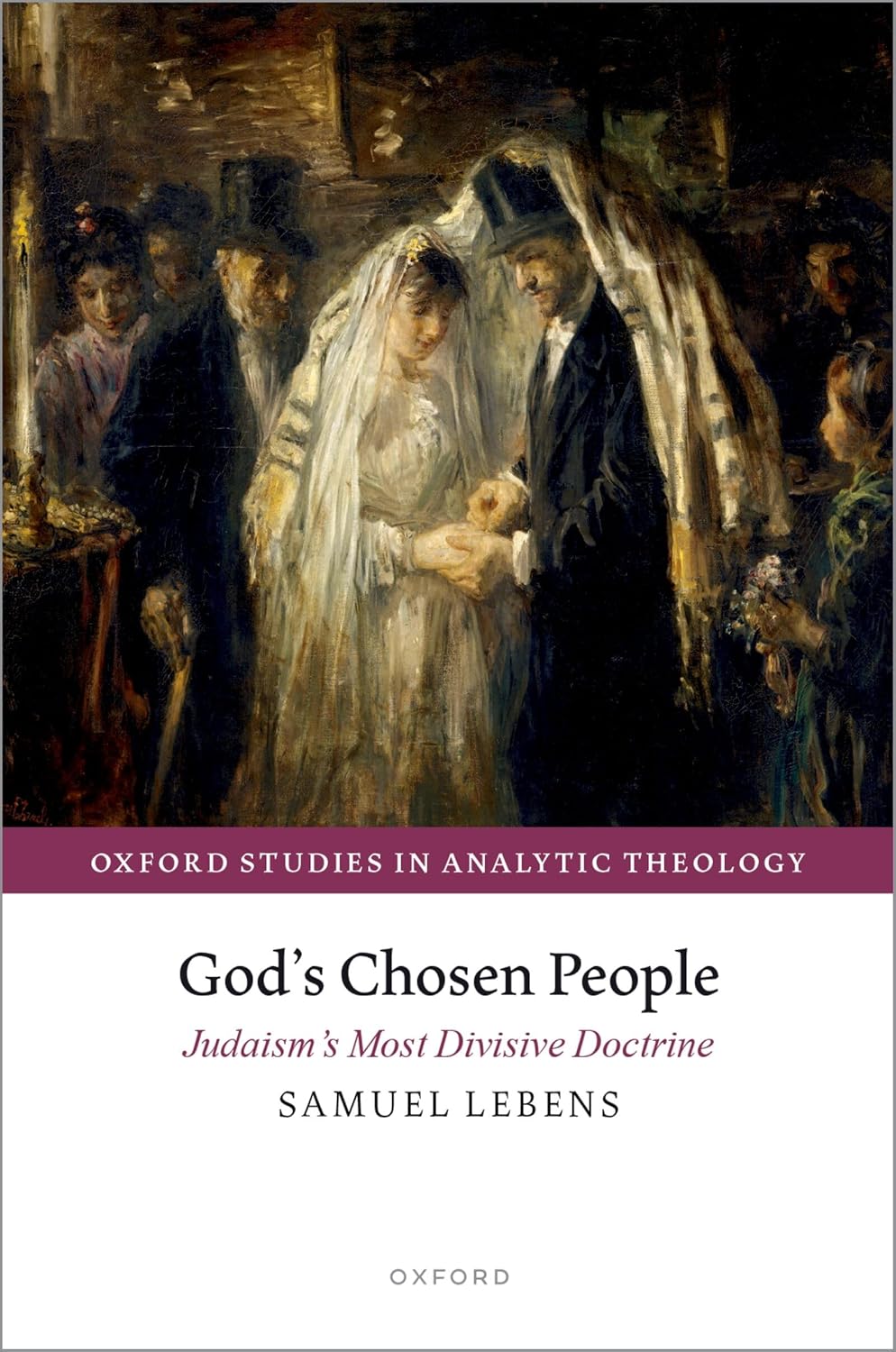
Sam Lebens- God’s Chosen People

The concept of a chosen people preferred by God challenges core ideas about fairness, divine love, and human equality. If God loves everyone equally, singling out one specific group for a special covenant or status appears to contradict that fairness. If God is over all of humanity, then how could God pick one people? It seems to imply a capricious deity or one closer to Greek myths. More importantly in our era, the concept generates arrogance, racism, chauvinism, or violence. It implies that one group is inherently better than the rest and often demeans the humanity of the other group. However, the concept of the Jewish People chosen from among all the people is a substantial part of the Bible and Jewish everyday liturgy.

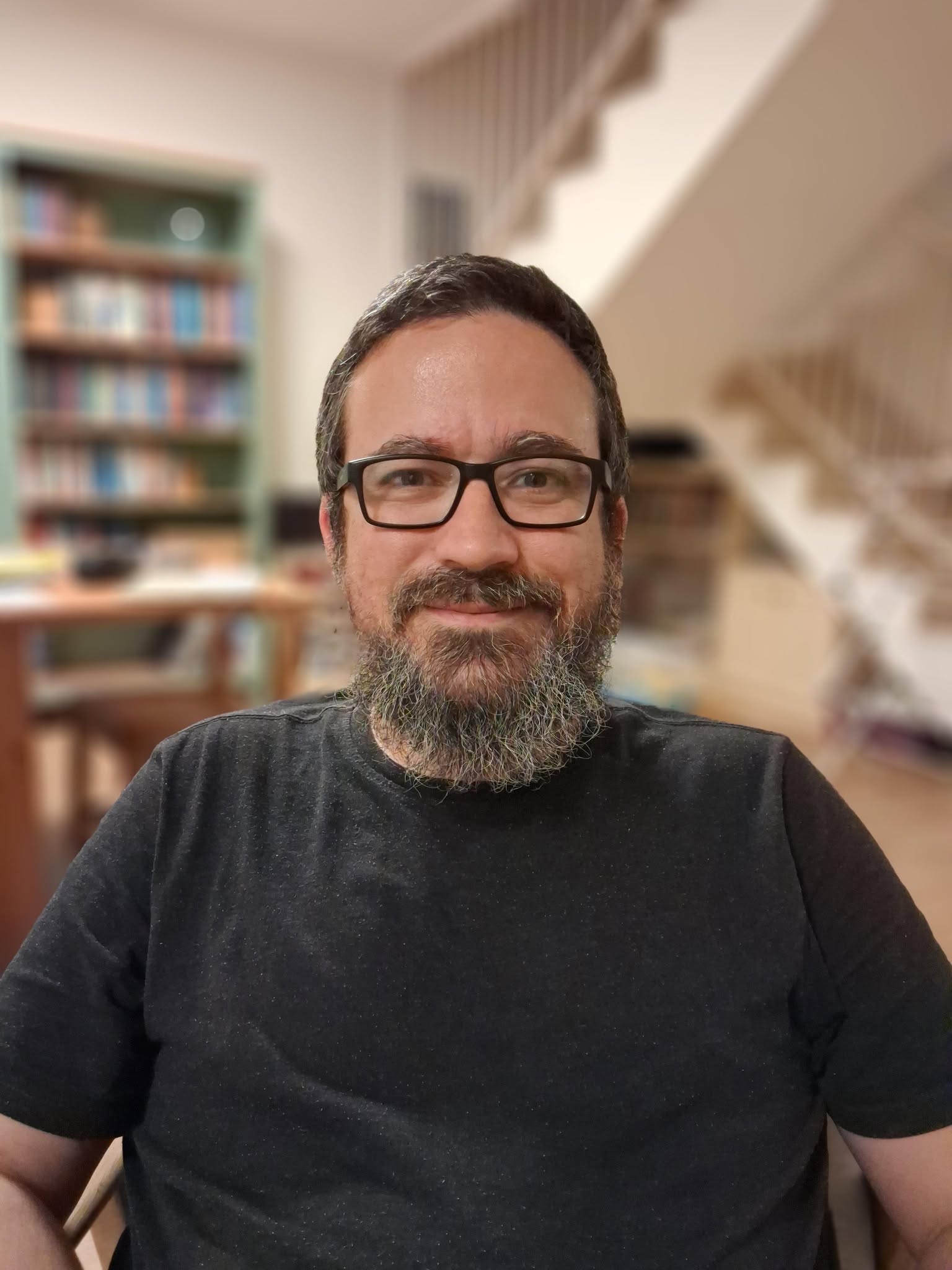
The latest volume to offer a solution to this  problem is an excellent new book by Rabbi Dr.  Samuel Lebens, God’s Chosen People: Judaism’s Most Divisive Doctrine (Oxford, 2026). Lebens is an associate professor of philosophy at the University of Haifa specializing in early analytic philosophy especially Bertrand Russell, the nature of propositions, the nature of fiction, and writes widely on the analytic philosophy of Judaism. His PhD is from Birkbeck College, University of London, and he completed post-doctoral fellowships at the University of Notre Dame and at Rutgers University with Rabbinic Ordination from Rabbi Zalman Nechemia Goldberg.
Leben’s method takes as a fundamental given the tenets of Judaism, which, for him, include existence of God, revelation, and Bible interpreted through Rabbinic method. He does not argue for these, rather they are his starting premises. Like many Evangelical analytic theologians, who Lebens studies, the goal is to formulate a position that he can live with, a Judaism with enough analytic philosophy defense to be cogent and defensible.

Lebens stands on the shoulders of several recent works to create his theology of Jewish choseness including the classic Rabbi Prof Michael Wyschogrod, Body of Faith (1983),  Rabbi Prof David Novak, The Election of Israel: The Idea of the Chosen People (2007), and Prof Yehuda Gelman, God’s Kindness Has Overwhelmed Us: A Contemporary Doctrine of the Jews as the Chosen People (2012). The last one by Gelman used the tools of analytic theology; Lebens acknowledges his debt to this work,

However, Lebens is more Biblically based than Gelman, analyzing five Biblical models of choseness of the Jewish people. You can read about the models in the interview. This is analytic presentation of materials is Leben’s strong suit; his collecting the data from a broad range of materials: Biblical, Talmudic, Medieval Philosophic, Rosenzweig, and Modern Orthodox thinkers. This extensive range is unique to this book compared to his predecessors.

In addition, Lebens emphasizes his belief in a personal God as the Jewish view. He rejects all abstract views of God and all impersonal views. His belief in this is strong enough for him to discount medieval Jewish thought and all Jewish views of an abstract God. Therefore, despite his broad historical reach,  mainly of the thinkers he discusses are presented for him to reject them.  

Lebens makes good use of Chief Rabbi Lord Jonathan Sacks’ ideas. And Lebens is part of a growing trend to follow the thought of formerly obscure thinker Rabbi Nathaniel ibn Fayumi who taught that God sends a prophet to every nation. (See my prior posts on the use of Nathanel ibn Fayumi by Rabbi Yaakov Nagen and by Rabbi Eliezer Melamed). Lebens, however, is original in how he presents ibn Fayumi as a continuity of Rabbi Saadiah Gaon.

In the 1948 debate between Bertrand Russell and Frederick Copleston, on the nature of God and philosophy, Russell argued for modern analytic logic thereby rejecting the medieval classics and Copleston argued for the classic scholastic theism. It was exemplar in showing two methods for reading texts from prior centuries, are they treated as objects for analytic analysis or as traditions received. Lebens is clearly on the side of Russell. I am much less comfortable rejecting Maimonidean positions. And Lebens chapter on Jewish mysticism, was unnecessary in its current form.  

Since the book only sporadically dips into the scholarship, it missed a few books that would have help develop his arguments such Chosen and Unchosen: Conceptions of Election in the Pentateuch and Jewish-Christian Interpretation (2009)by Joel N. Lohr. The book directly deals with the Biblical models of choseness and election in both Jewish and Christian thought, and specifically deals with Wyschogrod, Novak, and Jon Levenson.

My bigger issue is how his book relates to actual Jews and Jewish opinions. I tried pushing these issues in several of my questions. In 1983, Prof Arnold Eisen, wrote a book The Chosen People in America: A Study in Jewish Religious Ideology where he states: “A Jewish ethnic identity was illegitimate in democratic America; in clinging to the illusion of chosenness which demanded such an identity, Jews brought their sufferings upon themselves.” Eisen quotes the Conservative Rabbi Milton Steinberg who observed in 1934: “Only a people of acrobats could preserve a semblance of poise on a footing so unstable.” Based on this, does Leben’s book speak to a reader who does not accept his premises?

I think it does. It offers for Jews an exemplar example of Evangelical analytic theology based on Biblical truth. The rigor, extensiveness, and overview of many positions make it almost a basic reader on the topic. Most prior analytic works were articles arguing for a single position. Lebens offers range and depth. The book would make an ideal book for an introduction to Jewish thought especially in Modern Orthodox high schools or in gap year program. The book would raise the level of discussion to sophisticated levels. I make this recommendation, with the caveat that the instructor should complement the book by arguing for their own positions including those of Halevi, Maimonides, or Kabbalah, as well as modern thinkers who are not modern Orthodox.  

Finally, even though the book is being published by Oxford University Press, an earlier draft is also available on the Virtual Beit Midrash of Yeshivat Har Etzion as forty-five digestible lectures as Choosing a Theory of Chosenness. I emphasize this because the list price for the new book is $165. The book is worth reading, worth arguing with, and stay tuned for some responses here.   
  1. Why did this topic interest you?

My children had some disturbing experiences in the religious school system in Israel. On numerous occasions, they were witness to hateful and racist statements, not merely from their peers, but even from their teachers. Those experiences cemented my opinion that Jewish supremacism is growing steam in the rank and file of the Religious Zionist community in Israel. My decision to excavate and thoroughly explore the notion of chosenness was my attempt to do the intellectual heavy lifting required to challenge that supremacism, using the sources of the Jewish tradition itself.

2. What are the Biblical models of choseness and why did you pick two as best?

I found there to be five central Biblical models of the election of Israel:

One- The Genesis Model: The main notions within this model are that the choice of Abraham and his progeny was somewhat arbitrary (in that there may have been other individuals, no less qualified than Abraham); the choice of Abraham was intended to bring blessing to all of the families of the world – such that the election is a means to that universalistic end; the chosen are called upon to showcase and embody the political virtues of justice and equity (i.e., tzedek and mishpat); the chosen are to be liminal, and to utilize that liminality as a counter-cultural voice in the conversation of humanity; and they are called upon to struggle with man and with God.

Two- The Marriage Model: This refers to the idea that the chosen were not chosen for any mission in particular. Instead, they were chosen because God had fallen in love with them. The Torah and its laws, on this construal of the relationship, function like a marriage contract.

Three- The Priesthood Model: The guiding slogan of this model is that we are to be a “kingdom of priests, and a holy nation.” Whatever the Levitical priests are supposed to provide to Israel, the Israelites are called upon to provide for the nations of the world.

Four- The Zechut Avot Model:Zechut Avot” refers to the merit of the ancestors. On this model, the Jewish people have a special status, not in virtue of their own achievements, but merely in virtue of the merit of their illustrious ancestors.

Five- The Name-bearing Model: On this model, the Jewish people are to be witnesses to the existence of God, and to carry His name, or His reputation, among the peoples of the world.

These models aren’t exhaustive, since they neglect various other metaphors: God is the farmer and Israel is His vineyard; God is the shepherd, and Israel are His sheep; God is the potter, and Israel are His clay; God is the King, and Israel are His subjects; we are the allotment of land that He inherits, and He is our inheritor. But none of these metaphors are developed as extensively as the five models I’ve identified.

I found that Models iv and v are easily subsumed into the other models. For example, you might think that the Marriage Model is true, but that God didn’t fall in love with us so much as with our ancestors. Alternatively, you might think that bearing God’s name in the world is part of the mission of a global priesthood, or part of the mission bestowed upon Abraham. That leaves us with three main models.

In later stages of the book, I argue that the Genesis Model and the Priesthood Model can be combined into one coherent picture.

The Marriage Model can’t be taken too literally, for Biblical reasons, if we’re to reconcile it with other models of the election. Theologically, when taken too literally, the Marriage Model renders God guilty of favoritism and caprice. Accordingly, I would say that the relationship between Israel and God is aptly described as a passionate marriage, but only in some respects. It is the first two models that must take the lead.

  • 3.How do you deal with difficult Rabbinic texts on this topic?

Many of the most difficult Rabbinic texts, ones that reputedly dehumanize non-Jews, have been well dealt with already by others. To that end, I lean heavily upon (and embellish) Rabbi Eliezer Berkovitz’ masterful early work, What is the Talmud?

But more than that, I discover two potentially surprising data points.

First: with a proper understanding of their etiology and underlying symbolism, the Rabbinic laws known as eiva and darkei shalom – which prohibit actions that would cause animosity between Jews and non-Jews, and mandate various acts of kindness towards non-Jews – are not to be understood as political exigencies, or compromises. On the contrary, they are motivated by central ethical convictions of the Rabbis.

Second: the Rabbis take the most problematic Biblical model of the election – the Marriage Model – and entirely recalibrate it. Instead of portraying Israel as the bride of God Himself, they portray Israel as the bride of God’s daughter – the Torah. God is then recast as our heavenly father-in-law. This means that we only occupy any sort of special status to the extent that we’re living our lives in accordance with the Torah. To the extent that we’re not, the status will be attenuated.

This Rabbinic Model nevertheless has to rub shoulders with other conceptions of the election. And thus, it isn’t fair or possible to flatten the Rabbinic data and to pretend that there was always consensus. On the contrary, my aim is to trace all of the major lines of development and to find, where possible, the best fit between them all; without pretending that all of the sources are in agreement.

4.The liturgy states repeatedly that God chose us- asher bachar banu mi kol Haamim- how do you deal with this?

The fact that we were chosen “from among all of the nations,” doesn’t ipso facto entail that other nations haven’t also been chosen for other purposes. To that end, see Amos 9:7.

The fact that we have been exalted over other “tongues” and above the “uncircumcised” has nothing to do with our ethnicity or race, but with the language that we’ve been co-opted into speaking – i.e., the language of Torah – and her rituals, such as circumcision.

To the extent that we’ve been sanctified as a people, the liturgy tends to insist that it’s only because we have been given the Torah and holds only to the extent that we cleave to that Torah.

There’s no doubt that Jewish supremacists will nevertheless find lots of phrases in the liturgy to cleave to, but I argue that a closer reading of those texts always falls short of endorsing any one particular model of the election. In fact, the relevant liturgical texts tend to manifest a studied neutrality when it comes to the various competing Biblical and Rabbinic models of the election. A proper understanding of the etiology of even the most offensive sounding liturgical formulations inevitably undermines their offensive appearances; or so my study has found.

5. How do you both accept and reject the approach of Maimonides?

I endorse Maimonides’ goal of articulating an entirely non-racial construal of Jewish identity. I also hope to preserve an inspiring detail of his understanding of the Priesthood Model. On his account of that model, it isn’t only the non-Levitical tribes of Israel who are invited to share in the overall mission of the Priesthood to the world; but that:

Each and every person of all the inhabitants of the world whose spirit generously motivates him, and who understands with his wisdom, to separate himself and stand before God to serve Him and minister to Him and to know God, proceeding justly as God made him, removing from his neck the yoke of the many reckonings which people seek, he is sanctified as holy of holies (Mishneh Torah, Hilkhot Shemitta VeYovel, 13:13).

But there are two related respects in which I think we should diverge from the Rambam. The first is that his theology entails that God is not a personal being and that, as such, God can enter into no particular form of relationship with any individual or community.

That theology is alien to the Bible’s presentation of God, and alien to much of the Rabbinic movement’s conception of God, such that Jewish believers in revelation should be very reticent to embrace it. He was operating with an Aristotelian conception of how metaphysical explanation is supposed to work. Once that background has been removed, the argument that pushes Maimonides to his apersonalist theology is no longer compelling at all.

Secondly, and as a consequence of his apersonalist theology, one finds that Maimonides basically rejects the entire notion of chosenness. To the extent that anything remains chosen, on his conception of things, it is the religion of Judaism, but not the Jews. This is a highly revisionary conception of the election.

6.Why do you reject a non-personal or abstract God?

My rejection of the abstract God stuff can be boiled down to this: Given the Biblical and Rabbinic data, and the extent to which a great deal of Judaism is built upon the notion that God is the sort of being with whom a nation can have a covenantal relationship, I think that there’s a burden of proof upon the apersonalists. I accept that if you swallow a wholly Aristotelian conception of how metaphysical explanation is supposed to work, then you end up almost automatically with a very abstract God. But I don’t swallow that metaphysics. In my book, I go through every argument that supposedly entails that God isn’t a person, and I show them to be wanting. This leads me to think that, with no working argument against a personal God, we should lean into the tradition and revelation and accept that God is a person; albeit a perfect person. So, I argue. That part of the book is inspired in part by Rabbi Heschel, and also, in part, by contemporary analytic theology, where it’s increasingly common to think of God as a person.

7. How do you solve the issue of chosenness for Yehudah Halevi?

Despite Halevi’s presentation of himself as an opponent to Aristotelian philosophy, he nevertheless contends that God is entirely above description, and so entirely apersonal. The central challenge for a Jewish philosopher who embraces an apersonalist theology is this: how can an apersonal God enter into a personal relationship with a particular people at a particular time?

Maimonides answers this question by denying that God enters into such a relationship. Judaism might be chosen, but not the Jews.

Halevi answers our question by supposing that the Jews are a species set apart from all other human beings; possessed of a special “divine influence.” By making this move, Halevi can say that God didn’t have to make a choice in revealing His Torah to just one people. Instead, there was only one people who were at all qualified to receive it.

This was a massive innovation on the part of Halevi. In fact, Ehud Krinis argues that Halevi’s whole conception of an elevated form of human being was a foreign import gleaned from Shi’ite Islam (Krinis, God’s Chosen People: Judah Halevi’s ‘Kuzari’ and the Shi’i Imam Doctrine). I reject this innovation, not least because I reject the apersonal theology that motivated it.

And yet, despite my rejection of the Rihal’s conception, my reading allows us to defend him against the accusation of out-and-out racism.

Rabbi Dr. David Novak, is his book The Election of Israel: The Idea of the Chosen People,  contends that Halevi was never motivated by racist animus. As Novak details: Halevi recognizes the existence of righteous gentiles, just as he recognizes the existence of wicked Jews. Accordingly, Halevi doesn’t think that we Jews enjoy a “moral superiority over the rest of humankind.” The capacity for prophecy is the one and only advantage that Halevi thinks to be innately and uniquely possessed by the Jew. Moreover, Halevi seems to think that, in the end of days, all people will become Jewish. Indeed, on Novak’s well-reasoned reading, Halevi even concedes that the child of two converts, despite having no genealogical link by which to inherit the “divine influence,” will inherit it anyway.

To Novak’s defense, I would add just two further points. First: perhaps the central conceit of Halevi’s book was supposed to communicate to us that he still held non-Jews in the highest regard. Second: once we realize that Halevi was forced into his otherwise unsightly position by the shackles of an apersonalist theology, we can better understand the predicament that he was in; even if it isn’t one that we share.

8. How do you deal with the approach of Rabbi Menachem Mendel Schneerson?

The Rebbe was heir to the intellectual tradition, within the tapestry of Jewish thought, that seems most wedded to ethnocentrism and supremacism. There are approaches in the Kabbalah according to which non-Jewish souls derive from the dark side of reality – the sitra achra. They are repeatedly described as impure, such that Jews shouldn’t even approach them. This gave rise to a mystical tradition in which Jews and gentiles were said to have different sorts of souls. Indeed, Rabbi Chaim Vital says that Jews have two souls, whereas gentiles only have one. Despite Talmudic assurances to the contrary, these traditions often imply that only the Jews have a share in the world to come. This tradition arguably finds a firm hold in the Tanya, which was the founding text of the Lubavitch movement.

Rabbi Menachem Mendel Schneerson, by contrast, seems to have been animated by a profound concern for the physical and spiritual welfare of non-Jews. Accordingly, when one looks through his writings, one sees various ingenious attempts to utilize the strident monism of the mystical tradition, in an effort to dislodge from that same tradition the appearance of xenophobia.

My hope is that, against the backdrop of my book’s intellectual history, people will be better placed to appreciate what it is that the Rebbe achieved in his conception of the election. His theory manages to combine elements of (1) all of the Biblical models; (2) the incarnational elements of certain Rabbinic models of the election; (3) Maimonidean universalism; (4) the notion that God’s choice of Israel was supra-rational (since God’s choice of Israel, for the Rebbe, remains a mystery); and (5) the Two-Track Model (pioneered by certain German rabbis, according to which Israel and the gentiles are both called upon to serve God, but to do so in different co-equal ways).And yet, despite his best efforts, the resulting view still contains a residue of supremacism. Religious philosophers not so tightly wedded to the Tanya, I argue, will be better served elsewhere.

9. How do you use and then modify Prof Michael Wyschogrod’s thought?

Wyschogrod’s defense of a personalist theology is one of the most stridently formulated in the literature. How dare we be ashamed, he would ask us, to describe God in the terms that God Himself deploys in the Bible? My own personalist theology is in his debt.

But his conception of the election, though it may have been motivated by a desire to protect the spirit of Biblical theology, and to combine that spirit with a rejection of supremacism, remains deeply unattractive to me because Wyschogrod ultimately insists and defends the claim that we are, without being inherently better than others, literally God’s favorites.

His defense of God’s special love for the Jews is built upon the notion that any father, if sufficiently honest, will admit that he has a favorite child. Doubtless, Wyschogrod would accuse me of dishonesty, but – as the father of three children – I insist that I don’t have favorites. On the contrary, the three loves that I bear to them are entirely incommensurate.

In order that humankind should be able to understand God’s love for us all, God chose to love us in a distinctively human way; and – according to Wyschogrod – human love always has favorites. The non-favorite nations, like any non-favorite child, should at least take solace from the fact that God’s love for each of us is real. How do we know that it’s real? Because, like human love, it has favorites. If it didn’t, he claims, it would be more like the “love” of a faceless bureaucracy. If we want something more discerning, passionate, and personal then we’ll have to accept that it will have favorites.

Because I disagree with its central premise – that fatherly love always has favorites – I find myself entirely rejecting Wyschogrod’s conception of the election. If anything, I would argue that he’s taking the Bible’s Marriage Metaphor too literally. His God seems capricious.

10. How do you use and then modify Prof. Yehuda Gelman?

Yehuda Gellman’s work on the election is excellent. I would be proud if my work could be seen as an attempt to enfold his own conception of the election into something broader; on the basis of a more extensive survey of the relevant source material, from the Bible until today.

My own conception of the election is a version of what I call the Two-Track Model. It’s a model that I find articulated first by Rabbi Yisrael Lipschutz (the Tiferet Yisrael) and Rabbi Samson Raphael Hirsch; later to be developed further by Rabbi Lord Jonathan Sacks. On the Two-Track Model, and for reasons I develop in the book, God calls upon humanity to serve Him in two complementary and co-equal ways: the Jews on a Jewish track, and Gentiles on a gentile track.

Gellman adds to this that the love that God explicitly showers upon the Jews, in His acts of revelation and providence, is a figuration for the love that God actually has, equally, for all people. Were God to reveal this love in equal measure to all people, they would be rendered paralyzed by it. Accordingly, in His relationship with Israel, God allows the people of the world to see, just a sample, of the saving grace and love that He has in store for all human beings in the eschaton. This view is entirely consistent with the theory I develop.

11. Rabbi Mordecai Kaplan famously wrote that modern Jews cannot accept the concept of the chosen people anymore. How would you respond?

Mordechai Kaplan is absolutely right to worry that, any attempt to cast ourselves as a light unto other nations, “smacks of arrogance.” Indeed, that worry accompanies me throughout the book as I look to articulate a version of the doctrine – deeply rooted in the relevant source material – but immune from the accusation of arrogance or cultural imperialism.

On the other hand, Kaplan’s efforts to purge the Jewish faith of this doctrine were doomed to fail. That’s because the Jewish faith walks a delicate line between, on the one hand, the belief that we have something sufficiently valuable to add to the world that it would be a shame if we were to assimilate and disappear; and, on the other hand, the belief that we have no obligation to convince gentiles to become Jewish. In other words, we neither want to assimilate nor to proselytize; and it’s hard to hold onto both of those positions unless we believe that we have been called upon (either by fate, or destiny, or God) to play a role that does not need to be played by others. That’s the job of the doctrine of the election.

12. This may be all well and good for analytic theology, but most see in real life an ethnocentric, tribal form of chosenness writing off anyone not Jewish.  On the street, I would not get anything like your theology. Now what?

A Jewish theology is not automatically invalidated by the fact that it isn’t embodied in the faith of a particular Jewish community. Indeed, it might be the job of a Jewish theologian to criticize communities and to argue that, given their own theological axioms, their current form of life stands to be corrected.

To address this issue, I adopt a radical argument of Rabbi S. R. Hirsch. On his view, the mechanisms of cultural transmission and providence can be trusted to pass down an accurate presentation of what God demands from us, in each generation, formally or externally – literally, in terms of how we should behave, in order to discharge legal obligations – but they cannot be equally well trusted to make us understand how to perform those laws with the right spirit. The logic and textual basis for such a position needn’t detain us here, but it does allow me to maintain that many of the models of piety that can be found among truly sincere communities of God-fearers, might – despite their many virtues – stand in need of correction.

13 What happened to all your discussions of excreta and dreams from prior works?  This work seems so much straighter.

I am a product of my upbringing in the analytical tradition of philosophy. I think it’s fair to say that – especially among the more metaphysically inclined of the analytical philosophers – our tradition is one that celebrates weird and wacky ideas. David Lewis, for example, was legendary for using his belief in an infinite number of entirely real and concrete universes to solve all sorts of philosophical quandaries. The only objection that he knew he couldn’t defuse was the so-called “incredulous stare” that his work inspired.

So too, when it comes to the metaphysics of religion, I’ve been happy to explore and to occupy the most peculiar sounding terrain, from my discussion of omnipresence, and whether it problematically locates God within so-called filthy places, to my discussion of the nature of creation, that places all things – including you and me – within the mind, or even the dream, of God.

That wacky streak isn’t entirely missing from this book – but it’s only wheeled out when absolutely necessary.

This book was written to address a particular moment in Jewish history, in the hope that it might move hearts and minds towards a more open and even pluralistic form of Judaism. To that end, I try, whenever possible, to base my arguments only upon assumptions that I think will be widely shared by the audience I would most like to move. Consequently, I keep the wackiness to a minimum.

14. How do you rely on Nathaniel ibn Fayumi? How and why do we give him such deference?

I suppose one could lean upon the fact that the Rambam lauded him so effusively in his Epistle to Yemen. That constitutes quite an approbation! But, notwithstanding the Rambam’s praise, the fact that his work made so little impact upon subsequent thinkers, such that his ideas were never assimilated into the warp and woof of Jewish thought, suggests that he isn’t owed particular intellectual deference, unless and to the extent that his arguments stand on their own two feet.

However, I give him a degree of attention in my book for two reasons. First, he stands as an interesting example of a medieval sage embracing a far-reaching and seemingly quite extreme form of pluralism. That, to my estimation, makes his work noteworthy. Moreover, his thought can help us to extend Saadya Gaon’s theory of the election to its logical extreme. And Saadya Gaon’s position as a fountainhead of Jewish thought, I think, is in no doubt.

Saadya Gaon embraces a radically reductive account of our chosenness. He seems to think that God gave a true religion to multiple nations – each one with their own public and miraculous Sinai-like event. All that renders the Jewish people special – in Saadya’s eyes – is that we have better retained our God-given religion than any of those other nations, who have largely been lost to history. Rabbi Netanel, who seems to have been a great admirer of Saadya Gaon, can be seen as extending the radical seed of Saadya’s picture to argue that God hasn’t stopped sending prophets to other nations. Moses remains our guide, but – as far as Rabbi Netanel was concerned – Mohammed may have been sent by God to guide the Gentiles of the Arabian Peninsula.

15. How do you rely on the thought of Chief Rabbi Jonathan Sacks?

Rabbi Sacks developed a communitarian theology that, in turn, gave rise to an interesting and often misunderstood form of religious pluralism. Rooted against the background of those views, Rabbi Sacks developed an account of our chosenness.

I argue that, in light of the Biblical and Rabbinic data, and in light of the weight of the Jewish tradition, as it has unfolded from the days of Saadya Gaon until today, Rabbi Sacks’ theory of chosenness – suitably unpacked and embellished – stands out as the most robustly supported, and philosophically attractive articulation of the doctrine to date.

Rabbi Sacks grapples with the internal conflict that Judaism hosts between the universalism of its monotheism, with its creed that all human beings were created in the image of God, and the particularism of its mission for the Jews. What emerges is a complex view that can’t give a simple “yes” or “no” answer to the question, as to whether the Jews are somehow special. The reason that it can’t be answered simply is that, according to Rabbi Sacks, we were chosen precisely so as to be the ambassadors of this notion called the dignity of difference. In his words:

God, the creator of humanity, having made a covenant with all humanity [in the covenant with Noah], then turns to one people and commands it to be different in order to teach humanity the dignity of difference. (53)

We are chosen to be different, so to speak, in order to showcase to the world that God values cultural and even religious diversity.

Notice how this gels with Yehuda Gellman’s view, since something about our election helps to illustrate how God values every culture, so long as that culture continues to respect the moral code of the Noahide covenant. And thus, as long as polytheism, atheism, or unjust forms of monotheism exist, on the one hand, and as long as totalizing cultures continue to exist that would seek to bulldoze over cultural diversity, and refuse to recognize the varied and authentic relationships that multiple peoples can have with one God, on the other hand, the election of the Jews will still have a distinctive role to play. That is the Jonathan Sacks heart of this book.
Rav Kook’s Guide for Today’s Perplexed-Interview with Aryeh Sklar

Sunday is the 91st yahrzeit of Rabbi Abraham Isaac Kook. In 1904, Rabbi Kook penned a notebook where he addressed what he thought were the leading theological challenges of his day. He addressed evolution, atheism, Biblical literalism, religion and science, as well as many chapters on morality. He was not entering those fields; rather, he was offering a view of a deeper unity of the religious and secular realms. The speculations in the book push many boundaries about the Bible, science, evolution, and other religions. The manuscript has an evolutionary vision more direct, more open, and more universally utopian than the later edited volumes of his. The book remained unpublished until 2010, when it began to circulate in manuscripts. Here was my blogpost when it became known. It was later formally published as Le-Nevukhei ha-Dor.

Aryeh Sklar has done the English reader an immense service by translating this important book into English as Rav Kook’s Guide for Today’s Perplexed (Kodesh Press, 2026) as a source for contemporary Jewish thought. Rabbi Aryeh Sklar teaches Talmud and Jewish philosophy in yeshivot in Israel. He holds a BA in English Literature from Yeshiva University, and an MS in Jewish Philosophy from BRGS. He lives in Jerusalem with his wife Michal and their two sons, Avichai and Itai.

What is striking in Sklar’s translation Rav Kook’s Guide for Today’s Perplexed is that Sklar is grappling with the content of the book for the contemporary world. Sklar is asking big questions about the morality of Torah in order to create a ethical resource for today. Without being overtly political, Sklar hears in the text a strong call for morality and ethics, even an evolutionary goal of a higher morality.

The translation and notes show the enthusiasm that Sklar brings to the project. I am sure his students love the discussion he is opening. You can hear his excitement in the interview, and he is now working on translating Rabbi Kook’s Afikim ba-Negev, written in the same year.

Sklar’s moral presentation contrasts with that of Marc Shapiro’s book Renewing the Old, Sanctifying the New (see our blogpost here), who was motivated by being “deeply intrigued by his unconventional views, but also because I thought others, particularly those within the Modern Orthodox community, would find them of great interest.” There, the goal was unconventionality and broadening supposed intellectual limits. Here in Sklar’s translation, the goal is to use it for a moral worldview.

Rabbi Eliezer Melamed, the author of the widely accepted Peninei Halakha, series of Halakhic works, has already made this new volume of Rabbi Kook a pillar of his thinking on many topics, especially the acceptance of other religions and part of God’s plan. I have posted on Melamed’s approach. One of the weaknesses of the book is its English and Anglo focus, debating minor American opinions about Rav Kook without fully integrating the major Hebrew interpreters, both scholarly and rabbinic.

There were originally footnotes comparing Rabbi Kook to Rabbi Soloveitchik as well as notes providing parallel passages elsewhere in Rabbi Kook. They were editorially removed; let us hope for a second expanded edition. One pet peeve, the Henri Bergson term Lebensphilosophie (philosophy of life) was translated as Existential; it has been corrected in this interview)

This is a long interview, well worth printing out and reading. More importantly, the translation should enter the curriculum of Orthodox educational institutions, especially gap year programs, HS classrooms, and rabbinical training. The translation should be a required starting point for those grappling with the Jewish morality of the state. We should thank Sklar for his passion for the topic.

  1. How did you get interested in Le-Nevukhei ha-Dor ?

I was introduced to Le-Nevukhei ha-Dor by a close teacher of mine, Rabbi Pesach Wolicki, in 2010, soon after the work had been leaked onto the internet. I had been dealing with some religious perplexity in my own life, and Rabbi Wolicki offered to study it closely with me for a full year in Israel. That was one of the most important years of my life. Through Rav Kook, I came to see that truth is larger than any single approach, and that all sides point to a center, a core, of deep unification.

I was truly impressed with Rav Kook’s willingness to confront and even accept what seemed to be unacceptable notions to Judaism and religious belief in general. Rav Kook in Le-Nevukhei ha-Dor advocates turning away from complex philosophy and turning more toward ethics.

“We need to make fundamental something that is eternal and of which no person of human character can deny; and that is morality and justice (ha-yosher ve-ha-tzedek). Morality and justice are the depth of wisdom and its foundation. Only through them can we enter into a conversation with all people, for you will not find a person who does not [feel] obliged to give morality and justice their due.” (Chapter 3)

This was a rich foundation for me to unite the varieties of religious experience I found in Orthodox Judaism. What encourages moral growth? Who focuses on it as an ideal? Can even discordant ideas, regardless of their literal “truth,” bring man closer to a higher moral plane? Eventually the book mattered to me so much that I set out to translate it and annotate it, a project that ended up taking over a decade to complete.

Rav Kook’s overarching approach was to unite all planes of existence, to hold past, present, and future together, and to insist that morality and peace are standards that must be understood and explained according to our religious outlook. Our differences, says Rav Kook, should actually be a cause for unity, not factionalism.

On Morality

2. How does he resolve the tensions of natural morality and Torah morality?

Rav Kook believed that there was really no conflict between what he called “natural morality” – the intuited ethical feelings produced by a spiritually and emotionally healthy individual, derived from the divine soul in man – and the Torah’s morality. The only conflict is practical. Sometimes, the Torah makes demands that in the short-term compromise the natural moral feeling, in pursuit of a long-term moral outcome.

Rav Kook does express concern regarding a related tension. Immanuel Kant had raised the distinction between autonomous morality, that which is internally created and self-enforced, and heteronomous morality, that which is thrust upon a person from without, often laws of society. Kant felt that heteronomous morality was a kind of enslavement. Rav Kook formulated this as a problem when “legislative morality” – Torah law – runs contrary to the internal will for natural morality. Rav Kook spends considerable time in his early writings on this (see particularly Le-Nevukhei ha-Dor, ch. 22).

Rav Kook believed that this could be resolved by creating a two-tiered approach to Torah. Judaism wants to bring out the inner morality in all people, and it uses external laws to arrive at that eventual societal destination – what we might call the messianic age. Even if the individual person has already realized within themselves a high moral understanding, they must submit to the needs of building a society and not “push the end” and “cut the shoots,” to use the rabbinic terminology.

Rav Kook believed that there was really no conflict between what he called “natural morality” – the intuited ethical feelings produced by a spiritually and emotionally healthy individual, derived from the divine soul in man – and the Torah’s morality. The only conflict is practical. Sometimes, the Torah makes demands that in the short-term compromise the natural moral feeling, in pursuit of a long-term moral outcome.

Rav Kook does express concern regarding a related tension. Immanuel Kant had raised the distinction between autonomous morality, that which is internally created and self-enforced, and heteronomous morality, that which is thrust upon a person from without, often laws of society. Kant felt that heteronomous morality was a kind of enslavement. Rav Kook formulated this as a problem when “legislative morality” – Torah law – runs contrary to the internal will for natural morality. Rav Kook spends considerable time in his early writings on this (see particularly Le-Nevukhei ha-Dor, ch. 22).

Rav Kook believed that this could be resolved by creating a two-tiered approach to Torah. Judaism wants to bring out the inner morality in all people, and it uses external laws to arrive at that eventual societal destination – what we might call the messianic age. Even if the individual person has already realized within themselves a high moral understanding, they must submit to the needs of building a society and not “push the end” and “cut the shoots,” to use the rabbinic terminology.

3. You mention that many of his ideas on ethics and morality contained in this book have been available for many decades in his other books and have had little effect. So what power does it have if it had 122 years with no effect?

I’m not sure how we measure the effect here. Who knows where we would be without Rav Kook’s philosophy informing the ideas of the religious Zionist world? Maybe in the alternative history we would be much worse off. But I would say that too often those who claim to follow Rav Kook in Israel follow their own beliefs instead.

  • 4. What does Rav Kook think is appropriate speech about Arabs in Israel?

There is a letter regarding this that had a very big impact on me, so much so that back when personal blogs were a thing I translated it and put it there. The scholar Yehudah Mirsky told me in response to my post that he doesn’t think there is one word from Rav Kook that is hateful about Arabs, in all his writings.

This important letter (Igrot ha-Rayah II:398) was written in 1911 and sent to Meir Bar-Ilan, son of Rav Kook’s former rabbinic mentor, Rabbi Naftali Tzvi Yehuda Berlin. Meir Bar-Ilan was the editor of a popular newspaper in the Land of Israel, Ha-Ivri, and Rav Kook contributed articles there. In the letter, Rav Kook complains that the newspaper printed a literary story that painted Arabs in an unflattering light:

“My friend, I find it a sacred duty upon myself to arouse your honor’s attention regarding the style of the depiction ‘Judah Guards the Orchard’ in issue No. 44 of ‘Ha-Ivri.’”

He talks about how descriptions of “hatred” towards “the Arab enemy,” and “rhetoric filled with a revolutionary spirit” should not be printed in the newspaper, for “it does not align with our aspirations and is not suitable for the situation at all!”

In making his case, Rav Kook focuses on practical concerns, in that there are people who read the Hebrew-language newspapers in order to find this kind of material and go on to castigate the Jews in the Land of Israel, and others will also pass it along to the Ottomans and cause political trouble for the Jews in the Land of Israel.

He concludes the letter:

Please, my friend, for the sake of the Lord, God of Israel, chosen in the Desired Land, who has begun to show us sparks of His light, from His kindness and truth, to remember His holy nation, to give it a boundary in Judah (cf. Ezra 9:9); please do not grant space in your noble newspaper for things like these, whose benefit is zero, and whose harm is immense beyond measure. On the contrary, as much as possible, we ought to describe the pleasant situations of the ways of peace and brotherhood that we find between the best of the Yishuv who act in truth, and the Arab inhabitants of the land – of course, the noblest of them.

A few months later, in 1912, Rav Kook sent another letter (Igrot ha-Rayah II:411) to Meir Bar-Ilan recommending that he speak to his friend Alexander Ziskind Rabinowitz, who could relate to him stories of “peaceful sentiments” between the Jews of the settlements and Arabs of the region.

In 1921, Rav Kook wrote a letter (Igrot ha-Rayah, vol. 4, p. 84) about how “even with the kind view (ayin tova) we take in relation to our cousins and neighbors who dwell in the land – the Arabs,” how much more so we should love our brothers, the Jews helping to build the land. The kind perspective toward their “Arab cousins” was a given for Rav Kook.

Even if someone wants to read Rav Kook’s letters here purely in pragmatic and diplomatic terms, I will respond: Well, if only the followers of Rav Kook would write letters to newspapers decrying racist descriptions of Palestinians or other groups, even just to be diplomatic!  Even more so if some of them would see these letters and not engage in this kind of rhetoric themselves!

I understand that a lot of history, painful history, has happened since Rav Kook wrote those words. Would he view the situation similarly today? I believe that Rav Kook, as understood in his totality, as someone who saw true unity of all things, understood how to relate to his Arab neighbors much better than his son’s followers today. Those who disagree and think Rav Kook was naive, or too idealistic, should just come out and say it: they have a fundamentally different worldview than he did.

  • 5. Rav Kook postpones ideal morality until the messianic age? Why do you find it satisfactory?

There are two ways to answer this. First, Rav Kook has an idea (see especially Le-Nevukhei ha-Dor, chs. 10, 16, and 31) that in some generations, a certain Torah law will be difficult to grasp, especially regarding its moral nature, but a time will come when it makes perfect sense. An example he gives (in Le-Nevukhei ha-Dor, ch. 16) is regarding the obligation to procreate. He writes that life in his time was extremely difficult, and it seemed in the short term that having children was an immoral act. Why, someone could argue, should we subject new life to these terrible conditions? However, he argues, if you believe in a glorious messianic future, it would be immoral not to have future generations that could take part in that fortune.

Secondly, in Le-Nevukhei ha-Dor (ch. 13), Rav Kook presents a view of the authority of the Sanhedrin that he believes even the Orthodox should accept. After all, the Sanhedrin was the Supreme Court of its time. It had tremendous power to decide the law. Rav Kook argues: if Orthodox Jews believe the Sanhedrin will be brought back in the messianic age, and it will have the ultimate power to decide the law, why wouldn’t they “update” or “reinterpret” the law where necessary according to the modern circumstances?

Thus, Rav Kook ingeniously claims, the Orthodox have the same belief as the Reform – the laws of the Torah should be subject to changing generations. The only difference is timing and authority. In the future Sanhedrin, these differences will become null and the two factions will unite, because surely the Sanhedrin will be able to see the changes of circumstances and redefine the laws as they see fit.

This theory of law and authority opens the floodgates. It’s dangerous stuff. I understand why the publishers of Rav Kook’s writings at the Institute of Rav Tzvi Yehudah (Kook), when they published Le-Nevukhei ha-Dor in Pinkasei ha-Rayah, vol. 2, decided to remove the chapter entirely. I don’t agree with doing that, but I understand the motive behind it. On the other hand, it also gives us a new way to answer questions of morality and the Torah:

If you have a problem with the morality of the law, you should eagerly await the return of the Sanhedrin. The future Sanhedrin, Rav Kook believed, would have to consider new circumstances, new understanding, and decide which laws were meant to be understood differently or limited severely. He believed this to be embedded in the Torah itself, and could not happen without interpreting it accordingly for the era.  

In a letter to Moshe Zeidel, he denies that this should be called “development of the law.” In the letter (Igrot ha-Rayah I:90), Rav Kook explains at length his theory of hermeneutics. He writes that if the Sanhedrin and the rabbis have the capability of interpreting the Torah in a different way than it had been interpreted before, and it is accepted by the people, that interpretation must have been latent in the Torah all along (he writes similarly in his introduction to Ein Aya).

Interestingly, there is a flipside to this. The Sanhedrin could also institute even stricter laws and interpretations where they see the need. There is a balance, for Rav Kook, and they won’t please all the people all the time.

  • 6.How and why does he acknowledge that Judaism is not the inventor of the world’s “moral and righteous laws”?

Rav Kook writes: “The Jewish people never claimed any credit as the inventors of the world’s moral and righteous laws, or even as the inventors of the principle of monotheism.” (Le-Nevukhei ha-Dor, ch. 32)

For Rav Kook, the discovery of ancient documents, such as the Code of Hammurabi, which bear striking resemblance to the stories and legal traditions of the Torah, does not mean the Torah is a non-divine document. Rather, he believed that the Torah is the continuation and the purification of ideas that started from the earliest days of the human species.

Great people all over the world have the capacity to uncover lofty moral and philosophical truths, Rav Kook argued, so why would the Torah be bereft of them? The Bible itself reports the existence of early prophets, figures like Methuselah, Enoch, Shem, and Eber, whose character teachings, customs, meditations, and true narratives remained with the ancient nations and were engraved in their writings. This, he says, is precisely why modern researchers keep finding parallels between Torah concepts and the relics of ancient civilizations. He even adds that many commandments are of the sort that individuals would naturally incline toward from man’s inner nature, since human intellect is itself a spark of the divine light.

So, all nations have people who find the truth. Judaism’s distinction is not invention but clarification and mission: the prophecy of Moses refined these universal ideas from the confusion and error that had crept into them, and the Jewish people were chosen to carry, purify, and disseminate them as an eternal covenant. That is why he can conclude, remarkably for his time, that archaeological research uncovering these parallels should be used “for honor and splendor, and for strengthening faith,” rather than feared, and he believed that with greater archeological knowledge, there would be greater faith in the historical legitimacy of the Torah in the world.

Rav Kook combats the idea too prevalent in some Jewish circles, even today: “There are people who think that one can only have perfect faith in the true Torah of Moses so long as one also believes that other faiths are all ‘false and foolish’ (Lamentations 2:14), and that there is nothing positive in holding fast to them. This is not true… There is much evil that comes from this view if it is not corrected.” (Le-Nevukhei ha-Dor, ch. 14a)

In chapter 36, Rav Kook describes the problem of Jews who abandon Judaism because they find positive aspects and even advancement in other cultures and religions, which they had been brought up to believe could not possibly exist. “How terrible is this error, to hang the uniqueness of the Jewish people upon the lowliness and degeneracy among the nations, when all of our hopes and dreams are to spread authentic knowledge of God, and refined moral laws throughout the entire world! Could it really be that we should, God forbid, hope for a hindering of our national existence?”

On Biblical Literalism

  • 7. How is the account of Genesis not literal?

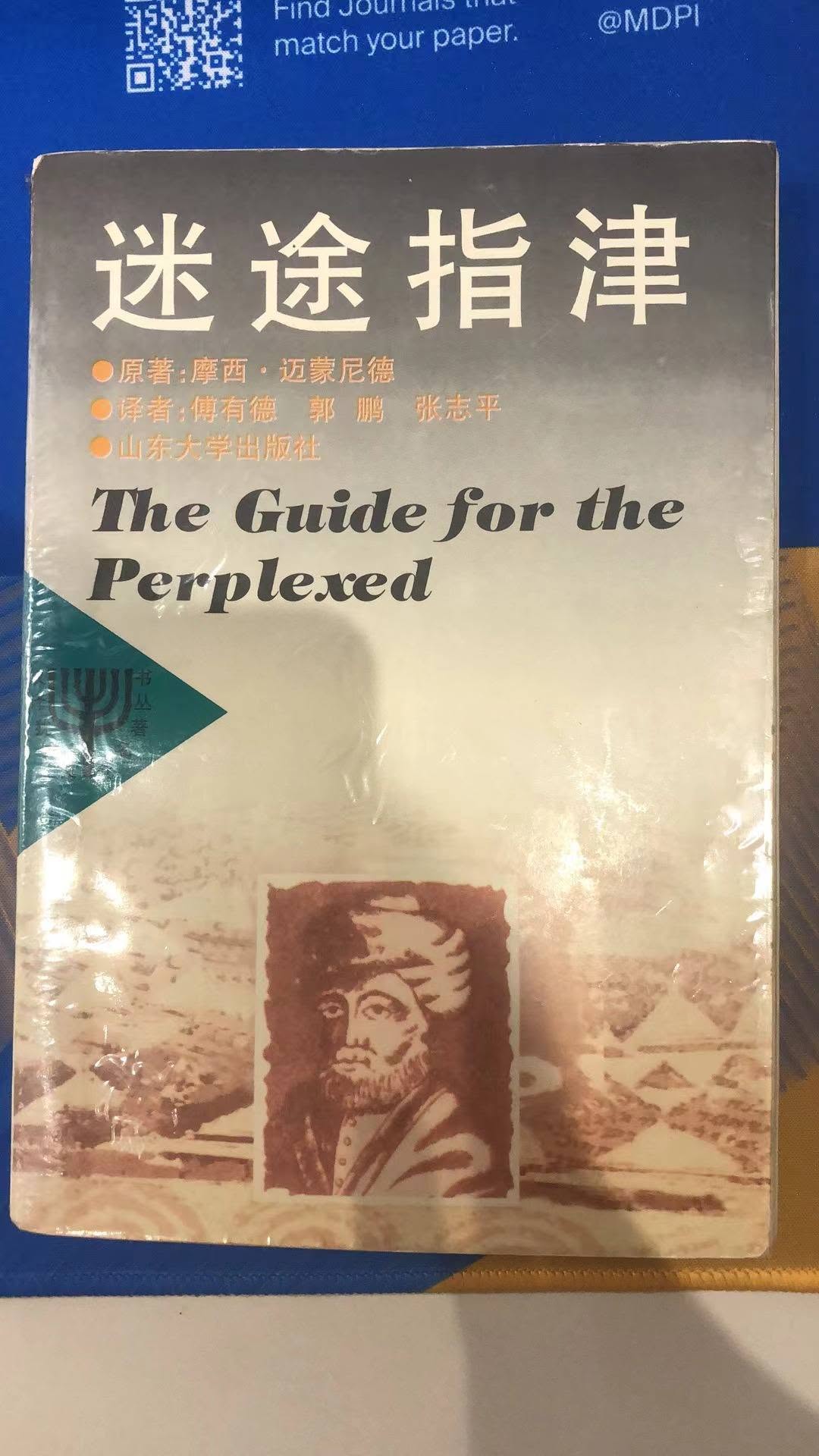
Rav Kook writes in many places that books need to be written by rabbinic scholars explaining how the Torah can be upheld even according to whatever popular theory is going around at the time. He saw this as a continuation of the methodology of Maimonides in the Guide for the Perplexed, where Maimonides defended Judaism within the philosophy of Aristotle (see Le-Nevukhei ha-Dor, ch. 2-3). Rav Kook writes that if a certain philosophical concept, ideology, or social movement fails, the Torah stays the same and can be interpreted according to the newer or more accepted theory of that time (see Ein Ayah, Shabbat, vol. 1, 2:5).

If so, you never know with Rav Kook if he is telling you how the Torah could be interpreted to align with a certain idea, or how the Torah should be interpreted. That makes his actual position difficult to ascertain.

Does Rav Kook believe the creation narrative of Genesis 1-4 is largely literal? He spends entire chapters of Le-Nevukhei ha-Dor explaining that narrative allegorically. With the background of his belief in providing interpretations that he knows could be later disproven, I think we can say that the answer is, he doesn’t much care whether or not a given passage is literal, particularly regarding the first four chapters of Genesis. The main thing is that if someone is bothered by a cosmological theory such as Aristotle’s theory, or a biological theory such as Darwin’s, then it is the rabbi’s obligation to take it head on, accept the premise of the theory, and then “build a palace of Torah above it” (Igrot ha-Rayah I:134).

Thus, Rav Kook is known for his relatively uncommon rabbinic support (at the time) for the theory of evolution, and wrote that it does not present a problem in reading the biblical story. In Le-Nevukhei ha-Dor, Rav Kook writes that evolution doesn’t make us dismiss God’s involvement in creation, but rather that evolution should astound us even more, that God set into motion a creation in such a way to evolve like this and end up here – and beyond.

  • 8. What about the specifics of the stories of creation and of Adam and Eve in the Garden?

Firstly, the story of creation, he writes, is so dense and esoteric that we don’t understand the simple meaning of it anyway. He cites a midrashic passage that Maimonides and Nahmanides also cite: “To relate what happened at Creation to beings of flesh and blood is impossible. Therefore, Scripture concealed it, ‘In the beginning God created.’”

Once you realize this, the text itself is fair game for any way you want to understand it, because the Sages already told us the true meaning is basically impossible to understand.

Secondly, he states that it’s possible that God took the genre and narratives of contemporary cultures because the Jewish people would accept it. God just purified the ideas so that they were kosher, so to speak. In Le-Nevukhei ha-Dor (ch. 52), he writes:

“There is no problem whatsoever even were we to say that the prophecy took as its lesson a vision of creation as was widespread in those days, making it into the foundation of the standard conception of the relationship of the Creator to creation, so that man would recognize his Master…”

Third, he also describes a fascinating approach that allows for a kind of literal interpretation of creation, just from a different point of view: what if the story is being told in a simplistic way like notes of someone on the surface as the process of formation happened over the course of hundreds of millions of years? How would that be described? This allows for a large part of poetic license.

Then there’s the story of Adam and Eve. As background to this, it is important to note that according to Rav Kook, human beings possess an innate, divine understanding of truth. What blocks us from truth is our over-complicated intellect. The intellect is of course important, but not the ultimate source of truth; the soul is.

This, to Rav Kook, is the foundational story of the Torah. Adam and Eve and their story are a metaphor about the human condition and the distance created by being more intelligent than the animals. How could man evolve to forget God? The answer is intelligence. Now, did God speak to a particular person? Did Adam and Eve sin? Did God actually cast them out of the Garden? For Rav Kook, the command not to eat from the tree is an allegory for man realizing his connection to the divine and the problems of overcomplicating his intellect. The story as a whole is a metaphor for the developing problem of the God-Man relationship and it being ironically torn asunder by the complications of becoming human, an, of a higher order than the animal kingdom.

Rav Kook writes that we live in a world of rationality and intellect. And we are worse off for it. That isn’t to say that we should shun the intellect, but only to realize we lost something, a knowledge from deep inside, because of our emergence as human beings from the animal kingdom.

Now, what about all the genealogy that occurs in Genesis 5? Isn’t Adam at the top of that list? Interestingly, Rav Kook writes (Le-Nevukhei ha-Dor, ch. 5):

“This transition was passed through by an individual who had reached a perfected state making him fit to be called ‘Man’ (Adam). Through these psychological causes, a great breach was created between him and life. This individual is ‘Historical Man.’ From here onward, the Torah will tell mankind’s history in precise detail.”

In my opinion, Rav Kook is still talking within the metaphor: as if Adam were a single person. Others who I’ve discussed this with tended to see in this a concession that the story is somewhat historical, in that it actually happened to a particular individual. I don’t think that is necessary.

Rav Kook with the mayor of New York John F, Hylan 1924 (Rav Moshe Mordechai Epstein on the left)

Morality of War

9. What are Rav Kook’s ideas on morality of war?

Rav Kook saw war itself as a moral evil, but sometimes practically necessary to achieve moral ends.


“And as for war: it would have been utterly impossible, at a time when all the neighboring peoples were literal ‘wolves of the night’ (cf. Habakkuk 1:8), for Israel alone not to make war. For then they would have gathered together to destroy them completely, God forbid. On the contrary, it was very necessary to cast fear upon these savages, even through harsh conduct, but only with a view toward bringing humanity to what it ought to be, not to force the hour before its time.” (Igrot ha-Rayah I:89)

The Torah’s intent was that by establishing the Israelite nation as a stable and respected entity, then they would have the ability to shine the light of morality and righteousness upon the world. Eventually, that would result in everyone laying down arms and realizing that war is never truly moral.

In one of his notebooks (Kevatzim mi-Ktav Yad Kodsho I:34), Rav Kook argues that the Torah’s rules of war themselves point us in this direction. Particularly, the law of the “beautiful captive” (Deuteronomy 21:10-14), which directs a soldier on what to do if he wants to take a woman home from the battlefield. The Talmud (Kiddushin 21b) already saw fit to probe the morality of this law, declaring that “the Torah only speaks counter to the evil inclination.” Rav Kook writes there that the Torah was written to include a time where people had not yet completed their moral education. Thus, he states, “it is impossible for one nation to actually raise itself to a moral state of refraining from war while all the other nations still grasp the sword with full force.” However, the law of the beautiful captive is a signal. The Torah expects us to rise above the law of the captive woman, because it is motivated by the “evil inclination.” Once society achieves that realization, he says, the Torah hopes we will go further and realize “that it is not right to spill blood even for political ends… and we will recognize that every weapon is nothing but a thing of shame (cf. Talmud Shabbat 63a).”

It’s worth noting that during WWI, Rav Kook set his mind to write about what war represents, its positives and negatives, and these entries were edited and published in the beginning of Orot. I had the extreme displeasure of reading an article recently where the author claimed Rav Kook was enthusiastically militaristic, since Rav Kook wrote in Orot, “When a great war comes to the world, the messianic power is awakened.” The author had to ignore everything else Rav Kook wrote on war to have this position. These passages in Orot are not Rav Kook glorifying war, but finding purposes and positives in everything, even in seemingly negative things.

Rav Kook’s early writings emphasize the knowledge that comes from two “impulses”: the moral impulse, and the revelational impulse (originating in Bachye ibn Pakuda’s Hovot ha-Levavot, “Service of God,” 3). For Rav Kook, we all begin with the moral impulse. We know it in our hearts, naturally. The revelation of the Torah, however, demands certain actions as part of a long-term program to help lead all of humanity toward a path of moral enlightenment. Not always will these two impulses align in the short-term. It is the job of wise people to show how the Torah/revelational impulse is working toward the same agenda as the moral impulse. (See his essay “Afikim ba-Negev,” as well Le-Nevukhei ha-Dor, ch. 51).

Many have also discussed Rav Kook’s view of Amalek. Since Rav Kook doesn’t believe in absolute, irredeemable evil, he writes (Middot ha-Rayah, “Ahava”) that we must love even Amalek, despite the Torah command to utterly destroy them.

10.How do you reconcile Rav Kook’s vision of an ethical messianic age with current religious Zionist rhetoric?

Rav Kook was ultimately a person of love. That isn’t to say he wasn’t harsh when he had to be, but it was all with the goal of unity. Do current religious Zionist leaders focus on the idea of unity of disparate parts playing their role? It seems to me that too many religious Zionist leaders seem to encourage friction: against secular Israelis, against “the left,” against the ultra-Orthodox, and more than anyone else, against the Arabs within Israel and without; everyone who is not them. This is not what needs to happen. Rav Kook’s posture was conciliatory and peace-loving. Many stories are reported of the love and kindness he extended to those who insulted and denigrated him. Unfortunately, this version of Rav Kook (the true one) has been buried by a single focus: land, war, and us-vs-them mentality.

The followers of Rav Kook, and in particular the followers of his son, Rav Tzvi Yehuda Kook, have often overly emphasized the importance of messianic thinking, of the value of the land, of nationalism. Now, all of these were of course values for Rav Kook Sr. as well, but they were hardly the most important in his thought – Rabbi Yehuda Amital once pointed out that Rav Kook uses the word “mussar,” ethics and character development, far more than he does the phrase “eretz yisrael,” the land of Israel.

But because these “grand-followers” focused on particular aspects of this great leader, they seem to have felt the need to repress or de-emphasized writings and ideas from Rav Kook that might steer away from that religious-national project. It is my belief that this is why we find some Israeli Jews who identify with the camp of Rav Kook and his followers, yet act in ways which are clearly contrary to Rav Kook’s vision of morality and justice. That is another reason why bringing Le-Nevukhei ha-Dor and other writings of his forward is so important.

On History and Other Religions

11. What is his vision of communal and human progress?

Rav Kook believed in the upwards progress of history, which he sometimes called “hishtalmut.” This was likely influenced by the ideas of Hegel and other philosophers – Rabbi David Cohen (the “Nazir”, his close student) wrote that Rav Kook’s later thought was influenced by Henri Bergson and the idea he had of an “elan vital,” some kind of force driving history toward constant evolutionary improvement (Rav Kook adds the divine to this force).

To Rav Kook, history is divinely orchestrated. Just as the original “shattering of the vessels” (to put it in kabbalistic terms) from an absolute unity resulted in the fractured existence we experience, so too the universe is engaged in an extremely slow return to that unity. It is man’s job to play a role in that return. Rav Kook takes this kind of idea to the next level in Orot ha-Teshuvah, arguing that repentance is not changing one’s core, but returning to it.

When we talk about a return to unity, we should note that Rav Kook had a peculiar notion of unity. To him, unity was not conformity. Instead, it was precisely through differences of mind and action that we could achieve true unity. Similar to how every piece of a puzzle is different, yet when connected they form one picture, so too every individual should use their talents and abilities to connect and help others connect toward building the overall picture of humanity and ultimately the universe.

What is true for the individual is also true for the nation. Just as national unity is everyone in the nation working toward the national agenda with their unique talents, so too every nation has its unique characteristics and talents that should be used to unite nations internationally. This idea, in turn, he likely derived from 18th-19th century philosophers such as Montesquieu, Herder, and Hegel.

12. How do the other religions reflect the spiritual development of humanity? How is this different than his work Orot?

In Le-Nevukhei ha-Dor, Rav Kook’s agenda was to show the good in every major movement and ideology. Repeatedly, he cites the Mishna in Avot that states, “There is nothing that doesn’t have its place.”

So, although idolatry and polytheism are abhorrent to the Torah, the practitioners of those religions are better off than with no beliefs, he writes, because at least they fear their gods, making their society more civilized than one under pure nihilism.

The next level above that is monotheistic religions. These are not perfect, writes Rav Kook. Certainly not as perfect as the divinely given Torah. But they are better because since monotheism is true, their moral compass therefore will tend to be better, and there is hope of unity through the belief in a unified God.

The next level above that is monotheistic religions based on Torah. Rav Kook calls these “branched off” religions from Judaism. Christianity and Islam carry something genuine from the source, and Rav Kook believes we should treat them accordingly. In fact, we should want pagans to become Christians and Muslims, he writes, if the other choice is paganism. He even says the fact that Christianity turned Jesus into a God can be justified because the “brilliant light” could only be accepted by people inclined toward paganism in that form (Le-Nevukhei ha-Dor, ch. 39a). In other words, it was a stepping stone out of paganism toward true monotheism, and necessary.

He remains in his conviction that Judaism is special. It alone can unite all nations and religions, since it alone is religion built upon a specific place and a specific nationhood, and therefore has a spiritual center that no other religion has in its essence. It alone can be the heart of the metaphorical “man with many body parts, or to be clearer, like a family with different kinds of people,” as he puts it.

Additionally, he critiqued Christianity for the idea of supersessionism – “the underlying conviction… that Judaism has been superseded, God forbid” – since for him, only Judaism can succeed in achieving for the world “the highest perfection of all humanity.”

To Rav Kook, the popularization of these higher forms of monotheistic religions is part of God’s plan. In his writings, Rav Kook derives this idea from Maimonides in Mishneh Torah, Laws of Kings 11:40 (which was ironically censored by Christian printers in earlier printings). Maimonides there writes that even though “there is no greater stumbling block than Christianity,” still, “ultimately, all the deeds of Jesus of Nazareth and that Ishmaelite who arose after him will only serve to prepare the way for the Messiah’s coming and the improvement of the entire world, motivating the nations to serve God together as it says, ‘I will transform the peoples to a purer language that they all will call upon the name of God and serve Him with one purpose’ (Zephaniah 3:9).” This statement by Maimonides was accepted by Nachmanides in Torat Hashem Temimah, and Rav Kook cites this source in Metziot Katan, 80 and 180, and Midbar Shur, Drush 21.

Other sources Rav Kook may have had in mind are Rabbi Judah ha-Levi in Kuzari 4:23, where he talks about God’s plan that the “seed” of Judaism should produce fruit of its tree like Christianity and Islam. Likely a major source for Rav Kook was 19th century German rabbinic scholar Rabbi Samson Raphael Hirsch, who writes (Nineteen Letters, Letter 9) that Christianity was a great boon for mankind, teaching pagans morality, monotheism, and paving the road toward the messianic future.

It would seem that Rav Kook changed his tone once he came to the Land of Israel. Rabbi Bezalel Naor writes that Orot is a “sustained intellectual battle… [that] hammers away, piece after piece, at the moral turpitude, hypocrisy, and spiritual inadequacy of the Church…. If anything, ‘Christophobia’ would more likely be the word to describe Rav Kook’s attitude toward Christian civilization.” (Naor, Introduction to Orot, Koren/ Maggid, 2015, 67–68)

In one of Rav Kook’s early essays when he came to the Land of Israel, “The Way of Renaissance,” Rav Kook called Jesus a “charismatic individual.” This caused a great deal of consternation among members of the Old Yishuv, a very conservative bunch. It is indeed possible that Rav Kook, or his son who edited Rav Kook’s notebooks to produce Orot, intentionally sought to downplay Rav Kook’s views on other religions to combat the suggestion that Rav Kook was tolerant toward Christianity.

I would suggest the contradiction may be answered in a different way. Rav Kook often distinguishes between the ideal and the practical. In Le-Nevukhei ha-Dor itself (chapter 10), he treats vegetarianism as a moral ideal that is simply not livable in the present world. Its value can only be seen in future time periods, when the time is right. Similarly, other religions: they hold objectively positive values – but those cannot be recognized fully by the Jewish people until the Messianic future. In a letter (Igrot ha-Rayah IV:1276), Rav Kook writes that the Jewish people will appreciate Christianity and Jesus, even to praise Jesus, only when the messianic age arrives and Christians admit to the truth of Judaism: “Only then at that fortunate time will our writers be able to say something positive concerning this personality – but only then, not now.” In another letter (Igrot ha-Rayah I:112), Rav Kook writes that Judaism does not seek to destroy other religions, but, based on Zechariah 9:7, to purify them and bring the “drops of light” they have been divinely granted to bring them to the fore in messianic times.

If so, I suggest the following: In Le-Nevukhei ha-Dor and other early writings, Rav Kook was willing to express the positive formation and progression of Christianity and Islam. Later, after arriving in the Holy Land, he preferred to discuss their present, practical negatives, believing wholeheartedly that the positives latent in those religions could be expressed in the quick arrival of the messianic age.

13. How does he acknowledge the potential for miracles and prophecy in other religions especially Christianity and Islam?

This is absolutely astounding. Rav Kook is willing to grant that perhaps Jesus did indeed receive divine prophecy, walk on water, and turn water into wine. For why not, if these religions ultimately represent positive progress in humanity? He writes:

“No one should view those ‘branched-off’ religions, in and of themselves, in a negative light. It is possible that there was divine impulse in this, on the part of the founders [of those religions], that they strive to improve an impressionable portion of humanity, to whatever extent was proper” (Le-Nevukhei ha-Dor, ch. 8).

In other words, he believes that since Christianity and Islam are helping to prepare the world for perfection and steering people away from polytheism, God may have even given their founders – Jesus and Mohammed – prophecy. He goes even further than that. He is willing to grant that perhaps these founders actually performed miracles divinely “prepared” for them:

“It is possible that some perceptible wonders were prepared for them, if it was necessary to encourage them, since this is relevant to humanity’s improvement, over which the hand of God stretches from the beginning of existence to the end.”

14. Why does he think nationalism is not enough?

Rav Kook gives several distinct reasons why nationalism alone cannot suffice, at least not for the Jewish people (see particularly Le-Nevukhei ha-Dor, chapters 13 and 37).

First, nationalism is emotion, not reason. “For ultimately, nationalism is based only on feeling, and when a person is called upon to explain its purpose, ‘he will find no reply.’” A people that was so severely forbidden from idolatry, which was itself “feeling based merely on consensus and delusion that filled the entire world,” has been constitutionally trained to reject anything built on “delusive feeling.” Rav Kook argues that anyone who wishes to establish “a nationalist feeling within the Jewish people, but in a less idealized form than that which has already been clarified to them, will never succeed.”

He writes that Jewish nationhood is unlike any other because it was created by its religion, not merely accompanied by it. Among the nations, “when the power of nationalism grows strong among the peoples, religious feeling weakens,” since “the nationalist feeling has already come to take their place.” Other nations, Rav Kook writes, can absorb their nonobservant members without damaging their core, for “their religion does not encompass their entire lives,” but Judaism is unique as a religion built on nationalism, and nationalism built on religion. Strip away the religion, Rav Kook writes, and you have stripped away the very glue of the nation.

He also believed pure nationalism is too particularist. Zionism, unmoored from a universal ethic, is actively dangerous. He observes that in his day “a life-will has begun to beat in the hearts of many peoples. From this has emerged the foundation of nationalism, which breaks down the boundaries of ethics, justice, and morality” (chapter 46). Jewish nationalism, he writes, must therefore be tied to its universal mission (Judaism the religion), to bring the moral unity represented by one God.

Rav Kook saw in the secular pioneers a life-force and a self-sacrifice that much of the pious world had let go slack. He believed that they were unconsciously “sparking” their religious inner selves. His argument is about what an ideal must contain if it is to sustain a people, not about who is entitled to belong to it. A nationalism that knows only itself, that can name no purpose beyond its own survival and strength, will in his opinion eventually turn narrow and then cruel, because nothing within it sets a limit on what may be done in its name. Judaism, Rav Kook believed, states that this particular nation exists for the sake of justice, compassion, and the moral unity of all humanity under one God. Israel’s return to its land is supposed to be part of its overall universal mission of justice, compassion, and morality.

Next Project

15.Why is Afikim Banegev your next project? What is it? What is interesting in that work?

Afikim ba-Negev is really a fascinating document. Rav Kook had published it in a series in the journal Ha-Peles, over the years 1903 and 1904. It is the last and longest of three essays Rav Kook published there, and contains some of Rav Kook’s core ideas that he would maintain for the rest of his life, regarding Zionism and religion, nationalism, politics, the importance of Torah observance even for ostensibly secular Jews, the importance of clarifying and refining Jewish philosophical and theological ideas, including understanding the rationale for the Torah commandments, and the concept of putting moral truths at the center of religious and intellectual life.

What Afikim ba-Negev is mostly known for, when it is known at all, is its section on vegetarianism. This section was excerpted and reprinted in Maamarei ha-Rayah vol. 2, and collected by Rav Kook’s disciple Rav David Cohen into the standalone volume Chazon HaTzimchonut VeHaShalom (“A Vision of Vegetarianism and Peace”).

I had read it in the course of translating Rav Kook’s Le-Nevukhei ha-Dor, focusing on what everyone else already did: the similar ideas regarding vegetarianism present in both works. Scholars Rabbi Eitam Henkin and Rabbi Shachar Rachmani, in their analysis of Le-Nevukhei ha-Dor, each note not just the conceptual similarities, but the word-for-word copying that occurred between Afikim ba-Negev and Le-Nevukhei ha-Dor in certain sections. Because of this, it allows us to place Le-Nevukhei ha-Dor in the time period either concurrently or after Afikim ba-Negev – i.e., around 1904.

It’s really too bad that I didn’t look into this essay enough while translating Le-Nevukhei ha-Dor, because I’ve found over and over again that there is almost no idea that appears in Afikim ba-Negev that doesn’t also appear in Le-Nevukhei ha-Dor. In fact, sometimes, a turn of phrase in the essay has cleared up a confusing idea in Le-Nevukhei ha-Dor I never understood before. I believe this essay deserves to stand on its own and become better known in the study of Rav Kook’s thought.

Teaching at Wuhan University

Wuhan University! I was a visiting scholar in the religion department of Wuhan University, China, this past May-June. Six years ago, in 2020, it was a research university that I did not expect to ever visit. There are many Western faculty members and many international students, with many courses in English. The school has 60K students and covers 3000 acres, but the campus also has 4000 acres of parks and lakes. It is a beautiful, wooded campus over many hills and ravines.

The campus is a modern campus like UCLA, MIT, or Rice, a huge secular campus amidst the skyscrapers of the modern city. They focus on ambitious science projects and count the many billionaires they have produced in the last 20 years. The campus boasts the most billionaires among their graduates. Some of the parents visit in BMW’s and Porsches. I stayed in a dormitory apartment building of visiting faculty who teach Humanities, most of them in languages such as French or Spanish.   

The religion department is large, offering many courses in Christianity such as Aquinas, scholasticism, Neoplatonism, medieval Christian mystics, and the history of contemporary Christianity in China. They also teach methods in religion and Buddhism. One professor is trained at Fordham University.

Jewish Studies at Wuhan and Jewish Mysticism is of interest to the students. One of the students, whom I will call J, just graduated with a PhD in religion at Wuhan University. He wrote his dissertation on Maimonidean Jewish mysticism and Kabbalah. His goal is to translate the Zohar into Chinese. To use the Pritzker edition as a base but write a commentary geared for a Chinese reader. We discussed how he should start with a book of 20 or so passages. As I discovered in Indonesia and elsewhere, many drawn to Jewish studies start with an affiliation with Protestantism. Their study of the Bible leads them to Rabbinic and medieval Judaism. He has already done the Yad Vashem foreign scholars’ program and is interested in attending other workshops abroad to increase his knowledge of Jewish Studies.

Another Graduate student, G, is a female graduate student pursuing a doctorate on the Zohar. She says she spent a fortune to acquire a full set of the Pritzker Zohar. She admires the work of Daniel C. Matt and Arthur Green. She has also already done the Yad Vashem program and is also looking for programs to apply to attend.

Their mentor is the professor of Jewish studies at Wuhan University, AI Luming, a billionaire, entrepreneur, and philanthropist. He started in philosophy and went on to engineering and founded corporations in technology and pharmaceuticals. (Like USA billionaires, a web search will give you many of his business exploits- good and bad) He is of Kaifeng Jewish descent, as shown in his patrilineal surname. For a good summary of Kaifeng Jews, see the article here. He encourages these students to pursue Jewish Studies. He donated a million yuan of seforim and Jewish studies books to the library.

We went out for drinks and were joined by Prof Z, who was the former head of the religion department. The religion department is only about 20 years old and was developed within the philosophy department. He is the one who made this a niche department by focusing on Thomism, medieval Catholic thought, Christian mysticism, Mahayana Buddhism, and Judaism. They do not have courses on Taoism as a religion; hence, for a degree in Taoism or Chinese folk religions, one of the graduate students was about to journey to  Europe for a PhD. Lao Tzu and Confucius are studied as political and social philosophers.

The entire Summa Theologica was translated into Chinese. Maybe the Zohar next.

Pictures of book covers. Gershom Scholem’s Major Trends in Jewish Mysticism is in Chinese. The students say that the English version is better; the translation seems to have skipped sections. There are no available translations of the scholarship of the last forty years. Another book, A Guide to Jewish Mysticism by Prof Liu Jingzhong (Nanchang [Nanjing] University). The book, according to my students is an eclectic mix of old theosophic society translations, combined with Scholem, Aryeh Kaplan, Ashlag, Michal Laitman, as well as snippets of Idel and Wolfson, The author is a professor of Judaism and has also published in Chinese an introduction to Judaism as well as a three volume work of selections of the Zohar, seemingly part of the Soncino translated by AI. I have never met the Nanjing professor, and it seems he is a holder of an endowed chair in Jewish studies as part of an academic center funded by Jews from abroad.

Before you go OY, oh no! realize that most Taoist religious texts or Tibetan Buddhism only had this level of translation and presentation in the USA as recently as the late 1980’s.

Another center is in Shandong University, which has regular classes, translations, and visiting scholars. They focus on Mishnah, Jewish history, exegesis, and modern Jewish history. I have been told their translation of two orders of the Mishnah and Avot is very good.

Maimonides’ Guide of the Perplexed has been translated into Chinese from the English by Dr. Fu Youde with Guo Peng and Zhang Zhiping. Prof Fu Youde has also supervised the translations of Buber, Rosenzweig and some of the Mishnah. He is the founder and director of the Center for Judaic and Inter-Religious Studies at Shandong University. He has visited Tel Aviv University and Yeshiva University. I have not met him.

Another Professor, Dong Xiuyuan, has written on Maimonides’ Cosmogony-Prophetology Puzzle: Revisiting the Traditionalist Approach; he was scheduled to speak this week in Wuhan, but I missed him as I was on my flight home. Dong Xiuyuan is the translator of Maimonides’ Sefer Hamada into Chinese.

I did a search using a Chinese search engine to see what they can get from the web. They get the Jewish encyclopedia, Sefaria, and many public domain books from the first half of the 20th century.

Back to Wuhan, people asked me what Prof. Ai Lummi teaches in his Judaism class, it seems a sample class looks something like this: Mishnah, Bahye, Maimonides, Crescas, Zohar, Abulafia, Heschel, Hasidism, using Scholem, Idel, and Green. Some of the Mishnah was translated at Shandong, and a graduet of the Wuhan program translated some of Crescas.  

They wish there were a formal Classical Hebrew class to read Rabbinic and medieval Hebrew. They asked me how many Jews in the USA can read classical Hebrew, and I just sighed, having to say fewer than we want.

Besides my formal lectures, I sat for hours in a campus version of Starbucks where they play old mid-20th century jazz in the background- Charlie Parker, Dave Brubeck. It is what is in with the younger crowd here. Every coffee shop and café is playing old USA music, and many of the students love K-Pop.

They have trouble making a timeline or a clear conceptual map of Western scholarship in Jewish studies. Most of them have a VPN at this point to access everything needed for business and scholarship, but they remain conceptually separated from the Western sites. They had trouble sorting out when Scholem wrote (they did not realize how long ago it was), and where Moshe Idel fits in. Where did all these new, younger scholars of Kabbalah and Jewish Studies fit in? I took a yellow pad and kept giving them charts, genealogies of scholars, and names of books.

I outlined for them the history of kabbalah scholarship, Zohar scholarship, Kabbalah main texts, Sefer Yetzirah, and 20th-century Kabbalah. They know Ashlag material since it is online. I also walked them through the contemporary debates over Zohar authorship- Ronit Meroz vs Avishai Bar Asher, discussion of the Idrot, as well as Melilah’s Hellner-Eshed’s book on the Zohar, which they had seen but could not place in a conceptual framework.

In addition, I drew them a little map of Spain in order to identify the regions of Castile and Gerona, things we take for granted. As I did this, they told me about the Song dynasty, contemporaneous with the Kabbalists, when the capital was in this region, and they invented gunpowder and movable type, and it was a great age of the synthesis of Neo-Buddhism and Neo-Confucianism with Taoism

At one of my talks, one recent Wuhan PhD graduate wrote on commonalities between Martin Buber, Zen, and Tao. After we went outside, he confided that he is a Korean Protestant Minister. Before returning to his home country and after the submission of his thesis, he is running a pop-up Korean restaurant in town.

When I give a public lecture, I get broad questions on the comparisons to Neoplatonism, the use of images of trees and water in all traditions, and the common use of light imagery. Specific question: Did Aquinas know kabbalah? Does it have a tradition of magic and superstition? And even the old chestnut: What is mysticism?

One of the members of the department said they only teach the major world religions here: Islam, Buddhism, Taoism, Protestantism, and Catholicism. Notice how different this is from the Protestant World religions list in a basic survey text. They know Jews as the ethnic group that wins Nobel prizes, has success, and produced Einstein, an ethnic group not as a World Religion. They also do not include Hinduism. Confucianism is seen as a social-political philosophy of beneficence and well-ordered society, not a religion. (In contrast, in other countries, such as Indonesia or Singapore, it is listed as a religion.)

The word for religion in general is zongjiao and was developed in the 19th century for Christianity. According to the recent Pew survey, most Chinese claim to not have zongjiao even if they regularly worship Buddhism or Taoism. Hence, the very terms of discussion of religions in a religion department have a Christian influence even when speaking of Buddhism or Taoism. The faculty are writing articles on how Chinese religion does not fit the established Christian categories in the field.

Wuhan University needs a center for Jewish Studies similar to Shandong University. It would need a foreign professor to get it started. I was living in the faculty housing of foreign professors, mainly from Europe, who have all been here 3 years, 5 years, 9 years, and they love it. They offer large salaries, faculty housing, and moving expenses. But there is no Jewish life here; to attract a qualified instructor to build a center, you would need to be in a city that has a solid ex-pat Jewish community. This is not the city.

One of my talks was on AI and Kabbalah, with a background on how Leibniz turned to the Tao/I Ching as well as the Cabala to create a modern binary representational system. It also let me speak of Ashlag and communism, as well as new age versions allowing for comparisons to recent secular and materialist versions of Buddhism.

One of the professors suggested to the students to market kabbalah to wealthy Chinese businessmen and sell it like Yoga, Japanese forest bathing and Vipassana. This would fund the research.

We also discussed how to translate. If the Mishnah gets translated into social harmony terms of Confucianism, does one translate Zohar in the same Confucian terms or switch to Taoist terms?  What is the goal? Prof Fu Youde compares Judaism to the Confucian Sages. But should Kabbalah be translated into Confucian or more relgious-spiritual Taoist/ Buddhist terms?

The word Li in Confucian thought is social well-being, blessing for the group, and propriety.  

In contrast, in Taoism, the emphasis is on Keyi – ritual rules, Zhai -purification and repentance, and Jiao- offerings. Taoist religion is Zhai Jiao

Last week, I saw a sign at a local attraction that defined Buddhism as a stable society, living in peace, and blessing for the community. Pure land Buddhism of chanting, offerings, and appeals to the various Buddhas and bodhisattvas is the social norm expressed in Confucian terms of social stability.

Prof Shaul Stampfer, in his dissertation on Voloshin Yeshiva, compares the 19th-century yeshiva training at Voloshin Yeshiva to Confucian training. A training that created an educated leadership. It was not to produce rabbis. One spent 4 years of one’s adolescence becoming educated for leadership. For many, the most important Volozhin graduate was Kalman Zev Wissotsky who was the leading importer of tea from China to Russia and who funded Volozhin yeshiva. His company had offices not just in Harbin but even in Wuhan.

The Buddhism we think of in the USA is about meditation and wellness, which is basically Taoist (or Indian) in origin. The Pure Land Buddhism here is translated using Confucian terms, while the US wellness meditations would need to be translated using Taoist terms. This brings me back to the question of how to translate Kabbalah and Jewish spirituality into which of the two languages. Your purpose would determine it.

Taoism, is about a fall of humanity and the goal to become an immortal or to produce a messianic redemption of humanity. The transcendents get there by fasting, visualization, gymnastics, alchemy, and seeking health and wholeness. Pure Land Buddhism is about the afterlife, to be reborn in the “Pure Land” (a realm free from suffering and distractions) to achieve enlightenment more easily. This is attained through devotion, chanting the name of Amitabha Buddha (Nianfo), and cultivating faith. It is the most widely practiced tradition for both monastics and laypeople in China

Which religious language is closer to the Kabbalah? Sufism has been translated into Taoist and Buddhist terms for a millennium. There are many great books that came out recently on how medieval Islam was translated into Chinese terms.

The department treated me well and took me around to tour Wuhan in detail. I would definitely go back for a few weeks, especially since I now know the ins and outs of the university. But I would definitely need to go in a cooler month. Wuhan’s climate is like Houston’s or Baton Rouge’s in the summer.

This post was originally three posts on Facebook, which is still my first audience.

Blog back again- stay tuned

In the upcoming months, my blog will be back in full swing. The first post will be tonight on China.

I will post discussions, many of them relating to my travels and interfaith work, as well as selections that will help me in my upcoming two books. Blogging is always a sign that I am at the writing stage and not the editing stage. There will be posts coming from projects that I am working on. I have posts on China and India as well as on my prior book, A Jewish Trinity.

I also have new interviews with authors about their recent books in Jewish thought, Kabbalah, Jewish spirituality, and interfaith. People have been sending me their books. I do not post on self-published books, or on Bible, halakhah, or politics. There are other blogs for those topics.

This blog turns 17 years old this September, so in addition I will post some of the classic posts from the early years.

One of the activities that kept me busy was making our Master’s program into an online MA

ONLINE MA in Jewish-Christian Studies or Certificate in Jewish -Christian Studies or a Certificate in Interfaith. As of Fall 2026, our graduate programs will have both asynchronous online courses and hybrid courses with students who are both in-class and on Zoom. The entire degree will be available online.   There are full scholarships from our Sister Rose Thering Fund for anyone who can, however loosely, present themselves as an educator. For those over 65 years of age, the program is $100 for two courses.

Finally, as I say every year. If you enjoy these posts, then the best way to show appreciation is to repost them on social media, discuss them on social media, and give credit.