Tag Archives: maimonides

Maimonidean Theistic Naturalism: Do we use it?

There is a mild debate in Israel over a little introduction to medieval thought published by Prof Shalom Sadik who advocates a Maimonidean rational naturalism and Rabbi Shmuel Ariel who presents a religious critique

Prof Sadik in his book A Call For The Revival of Religious Philosophy. [Hebrew] (Keriah le’techiyah shel Hafilosofia Hadatit), a related English book by Sadik came out last year  Maimonides A Radical Religious Philosopher(2023)

Sadik presents many of the basics ideas of the Guide of the Perplexed as an esoteric document: the eternality of the world, that miracles are natural events, that God does not violate the course of nature, providence is naturalistic, and Mosaic prophecy is an act of his own cognition. These are standard understanding of the Guide debated by Samuel Ibn Tibbon, ibn Falquera, Albalag, Efodi, Narboni, Anatoli, Gersonides, and other Maimonideans/Averroists within Jewish thought. These are also affirmed by most modern scholars of Maimonides’s thought.

In contrast, Rabbi Ariel assume that these ideas are outside of the limits of accepted Jewish thought, that mizvot assume that one is doing them to serve a theistic God, and that Judaism is primarily about belief in the principles of Judaism. These ideas should certainly not be taught at yeshiva.

Prof Sadik points out that Crescas and Albo already show that we do not exclude people for their philosophic beliefs. However, Sadik points out that much of Kabbalah as well as Hasidut would be outside the pale of Maimonidean thought as foreign worship since they contain the wrong conception of God.

Sadik and Ariel produced an unedited Hebrew document on their discussion, but there are more pieces of the discussion on social media.  

This discussion produced long threads on social media debating the topic, but it was almost entirely about Hasidic thought and how the personified God who is moved by human action is the Jewish opinion and how now in our age Hasidut or Rabbi Kook is the horizon of Jewish thought along with a literal reading of the Bible and Yehudah Halevi’s Kuzari. Rav Nachman of Breslov has become the norm. It was as if no one knew about Maimonides and the method that medieval Jewish thought treated the Bible in a way to remove the literal anthropomorphism.

What really struck me, was that it seemed almost no one had heard of the medieval thinkers, as if no one knew the Guide of the Perplexed and its esoteric teachings and the assumption that these medieval thinkers were not part of the canon of Jewish thought. Yet, these texts and ideas are taught in every department of Jewish thought. They are a pillar of mastery of Jewish philosophic texts. No one on social media could offer a defense of medieval theistic naturalism or understood how important they are for understanding Jewish thought and intellectual history.

In order to present the issue, I asked six experts on medieval Jewish thought: Do you see the medieval Jewish rationalists and naturalists as them as important for Jewish thought and thinking? How important are medieval rationalism and the Maimonidean/Averroiest Jewish commentaries. I asked each participant for just two paragraphs so that you get a taste of the diverse justifications of these thinkers.  Those who answered were Professors Zev Harvey, Yehuda Halper, Daniel Rynhold, Sarah Pessin, Y. Tzvi Langermann, and Lawrence Kaplan. They are presented in the order in which they replied to my query. Go and Study.

From my perspective, these naturalistic ideas are already in Abraham Ibn Ezra’s commentaries, Shlomo Ibn Gabirol’s piyyutim, and Isaac Arama, Akedat Yitzhak. These works are certainly in the canon. And these ideas are needed to understand the dialectic in later works including Kabbalists such as Nahmanides, Yakov bar Sheshet, Maharal, Shelah, and the Vilna Gaon. In addition, these of works generated several Maimonidean controversies in 1230’s, 1288, 1300-1305, and then later in 16th century Eastern Europe. The study of these debates reveals the contours of Jewish thought.

Furthermore, these rational thinkers are studied to produce new Jewish thinking in every generation. They have produced many forms of Jewish thought including Kantian and Hegelian reading of Judaism, process theology, philosophic contemplation, theistic skepticism, theistic naturalism, and Barthian versions. Almost every generation returns to Maimonides and his commentaries to develop Jewish philosophic thinking.
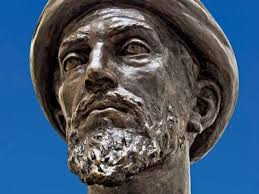
Zeev Harvey, Emeritus Professor of Jewish Philosophy, Hebrew University  

Radical Philosophy and Mainstream Judaism

The genius of Jewish Thought is its cosmopolitanism and pluralism.  It is written in seventy languages and ranges from radical rationalism to radical mysticism.  Maimonides, like Rabbi Shmuel Ariel after him, believed that Judaism can be defined by dogmas.  However, as Mendelssohn said, the only truly good things that came from his 13 Principles are the beautiful piyyut Yigdal and the great books by Hasdai Crescas, Joseph Albo, and Isaac Abrabanel, which criticized those Principles and suggested different approaches. 

 It was Ibn Gabirol who brought radical philosophy into the Synagogue with his Adon OlamAzharot, and Keter Malkhut.  Ibn Ezra and Gersonides brought it into Mikraʾot Gedolot.  Maimonides’ Guide of the Perplexed is the most influential book in Jewish philosophy, and traditional Jews usually read it in Ibn Tibbon’s Hebrew translation, together with the radical Commentaries of Narboni, Kaspi, and Efodi.  The presence of radical philosophy in mainstream Judaism is clear and significant.   

Last February I was invited to give a series of seven shiʿurim on the philosophy of Rabbi Hasdai Crescas at the “Kerem” center in Brooklyn.  Founded by Reb Joel Wertzberger and directed by Harav ha-Gaon Yonoson Marton, “Kerem” is a group of Satmar rabbis and scholars who are wholly committed to the Satmar derekh, but interested in learning about different approaches.  Among other Israeli academics who have spoken there are Moshe Halbertal, Yair Lorberbaum, Benjamin Porat, Elhanan Reiner, and Shai Wozner.  James Diamond of Canada has also spoken there.  I was not surprised to find that the Satmar ḥasidim were well versed in Sefer Or Ha-Shem and other medieval philosophic books.  However, I was surprised when they asked me pertinent questions about the most recent writings of young Israeli scholars – not only Shalom Sadik but also more controversial authors, like Micah Goodman and Israel Netanel Rubin.  I have no doubt that in the eyes of the Satmars Rabbi Ariel’s belief that the State of Israel is atḥalta de-geʾulah is far more problematic than Professor Sadik’s views on hashgaḥah.    

Yehuda Halper, Dept of Jewish Philosophy. Bar Ilan University

Following Al-Farabi and Averroes, medieval Jewish philosophers turned to Aristotelian logical works to develop a notion of what modern logicians call second-order knowledge. This kind of knowledge is knowing that you know something. Al-Farabi had associated the Aristotelian demonstration, the pinnacle of logical argument and the foundation of mathematical and scientific reasoning, with certainty, i.e., knowing that you know what has been demonstrated. Thinkers of the Ibn Tibbon family and later commentators on Aristotelian thought adopted the demonstration as the ideal basis for math and science, but recognized that there are very few, if any proper demonstrations in Biblical or Talmudic works. Rather what we might find in those works are portrayals of beliefs whose verification is less than certain. They often looked to other forms of argument, such as dialectic, rhetoric, and poetics, to describe the arguments of such works. That is, thinkers like Jacob Anatoli and Moses Ibn Tibbon, focused on the form of Biblical and Talmudic claims and took them as non-demonstrative, but often persuasive by using other forms of argument. Using these techniques they were able to differentiate in fairly technical terms argumentative techniques for religious and scientific purposes.

Students today often think of belief as something inherently irrational, as essentially opposed to scientific or justified knowledge. As such, they seem to think that people cannot reason about belief. The medieval Aristotelians exemplify ways in which humans can reason about belief, even beliefs that are not scientific or scientifically provable. In fact, I believe that everyone can benefit from greater use of reasoning, in public, in private, about religion, about science, in general.

Daniel Rynhold, Dean & Professor of Jewish Philosophy, Yeshiva University

It’s difficult to attribute immense historical importance to the thinkers you mention since they are little studied by the Jewish masses. Some are likely unknown to the average yeshiva bochur, and even in the academy, with the possible exception of Gersonides, they are only studied by specialists in medieval thought. However, they are incredibly important (again, particularly Gersonides given that his biblical commentaries place his works – even if unopened – on the shelves of many Batei midrash alongside the classical and oft-studied commentators) for modelling a path for a relatively silent but sizable enough minority in the Orthodox Jewish world. And that path is one that allows halakhic study and commitment to sit side by side with a theology that veers far from the mainstream. It troubles me when such approaches are not accommodated. It’s not that those opposed to such philosophies need to accept them. But however difficult it is for some to understand how those non-mainstream philosophies can support halakhic commitment, for people of a certain religious sensibility, it is only those theologies that can inform their religious commitments. One person’s heresy is another’s “divrei elokim hayyim” as anyone who has, for example, read both Ramban and Rambam can attest.
Sarah Pessin, Professor of Philosophy, University of Denver

The question of rationalism in a thinker like Maimonides is itself wrapped up in a pre-modern sense of ‘the rational’ where ‘the rational’ includes a depth of commitment to logic, math, and science, yes, but all at once also to ethics and theology. It’s a wonderful Greco-Islamo-Jewish framework for seeing the hand of God and with it the heart of divine wisdom in the details of botany and also in the invitation to minister with respect to neighbors. Living a life b’zelem, in this context, is living a life which aspires to a hint of God’s wisdom and a trace of God’s goodness all at once such that a life of Torah and a life of science and life of ethics are all intertwined parts of a life-with-God.

Yes Torah—and yes Torah because yes wisdom and ethics; for the attentive person-of-God, the Torah is a gift just as our God-given talents of intellect and virtue are gifts. When in doubt, the Torah guides—but if the Torah appears to guide against reason and virtue, it’s a fine indicator that we’ve made a wrong turn.

While different in epistemological frameworks from a modern thinker like Buber, I think Maimonides would agree with Buber’s take on “theomania” as the error humans make when we are so excited to meet God (or relatedly, so confident that we have already met God) that we feel confident overlooking responsibilities to neighbors. I think Judaism–and also, humanity in general–is richer for Maimonides’ ancient sense of reason–shared by Greek, Islamic, Christian, and other thinkers–which features the sort of wisdom that imitates God’s wisdom not only of head but of heart, inspiring and inviting a life of religion-with-science-with-goodness-to-neighbors that mirrors the generosity of God’s overflowing hesed

Y. Tzvi Langermann, Professor Emeritus, Bar Ilan University

It is impossible for me anyway to answer questions about relevancy without thinking about how the figures you mention are relevant to me, on a personal rather than professional level. I find inspiration and guidance in the thought of many figures across the cultures and ages, especially Maimonides. In this context the most important point is this: Maimonides wrote a guide for the perplexed–a book whose aim is not to inculcate doctrine but to show the way. It is fundamental to Judaism that there is only one Truth–with a capital T, because God is al-Haqq, the Truth, but each individual must make his/her own struggle or journey to approximate the Truth as best as one can. Maimonides’ chief aid is in coaching us how to avoid errors along the path.For this reason Maimonides, and not a few other medieval thinkers, are relevant–chief among them, Yehudah ha-Levi who, in my understanding, is no less rational than Maimonides.

The proof of the pudding is in the eating., Maimonides is clearly still relevant. The questions are how and why. To the best of my understanding of Maimonides’ historical setting and intellectual milieu, the question, rationalist or not, is out of place. Making this a focus of discussion is another example of the ubiquitous yet unavoidable act of imposing contemporary categories (whose parameters are not clear to me even in contemporary terms) on historical actors from another world. Yet this faux pas is unavoidable precisely because there is, for whatever reasons, great intellectual interest and, I submit, societal and political significance, in exploring the questions associated with rationality and its presumed opponents and slugging out the answers. Maimonides is brought into this exchange because his rich written legacy offers material for discussion and, yes, prooftexts, for the different positions–of course, when the material is translated (since most of it is in Arabic) and explicated. Finding support or at least solace in a towering authority (and yes, authority matters for everyone, admit it or not) certainly is helpful.

Prof Lawrence Kaplan, McGill University

For the radical Maimonideans, Maimonides’ view of the relationship between philosophy and religion is a prime example of what Prof. Carlos Fraenkel refers to as “philosophical religion.”  That, Maimonides, to some extent, seems to be an adherent of philosophical religion is, in my view, undeniable. He identifies the highest and most profound teachings of Judaism, the account of creation and the account of the chariot, with the philosophical natural and divine sciences, and for him the highest and ultimate goal of Judaism is the knowledge, love, and fear of God based on reason. Moreover, Maimonides sharply differentiates between the welfare of the soul, correct beliefs in simplified or imaginative form prescribed for the multitude on the basis of authority, and perfection of the soul, the intellectual knowledge of God based on reason designed for the elite (Guide 1:33, 3:27). 

And though he never says so explicitly, he intimates that observance of the commandments of the Torah, both commanded practices and commanded beliefs, inasmuch as they are accepted on authority, cannot endow one with perfection of the soul, though they can point one in the direction of attaining perfection of the soul, if one has the ability, through the use of one’s intellect.

Still, if one takes Maimonides at face value, it seems he cannot be viewed as an adherent of philosophical religion tout court, as say was Averroes.  Here the radical Maimonideans, pushing Maimonides’ claim that the Guide is an esoteric work to its limits, argue that, despite his protestations, Maimonides in truth subscribed to the Aristotelian view of eternity and thus did not allow for the possibility of miracles understood supernaturally, whereby God suspends the natural order, even if only temporarily, through an act of will. Rather the biblical “miracles” are just wondrous acts, whose natural causes we do not understand. Along these lines and, more significant, for the radical Maimonideans such basic biblical doctrines as prophecy and providence have to be understood purely naturalistically, the more literal, personal, and supernaturalist presentation of these doctrines in the Bible just being an accommodation to the limited understanding of the multitude.

 Unlike the radical Maimonideans, I see no reason to question Maimonides’ sincerity in affirming that creation is more probable than eternity. Still, I believe that one should not exaggerate the differences between the view that takes Maimonides’ affirmation of creation at face value and the radical Maimonidean view. For even according to the Maimonidean view of creation, the world is not just an expression of an act of divine will, but also of divine wisdom.   This being so, the primary path to knowledge and love of God (See Hilkhot Yesodei ha-Torah 2:2) is not through knowledge of God’s miracles, as Halevi or Nahmanides maintain, but knowledge of God’s wisdom as revealed in the orderly and law-like processes of nature. And included in these law-like natural processes are the phenomena of both prophecy and providence which, for Maimonides, operate naturalistically.

Rav Soloveitchik on the Guide of the Perplexed-edited by Lawrence Kaplan

When Rabbi Soloveitchik arrived at Yeshiva University he gave classes for two decades on philosophic topics.  In these lectures, we see Soloveitchik as the graduate of the University of Berlin in philosophy and as the former student in the Berlin Rabbinical seminary (for a year). Soloveitchik gave great weight to future rabbis having training in philosophy and having a master’s degree in Jewish Studies.

Did you ever want to know what Rabbi Soloveitchik’s early philosophy lectures were like? Did you ever wish to have been able to attend them? Here is your chance.

We now have a record of one of those early courses, edited thanks to the hard work of Lawrence Kaplan professor at Magill University, who was the official translator for Halakhic Man.  The new volumes is called  Maimonides – Between Philosophy and Halakhah: Rabbi Joseph B. Soloveitchik’s Lectures on the Guide of the Perplexed (Urim Publications). The work is based on  a complete set of notes, taken by Rabbi Gerald (Yaakov) Homnick. The original notes consisted of two five spiral notebooks of 375 pages and 224 pages.  For the philosophic reader of Soloveitchik, these are interesting and exciting lectures bringing many scattered ideas into one place. Kaplan provides a wonderful introductory essay setting out and explaining the ideas in the lectures.

kaplan cover

In this volume we see Soloveitchik in his use of Isaac Husik, David Neumark  and Leo Roth to help him understand the texts of Jewish thought, and his reliance on the modern thought of Hume, Spinoza, and Bertrand Russell. We see him giving out an academic reading list to start and engage with university Jewish studies.

Soloveitchik was originally planning on writing his dissertation on Maimonides but that did not work out so instead he switched advisers to work on Hermann Cohen. But what did he plan to discuss in the original medieval dissertation? This work gives the reader a sense of what he would have written since Soloveitchik incubated his ideas for decades and remained for decades with the direction of his earliest thoughts. It seems to have been a modern reading and defense of Maimonides.

Hermann Cohen’s modern reading of Maimonides as ethical and Platonic was instrumental in the 20th century return to Maimonides and especially Soloveitchik’s understanding of Maimonides. This lectures in this volume show how Soloveitchik both used and differed with Cohen. However, the citations from Cohen in the original lectures were telegraphed, in that, Cohen was not available in English at the time and Soloveitchik was just giving the gist to audience that had not read him. This makes it harder for those who have not read Cohen recently.

Kaplan notes that Soloveitchik’s readings of Plato, Aristotle, Plotinus and Aquinas are “highly controversial” meaning that they are less confrontations with the texts of those thinkers and more the reception and rejection as found in early 20th century thinkers. His German Professors considered idealism as superseding the classics and Russell considered science and positivism as superseding the ancient. For these works, Maimonides was relegated to the medieval bin. Soloveitchik was going to save the great eagle.

In addition, the 19th century Jewish interpreters saw Maimonides as an abstract Aristotelian philosopher, and, if anything relevant, closer to Reform than Orthodoxy. The scholar George Y. Kohler showed that at the Berlin seminary they were quite ambivalent about Maimonides. In addition, the instructor in Jewish thought Isaiah Wohlgemuth at the seminary leaned in his teaching towards considering faith as absurdity- Tertullian meets Kierkegaard and Scheler.

So the point of these lectures, and probably the unwritten dissertation, was to show the continuous relevance of philosophy for the understanding of Torah and the relevance of Maimonides. The goal was also to show the importance of Torah study for Maimonides despite the explicit vision in the Guide. Much of this agenda was later set out and popularized by Soloveitchik’s students David Hartman and Isidore Twersky.

Soloveitchik sought to move the reading of Maimonides from the practical Aristotelian approach to a German idealistic higher ethic of imitating God.  According to Kaplan’s notes this reading is not really Maimonides’ own thought.

One of the bigger unexpected formulations of this volume is Soloveitchik’s presentation of a pantheistic view of God as the hesed (mercy or caritas) behind creation. As in many idealists where the world is fundamentally mental or immaterial, the world is in God -in some ways the real is the rational- but he sets this within a theistic scheme .

This pantheism led Soloveitchik to think that aspiring Torah scholars should attain a cosmic-intellectual experience and thereby identify with the world through their minds.

There lectures discuss the ascent from ecstatic prophet to the higher cosmic prophetic experience. For Soloveitchik, the goal of cosmic-intellectual prophecy is to surrender to God beyond words to an inexpressible point.

Soloveitchik distinguishes between two levels in the observance of halakhah. A lower approach where halakhah concerns obedience, duties and practical law; at this level ethics are instrumental. There is a second higher level of identifying with God and thereby with the cosmos. In the lower level there is obedience to a normative halakhah which is distinctly and qualitatively lower than having a cosmic intellectual experience where the divine is internalized as a prophetic experience in which one reaches the pinnacle of human existence.

Soloveitchik declares that halakhah is not about “how to” rather in its ideal state it is about merging into cosmos via cosmic experience to reach a higher truth into reality. (This ideal is quite unlike the way many today conceive of Soloveitchik).

Kaplan notes that these lectures present an innovative theory of fear, in which fear at that moment of cosmic consciousness generates a recoil thereby returning us to the halakhah and norms. After love and identity with God, one recoils in distance, submission and returns to the external norm.

For Soloveitchik concern for others and responsibility for fellows as hesed is the inclusion of the other in the cosmic vision. Just as God is inclusive of the world and knows the world because it is part of Him, the Talmud scholar knows about people through his universal understanding.

Kaplan points out how this is completely the opposite of Jewish thinkers such as Levinas where you actually confront the other and through the face of a real other person gains moral obligation.  (I am certain that Soloveitchik pantheistic-Idealist view of ethics will elicit some comments. )

Rav Soloveichik’s speaking style often consisted in sentence fragments and repetition of phrases, especially a repetition to return to where he left off, after a side interjection. Many times one did not know the relationship of the return to the interjection. Was it in agreement or disagreement? Unfortunately, I am not sure if this edition solved the problem in that there were many dangling sentences and lines that the reader would be unclear if it agreed or disagreed with the prior line. In addition, many of the lines in this book needed an explanatory footnote especially those concerning idealism and Hermann Cohen.  But despite these caveats, for the philosophic reader of Soloveitchik, we once again owe Kaplan gratitude for his fine work. We should also thank him for this extensive interview analyzing many of the most important issues in the work.

kaplan 2

  1. What is new in this work?

From the point of view of form, these lectures are certainly new, since until now we have never had an essay of Rav Soloveitchik [henceforth, “the Rav”], much less a book, devoted to an analysis of the Guide. But from the point of view of content, the matter is not so clear After all, the Rav discusses certain themes from the Guide at length in Halakhic Man, Halakhic Mind, and U-Vikashtem mi-Sham (And from There You Shall Seek). Also, another very important discussion of the Guide can be found in his Yiddish Teshuvah Derashah (Discourse on Repentance), “Yahid ve-Tzibbur” (“Individual and Community”) in his Yiddish volume of Essays and Discourses. The truth is that if combines what the Rav says in U-Vikashtem mi-Sham with what he says in “Yahid ve-Tzibbur,” you get much—not all—of the basic outline of the argument of these lectures. Still, there are a number of   new elements.

One point obvious, while, in another sense, new is that while the Rav in all his essays displays a great openness to scientific and philosophic thought, he never explicitly justifies such openness. In these lectures, however, the Rav finally justified his practices.  The Rav notes that Maimonides believes that non-Jews could also reach the high religious level of “serving the Lord continually.” In this connection he observes that Bahya often cites “pietists,” who turn out to be non-Jews, and similarly cites Arabic philosophers and Church Fathers. He goes on to cite Maimonides’ famous statement  “Accept the truth from whoever said it.” He also cites a passage from the Laws of the Sanctification of the New Moon to the same effect, and concludes “Maimonides is clear…we do not care who the author is.”

There are, however, three entirely new elements. First, in the lectures the Rav presents his basic argument as a response to the claim of medieval commentators on the Guide and, in the modern period, of Heinrich Graetz that Maimonides considers Halakhah (Jewish law), both its study and practice, as secondary to philosophy.

Second, though in U-Vikashtem mi-Sham the Rav maintains that according to Maimonides, “The existence of the world [is] not only caused by God, but [is] also rooted in Him,” he carefully avoids any use there of the word “pantheism.” In the lectures, by contrast, he does speak of Maimonides’ pantheism—to be sure, with certain important qualifications.  Third, the penultimate section of the book on Yirat ha-Shem, the fear of the Lord, is, to my knowledge, new, and, in important ways, it goes against what he states both in Halakhic Man and in U-Vikashtem mi-Sham.

2) Could you elaborate on the claim that Maimonides considers Halakhah as secondary to philosophy? How does R. Soloveitchik counter this approach?

This is an old objection to Maimonides. The claim is that Maimonides follows Aristotle in maintaining that knowledge is superior to morality, both moral virtue and moral action, and, furthermore, in arguing that only intellectual knowledge possesses intrinsic value, while morality possesses only instrumental worth, serving only as a steppingstone to attaining intellectual perfection. From this it would follow that Halakhah, dealing with action, is of lesser worth than science, and that Talmud Torah, that is, the study of Halakhah, is inferior to the study of the sciences.  The Rav—inaccurately by the way—quotes Graetz as stating that Maimonides in the Guide “sneered at halakhic scholarship.”

The Rav counters this objection by claiming that Maimonides distinguishes between two stages of ethics: pre-theoretical ethics, ethical action that precedes knowledge of the universe and God, and post-theoretical ethics, ethical action that follows upon knowledge of the universe and God. Pre-theoretical ethics is indeed inferior to theory and purely instrumental; however, post-theoretical ethics is ethics as the imitation of God’s divine attributes of action of Hesed (Loving Kindness), Mishpat, (Justice), and Tzedakah (Righteousness), the ethics referred to at the very end of the Guide, and this stage of ethics constitutes the individual’s highest perfection.

3) It sounds as if here Soloveitchik is just following Hermann Cohen.

The Rav, as he himself admits, takes the basic distinction between pre-theoretical ethics and post- theoretical ethics from Hermann Cohen, but his understanding of the imitation of the divine attributes of action involved in post-theoretical ethics differs from Cohen.

Cohen, following Kant’s thought, distinguishes sharply between practical and theoretical reason, ethics and the natural order, “is” and “ought.” For Cohen, God’s attributes of action do not belong to the realm of causality, but to that of purpose; they are not grounded in nature, but simply serve as models for human action.

What Cohen keeps apart, the Rav—and here he is, in my view and the view of others, for example, Avi Ravitzky and Dov Schwartz, more faithful to the historical Maimonides—brings together.  For the Rav, the main divine attribute of action is Hesed, God’s abundant lovingkindness, His “practicing beneficence toward one who has no right” to such beneficence. The prime example of Hesed, for Maimonides, is the creation of the world.  This act of creation is both an ethical act, whereby God freely wills the world into existence, and an ontological act, an overflow of divine being, whereby God brings the world into being by thinking it.  However, the Rav goes beyond what Maimonides states explicitly by maintaining that the deepest meaning of God’s Hesed is that he not only confers existence upon the world, but continuously sustains it by including the existence of reality as whole in His order of existence.

4) Is this the basis of Soloveitchik’s claim that Maimonides is a pantheist?

Yes. The Rav denies that Maimonides affirms substantive     pantheism, that is, in terms of substance there are two orders: a finite order, all reality other than God; and an infinite order, God Himself.

But he maintains that Maimonides was an ontological pantheist, inasmuch as God included the existence of reality as whole in His order of existence.  Actually—I did not make this point in my Introduction—I wonder whether the Rav might have done better to refer to Maimonides as a panentheist. Thus the Rav concludes that Maimonides agrees with the seventeenth century French Catholic philosopher, Malebranche that ontically the world exists in God, which is exactly what panentheism (All-in-God) means.

5) Why do you think that Soloveitchik felt it was so important to make this claim of pantheism?

I am not sure, but I believe it is may be motivated by his conception of what true human Hesed is. That is, formally, the Rav begins by articulating Maimonides’ conception of divine Hesed, and then maintains that human Hesed has to imitate and therefore resemble divine Hesed. But I wonder whether the Rav’s thought, in truth, proceeded in the opposite direction, that is, he began with a conception of what true human Hesed is, and then projected that conception back onto divine Hesed.

Anyway, the Rav’s argument is as follows. We can only grasp the divine Hesed and only imitate it through knowing the world in which that Hesed is manifest.  It is in this sense that the highest stage of ethics is post-theoretical, for it is based upon and follows from the knowledge of God attained through the knowledge of the cosmos. To spell this out, since God created and sustains the world through knowing it, when man knows the world, whether through philosophical knowledge or prophetic knowledge, he and God unite together, since they both have the same object—the world– as their object of thought.

More than that—and here the Rav’s interpretation of Maimonides follows that of Solomon Maimon, though, strangely enough, the Rav never cites Maimon in these lectures—in man’s every act of knowledge his finite intellect unites with the infinite divine intellect which constantly and uninterruptedly knows everything. Here, the Rav maintains, we find another type of pantheism in Maimonides, intellectual pantheism, the union of man’s finite intellect with God’s infinite intellect in the act of human knowledge.

But the real point, and, as I said, I think the motivation of all this, is that after this intellectual union with God, man first internalizes the all-embracing divine Hesed, and then imitates that Hesed in the sense that he not only helps and confers benefits upon all who are in need, but, rather, in God-like fashion, he invites them to share in, to participate in his own existence, including them in his own order of being.

Here I would contrast the Rav with Levinas. Hesed, for the Rav, is not extended to the other qua other, as Levinas would have it; but, to the contrary, it is extended to the other because he is not other, because I have made him part of myself, of my own existence. What is truly ethical is not acknowledging the otherness of individuals I interact with, but identifying with them.  And this, to repeat, constitutes the true imitation of God.

So I believe–this is yet another point I did not make in my introduction—that the Rav’s pantheistic or panentheistic reading of Maimonides’ view regarding God’s relationship to the world is motivated by what he perceives as its ethical payoff.

6) Is Soloveitchik, then, claiming that for Maimonides there is no direct knowledge of God?

Indeed, the Rav denies that for Maimonides there can be direct knowledge of God. In this way Maimonides differs, say, from Rav Kook, for whom the highest knowledge of God derives from the soul’s direct love of God as the highest good, a love not mediated through nature. As the Rav clearly says, for Maimonides the only way to know God is through knowledge of the world.

Three times in the lectures the Rav cites Maimonides’ statement in Guide 1:34 that “there is no way to apprehend [God] except through the things He has made.” Similarly, the Rav appears to understand Maimonides’ citing in Guide 3:51 the rabbinic statement that “Ben Zoma is still outside” to mean that Ben Zoma tried to attain direct knowledge of God without intellectually cognizing the universe.  To repeat, it can’t be done.

7) What is the relationship for Maimonides, as Soloveitchik understands it, between philosophical and prophetic knowledge?

For Soloveitchik, as stated earlier, when man knows the world, whether through philosophical knowledge or prophetic knowledge, he and God unite together.

As the Rav’s understands it, Maimonides’ view is that prophetic knowledge builds on philosophical knowledge, that is on the scientific knowledge of the cosmos. Or, as the Rav phrases it, first we have the pre-theoretical normative-halakhic experience, that is, the halakhic experience that precedes knowledge of the cosmos, then the cosmic-intellectual experience, and finally, building on and going beyond that cosmic-intellectual experience, the ecstatic–prophetic experience.

Sometimes the Rav emphasizes the difference between prophetic knowledge and philosophical knowledge, sometimes he blurs the distinction between the two. But there seem to be three features that characterize the ecstatic–prophetic experience as opposed to the cosmic-intellectual experience: intuition, vision, and self-surrender. The key point seems to be that while the cosmic-intellectual experience brings the individual into intellectual contact with God, the ecstatic–prophetic experience brings one into personal contact with God.

The way I understand this—the Rav never states this explicitly—is as follows. God created the world by an act of free will, and, as such, His relationship with the world is a voluntary one, and the connection between Himself and man is an ethical one. But God also created the world by an act of thought, in which case God’s relationship with man is primarily intellectual and ontological.

Ultimately these are two sides of the same coin, for, in Maimonides’ view, God’s will and wisdom are one. Still—again, this is my formulation of the Rav’s view—the philosopher who unites with God solely through the intellect focuses on God’s wisdom, on God as pure intellect, while the prophet who, in addition to uniting with God intellectually, also connects with Him via intuition, vision, and self- surrender, focuses on the personal God, whose creation of the world is a free ethical act.

8) Does Soloveitchik deprecate philosophic thought, at least in comparison to prophetic knowledge?

To an extent. But while the Rav refers to Maimonides’ alleged belief in “the insufficiency of the cosmic-intellectual experience,” nevertheless, in the Rav’s view, Maimonides is firm in affirming that this experience is a necessary stage in arriving at the ecstatic–prophetic experience.  The Rav could not be clearer that for Maimonides there is no bypassing the scientific knowledge of the cosmos.

 9) How would you answer someone who says that this book sets up each problem as goyish philosophy as opposed to Maimonides and that Maimonides is really a halakhic position? Ostensibly, this work rejects both Aristotle and Kant on most issues, leaving Maimonides as unique and as halakhic?
With reference to the Rav’s playing up Maimonides’ differences with Aristotle and (a-chronologically) with Kant, as I and other scholars have noted, one can broadly divide interpreters of Maimonides into two camps: the radicals who minimize the differences between Maimonides and the philosophers (particularly Aristotle), sometimes going so far as to deny that there are any differences; and the traditionalists, who emphasize these differences. The Rav clearly belongs in the traditionalist camp.

Still, though the Rav devotes an entire chapter to contrasting Aristotle and Maimonides, we must not forget that regarding the issue of the necessity for scientific knowledge of the cosmos, and regarding the conception of God as the unity of intellect, the subject of intellection, and the object of intellection the Rav forthrightly acknowledges that Maimonides follows in Aristotle’s wake.

I think that what the Rav objected to most in Aristotle, Plotinus, and
Spinoza was that for them God’s relationship with the world and man is one of necessity. (I am not sure if the Rav is correct about Plotinus, but this is a long story.) They, thereby, negate the possibility of an ethical relationship between God and man, which, as stated above, is possible only if God’s creation of the world was a free and therefore an ethical act. Again we see the ethical motif coming to the fore.  Perhaps in this respect, the Rav reflects the influence of Kant.

10) Is the ecstatic–prophetic experience the same thing for Soloveitchik as revelation? Does he have multiple conceptions of Maimonides’ view of revelation?

Actually, the Rav contrasts the ecstatic-prophetic experience with prophecy and revelation proper, what the Rav refers to as “apocalyptic prophecy.” To cite the lectures: “The Prophetic-Ecstatic experience… is not the apocalyptic moment of prophecy he describes in the latter chapters of Book 2 of the Guide. That moment of prophecy, where God bestows upon man a prophetic revelation, is an act of grace on God’s part. The Prophetic-Ecstatic type of prophecy that Maimonides speaks about in Guide 3:51 can be obtained by all.

In sum, there are two types of prophecy:  The apocalyptic moment of prophecy is granted to the individual by God; the Prophetic-Ecstatic experience is a state of mind.”

Another indication that the ecstatic-prophetic experience is not to be identified with prophecy proper is that sometimes the Rav refers to the ecstatic-prophetic experience as the ecstatic-mystic experience.  This is part of the emphasis in all the Rav’s works not so much on theology, but on human experience, human states of consciousness. Nevertheless, I actually think there is some basis here for the Rav’s distinction in Maimonides’ texts, though it is not so clear and neat as he would have it.

In U-Vikashtem mi-Sham, when the Rav refers to the revelational experience he is referring to “apocalyptic prophecy,” which, for him, is a supernatural phenomenon.So U-Vikashtem and the lectures are operating on two different planes. Actually, I think that, contra the Rav, all prophecy, for Maimonides is natural, but, again, that is a long story. (For Kaplan’s understanding of revelation in Maimonides – see his prior post on Maimonides on Mosaic revelation. )

Still, there may be an important difference between the lectures and U-Vikashtem. In the lectures, where the Rav speaks as an expositor of Maimonides, it is clear that no prophet, not even Moses, can bypass the cosmic-intellectual experience. In U-Vikashtem, where the Rav, though citing Maimonides, speaks in his own name, the revelational religious experience is discontinuous with what he refers to as the rational religious experience.

11) How does this respond to the objection that even if Maimonides did not “sneer at halakhic scholarship,” nevertheless in his view the study of Halakhah, is inferior to the study of the sciences.

The Rav, like a good “Brisker,” a practitioner and devotee of the analytic school of Talmud study, sharply distinguishes between the practical study of Halakhah, study in order to know how to perform the norm properly, and the conceptual and theoretical study of the Halakhah, lomdus. He grants that Maimonides deprecates the significance of the practical study of Halakhah, inasmuch as it belongs to the pre-theoretical, normative-halakhic, stage of religious experience, and, indeed, possesses only the instrumental value of enabling one to perform the commandments properly.

However, he argues that Maimonides would view lomdus, the theoretical study of the Halakhah, if carried out “in conjunction with the cosmic experience (science),” as providing a cosmic-ethical experience parallel to the cosmic-ethical experience attained in the study of the cosmos. Indeed, he claims that when Maimonides in Guide 3:52 states that the knowledge of the de‘ot, “the opinions the Torah teaches us” leads to the love of God,  he is referring not only to theoretical, metaphysical knowledge, but also to the theoretical understanding of the Halakhah.

This claim in my view lacks any textual basis in Maimonides. Still, perhaps the Rav might view his reading of Maimonides as a legitimate “updating” of Maimonides’ position.  Thus, as a number of scholars, including myself, have argued, Maimonides in the Guide appears to suggest, albeit not explicitly, that understanding the reasons for the commandments, that is, the divine wisdom inherent in the commandments, leads to the love of God. The Rav might argue that given that Maimonides’ view of nature was teleological, he viewed the wisdom inherent in the commandments in teleological terms, and thus focused in the Guide on ta‘amei  ha-mitovot, the purpose and aim of the commandments.

However, as the Rav often pointed out, modern science, as a result of the Galilean-Newtonian revolution, no longer views nature as teleological.   Rather the rationality found in nature is that of the abstract quantitative laws that parallel and thus serve to explain the particular, qualitative, natural phenomena. Following from this, the wisdom found in the commandments would not be their purpose, but the abstract legal principles that underlie the particular laws, i.e. lomdus!

But coming back to Maimonides himself, presumably, Maimonides, according to the Rav’s understanding, would not view the lomdus of Rav Hayyim Brisker, the Rav’s grandfather and the founder of the analytic school, as significant, since Rav Hayyim never studied science, and thus should be classified as one of the talmudiyyim, the unphilosophical jurists, to whom Maimonides refers in deprecating fashion in Guide 3:51, but he would approve of the Rav’s lomdus. This obviously is my own extrapolation.

12) How is Soloveitchik’s discussion of the fear of the Lord, (Yirat ha-Shem) original, and how does it goes against what he states elsewhere?

The Rav’s take on the fear of God is, in my view, the most innovative part of the lectures. In U-Vikashtem, the Rav’s discussion of the love and fear of God follows, I would say, a Mishneh Torah model. That is, in the Mishneh Torah, his great code of Jewish Law, Maimonides discusses the love and fear of God, where fear follows love, in Laws of the Foundations of the Torah 2:2, and both are necessary. However, in Laws of Repentance 10:3 he only discusses the befitting love of God and does not mention fear. The Rav—questionably, I believe—understands this to mean that the love and fear of the Laws of the Foundations of the Torah 2:2 refer to a lower form of religious experience, Hidammut, imitation of God, but at the highest level of religious experience, Devekut, cleaving to God, there is only love and no fear, as Maimonides supposedly suggests in Laws of Repentance 10:3.

The Rav’s discussion of the love and fear of God in the lectures follows, I would say, a Guide model—not surprising, since these are lectures on the Guide—and differs from his discussion in U-Vikashtem in three ways. First, as I already noted, in the lectures, according to the Rav’s reading of the Guide, imitation of God does not precede but follows upon Devekut or union with God. Second, in the Guide Maimonides discusses love in Guide 3:51 and fear in 3:52, and in the conclusion of 3:52 he sums up his discussion by speaking first of love, then of fear. As the Rav, correctly I believe, understands it, fear here is the last word, and, unlike the alleged implication from Laws of Repentance 10:3, is indispensable.

The Rav notes that in Guide 3:52 Maimonides links fear with the “actions prescribed by the Law,” or, to use the Rav’s terminology, the mitzvot ma‘asiyyot, by which the Rav seems to have in mind rituals, such as—the example is his—tzitizit (ritual fringes). How is fear connected the “actions prescribed by the Law”? The Rav links Maimonides’ discussion of fear of God in Guide 3:52 with his discussion in the Laws of the Foundations of the Torah 2:2. There Maimonides states that while love of God is the drive to know God and unite with Him, in the fear of God the individual becomes aware of his lowliness and immediately “nirta le-ahorav,” recoils backward. Thus fear reopens the gap between God and man that love or union had closed up. In this way—and this is the Rav’s main point— fear fulfills a halakhic function. Via the love of God, via uniting with Him, the individual internalizes the Law. But the danger is that by internalizing the Law the binding force of the norm will fade away. Fear, by reinstating the distance between man and God, “rehabilitates the norm,” the performance of the law on the practical level. That is, only a heteronomous norm, only a norm imposed upon man from the outside retains its force and binding authority. And this, concludes the Rav, is the meaning of the link that Maimonides in the Guide 3:52 establishes between the fear of God and the “actions prescribed by the Law.”

Here we come to the third difference between the lectures and U-Vikashtem mi-Sham, and, I would add, Halakhic Man.  In the latter essays the highest religious level that halakhic man or the man of God reaches is precisely the love of God and consequently the autonomous internalization of the laws; but in the lectures internalization must be followed by externalization, autonomy by heteronomy. Of course, in the essays the Rav speaks in his own name; in the lectures as an expositor of Maimonides. Are we to conclude that the Rav’s exposition of Maimonides in these lectures is more “halakhic” and less “philosophic” than the Rav’s own philosophy?

I should add that while this reading of the link in Guide 3:52 between the fear of God and the “actions prescribed by the Law” is very ingenious and provocative, it is exceptionally hard to maintain that it is what Maimonides had in mind. The Rav’s attempt to understand Maimonides’ discussion of fear in Guide 3:52 in light of his discussion of fear in Laws of the Foundations of the Torah 2:2 fails, in my view, to convince.  For in Guide 3:52 Maimonides sees the fear of God as being connected not with distance from God, as he does in Laws of the Foundations of the Torah 2:2, but, to the contrary, with God’s constant presence, with, to use Moshe Halbertal’s phrase, the individual’s sense of constantly being scrutinized by God. How, in fact, then, Maimonides understands the link in Guide 3:52 between the fear of God and the “actions prescribed by the Law” remains to be established, but whatever it turns out to be, it is not what the Rav had in mind.

13) You pointed to a number of places where you argued that is it difficult to uphold Soloveitchik’s interpretation as what Maimonides actually meant. Do you think this is true for Soloveitchik’s reading of the Guide more generally?

While I think that the Rav’s understanding of the cosmic-intellectual experience in Maimonides, with its focus on the cognition of the cosmos and man uniting with God through the intellect is true to the spirit of Maimonides, I think the way he attempts to broaden and deepen this concept and argue that in the ecstatic-prophetic stage the total individual establishes personal contact with God is a modernizing reading that is much too existentialist for my tastes.

Negatively speaking, the presentation of Maimonides in the lectures differs from more recent interpretations of Maimonides by the almost complete absence in it of any concern for Maimonides’ political thought and, as well, with the almost complete lack of any concern for the hermeneutic aspect of the Guide, for the Guide as a reading of both Scripture and the rabbinic tradition.

This last point is ironic, for the lectures begin with a lengthy analysis of why Maimonides began the Guide with the verse “In the name of God, the Lord of the world” (Gen. 21:33).  In that connection, the Rav very presciently observes that Maimonides “in quoting a verse… casts off philosophic routine and jargon, and we can gain a more intimate glimpse of him. Maimonides’ citations of biblical verses and rabbinic midrashim throw new light on his thought.”  Prof. James Diamond couldn’t have said it better! But, alas, the Rav does not follow up on this insight.

Reason and Tradition in Maimonides according to Jonathan Jacobs

I did not post the Ngram, but in my playing with it I discovered that Maimonides went through a cultural peak in the 1990’s, the way Buber did in the 1960’s. Maimonides’ Guide has entered the canon on many college campuses as part of the general education requirement
.
To serve these new readers, there is a new book by Jonathan Jacobs of Colgate University, entitled Law, Reason, and Morality, in Medieval Jewish Philosophy. The book places Saadyah Bahye, and Maimonides into the context of Aristotelian tradition as part of an undergraduate philosophy curriculum. The book has not come into the library yet, but the author just published a nice article on the role of tradition in medieval Jewish thought.

Kant declared that rationality meant autonomous reason, if something was know by means of tradition then it is not rationality. Gadaemer returned the respectability of tradition. Here is an article discussing tradition in Saadyah Bahye, and Maimonides. What makes the article interesting is that it does not get involved in history or ideology. Jacobs does not concern himself with Islamic theories of reliable traditions nor with connecting Maimonides to any modern movement.

According to Jacobs, there can be good reason to follow tradition even if we don’t personally know the reason. Moderns care about choice, volition, and decision. Since the Torah is rational and there are reasons for the commandments and Torah is know by reason, we can follow the tradition .trusting that we will see the rationality.

For the medieval, rationality develops over time. All three monotheistic regions share the belief in reason and we all accept tradition. Not Talmudic, Patristic, or Hadith interpretations but tradition that the Biblical faith with its doctrines and observances makes sense. Each particular tradition teaches a universal truth and we can only learn universal truths by means of being in a tradition.

It would be worthwhile to compare this presentation of Maimonides to the Haredi and Centrist uses of Maimonides. For Maimonides, tradition is not an end in itself or about authority or to use tradition to exclude positions. Tradition is individually a moment of one’s education and in community the bearer of universal values. Because of the need to grow in rationality, we temporarily accept tradtion, like medicine.

THE EPISTEMOLOGY OF MORAL TRADITION: A DEFENSE OF A MAIMONIDEAN THESIS
Jonathan Jacobs. The Review of Metaphysics. Washington: Sep 2010. Vol. 64:1; pg. 55, 20 pgs

Maimonides (and other medieval Jewish thinkers) regarded tradition as an ethical and intellectual resource keeping us directed rightly, and also substantively perfecting us. Tradition sustains continuity with the past and connection with roots, and it is a guide into the future. Tradition sustains faithfulness to normatively authoritative origins and also supplies guidance for how to carry on leading well-led lives.

Jewish philosophers’ repeated reference to Deuteronomy 4:6 and what it says about the importance of understanding the commandments – “observe them and do them, for this is your wisdom and your understanding in the sight of the peoples” – is indicative of the importance of the exercise of reason in fulfilling the commandments. Bahya ibn Pakuda wrote,

if you are a man of sound mind and understanding, which qualify you to verify the traditions passed down to you from the prophets concerning the roots of religion and the origins of the acts of worship – then you are obliged to use your faculties in order to verify things both logically and by tradition.

Saadia held a similar view and he argued extensively that the rationality of Judaism could be shown. He wrote:

Moreover, in support of the validity of these laws, His messengers executed certain signs and wondrous miracles, with the result that we observed and carried out these laws immediately. Afterwards we discovered the rational basis for the necessity of their prescription so that we might not be left to roam at large without guidance.

The Introductory Treatise to The Book of Beliefs and Opinions is largely devoted to just that issue and he shows how, with regard to one major concern after another, Judaism can be interpreted in terms of rational considerations.

The strong rationalistic current in medieval Jewish philosophy is distinguished from other forms of rationalism by the way in which it acknowledges that our rational comprehension needs to develop over time, through practices required by tradition.
This bears some likeness to the Aristotelian notion that good habits and dispositions are necessary for attaining sound ethical understanding. The Jewish view differs in regard to the relations between understanding the world on the one hand, and excellent practice on the other. It also differs insofar as the Jewish view has a genuinely historical dimension. The enlargement of understanding is a process occurring in the history of a people and not just in an individual’s maturation and reflective sophistication.

We can now begin to see important differences between the Jewish understanding of tradition and its role, and Aristotle’s understanding of habit, understood as sustained, regular practice, transmitted across generations, and its role. Aristotle’s ethical thought takes habit to be of the first importance, but habit – while it is strongly relevant to tradition – is not the same as it. Tradition is often transmitted by habituation, but tradition is much more than a means of transmission. It can also be the substance of what is transmitted.

In the early portions of The Book of Beliefs and Opinions, in discussing epistemological matters, Saadia noted that the authenticity of religion is attested by the senses and “acceptance is also incumbent upon anybody to whom it has been transmitted because of the attestation of authentic tradition.”29

As for ourselves, the community of monotheists, we hold these three sources of knowledge to be genuine. To them, however, we may add a fourth source, which we have derived by means of the [other] three, and which has thus become for us a fiirther principle. That is [to say, we believe in] the validity of authentic tradition, by reason of the fact that it is based upon the knowledge of the senses as well as that of reason.30

There is no conflict between the givenness or the certainty of revelation and the extensive role of human beings in elaborating and applying what is revealed. The Law speaks through not only the extensive reasoning and argumentation of the rabbis who originated the tradition but also through one’s own reasoning and understanding. In studying Torah one learns strategies of inquiry and argument, not just a fixed code. Moreover, such study includes multiple perspectives, contested interpretations, and enduringly hard cases. The wisdom that would be deployed by someone faithful to the Law would involve knowledge attained in experience and it would involve the cultivation of discerning perception, attention to ethically relevant features of persons, acts, and situations, knowledge of the Law in its complex multi-dimensionality, and knowledge of the ways in which its elements fit together.

There are at least two important observations to make about this. One is that the particularism of a tradition need not be at odds with the objectivity or universality of values it inculcates. The concrete details and specific requirements and practices of a tradition can be the way in which people learn universal values and become habituated to acting on them. A corollary to this is the important moral-psychological fact that the acquisition of values tends to occur in and through experience and contexts thickly textured with certain perspectives, practices, aspirations, and so forth.

Sarah Stroumsa, Maimonides in His World: Rambam as Cosmopolitan-Updated

There is a new book Sarah Stroumsa: Maimonides in His World Princeton University Press  2009. I await my copy to arrive and for the reviews to start appearing. In the meantime, in her first chapter she describes the Islamic Mediterranean culture in which Maimonides worked and which she will use as the framework for her book. She paints Maimonides as the end of an era of Arabic-Jewish integration.

In this approach, she is similar to the method of Steven Wasserstrom, Between Muslim and Jew: The Problem of Symbiosis under Early Islam. Between the 8th and 12th centuries, Jewish culture was tied up in Shiia and Ismaeli thought, in the formation of hadith collections, and Islamic legal schools, in the machinations of Caliphs, in Arabic poetics, and Islamic science.  Maimonides thoughts as he wrote them, were not the start of something new, rather the final summery, reflection, and synthesis of a different age. She credits this approach to S. D. Goitoin and others.

In this approach, the Maimonides of his time is different than the Maimonides of thirty years after his death and then the subsequent use in the Beit Midrash. The former Maimonides spoke and read Arabic and Berber, had Muslim colleagues, and needs to be situated in a world of Farabi, Ibn Sina, ibn Bajjah and the fiqh of Al Ghazzali and debates between Hanafi and Maliki schools of law, and the Ismaeli Qadi al- Nu man’s “Pillars of Islam.” In many aspects, Maimonides was quite conservative compared to the religious options his age. In contrast, the Maimonides of the Beit Midrash is a about a European reception of his works in Hebrew. In Provence, Maimonides was read with Hebrew translations of Farabi, and ibn Sina, but the original world has been lost.

First Chapter as pdf

The “Mediterranean culture” that shaped Maimonides had, of course,  produced other Jewish leaders and scholars. It is interesting to compare  Maimonides to another “Mediterranean thinker” of impressive stature, Saadia ben Yosef Fayyumi, alias Saadia Gaon (d. 942).80 Like Maimonides’, Saadia’s thought was shaped by his education, travels, readings, and personal encounters, and included the legacy of different schools
and religious communities. Like Maimonides’, Saadia’s originality lies in  his ability to integrate these diverse sources of influence into a coherent Jewish thought, speaking the universal cultural language of his time while  yet remaining entirely Jewish. The differences between the tenth-century  Saadia and the twelfth- century Maimonides are not only differences of  personality. The distinctive characters of their respective “cultural Mediterraneans” reflect the turning point in the twelfth century. Both Saadia and Maimonides can be seen as high- water marks of the Jewish Mediterranean society. Saadia, in the tenth century, marks the consolidation and coming of age of the Judaeo- Arabic Mediterranean culture. Maimonides, at the close of the twelfth century, marks the turning of the tide, the end of an era: the beginning of the waning of Islamic culture, the rise of Europe an intellectual power, and, as part of this process, the great shift occurring within the Jewish world.

In modern parlance, he could  perhaps be called “cosmopolitan,” that is, a person who belongs to more  than one of the subcultures that together form the world in which he  lives.

Even some of his famous statements in his commentary on the Mishnah reflect the world in which he lived and book that were known to his readers.

Ibn  Qutayba (d. 889), a traditional Muslim scholar, wrote an anthology of edifying material for the state secretaries, in the introduction to which we find him quoting the Prophet Muhammad’s learned cousin, Ibn Abbas, who had said: “Take wisdom from whomever you may hear it, for wisdom can come from the non- wise.”

Update:

I thank my reader Jeff for pointing me to a recent book review by David Burrell at NDPR- here. In general I recommend highly David Burrell’s Knowing The Unknowable God as an easy to read introduction to the trajectory of Farabi-Maimonides-Aquinas.

Burrell chose the same passage, which I chose, from the first chapter to illustrate her approach. According to Burrell’s summary of Stroumsa, in the chapters which I have not read yet—Maimonides was influenced by the Fundamentalist Almohad world of his youth, including his view of the unity of God, his definition of a leader, and his messainism. But unlike the Islamic world where jurist and philosophers were not the same social roles,  Maimonides in his rarely-found dual role could offer a more creative synthesis of fundamentalism and philosophy. Strousma finds a serious Ibn Sina influence on Maimonides’ vision of perfection as contemplative and erotic and ecstatic. She finds this is one of the places where Maimonides own religious belief is found.

She also attributes the Letter on resurrection to the Almohad heresy hunting against those falasifa who deny resurrection. (I thought for years that Bernard Septimus’ work on the resurrection controversy using only Jewish sources was barking up the wrong tree for similar reasons, any introductory work on medieval Islamic thought mentions the Islamic controversy on resurrection at the end of the 12th century.)

She suggests that Maimonides’ “identifying true monotheism with a noncorporeal perception of God” aligns him with Ibn Tumart’s school of thought (71). It is especially “Maimonides’ overall perception of the role of the ruler that is modeled according to Almohad thought” (77). In particular, his “depiction of the Messiah is characterized by an overwhelming insistence on his military role” (78). Yet it is here that we must recall that

the status of Maimonides within his own community was strikingly different from that of the Muslim philosophers of his generation within  their society[. Indeed], as the spiritual leader of a minority group, [he] could feel, perhaps more than a Muslim philosopher marginalized in the court, that he was able to shape the minds of his flock, [leaving] him, paradoxically, more freedom to adopt Almohad ideology than that left to his Muslim counterparts (79).

Chapter five, “A Critical Mind”, on Maimonides as scientist gives Stroumsa has :”a particular fascination for his obloquy towards pseudo-science, which he labels “ravings”

The chapter crowning the study, “‘From Moses to Moses’: Maimonides’ Vision of Perfection”, begins by comparing the Rambam’s concerns with those of Avicenna,… “the Guide gives us a glimpse of a positive description of Maimonides’ understanding of paradise.”

Commenting on this unusual use of evocative language by the Rambam, Stroumsa proposes (and I would concur) that “his description of the bliss of the perfect souls rings with the exultation and rapture of the believer” (164).

Maimonides’ own Treatise on Resurrection has elicited contentious commentary… Yet in the light of his clear predilection for immortality of soul, one wonders why Maimonides should insist, as he does in his ‘creed’, on obligatory belief in the resurrection of the dead. Stroumsa cuts the Gordian knot by suggesting that

in instituting a list of legally binding dogmas that define the boundaries of Judaism, [he] followed the example of the Almohads, [and especially of] their source of inspiration, Ghazali, who counted the denial of the resurrection as one of the marks of the philosophers’ heresy.

Angel’s Maimonides – rationality and social order

Steve Nadler gives a favorable review to Marc Angel’s  Maimonides, Spinoza and Us: Toward an Intellectually Vibrant Judaism. Nadler, nevertheless places his critiques between the lines. Nadler supports Spinoza’s concept of rationality in which we live rational human beings.  Angel wants Judaism without superstition. But is a lack of superstition the same as rationality?

“Rambam and Spinoza both located superstition in the realm of ignorance and irrational fear…. Rational people will learn to overcome the tendency toward superstition and will root their lives in reason and in an intellectual love of God.”

On this I am overwhelmed by .the simplicity of the definition of rationality. Much of the philosophy of the 1970’s and 1980s discussed rationality. Winch said that it is all contextual, and after some great volumes by Bryan Wilson and then Hollis & Lucas we conclude with Taylor’s defense of universal rationality but as within a given system. In that middle period we had many such as Douglas and Turner who said that the term is only in reference to one’s system- it reveals how one defined one’s social order.

Treating Maimonides as rejecting superstition is following the minimal Maimonideans somewhere between the Rashba’s rejection of kaparot and the Meiri rejecting non- philosophic agadot. It is not the Maimonides of the philosophers- it is not Gersonides, Falquera, or Narboni. It is not even the Maimonideanism of Radak who discusses how he studies the natural order on Shabbat. Maiimonides is here for the broad community- no superstition but not the Maimonides of those who read.  There is no offering of a new Guide of the Perplexed that combines the philosophy of our age and Judaism .

Nadler concludes:

But the success of Angel’s project depends on how well he manages tensions that will be apparent to contemporary rationalist critics of religious belief. For example, while decrying attempts to import superstitious elements into Jewish practice (talismans, prayer for hire, etc.), he suggests that (according to Maimonides) the harm they bring includes the loss of one’s portion in the world to come. And Angel himself apparently believes in the efficacy of prayer, because “God is always present and listening everywhere.” These and other elements of even an “intellectually vibrant” Judaism will strike nonbelievers as no less superstitious than red strings and amulets.

Eliezer Goldman, following Weber, had already written that Maimonides is rational not in the modern sense but in the sense of having a fixed goal and system and then working within it. The rejection of superstition seems to define a current social order. Maimonides would actually reject  “God is always present and listening everywhere” in its modern American usage. In the Guide it is defined in more naturalistic terms.

We can use a good discussion of how these beliefs  connect to modern scientific worldview. The 1970’s rationality debate used as their example the Azande of Africa who followed the natural order but also resorted to witchcraft to provide meaning, telos, and remove contingency. The natural and the religious may be on two separate planes. In this case, Maimonides describes a theoretical sabian magic and then uses as a yardstick and rubric to explain how one should relate to the commandments without magical idolatry. In the modern case, we want a rational Orthodoxy, so we project  a lack of rationality onto others, henceforth called superstition, and if we don’t violate our own definition then willy-nilly, we are rational.

Maybe we can be more like the Azande and accept have both the natural order and witchcraft? or more like Spinoza and have rational educated lives and have religion as its own realm? or we can be like Maimonides himself who had an esoteric Torah for the philosophers and the fighting of superstition for the masses and that philosophy that should not be brought to the masses?. And what of symbolist approaches such as Ricoeur?

How can there be a faith-based sectarian religion that is informed by rational thinking, one that avoids the Scylla of irrational faith and the Charybdis of rational unbelief?

This seems like a false dichotomy and does not correspond to the fragmented, multiple realms of our lives.  Nor does it correspond to context of rationality. My question is: how does this dichotomy portray a very specific social order of what is in and what is out. Do we all really color just within the printed lines of a coloring book?

Maimonides believed the ancient prophets to be morally and intellectually gifted individuals — much like philosophers, except with greater imaginative powers.

Is this a potential definition of prophecy as a acquired perfection? Does this require a philosophic reading of the Bible? And wouldn’t this negate the vibrant literary reading that people are giving to the Bible? The Bible should only be understood by gifted individuals like the prophets. Should we create a prophetic Orthodoxy teaching people to attain these levels? And as Feyerabend ended his classic work Against Method – – If a non system allowed Rabbi Akiva to gain knowledge of the heikhalot- who  re we to try and impose a rational system?

Novak- Natural Law in Judiasm part 1

Natural Law in Judaism – David Novak (Cambridge UP). Here we go again with another volume.

This book, except for a few slips and snipes, is not directly against liberals. Rather it presents Novaks view of Judaism.

Chapter One – Jews were outside public sphere in middle ages and did not know how to enter. We need natural law based on God’s wisdom to engage public life.

Chapter Two – The Bible is filled with stories showing the pre-existence of morality. They prove natural law. Novak does not really entertain that they might be intuitionism like Saadyah Nahmanides, and Rav Kook, or virtues and phronesis like Maimonides, or cultivated conscience like R. Israel of Salant.

Chapter Three – Jewish ethics are based on natural law. Novak assumes that we are darshinan taama dekra (expose reasons for the scriptural law),  we work on reasons for the commandments, and that the Talmudic discussions on rational commandments were actually derived by reason. The Noahide law shows that natural law undergirds the Talmud. He also assumes that the Meiri’s category of “people of relgion” to be the Noahide laws and that the Meiri is the best explanation for the Talmudic law. He assumes the natural law, which preexists the halakhah, includes the principles of avoiding desecration of the name, human dignity, and misleading someone in business.

Chapter Four – Maimonides showed the rational structure to the law and its teleology in accordance with nature.

Chapter Five is the core argument of the book. Albo brought the term natural law into Judaism but it was always there.We receive norms from God on the right way to act. We avoid the two incorrect positions – it is incorrect to act from autonomy and it is is incorrect to think we have to wait for Divine commands. God gave us the basic principles as norms know through natural law. The Talmud is a record of the Jewish understanding of what natural law requires.

Novak rejects legal formalism and is happy  that his approach rejects the approach of the legal formalist Hans Kelsen. Unlike formalism- Novaks law corresponds to a divine reality, is given to humans to make the world a better place and shows the primacy of God’s wisdom in our world. Our major activity in maintaining the world through Torah is the development of the rational laws through philosophic activity. Jewish law, philosophy, and theology all merge in our quest to apply the natural law to the world’s problems.

He pushes Maimonides slightly on the side because he is too Platonic and based on an ideal nature. Now we are post Cassier and Habermas and knowledge is for human construction and to serve human interests.

Novak quotes Etienne Gilson on the need for revelation and to see divine wisdom in our world. Rav Lichtenstein quotes the same idea from Gilson But for Rav Lichtenstein, the Divine wisdom is the Talmud as know through the books in the Beit Midrash; the halakhah in is playing out by the hakhamim is Divine wisdom. For Novak, the divine wisdom is the Jewish natural law, the norms given by God and know as the basis of the Bible and as the principles on which the Talmud is based. The divine wisdom is in our rationally understanding these norms of natural law and philosophically applying them.

Novak does explicitly rejects Rabbi JD Bleich  who equates halakhah and ethics. Novak argues that ethical principles inform the law and one cannot decide the law without philosophic principles.

Novak avoids the presentation of Maimonides as done by David Hartman and Isadore Twersky where Maimonides combines halakhah with philosophic quest. In contract, Novak presents Maimonides as working for natural law philosophic principles to derive Jewish law.

Chapter Six – Noahide Laws The Noahide laws are not just something before Judaism or of a lower status but they are the basic principles of morality for Jews too. Moral by definition mean the Noahide laws. The image of God means that people can make more of themselves than they can from a natural state.

xLDen>en GoogleC
Etienne Gilson