Category Archives: Uncategorized

Return of the Blog after a Hiatus

As of this week, I return to regular blogging. I thank everyone who contacted me wondering where I was. A few points before we resume our regularly scheduled programming.

1] Due to recent events, comments will no longer be allowed from an unknown email or IP addresses. You can remain with an anonymous screen name such as EJ or IH, but you need a verifiable email and IP addresses corresponding to a person known on the web. No more malinator email accounts and no phony emails. I will not place an ID program on the blog. Just give me an email that I can google to verify with a matching IP. (I understand if you have a separate IP for home and work.) If you need to explain yourself, then do it in the line for URL. I already have a stable IP address and email for many of you but for those whom I don’t, you will need to start using one. Don’t take it personally.

2] It appears that the majority of my readers are not reading the posts in real time. They are noting the articles that they want to return to read and then returning on the weekend or in later weeks. People use Pocket (nee Read It Later) and other programs to mark the article to return to read. I get spikes on a post two weeks after posting. Hence, comments are no indication of number of people reading a post. It also means that people like longer posts so they can treat them as magazine articles.

3] I would like guest bloggers to fill in some of my time away. If anyone is interested and has material appropriate to this blog, then let me know.

The Future of Jewish Medical Ethics – Alan Jotkowitz MD

An online discussion had a wonderful post by the important Jewish Medical Ethicist, Alan Jotkowitz MD. In the post he gives five programmatic directions for the future of medical ethics. Some are statements of his different starting points and others are open questions  (1) To recognize the lack of precedents for Jewish medical ethics and its reliance on aggadah and Jewish thought. (2) To encourage that it serve as a source for the general ethical discussion. (3) We  need a greater recognition of the role of patient autonomy is needed, similar to Western medical ethics. This goes with a lesser rabbinic presence. (4) Does the lack of consensus undercut the discipline? (5)There is a greater need to focus on the sources of confession and death bed to develop an ethic of empathy and altruism. I hope he finds time to write a book soon.

His approach breaks the denominational and legalistic straitjacket of the field in the last twenty years. I discussed some of these issues when I posted on Immanuel Jacobovits here and here. 

A Dialogue on Jewish Medical Ethics – Alan Jotkowitz MD, 

Associate Professor of Medicine, Ben-Gurion University of the Negev, Beersheva, Israel

There has been an explosion in interest in Jewish Medical Ethics since the publication of Lord Rabbi Immanuel Jakobovits monumental work Jewish Medical Ethics and culminating in Avraham Steinberg’s Encyclopedia of Jewish Medical Ethics. Scholars and Rabbis have over the last fifty years developed a particular Jewish bioethics and given an authentic Jewish response to such questions as end of life care, artificial reproduction and abortion. Notwithstanding these achievements I think there are five fundamental areas that future Jewish bioethicists have to pay particular attention to.

  1. An authentic Jewish ethical response is heavily dependent on Talmudic sources and precedent. However many modern ethical questions simply have no precedent in the Jewish sources as Louis Newman has pointed out in his landmark article On Woodchoppers and Respirators The Problem of Interpretation in Contemporary Jewish Ethics. (1) For example, how does develop a Jewish approach to such questions as cloning and the development of human-animal chimeras (not to mention the rapidly growing fields of public health ethics and bio-environmental ethics) where there is a paucity or absence of halakhic material. Jewish ethicists in the past have relied on aggadda and Jewish theology to help answer these questions but this also raises the methodological question of how to use these sources to develop normative law. (2)
  2. Another question related to Jewish medical ethics is what is the relevance of the field to general medical ethics? In other words why should a non-Jew care about what the Jewish tradition says about a particular area? Daniel Callahan has argued that for the benefit of an extensive exposure “to the accumulated wisdom and knowledge that are the fruit of long established religious traditions. I do not have to be Jewish to find it profitable and illuminating to see how the great rabbinical teachers have tried to understand moral problems over the centuries.”(3) From a different perspective David Novak has long claimed that halakha and particularly the seven universal commandments, from which most of JME is derived, are rooted in natural law and therefore have universal applicability. (4)
  3. In modern secular medical ethics there is a consensus that the ultimate decision maker should be the patient or their surrogate. Autonomy is one of the four basic principles of modern bioethics (and some say the ultimate principle) and the Charter on Medical Professionalism, which states as one of its cardinal principles “Physicians must be honest with their patients and empower them to make informed decisions about their treatment.” (5) Traditionally, from a Jewish perspective the Rabbi has been the ultimate authority and the question arises in the modern healthcare environment if that is still a tenable position. Rabbi Emmanuel Rackman has even gone as far as to suggest in relation to triage that “”when one must choose between two persons, who will live and who will die, the decision must be that of the person who will act upon it and not that of the state or any of its duly authorized agents. ….the rich legal literature of Judaism provides him with no imperatives. No court will authorize his action in advance and no functionary of the state will or should be his surrogate to decide for him. The only sanction he may suffer will come from his conscience and public opinion. His problem is exclusively ethical and not legal in character…. It seems to me that human beings who are confronted with the problem of making a choice must evaluate all the circumstances and make their own decision”.(6)
  4. The question also arises of whether there can even be a Jewish bioethics due to the lack of consensus even among ultra-orthodox authorities not to mention inter-denominational differences of opinions. For example Rabbi Moshe Feinstein and Rabbi Eliezer Waldenberg, two of the greatest poskim of the twentieth century, have widely divergent opinions on such fundamental questions such as abortion and end of life care. An esteemed halakhic authority can come to the same conclusion as the Catholic Church regarding abortion and an equally distinguished authority can rule that even late term abortion is permitted in certain instances. If this is indeed the case then what is the meaning and significance of a Jewish bioethic?
  5. JME has traditionally been focused on the relatively straightforward clinical questions such as how aggressively to treat a patient at the end of life or in which cases an abortion is permitted. However, there should be much more to a Jewish approach to these questions reflecting the traditional concern with character development and supererogatory behavior. For example, beyond the question of whether an elderly demented patient should be fed which relates to the question of quality of life versus sanctity of life, the commandment to respect your parents and the obligation to feed them should enter into the discourse. (7) The requirements of Bikur Cholim and confession before death and how they are done appropriately should be a factor in the Jewish  discussion of the doctor-patient relationship and professionalism. (8,9) However this perspective has been missing in may modern presentations of JME which tend to focus more on the dry legal issues and less on how these dilemmas relate to the development of an altruistic and empathic personality. These latter concerns have been a staple of those concerned with virtue ethics and should also play a role in JME.
  1. Newman L.E.  Woodchoppers and Respirators: The Problem of Interpretation in Contemporary Jewish Ethics. Modern Judaism 10:2 (February 1990):17-42.
  2. Alan Jotkowitz  Nomos and Narrative in Jewish Law: The care of the dying patient and the prayer of the handmaid Modern Judaism in press
  3. Callahan, Daniel. 1990. ” Religion and the Secularization of Bioethics” Hastings Center Report , Special Supplement: “Theology, Religious traditions and Bioethics” 20, no 4. (July/August): 2-4.
  4. David Novak The Sanctity of Human Life Washington DC: Georgetown University Press 2007.
  5. “Medical professionalism in the new millennium: a physician charter. Annals of Internal Medicine 2002 136(3):243-6.
  6. Emanuel Rackman Priorities in the right to life Tradition and Transition: essays presented to Chief Rabbi Sir Rabbi Immanuel Jakobovits to celebrate twenty years in office Ed. Jonathan Sacks London: Jews College Publication 1986. pp235-244
  7. Jotkowitz A, Clarfield AM, Glick SM The care of patients with dementia. A modern Jewish ethical perspective Journal of the American Geriatrics Society. 2005:53:881-4
  8. Jotkowitz A. Clarfield AM The Physician as Comforter. European Journal of Internal Medicine. 2005; 16:95-6.  
  9. Jotkowitz A , Glick S. Confession at the end of life: A Jewish perspective. Journal of Palliative Care. 2005; 21:57-8.

Uneasy in Babylon by Barry Hankins & the culture wars of Orthodox Judaism

Remember the culture wars in Modern Orthodox Judaism between 1995-2002? The age of Edah, the founding of YCT, the promulgating of the doctrine of mesorah, ban of WPG and furthering women’s role in the synagogue, the decline of the Orthodox Caucus and RCA Roundtable, and the tehillim rallies against the new President. Did anyone record the events week by week? Did anyone produce a book by 2003 delineating the struggle within Orthodoxy?

I recently discovered that the similar struggles within Southern Baptists were immediately documented by Barry Hankins in his well received book Uneasy in Babylon in 2003. The book had several good reviews here and here. His book explains to the moderates that the new conservative forces were not a throwback to some Fundamentalism, and he explains to the conservatives that the moderates were not liberals rather they expected a broad accepting Church.  He explains the differences in various liberal and conservative positions seeking  to inform his readers that they are not all the same. Most importantly, he shows how a leadership role for women was the wedge issue that divided the groups. Let me know if any of this sound familiar in Modern Orthodoxy.

The books starts with the once upon a time story that In 1967 southern Baptists were at ease in their enclave as Southern, Christian, Baptist- subculture “it was the catholic church of the south. ” However, by the end of the twentieth century it was no longer homogeneous (1) During this era there was a grand compromise of placing in control neither right or left. No one was seen as excluded, and their were various emphasis by congregations on mission to others, truth, service, and personal conversion (6)

In 1979, there were conservative appointments that were portrayed by moderates as a start of a takeover- originally seen as mild violation of grand compromise. (7) In the 1980’s conventions and meetings grew n size as each side began to recruit organize and mobilize. Liberals were seen as not believers and conservatives seen as power hungry.  Both sides focus on worst case scenario of the other’s position. (12) Hankins to avoid the conflict avoids using the words fundamentalist or liberals but conservatives and  moderates.

Many tried to tarnish the conservatives as Fundamentalists,  but Baptists were not fundamentalists in 1930’s. They have a denominational independence, they use different terms, are active missions,  (Compare Modern Orthodox vs Ultra-Orthodox split). Conservatives start in the 1980’s with rhetoric that they are the only true church (15) Prior to the 1980’s, Baptists have a negative view of evangelicals as narrow, card-carrying, and anti-denominational. Evangelicals are Yankees, Lutherans, or those preoccupied with Orthodoxy.   (16-17) Yet, by the end of the 1980’s there was a growing sense that they are becoming evangelical, reading Schaffer, and Christianity Today. (21)

Hankins has an interesting point on the difference between those groups like SBC  or RCA/ YU orthodoxy that is full service, in contrast northern Evangelicals and Artscroll/Community Kollel  are interdenominational in their publishing, in outreach work,  in colleges (and yeshivot),  and in periodicals.

The real story starts in 1996 when Albert Mohler takes over the seminary in Louisville Kentucky and turned it sharply right, accomplishing in three years a decade worth of turns. A turn to the right with a speed and velocity that overtook most students and faculty (28, 81) (Was it like this in Judaism?)In 1996, Mohler made women’s issues as the sole litmus test of hiring and firing, it left only a hardline group. Can a women be a preacher? He asked all incoming faculty and he made those faculty sympathetic to women clergy uncomfortable enough to leave. All speakers, authors, and affiliate personal could not affirm women clergy.

Hankins points out, and I have been saying it for years, that you can be hardline without being sectarian or fundamentalist. (or Haredi)  (85) Moderates could get phd but not speak in the university, now one should not read wrong authors in class, guest speakers now needed an ok. (28)

At the start of 1996, moderates called conservatives who didn’t accept critical theories morons. (33)The moderates had a false sense of academic elitism.  They saw themselves as conduits of college and graduate school study but Hankins points out that their sense of themselves was inflated and ideologically driven (Think of the Torah uMadda advocates).In reality these  moderates or liberals faculty were rather conservative by ivy league standards . (97, 104) Moderates say the right as combative in an un-Christian way against liberals, women’s roles, gays, and democrats  (98) This process removed the diversity of evangelicals (104)

The conservatives also started to portray America as a Christian country and to see state, university and media as against religion.  (119-120)

The seminary did not turn for inspiration to the new generation of believing philosophers such as Alvin Plantinga, Keith Yandell,  nor did they turn to Evangelical defenses and rebuttals of historical study.

Albert Mohler embraces post-modernism to argue that (1) truth is not universal or objective but socially constructed, hence one only knows it through the Church (  AB- compare halakhic man’s Kantian constructivism to only knowing the text though mesorah of authorized Rabbis.) (2) There is no metanarrative that all are bound to, so one should accept the  Christian narrative. (3) The text has lost its meaning in Western culture so we can affirm the inerrant Bible without worrying about historical research.(47-48)

The book concludes that no Baptist congregation was ever punished for its stance on women’s leadership or participation, the only ones that were punished were those allowing same sex marriage (226).

After remaking the seminary, between 2003 -2010 -Albert Mohler turned outward and became an outspoken leader in American Evangelical religion whose positions are to the right of his colleges, but this does make him a return to Fundamentalism or superstition.

So where was this like Modern Orthodoxy circa 1996-2002? After?

(Let me know typos in comments and I will correct them.)

Rare Recording of Sigmund Freud (sounds very similar to Rav Soloveitchik)

Unearthed: the authentic sound of Sigmund Freud

March 6, 2013 by  h/t Slipped Disk- here

Psychology magazine has retrieved the only known recording of Sigmund Freud, a statement in English taken by a BBC crew in December 1938 and deposited at the Library of Congress. This you must hear:

Transcript: I started my professional activity as a neurologist trying to bring relief to my neurotic patients. Under the influence of an older friend and by my own efforts, I discovered some important new facts about the unconscious in psychic life, the role of instinctual urges, and so on. Out of these findings grew a new science, psychoanalysis, a part of psychology, and a new method of treatment of the neuroses. I had to pay heavily for this bit of good luck. People did not believe in my facts and thought my theories unsavory. Resistance was strong and unrelenting. In the end I succeeded in acquiring pupils and building up an International Psychoanalytic Association. But the struggle is not yet over.  –Sigmund Freud.

And  for comparison Rav Soloveitchik

Pidyon Haben

Rabbi Prof. Marc Shapiro on the need for Kashrut Organizations

This piece from ten years ago by Rabbi Prof. Marc Shapiro, which was written for the Rabbi Abadie website, was circulating on my Facebook page this morning. I never saw it before, enjoyed it, and thought others would find it interesting. I asked Marc if I could post it: He said sure.

Q & A Board – View Post
Author: Marc
E-mail: not available
Date: 11/11/2003 8:02:00 AM
Subject: Clarification

Message: I have noticed that many people don’t understand the basic shitah of this website. With your permission, let me clarify something.
Rav Henkin, who together with R. Moshe Feinstein was the leading halakhic authority in the U.S. in the 1950’s and 1960’s, is quoted as saying that the entire basis for the existence of the kashrut organizations is the view of the rashba. What did he mean by this?
There is a machloket rishonim and the rashba holds that if a non-Jew, in the normal process of making a food product, adds some non-kosher element, even a very small percentage, then it is not batel. Bittul only works when it falls in by accident. This view is known by those who study Yoreh Deah since it is quoted in the Beit Yosef.
If you look at any of the standard Yoreh Deah books you will find, however, that the halakhah is not in accordance with this rashba. Rather, any time the goy puts a small amount of treif into the food it is batel, even if it is intentional on his part. There is a famous Noda Biyehudah that discusses this at length. See Mahadura Tinyana, Yoreh Deah no. 56 where he permits a drink that was produced using treif meat in the production but the amount of meat was very small and could not be tasted. He states that it is permissible. There is a Rama who has a teshuvah and states similarly. (I am sure if you describe the Noda Biyehudah’s case to people, even learned ones, and say that there is a contemporary rabbi who permits this, they will mockingly refer to him as a Conservative or Reform rabbi since in their mind no “real” rabbi who knows halakhah could ever permit something that has non-kosher meat in it!)

So now we can understand R. Henkin’s comment. If you go to the kashrut organizations’ websites and speak to them they will tell you that you need the hashgachah because sometimes the runs are not properly cleaned between kosher and non-kosher or milk and meat and some slight amounts of the objectionable ingredient might remain (yet here even rashba will agree that it’s not a problem!), or they tell you about release agents or that small amounts of ingredients are not listed on the label, etc. etc. The rashba indeed holds that these last cases are problematic, but the halakhah is not in accordance with the rashba. The hashgachot have raised the bar and are now operating at a chumra level here as well as in other areas. But the average person has no idea about any of this and has never even heard about the concept of bittul. Even if you explain the concept of bittul to him, his response will be: “OK maybe this is the strict halakhah, but I’m not starving so why should I eat something that we had to rely on bittul for. A person who cares about kashrut won’t eat something that has even the smallest amount of treif.” Since people haven’t been educated about the halakhot, they assume that bittul is a kula to be used in emergency situations, and it is not their fault that they believe this, since this is the view that the kashrut organization hold and publicize.
There is a good article waiting to be written about how in the last thirty years we went from halakhah to chumra when it comes to food issues.

Marc Shapiro

Reply: Educational!
AA

Author: Marc shapiro
Subject: Kashrut
Message: Take a look at

Click to access pardesforty3.pdf

Pardes 40: 3 pp. 12-13 and you will see that in 1965 the Israeli chief rabbinate held exactly like your father. The article is written by R. Shimon Efrati, head of Kashrut for the Chief Rabbinate

Afterword: In today’s email from Marc he adds “but it was pointed out to me that my description is too simplistic. E.g., R. David Zvi Hoffmann accepts the Rashba halakhah le-maaseh.”

Chag Sameach

Have a Zissen Pesach. Hag Kasher veSameach.
I have been very busy the last few weeks. I am still here and the blog will return with regular updates starting after the holiday.

passover-spring

seder-duluth1910
Duluth, MN 1910

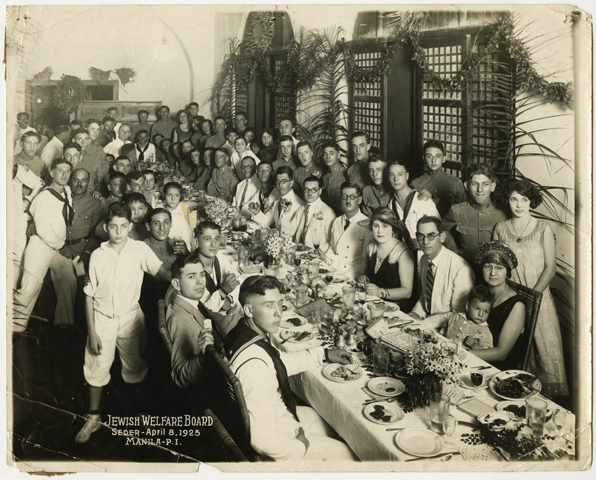
seder-manila
Manila, 1925

dalailama-seder
Washington DC, 1995

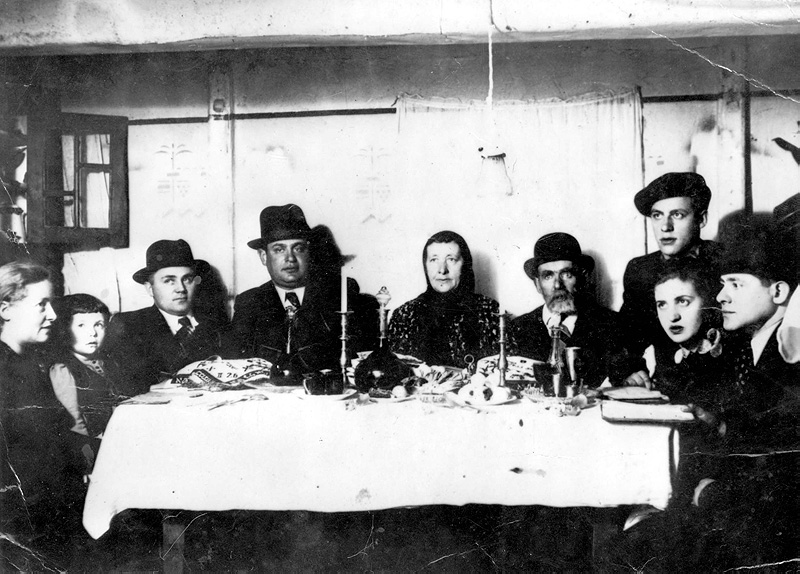
Lithuania-seder
Kurshan, Lithuania 1930’s

Sarah Benor on Orthodox Culture & Linguistics

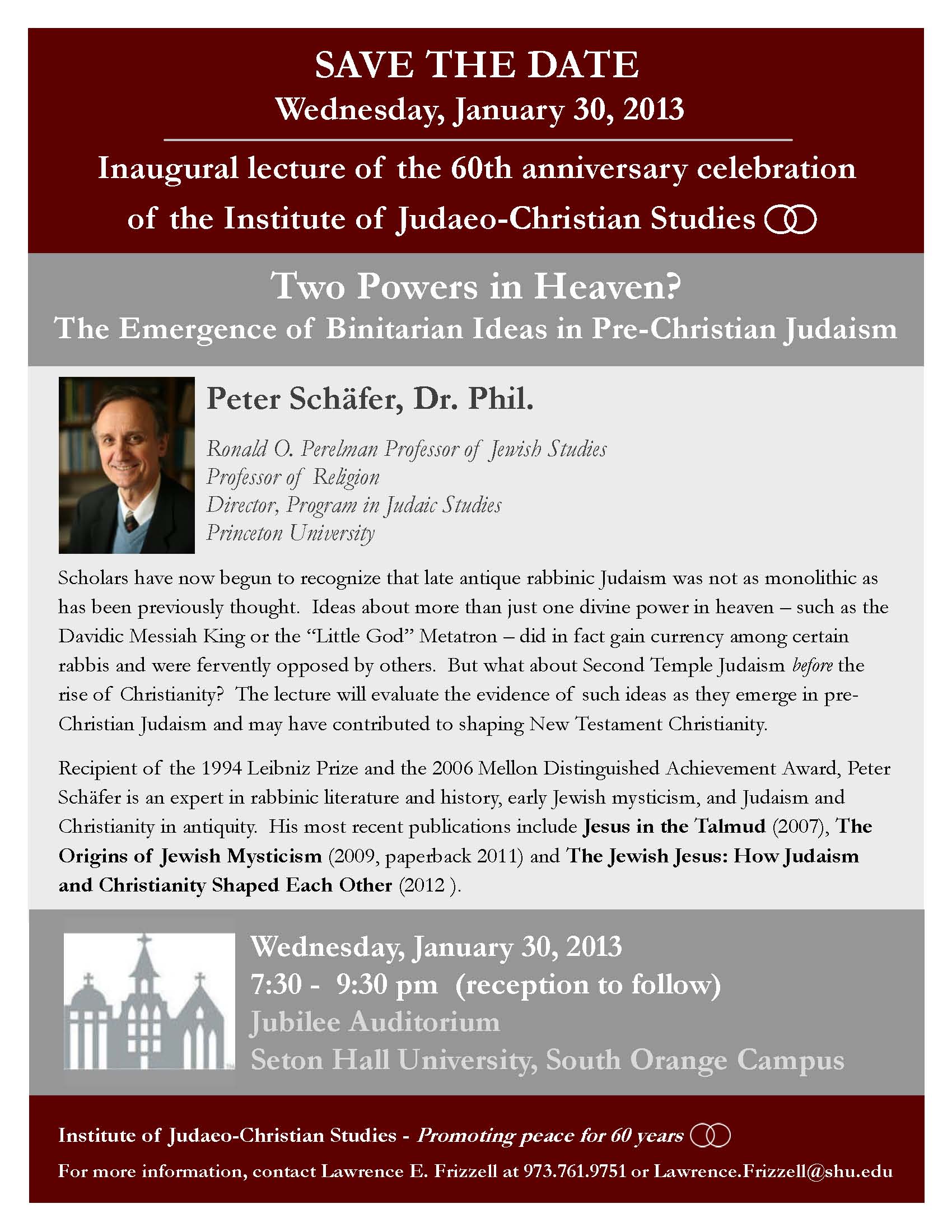
At another session at the Yarnton Manor Conference on Modern Orthodoxy the topic was the sociology of the Orthodox community. The speakers were Daniel Sperber: “Tradition, Continuity and Innovation: Opposing Halakhic Concerns” Sarah Benor, “Frum Unity, Frum Diversity: The Orthodox Continuum in Popular Culture.”Samuel Heilman, “Old and New Orthodoxies”and Chaim I Waxman – Respondent. The presentation by Sarah Benor was novel and engaging. For those who just missed her at Limmud-NY, then catch her talk at Princeton University this Wednesday. (This blog has a sizable Princeton readership who should attend.)

Sarah Bunin Benor is an Associate Professor of Contemporary Jewish Studies at Hebrew Union College – Jewish Institute of Religion (Los Angeles campus) and Adjunct Associate Professor in the Linguistics Department at the University of Southern California. She received her Ph.D. from Stanford University in Linguistics in 2004. She teaches about the social science of American Jews, as well as about language and culture. In addition to the book Becoming Frum, she has published many academic papers and given lectures around the country about Jewish languages, linguistics, Yiddish, and American Jews. Dr. Benor edits the Journal of Jewish Languages and the Jewish Language Research Website, both of which she founded.

She is almost single-handedly (re)creating a field of Jewish Linguistics.

She has a website of Jewish-English keeping track of Yinglish, Hebrish, and other distinctive ways Jews speak English.

The goals of the Jewish English Lexicon (JEL) are to collect data on the English of Jews in America and elsewhere and to make it available to the general public. JEL is a collaborative database of distinctive words that are used in the speech or writing of English-speaking Jews. Think of it as the Wikipedia or Urban Dictionary of Jewish language.

She wrote a seminal paper on the language of American Jews as a Jewish language and concludes:

Yes, American Jews do speak a Jewish language comparable to Judeo-Persian, JudeoArabic, Judeo-Greek, and many other Diaspora languages.
When we analyze the distinctive repertoire available to American Jews, we find that it does have most of the components common among other Jewish languages. It has a non-Jewish coterritorial base language (English), a Hebrew/Aramaic component, influences from a previous Jewish language (Yiddish), displaced dialectalism, other distinctive features not linked to previous languages, avoidance of non-Jewish religious features, and a recognition that Jews use distinctive language.

In addition to these similarities, we also find important differences. Jewish American English is written in the same alphabet as general American English (albeit with occasional remnants of Hebrew orthography), rendering it more accessible to non-Jews than any language written in the Jewish alphabet.
American Jews are generally able to speak an English indistinguishable from that of nonJews—even to pass as non-Jews, if they so choose—leaving American Jews much less vulnerable to linguistic ridicule than some Jews of the past.

Prof Benor’s recent book is Becoming Frum: How Newcomers Learn the Language and Culture of Orthodox Judaism (Go read it!)

The book has a website and here are some excerpts:

“One of the few times I heard Milldale Orthodox Jews listening to non-Orthodox music was in the Kramers’ van on the way to New York for a wed­ding. The Kramer parents both became BTs in their twenties, and their teenage children have grown up as FFBs. For part of the trip, they listened to an Orthodox band. When the tape ended, they turned on the radio, which was set to a classic rock station. When “American Pie” started, the children got excited. They sang along for the chorus and some of the verses. But just as the singer was about to say, “The three men I admire most, the Father, Son and the Holy Ghost,” the mother turned the volume all the way down. One of the sons asked why, and she answered, “It’s words you don’t want stuck in your head.” The older daughter said, “Probably something about Yoshke” (the Yid­dish diminutive form of Jesus and the name I generally heard applied to him in Orthodox communities). After “American Pie” was over, the mother put in another Orthodox tape, which happened to start with “Ani ma’amin,” a Hebrew song stating a “full belief” that the Moshiach (Messiah) will come. I couldn’t help but smile about the ironic contrast.” (p. 74)
“For many BTs, feeling or being called inauthentic does not stop them from participating in Orthodox practices. When Mark was a Peripheral BT, he told me that he felt he was not acting like himself when he used chanting intonation or wore a black hat. But he sometimes adopted these behaviors anyway, because, he said, “it’s fun.” So when he was planning his wedding, he told friends and family that it would be “black hat optional, and I’m opting in.” Although put­ting on this “costume” did not seem authentic to him, it was an enjoyable way of connecting with the community. As Ira, an advisor at a BT yeshiva, says, “To a large part, everyone’s putting on a costume in [a BT] yeshiva.” This self-consciousness tends to be only temporary; BTs who continue to participate in a cultural practice eventually feel it is an authentic part of who they have become.” (p. 178)

She has a fascinating article on the language of non-Orthodox Jewish elites, the super-Jews, showing their language as distinct from ordinary Jews.

I argue that the major factor in the distinctive linguistic profile of non-Orthodox Jewish elites is their interaction with others like them. Anyone who attends synagogue more than monthly, has spent significant time in Israel, and/or reports that most of their close friends are engaged in Jewish life (the three criteria we used to define super Jews) likely has regular conversations with others like them. In addition, almost half of young super Jews in the sample refrain from handling money on Shabbat, which suggests that they may also host and/or attend Shabbat meals regularly. We know from studies around the world that people who talk to each other on a regular basis often converge linguistically…Participating in Jewish religious and communal life offers Jews ample opportunity to converse with others like them and to learn and spread Hebrew and Yiddish words. Read the rest here.

And she has an article on how the language of Reform sisterhoods changed . “From Sabbath to Shabbat: Changing Language of Reform Sisterhood Leaders, 1913-2012.” In Women of Reform Judaism / National Federation of Temple Sisterhoods Centenary Volume

1) What was it like for you as a non-Orthodox Jew doing research in an Orthodox community? Is there anything you want to convey to the Orthodox community?

It was a great experience. I am a religiously engaged non-Orthodox
Jew, and I came to my research with a good deal of knowledge about
halacha, tefillah, brachot, and chagim. I also came in with
proficiency in Hebrew and Yiddish. In that sense, I had an easier time
making sense of Orthodox culture and fitting in than some new BTs and
gerim (converts) who come from secular or non-Jewish backgrounds. On the other hand, my experiences also mirrored those of a new BT in many ways, as
we both encountered new traditions, Ashkenazi pronunciations,
different gender distinctions, and a community that’s much more tight
knit than our own. One major difference between my experiences and
those of BTs: I knew that my participation in Orthodoxy was just
temporary, and they expect that theirs will be long-term. Some of the
people I met during my research expected that I would become frum
myself, and a few were disappointed that I didn’t. I hope that
Orthodox Jews will read my book, even though it’s written by a
non-Orthodox Jew. I hope they’ll see in my writing my deep respect for
Orthodox communities and culture. And I hope they’ll invite me to give
talks at their shuls and kiruv centers.

2) What is your method of sociolinguistics? And how does it produce different results than other sociological methods?

My main method is ethnography: hanging out with people, visiting their
homes, attending their lifecycle events, going to shul and school with
them, and going out to restaurants with them. I observe their
interactions, I talk to them informally, and I also do formal
interviews. Throughout this process, I write detailed notes about what
I observed and heard, and I analyze those notes regularly, leading to
more questions I can ask and hypotheses I can test. This is a classic
anthropological technique, and it’s increasingly used in sociology
too. In addition, I also listened carefully to their language and
analyzed their use of words from Hebrew, Aramaic, and Yiddish, their
grammatical influences from Yiddish, and other distinctive features
(like /t/ release). I also did a sociolinguistic experiment called a
matched guise test, in which I recorded an individual saying a
sentence in two slightly different ways (like “Do you know where he
was going?” and “Do you know where he was goingk” or “rosh chodesh”
and “rosh choydesh”), mixed up a bunch of speech excerpts, and played
them back for community members. I then asked them whether they
thought the speaker was Orthodox and FFB (frum from birth), and their responses told me a lot about the linguistic feature in question.

3) How does your data show Modern Orthodoxy as separate from the rest of Orthodoxy?

In my study of responses on Frumster.com, I found that users who
self-select the category Modern Orthodox Liberal differed
significantly from those who selected other categories (Modern
Orthodox Machmir, Yeshivish Modern, and Yeshivish Black Hat) in a
number of indicators, including head covering (kippah/hat type for
men, plans to cover hair for women), tzitzit, and skirts vs. pants. I
found a continuum in all four categories for several of the
indicators, but for some, Modern Orthodox Liberal was distinct from
the other three.

4) How do certain ways of pronouncing letters like stronger Ts show rabbinic authority?

Americans have a few ways of pronouncing a /t/ at the end of a word,
including with or without a release of air. The released /t/ is common among people presenting themselves with an air of authority. This is not just an Orthodox thing- it can be heard in diverse communities. I found that in Orthodox communities /t/ release is more common among men than women and that people tend to release their /t/s more when they are in a position of authority (or when they want to indicate a stance of adamance). It’s not just a rabbinic linguistic feature, but certainly many rabbis release their /t/s frequently, because they often seek to speak with authority.  ( AB- to articulate -a speech sound,  so as to produce an audible puff of breath, as with the first t  of total,  the second t  being  usually unaspirated.)

5) What do you make of the Orthodox rejection of liberal Jews from their purview? What do your HUC students not grasp about Orthodoxy or where are they most resistant (other than egalitarianistm)?

This is, in my opinion, one of the most pressing issues facing
American Jewry today: the fact that many Orthodox and non-Orthodox
Jews have disdain for each other. I think the problem stems mostly
from lack of knowledge and contact. In my fieldwork I heard some
Orthodox Jews (especially but not only ba’alei teshuva) making
critical comments about Reform and Conservative Jews and their
institutions. And in my everyday life in the non-Orthodox world (in
Reform, Reconstructionist, Conservative, and post-denominational
egalitarian circles), I sometimes hear critical comments about
Orthodox Jews and their institutions. I also hear people on both sides
of this divide talking about “Jewish diversity and unity” and “klal yisrael” while
(sometimes inadvertently) excluding those on the other side. Most
people who make critical comments do not understand how diverse and
dynamic the other group is. Orthodox Jews tend not to know that some Conservative Jews observe Shabbat strictly and that some Reform services are now mostly in Hebrew. And non-Orthodox Jews tend not to know that some Modern Orthodox shuls have women’s tefillah groups and that many Haredim have professional degrees. People in both groups assume that those in the other group have no interest in them. I hope this book serves as a small step in addressing this issue: non-Orthodox readers will learn about a Black Hat community and about diversity in the Orthodox world, and Orthodox readers will understand that a non-Orthodox researcher can represent frum Jews and frum culture in a positive and respectful way.

5) Any thoughts on how Orthodox Academics shift their way of speaking in presentation, discussion, and dinner? Can you give examples?

At the conference on Orthodoxy, most of the participants were Orthodox. One of my favorite parts of the conference was the question and answer session after one particular talk. This one speaker gave his presentation in a very academic way, talking about the Pentateuch and referring to biblical concepts with their English names. As soon as he began his answer to the first question, he switched to a more Yeshivish style, using Hebrew names for biblicalconcepts and using other distinctive Orthodox features, like the Israeli hesitation click. His New York accent even became stronger. During the rest of the conference, including coffee breaks, meals, and other academic sessions, he (along with most of the other attendees) used varying degrees of Orthodox features in his English, but he never shifted back to pure Academese. This kind of style shifting is common and useful. We wouldn’t expect a frum scholar to use Yeshivish at AAR, and we wouldn’t expect him to use Academese at his rov’s mussar shmues.

6) How do ba’alei teshuva distinguish themselves from FFBs?

It depends on the individual. Some BTs (acronym for ba’alei teshuva),
especially those who have been frum for many years, are
indistinguishable from FFBs. Those individuals sometimes intentionally
pass as FFB and don’t correct people who assume they are FFB. But many
do not feel comfortable with this situation, and they avoid it by
referring to their non-Orthodox past or to their process of teshuva.
However, most new BTs are not able to pass as FFB. Some indicate their
BT status by trying too hard to fit in – maybe their skirt is longer
than it needs to be, they display their tzitzis too conspicuously, or
they say “baruch Hashem” and “mamish” too much. Others indicate their
BT status through unique combinations, like geflite fish made with
with Indian spices, a black hat worn with trendy sunglasses, or Hebrew
and Yiddish words combined with American slang (like “mamish keepin’
it real”). This distinctiveness is sometimes intentional and sometimes
not. As I write in chapter 1: “Even when BTs attempt to pass as FFB,
their in-between status may become apparent to those in the know,
based on the tilt of a hat, the slit of a skirt, or the shape of a
vowel.”

Five big Hartman ideas by Rabbi Mishael Zion with Noam Zion

Here is one of the best, so far, of tributes to Rabbi David Hartman z”l in that it focuses on what he taught. It was written by Mishael Zion who has a great blog Text and the City together with his father, one of the earliest members of the the Hartman Institute. Below is about half of it- follow the link for the rest of it.

Five big Hartman Ideas 

If you walked into his class, you were probably going to get yelled at. The most boring thing you could say to him was “I agree with you.” His sharpness – and fallibility – managed to revive the Talmudic Beit Midrash, bringing students, intellectuals and politicians to his door.

Our teacher David Hartman, who passed away last week at age 81, was more Socrates than Plato. He challenged young and old alike on their sacred presuppositions.

In his honor, we offer five of his most influential ideas enshrined by the provocative catch-phrases he often used to describe them.

ONE: ‘Sinai or Auschwitz?’

In the 1970’s, the Holocaust came to dominate the strategies for enhancing Jewish identity in Israel and America. Hartman was sharply critical of what he saw as a “Holocaustization” of Judaism. Without detracting from the calamities of the Shoah, the center of Jewish experience must be Sinai, not Auschwitz, he claimed. Sinai is the blue print for a living community which seeks to embody in practice a world of justice, solidarity and service. Dwelling on the indignities of the past will not renew our passion for a just life – rather the creation of a vibrant future-oriented discourse must be the basis of our identity.

Hartman loved teaching a passage in Maimonides which addresses a seemingly ritualistic question: The Candle of Hanukkah and the Candle of Shabbat, which candle takes preference? In Hartman’s keen reading, this was a question of philosophy, not blind ritual: What takes precedence – commemorating heroic wars and the defense of God and the Jewish people, or conserving shalom bayit and the intimacy of a candle-lit Shabbat dinner? Maimonides resoundingly subordinates Hanukkah to Shabbat, which to Hartman was a call to subordinate historical memory and messianic dreams for the joy of a Shabbat meal and the vibrancy of family life. As his teacher Rabbi Joseph Dov Soloveitchik said: “The Jewish people were not put in this world simply to fight anti-Semitism.”

TWO: ‘From Sinai to Zion’ – from Children to Adults

Hartman’s book A Living Covenant was translated into Hebrew as From Sinai to Zion. For many Jews, Sinai represents the moment that God forced Israel to accede to his commandments, a God of paternal authority who threatens to destroy those who do not obey him. Instead, David Hartman’s theology emphasized God as a loving parent who gradually steps back. A wise parent creates room for his child to grow into an adult and make his own mistakes.

The Rabbinic project continues God’s ceding of responsibility to a preponderance of human wisdom in the partnership of God and Israel. Hartman made Rabbi Joshua’s cry – “it is not in Heaven” into the canonized text of all liberal minded Jews. God’s self-ironizing response: “My sons have out-argued me!” is the supreme expression of Hartman’s notion that Torah education is a millennial process of making Jewish children take on the adult responsibilities of shaping the Divine law in human hands. Zionism was the final stage in this movement, where the Jewish people took on not only law, but also history.

But where others saw messianic redemption in the State of Israel as the achievement of Judaism’s vision on earth, Hartman saw it as only the expansion of a challenge that puts our Jewish adulthood to the supreme test. The Jewish state in Zion with its empowerment over all aspects of society is the laboratory to test the Jews capability of fulfilling the desert vision of Sinai in a real world without miracles. But it is also a test-tube for Judaism to see if it has matured enough to provide not just idealistic sermons in the synagogues of the Diaspora, but to guide a modern democratic Torah-inspired state with a concern both for human rights and for security, for democracy and for Jewish identity.

THREE: ‘There is just as much a Jewish morality as there is a Jewish science!’

 Hartman had no patience for the self-congratulatory discourse of an essentialist “Jewish ethics,” and enjoyed counting the reasons why:

First, he recalled that historically Jews in all generations held a myriad of opinions and that the gap between even their best moral maxims and the actual communal behavior was often appalling. In this way, he was a student of the Biblical prophets who have pointed this out in every generation.

Second, the strength of Jewish thought is not in celebrating a common core but in revisiting the grand debates of Judaism. His books engaged in a series of living dialogues: the Bible versus the Rabbis, Maimonides versus Nachmanides and HaLevi, Rabbi Kook versus Yeshayahu Leibowitz and Rav Soloveitchik. Judaism is not a monolithic tradition, but a series of grand debates and fiery revolutions.

Third, “the God of Sinai is still the God of Creation,” and any other claim is a desecration of God’s name. Jewish ethics is first a universal ethics based on the creation of all human beings in the image of God. Human dignity is not divisible and the Chosen People cannot preach their own intrinsic superiority, discriminating against others in the name of becoming a holy people.

Hartman loved to cite the story of a Talmudic rabbi who was urged to use a legal loophole to justify cheating a non-Jew in the purchase of his donkey. The Rabbi retorts: “What, shall I become a Babrbarian?!” That Jewish law, like other systems, cannot prevent one from being a barbarian, was one of his most profound lessons. Hartman’s most uncompromising diatribes against venerable Jewish wisdom were his angry dismissals of the racist presuppositions he found in Kabbalah, Chabad or Rav Kook.

FOUR: ‘Out of the Bathtub of the Shulkhan Arukh!’

Hartman sought to hold two poles – the ghettoized and the cosmopolitan. On one hand there was Torah study as an all-encompassing passionate practice, such as he experienced in the Lakewood yeshiva among the great scholars of Lithuania who escaped the Holocaust. In Lakewood, just as since the destruction of the Temple all God has is the four ells of halacha, so today all a Jew needs is the four walls of the Beit Midrash. In many ways, Hartman never left that Beit Midrash.

On the other hand Torah is meant to be a torat hayim – a guide for life in all aspects of human endeavor. He loved to quote Maimonides who cited Aristotle’s Ethics to illuminate Pirkei Avot: “Accept truth from whomever has spoken it”. For Hartman this meant that Jewish scholars must come out of their intellectual ghettos to seek a critical dialogue with Western thinkers and with other religions.

Hartman could be sharply critical of liberal Judaism for neglecting deep Jewish learning in quality and quantity, even though he honored their commitment to adapting Judaism creatively. On the other hand Hartman, whose parents and siblings would today be called Haredi, would often lash out at the Orthodox community for what he saw as a turning of the “Talmudic Sea of Halakha” into the sordid “Bathtub of the Shulkhan Arukh.”  Halakhic Judaism had become obsessively concerned with libido – kosher eating, kosher sex and kosher dress.

FIVE: ‘What can I say? I love my people…’

David, whose name means lover, loved both the Torah and the Jewish people. He abhorred those who used Halakha to degrade the ordinary Jew’s failure to reach its ideals. Yet he never promoted a facile, apologetic Judaism to pander to Jews seeking a self-congratulatory religion. He loved the Jewish people with a passion, but wanted them to be a sea of raging intellectuals, a yeshiva where all Jews and indeed all seekers of truth could sit, study, and argue. He loved Rabbinic Judaism precisely because it preserves and engenders perennial ongoing debates about conflicting values.

His heart was made of many rooms, but these were not neatly distanced conference rooms for polite toleration of difference, rather it was one big Beit Midrash with many dueling study hevrutas. Rather than a return to the pristine days of old, Hartman celebrated the living covenant of Sinai, where each generation applies a constant reinterpretation to the ancient texts. In this way Judaism is not a community of shared beliefs or values, but rather a community of interpretation – where different readings of shared texts create the boundaries of the community.

Read the Rest Here

Smadar Cherlow- Rabbi Kook’s Secret Mission and Mystical Experience – review by Tomer Persico

There is a solid review by Tomer Persico from Haretz Jan 25, 2013 of an important new book on Rav Kook by Smadar Cherlow (Yuval is her husband).

The book claims that Rav Kook saw himself as a hidden Tzaddik who had to maintain the world and that he was endowed with prophecy. Cherlow deals with Kook’s mystical diaries and claims of the holy spirit.

After WWI, his messianism peaks and is the drive behind his goal to raise the sparks of the secular settlers. Rav Kook see an inner light of God in the secular, while Rav Sonnenfeld said that we look at halakhah not inner hearts.

During this time, Rav Kook’s diaries contain a wealth of religious revelation, visions, entering pardes, and holy spirit: He wrote  “… and I shall listen and hear.. the voice of the Lord calling” ‏(“Shmona Kevatzim,” 4:17‏). Because of its audacity, the sentence was censored when Kook’s words were transferred from his diaries to the book “Orot Hakodesh.”

The review is from Haaretz premium here  Read the selection from the review below-Any thoughts?

“Tzadik Yesod Olam: Hashlihut Hasodit Ve’ha’havaya Hamistit shel Harav Kook” ‏(“Tzaddiq Yesod Olam: Rabbi Kook’s Secret Mission and Mystical Experience”‏), by Smadar Cherlow. Bar-Ilan Press, 435 pages,

Considering the immense influence that Rabbi Abraham Isaac Kook ‏(1865-1935‏) has had on the fate of the State of Israel in our day, it is surprising how few scholarly books have been devoted to him. The thinker who lay the foundations for the national-religious viewpoint that sees in the state the beginning of the budding of Jewish redemption − and in its sovereignty over its territory reliable signposts marking the progress of this redemption − has indeed been the subject of several doctoral theses. But in bookstores the number of titles about him and his philosophy does not exceed a single digit, and approximately half of these are more than 20 years old.

As the subtitle of Smadar Cherlow’s book attests, her work presumes to expose a hidden and secret dimension of the life and importance of the figure known popularly as Rav Kook: his mission as a tzadik yesod olam, literally, a righteous man who serves as a foundation of the world. This mission led him to view himself as one who had been endowed with prophecy − and ultimately also as a tzadik in the role of a messiah waiting for revelation.

Cherlow introduces these characteristics of self-perception from a close reading of Rav Kook’s diaries ‏(which were made public only a dozen or so years ago in the volumes “Shmona Kevatzim”‏), and via a reading of the words of his close students Rabbi David Cohen ‏(“The Nazirite”‏) and Rabbi Yaakov Moshe Harlap. Delving deeply into “Shmona Kevatzim” enables Cherlow not only to suss out what is hidden in Rav Kook’s heart, but also to weave his statements into a chronological axis of development.

After publication of the Balfour Declaration in 1917, and the subsequent end of World War I, messianic expectations from Rav Kook reached their height. These hopes emanated from Rav Kook’s own view of himself as a tzadik, and in fact tzadik hador− the righteous man of his generation. Cherlow brings a variety of his statements, which point to the mission to which Kook saw himself as enlisted as early as his tenure as the rabbi of Jaffa, starting in 1904.

Rav Kook determined that the secular immigrants of the Second Aliyah ‏(wave of immigration‏) − “the impudent transgressors of roads and fences,” as he put it, who came to the Land of Israel between 1904 and 1914 − were the ones who, by their actions, were implementing the divine plan that called for the return of the people of Israel to its land. If to date the preoccupation focused on these views, then in the new book the emphasis is on the mystical intuitions behind them. With the help of assorted quotations from his diaries, Cherlow shows how Kook’s self-perception as tzadik hador led him to perceive himself as responsible for “raising” the pioneers’ enterprise and inserting it as another stone in the evolving tablet of the priestly kingdom that was taking real shape.

About his own times, Rav Kook asks: “Then what are tzadikei hador to do?” and answers himself: “Rebelling against the spirit of the nation … that is something one cannot … but they have to perform great work, discover the light and the sanctity in the spirit of the nation, the light of God that is inside all these” ‏(“Shmona Kevatzim,” 1:71‏).

Kook expresses himself in the third person, but his writing style elsewhere tells us that he is referring to himself, and from his view of himself as tzadik hador, he rolls up his sleeves to try to discover the light of divinity in the actions of the heathen Jews.

It is worthwhile juxtoposing these statements by Rav Kook with the position taken at the same time by Rabbi Yosef Chaim Sonnenfeld, the first rabbi of the ultra-Orthodox Edah Haredit in Jerusalem. With reference to Kook, Sonnenfeld stated that, “the path of this one is not straight in my eyes. What have we got to do with their inner lives? The Lord sees into the heart, but we, human beings, we have but things that are visible and to rule according to the law and the halakha ‏(traditional Jewish law‏).”

Sonnenfeld recognizes that the venerated rabbi is developing his theological method in accordance with “inner sight,” and finding in the secular pioneers a divine spark that is not evident in their actions. From the Haredi rabbi’s standpoint, however, we are talking about a presumption to vision into the Holy Spirit, and he refuses to play on that field. In contrast to him, Rav Kook saw himself as a lead player on that same field.

Later on, Kook exhibits a prophetic and even messianic self-perception. The rabbi’s diaries contain a wealth of terms that describe religious revelation, starting with tzefiyah ‏(vision‏), through tiyul bapardes ‏(a walk through the orchard; pardes, lit. orchard, signifies mysticism), and ending with ruah hakodesh ‏(the holy spirit‏) and nevuah ‏(prophecy‏). Cherlow points out the increasing frequency of these phrases following Kook’s immigration from Russia to Israel and the start of his tenure as the rabbi of Jaffa, based on the assumption that a complete prophecy is only possible on Israeli soil. That was when the rabbi wrote: “… and I shall listen and hear from the depths of my soul, from the heart’s emotions, the voice of the Lord calling” ‏(“Shmona Kevatzim,” 4:17‏). Because of its audacity, the sentence was censored when Kook’s words were transferred from his diaries to the book “Orot Hakodesh.”

Rav Kook’s self-perception as a tzadik and prophet developed into a self-perception as messiah with the end of the Great War. The terrors of World War I inspired him to hope that it was in fact “the war to end all wars,” as it was dubbed at the time. In similar fashion to the impact that the horrors of the Holocaust had on Chabad rabbis, the sensation grew on him that out of such great darkness must burst forth light, and he saw himself as responsible for spreading that light. To that end he worked to found a spiritual-political movement and to revive the Sanhedrin.

Contact with the divine

Cherlow’s formulation of these insights was done based on things − explicit and insinuated − contained in Kook’s diaries. This method is dangerous sometimes, since scholars tend to find in writings whatever they are looking for. But in many cases there is no other choice, for rarely will a mystic ‏(let along a Jewish mystic‏) relate in a simple manner what he feels and the image he has of himself. Cherlow is aware of these dangers. She focuses in her book on Kook’s experiences, at the expense of looking at his activity or his philosophic and halakhic writings. This choice underscores the mystical dimension in his life − i.e., his constant striving for immediate contact with the divine.

One of the interesting insights that arise from this study pertains to the image of Kookian mysticism, which focuses on one’s subjective inner life. The prophetic source as far as Kook is concerned lies in the depths of his psyche. His world is divided into the subjective interior and the objective exterior. This also gives rise to the tension between the inner revelations and hovot ha’evarim − the duties to be performed by the bodily organs, which is to say the mitzvoth and social ties by which he is bound.

His words suggest that his mystical self-perception is utterly different from that shared by mekubalim ‏(mystical masters‏) in the past, in whose eyes the mitzvoth are the mysticism − i.e., that their mystical journey ‏(which includes mating of spheres or impregnation of souls, prophetic revelations or elevation of sparks‏) takes place by means of the mitzvoth, and out of an affiliation with a group of mekubalim around them.

“Cherlow devotes two chapters to examining the strains in the rabbi’s life between his inner identity as a mystic and his social role as a public leader. Again and again, Kook writes about the sorrow caused him by the necessity to go out into the world, and even by the obligation to be a stickler for halakha. His words suggest that his mystical self-perception is utterly different from that shared by mekubalim ‏(mystical masters‏) in the past, in whose eyes the mitzvoth are the mysticism − i.e., that their mystical journey ‏(which includes mating of spheres or impregnation of souls, prophetic revelations or elevation of sparks‏) takes place by means of the mitzvoth, and out of an affiliation with a group of mekubalim around them.

Rav Kook presents a modern mystical consciousness, which he shares with other Jewish figures who were active in the early 20th century, such as Martin Buber, A.D. Gordon, Hillel Zeitlin and the Grand Rabbi of Piaseczno. In a spiritual world such as theirs, mythic thinking, which unites inside and outside, and above and below, gave way to a modern consciousness and a perception that makes a harsh distinction between consciousness and action, between the subjective world and the objective world. Their reunification is precisely the challenge facing the mystic, and meeting it is perceived as the height of mystical accomplishment.

In the eyes of the Jewish mystic, that is a new situation, the first signs of which appeared in the Hasidic movement. From Cherlow’s book emanates Rav Kook’s passion not only to redeem the world, but to redeem his soul as well, through the total unification of the aspects of his life − the mystical, the halakhic, the social and the national. Rav Kook, a dedicated optimist, was convinced it was possible.”

Tomer Persico teaches in the program for contemporary religious studies at Tel Aviv University.

New York: 2011 Geographic Profile.

In mid-January, they released the data from the UJA-Federation 2011 Geographic  Profile. It provides statistics of wealth, denomination, intermariage and other valuable knowledge about the NYC community broken down by county. I have seen no discussion of the data.

Among my observations is that in Manhattan only 18 % light Shabbat candles or are in household that lights candles. In the national studies of 1990 and 2000, it was about 36 % then 32% making it one of the most kept rituals. The keeping of candle lighting was one of the firm ritual kept out of nostalgia or filial piety, not anymore. In addition, kashrut in Manhattan is down to 17%, made up of the  Orthodox and half of the Conservative. On the other hand, Shabbat meals is at 32%- meaning that synagogue sponsored Shabbat meals are attractive even to those who dont light Shabbat candles.  And 32% study Judaism, much higher among those younger.

the whole study is here Geographic Profile (PDF)

A breakdown by counties is here Jewish Community Study of New York: 2011 Geographic Profile

Let me know if you discover any interesting trends.

Conversation with James Kugel- A Follow-up

Prof. Kugel has accepted to answer some of the questions that I received on the prior conversation about revelation. Do not expect a third round. So if you are qualified and want to continue the conversation, then contact me about a guest post or email me a draft.

Prof. Kugel reiterates his approach to the challenge of modern biblical scholarship and again asserts that Orthodox Jews need not be afraid of it.  He also formulates a theory of prophecy, with content somewhat similar the medieval commentaries on the Guide of the Perplexed; a prophecy that is above our comprehension and above the historical details. (This is my take, he avoids the medieval language.) The goal of revelation was to teach the people of Israel the service of God in their daily lives. This is the religion of mitzvot.

In Kugel’s reply, he compares the human apprehension of divine revelation to the human faculty of sight, specifically, our perception of colors, whereby different wavelengths of light reflected off of objects are turned into different colors inside our brains. “The wavelengths are indeed ‘out there,’” he writes, “but the color happens inside our brains.” So too with divine speech: it indeed starts “out there,” but it acquires the form it ultimately has inside the human brain. (AB- think of medieval theories of the agent intellect for prophecy.)

In saying this, Kugel does not address directly the matter of the Documentary Hypothesis or the presence of doublets, repetition, and other apparently human elements in the text, as do other scholars. For example, Rabbi Mordechai Breuer holds that the Torah exhibits different aspects (behinot) corresponding to the different “sources” in the Documentary Hypothesis, but these are all part of a single, divinely authored text and no proof of human intervention. Prof. David Halivni holds that the Torah is a Divine text, but that it became earthly and then was tragically broken and needed to be restored in the time of Ezra, so that the final product does indeed show signs of historical wear and tear and the presence of different voices. In contrast,  Kugel does not try to accommodate the historical reconstructions and multiple authors of the Documentary Hypothesis the way Breuer and Halivni do.

Kugel writes in a style both captivating and convincing, but expresses surprise that his Orthodox readership did not understand that his book How to Read the Bible was not intended specifically for them. He did not expect an  Orthodox audience who are too rationalistic for his Jewish approach and preferred the critical approach once they heard about it. They found Second Temple stories and Midrash too fanciful. He remarks: “I don’t see how they can be Orthodox if they can’t accept the traditional Jewish approach.” He may have misunderstood how some of his Orthodox readers sought to keep literature and psychology free of doubtful material  or how insular they were raised. The audience to whom he wishes to teach modern criticism once they can tell the difference “between Torah and Pentateuch” may be much smaller than he thinks.

Kugel does not answer why there are so many doublets, contradictions, tensions, etc. in the Tanakh, since he believes that the critical approach is completely incompatible with the traditional Jewish approach.

At this point, it may be need to bring into the Jewish discussion through selctive adaptation ideas from theologians who emphasize a second nativity or reading the Bible as part of a community’s exegesis such as Paul Ricoeur, George Lindbeck, Hans Frei or Cardinal Ratzinger. One can only push Biblisists so far, and no further, for philosophic formulation

Commenters please do not comment without having read the books. Also skeptics: your affirmation that you “Aint buying it” does not add to the discussion.

Dear Alan:

I’ve been somewhat overwhelmed by all the email generated by our motza’ei Shabbat conversation. I’m grateful for your invitation to expand on it a bit here (though I’m pretty sure I won’t get to answering all the questions raised). But I should also mention that I hope to have a little book coming out soon that addresses a lot of these issues. It’s Part II of a book I wrote some years ago called On Being a Jew, which took the form of a dialogue between a young man just discovering Judaism and a more knowledgeable, older fellow, who leads him through a series of basic issues and concepts. I had always intended to have that book followed by a Part II: it begins four years later, the younger guy having spent the intervening time in yeshiva in Israel. Now he has a different set of questions, some of them the same as, or at least related to, the questions raised in our earlier conversation and those subsequently sent in to your website. So, if I don’t get to everything in this writing, let me put in a plug for Part II, which is called The Kingly Sanctuary.I should have it out in some form pretty soon, and as soon as I know when, I plan to announce it on my website, jameskugel.com.

Now, here are some answers to questions:

    1) Why did Kugel bother writing a whole book about modern biblical scholarship if he thinks it’s irreconcilable with traditional Jewish belief?

    I think a lot of your correspondents don’t realize that How to Read the Bible was not written primarily for Orthodox Jews, in fact, not for Jews at all. The book was aimed at any educated reader interested in the Bible, which includes an awful lot of Christians, plus some Muslims, Buddhists, etc. as well as people with no connection to any particular religion.

    What I wanted to show to all these readers was the great gap between the Bible as it was generally understood by both Jews and Christians in earlier times and the Bible as it is understood today by modern biblical scholars. So that’s what I did, contrasting the two approaches in chapter after chapter. The point of this, apart from teaching about both ancient biblical interpretation and the basics of modern scholarship, was to raise an important question: hasn’t this whole modern approach seriously undermined the role that Scripture used to play in Judaism and Christianity?

    Most Orthodox Jews don’t have any troubling answering “yes” to that question (in fact, some of them would answer, that’s why we don’t want to hear about it).  But lots of other people found my question very disturbing, or else it just made them mad—among them, not surprisingly, many of my colleagues, people who teach modern scholarship in universities and Christian seminaries. Some of them wrote pretty negative reviews: “Kugel overstates the case, the Bible is alive and well,” “Modern scholarship only enhances our knowledge, which can’t be bad,” etc. etc. Actually, not all of these reviews were written by Christians; at least one of the nastier ones came from a Jewish Bible professor eager to denounce my book as too “Orthodox” in its whole approach.

    So I ended up alienating people on my right (Orthodox Jews who somehow concluded that I was endorsing the modern approach) and people on my left (who attacked me for not endorsing the modern approach). You might say that this is the true mark of success, proof that I hit it just right. But actually, in terms of what I set out to do, I would have to judge the book a failure. I may be wrong, but I think a lot of my Christian colleagues read one or two of the “too Orthodox” reviews and never even bothered to look at the book or consider its argument, while a lot of Orthodox Jews looked at the table of contents and dismissed it for exactly the opposite reason.

    2) Isn’t Kugel being inconsistent? On the one hand, he says that modern scholarship is irreconcilable with tradition Jewish beliefs, and on the other he says Orthodox Jews who don’t want to know about it are “hiding their heads in the sand.” Which is it?

    Actually, I don’t find these two things to be contradictory. As I explained last time (no need to repeat here) modern scholars and traditional Judaism don’t even agree on what the “text” is: the former take it to be strictly the words on the page, the latter to include the whole Oral Torah (torah she-be’al peh). This is no minor disagreement: it represents two completely opposed notions of how to read the Bible. But precisely for that reason, I don’t believe Orthodox Jews need to hide from modern scholarship: its Pentateuch and our Torah exist on two different planes. Of course, I know that there are people who nevertheless feel quite threatened by the whole approach of modern scholars; I’ve always said I’d never compel anyone to study this material. But for me, in any case, I really wanted to know about it, and I think there are a lot of Orthodox Jews like me. So to them I would say: if you truly understand the difference between “Pentateuch” and “Torah,” then go ahead. (But maybe, for some people, it should be like studying the Zohar: age forty and up.)

    3)Why doesn’t Kugel say anything about medieval parshanut and medieval ideas about Torah—Abraham ibn Ezra, Rashbam, the Rambam, Ramban, etc.?

    The story of the rise of medieval parshanut has been told many times and the various contributory factors are well known: the entrance of Greek philosophical ideas into the Arabic-speaking world and their impact on Jewish biblical interpreters from Se’adya on; the fierce Islamic critique of Judaism; the rise of Karaism; the development of Hebrew grammars and Hebrew lexicography; and yet others. All these things combined to cast traditional Jewish exegesis into doubt, indeed, to make Jewish Scripture itself look silly. That’s where the whole movement of medieval parshanut started, and who could blame its brilliant practitioners?

    But these are different times now. We now know full well where the approach of the pashtanim ultimately leads, and you can’t start down that path today without going all the way; the search for peshat didn’t end in the Middle Ages. So if it’s peshat you’re after, then eventually you have to consider not just what Rashbam wrote in the twelfth century, but what is known now about the historical circumstances in which this or that text was uttered, since this will certainly illuminate the peshat. You’ll also have to concern yourself with the archaeology of the ancient Near East and what it has revealed about biblical history, as well as with all the ancient Near Eastern writings that parallel biblical passages and what these may teach us about peshat—what, for example, ancient Mesopotamian law may show about the straightforward meaning of this or that legal passage (as well as the implications of the Mesopotamian law codes’ historical priority to the biblical texts in question).

    You’ll also have to consider questions of the authorship of various books and parts of books (since you really can’t talk about peshat and ignore all that scholars have concluded about the chronology and the unity of different biblical books and passages). Eventually, you’ll have to start looking at the Big Questions—the origins and nature of Israel’s God as reflected in Ugaritic epic; the whole of Israelite cultic practices, i.e. sacrifices and holy days and tum’ah and tahorah, in the light of Mesopotamian cultic worship; likewise, the origin of the people of Israel as currently understood by scholars and the impact of this understanding on the peshat meaning of the Bible’s account of same—in short, you can’t start down the road of peshat and stop once you get to the eighteenth or nineteenth century because it becomes inconvenient after that. So I’m altogether a follower of Hazal  (the rabbinic sages of the opening centuries of the common era) and the approach to Torah that they championed. That is the true theological significance of the doctrine of the torah she-be’al peh.

    4)What does Kugel really think went on at Mount Sinai? How much of the Torah as we have it—if anything!—was actually given to Moses? If he accepts the idea of scholars that the Torah was put in its final form in the Persian period, does this not contradict the plain historical statement that Moses was given the Torah at Sinai?

I tried last time to address the significance of the Torah’s own narrative of mattan Torah by contrasting the theme of Torah min ha-Shamayim with Torah mi-Sinai. With regard to the latter, I alluded to what is said in Sifrei Bemidbar (Beshallah 112), “Anyone who said, ‘The whole Torah was spoken by the Holy One, except that this one thing/word Moshe said on his own (mippi ‘atzmo amaro)’—this is what is meant by ‘He has spurned the word of the Lord’ [Num 15:31].” In other words, Hazal insisted that Moshe was strictly the conduit for God’s words; in their view, he himself had no role in establishing its contents.

As for Mount Sinai, it was so significant to them that no one today has any idea where the real Mount Sinai is. (The place that tour-guides take you to, called in Arabic Jebl Musa, is simply someone’s wild guess of where Sinai might have been. The only ancient Jew I know of to have expressed an opinion on the mountain’s location said it was “in Arabia,” which would put it considerably to the east of the Sinai peninsula.) Actually, it seems that Jews lost sight of Sinai’s geographic location fairly early in biblical times. What was significant in the Sinai narrative was the fact that the Torah came from God; it is not, as others would have it, a “human reaction to the ineffable.” But equally important is the fact that it was given into human hands.

I can certainly imagine a holy book of some other people claiming (somewhat Platonically) that its words are but a pale reflection of the true text, which remains in heaven. That’s not Judaism. So, if one considers these two central principles of the Torah’s own narrative—that the Torah came from God and that the Torah was given over to human beings—then Torah mi-Sinai will itself be seen to embody what I said is the crucial teaching, Torah min ha-Shamayim.

But perhaps I should repeat here something that the older fellow in my forthcoming Kingly Sanctuary says (which is not too different from I have been saying for quite a while): The whole purpose of the Torah is to teach ‘avodat ha-Shem. In fact, the Kingly Sanctuary’s protagonist (“Albert Abbadi”) goes on to describe the Torah as “Volume One of a multi-volume work entitled How to Serve God”; it is followed by other volumes, the Mishnah and Tosefta and the tannaitic midrashim and the Talmud and the medieval codes and so forth. This is certainly not to equate all of these, but to assert that they all constitute a single trajectory. That trajectory began with the Torah, and its divine origin is no insignificant circumstance. But believing in Torah min ha-Shamayim does not imply that the Torah is the last word (otherwise, why do we have these other books?). Rather, it is the first word, and its literal text never was equated with the whole Torah.

Indeed, as I also tried to say as clearly as I could last time, a central doctrine of Judaism is that what starts in heaven is eventually handed off to human beings. That’s the meaning of lo ba-shamayim hi, “It’s no longer in heaven.” Somewhere, at some point in this trajectory, it comes down to earth and human beings take over. Considered from this standpoint, I don’t think much is theoretically at stake in where that line is drawn; it has to be drawn somewhere. I’ve heard people say that every word of the Babylonian Talmud was divinely inspired, and every word of Rashi’s perush to it was divinely inspired, and the Shulhan Arukh was divinely inspired, and all the teshuvot of R. Moshe Feinstein ztz”l were divinely inspired, and so forth. I think this is to miss the whole idea of this divine-to-human handoff, which is so central to Judaism.

5) How can the Torah come from God if it contains elementary mistakes in physics or biology or history?

If we really understood what it means for God to speak to human beings, we would know just how much of a part the human mind plays in the process. But we don’t. Let me mention, by way of analogy, something about our own faculty of sight. Neuroscientists know full well that the objects that we see with our eyes really have no color. Nothing is blue or red or whatever. Rather, what happens is that light (from the sun or an electric bulb or whatever) is reflected off objects in different wavelengths. These wavelengths in and of themselves might be altogether insignificant, but long, long ago, brains developed the capacity to sort them into colors in a process that starts, in humans, with those wavelength-sensitive “cones” in our retina. But that’s only the beginning of a long journey, which moves next to the optic nerve and from there to the optic chiasm, at the base of the hypothalamus; there the information from both eyes is combined and eventually passed on to something else called the LGN (lateral geniculate nucleus), which in humans is a six-layered sensory relay nucleus that further processes and sorts the information until it is forwarded to the visual cortex, way at the back of the brain above the cerebellum. (The visual cortex is actually the largest system in our brain and the one responsible for ultimately making sense of all the input deriving from the previous stages.) What does this mean? It means that there is nothing essential, nothing inherent in the object viewed, to connect it to the color that we perceive. The wavelengths are indeed “out there,” but the color happens inside our brains. Someone could take a computer and program it to assign quite different colors to various wavelengths and so produce a very different picture of what is seen. (This is somewhat similar to what scholars have done with some previously unreadable parts of the Dead Sea Scrolls, causing the black letters of the scroll to emerge from the parchment on which they were written, despite the fact that, to our eyes, both the letters and the parchment are indistinguishably black.) The nimshal is this (and its implications go even beyond the matter of divine speech): we simply don’t know the beginning of the process we call prophecy, i.e., God speaking to a human being. All we know is what comes out the other end, after the intervention of a human brain.

    .6)Does Kugel accept a version of Halivni’s corrupted text theory? If that’s not his explanation for imperfections in the text, what is? Does he expect us to adopt the “solutions” suggested in the Book of Jubilees and the like?

    I guess I’ve answered some of this in the above. And although I am a great admirer of Professor Halivni, I don’t think his idea of a corrupted text is the way to go. But I would like to say one thing in this connection. We know from the Dead Sea Scrolls, as well as from the close textual analyses undertaken by scholars over the past century and more, that our biblical texts were not static. You give to someone, an ancient prophet or sage, a text of the words of God as transmitted to the prophet Isaiah or Jeremiah, and what does he do? He changes them. He moves this over there, he puts some material that came after the beginning of the book and makes it into the new beginning, he glosses and explains and elaborates. Sometimes he does this on a very large scale. We know from Qumran that there were two “editions” of the book of Jeremiah; one version, attested in the Old Greek translation of the Bible as well as in some Dead Sea Scrolls fragments, was about ten chapters shorter than our Masoretic version of Jeremiah (also attested on some Dead Sea Scrolls manuscripts), and the chapters were arranged somewhat differently. It appears, though not irrefutably so, that the shorter version was expanded (rather than the longer version having been abbreviated).

    With regard to all such changes—and there are a lot more—you want to ask that meddling scribe or sage or prophet: How dare you? Someone gives you divrei Elokim hayyim and you start switching things around and adding to them? How dare you?! And the answer is: he dare. And although changing the actual text ceased at a certain point, ancient biblical interpretation continued to accomplish precisely the same thing without changing a word. The endless refrain of those interpreters—people who otherwise had little in common with each other, Philo of Alexandria and ben Sira and the author of Jubilees and so forth—is always the same: “The text says X, but what it really means is Y.” In this sense, I think, there is a direct line leading from text alteration to biblical interpretation: they look like two completely different things, but viewed from a distance, their similarity is unmistakable. And this way of viewing sacred texts, in one form or another, has been there from the very start.

    Do I expect people to accept the “solutions” found in Jubilees? I expect Orthodox Jews to accept, to champion, the solutions found in the writings of Hazal (although, as my earlier remark about Rashi versus Yalkut Shim’oni was intended to convey, midrashic collections generally present multiple solutions to the same textual problem, and these frequently contradict one another). Then why am I bothering with Jubilees? Because the earliest texts of Hazal were written down four hundred years after Jubilees. Jubilees and other writings from the same period thus afford us a glimpse of part of the Torah she-be‘al peh at an earlier stage (though I don’t mean to equate the two)—that’s how I got interested in pre-Hazal midrash in the first place. But quite apart from this, the reason I used Jubilees and other pre-Hazal sources in How to Read the Bible was that I did not want my Christian readers to think that midrash was strictly a Hazal-ic (that is, rabbinic) operation: it was there long before, and is as much a part of what Christianity inherited from earlier Judaism as the books of the Bible themselves.

Conversation with James Kugel about Revelation

Last week, I attended a wonderful symposium in Yarnton Manor, Oxford on “Orthodox Judaism and Theology in the 21st Century”. I thank Miri Freud B Kandel (Oxford) and Adam Ferziger (Bar Ilan University) for all their wonderful work organizing the delightful conference which included an intimate Shabbat for the participants. I will have several blog posts about the conference. The session in which I spoke “Orthodox Judaism and the Bible” consisted of Joshua Berman “Jeremy Bentham and the Modern Perception of Contradiction in Biblical Law,” Alan Brill, Orthodoxies confront Biblical Criticism: Must Orthodox be Orthodox?, Tamar Ross, Orthodoxy and the Challenge of Biblical Criticism, and James Kugel was the respondent to our papers. The core of Berman’s paper was already posted on this blog, and I will post mine in upcoming weeks, the core conclusion of which is that: Yes, one must be Orthodox and that Louis Jacobs was closer to Reform thinkers in his theology by the 1970’s.

In the response to our papers, Kugel stressed how should not preclude that God can actually talk and that we should not use Biblical criticism for theologies. The positions that Kugel explained during the weekend was not the same as the position that many ascribe to him. When Shabbat was over and the others were eating the melavah malka buffet, I sat down in another room with Kugel for a conversation about his opinions and to explain the Orthodox community to him. I recorded some of his points to which Kugel kindly responded with greater detail. The bold print is my echoes of what he said to which he replied in writing.

The Jewish approach, the Rabbinic approach,is one of Torah min Hashamyim as an ongoing process of explaining, reworking, and interpreting the text.

Dear Alan—thanks for all of this, and please excuse all my fussy diyyukim below.
Well, the Jewish approach is certainly Torah min ha-Shamayim, but saying it’s an “ongoing process” might mislead people. For me, Torah min ha-Shamayim is the belief that the Torah was given to Israel by G-d, period. I wouldn’t want to seem to say by this that the text of our Torah was given over a period of centuries or anything like that—just that it is all of divine origin.

I also said that no modern biblical critic that I know of has ever suggested that scholarship can prove or disprove the divine origin of the Torah: this is a matter of belief. The Torah consists of words, and there is no litmus test that can determine that this word came from G-d while that word was inserted by Moses (or someone else). Words are words are words. Even if someone could point to contradictions within the Torah, or apparently unnecessary repetitions, or signs of later editing or interpolation—none of this has any bearing on the Torah’s divine origin: after all, who makes up the rules of what a divine text can or cannot consist of? This may sound like an apologetic approach, but when you think about it, it’s just the simple truth: who are we to determine what or how G-d can put in His book, or how it can arrive in our hands?

The phrase “Torah mi-Sinai” is entirely different: it refers to a particular place, Mt. Sinai, and implies a particular time and person, Moshe at the time of Ma’amad Sinai. A modern scholar can certainly take issue with this doctrine (and lots of them do). I myself have never done so; never.

Frankly, I don’t believe that doing so is consistent with being a religious Jew. (Of course, I reported in my book about the whole development of the Documentary Hypothesis, and I know that some readers took this as an endorsement of it—but that’s because they misunderstood, or never got to, the basic argument of that book—on which see more below.) I would say, however, that Torah mi-Sinai and Torah min ha-Shamayim exist on two completely different planes and are not, therefore, of equal importance. Torah min ha-Shamayim is what counts. As Hazal said, anyone who says the whole Torah comes from G-d except for this one pasuk, which Moshe wrote on his own—such a person is a blasphemer who dishonors the Torah.

Jews do not study the text
I meant: “Jews do not study the biblical text alone, in isolation,” because for us the Torah is not, and never was, just the Torah’s own words on the page, but it was those words plus the interpretations and explanations of the Torah she-be’al peh that constituted the Torah’s true meaning.

I’d put it this way: I have said from time to time (somewhat whimsically) that it might have been better if, instead of printing Humash with Rashi, publishers had started out printing Humash with Yalkut Shim’oni, since, unlike Rashi’s commentary (which, for all sorts of laudable reasons, sought to eliminate any inconsistencies between one midrash and another and therefore made a specific kind of selection of various midrashim), Yalkut Shim’oni preserves that kind of tentative, and strikingly modest, character of midrash: “It could be this, but on the other hand, here’s another explanation.” What bothers me is that nowadays people learn Rashi as if it simply is what the text means; it is the Torah. Among other things, I don’t think this is good pedagogically. It works fine with third-graders. But by the time they get to high school, most of them know Hebrew pretty well, and they know that those Hebrew words in the pasuk don’t mean what Rashi says they mean. So how can Rashi be the Torah? At this point, the best of them develop a new interest in biology or social studies, because limmudei kodesh don’t seem to fit with their notion of the truth.

Kugel accepts Torah from Sinai through Moshe as a historic event but more important is that Torah from Heaven in the continuous reading of meaning in the text.

It’s what I said above about Torah min ha-Shamayim being the crucial matter. I could not, and would not want to, be part of a religion that claimed that Torah was a human creation, or that it is, as I’ve heard some people say, “a human reaction to the ineffable divine.” At the same time, though, I think it is a basic principle of Yahadut that what starts in heaven is inevitably given over to human beings. “Lo ba-shamayim hi” means “the Torah is no longer in Heaven.” It started out there, but then it was given to our sages to adjudicate.

Rather than cite the much-cited Oven of Akhnai story or any of the others, I’d mention a matter close to my own area of research, the calendar. There was this great calendar that some Jews used in Second Temple times: it worked automatically on the basis of the solar year—30-day months with an extra 5 or 6 days added to keep pace with the sun, hence no need for witnesses to go to Beit Yaazek and testify before the beit din that they had seen the new moon, no need to intercalate a whole month at irregular intervals,, and the hagim were never, as we say, “early this year” or “late this year,” because they were basically in sync with the sun. Was this calendar not a better representation of the passage of time than the calendar of Hazal? After all, it was G-d who set the sun in the sky and it was that solar year that had to be followed if Pesah was to occur in the spring and Sukkot in the fall; why play around with lunar months and all the difficulties they entailed? (If you read the words of the Torah alone, there is no indication that the months it speaks of are lunar months, dependent on sightings of the new moon.) But Hazal gloried in the idea that the sacred calendar was NOT automatic, that it required human beings as witnesses and a beit din to interrogate them (“Hakhazek ra’ita o khazeh—did it look like this, or did it look like that?”). And they made sure to stress the point by having us say the berakhah “mekaddesh yisrael ve-rashei hodashim” which means: You gave us the authority to determine the calendar, having us establish not only when each new month starts, but also when all the holy days within it occur, hence “mekaddesh yisrael ve-ha-zemenaim,” and even “mekaddesh yisrael ve-yom ha-kippurim.” This is a striking instance of the principle, “Lo ba-shamayim hi,” what starts in Heaven is given over to humans to interpret and apply.

Biblical scholarship and Biblical criticism is fundamentally a Protestant endeavor and antithetical to the Jewish approach.
Absolutely. The whole Protestant movement began with the rejection of interpretive traditions or anything like our Torah she-be’al peh: the only thing that mattered was the Bible’s own words, or, as they said, “Sola Scriptura,” by Scripture alone. That’s why biblical criticism began as, and still largely remains, a Protestant undertaking, still pursued for the most part in Protestant centers like Germany, Scandinavia, England, Holland, the U.S. and Canada—and, for various easily discerned reasons, in modern Israel as well.

The title “How to Read the Bible” as explained in my introduction was to show two radically different approaches to how to read the Bible.
True enough. But, by the way, I never wanted to call the book How to Read the Bible. That was the publisher’s idea. I wanted to call it: The Bible and its Interpreters. Most of my previous books had been published with university presses, which generally let you call your book what you want. But they don’t get your book into bookstores, so if you’re interested in reaching a wider public, you sometimes have to make a deal with the devil. So I accepted “How to Read the Bible.” (I originally thought I would make it, “How to Read the Bible: a Modern Dilemma,” but my publisher said: “Nobody want to buy a dilemma.”)

I’m sure some people were misled by this title (despite what I think I made clear in the preface). I know some people even thought—in spite of everything I wrote in the preface, the introduction, and the final chapter—that I was recommending that people adopt the conclusions of modern biblical scholars as the way to read the Bible. That was actually the opposite of my message. Don’t get me wrong: some of these modern scholars were nothing short of brilliant readers and thinkers. But they all approached the job of reading the Bible from the Protestant assumptions that I have described—which were quite at odds with the assumptions that had always accompanied the reading of the Bible in an earlier age.

It might have helped some readers to know something about the work I have done as a professor. I suppose that many of them just assumed that I have spent my life writing about, and contributing to, modern biblical criticism. Actually, almost all of my previous books and articles (starting in 1982) have been about ancient biblical interpretation, things in the Dead Sea Scrolls and the sefarim hitzonim (the book of Jubilees, Ben Sira, etc.). Among those books: Ancient Biblical Interpretation (1986), In Potiphar’s House (1990), The Bible As It Was (1997), Traditions of the Bible (1998), The Ladder of Jacob (2006), and A Walk Through Jubilees (2012). I’m sure that almost anyone who knew my previous research could not misconstrue the message of How to Read the Bible: it is all about the role of ancient biblical interpretation in determining the meaning of the biblical text, a role that had existed long before the elements of the Torah she-be-‘al-peh first began to be committed to writing at the end of the second century C.E.

Protestants are basically concerned with the text itself and all that modern scholars now know about the historical and other circumstances connected to it. Jews, by contrast, are concerned with the text as it has always been interpreted in the Torah she-be’al peh, which is often at odds with the literal meaning of the Torah’s own words.

AB– I wrote “He rejects Moshe Greenberg, Nahum Sarna, and anyone who attempts to create a Jewish version of Biblical criticism.”
Actually, I knew both these scholars and admired them. But I do think that they were chasing a phantom, a synthesis of traditional Judaism and biblical criticism. The very basis of such a synthesis is incompatible with Jewish tradition. This approach just assumed that biblical criticism was, or could be made to be, compatible with traditional Judaism: and the solution and integration was just around the corner. But somehow, it never materialized.

It never could because biblical criticism is concerned with the literal meaning of the Bible’s words on the page, divorced from Judaism’s age-old traditions of interpretation. That is to say, Jews and Protestants can’t even agree on what the text is. For Protestants, it’s the words on the page, sometimes supplemented with archaeological or historical data gleaned from excavations in the Middle East. These data are certainly interesting, in fact, fascinating—but they don’t have anything to do with Torah in the classical Jewish sense.

This critique also applies to Orthodox Bible scholars who think they can teach philological peshat and the Near East context as part of an overall Jewish approach. Creating derashot that mix midrash and Mesopotamian elements in the text is a kind of sha’atnez that must ultimately be unfaithful to either approach, and usually ends up censoring out of each anything that might call into question their combination. It’s just a kind feel-good operation. Lots of people like this feel-good stuff, including lots of Orthodox Jews.

I wrote “He rejects the approaches of Rosenzweig and Jacobs.”Kugel deleted it and explained:

I didn’t like it because it seemed too general. Rosenzweig was basically a trained philosopher, so rejecting his approach might mean almost anything (philosophers trying to make sense of Judaism, his ideas about Bible translation, etc.); Louis Jacobs… my sense so far is that it’s more a matter of his conclusions than his approach (I’m not sure there’s anything distinctive about his approach).

Kugel does not like Bible as literature.

I don’t like the “Bible as Literature” approach primarily because it’s another feel-good operation, designed to get us to appreciate what Norman Mailer once called (sarcastically) “the great novelist in the Lord.” We don’t honor Scripture above all other writings because it’s the most beautiful or artistic; that’s Islam. The Torah is our most sacred book, divrei Elokim hayyim; it’s not about literary excellence. What’s more, the “Bible as Literature” approach is often unconvincing: it finds great artistry where it wants and overlooks anything in the text that might counter this conclusion.

He accepts the entire text as Torah min Hashamayim and therefore rejects any approach that minimizes God’s role.

It is certainly not illogical to believe that God can communicate with human beings, as some have suggested: This is the whole idea of prophecy, and without it Judaism cannot be said to exist.

Do you limit God’s activity to only inspiration of the Biblical authors or a vague inspiration of God’s will?
As I’m sure you know,inspiration is a very tricky term for modern theologians, Jews and Christians as well: for some them, it isn”t something less than actual divine speech, so I”d rather leave that term out of the discussion entirely. But I’d be happy to reword what I wrote in blunter form and say: I believe that God does speak to man; this is the whole principle of prophecy, and without it Judaism cannot be said to exist.

His field is ancient interpretation of the text, not modern Biblical criticism. He is surprised that people think he is a Biblical critic or that he works in that field or made any contribution to that field. He has not. On the other hand, he thinks Orthodox Jews should learn to live with Biblical criticism the way they have learned to live with such things as Darwinian evolution or modern astrophysics.

I think it is best to deal with modern biblical scholarship not by hiding from it, but by understanding that its underpinnings are based on a conception of Scripture that is altogether alien to Judaism and, frankly, to everything other scholars and I have discovered about the very idea of Scripture as found in the Dead Sea Scrolls and other ancient texts.

If only Maimonides were alive, he certainly wouldn’t hide from Biblical criticism. [AB- The same way he showed everyone how not to be bothered by the eternality of the world or naturalistic Aristotelians.]

Yes!

He cannot account for the emblem he has become.

None of what I’ve said in the above is new: it’s all in the last chapter of How to Read the Bible, as well as in earlier works such as The Bible As It Was and In Potiphar’s House. Nor, frankly, have I said any of the above to find favor in the eyes of my critics, Teaneck or otherwise.

If they want a Bad Guy—well, I’m sorry if it has to be me; I don’t think anyone likes the idea of being disliked. On the other hand, the things I’ve said here, and in my book, are really pretty straightforward. If some people are of such a nature as to willfully distort what I’ve said above and in my books, well, I’m not sure I’d want to convert them into allies even if I could. Let them seek out the company of others, Orthodox Jews who would rather hide their heads in the sand than even acknowledge that modern biblical scholarship exists, or else the feel-good people who try to make everything work out by a selective reckoning with the evidence. In the end, I don’t think either of these approaches can succeed.

On the other hand, I do believe that in fifty or a hundred years, a lot of Orthodox Jews will wonder what all the shouting was about; modern biblical scholarship, like Darwinian evolution or astrophysics, will just have receded into the background. Who knows, maybe some will even understand what I have been saying about the difference between the very idea of Torah in Judaism and the quite different, Protestant conception of Scripture underlying the whole enterprise of modern biblical scholarship.

My Comments not vetted by Kugel
By the last quarter of this hour discussion, we had gathered a small group of listeners who started to participate in the last round of questions. In the discussion of Kugel’s being singled out, the listeners started to point out the lack of education in the community. How many in the community think the words of the Talmud were from Sinai, how they think there is direct causal reward for mizvah observance and observe Judaism out of fear, how they accept outreach arguments like the kuzari proof. How they approach Torah text with mechanical literalism, even when do the new approaches of Bible as literature. The discussion turned to how Orthodox pick up Kugel’s book and think that he is preaching the Enlightenment critiques of religion, which are certainly more readily available elsewhere than his book. The fact that Orthodox, even modern ones, read his book and hear about common academic ideas for a first time is not to be laid at his feet.

Kugel has little interest in addressing or correcting the low level readers of his book lacking a good humanities education. He did not realize that not just high school students but most of the community including leaders, authors, Bible teachers, and high school Jewish studies teachers lack his requisite erudition. He was more than shocked at the lack of basic exposure in the Orthodox community to historical thinking and critical studies. He will be publishing a sequel to his introductory work On Being a Jew where he will discuss Biblical criticism and Judaism but none of the content of this interview. He does not think it is needed and if it is,then it is not his audience.

This is not my final post about Kugel’s work. I still seek to process in my mind: his giving preference to Jubilees and Wisdom of Solomon over Rabbinics, his method of treating everything as eisegesis without problems to be solved, and his Spartan view of not seeing the poetics and values that can still be found within and in comparison to Mesopotamian texts. Most of all, I need to recheck his writings and see if they were as free of ambiguity as he claimed.
If you comment, please reread the rules for comments and remember the discussion is the contents and topic of the interview not outreach arguments or your opinion of academia.
(P.S-If you catch typos, just leave me a comment with corrections. This is my longest post ever, three times the size as my usual limit.)

This Wednesday: Peter Schäfer,“Two Powers in Heaven? The Emergence of Binitarian Ideas in Pre-Christian Judaism”

This Wednesday, January 30, 2013– 7:30 p.m.
Jubilee Hall Auditorium, Seton Hall University,

We will host
Dr. Peter Schäfer, Princeton University

Two Powers in Heaven? The Emergence of Binitarian Ideas in Pre-Christian Judaism
(The title seems like a reply to Boyarin)
If you are an academic and want to join for dinner, then contact me off line.
I will also be selling my last two books for $43 and $49 respectively.

Dr Schafer (1)

Peter Schäfer is currently the Ronald O. Perelman Professor of Jewish Studies and Professor of Religion at Princeton University, as well as the Director of Princeton’s Program in Judaic Studies. Before this he served for 25 years as Professor of Jewish Studies and Director of the Institute of Judaism at the Free University of Berlin. He held positions as Visiting Professor at Oxford, Hebrew University and Yale University. In 1994, Dr. Schäfer was awarded the Leibniz Prize, the highest award for German scholars, and in 2006 he received the Andrew W. Mellon Distinguished Achievement Award. Dr. Schäfer has published extensively about rabbinic literature and history, early Jewish mysticism, and Judaism and Christianity in antiquity. He edited the corpus of Hekhalot literature, the Talmud Yerushalmi and (with Sh. Shaked) magical texts from the Cairo Geniza. His most recent books are Jesus in the Talmud (2007), The Origins of Jewish Mysticism (2009, paperback 2011) and The Jewish Jesus: How Judaism and Christianity Shaped Each Other (2012).

Conference on Ultra-Orthodoxy:Van Leer Institute

For those in Teaneck who read this in the next two hours, Prof James Kugel will be the scholar in residence this Shabat Dec 28-29 at Davar- 1500 Sussex: Friday night at 4:20pm – talk #1 Regarding the Dead Sea Scrolls; Saturday morning talk #2 Joseph’s Change of Heart in pre-rabbinic midrash; Saturday afternoon at 4:00pm – talk # 3 Modern Biblical Scholarship and Traditional Judaism: a discussion. For those in Jerusalem, these will be a conference on Ultra-Orthodoxy- program below. If anyone want to blog it then let me know.

Conference on Ultra-Orthodoxy: Between Modernity and Post-Modernity
Monday-Tuesday, 31 December 2012-1 January 2013,
The Van Leer Jerusalem Institute– 43 Jabotinky Street, Jerusalem Tel.

Ultra-Orthodoxy emerged in European Jewish society as a reaction to modernity and was an outgrowth of the processes whereby Orthodox communities were consolidating in defense against the challenges of an open society. This led to innumerable struggles and divisiveness, to great successes but also to catastrophic failures bordering on total disintegration. These processes were contradictory and complex and they included intra-Jewish events, among them conflicts with modern Jewish movements, as well as external political events that had a decisive influence on the fate of the Jews. During the second half of the twentieth century these communities took root, enjoying enormous growth; their influence spread over the entire Jewish people in Israel and the Diaspora.
It is apparent that, contrary to expectations, the postmodernist era gave added impetus to the influence of ultra-Orthodox communities despite the great variety and differences between them.

Monday, December 31, 2012
10:30 – 11:15
Opening Session
Menachem Friedman, The Unclear Distinction between Orthodoxy and Ultra-Orthodoxy

11:30 – 13:00
Trends and Transformations
Chair: Yosef Salmon

David Sorotzkin, Jewish Orthodoxy in Early Modern Europe and the Formation of 19th-Century Ultra-Orthodoxy

Chaim I. Waxman, The Americanization of Ultra-Orthodox Jewry

Shlomo Tikochinski, The Haredi Community in Israel: Convention, Ethos and Myth

14:15 – 16:15
Theology, Halakhah and Custom
Chair: Arye Edrei

Levi Cooper, Commitment and Creativity: Custom in the Writing of Rabbi Hayim Elazar Shapira of Munkács

Iris Brown, Conservative Rhetoric, Liberal Practice: The Leadership of R. Zalman Leib Halberstam of Sanz-Klausenburg

Harel Gordin, The Shaping of Orthodoxy in Post-World War II America as Reflected in R. Moshe Feinstein’s Responsa

Nicham Ross, The Divine Response to Modernity: Why the Holocaust Occurred Precisely in the 20th Century

16:30 – 17:30
Anti-Zionism in Education and Diplomacy
Chair: Aviad Hacohen

Yair Halevy, The Extreme Section in “Neturei Karta” and its Alternative Diplomacy

Sima Zalcberg Block, Game Theory: Games as Socialization Agents among Youngsters in Groups of Radical Zealots

17:45 – 19:45
Polemics
Chair: Dafna Schreiber

Uriel Barak, Remarks on the Relationship between Rabbi Yaakov Moshe Harlap and the “Zealots of Jerusalem”

Adam Ferziger, Hungarian Separatist Orthodoxy and its Contested American Legacy

Gershon Greenberg, Alienated Forever: Neturei Karta and Agudat Yisrael Face the Historical Reality of the Holocaust (English)

Ido Harari, Tekhelet in Jerusalem: The Blue Thread in the Tzitzit between R. Akiva Yosef Schlesinger and R. Yeshaya Asher Zelig Margaliot

Tuesday, January 1, 2013

10:15 – 12:15
New Haredism
Chair:Haviva Pedaya
Nissim Leon, Haredi Modernization of the Traditional Prayer Book of Mizrachi Jewry
Shlomi Doron, The Ultra-Orthodox Repentance Movement: Between Modern and Post-Modern
Lee Cahaner & Haim Zicherman, From Individuals to a Group: Modern Ultra-Orthodox Middle Class
Batia Siebzehner, Ultra-Orthodoxy and Ethnicity: Reshaping the Community’s Boundaries in Mexico and Panama

12:30 – 14:00
From Orthodoxy to Ultra-Orthodoxy and Back
Chair: Yoram Bilu

Yaakov Ariel, The Counter-Culture and Ultra-Orthodoxy Unite: The Unexpected Rise of Neo-Hasidism

Samuel Heilman, How Modern Orthodoxy Inevitably Evolved into Haredi Orthodoxy
(English)

Gili Zivan, The Disengagement as a Catalyst for Ultra-Orthodox anti-Zionist Developments

15:00 – 16:30
The Gender Challenge: Coping with Gender Issues
Chair: Rachel Elior

Nava Vasserman, The Abstinent Society: The Idea and Practice of Sexual
Abstinence in the Gur Hasidic Community

Yoel Finkelman, Men and Masculinity in Contemporary Haredi Media

Rivka Neriya-Ben Shahar, Saying without Saying: Ultra-Orthodox Women’s Discourse

16:45 – 18:45
Concluding Session: From Jerusalem to Bnei-Brak
Chair: Menachem Friedman

Marc Shapiro, R. Jacob Israel Kanievsky: The Steipler (English)

Yosef Salmon, The Maharil Diskin: The Beginnings of Ultra-Orthodoxy in the Land of Israel

Benjamin Brown, Bnei Brak and Jerusalem: The Lithuanian Haredi Community’s Leadership in the 1950s: Between the Chazon Ish and the Rabbi of Brisk

Rabbi Soloveitchk on Original Sin

At this point, as I mentioned before, I am more than a year behind in posts. Last September (2011), I gave a talk at another university on how to formulate similarity and difference between Judaism and Christianity as not just same or different. When I got home, the Dvar Toah of the week was from Rav Hershel Schachter on Original Sin. I had payed attention to Rav Soloveitchik’s use of the term before but it seemed stranger in the current context. So I collected some sources and am just getting to it now. In Lonely Man of Faith and From There you Shall Seek he has allusions, however in The Emergence of Ethical Man the topic is presented fully.

Rabbi Soloveitchik has as one of his background premises that “If not for sin then experience of God would be without disappointment. Instead, life after the Fall is one of defeat, resignation, and struggle.

What was wrong with the choice to eat from the tree if it is referred to as good? He suggests that the concept of “good” can mean two very different qualities: good as an ethical quality and good in the esthetic sense. In the Fall, “[t]he ethical motif collided with the orgaistic esthetic one and was defeated.” In other words, to be fully human is to be able to choose between the esthetic and the ethical- and the wrong choice, sensuality “unhallowed by ethical appraisal” constitutes “sin.” While Christianity suggests that man is forever tainted by this sin, Soloveitchik sees them as the beginnings of man’s split personality. Man’s ethical side is his “prosecutor-judge” that seeks to correct his esthetic side.

In another place, however, Soloveitchik explains that, “The Biblical account of the original sin is the story of a man of faith who realizes suddenly that faith can be utilized for an acquisition of majesty and glory and who, instead of fostering a covenantal community, prefers to organize a political utilitarian community….The history of organized religion is replete with instances of desecration of the covenant.”

The Emergence of Ethical Man

The Emergence of Ethical Man is in many ways it is responding to and building upon the book The Divine Imperative by the Christian neo-orthodox thinker Emil Brunner. (see my Van Leer paper- here)

In this work, Rabbi Soloveitchik has a unique approach to sin, one not commonly seen in Judaism. Soloveitchik acknowledges the doctrine of Original Sin, and incorporates it at length into his philosophy of the nature of man. The Original Sin, is important not because it separates man from God (as it is in Christianity), but because it presents an alternate view of God, a demonic God-a gnostic reality.

Before the serpent, Adam and Eve perceived God correctly as the cosmic Creator, and worked alongside Him in the Garden of Eden with His direction and guidance. With the serpent, doubt is cast upon God’s actions and motives, making God demonic. Rabbi Soloveitchik writes, “The experience of God, according to the serpent, is demonic, uncanny, weird. Man should not fear God but should shudder or feel horror before Him…God is not the friend but the fiend…if man wants to gain freedom, he must rebel against Him and throw off His yoke.”

This mistaken view is an unforgivably primitive view of God. It denies the divine attributes and makes God less than the creator of the universe. This is the importance of Original Sin. (Generally, the Divine attribute for Soloveitchik are taken to be creativity, freedom, and self-transformation.)

For Soloveitchik, this sin did not corrupt man or make him into an unplanned part of creation. Rather, it divided him. “The paradoxical tragedy did not consist in a metaphysical metamorphosis…sin did not corrupt man but split him.”
Therefore, Judaism is not in the business of saving man from sin, but correcting that gap. But there is a continuously present gap to be corrected.

“When man frees himself from such natural [moral] bonds, he loses contact with his God” Citing pre-Vatican II opinion, he writes: “Christianity has been bent upon a transcendental adventure, namely, to free man from his bondage to the flesh and raise him to a spiritual level. Judaism, in contrast, proclaims the goodness of the whole of man, of the natural”. “Christianity viewed instinct as corrupt and sinful; man’s divine essence asserts itself in his spirit, which is always in a state of war with the flesh. Judaism rehabilitates the flesh…attaching the quality of divine image to the biological forces in man”

Emil Brunner in his Divine Imperative describes the distinct separation between man and God brought on by Original Sin. “Sin has caused a cleavage in human life which runs right through all that is human.” Brunner also thinks this sin pits man against God, where “God is only an alien Power, which forces him from the outside.” Soloveitchik and Brunner agree that there was a perversion of God’s divine attributes with Original Sin, and that what is completely holy is now perceived to be unholy by those who rebel against Him.

Even though the ability to be in communion with God as we were created has changed, our nature and desire to do so have not. We are still designed to worship, and will do so, “either God or an idol.” Sin has become a burden for all of mankind, since for Brunner, it is present in our very being, and is perpetuated daily when we create a false God in our lives instead of worshiping Him.

Man was created in the image of God and with the express purpose of being in community with God. “The distinctive character of man, in contrast to the rest of creation, is based upon the fact that he is designed for freedom-in-God, for a personal existence which is distinct from God, and yet dependent upon Him.” Original Sin not only forced us out of this community, but removed the very basis of our existence.

Soloveitchik acknowledges the difference of approach to the nature of man in relation to sin between Christianity and Judaism in his book. He writes:

Historical sin, punishment and reward are original Jewish ideas. Just as the natural individual is responsible for his own deeds, the group bears responsibility for the sins of the past. This is not to be equated with hereditary sin. The latter, as developed by Christian thinkers, is a metaphysical, objective quality, inherent in human natural existence. Historical sin signifies a historical category, which asserts itself in historical continuity. The individual is not guilty of sins perpetuated by past generations. The historical group is responsible for historical errors and sins committed by the fathers, because the latter repeat their existence in their descendants.

Sin still corrupts man’s nature according to Soloveitchik, because the current generation shares the memory and therefore the responsibility of the wrongs from the past generations. In Christianity, sin is a change in human nature, one that is internalized in all of us. In Judaism, it is a repeated action, one in which all man partakes- similar to Buber or Frued.

Sin not only affects the relationship of man to God, but man to the natural world around him. Both Brunner and Soloveitchik see man playing a critical role in God’s created world. Both Brunner and Soloveitchik outright reject the popular thought that man is nothing more than just an animal. Rather, we have a Divine imperative to live a life of dignity and majesty. “God has not created us as angels, but as human beings of flesh and blood, human beings who can only manage to live their life in a human way by means of marriage and the family, civilization and culture, by means of the State and the system of law.”

This is done with more of an eschatological mindset than Judaism professes, as Brunner states this work is to be done to further the New Kingdom that God will bring.

Rabbi Soloveitchik sees man more in continuity with the current natural world around him. Man is a part of creation, and therefore intended to be a part of it. However, man is also separate from the rest of nature, because God specifically charges him to be a co-participant in the world He has created, and imprints Tzelem Elokim, the divine presence on him. As both part of creation but also separate, man is to strive to imitate God, both as a creator and as a participant in creation. Regardless of the sinful situation, this is still the goal of all man.

Brunner and Soloveitchik approach the topic of ethics differently because they see the role of man in creation differently. For Soloveitchik, man is free to do what he wants, and needs to actualize this ability. The Jewish ethical man is one who strives to co-participate with God in the divine. While Original Sin did derail this mandate, there are still mechanisms in place to return man to God, namely the covenant made through Abraham and completed in Moses. In Abraham, God chose one man to be His friend. This relationship involved Abraham leaving his family and society in order for God to create a bond that did not and could not exist in the world. Abraham accepted this friendship with God, because he is then engaging in his own freedom to be a part of the ethical covenant God is creating.

From context, it is clear that in the original lecture, Soloveitchik used the word kerygmatic and not charismatic. Abraham and Moses teaching ethical norms is an act of kerygma not charisma.

This covenant is fulfilled in the work and life of Moses. Moses introduces a new role of agent, representing man to God and God to man. Through Moses, God is able to provide redemption for His people, bringing them out of Egypt and establishing His Law with a people. God provides the ethical norms that He started through creation and provides the means to have man participate once again in this plan.

Brunner’s Christian approach has a much stronger focus on the impact of sin. Man is enslaved to sin, and is in need of a special grace. This grace is offered through the life, death and resurrection of Christ. For Brunner, the completion of God’s plan is not seen in the covenant of Moses, but Christ.

Being “good” means imitating God, a thought both Brunner and Soloveitchik can agree to.

The Christian ethical man is therefore concerned with his conduct here in the world, because they are the physical actions of God. For him, the whole of ethics is concerned with God’s action in and through man. The Jewish ethical man is concerned with his conduct here in the world, because they are autonomous application of the ethical norms know through the actions of God

Evaluation

Both faiths share the Biblical language of missing the mark (het), transgression (averah), guilt (asham), and debt (hove). Both religions have all four but Judaism emphasizes the former two over the latter. Judaism also use rebellion (mered) in its narrative and liturgy. And Jews use direct courtroom imagery. In almost all cases, Jews avoided the language of Original Sin.

Linward Urban in his History of Christian Theology lists several components of a Western doctrine of sin.

1. God’s Creation is perfect but humans in that they are not perfect have imperfections
2. Adam sinned for all humanity.
3. After the sin human nature could no longer see the truth.
4. Therefore we have bruised and damaged nature- we are perverted and distorted.
5. All humans have guilt that has to be removed.

In general, traditional Jewish thought accepted 1-3 but rejected 4-5. Thinkers as diverse as Hasdai Crescas, Eliezer Berkovits, Leo Baeck and Paul Ricouer repeat the truism that Judaism does not have original sin.
Many Kabbalists also accept #4.
The midrash that we all have guilt from the Original Sin and Mt. Sinai removes our lustful fallen nature is a lone Rabbbinic opinion that works with #5.
Rabbi Solovetichik makes a point of accepting #4 and has an interesting version of #5 where the human condition repeats itself and has a covenantal method of removing the sin. Historical repetition replaces heredity.

Rav Schachter’s version

I was taken that Rav Schachter maintains the language of original sin used by his teacher. Yet, he says it does not play a major role. The function of discussing sin is to teach us that we make mistakes through desire or social pressure. The opening also seems to imply we make mistakes because we are not truly conversant with Torah. Gone is the human struggle with defeat, resignation, and futility before the cosmos.

This version lack the fallen nature of humanity taught by Rabbi Soloveitchik. More importantly, Rabbi Schachter advocates illumination through laws of the Torah in place of Rav Soloveitchik’s philosophic Imitatio Dei (On this point, see the classic but still timely article of Lawrence Kaplan, “Revisionism and the Rav”)This version has no mistaken views of God, no dichotomy in human nature, and no unredeemed human anthropology. This version also lack Rav Soloveitchik’s condemnation of the utilitarian and social approach to life.

Many issues in this world are very unclear just like in the middle of dark night; there are mitzvos that people think are really aveiros and there are aveiros that people consider to be mitzvos (see the hakdama of Mesilas Yesharim). Without illumination granted by Hashem through the laws of the Torah, we will remain “in the dark”. Rosh Hashonah for Adam ha’rishon was his day of kabbolas haTorah.

According to the tradition recorded in the midrash, Adam ha’rishon sinned on that very same first day that he was created. He was judged and punished on the same day and Hashem notified him that just as I have judged you on this day, so too will I judge your descendants in all future generations on this day.

The story of the “original sin” does not really play a significant role in Jewish theology. It was recorded in the Torah, however, to teach us certain aspects about sin that are relevant to all of us today.

The reason Adam and Chava could not control themselves and sinned by eating from the eitz ha’daas is because the fruit seemed so delicious and appealing..

When Hashem confronted Adam ha’rishon and told him that he would be punished for having sinned, He says… Chava coaxed her husband to eat along with her from the forbidden fruit by crying in front of him. Very often we sin because we give in to social pressure.

On Rosh Ha’shonah and all year long we should take to heart the details of the original sin and realize that it simply does not make sense to violate the mitzvot of the Torah.
Read the Rest Here