Category Archives: Uncategorized

Rav Shagar: To be Connected to Eyn: living in a Postmodern world

Rabbi Shagar on Postmoderism.

In the 1840s, Kierkegaard rejected Hegel’s historical dialectic narrative, instead he stressed that each individual must negotiate his or her own relationship with God. Kierkegaard also objected to Hegel’s claim that there was system of thought that could explain the whole of reality. Rather, Kierkegaard considered that the truth is based on the subject and one’s own resolute decision. As a result, Postmodernism denies the subject and sees everything as culturally constructed. Finally, the Postmodernist Lyotard denies any vestige of a grand narrative of history or ideology started with Hegel .

In the 1990s, many in the Religious Zionist camp felt that their grand collective narrative of history broke down, and that knew realms of knowledge questioned former certainties. Rav Shagar uses the language of Postmodernism to express this sense in his recent collection of posthumous essays, Luhot ve Shivrei Luhut. Today, we are going to look at his most Postmodern chapter in the volume where he defines his postmodernism and his postmodern Judaism. (I posted on a different chapter in Rabbi Shagar’s book here, and in general see the film here and on Torah study here.)

The essay To be Connected to Eyn: living in a Postmodern World is itself constructed from parts of three talks (2000, 2002, 2008) and one can see a progression from his confrontation with  Postmodernism, his postmodern reading of Hasidism, and his moving beyond.
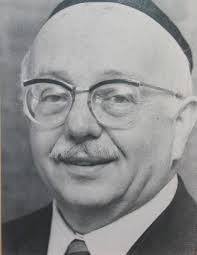
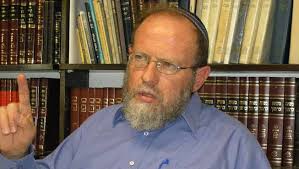
shagar photo

I went through the book with a study group at my house. This is a first draft of selected first thoughts therefore this post is subject to ongoing change and revision. Treat these as notes to myself as I work out the issues. I am trying to understand Rav Shagar’s Postmodernism. (Assume I have seen the prior discussions.)

Section One: The Postmodern condition

In this section we find his most explicit definitions. On basic definitions of postmodernism, see here, here, and here.

For Rav Shagar, Postmodernity is not theoretical philosophy but a condition of life, we live with a sense of the end of the narratives. It is not even a description of society, it is how we feel and it is expressed by Lyotard’s Postmodern Condition. We live after all ideologies of Communism, Socialism, and Nazism. For some readers, this applies also to Zionism and Halakhacism.

In the Postmodern age, we especially experience a loss of self.  “In Postmodernity it is not the [loss of the] creator of the world (God) but also of man, a process that starts  with denial of God  and concludes with the breakdown and death of the subject.” There is what Shagar calls a “Nietzschian loss of the value of man”. Shagar explains the philosophy of Kant as subjectivism and perspectivism (AB- this is not Kant, he is reading Kant through Nietzsche, in that the latter connects everything to his philosophy of will). Kant critiqued metaphysics and now in the modern era we can only save truth, ethics, and God by relying on subject which leads to Nietzsche’s concept of the will, all ethics are based on the will.

Shagar cites Foucault in that all is a will to power, but the will has no hierarchy and it is not the cosmic blind will of Schopenhauer. Rather today, we are in a social weave in which all discourse is power “unidirectional power” – with no metaphysical angle. Shagar’s Foucault has no discussion of freedom, critique, discourse, and stratagem.  This discussion is difficult because the philosophers are more namedropped into the text than cited and analyzed; he works in a Hasidic manner by making equations of terms.

Shagar says that all is language and not metaphysics, which he proves by mentioning Wittgenstein Derrida, and Lacan. He discusses Wittgenstein’s limits of language and limits of questions that can be asked. Shagar reads Wittgenstein not as the peak of analytic linguistic thought but as Postmodern. The mistake is widespread in Israel. I should check the introductions to the Hebrew editions to find the source.

Shagar also mentions the critics of global capitalism and late capitalism, to which he states that we have Rav Nachman’s critique of capitalism. He also notes that technology has changed everything about all lives.

Section Two: Postmodern Eyn

Rav Shagar asks: what is the Archimedical point of the Postmodern era? What deep insight does it express? For Rav Shagar, it reveals the Hasidic concept of metaphysical nothingness, eyn. It is an age of no metaphysics above, no ideology below; it is a pantheistic Postmodernity.

In the Postmodernist age, there is no why. For Rav Shagar, this is neither Heidegger’s nothing nor the mystical nothing, nor is it even the Buddhist nothing. This is nothing with a small “n” as opposed to a capital one.  An attitude of no direction as described by Gadi Taub in his work, Dispirited Rebellion.

This is the loss of the creator, a loss of any great ideology, a loss of man, of truth; this loss is the source of the fantastic perspective which characterizes the Postmodern world. Rav Shagar then compares this condition to Existentialism and (Bahye). Where Existentialism sees no reason for life and is compelled therefore to ask Why not commit suicide, Bahye in his Duties of the Heart sees no purpose in material life so we therefore relinquish everything to serving God (bitachon 7; also see Kuzari III who rejects this opinion).

These are both forms of histavut, equanimity or indifference. The difference is that Bahye sees redemption in the light of God and in an influx of chesed. For him, it brings not only tranquility but also ecstatic love and cleaving to God. In contrast, Existentialism denies any form of redemption and destroys a sense of existence in which life as empty of meaning. An Existentialist sees the Hasid as empty and as a hindrance to self-acceptance.

(AB- Shagar  seems to conflate Existentialism and Postmodernism. According to Camus, “The absurd man will not commit suicide; he wants to live, without relinquishing any of his certainty, without a future, without hope, without illusions […] and without resignation either. He experiences the ’divine irresponsibility’ of the condemned man.” Bahye sees the Divine in all creation. Despite his asceticism, he does not see the world as devoid of value.)

For Shagar, Bahye’s portrayal of the Hasid is paradoxical:  the Hasid has no promise of wealth or redemption but has complete trust without trust in anything in this world, a relinquishment of trust in anything because the world is empty and he is full [of the infinite] There are two psychological movements in the faith of the Hasid: first, the Hasid must surrender trust just as the Existentialist surrenders meaning in the world. Second one must stand directly before the nothing, Eyn

The Postmodernist, according to Shagar, outdoes the Existentialist by relinquishing truth and the need for truth. This giving up on truth yields self-acceptance But he also relinquishes a need to make a big deal or about the giving up of truth. A postmodern Hasid is therefore giving himself up to an ecstasy not of truth but of infinite self.  Since in the postmodern age there is no more metaphysics then the reaching of Eyn is really reaching our infinite selves. Rav Shagar already said similar things in the last paragraphs of the first essay in his earlier work Kelim Shevurim. God is our own infinite selves.

(AB- This acceptance of the self, a common theme in Shagar’s writings, is in direct contrast to the Postmodern rejection of the sovereign autonomous individual, Postmoderns emphasis construction of reality and linguistic constructions.)

Continuing this line of thought, for Rav Shagar Postmodern equanimity (histavut) can be explained by the two Chabad concepts of sovev kol almin and mimalei kol almin. Sovev surrounds and has no hierarchy, no good or bad, no sense of absolute just that the world is only God –all is his will Postmodern negation is sovev kol almin: nothing is absolute by itself, there is no up and down or hierarchy.

But, a person cannot live on the level of surrounding sovev rather we need to live in mimale kol almin. Sovev leads to nihilism and the breaking of categories but it can also have a positive function in opening up to new options and new places to find God.  It places us in a world where God is hidden and without hierarchy. If we do not know where God is, then we can use our free will to find the way. Shagar sees this as similar to Bahye who chose to seek God in a material world devoid of God.

Shagar declares that Postmodern is similar to hishtavut of Bahye and the sovev of the mekubalim [Chabad] insomuch as  all is equal without clear lines of where God is in the world.  The Postmodern innovation is to turn the perspective of God of Sovev kol Almin into a human perspective However, according to Shagar, in Hasidut, the Eyn has true reality and the Eyn is where all will return and it sustains the yesh, the existence, because the yesh does not really exist; only the Eyn is the true existence

However the Eyn in Postmodernity does not  sustain the yesh.  Now, the Eyn is a negation of hierarchy, postmodern perspective useful for creating new social and political perspectives

This flows from a second difference of the Eyn in Postmodernity, for the Hasid and kabbalist the Eyn is divine but in Postmodernity the Eyn is the halal hapanui – the empty space, the void or absence of God. (Likute Moharan 64) (AB- This is classic Arthur Green and his Existential doubt of God- see“Faith, Doubt and Reason,” in Green’s Tormented Master. )

For Rav Shagar, using the terms from the language of kabbalah and Hasidut allows us to see that postmodernism reveals the Eyn –the Eyn od. He conflates the Infinite of God, the absence of God and the all-encompassing of God.  In truth for Rav Shagar, there is no grasping of the metaphysics above.

We have to accept that God is the ground of everything and all our choices.

(AB- One senses a romantic pantheism and living in the moment, this is akin to Western Zen, focus on being “In the moment”. One also sense an existential concern with an authentic or well lived life not the postmodern concern with hegemony, social construction, or looking at the logic of our desires. This is more Camus meets Siddhartha, and Arthur Green in the language of postmodernism.)

A note should be made of his use of Hasidic language, it is not a translation of Hasidut into Postmodernity or vice-versa, rather a few theologically pregnant Hasidic terms that he uses to create a concrete that is original to him.

Section Three: Soft and Hard Postmodernity

Rav Shagar thinks that Postmodernity has no telos, no ultimate goal, no foundation, no ideology, and no closure. (AB- This means that neither Halakhah, beliefs (emunot), experience nor Zionism can serve as a basis to judge or create hierarchy.)

Postmodernists do not turn look to their struggles into fear or joy because they believe it is all contingent or happenstance.

Question: Can you bind yourself to Eyn in a way similar to the way a traditional religious Jew can bind himself to the Holy One blessed be He for religious devotion?

Answer: No, one cannot. And one cannot experience the resolution offered by religion anymore, no fear or rejoicing.

Question: Will we not we be officially left with nothing and therefore create a closure defined by absence?

Answer: Hard Postmodernism is Nihilism and deconstruction of the subject. It denies truth.

Soft Postmodernism, however, is a mixture of traditions, what works for me, I do not know what the truth is, there is no possibility of knowing truth but it does not deny truth itself. In soft Postmodernism, all is based on the perspective and context of person but truth does exist.

(AB- The only people who use this soft/hard distinction are Emergent Evangelicals who use postmodernism to says that there is no certain truth in the world and therefore we turn to Christianity, but the Christianity is uncertain about doctrine and teachings).

Question: How can this perspective change society without possessing truth?

Answer: The paradox of the void/absence (halal panui) allows us to confront the lack of truth without running from it or hiding, it instills an attitude of humility not victory.
shagar photo2

Section Four: Klipat Amalek as Opposed to Self-acceptance

The paradox of Postmodernism is that if everything is in doubt and there are no true values then does this not lead to the questioning of postmodernism since we cannot know that it is true.  Such a question is “nonsense” in the Wittgensteinian sense.

Wittgenstein’s nonsense is a form of Eyn.

(AB- in Wittgenstein’s writings, the word “nonsense” carries a special technical meaning which differs significantly from the normal use of the word. In this sense, “nonsense” does not refer to meaningless gibberish, but rather to the lack of sense in the linguistic context of sense and reference. In this context, logical tautologies, and purely mathematical propositions may be regarded as “nonsense” Why do these Israelis misread Wittgenstein so horribly?! The very question shows that Shagar is treating postmodernism as an ism to adopt rather than the current condition of our lives like the prior existential-psychological era that we did not choice but were embedded within).

But if Postmodernism is another uncertain narrative then even postmodernism is yeshut (an entity or grand narrative). In fact this makes it a pure yeshut, which in Hasidut makes it the evil of Amalek. The acceptance of postmodernism is thus Amalek. However, soft Postmodernism lets you not even accept the theory without accepting it as the truth. Yes, we are in doubt even about Postmodernism – just give up foundations and accept that you will never know. We will live with the existential irony of holding opposites.

Section Five: Random, Indifference or Discomfort—Routine and Ecstasy

The difference between the two types of Postmodernism is dependent on separating the connection between random and indifferent. Hard postmodernism says the randomness leads to indifference. Soft postmodernism says that randomness does not lead to indifference because there is meaning above the self, even if we cannot know it.  We give up the need for truth and even question Postmodernism.

There is ecstasy when you realize that you can live as Eyn because then you know that you are living life fully without the limits that binds others. In that state of living, one is above the limits of science, historicity, or psychology or any other structure that impedes the believer and his belief. Eyn opens him up to humility and greater spirituality.

In conclusion, we wind up with the irony and freedom of the religious Existentialists,  like Zorba the Greek—or do we? We also get the freedom to see everything as Eyn and not worry about belief in God, the rationality of religion, religious rules, or social roles. We have the absence of God, the self as God and the full language of Hasidut. But whereas Art Green’s Hasidism leaves us in the modern world of doubt, and a postmodern would treat God as culturally conditioned (or textual or a God beyond God), here we have a self that accept itself and its fragmented life.

To sort out where Rav Shagar differs from Existentialism, we return to Kierkegaard: “Without risk, there is no faith. Faith is precisely the contradiction between the infinite passion of the individual’s inwardness and the objective uncertainty. If I am capable of grasping God’s objectivity, I do not believe. If I wish to preserve myself in faith I must constantly be intent upon holding fast the objective uncertainty […] still preserving my faith.” For Rav Shagar, after his reading of Nietzsche, Lyotard, and Rav Nahman, there is no quest for passionate faith because we have made peace with the contradictions and uncertainties. This peace and uncertainty is our ecstatic freedom.

Appendix: Already on Facebook, Todd Berman commented that in a way that shows that his readers may really just be looking for a pluralist modernity. Kuhn and Berlin are pluralist moderns and not postmoderns.

Can only tell you what works for me. The notion that the corollary to the impossibility of Truth is the lack of necessity of arriving at Truth is very powerful for me. I was quite taken by Isaiah Berlin’s article on History where he argues that history is more akin to art in that it jibes with one’s understand of the world. Then Thomas Kuhn questioning the absolutes of science or more accurately the bias of scientists skews their models of the world, Rav Shagar, for me, seems to be the first person to take such notions and argue for a synthesis within my world view. Can one study artificial intelligence, read Asimov, Biblical criticism, like the Mets, and find a way to work this into a holistic view or why learning Bava Metzia is important as well?

Religious Student-Soldiers in the Israel Defense Forces: Interview with Elisheva Rosman-Stollman

The founding of the modern secular State of Israel posed a dilemma for Religious Zionist leadership because the state operated outside of the realm of Rabbinic law. The state had neither Sanhedrin nor a Talmudic legal system. In addition, the daily operation of a state posed many conflicts to the state-less diaspora halakhic tradition. How does Jewish law now accept democracy of elected officials that now includes non-religious, non-Jews, and women? How does one produce electricity or load docks on the Sabbath? In the early years of the state, a variety of rabbis engaged in a still unfinished and unfinishable project of creating a Torah state in Israel. (For more information, see Asher Cohen, The Tallit and the Flag: Religious Zionism and the Vision of the Torah State in the Early Years of the State (Jerusalem: Ben Zvi Institute, 1998).

Even as many still pin for those fragmentary projects, in recent decades the site of tension has been the required army service, a source of pride for the religious Zionist community especially their entering higher command positions. Yet, does one’s have to obey orders that go against one’s religious beliefs? What if orders go against one’s Zionist political beliefs? What are the limits of bending the laws of prayer, Sabbath, or modesty? To answer these questions of the tension of military service and religion there is a recent book by Elisheva Rosman-Stollman (Professor of Political Studies at Bar-Ilan University)For God and Country?: Religious Student-Soldiers in the Israel Defense Forces (University of Texas Press, 2014).

Rosman

From the Blurb:

In many modern armies the religious soldier is suspect. Civilians and officers alike wonder if such a soldier might represent a potential fifth column. This concern is especially prominent in the public discourse over the presence of religious Orthodox Jews serving in the Israel Defense Forces. Will they obey their commanding officer or their rabbi? With research collected over almost a decade, including hundreds of hours of interviews, Elisheva Rosman examines this question of loyalties and reveals how religious soldiers negotiate a place for themselves in an institution whose goals and norms sometimes conflict with those of Orthodox Judaism.
Many journalists and scholars in Israel are suspicious of the student-soldiers who participate in these programs, but in fact, as Rosman’s research demonstrates, the pre-service study programs serve as mediating structures between the demands of Religious Zionism and the demands of the Israel Defense Forces and do not encourage their students to disobey orders… Rosman has discovered that the pre-service study programs can successfully serve as agents of civil society, both able to curb the military’s efforts to meddle in civilian affairs and vice versa.

Rosman prefaces her book by stating that: “Most non-Hebrew speakers are largely ignorant of the civil military issues” She presents the issues for the English speaking reader by looking at the mehinot, the shiluv programs as well as the hesder programs. Currently, more attend the former two programs than the latter one, even if hesder is better known in the US.. She also looks at the women’s programs, the new Garin program.

Traditionally, Yeshiva was an educational ideal, but can army service override it? The Haredi approach says no, it cannot override it except temporarily at best. But for many Religious Zionists army service a religious command like tefillin, while for others it is a needed practicality, or they feel that they are engaged in a continuous obligatory war, and for other it is bearing one’s burden and not standing idly by the blood of your neighbor. Rosman did discover that mechinah and shiluv programs report fewer religious problems, while hesder participants find greater dissidence.

The best parts of the book are based on her extensive interviews In which we see the important roles played by Rabbis Eyal Krim, Ohad Tahar-Lev, Rafi Peretz, Avi Ronztki and Eli Kahan in creating a Religious Zionist approach that closes the gaps between army and religion.

One of the heroes of the book is Rabbi Eli Sadan, who is seen by many as the father of mechinot, who wrote a pamphlet in 2005 stating that religious soldiers should not disobey orders because it would undermine the entire military and he sent it to all active relgious soldiers. Recently and beyond the scope of the book, Sadan called on soldiers to remain in the room when women sing during ceremonies and published sharp criticism against the “price tag” phenomenon. For more on him, see here and here. Sadan also recently put out three ideological pamphlets on the direction that Religious Zionism should take.

As a political scientist, Rosman was more interested in society than ideas; her goal is to understand the function of the mechinot not to analyze the books. For example, she shows that the students of Har Etzion, Petah Tikvah, Yerucham, Ma’aleh Adumin are given a clear signal of where the institution stands compared to other institutions that leave the students in ambiguity. Her question was solely the clarity of the message not it’s content. Nevertheless for the student of Jewish thought, her framework and bibliography provides ample guidance in knowing who to read.

The book, still close to a revised dissertation, uses as a methodology the short book by Peter Berger and Richard Neuhaus in To Empower People: From State to Civil Society. In the book, Berger and Neuhaus argue that we are not isolated individuals before the state, rather we exist, find meaning and create civil society through mediating institutions of church, school, and voluntary organizations. Rosman uses the book to show the function of the mediating institutions of mechinah, shiluv, and hesder in easing tensions. However, the work of Berger and Neuhaus came out in 1977 and was a polemic against the individualism of the era arguing for more conservative or religious values in the public sphere, eventually producing Neuhaus’ influential Naked Public Sphere. Rosman work remains functional and does not explore the values of her model. Similarly, the work is devoid of the American discussion of conscience and civil disobedience when looking at the personal opinions of the soldiers

1} What is the thesis of your book?

Pre-service religious programs mediate between religious student-soldiers, the IDF and their social group (religious zionism). When they are successful, these programs are able to regulate pressures and help all the parties involved coexist in a way that is mutually beneficial. In addition, these programs serve as agents of civilianization of the military (As opposed to militarization of civil society) and in certain ways, strengthen civil society in Israel.

Peter Berger and Richard John Neuhaus wrote a book about mediating institutions that stand between individuals and the larger institutions of society, such as family, neighborhood, voluntary associations. But also the mafia, gangs, the KKK can all be mediating institutions. These institutions allow individuals to understand the larger constructs of society, give the state legitimacy and allow individuals to voice their needs and wants better.

My book looks at all the pre-service comprehensive programs: hesder, mekhinot, shiluv and the midrashot that serve this role in Israel between the religion and the state. In the context of the book, mediation is the attempt to stand between individuals and greater structures they belong to and regulate conflicting demands and pressures. It is a strategy that can be used – or not – by individuals in order to navigate between these larger structures.

The tensions between religion and the military include specific mitzvot such as how to observe shabbat, and sometimes how to observe kashrut. Observing prayer properly (minyan, torah reading during the week and on shabbat). How does one live in the same quarters 24/7 with non-religious individuals. If one is supposed to study torah during the ages of 18 and 24 (for men), then how does can one also serve in the military during this time?

2) How do the study programs help?

Study programs can serve as mediators by conducting negotiation on behalf of individuals either with the IDF or with religious systems. for example during the disengagement, some of the programs helped students by supporting them actively, some helped by negotiating with the IDF so that the students were less involved. Rabbis and books alone do not have this function.

Study programs can help individual student-soldiers with religious problems by giving halakhic advice, reassuring students, advising on how to navigate situations when dealing with specific situations or problems.  They can also mediate on a more general level: trying to help women soldiers project a halakhically-sound public image, trying to support students during the disengagement or in co-ed issues students find problematic.

In general the study programs serve mostly as a sort of “safety net” – students know that if they really need an advocate, the program will be there for them. In many cases, just the knowledge that this is possible is enough. Sometimes it isnt.

3) What did you learn from your interviews?

Any religious soldier in the IDF (and in other militaries) will tell you that he or she had to negotiate.

The book is looking at the concept of religious soldiers and the potential issues this concept raises from the perspective of the individuals themselves: what do religious Jewish Israeli soldiers contend with and how do they handle potential conflict? In that sense, I think the book is doing something new. It puts the individual soldiers in context. It looks at the mediators themselves, and the super-structures, but the focus is the soldiers. We usually talk ABOUT them, but don’t listen TO them. The book tries to listen to them, to their mediators and to the IDF. It tries to let them do the talking, rather than talk “over their heads”, as happens quite a bit in academic and journalistic discourse regarding this topic.

When I teach this topic, students usually come up with lots of examples for negotiation – not just in this field. Discussion usually reaches the point that people wish there were more options for mediation in order to make sense of our public and private lives, but even more so in order to help us deal with structures we don’t understand, don’t know how to navigate, don’t want to navigate alone, and so on. We usually feel powerless or at a disadvantage when we deal with super-structures. In the context of the book, soldiers are perceived as part of the system, but they are individuals with needs that should be addressed. This is not just for the benefit of the soldiers, but also for the benefit of the military system and the religious system. Having a mediator can be helpful to all actors in this context.

I met with students once a year for at least 3 years. So I got an opportunity to watch them change over their service. I got to see them grow up in many aspects. I had good and bad experiences with army personnel. Rabbi Sadan refused to meet but agreed to a phone interview. He wouldn’t let me come visit the mekhinah either, we had ground rules for interviewing his students (it didn’t affect what I did in the end, but it was a clear message from him about how he felt about the project).

eli sadan
(Rav Eli Sadan)

4) Why is co-ed the most sensitive issue?

This has a lot to do with Israeli society today, I think, as well as the fact that issues of tzniut are in a way more clear-cut halakhically. On the one hand, in general we see a tendency to emphasize tzniut in Israel today. Gender scholars in Israel, such as Orna Sasson-Levy (such as in: “Gender Segregation or Women’s Exclusion? – The Military as a Case Study.” Civil–Military Relations in Israel: Essays in Honor of Stuart A. Cohen (2014): 147-169.), have written about this. And so you have demands to separate buses, not to display women’s photos in the public sphere and so on. Naturally, in Israeli reality, these things spill over into the IDF.

On the other hand, while issues of disobeying orders for example are harder to muster halakhic support for, co-ed issues are a relatively easy target. I think it is harder for rabbis to be lenient when considering tzniut.

In this context, I accept Charles Liebman’s thesis on extremism that all religious systems tend toward their extremist positions and extremism is the norm. It is far harder to explain religious moderation than extremism. Extremists rarely feel the need to apologize and usually blame the moderates for not being “truly” religious. I think this idea makes it easier to understand why the issue of mixed service has become the focal point for religious issues.  It is moderation that needs to be explained. So if a rabbi takes a lenient stance on modesty, it is much harder for him to defend his position if he were to take the more stringent one. Its always easier to say “its prohibited”. Moderate rabbis are suspect.

Looking at it from a different perspective, there are a few points regarding co-ed service that I didn’t discuss in the book: Asher Cohen has spoken a lot about the effect extremists have on the mainstream (for a latest example in English: Cohen, Asher, and Bernard Susser. “The Extreme Case Syndrome in Religion-Army Relationships.” Civil–Military Relations in Israel: Essays in Honor of Stuart A. Cohen (2014): 127-146). Most religious soldiers do not conform to stringent standards of Tzniut in their daily lives when not in uniform. However, when in uniform, they are affected by the minority calling for a more stringent position on modesty and may cave in to this position for many reasons.

Another point to consider is that most religious soldiers do not encounter women during their service. Contrary to what some other civil-military scholars in Israel posit, women and religious men rarely compete for the same military positions. The overwhelming majority of religious men serve in combat positions – few women serve in semi-combat positions in the IDF. So in truth, the majority of religious men in uniform meet women in the initial stages of training (if at all) as instructors. Some do serve with women either in combat support positions or non-combat positions. But they are by far a minority.

5) How are you agreeing or differing with the journalist Amos Harel who also writes about this tension of religion and army?

Amos Harel is a journalist at Haaretz who usually covers military affairs. Harel’s latest book, in Hebrew (the title was translated as: The Face of the New IDF), paints a portrait of the IDF in the 21st century using a single unit (Its a good book – I liked it). I was able to interview soldiers from many units, so its difficult to compare. Harel’s stance in his coverage of similar issues is usually that religion in the ranks is not a positive thing. Religion should not be part of the IDF. I’m trying to put things in context and show that it is much more complex than usually presented. Not “good” or “bad”. But, I’m not sure we’re even trying to do something similar.

Religion can be a negative force. But it can also be a positive one – like anything else. When people go out to battle, or when they are serving their country in other ways, it is not uncommon to feel the need to turn to a higher power. For some people this is religion and it helps them be better soldiers. Not just to be brave, but it can also mean to be more moral. More humane. If a soldier thinks that religiously he is prohibited from behaving violently toward a prisoner of war, then religion can be a positive force. There are many other examples, and if you look at halakhic responsa (shootim) from the past decade or so, you can see examples for positive and negative influences of religion on troops. A lot depends on who is doing the asking and who is doing the responding, halakhically.

6) You compare the Israeli situation to Iran in terms of religious  aura and to Turkey regarding practical issues. Can you explain?

Islam and Judaism have a lot in common. So comparing Israel to Muslim countries is important and not done enough, i think. Of course Iran and Turkey are not the same as the Israeli case, but there is a good basis for comparison since we are dealing with religions that are law-based (or orthoprax). Additionally, all three cases are conscription-based militaries, so we might assume we would find similar structures. But we dont. And I think that the main reason we see differences has to do with boundaries and therefore also with mediation. The Iranian military doenst accept a secular reality. It is a religious Muslim force. So it has no use for mediation. Mediation would only weaken the religious establishment.

The Turkish military is apprehensive about anything to do with religion because it sees itself as a secular force – even though its soldiers are mostly Muslim, if mostly culturally so. This means it also rejects mediation. I think that perhaps if there was a possibility for mediation, the Turkish armed forces could manage religious soldiers and their needs better. In that respect, Turkey and Israel mirror each other. Since they are both conscription-based (for rank and file soldiers), they MUST include religious soldiers and so will have to contend with the dilemmas these soldiers bring with them: prayers, fasting, dietary requirements, dress and so on. In Turkey, these soldiers are basically ignored, but the problems exist. In Israel there are mediators, but – as I show in the book – they dont completely solve every problem. They are, however, better at managing tensions.

6) Does observance erode in the army?

In general, we can talk about processes. During the harder parts of service (mainly training), most of my interviewees felt there was a certain erosion in observance. However, as they progressed and entered other stages of service, this usually changed. Interestingly, quite a few interviewees felt that their level of observance actually increased. Their service made them more committed to their religious identity. Of all my interviewees, only two became secular during service, and even they weren’t entirely sure that this was a final identity change and refused to truly classify themselves.  I do note that my study did not focus on this point and I cant draw definitive conclusions as to secularization during service.

7) What makes the Gariinim program special?

The Garin program is a program geared to help religious women who would like to serve in the IDF but want two requirements met. First, they don’t want to serve in a military position that will be difficult for them religiously. Second, they would like to learn torah as well. These women can enlist through the garin and combine study with service in an environment that is more friendly for religious women (such as service as education NCOs). This is really the first time you have official programs with a halakhic “umbrella” that endorse women’s conscription. Actually, this is one of the projects I am working on now. I think that the garinim mark an important turning point in the way Israeli society in general and Religious Zionism in particular view religious women in uniform.

Religious women always served, but they were basically ignored by the religious establishment. In some places, enlisting meant you werent a “good religious girl”. 20 years ago, 12th graders in certain schools, who knew they were going to enlist rather than go to National Service, did their best to conceal this from their school so as not to hurt their sisters’ chances of getting in. The garinim didnt change this overnight, but they demonstrated how it was entirely possible to be a “good religious girl” and still serve. That is huge. I won’t say that today being a religious women in uniform is considered accepted or a norm or a “good” thing, but it certainly isnt what it used to be and the garinim played a very important part in that.

8) You read through dozens of ideological tracts, seforim, and little  books written by Rabbis for the students. Which do you recommend for readers to gain a sense of the ideological issues?

It really depends on what you are looking for. For readers who want something practical – how to guides, if you will – the books written by rabbis in mekhinot (such as LeEzrat Hashem BaGiborim) and Rabbi Yosef-Tzi Rimon’s (a rabbi  who teaches at Har Eztion) booklets are good choices.

These are basically “how to” books – either practical (how to keep up a positive attitude in the face of difficult and trying military realities, how to find ways to uphold morality or stick to one’s ideals even when others around are slacking off, wasting time and so on) or halakhic (for example – what to do with one’s tfilin if one is leaving the base on Shabbat for a combat situation and will not be back before Sunday morning. Is it permissible to take the tfilin with, in order to be able to use them on Sunday, even though it is prohibited to carry them on Shabbat? During prayer in the field, when it is difficult for cohanim to remove their shoes, can they perform “aliya la-duhan” with shoes? Are there halakhic rules for guard duty? [yes – there are. For example, it is forbidden to be late for your shift as being late means stealing time from the soldier you are relieving; which is prohibited by halakha]. Is it permissible to count non-religious soldiers for a minyan? Or – one of the most common dilemmas encountered by religious soldiers: is it permissible to eat “food that traveled”? – food that was brought to the military base or outpost on Shabbat, violating the eruv.). They are small, army-pocket-sized books that can be very helpful for a religious soldier in daily military life.

Personally, I find almost anything written by Rabbi Eli Sadan, one of the heads of the mekhina in Elie, fascinating. I think he is perhaps one of the least understood rabbis to those who are not his students. Everyone thinks they know what he says, but don’t bother to read him.I think if people really want to understand what the mekhinot are about ideologically, his writings are pivotal.

I think its a shame some rabbis and leaders do not publish more – Rabbi David Bigman of the Religious Kibbutz, Ms. Tami Biton of the Be’er program and Rabbi Ohad Tehar-Lev of the Hadas program, are just a few examples. They have a lot to say, but few hear them since they only speak to their students. It creates a reality where only certain voices are heard and this naturally influences discourse on the topic.

For example, all three of these figures speak of a “thinking halakha”, where a true Torah scholar is ready to ask questions, even without receiving answers, and is willing to face the modern, secular world, and learn from it. Tami Biton has a clear social agenda that she wants to instill in her students. Rabbi Ohad (as his students call him) feels that “if military service is a mitzva, then it’s a mitzva for everyone”, both women and men. His students are taught that their observance of halakha is important and meaningful and that the fact that they are women does not detract from this.

Rabbi Bigman’s students all stress that military service is not a positive thing. It is a civil duty that should be carried out well, but certainly not something to be looked forward to. In his classes and talks, he emphasizes that a Torah scholar must be sensitive to the world he lives in. During one of our talks he told me how much he was impressed, as a teen growing up in the United States, by the famous picture of Rabbi Heschel marching with Martin Luther King Jr. These voices are not as prominent in public discourse and rarely heard when discussing religious soldiers in the IDF.

I think the most interesting part of this project, for me, was meeting rabbis and students, various officers, women who are important to the changes in civil-military relations in this sphere. Most of these people dont have much of a public voice, but they are extremely influential and have something to say that is worth listening to. What I should really do is just publish the interviews. It would be more interesting than this book.

Interview with Prof. James Diamond

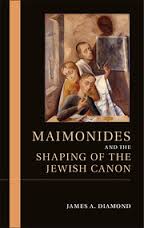
The historian of Jewish philosophy Isaac Husik once mentioned that Jewish thought is a series of footnotes to Maimonides. In this he was modifying the famous statement of philosopher Alfred North Whitehead who claimed that philosophy was a series of footnotes to Plato. In his recent book Maimonides and the Shaping of the Jewish Canon, James A. Diamond the Joseph and Wolf Lebovic Chair of Jewish Studies at the University of Waterloo accepts the veracity of Husik’s claim by looking at many Jewish thinkers and their dialectic relationship with Maimonides.

James A. Diamond has earned an LLB as well as an LLM in International Legal Studies at New York University School of Law and has practicing civil litigation, in addition he has an MA and PhD in Medieval Jewish Thought from University of Toronto. He was the international director of the Friedberg Genizah Project. His prior two books were Maimonides and the Hermeneutics of Concealment, and Converts, Heretics, and Lepers: Maimonides and the Outsider, both smart and insightful.

Professor Isidore Twersky considered Jewish intellectual life as revolving around the usage, rejection, or struggling with Maimonides issues. His approach asked how each later thinkers answered the broad cultural issues by which Maimonides had struggled, including the role of aggadah, the role of meta-halakhic knowledge, the role of elitism, and the role of spiritualization of Judaism. James Diamond in his Maimonides and the Shaping of the Jewish Canon is concerned more with the actual dialectics of subsequent thinkers with the philosophy of the Guide than the cultural world. He looks at points in the thought of Nahmanides, Ritva, Ran, Abarbanel, Spinoza, Netziv, Buber, Rav Kook, and Hermann Cohen among others to see the canon of Jewish thought as shaped by Maimonides.

Moshe Halbertal who has written on the role of canon in the formation of Judaism praises the work for its “analysis of the complex and deep ways in which Maimonides’ own works became, in turn canonical.” James Kugel loved the book and wrote that: “This book is an intellectual tour de force, but more than that, it is an essential guide to understanding the ‘thinking’ part of Judaism in our own day.” Finally, Leon Wieseltier wrote: “James Diamond has captured.. the excitement of tradition generally. His account… establishes the primacy, and the originality, and the beauty of interpretation as a mode of thought.”

Readers may profit from comparing this interview to our interview with Kenneth Hart Green about Maimonides.

diamond cover

1. How is Maimonides a “fulcrum” of all subsequent Jewish thought?

Maimonides set the agenda in one way or another for virtually all of Jewish thought since the Middle Ages; a study of the explicit and implicit Maimonidean threads that course their way through various historical periods and thinkers serves to illuminate certain aspects of the different strands of that thought which might otherwise go undetected. Much of Jewish intellectual history can be viewed as a series of engagements, disengagements, and re-engagements with him, fueled by the kind of writing Maimonides himself practiced, thereby establishing the very lines of discourse that target or conjure up his thought, regardless of the social, cultural, and intellectual transformations inevitably wrought by time.

A few years ago, during the book’s gestation, Leon Wieseltier suggested looking at Gershom Scholem as a contrast. For Scholem there were only three books–the Hebrew Bible, the Zohar, and the collected works of Kafka–which he “read and reread with true attentiveness, with an open heart, and with spiritual tension.” He considered these three “books” to be “collections on which over the course of three thousand years were impressed that spirit customarily referred to as the spirit of Judaism.” Scholem’s concise list of quintessentially Jewish works betrays a certain bias against the classical rabbinic tradition, Maimonides, and rationalism.

I would express the same sentiment with respect to the collected works of Maimonides. Alongside the Bible, the Talmud, and the Zohar, they comprise the core spiritual and intellectual canon of Judaism. It would be difficult to characterize anything postdating the Middle Ages as authentically Jewish absent some engagement with all or some of the components of this canon. Indeed, Scholem’s own canon of Jewish thought, and lifelong interest in kabbalah, can be thought to have been constructed in one sense as a reaction to Maimonides. When reminiscing about what motivated his study of kabbalah, he admitted an antipathy to the Maimonidean (along with Saadya Gaon and Hermann Cohen) project, whose “primary function” he claims was “setting up antitheses to myth and pantheism and disproving them. It would have been more beneficial had they attempted to raise them to a higher level within which they would be negated.” Scholem’s entire kabbalistic project can be viewed as a redemption of what Maimonides had denigrated.

The numerous examples of Maimonidean engagements in the book collectively amount to an argument against Scholem in favor of elevating the Maimonidean oeuvre to canonical status alongside the Hebrew Bible, the Talmud, and subsequently the Zohar.

Moshe Halbertal’s distinction between central texts that are influential in shaping thought and formative texts “in which progress in the field is made through interpretation of the text itself,” is instructive in terms of how precisely to classify the Maimonidean textual legacy in terms of Judaism’s curricular canon. In light of the extent to which this book places post Maimonidean thought in dialogue with that legacy, Maimonides’ Guide and Code can safely be subsumed within the formative category.

This study gives voice to that dialogue in a panoply of intellectual languages and across historically delineated periods. The dialogue may stretch between a rabbinic rationalist such as Maimonides, living in Islamic-dominated Egypt; an adversarial rabbinic mystical exegete such as Nahmanides (13th century) in Christian-dominated Spain; the fiercely antagonistic fifteenth-century kabbalistic encyclopedist Meir ibn Gabbai; or an admiring twentieth-century Eastern European mystic, Zionist, and political activist such as Abraham Isaac Kook, who reinvented Maimonides; but all are firmly entrenched within a well-established rabbinic tradition. Even Spinoza, Judaism’s arch-heretic and free-thinking iconoclast, who broke with the Jewish tradition altogether in seventeenth-century Holland, could not sever his ties to his inherited religion without refuting the Maimonidean biblical hermeneutic. In his very rejection of Maimonides, he actually resorts to this hermeneutic if only to overcome his primary Jewish intellectual predecessor and foil.

In a sense Maimonides emerges as a fulcrum for Jewish law and civilization in all its genres–legal, rabbinic, philosophical, and mystical. Often, even when Maimonides is not explicitly mentioned, it becomes evident from a cited verse or a rabbinic adage that a later thinker has contemplated Maimonides’ interpretation, whether as endorsement and incorporation of its Maimonidean sense, or to carve out new space for an opposing idea.

2. Do you agree with Isaac Husik, the historian of Jewish thought,who considered Jewish thought as a series of footnotes to Maimonides?

I have been studying Maimonides in various contexts during the course of my life from the yeshivah, through a legal career, and then in the academy. My interests, however, range the entire spectrum of Jewish thought across strictly delineated historical borders the academy has drawn, at times artificially, between medieval, early modern, and modern. At the same time, I have wandered, some might consider trespassed, onto “fields” that also seem to me often artificially constructed when it comes to Jewish thought such as theology, philosophy, law, rabbinics, and biblical exegesis. Maimonides seemed to be a connective thread traversing historical periods and genres of writing.

Every path in Jewish thought and law from the twelfth century onward bears some of Maimonides’ imprint, even the particular crystallization of kabbalah, so inimical to the general thrust of his rationalism, would have been unimaginable without the work of Maimonides.

The Husik quote which launches the book transposes what Whitehead is reported to have said regarding all of western philosophy as a series of footnotes on Plato, to the relationship between Jewish philosophy and Maimonides. This always resonated with me and is an apt, yet partial, characterization. Husik’s observation was actually too narrow in its scope, and emerges from the traditional strict bifurcation between philosophy and theology. I would expand Husik’s observation beyond philosophy to include theology, law, and kabbalah.

As scholars such as Isadore Twersky have argued, the Mishneh Torah offers a grand jurisprudential/philosophical/ political/ social conception of Judaism and humanity in general. It begins with a universal ideal accessible intellectually to all human beings and ends with a messianic vision where that universal ideal is actually realized socially, politically, and philosophically. An entire “parochial” legal code is bracketed by a universal vision.

The Guide is also far more than a philosophical treatise. I begin my book with another observation, this time by Leo Strauss, that it “is not a philosophic book–a book written by a philosopher for philosophers–but a Jewish book: a book written by a Jew for Jews.” When I first began my studies on Maimonides, I thought it a trite observation. However, over the years, I came to increasingly appreciate its full import. Overlaying the Guide’s undercurrent of Aristotelian philosophy, medieval cosmology, and logic, is a very Jewish work. Its relentless citation of biblical and rabbinic sources renders it much more a book of exegesis than strictly a philosophical treatise. The Guide I believe , in its entirety, fits in to the age old tradition of rereading Judaism’s sacred texts both on a micro-level of individual words and a macro-level of passages or units called “parables”. Maimonides’ intended audience is Jewish; his core subject matter consists exclusively of philosophical issues filtered through Jewish texts; the very writing of the Guide is grounded in a halakhic dispensation of openly transmitting forbidden esoteric subjects ; and the existential angst he aims at relieving of the conflict between the Torah and philosophy is a Jewish one.

3. How does Harold Bloom help developing your approach of tracing the use of Maimonides?

There is a form of anxiety that both links and propels the various strands of Jewish thought presented in the book and helps to account for a critical dimension of creativity in advancing Jewish thought. Harold Bloom’s seminal insights into the vitality of poetry and prose are relevant to the way the book approaches the history of Jewish thought vis-à-vis Maimonides.
Here is how Bloom understands the creative force of much of Western poetry composed over the last few centuries:

Poetic Influence–when it involves two strong, authentic poets–always proceeds by a misreading of the prior poet, an act of creative correction that is actually and necessarily a misinterpretation. The history of fruitful poetic influence, which is to say the main traditions of Western poetry since the Renaissance, is a history of anxiety and self-saving caricature of distortion, of perverse, willful revisionism without which modern poetry as such could not exist.

As one proceeds along this study of various Jewish thinkers–rationalist or kabbalist, medieval or modern–this “central principle” of Bloom’s sweeping consolidation of all good poetry under one primary rubric of “misreading,” “correction,” “misinterpretation,” and “revisionism” begins to crystallize as a formative principle of post-Maimonidean Jewish thought as well. By transposing some of the terms in Bloom’s assertion, the following can be stated with equal force:

Jewish philosophical, jurisprudential, and theological influence–when it involves a strong, authentic thinker—often proceeds by a misreading of Maimonides, an act of creative correction that is actually and necessarily a misinterpretation. A good part of the history of fruitful Jewish philosophical and theological influence, since the Middle Ages, is a history of anxiety and self-saving caricature of distortion, of perverse, willful revisionism of Maimonidean thought, without which modern Jewish thought as such could not exist.

To borrow another formulation from Harold Bloom’s theory of poetry, one of the indicators of the greatness of the thinkers dealt with in the book lies not necessarily in their “originality” but rather in their “persistence to wrestle with their strong precursors, even to death. Weaker talents idealize; figures of capable imagination appropriate for themselves.” That “precursor” with whom the subjects of the book wrestled and from whom they appropriated is Moses Maimonides.

4. In your view, what is the dialectic between philosophy and kabbalah?

I don’t believe there can be a neat bifurcation between kabbalah and philosophy and the Maimonidean impetus for the development of kabbalistic theology is a critical focal point to demonstrate this. Scholars of Jewish mysticism have already argued for the Maimonidean influence on kabbalah- and not simply as an antagonist but as a positive catalyst for kabbalah’s formation. Maimonides’ influence on the Zohar is still a scholarly desideratum but I deal with one particular example where the Zohar’s mystical/sefirotic exegesis of a key verse in Maimonidean hermeneutics is fueled by Maimonides’ own pragmatic, rationalist reading of it.

Two chapters in the book deal specifically with the dialectic between philosophy and kabbalah using Meir ibn Gabbai of the sixteenth century and Rabbi Abraham Isaac Kook of the twentieth as instructive examples.

Ibn Gabbai’s magnum opus, Avodat HaQodesh, consists of a counter-lexicon which methodically displaces the philosophical layer of many of the key terms such as “sitting,” “standing,” “foot,” or “spirit,” dealt with in Maimonides’ lexicography of biblical terms in the first part of the Guide, replacing them with his own parallel, but inverse, lexicon. While Maimonides’ overarching concern was to drain these terms of their anthropomorphic connotations when referring to God, ibn Gabbai’s was to reverse Maimonides’ anti-anthropomorphism crusade, and re-anthropomorphize biblical language in aid of what he was convinced was its kabbalistic message. Along the way ibn Gabbai dismantles Maimonides’ theological rationalism. His exegesis of biblical verses and midrashic traditions are intended as hermeneutical counterpoints to Maimonides, radically transforming the philosophically esoteric exegeses of those common references into a kabbalistic mode.

Throughout his prolific career, R. Kook, engaged the thought of Maimonides, whose own corpus, in its thoroughly systematic nature, whether halakhic or philosophic, could not be more antithetical to R. Kook’s. Rather than Gabbai’s counterpoint, R. Kook rereads Maimonides through commentary- more of an eisegetical reinforcement of his own thought than an objective commentary.

In a sense R. Kook applied the methodology he ascribed to Maimonides’ appropriation of Aristotelian philosophy to his very own appropriation of Maimonidean philosophy. He believed that the patent sense of many Maimonidean texts offends their real, authorially intended, sense and therefore required conscious subversion so that the genuine sense would emerge seamlessly for his readers.

R. Kook reads Maimonides “omnisignificantly”, a term James Kugel applies to rabbinic midrashic readings of scripture. In R. Kook the lines between Jewish mysticism and Jewish rationalism become somewhat blurred. R. Kook, in this short commentary on the most philosophically oriented section of Maimonides’ Mishneh Torah, combines the two domains seamlessly in constructing an intellectualist mysticism for which Maimonides’ rationalist corpus is indispensable.

5. Should we consider Abarbanel to be a continuation or rejection of Maimonides?

I focused in particular on Maimonides’ thought which was imported by those who succeeded him, adapted to new currents of thought, subverted, or negated by them, as the case may be, and transported further, elongating the chain of Jewish philosophy, theology, and law.

A number of thinkers I deal, such as Isaac Abarbanel, Moses Nahmanides, Ritva, and, I even include Spinoza, suffer from a not uncommon love/hate attitude toward Maimonides. They all share a dynamic emotional/intellectual/spiritual relationship that reflects both a reverence for Maimonides’ towering intellect and rabbinic proficiency as well as fear and anxiety as to the consequences of his rationalism.
The chapter dedicated to Isaac Abarbanel, for example, arguably the most prominent of 15th century exegetes, who also experienced the exile and trauma of the Jewish expulsion from Spain, wrote after centuries of raging controversies incited by Maimonides’ works, over whether the rationalist approach to religious belief in its deference to the Graeco-Arabic philosophical tradition reinforced or undermined Jewish faith and practice. Abarbanel’s thought resonates negatively with both the aftershocks of these religiously bitter and socially divisive debates

I chose his treatment of the akedah as a particularly poignant example of Abarbanel’s passionately conflicted engagement with Maimonides which treads a precarious tight-walk between what Abarbanel perceives as both a continuum and a rupture with rabbinic Judaism and loyalty to halakha. In this case, an apparent endorsement of Maimonidean biblical exegesis rendered in the course of his own exegetical discourse may actually amount to a sustained subversive attack once his overall interpretation is considered. Abarbanel’s cultural/historical milieu, which demanded concrete existential sacrifice for the preservation of one’s faith along with the disappointing failure to withstand a challenge to faith in his own family background and beyond in the general community, may have informed his exegetical divergence in this instance and throughout.

Thus biblical exegesis in fifteenth-century Iberia charts a different path, fueled by a worship that in the end entails absolute submission rather than Maimonidean reasoned obeisance to divine command. Abarbanel’s exegesis has its precedent in the withering assaults on Maimonidean rationalism by Moses Nahmanides, a seminal critic of Maimonides, especially when it comes to offering rationale for mitzvoth. The subsequent struggle to carve out a space for Maimonidean theology is so intense that a major attempt to do so emerges within the Nahmanidean camp itself by Ritva who dedicates a systematic treatise to it. What I argue is that while Nahmanides attempted to replace a rationalist theology with a more kabbalistic one, a generation later Ritva, salvages Maimonidean rationalism and reserves a space for it alongside kabbalah within Jewish practice and belief.

6. How does the Netziv fit into your pattern?
On this score, Maimonides’ anchoring of halakha in reason, as evidenced in his ta’amei mitzvoth, looms so large that the Netziv, one of greatest of nineteenth century rabbinic authorities could find himself expending much energy to combat it. Netziv’s view of Jewish law that transcends reason militates against Maimonidean jurisprudence which appreciates every single commandment teleologically, regardless of their ritualistic or civil character, aimed toward inculcating any one of “opinions, moral qualities, and political civic actions.” Netziv subverts Maimonides’ collapse of any distinction between non-rational (hukim) and rational (mishpatim) commandments into one overarching rational classification, replacing it with his own collapse of them into a uniform scheme of non-rationality. Thus he infuses even that dimension of the law reason would dictate necessary for the normal functioning of any civil society with meta-legal mystery, for “even those commandments which apparently even human reason would engender, were not decreed by the Torah from the aspect of human reason, but rather from the aspect of the non-rational (hukei) dimension of the Torah.”

7. Why is Maimonides relevant today?
Firstly, he remains relevant in the sense for example the Hebrew Bible does. I constantly remind my students that regardless of one’s beliefs, one cannot possibly understand the history of Western thought, culture, and art without knowledge of the Bible. In the same way, from practical, historical, and scholarly perspectives my book demonstrates that the development of Jewish thought since the middle ages, in all its dimensions, cannot possibly be appreciated without considering the traces of Maimonides’ thought explicitly and implicitly. For this, the correctness of his science is irrelevant. My book ends with Franz Kafka, a Jewish writer who is rarely mentioned in the same breath, and I claim that even his Kafkaesque thought can be better appreciated if read against the grain of Maimonides.

Secondly, and more importantly, is that Maimonides stands as the supreme model of a complete human being, who struggled to incorporate both his humanness and his Jewishness into a seamless whole. As such both the world of the yeshivah and that of the academy have much to learn from his legacy.

Again, the science Maimonides operated with is irrelevant to an appreciation of the existential enterprise he devoted his life to. The science changes but the dilemma, conflict, and spiritual wrestling remains the same. The reason he has and continues to wield so strong an attraction in both worlds is because of his wholeness, of his potent combination of rabbinic expertise and philosophical acumen. Without those Maimonides could easily have been ignored by devotees of either school and thus would not loom as large over the evolution of Jewish thought, nor indeed, even be the subject of my study.

For me the problem he addresses that motivated him to compose the Guide really says it all about his continuing relevance to any modern Jew. Those who seek to remain committed to their tradition and sacred texts as well as their intellects need not abandon either. Jewishness cannot be fulfilled at the expense of turning one’s back on one’s intellect and living a lie, condemned to perpetually suffer from “loss to oneself and harm to one’s religion”. Maimonides offered us the tools for avoiding a life of inauthenticity or simplicity.

Religion for Maimonides does not provide comfort but demands extraordinary effort in understanding both the world around you and the why of God’s dictates. Blind faith attracts no praise from Maimonides, except as a childish starting point for a life of sustained thought and struggle as the only authentic mode of existence.

8. Where does Maimonides stand along the classical rabbinic canon that preceded him?

There is a striking observation attributed to R. Hanina bar Papa, a fourth-century rabbinic sage, which demarcates the four primary texts of the classical Jewish canon according to their hermeneutical effects. Midrashically stimulated by the direct form of mass revelation to the Israelites at Mount Horeb described as “face to face” (Deut. 5:4), the divine word is said to manifest itself in four different ways, associated with each of the four constituents of the rabbinic canon: “The Bible possesses the face of dread (אימה), the Mishnah a neutral face (בינוניות), the Talmud a playful face (שוחקות) , and the Aggadah an explicatory face (מסבירות).”

In whatever sense the term “ dread” or “awesome” is understood, the notion is that the Bible undergoes an interpretive process through the various stages and approaches represented by these different rabbinic genres that slowly moderates that initial terror, transforming it into understanding and clarity. I would venture to attribute the dread emanating from the Bible to its inability to communicate sensibly with a later audience that might no longer share its theological tenets and is uncomfortable with its moral and juristic sensibility. Inconsistency and anachronism, as well as large parts of it being rendered irrelevant by the historical demise of the sacrificial cult, obscures its communicative “face” even further. What initially overwhelms, startles, or shocks is illuminated by the conciliating, liberal, and explanatory strategies of rabbinic exegesis.

My book seeks to add a fifth face, that of Maimonides to that exegetical process which filters out further biblical unintelligibility for an even later audience who can no longer tolerate its philosophical, theological, and juridic incoherence. Just as the biblical Moses intervenes to mediate the divine face-to-face communication that people cannot tolerate further, so the medieval Moses intervenes in Jewish intellectual history with a new midrashic face that philosophizes and theologizes. In doing so, Jewish thought continues to advance while at the same time firmly anchored in its foundational texts.

Judaism and Other Religions- paperback is almost here

My book Judaism and Other Religions: Models of Understanding will be out in a reasonably priced paperback in 2-3 weeks. Now is the time to pre-order your copies. Amazon offers price guarantee. The book makes a wonderful gift for Hanukkah (or Thanksgiving, solstice, Saturnalia, Diwali, Christmas, Rohatsu-Bodhi Day, Vasant Panchami or Guru Gobindh Singh birthday). The book has already been used as the text in more than a half dozen university courses.

Available at Amazon here.

Brill0230622267

Service for Thanksgiving Day 1940 – Rabbi Joseph Lookstein

A few years ago I posted the Thanksgiving service from the Spanish Portuguese Synagogue of NY from 1945. Here is another one, this time the service from Kehilath Jeshurun 1940 and prayer from Rabbi Joseph Lookstein. Read the wonderful universal prayer- ideal for Thanksgiving reading.

lookstein

THANKSGIVING SERVICES

Thursday, November Twenty-first
Nineteen Hundred and Forty
11:00 A.M.
CONGREGATION KEHILATH JESHURUN

ORDER OF SERVICES

Ma Tovu .                                                      Levandowsky, Cantor Fingeroth and Choir

Procession of the Colors
The congregation will rise at the entrance of the
color guard and will remain standing until after the
singing of the national anthem.

Presentation of American Flag     .         .       Ira F. Weisman, President, Kehilath Jeshurun Men’s Club

The flag will be accepted by Mr. Max J. Etra, President of the congregation

National Anthem      Congregation and Choir

President Roosevelt’s Thanksgiving Proclamation –Max J. Etra, President 

Thanksgiving Prayer               .    Rabbi Joseph H. Lookstein

The congregation will recite in unison the last verse
of the prayer.

Lo Amus                                          Machtenberg Cantor Fingeroth and Choir

Offertory Thanksgiving Address        Hon. Charles Lieutenant-Governor, State of New York

Olenu                                                                               Congregation and Choir

Adon Olam                                                                       Congregation and Choir

Benediction

THANKSGIVING PRAYER by Rabbi Joseph H. Lookstein

Eternal God:

We thank Thee for the glory of the universe, for the light of the sun and the mellowness of the moon and for the stars in their courses whose amazing dimensions and staggering distances challenge our imagination.

We thank Thee for the beauty and utility of Thy creations, for the flowers which are the stars of the earth even as the stars are the flowers of heaven; for the fertility of the soil and the abundance of its products; for the food that is borne within its bosom and the waters that flow from its deep and inner fountains; for the air that surrounds all creatures and that holds within its invisible self the secret and power • of life.

We thank Thee for the dignity and majesty of man, for the spirit of wisdom with which Thou didst endow him, for the vision with which he is possessed, for the sensitivity of his heart and the profound­ness of his soul. We thank Thee for the dominion that is his over all creation, for his capacity to live with all his kind and for the urge that stimulates him to search, to seek and ultimately to approach even Thee.

For all these blessings we thank Thee.

Almighty God, we pray that we may remain true to the destiny for which we were created. We pray that the dignity of human per­sonality may be preserved and the reverence of man for man may continue. We pray that the beautiful heavens that Thou didst spread over our heads may not be darkened by the clouds of hate and that the magic carpet which is earth may not be disturbed by the tramp of hostile feet. We pray that man’s inhumanity to man may forever end and that human genius may continue to strive for greater perfection and for nobler fulfillment. Let man come to understand that he is closest to God when he is nearer to man, that he worships at Thy holy throne when he serves Thy creatures and that he is within Thy holy shrine when he is at one with his fellow-beings.

We pray also for those of our fold in benighted lands of oppression, exposed to cruelty and suffering, that they may soon be blessed with the restoration of the rights and privileges of which they have been despoiled and which we believe to be the inalienable rights of man.

We pray sincerely for America and the ideals of democracy and freedom that are here enshrined. May she be strong to withstand all the currents that assail her and all the forces of evil that would invade her sacred precincts. A tower of light to her own citizenry, may she cast a steady beam and light up all the dark areas of the world and show to a perplexed and straying humanity the path of freedom, of life and of peace.

Rabbi and Congregation.

May the words of our mouths and the meditations of our hearts be acceptable to Thee, oh Lord, our rock and our redeemer. Amen.

Thanksgiving Service at KJ 1940 EDITED

Sam Fleischacker Responses to Comments on “Words of the Living God

The author responds to his critics. Also notes that his next book The Good and the Good Book: Revelation as a Guide to Life comes out July 2015.

Response to Comments on “Words of the Living God
Sam Fleischacker

Here are some responses to the comments and questions about “Words of the Living God” that have been posted on the blog or Facebook page. Thanks very much to everyone who has written in!

Paul-Celan-loss-poetry-language
1) Pace YK, at no point do I deny that we can experience moments of great religious significance that transcend language. Many elements of our tradition suggest that we need to go beyond language in our relationship to God. “Silence is praise to You,” says Psalm 65, and the Rambam quotes this approvingly; it fits well, of course, with his view of the limitations of language as regards God (I’ll say a bit more about the Rambam below). Psalm 19 also implies that nature “speaks” without words. And hasidut, as several respondents have pointed out, is filled with parables emphasizing the importance of getting beyond language — of moving away from language, in our worship, towards music, dance, or internal, silent devotion — and of God’s presence in non-linguistic spaces.

The question I’m grappling with is just whether these non-linguistic moments should be the source of our religious commitments — as opposed to gaining religious significance only by way of a prior revelation. I certainly think we have and should value these sorts of moments. I had my breath taken away by the sublime and beautiful landscapes on the different sides of Indonesia’s Mount Bromo: and in response uttered, in accordance with our tradition, both the blessing “oseh ma’aseh b’reishit” and the blessing “shekacha loh b’olamo.” But I’m not sure what I gained cognitively from this experience, and I’m quite sure that I wouldn’t have taken it in a religious light at all had I not already been committed to the Torah. What wordless encounter theology does is however precisely to take these sorts of experiences as foundational to the religious life, and read the revelatory moments in the Torah as roughly capturing the wonder and awe they arouse. Giving the non-linguistic this sort of foundational importance — greater importance than the Torah itself — is something new, not a mere extension of the Baal ha-Tanya, and it is supposed to help resolve or side-step the problems we moderns have with the idea of a God who spoke on Sinai. My claim is that that the hopes it holds out in this regard are vain ones: that it does not resolve either the historical or the philosophical or the halachic problems that concern progressive Jews in the modern age. We may well have wordless encounters with God — if we have encounters with God at all, I am sure some of them are wordless — but they cannot be our prime source of revelation: not the source of the sort of revelation that Jews believe in, at least.

2) To YM and HH: As I’ve indicated, I think it’s a mistake to see everything in figures like Heschel as coming from hasidic sources rather than philosophical currents in the non-Jewish world. This is a mistake because it is absurd to suppose that any hasid would have denied the literal truth of the Torah — would have described it as wholly a “midrash,” and allowed that it might have been produced by (fallible, and politically motivated) writers other than Moses. It is also a mistake because Jewish philosophy always draws on a wider non-Jewish context — on Aristotle, or Kant, or Heidegger — and to present it as a hermetically sealed project, in which each contributor is responding only to endogenous Jewish sources, is to distort it. As a philosopher whose training and scholarship has been mostly focused on non-Jewish thinkers, what I can bring to Jewish theology is precisely an appreciation of its wider context. I don’t by that mean to deny that there is also great value in pointing out its endogenous roots. Certainly, the Baal ha-Tanya is very important to Heschel, and it would be wonderful to see the connections between the two laid out in detail. But that shouldn’t blind us to Heschel’s interest in making sense of the Jewish tradition in terms of early twentieth-century phenomenology, or fitting it in with the theology of such writers as Otto.

3) Several people were puzzled by objection (b), in the first part of the essay: that wordless encounter theology gravitates towards animism rather than monotheism.

In response, I’d first note that if my other objections, especially (c), are successful, it doesn’t much matter if one agrees with (b). If wordless encounter theology relies on an incoherent conception of language, then it is unacceptable, even if it does not stand in tension with monotheism.

But I expected that my suggestion that wordless encounter theology smacks of paganism would have seemed obvious, and resonated with the experience of most readers. I recall once participating in shacharit on a retreat in the woods of Maine led by a rabbi much influenced by this sort of theology. When we came to the Shema, he noted to the community that Jews usually cover their eyes when saying the Shema, to make clear that they are committed to a God who transcends their surroundings rather than worshipping some object they see before them. But here in the midst of the nature’s glories, he said, we should for once open our eyes while saying the Shema. “So here,” I thought, “where the danger of avodah zarah is greatest, we should indulge our temptation towards it …” I would be surprised if this is an unfamiliar experience to my readers — that they have not also heard, far more often than they would like to have heard, that the Grand Canyon or a glorious sunset is the real place to encounter God. Again, I don’t mean to deny the joy that comes of praying in beautiful natural surroundings, but the suggestion that this is where God is most to be found surely recalls the pagan investment of groves and springs with divinity more than it does the idea of a God who fills the universe. Among other things, it implies that God does not dwell in ugly office buildings, or depressing slums, or anything else that is humdrum or upsetting: a fall away from, or failure to grasp, the sublime, rigorously monotheistic, declaration of Isaiah, echoed in our liturgy, that God is the creator of both good and evil.

The deeper point to be made here is that the very notion of a “god,” let alone of the one God of monotheism, is an abstraction that we cannot achieve without language. An infant or non-human animal may sense something wonderful or awful about a certain event, even without language, but that is not yet to understand the event as pervaded or governed by a god. To arrive at the notion of a “god” we need first to separate intentional from unintentional agency, to conceive of intentional agents that are not human, and to see elements of nature as explicable only by way of a super-human intentional agent. These are complicated, highly linguistic thoughts — making use of the sorts of generalization and abstraction that only language can accomplish — and without them, there will be nothing in our reactions to experience that could reasonably be interpreted as belief in a god.

To get to belief in “God” full stop, moreover — the upper-case, singular God of monotheism — we need to make sense of and accept an argument to the effect that gods, because perfect, cannot differ among themselves in any significant respect: that if the universe bespeaks intelligent and good government or design at all, government or design worthy of our love and worship, it must bespeak a single governor or designer, who pulls the whole thing together and gives us a place in it that we can embrace. It is unimaginable that we could get to any of these thoughts without language. Hence a view of religion by which pre-linguistic and pre-conceptual experience is fundamental will inevitably be a view of religion that gravitates toward animism rather than monotheism — as wordless encounter theology in fact does.

4) I thought YM’s gesture toward the “skein in our tradition according to which God is both ineffable AND speaking” was terrific. As I indicate in response 2) above, I don’t think this is what the theologians I discuss have in mind, when they make revelation nonverbal, and I don’t think my critique of that theology rules out this interplay. And I suggest that the best way to understand what Yehudah has in mind is by way of a process that is inter-conceptual and inter-linguistic rather than pre-conceptual and pre-linguistic. What is ineffable about God is something we appreciate in the spaces between words, on this model — the ways in which they fail, or fall short — rather than in a space that is prior to language.

I’ve tried elsewhere to explain what this process might look like (see the account of Kant’s “harmony of the faculties” in my Third Concept of Liberty, chapter 2), but the simplest way to think of it — this would also go with the comment of  SR — might be to consider the way great poets move between invocations of the ineffable, the mysterious, etc. and limpid, vivid descriptions of concrete objects: as if to suggest that there is something ineffable within language and something proto-linguistic, something that signifies, in silence (in the silences of a language-user, at least).

Consider in this light R. Mendel of Rymanov’s famous suggestion that the Israelites at Sinai heard just the silent aleph at the beginning of the first word (anochi) of the Ten Commandments. This is often taken to mean that the Israelites heard nothing at Sinai, that they had the sort of non-linguistic mystical encounter I have been taking to task, as a foundation for religion. But that’s not exactly R. Mendel’s point. Even aleph is an element of language, after all, a letter: which is moreover used to abbreviate important Hebrew words (including anochi), has a numerical value that could hardly be irrelevant to a Jewish experience of God, and plays a deep role in Kabbalistic cosmology.

So “hearing the aleph” is by no means something non-linguistic: although it may well draw our attention to the silent spaces within language, the elusive and multi-valent symbols and terms and sentences that we do not quite grasp. But what we do with elusive and multi-valent symbols and terms and sentences is come up with an endless string of attempts to grasp them — endless interpretations, midrashim — rather than being struck dumb. So the silence of the aleph is an invitation to engage in a great deal of language, rather than to abjure language: and it is able to invite us to this because it is already situated within a linguistic system. That’s what I mean by an inter-linguistic rather than a pre-linguistic gesture toward the ineffable. And I suspect that hasidic texts are best read by making use of this inter-linguistic framework, rather than supposing that they long to get beyond words altogether.

5) I don’t see that anyone has mentioned the Rambam (although some may allude to him in his comment on “negative theology”), but one might object to my claim that wordlessness is unsuited to Judaism by pointing to his critique of language in the Guide, and intimation that we come closest to God in silence. It might help clarify my view to note that the Rambam’s silence is a form of philosophical contemplation rather than mystical encounter, and we get there only via a good deal of — wordy! — metaphysics and epistemology. We need first to recognize, by linguistic means, both what the word “God” points us to and the limitations of language in capturing that referent; only then can we transcend language in our love of God. Language is for Maimonides, very much as it is for the early Wittgenstein, a ladder we can throw away only once we reach its top.

This is a very different view than one that would make a pre-linguistic experience of God foundational to all language about God. The Rambam is thus not a wordless encounter theologian. (It is also inept, given the Rambam’s conception of God, to suppose that we “encounter” God. We have encounters with particulars, at particular times and places, but God is necessarily not a particular, for the Rambam, and not present at any particular time or place. All the figures I discuss, starting with Buber, are anti-Maimonidean in their talk of an “encounter” with God: that is meant precisely to undermine Maimonidean and other religious rationalism, to presuppose a personalist God rather than the abstraction that rationalists revere.)

6) To MK: No, I certainly do not want the Torah “to become Heidegger’s Being.” Affinities between the two are drawn out beautifully in Peter Gordon’s book on Heidegger and Rosenzweig, but my own view might better be put by saying that I’d like Heidegger’s Being to become more like the Torah’s God.
MK seems more generally uncomfortable about using Heidegger for Jewish thought, and I imagine other people will feel this way as well. I understand that discomfort, of course. Nevertheless, Heidegger provides very useful tools for thinking about language and revelation (although on language, it is at least equally important for modern Jewish theologians to absorb the crisper, more rigorous, and more thorough-going, investigations of meaning to be found in the so-called “analytic” tradition of philosophy: in Russell, Wittgenstein, Quine, Davidson, Dummett, Kripke, Putnam and Brandom, especially). We should never overlook Heidegger’s hostility to liberalism, which is deeply built into his thought (his anti-Semitism is I think less important: it depends on the misconception that all Jews are liberal cosmopolitans), but that doesn’t mean there is nothing to learn from him.

In a debate with Isaac Breuer, Yeshayahu Leibowitz once exclaimed, “Dr. Breuer, why should we deceive ourselves? You know as well as I that in our treatment of philosophical questions both of us — who consider ourselves believing Jews…— do not draw upon Jewish sources but upon the atheistic anti-Semite Kant. We cannot do otherwise!” Today Jews discussing philosophical questions might say the same about Heidegger. And while it is a bit unfair to call Kant an anti-Semite, it’s certainly not unfair to say that of Heidegger. So it’s a dark irony that Jews, including Levinas, have drawn so much on Heidegger. But this is an irony we need to live with. Once again, as in so many other respects, we can understand our own, specifically Jewish beliefs properly only when we recognize openly how much they depend on ideas we draw from a larger, non-Jewish — and yes, sometimes anti-Semitic — context.

Howie Katz responds to Dovid Sears

Howie Katz is a local yoga instructor who has a deep interest in combining Judaism with Yogic wisdom. Here he responds to several of the points made by Dovid Sears.

Critique to Dovid Sears Review- by Howie Katz

Once again, we are indebted to Rabbi Sears for stating the Orthodox objections to positions advanced by Rabbi Glick, and for doing so in a clear and unapologetic manner, a manner without either rancor or sectarian polemics. Our concern is, after all, for the truth, and this type of discussion greatly enhances the search for it.

My major objection is to R Sears’ comments regarding Torah vs. Wisdom. (As a side note, and to perhaps to muddy the waters a bit, it is worth noting that the Sanskrit word Jnana actually means “wisdom”).

R Sears’ view is stated succinctly as follows: “Yoel Glick means something else by ‘Torah’ than most of us do. I think he means that other nations not only possess common-sense wisdom and scientific know-how, but spiritual knowledge – something of the Divine.” And “…our argument is primarily over the concepts of Torah vs. Wisdom. Yoel would extend the meaning of the former while I would extend the meaning of the latter.” This is followed by a quote from Maimonides about the unique revelatory status of the Torah, communicated through the foremost prophet, Moses. This quote is understood to refute the view of R Glick that there is Torah – and not merely Wisdom – among the nations.

I believe that what we have here is a category error on the part of R. Sears. The entire thrust of R. Glick’s book is about meditation, and the spiritual heights to which it can bring the practitioner. Vedanta and other Hindu-derived spiritual disciplines, such as Yoga or Buddhism, are the spiritual practices in question. The crucial point is that neither Vedanta nor classical Yoga is text based; neither relies primarily on a revealed text that is infallible as the means by which one can attain God-Realization. Indeed, both traditions are rather wary about what they sometimes scornfully refer to as “book knowledge.” What brings the practitioner to the desired state, variously called “enlightenment,” Moksha, Samadhi, “Mukti” etc. is saddhana – intense spiritual practice, and not the central reliance on a text or texts.

Indeed, Sri Ramana Maharshi, though he had the Vedas read to him every day in his ashram, felt the classic texts useful primarily as a confirmation of what he himself had directly experienced in the depths of his soul. To be sure, there is what is called shradda, or faith, but this is not in texts; rather, it is faith in the possibility of going beyond conditioned human existence, eliminating the attachment to the ego, and realizing one’s True Self as the one with Divine Consciousness. (None of this is to argue, by the way, that various forms of Hinduism do not believe in something we could call “Revelation.” However, the meaning of this term and its relationship to foundational texts is very different from what these terms mean in Judaism. For an excellent discussion of this see the volume entitled Veda and Torah, by Barbara A Holdrege).

All of this is to say that R Sears’ objection to R Glick’s assertions that other nations (especially India) possess Torah is, to my mind, irrelevant. The unique revelatory status of the Torah is not being “challenged” by the Bhagavad Gita, the Yoga Sutra, or any other text because Vedanta and other Hindu darshanas are not primarily about texts (although there is certainly no lack of them). The “Torah” that R Glick posits as existing among other nations is, in the case of his book, the meditation techniques, rituals, and other practices that allow the practitioner to go beyond conditioned human existence and realize his or her essence as the Supreme Self. These practices and this view are not dependent on a divinely revealed text.

My argument might seem to fly in the face of the quote from R Glick’s book, cited by R Sears – “The Bhagavad Gita, the Dhammapada, and many other texts provide profound wisdom and moral righteousness.” Note, however, the phraseology – “profound wisdom and moral righteousness.” The “Torah,” in my view, resides in the practices that bring the practitioner to Self-Realization, or Jnana. It may be that here, I diverge from R. Glick as well as from R Sears.

dovidsears10
photo (c) D. Sears

The second major issue I would like to address is prophecy. R Sears is at pains to firmly reiterate the traditional view that Moshe is the “Master of all prophets” who “perceived matters clearly,” in contradistinction to other, lesser prophets. Here, I would make two points:

1) The Self-realization/Enlightenment of Sri Ramana, Ramakrishna, etc. is of a radically different nature than the Nevua of Moshe Rabbeinu. Indeed, so different are they that I think it is difficult to make comparative statements at all.

I would argue that the term “prophet” does not apply to the Indian non-dual masters, and that, indeed, the use of the term “prophecy” to describe highly evolved spiritual states in Hinduism is problematic. Though Moshe and the Indian masters both share R. Glick’s “bottom line” of Pure Consciousness/mystical experience (a point to which I will return), the similarities end there. Moshe’s Nevua was the transmission of a very specific set of texts laws, etc. i.e. the transmission of substantive content, while the Enlightenment of Ramana and Ramakrishna was their direct, experiential “knowing” of who they truly were, which filled them with bliss (Ananda). To try to hierarchically “rate” these two numinous experiences, and to place the Indian masters in a subservient position seems to me a profound misunderstanding.

I should also state that that I understand R. Glick’s statement about the “bottom line” of prophecy being “mystical experience” rather differently than does R. Sears. For me this means that any prophetic experience must, by definition, include a “mystical” element, an element of Absolute Silence, and feelings of Absolute Awe. Prophecy is not an Internet chat room with God. However, the fact this this is a defining “bottom line” does not rule out the subsequent communication of content in the form of Divine Commands, etc. In discussing the prophet Elijah, for example, R. Glick notes that the true Nevua was to be found in the Silence i.e. the Still Small Voice. This does not, however, rule out the subsequent communication of Divine directives, and I do not see where R. Glick argues that it does.

Finally, I would like to return to one of the foundations of R Sears’ critique: the statement in Eichah Rabbah that “If someone tells you that the nations possess wisdom believe them, but if someone tells you that they possess Torah, do not believe them.” Here, I have a number of questions/objections. My first is a perhaps rather naïve sounding observation and question. This statement in the Midrash is, in fact, just that – a Midrash! How, and more importantly why, did it get elevated to canonical status? There are, after all, quite a few Midrashim in rabbinic literature. Many are either understood allegorically,reinterpreted or ignored altogether. Why is this one considered so important?

There are a number of answers to the above questions, some of them not especially pleasant. One answer, of course, is the tendency of all monotheistic religions, Judaism included, to posit an absolute claim to the Truth, with no possibility of error. The notion that other spiritual traditions and practices might share in the truth and be equally valid paths–i.e, religious pluralism–is anathema to the Orthodox tradition. Here, we can do no better than quote R. Sears himself: “If this denotes a perrenialist there-really-is-no-difference “new testament” (of Universal Consciousness), why should anyone pack up and go to Jerusalem at all?”

Indeed, that is the crucial question. If “we” are not entirely correct and “they” are not completely “wrong,” does the entire practice of Judaism really become superfluous and, essentially, a waste of time? Seen in this light, the elevation of the above Midrash serves an obvious purpose: to ”plug the holes” against any notion that other spiritual communities might be equally true.

The Indian spiritual traditions, it must be said, are quite a bit more positive and pluralistic on this point. It is assumed that people will practice Yoga/Vedanta because it brings them into union with God, and this union and the associated practices are not undermined by admitting the validity of other paths. There is no concept of avodah zara if a person has an alternate mode of worship, no threat of “kareis” if one does not follow a particular deity or Yogic path. Yogis presumably do not get up at 4:30 AM to practice Yoga Saddhana because they are afraid that, if they don’t, Hanuman (or Shiva, or Kali or Krishna) will cut off their souls.

The idea that Jews do not have a monopoly on “Torah” is deeply threatening to many Orthodox Jews. This demonstrates, to my mind, a profound pessimism and sense of fragility concerning traditional Jewish spiritual practice. As R. Sears seems to indicate, the logic is that, if we are not absolutely and uniquely correct, why would anyone keep Shabbos, Kashrut and other mitzvot? The answer might be – because these practices bring Jews closer to God, even as the practices of other spiritual paths bring their adherents closer to God. Ironically, some anecdotal evidence even suggests precisely the opposite of what R. Sears believes: many Jews who practice Yoga/meditation are actually brought closer to, rather than driven away from, traditional Jewish practice. Indeed, there are more than a few cases where Indian gurus directed their Jewish followers to return to traditional Jewish practice.

Opening the window might not destroy the foundations of Judaism; it might even strengthen them.

Third, I disagree most with R. Sears is in his categorization of R. Glick’s book as a ‘Parah Adumah’, to ‘purify’ those of us who have practiced yoga, Vedanta, and other Indian spiritual practices. Because we are immersed in a spiritual world of ‘Tumah’, it is necessary to wean us away from this, and R. Glick, with his experience and knowledge of all things Indian, is an ideal person to accomplish this. The ideal, of course, is to never have engaged in any spiritual practices outside those of Orthodox Judaism. Thus, R. Sears sees R. Glick’s book as a form of kiruv, which he embellishes by citing the mystical experiences and practices of numerous Hasidic leaders and Mekubalim.

R. Sears’ attempt here is certainly in keeping with Orthodox theology and practice; I simply disagree with it. If one can enhance one’s state of consciousness by using practices from India, then go for it – even if Orthodoxy disapproves. Furthermore, R Sears is at pains to establish that the Jewish spiritual leaders cited developed a level of awareness that is at least equal to, if not superior to, that of Sri Ramana etc. He chides R. Glick for not availing himself of Jewish teachers and studying with Indian ones instead. His position is a vastly more sophisticated version of a slogan heard in kiruv circles: “It’s all in Judaism!”.

What, however, if ‘it’ isn’t? What if Indian spiritual practices do lead a given individual to a higher state of consciousness than the parallel ones cited by R. Sears? His short answer is – tough. Loyalty to the Torah and its’ boundaries come first. And if one resonates more with Jnanis rather than Rebbes – that’s also too bad. Interestingly, R Sears implicitly acknowledges a problem here – the highest goals/practices of Judaism are those related to this-worldly mitzvoth/Talmud Torah. Higher states of consciousness and their associated practices may be available within Orthodoxy, but they are hidden, oblique, and not really accessible. Would it not stand to reason, then, that traditions such as Vedanta and Yoga, which have a ‘one-pointed’ focus on these issues (to use a yogic term), would be a better place to access higher states rather than a spiritual practice that views Jnana/Samadhi/Moksha as ‘at best a sideshow?’, in the words of a previous commentator here.

To be clear; I do not think that R. Sears is ‘wrong’ or incorrect in his characterization of halachic/hashkafic limits to engaging in other spiritual practices. I simply do not agree with them, nor do I agree that reaching for higher states of consciousness is a secondary goal, after the ‘meat and potatos’ of Halacha and Talmud Torah are fulfilled. Of course, if possible, the search for Jnana should, ideally, be conducted within Jewish parameters. However, I, unlike R Sears and his religious co-thinkers, would not be averse to stretching – or in some cases crossing – those boundaries.

Dovid Sears Review of Yoel Glick – part III

Here is a third installment of Dovid Sears’ review of Yoel Glick’s new book. In another day, I will post someone who takes issue with Sears’ critique of Glick.
The original Yoel Glick posts are here part one and part two, the first three Dovid Sears posts are here one, two, meditation.

Wisdom or Torah? Dovid Sears

This is the third posting in a series related to Rabbi Yoel Glick’s recent book, “Living the Life of Jewish Meditation” (Jewish Lights).

In the interview with Yoel Glick, we find the following Q & A. The discussion is based on a Midrash from Eikhah Rabbah: “If someone tells you that other nations possess wisdom, believe them. If someone tells you that other nations possess Torah, do not believe them.”

Additionally, I would like to cite two relevant halakhot from Maimonides, as they are fundamentals of Judaism and are relevant to any discussion of the nature of Torah:

Moses, our teacher, is the master of all prophets … Unlike all other prophets, Moses, our teacher, would prophecy while fully awake … He would perceive a matter clearly, without metaphor or allegory … in a calm and composed state of mind … and whenever he desired … The skin of his face radiated beams of light, and he was sanctified like the angels (Mishneh Torah, Hil. Yesodey HaTorah 7:6).

It is clear and explicit in the Torah that it is a mandate that stands forever, without change, whether by diminution or addition… (as stated in Deuteronomy 13:1) We are commanded to fulfill all of the Torah’s words forever (as stated in Deuteronomy 29:28) (Mishneh Torah, Hil. Yesodey ha-Torah 9:1).

So much for the preamble.

dovidsears8
photo (c) D. Sears

Q: Why is Indian meditation only wisdom and not Torah?

A (YG): In the context of the modern world, our understanding of the teaching that there is wisdom among the nations but no Torah needs to be reassessed… Even a few hundred years ago this statement may have seemed self-evident…Today, however, we have to answer this rhetorical question by admitting that there are other nations to whom God has given teachings as righteous and inspiring as the Torah. The Bhagavad Gita of the Hindus, the Dhammapada of the Buddhists, and many other texts all provide teaching with profound wisdom and moral righteousness. Today, we have to admit that there is not just wisdom but Torah among the nations. The Torah is God’s special revelation to the Jewish people. A gift made no less meaningful or significant by the acknowledgement of the gifts God has given to His other children. (source here)

I was quite surprised to read such a statement. Read superficially, Yoel’s response seems to imply that Chazal made the distinction between “wisdom (chokhmah)” and “Torah” either out of religious myopia or naiveté. Are these the same sages of whom we learn that “even the the least disciple of Hillel,” namely, the legendary Rabbi Yochanan ben Zakkai, could resurrect the dead, and whose knowledge spanned the Mishnah, Talmud, law, exposition, grammar, scribal analysis, logical inference, astronomy, gematriyot, incantations for both angels and demons, the “speech” of palm trees … a “Great Matter” and a “Small Matter”—the former being the prophetic mysteries of Ma’aseh Merkavah and the latter, the profound scholarly arguments of Abayye and Rava (Sukkah 28a, Bava Batra 134a)? Sages so intellectually adept that Rabbi Akiva, who single-handedly regenerated the Oral Law after the death of 24,000 disciples, could derive “mountains of legal rulings (tilei-tilei halakhot)” from every jot and tittle of the Written Torah (Menachot 29b; Eiruvin 21b)? And if Midrash Eikhah was compiled by the Amoraim, what would we reasonably expect from the foremost successors to the Tannaim we have mentioned?

Moreover, did Chazal lack knowledge of contemporaneous or earlier Indian religious teachings such as those Yoel quotes, when Jews had already long-established communities in India and had likely conducted trade there for centuries? Philo’s Alexandria, well before the redaction of the Mishnah, was renowned for its “Mouseion,” its all-encompassing library and research facilities (in Latin, “Museaum,” of which “museum” is a variant); thus it was an international forum for diverse religious and philosophical knowledge and discussion. I have read that the philosophers of Athens welcomed sages from all over the world, including India (where Hellenism’s influence also reached), creating the model for what came to be known as the “university.”

According to some Jewish traditions, both Plato and Pythagoras conferred with the prophets of Israel (Josephus, “War of the Jews” and “Against Apion”; Reishit Chokhmah, Sha’ar ha-Yirah 13:80, Sha’ar ha-Ahavah 6:42; Sefer Chareidim, chap. 13, et al. I seem to remember mention of this somewhere in Seder ha-Dorot, as well); and the Gemara (Avodah Zarah 10-11a) tells of the dialogue between Rabbi Yehudah ha-Nasi and Antoninus (although this probably was not Marcus Aurelius Antoninus, author of the Stoic “Meditations”). Were Chazal completely out of touch with what went on in the two greatest intellectual centers in the ancient world?

For that matter, was our Patriarch Abraham, who rejected the idolatry of the East some 4,000 years ago, similarly out of touch? (Hindus attribute the Bhagavad Gita and the Mahabharata, of which it is but one part, to Vyasa, who according to their traditions lived long before Abraham.)

The distinction Chazal make surely is meant to underscore the uniqueness of the Torah in comparison to “wisdom.” Yet Rabbi Glick would extend the definition of Torah to other religious doctrines—even if they were entirely free of any trace of idolatry or heresy, which in one way or another these scriptures are not. The word “Torah” would become all but meaningless.

There’s another well-known Aggadah that tells how God offered the Torah to the various nations, who refused it for one reason or another; but when God offered it to Israel, they declared, “Na’aseh vi-nishma, we will do, and we will understand.” Would Yoel rewrite that Midrash to say that some of the other nations accepted it after all—or parts of it—and called it the Bhagavad Gita or Dhammapada? If so, do we find that these three doctrines largely agree, or do they fundamentally contradict one another?

As I mulled over these conundrums, I realized that Yoel couldn’t mean anything like this. It would be too bizarre.

Rather, he evidently follows the view of Advaita Vedanta, which finds a common core to all religious experience which transcends doctrinal differences—while affirming that each religion has truth and value for the group that upholds it. For Jews, that is the Torah—while for Hindus it is the Bhagavad Gita, or Dhammapada for Buddhists, or another body of religious teaching that bears spiritual treasures for another faith community. Yet according to this view doctrinal religious values are all on the relative plane; ultimate truth leaves behind the dissipating, billowing dust of worldly concerns and dualistic thinking.

Yoel Glick means something else by “Torah” than most of us do. I think he means that other nations not only possess common-sense wisdom and scientific know-how, but spiritual knowledge—something of the Divine. For he has sensed this in the Eastern paths he has explored and which he deeply esteems. He is certainly entitled to esteem spiritual knowledge from other traditions, and so are like-minded “fellow travelers.” I too can appreciate Eastern mysticism. But the fact that there is truth and beauty in other traditions does not contradict or impinge on the uniqueness of the Torah as a God-given mandate to the Jewish people of a different order entirely. Maimonides takes great care to underscore the uniqueness of the Sinaitic Revelation in world history. So does Rabbi Nachman in his Shir Na’im, which his scribe Rabbi Natan placed at the beginning of Likutey Moharan:

No other religions compare to our faith
Contrivances of mortal intellect their sages conceived
Moses, however, ascended on high, cloud-garbed
Necessary Existent spoke with him at any time
So he distanced himself from his wife

Religious Jews study both the laws and extra-legal teachings of the Torah every day, “for they our life and length of days” (Liturgy), and we are prepared to lay down our lives for them, if need be – as historically has too often been the case.

If my understanding of Yoel’s position is correct, our argument is primarily over the concepts of “Torah” vs. “wisdom.” Yoel would extend the meaning of the former, while I would extend the meaning of the latter.

Non-Jewish wisdom can go beyond the mundane—and although Chazal don’t explain their terminology, this might not be such a radical idea. Especially when we consider that Chazal propose an ancient pre-Israelite monotheism passed down from Adam to his son Seth, who transmitted it to Noah, and Noah to Shem and Ever, the teachers of the Patriarchs (see Sefer Halakhot Gedolot 76, Hil. Hesped, p. 688; Abarbanel on Genesis 11:1; et al.). If some of this religious wisdom continued to proliferate throughout civilization, surely other nations possess righteous teachings too.

But what Jews mean by “Torah” is not one line of spiritual transmission among others. As we have cited above from Maimonides, it is a cornerstone of Judaism that the Torah is a unique Divine revelation to the Jewish people, communicated through Moses, “the master of all prophets,” at Mount Sinai, which was passed on to Joshua, and from generation to generation, as stated in the first mishnah in Pirkey Avot.

If both “wisdom” and “Torah” express truth, what is the distinction that Chazal wish to make in Eikhah Rabbah? In the spirit of Rabbi Nachman’s verses above, I would venture to say that “wisdom” means human wisdom, which the kabbalists would define as an “awakening from below to above” (mi-lematah le-maalah), while Torah is “min ha-shamayim,” thus an “awakening from above to below” (mi-le-ma’alah le-mattah). Certainly all of humanity possesses human wisdom in one form or another, and to one degree or another. But that is not the same as “Torah.”

We must also ask whether the Advaitan mystical-pluralist position is consistent with the foundations of our faith. (I’m sorry, Alan, I tried to avoid treading on your turf, but here we are.) If that theology were acceptable, how could conversion be allowed, much less encouraged (though not through missionary activities since ancient times)? Why would there be any need for conversion or advantage to be gained by it? I once read in Prof. Nathan Katz’s wonderful autobiography how a non-Indian student of an Advaitan professor in Bombay was so moved by what he or she learned as to seek conversion to that school of Hinduism. The teacher retorted that the student had missed the whole point and severed their ties thereafter.

dovidsears7
photo (c) D. Sears

And what of Jewish inclusivism? What of Zekhariah and Isaiah and Zephaniah, who envisioned all humanity serving the One God of Israel with a common accord and “flowing” to Jerusalem? What of the teachings of Chazal about the ultimate reconciliation of all nations with Israel and the Torah of Israel? If this denotes a perrenialist there-really-is-no-difference “new testament,” substituting a universalist revelation for the more particularist (although qualifiedly so) revelation entrusted to Moses, why should anyone pack up and go to Jerusalem at all? What need would there be for such a focal point? And if the Great Mandala of human consciousness requires a focal point for some reason, why Jerusalem?

I share Yoel’s view about a phenomena that some academics have called the “Pure Consciousness Experience” which seems to be shared by otherwise widely differing spiritual paths. I can even sense it in Rabbi Nachman’s major hitbodedut teaching, which I quoted in an earlier posting, Likutey Moharan I, 52, particularly in the Rebbe’s remarks about the Necessary Existent as the ultimate reality and the foundation of consciousness. What I question is whether this category of mystical experience may be taken to be the very essence of all religion and the “bottom line” of all prophecy (see Interview Part II, Q & A ##15-16; also Living Jewish Meditation, Introduction p. xviii; Chapter 12, p. 189, where Yoel reiterates this concept).

Our sages (Sota 14a) did not share Yoel Glick’s viewpoint, for they describe how Moses, our teacher – who Yoel acknowledges must have experienced Pure Consciousness and attained enlightenment to the ultimate degree – at the very end of his life begged God that he be allowed to enter Eretz Yisrael only so that he could perform the mitzvot related to the land – tithe his produce, bring bikkurim (first fruits) to the Holy Temple, leave a corner of his field for poor, etc. Clearly, Moses didn’t feel that after attaining the PCE such ritualistic mitzvot are trivial!

Neither can I accept the notion that all other aspects of prophecy merely reflect cultural diversity, or are later accretions by interpreters of the cryptic remarks of those privy to the Pure Consciousness Experience, as Yoel indicates. This would similarly deny the foundational beliefs of Judaism, and in so doing, our entire mesorah (aside from bordering on the ridiculous, and even breaking through Customs).

It sounds like what began as laudable good will and respect for others and the discovery of truth both near and far have led the author down a slippery slope. And this is the fatal flaw of the syncretism of Living Jewish Meditation, where all boundaries between the plurality of religions dissolve in the clear white light. Please, Yoel, let’s be content with Chazal’s use of the word “wisdom” and thus preserve what Rabbi Jonathan Sacks calls “the dignity of difference.” Surely at the level of the Absolute, there are no distinctions—not between doctrines, not between anything. “After Creation” has been reabsorbed into “Before Creation” (Likutey Moharan I, 51, 64), and “water into water” (Chagigah 77a). But in this manifest world of olam-shanah-nefesh, with all the distinctions that apply to each category, there surely is—and whether we like it or not, that’s how it must be down here in the trenches, which the Zohar calls (and we can almost hear Rabbi Shimon sigh) the “alma de-peruda,” the World of Division.

***

Yet when all is said and done, there is something within us that constantly yearns to transcend this state of division and to experience the underlying Divine Unity – as in Rabbi Nachman’s story-within-a-story of the Heart and the Spring in his Tale of the Seven Beggars. Yoel Glick eloquently speaks of this yearning in his meditation on the “Shema”: “The essence of the Shema is a proclamation of the intrinsic unity of all creation. It is a declaration that everything arises from the same divine source. The Shema is a testament of our undying love for the Power at the heart of existence. Love is the path that will lead us to union with the Supreme Reality.”

Sam Fleischacker, Words of the Living God- Part II

Here is the second installment of Sam Fleischacker, Words of a Living God -Part II continued from Part One here. Download the whole essay and get back with comments.
In this part, Fleischacker argues for a Divine revelation in words. Torah should not be less than a poem and therefore subject to the full scrutiny of the midrashic process.“Language is the house of Being,” says the later Heidegger;The Torah is the house of God for us.”

SamF

Words of the Living God:Towards A Progressive and Traditional Jewish Theology(Author’s Abstract)
Sam Fleischacker, Philosophy Department, University of Illinois-Chicago

Part II: Sharing Language With God

In Part I of this essay, I criticized the idea — found in progressive Jewish theologians from Martin Buber to Michael Fishbane — that we encounter God outside language and our sacred Scriptures merely approximate what happened in that encounter. Among other things, this view misconstrues language as a purely human tool, under our control and used to manipulate a reality beyond itself for our everyday purposes. I argued that it is hard to make sense of this view of language, and pointed out how badly it fits poetry, in particular.

Part II begins by suggesting that poets exemplify how much language controls us rather than the other way around — they are vessels through whom the spiritual mysteries with which we struggle can be disclosed to us: who bring out the mystery that is in language itself, among other things. I take a particular Celan poem as an example, and propose that we can see it as a revelation.

But if a Celan poem can be a revelation, surely the Torah can be as well. It too is a great poem, brimming with power and mystery. Which brings us to the alternative to wordless encounter theology that endorse. God encounters us, if at all, in language — not, and certainly not just, wordlessly. The aspects of language that are beyond our control can of course be explained naturalistically; social scientists can and do put forward plausible explanations of the emotional, sociological, and historical factors about language that prevent individual speakers from fully mastering what they say. But a religious believer has reason also to take these factors of language as ways by which God shapes our world and destiny: vehicles through which God works. If God shapes nature and history, as the Jewish tradition believes, then God surely shapes language. And if God can be present in trees and waterfalls and horses, as Buber and his followers suggest, then God can also be present in language. God can speak.

What remains is to locate the linguistic site or sites in which we think God speaks pre-eminently. And for Jews, there is one obvious such site: the Torah. Even modern Jews, renouncing the theologically and historically implausible story of God literally speaking to Moses on Sinai, must recognize the fact that the canonization of the Torah was basic to the formation of our tradition. Perhaps that canonization reflects the traces of a powerful historical event, dimly recalled in the Sinai story; perhaps it came about because the Sinai story fit well with the experience of Jews returning from Babylonian exile, as described in Ezra-Nehemiah; perhaps it came about because the Sinai story simply spoke strongly to the ethical and spiritual imagination of Second Temple Jews. Whatever the reason, the text was canonized, and that set the stage for all the midrashim, ritual practices, legal codes and theology that have defined our tradition for over two millennia. I propose that we embrace this canonization as the means by which we have let God speak to us — have created a space in which we can share language with God. In the remainder of the essay, I sketch out what “sharing language with God” might look like.

Selected Passages (they are not consecutive)

God encounters us, if at all, in language — not, and certainly not just, wordlessly. If God shapes nature and history, as the Jewish tradition believes, then God surely shapes language. And if God can be present in trees and waterfalls and horses, then God can also be present in language: God can speak.

The first thing we need to do in order to recognize such a mystery in language is step back from the attempt to control some bit of language, to be sure we know what it means or implies. Which is to say: we need to humble ourselves to it, to let it guide or direct us, let it have authority over us. We need to allow God into our language if God is to speak to us, and we do that by giving some bit of language authority, directive power, over us.

The text was canonized, and that set the stage for all the midrashim, ritual practices, legal codes and theology that have defined the Jewish tradition for over two millennia. By embracing this canonization, we (re-)join our tradition’s particular form of humbling oneself before God. Jews encounter God, first and foremost, in the Torah. If we can’t encounter God there, we have no reason to expect such an encounter elsewhere.

What exactly God might mean by way of these things is a separate question. If, by hypothesis, they reflect something endlessly mysterious, beyond our grasp, then what we take them to mean should be constantly in flux: they will require endless midrash, and endless re-interpretation of the directives they seem to give us. What an all-good being, who loves all human beings and whom we can love, might mean by an expression or command is quite different from what a scribe or priest in ancient Israel might have meant, even if that scribe or priest is the immediate source of these words. Once we ascribe the Torah to God, we have ipso facto stripped it of its most straightforward meaning: we have opened it up to midrash. Taking the Torah’s words to be divine rather than human is precisely an invitation to a fluid, ever-changing process of interpreting them.

But the essential step is for us to take the Torah to be divine; we cannot hear a bit of language as spoken by God unless we invest it with the capacity to be that. We sanctify texts and only then can God speak to us through them. We may compare this process to what happens, according to the Torah itself, when we build a tabernacle for the worship of God. We build it, we sanctify it, and only then can God dwell in it. Exactly the same is true of the language of the Torah. “Language is the house of Being,” says the later Heidegger, and there could be no better metaphor for the Torah. The Torah is the house of God for us, but it becomes that if and only if we make it holy — if we invest it with sanctity, regard it as a way for God to address us. The sanctification of the tabernacle, in the Torah, requires us to treat all its parts with reverence, and never to use the whole for profane, daily purposes, let along to mock or trample it. Only then does it become a home of God, a space we can share with God.

Sanctifying the Torah itself is similarly to treat all its words with reverence, and to avoid employing it for our profane, daily purposes: to try always to learn from it rather than reading into it what we find it convenient to do, let alone mocking it or trampling on its demands. We make the Torah holy — we recognize and thereby establish its sanctity — but it then becomes speech that God can inhabit, speech we can share with God. Once we invest the Torah with authority, we can encounter God in it. On the literalist views common in many traditional Jewish communities, the Torah derives its authority from the fact that we long ago witnessed God speaking it. I am suggesting instead that if we invest the Torah with authority, God can today speak to us. The Torah is not authoritative because it is divine; it is divine because it is authoritative.

In short, the view I am recommending would return us to the traditional Jewish idea that the Torah is God’s word but not out of any historically naïve belief that God literally spoke it to Moses at Sinai. Rather, the view reflects an understanding of language as bearing God’s presence in its mystery, as a meeting place for God and humanity rather than a purely human product. This is a view that fits far better with the Jewish tradition, with personalist monotheism, and with philosophical understandings of the relationship between language and reality, than does wordless encounter theology. The central object of Jewish faith is that God speaks our language — dibra Torah k’lashon bnei Adam. This is what Christians would call a “mystery,” to be sure: a paradox as great and of much the same kind as the Incarnation. But it is mysteries that distinguish revealed religions from the rational theology of philosophers. There is an irremediable paradox or mystery in the idea that an infinite, perfect being can enter our finite, highly imperfect lives — but without that paradox, there can be no personal God, and certainly not the personal God of Judaism.

In a robust sense, then, we can emphatically say that Oral Torah was “given” at Sinai alongside Written Torah. But it was given as free will was given: as a fluid, ever-changing method or set of methods of interpretation, perhaps even just a call to autonomous interpretation on our part, not as a fixed set of meanings for the divine words to which it is directed. And if “Sinai” is, as I have been suggesting, a metaphor for a process that took place historically when we canonized the Torah, we can translate this point about oral Torah by noting that canonization of the written Torah went inextricably along with the rise of oral modes of interpretation. Fixing the written Torah as the word of God freed up its meaning to range widely, and to change over time. What God might plausibly mean by a set of words is after all very different from what a human author might mean by those same words. It is implausible to think that a 5th-century BCE Israelite priest or scribe might intend his words to be read in the light of modern liberalism, but it is not implausible to think that God might intend for us, today, to read them that way: God’s communication is not circumscribed by place and time.

But as long as we realize that attributing the Torah to God should make us more vigilant, not less, about seeking admirable meanings for it, I see no reason — no moral reason, no philosophical reason, and no historical reason — not to attribute the whole Torah to God: every sentence and word of it, as Maimonides admonished us to do.

We may be elated at the burning bush, bemused by the lists in Numbers, and horrified by the stubborn and rebellious son, but we can find religiously valuable meanings in all these passages: as our tradition has in fact long done. And anything less than this holistic reverence for the Torah, anything that splits it into more and less acceptable bits, takes away from its ability to teach us, to humble and thereby enrich the ethical and spiritual sensibilities we bring to it. The Torah becomes less than a Celan poem, and far less than an object of sanctity, a space for encountering God. We preserve the sanctity of the Torah by preserving it whole. “These and these” — all the sentences of the Torah — are the words of the living God. I know no more powerful way of encountering that God.

Full Version of Part II – here

Discussion with Dovid Sears on his Meditation

The interview of Yoel Glick and the review of Dovid Sears has generated a lot of interest among those interested in the topic. I expected a one part interview and a one part review. I will be posting in the next few days a third part of the Sears review and a response and defense of Glick by a Yoga practitioner. When four years ago, there was a debate here between Art Green who advocated a spiritual God within the self and Danny Landes who advocated the covenant commanding God of Berkovits, it was a very broad discussion of spirituality or non-spirituality. Now, we have a debate with Orthodoxy, followed by those concerned with the topic, on a syncretic spirituality as opposed a spirituality solely within Jewish sources. There are still many positions in between.

In the process of creating the review, the following discussion was produced and worth preserving.

Q: What would you say about an opposite case from that of Yoel Glick, where a person has been entirely trained in Eastern practices, but when teaching then passes it off as authentic Jewish teaching of the Besht or the Vilna Gaon? Which is worse: their packaging the East as Torah, or the misrepresentation the Torah as teaching Eastern ideas?

A: Are we talking about Eastern views that are consistent with Torah, which enable us to zero in on issues we had previously overlooked or neglected? Or actual falsification of Torah by attributing to certain Gedolim teachings that they never said? And as for honestly combining Eastern teachings with those of Torah, we would have to ask: which Eastern teachings? And how are they presented? As syncretic, or as parpara’os le-chokhmah, side-issues? It would depend on the manner of presentation and the context.

dovidsears9
photo (c) D. Sears

Q. Hypothetically, let’s say that someone presents Zen silent meditation as if it were the same as the silence mentioned in Jewish mystical texts such as the Nefesh Ha-Hayyim. And this teacher says he is not syncretic or coming from outside at all, but claims that everything he teaches is just our practice of silence as a way of fighting mahshavot zarot (foreign thoughts). He denies how he got there.

A. I don’t know which misrepresentation is worse: East masquerading as Torah, or Torah being twisted to conform to Eastern ideas. I know being true to our mesorah is best!

We know that there are overlapping teachings, Hindu, Buddhist and Jewish, about silence and the meditative state. The first problem is that some traditional Jewish meditative practices that entail silence have to be reconstituted from teachings in sefarim here and there; we have lost parts of our mesorah, it seems. I have discussed silent meditation with both the Bostoner Rebbe of Ramat Beit Shemesh (when he was in Borough Park, and I worked for him as a writer-translator) and with my mashpia in Breslov, Rav Elazar Kenig. Both confirmed such gaps in our mesorah, and were extremely unenthusiastic about those who wanted to bring it back to life through inference and speculation. These things are really a matter of mesorah.

Despite my points of disagreement with him, I think Yoel is very honest and “out front” about what he’s doing, which is the way it should be – even if he is not presenting “pure” Jewish meditation in the sense of carrying on a mesorah. He’s not trying to fool anybody.

The Orthodox Jewish meditation teachers I know seem to have found authentic Jewish teachings that are relatively uninfluenced by Eastern religions. I say “relatively” because the widespread interest in meditation in western culture is largely due to the influence of Eastern religions for over a century (pretty much beginning with Vivekenanda, and then Inayat Khan, but also a host of other Eastern teachers who succeeded in bringing their traditions here, especially after WWII). The Chabad, Breslov, Komarno, Vitebsk and Sefardic-Kabbalistic communities all have specific meditation practices that have survived, even if only furtively in some cases. Some are done in connection with prayer or speech, while others are done silently, in thought alone. But I am not aware of any traditional Jewish meditation practices that use silence itself the way Zen or Buddhist meditation does.

Q: What form of meditation do you practice?

A: As a daily practice, the type of hisbodedus that Rabbi Nachman of Breslov describes, and which I have learned from my teachers in Breslov – primarily Rabbi Kenig. I used to “drei him a kopp” about silent hisbodedus during my first years of studying with him, in the late 1980s and early 1990s.

Q. And what did he say?

A: Let me tell you a story. After reading Rabbi Kaplan’s “Meditation and the Bible” and “Meditation and the Kabbalah,” I started compiling sources in Hebrew that I came across here and there, similar material to Rabbi Kaplan’s but from some additional texts, until after a couple of years I had a folder of 50-60 pages of photocopies, ranging from Rishonim to Rabbi Yitzchok of Acco to the RaMaK to Rav Chaim Vital to the Piacetzna Rebbe. I no longer remember the specifics. When Reb Elazar came to Borough Park in the early 1990s and stayed with his wife at Rabbi Eichenthal’s rooming house on 47th St., I presented this material to him.

One evening, after all the vistors had gone home and the two of us sat alone in his room, I brought up the issue of silent meditation again. Reb Elazar asked me what I seemed to find lacking in the Rebbe’s hisbodedus, and, a little guiltily, I tried to state my case: I wanted to get beyond words. After a few minutes, Reb Elazar said (in Yiddish), “The silence we need is the silence of deveykus (cleaving to God)” – meaning, I assumed, that it is not a technique. “This kind of silence…” he added. Reb Elazar then closed his eyes, and became perfectly still. Perhaps five minutes passed. Then he slowly opened his eyes again, looked for a moment or two as if he had just returned from another plane, and then gazed at me intensely. I thanked him and left the room.

Samuel Fleischacker- Words of a Living God -part one

Back to Orthodoxy and Contemporary Thought. Is revelation ineffable or in words? Kant, Schopenhauer, and Otto thought the natural experience of the sublime stood alone, Barth and Rav Soloveitchik both said that there is no meaningful numinous with the kerygmatic.

Sam Fleischacker in this guest post, criticizes the positions of Martin Buber, Louis Jacobs and even Michael Fishbane by arguing that for a Jewish theology, revelation must come in words. (James Kugel agrees that it is words) In Part One of the essay-here, Fleischacker argues that the idea of an ineffable revelation does not solve modern philosophic or historic problems. For him, it is not a Jewish understanding. In Part II, he will offer his own theory of revelation in words.

Sam Fleischacker is Professor at University of Illinois at Chicago and, in 2013-14, a Fellow at the Center for Advanced Study in the Behavioral Sciences at Stanford. His most recent books include What is Enlightenment? (Routledge, 2013) and Divine Teaching and the Way of the World (Oxford, 2011). He is working on a manuscript on contemporary thought and revelation. We have already presented his view on revelation, he has already written elsewhere on Maimonides on revelation and models of revelation.

Torah_Feature

Fleischacker Introduction

Jewish theology – never a thriving business – seems to be undergoing something of a revival in recent years.  The Bible and midrash scholar, Michael Fishbane, published an influential exploration of theological issues in 2007.  Rabbi Zev Farber helped initiate the website TheTorah.com with a passionate manifesto on how one might reconcile historical scholarship with a commitment to the Torah in 2013.  Sam Fleischacker worries here that both of these scholars are, like their predecessors in 20th century Jewish thought, giving up too easily on the idea that the Torah is God’s word.

Words of the Living God
Towards A Progressive and Traditional Jewish Theology

 Words are human, God is beyond words, and the Torah is a human attempt to grasp what an encounter with God might be like.  That’s the view held by practically all progressive Jewish Bible scholars and theologians today, even ones in the Conservative movement, or on the liberal end of Orthodoxy.  The view is also widely represented as characteristic of sophisticated, modern Jews, as opposed to the naïve traditionalists who treat the Torah as God’s word.  Staking his ground as the founder of Britain’s Masorti movement, Rabbi Louis Jacobs wrote, “The believer in verbal inspiration believes that he has in the Bible … the ipssissima verba of the prophets, indeed, of God Himself.  The more sophisticated believer, nowadays, cannot accept this for the soundest reasons.”  (For references, see the full version of this piece.)  These “more sophisticated believers” instead see revelation as a non-verbal encounter with God and Scripture as a humanly-composed attempt to describe that encounter.

Before Jacobs, Abraham Joshua Heschel had written, famously, that “As a report about revelation, the Bible itself is a midrash.”  “The nature of revelation is  ineffable,” said Heschel and “human language will never be able to portray” it. “Any genuine encounter with reality,” so certainly any genuine encounter with God, takes place at an “immediate, preconceptual, and presymbolic” level:  a level that lies below language.  And in his recent Sacred Attunement, Michael Fishbane echoes Heschel, characterizing language as a human tool that “carve[s] a sphere of sense out of the limitless ‘whole’ [of the universe],” while God appears to us in moments that “rupture” the spheres we carve, allowing a ”vastness” beyond language to break in on us.  “Human speaking brings something of the ineffable divine truth to expression,” says Fishbane:  the Torah, and other Scriptures, are a human-all-too-human attempt to capture a divinity who transcends language.

At the origin of this sort of theology stands of course Martin Buber, whose I-You encounter — the core of all revelation, for Buber — is widely understood to be pre-linguistic:  “Only silence toward the You, the silence of all tongues, the taciturn waiting in the unformed, undifferentiated, prelinguistic word leaves the You free.”

All this sounds very beautiful.  But it is unclear what it amounts to.   And it is yet more unclear how any halachic form of Judaism — any form of Judaism committed to the wordy Torah, and its even wordier rabbinic commentaries — can be squared with such a view.  That might not have been a worry for Buber, whose Judaism was mystical, anti-rabbinic, and dismissive of halacha, but it should be a worry for Jacobs and Heschel and Fishbane.  If there is no good way of squaring wordless encounter theology with halachic Judaism, we should also wonder whether halachic Jews who uphold it are really so “sophisticated.”

In any case, most of those who draw on wordless encounter theology treat it as a dogma;  instead of examining it, they take it to be obvious.  I try here to begin the process of shaking up this dogma — and to offer an alternative to it:  a theology that blends a traditional respect for the Torah as God’s word with a progressivist approach to history.

Selections from the Essay:
We might want to endorse wordless encounter theology if we think it is coherent, spiritually attractive, and a helpful way of framing our Jewish commitments.  It is none of these things, however. 

a) Wordless encounter theology is unsuited to Judaism, a supremely wordy religious tradition.  The God of the Torah creates the universe with words and inaugurates our role in the world by giving us the power of naming. Taking a cue from these sources, perhaps, the rabbis argue endlessly over how best to interpret all these stories and commands and aphorisms, delighting in every fine detail of their linguistic embodiment, and using those details as the ground for their claims.

b) Wordless encounter theology is unsuited to monotheism. Wordless encounter theologians may protest that they are not talking about a direct experience of God — just having a sense of “wonder and awe,” in response to various limited experiences, that opens us up to an awareness of the limitless whole underlying all experience. A deity we encounter just at special moments of natural grandeur would be a limited deity who belongs in a polytheistic pantheon, or collection of animist spirits, not a force or principle of goodness underlying or pervading the universe.

c) Wordless encounter theology is based on a philosophically untenable conception of language. Wordless encounter theologians draw a sharp distinction between language and reality. Reality, including the reality of God, lies according to them beyond language; language is a human tool that only partially grasps, and bends to human use, what is out there.  But from a philosophical perspective, this picture raises a number of questions.
Why suppose that language is merely a human construct, a set of tools to make bits of reality usable for us?  If we know so little about reality in itself, how do we know so much about the reality of language?  So language masters us at least as much as we master it:  the full meaning of our words always lies somewhat beyond us, claimed by emotional valences, and sociological and historical processes, beyond our control.  More fundamental than any of these points is the simple fact that our intentions themselves are always linguistic, so language is always prior to our attempts to control the world, not a mere means for that control.  Language is also prior to our attempts to find out what is in the world:  it provides us with our modes of seeing and hearing, and interpreting what we see and hear, as well as the distinction between reality and illusion by which we determine which of our sensations are veridical. 

Wordless Encounter Paper -Read the Full Essay Here —Part 1, 19 pages

Part II is here

Shaivism to an Outsider

I will begin to answer some of the basic questions about Hinduism that I have been asked by my readers from the start. What do they believe and how does it contrast with Judaism? I will present these basic posts over several months to allow for feedback. (So, therefore next week, I return to blogging about Jewish Orthodoxy and/or Jewish-Christian encounter.)

Hinduism is a variety of denominations and from a Western and more specifically Jewish perspective can even be seen as separate religions in term of both theology and practice. There are the classic major denominational rubrics of Hinduism consisting of Saivism, Vaishnivites, Shaktism, and Smarta as well as the current denominations that one would find in the US like BAPS, Sai Baba, Iskcon , or Sri Chinmoy. I cannot repeat enough that you cannot know anything about Hinduism from the few ancient texts that might have been in your introduction to religion course. We will look first at Saivism.

I lived in a city dedicated to Shiva and on a campus with a major Shiva temple in the center of campus and I was there for the major festival of Mahashivarati. I will come back to the personal stories in a follow-up post. I am treading carefully since this is someone else’s religion. I am not claiming any special knowledge. This is a guide for outsiders, especially my Jewish readership, that will avoid the typical American academic approach. This is specifically a first draft. I will revise this as needed.

shivatemple

Saivism presents itself as the world’s oldest religion, the roots of Siva worship back more than 8,000 years to the advanced Indus Valley civilization. Many aspect of this religion are Dravidian pre-dating any Aryan or Vedic understandings. Historians date the religion to have been formed between 200 BCE to 100 CE, and fully recognized as a branch of Hinduism during the early Gupta period (c. 320 CE). This corresponds roughly to the same era as the Rabbinic scribes and Tannaim. Shaivism is the second largest branch of Hinduism, with over 198,000,000 adherents worldwide. A note on spelling: the pronunciation of Saivism and Siva is with a Sh as if it is written Shaivism. Usually the S has an accent to indicate the SH sound. Since this post is cut and pasted from dozens of sources, it was hard to be consistent here.

The worship is to Shiva as the central deity, a monotheism combined with panentheism, similar to mystical Judaism. Siva is portrayed by Saivites as the compassionate One present everywhere and offering grace or liberation to those who serve Him. “The Lord is one. He is the supreme of all existences and pervades all….He is kindness and love. His kindness is bestowed upon the suffering souls through the medium of His grace.” Shiva is the ultimate reality endowed with omniscience, omnipotence, independence, freedom from sin, benevolence, blissfulness, and purity. Shaivites hold that Lord Shiva performs five actions – creation, preservation, dissolution, concealing grace, and revealing grace.

Saivism sees Siva as a personal God neither male nor female. He is pure love and compassion, immanent and transcendent, pleased by human purity and spiritual practice. There is no incarnations or avatars as in Vaishnavism, no embodied male deity like Krishna since that would make the divine corporeal. On the other hand, they reject the Smartism approach that the divine is impersonal Oneness and the personal deities (Ishvara) are only a concession or a needed instrument.
Saivism does not encourage worship of minor deities. If any benefit is derived by worshipping them, it is only a temporary psychological benefit that will becomes a hindrance to spiritual progress. Whatever historical antecedent of many gods that had once existed has been reduced to all being attributes of Siva.

For spiritual progress and to earn Siva’s Grace, Saivism encourages everyone to develop good qualities such a love to all beings and to imitate Lord Siva who is seen as a personification of wisdom, love, and all good qualities. Here is a theistic hymn to Shiva as Lord of Heaven and Earth as well as personal god.The Lord is beyond all laws of heaven and earth but at the same time he is very near

Oh God Shiva, Oh remover of all problems, Oh personification of truth,
Oh all knower, Oh holy god who lives in every one’s heart,
Oh God who blesses with all types of wealth, Oh friend of people devoted to you,
A lustrous good morning to you, Oh my Lord of the universe.

The foundational text of Shaivism is the Svetasvatara Upanishad (work s such as the Bhagavad Gita are primarily for Vaishnavites). Here is one of the key verses about the lord sustaining the world, while the soul is bound in this world but freed by knowing the divine.

The whole world is the perishable and imperishable, the manifest and the unmanifest joined together —the Lord supports it all. The self (atman) who is not the lord, remains bound because of enjoying. By knowing the divine, one is released from all restriction.

Shaivism make use of rational proofs for the existence of God found in the Indian philosophers. From a Jewish perspective they are not far from Islam, except they have universal reincarnation. The major difference is that the infinite Siva emanates and maintains the world personified by his consort Shakti- who is not considered a separate god from Siva. One could compare Shakti to the real of the kavod, the sefirot, the celestial hierarchy of the medieval Jewish cosmologies. (Christian comparative works treat Shakti as the Logos). In many ways, they fit the category of Tosfot or the Rama in that they worship the God of creation along with an association with other aspects (shituf). Or it can be better understood through the more expansive version of R. Yakov Emden who frames it as accepting an absolute God, a god of gods and not just having intermediaries.

The second major difference is that divine blessings, divine providence, the gift of wisdom, and the gift of children are personified by devas such as Ganesha or Parvati. The store keepers selling clay idols in town as well as everyone on campus was quick to remind me that these cannot be referred to as separate gods if one is a Shivite rather they are devas. A term already translated by medieval Jews when they looked at Hindu religions as angels. Today, they would not be seen as gods or medieval angels, rather personified attributes. In actual practice for the last 200 years, they have been presented in basic works as allegories of ethical struggles, similar to the way S.R. Hirsch, Hertz, or Baeck read prior texts as ethical. [This is unlike the Smarta, with an Absolute above all forms.]

Shaivas often pray to Ganesha for worldly things, reserving prayers to Shiva for worship and asking for spiritual insight, help and advancement. Thus they might ask Ganesha for help in preparing and taking an exam, but ask Shiva to help us see our true spiritual nature.

The final, and for many, the main distinction is the extensive use of images.

Images
Siva in His inherent form is formless. He is manifested in three ways, form without a body, form with body, and form both with and without body. The image of Siva Linga is symbolic of the last category, which is the intermediate stage between the other two.
For the first category, Śaiva texts describe Śiva, the highest aspect of reality, as a stainless void, “One who sees one entity as it really is sees all entities as they really are. One entity has the (same) innate nature as all entities, and all entities have the same innate nature as any single entity.”

The second way with a pictured image, representation of deities is where it is unlike Judaism but do not turn the image into an incarnation or shituf. It is a symbolic image that is not used in Temple worship, the linga is used. Some groups such as the Lingayatism, do not use the images (see below).
In the pictured image, Siva is seated on Nandi, his bull mount, the perfect devotee, Lord Siva holds japa beads and the trident, symbol of love-wisdom-action, and offers blessings of protection and fearlessness. Mount Kailas, His sacred Himalayan abode, represents the pinnacle of consciousness. Shiva has a crescent moon on his head. He is said to be fair like camphor or like an ice clad mountain. He wears five serpents and a garland of skulls as ornaments. Shiva is usually depicted facing the south. His trident, like almost all other forms in Hinduism, can be understood as the symbolism of the unity of three worlds that a human faces – his inside world, his immediate world, and the broader overall world. Shiva is often depicted with a third eye, with which he burned Desire (Kāma) to ashes. When Shiva loses his temper, his third eye opens to reduce most things to ashes. Shiva smears his body with ashes said to represent the end of all material existence.

The third category is the image of Sivalingam, Linga (Sanskrit for “symbol”) is the form in which he is most commonly worshipped and is often the most often misinterpreted symbol. Basically, it is a natural stone or natural pillar. American Temples in the West use beautiful crystals and boulders, many Hindus use an oval or egg shaped polished stone or painted oval figure. From a Biblical perspective, it is a pillar such as used in Genesis and then forbidden to Jews in Deuteronomy. Linga that have formed naturally are some of the most auspicious forms.

shivling

Many of the forms are that of a phallic symbol, and is usually the main object of worship in Shaivite temples. The linga is a simple stylized phallus that nearly always rests on pedestal of a stylized yoni, or female sex organ. Together, the linga and yoni represent the power of creative energy and fertility.The linga’s form began to be conventualized during the Gupta period, so that in later periods its original phallic realism was to a considerable degree lost. There are precise rules of proportion to be followed for the height, width, and curvature of the top. Variations include the mukhalinga, with one to five faces of Shiva carved on its sides and top, and the lingodbhavamurti, a South Indian form that shows Siva emerging out of a fiery superiority over Vishnu and Brahma. Some lingas are topped with a cobra, symbolizing the kundalini chakra located at the base of the spine.
Another image of Shiva is the Nataraja, on Western book covers it is probably the most iconic image of Hinduism. Nataraja is Shiva as the multi-armed Lord of the Dance. This image pictures Shiva in the dance of creation, preservation and destruction. In this multi-armed form Shiva holds a drum in one hand, representing creation, the fire of destruction in another. One of his right arms is in the gesture meaning “no fear”, signaling preservation. His fourth arm is held in an elephant trunk like posture, alluding to Ganesha, the removal of obstacles, again showing help and preservation to all people. Dancing Siva is expressive of the highly evolved arts and culture. The art of Siva is extensive but not generally used in Temple worship.

dance of shiva

Four types of Shaivism
Even within this one denomination of Shaivism, there are many subdivisions with major theological distinction. I will present four. Lingayats who do not use images or accept reincarnation, Saiva Siddhanta who want God to free their souls, Kashmir Shaivsm which is a monism, and the Ascetic Shaivism.
Lingayats (also know as Virashaivas)
Lingayatism established in 12th century by social reformer Basavanna makes several departures from mainstream Hinduism. It propounds monotheism and avoid images. It only worships Lord Shiva in the form of linga or Ishtalinga. an oval-shaped emblem symbolizing the absolute reality, It is worn on the body by a cord hung around the neck. They were sold in the campus bookstore.

They also bury the dead rather than cremate them. It also rejects the authority of the Vedas, the caste system and some Hindu beliefs such as reincarnation and karma,

lingum

Major Concepts of Saiva Siddhanta
The Saiva Siddhanta School is one of the most ancient schools of Saivism, currently popular mostly in the south.
The three fundamental concepts of this ideology are the divine, the soul, and the bonds of existence. Saiva Siddhanta believes in the three eternal entities of God, Soul and Bondage. These are called Pati, Pasu and Pasam respectively. Pati means Lord (of the souls) who is God. Pasam means bondage of the soul. Pasu means that which is under bondage. All things known and perceived are included in these three categories.

According to Saiva Siddhanta God is one, Souls are many. No two persons or beings are alike, every living being has a personal soul of its own. Bondage consists of three impurities called Anava, Karma, and Maya. God, soul and the bondage are all eternal and real. It has a personal doctrine, (as opposed to the advaita idea that all souls and God are ultimately one). The version of Brahmanism that R. Saadiah is familiar with seems to be some form of this, an eternal creation, with the world as bondage.

Siva is the ultimate and supreme reality, omniscient, omnipresent and unbound. He is Pati, the primal being and the supreme deity. Siva alone is the efficient cause of all creation, evolution, preservation, concealment and dissolution. He brings forth the worlds and their beings through his dynamic power, Shakti.
Anavam is the cause of all inherent negative qualities of the soul, ego, ignorance, hatred, etc. Like tarnish on copper, or the husk on wheat, it has a natural association with the soul. Anavam is spoken of only in Saiva Siddhanta and not in any other Indian philosophies. (Only Jewish adherents of Musar or those who follow medieval ethics of Maimonides have this a major concern of life)

Karma or binding action is the second impurity. It binds the soul to the consequences of its actions. Actions done from a self-less perspective do not bind the soul to the world. But actions done with an egoistic attitude, driven by ones desires, are binding.

Maya, the third impurity, binds the souls (jivas) to the sense objects through desires and ignorance. It is the first cause of all material things. It is real, and not an illusion as in Vedanta philosophy. To perform any karma or action, material objects such as the physical body and worldly things are required. These are created by God from maya. This is akin to a potter making pots from the clay. The physical body is made from maya and given to bind the soul. Modern Siddhanta literature compares maya to the Big Bang theory, in which the universe had an origin from a ‘cosmic egg’ and expanded to the present state. It is an expanding Universe.

The purpose of maya is two fold. First, to subject the souls (jivas) to the conditions of material existence and help them acquire sensory knowledge and material knowledge.

Second, to prepare them for final liberation by subjecting them to the laws of karma and helping them discriminate between right actions and wrong actions so that they can gain merit by doing right actions and avoiding wrong actions.
This is of course a long and tedious process and the souls (jivas) have to spend many lives before they feel the need to work for their liberation.

The difference from Judaism is that Rabbinic Judaism see that we have good and evil inclination, and that both are needed. All is not self-less and free of desire in that without it, a human being would never marry, beget children, build a house, or engage in trade (Gen. R. 9:7). It is only when it gets out of hand that it becomes the cause of harm. An effective antidote is the study and observance of Torah (cf. Kid. 30b). Greatness does not necessarily render a human being immune from the power of the evil inclination, which manifests itself in such traits as vindictiveness and avarice (Sif. Deut. 33), anger (Shab. 105b), and vanity (Gen. R. 22:6). In fact, the greater the man, the stronger are such tendencies apt to be in him. Maimonides’ reading of the garden of Eden of the fall into desire from pure soul is closer to this perspective.

Obligations and Liberation
In this life of maya, the soul evolves through karma and reincarnation from the instinctive-intellectual sphere into virtuous and moral living, then into temple worship and devotion, followed by internalized worship, or yoga, and its meditative disciplines. Union with God Siva comes through the grace of the satguru and culminates in the soul’s maturity in the state of jnana, or wisdom. In contrast, most Vaishnavites believe that religion is the performance of bhakti
In Saiva Siddhanta true liberation is a gift from God and the result of his direct intervention. The soul learns true and false through maya, basically theoretical knowledge or lower knowledge. In every birth, the soul, through its action, gains experience, and through experience gains knowledge. It does not help them to transcend their conditioned minds and experience their true consciousness. It is only when Lord Siva bestows his grace upon them and comes to them in the form of a personal guru.

Liberation is made in four progressive stages of belief and practice called charya, kriya, yoga and jnana.
The path of charya involves serving Lord Siva in a temple or religious place by performing tasks.
The path of kriya involves performing devotional tasks such as worshipping Siva , singing devotional songs, reciting the mantras, narrating stories about Siva or doing personal service to Siva like a son does to his father.
The path of yoga involves practicing yoga exercises (asanas) and meditation and contemplation (dhyana). By following this path one gets an opportunity to live constantly in the company of Siva and become his spiritual companion.
The path of knowledge is the fourth path, considered the most direct path. The other three are actually considered inferior to it. On this path, jnana or knowledge is the mean to become aware of their true Siva consciousness.

After liberation, the liberated soul knows that its intrinsic nature is that of Siva but that it is not Siva or the Supreme Self. Thus in its liberated state it continues to experience some form of duality, while enjoying Siva (pati) consciousness as its true consciousness free from all bonds (pasas).
Judaism spends most of its efforts on the two lower paths, but Maimonides, Kabbalah, and parts of Hasidut focus on the higher two paths. As Alon Goshen-Gottstein pointed out, the learning done in an ashram is as if we had a program of all Kabbalah and Hasidut.

In Saivism, the soul needs to perfect itself and then it merits liberation. In contrast, rabbinic texts allow greater moral latitude and laxity because the Jewish God in Rabbinic literature is ever patient, ever forgiving, long-suffering, and even takes bribes. Here too, the Maimonidean world-to-come based on knowledge and conjunction is closer to Hinduism. Also Kabbalists such as R. Azriel of Gerona and the Ramak share this spiritualization.

Kashmir Shavism
Kashmīr Śaivism: codified by Vasugupta (ca 800), is mildly theistic, but intensely monistic school, a well-known branch is Pratyabhijñā . Besides having ordinary traditional worshippers it is attractive to foreign outsiders and many intellectuals as a form of Hinduism similar to monistic immanence and identity of humans with God as found in Hasidut. I hear there are currently several Israeli Kabbalah scholars looking into the similarities.

The central thesis of this philosophy is that everything is Shiva, absolute consciousness, and it is possible to re-cognize this fundamental reality and be freed from limitations and immersed in bliss.

Thus, the slave (pasu – the human condition) becomes the master (pati – the divine condition), a self-realization that God is within one’s own soul. It believes that all reality, including Shiva and Shakti, is mirrored in the human soul and that recognizing this image is the means of liberation. This is like acknowledging that the sefort or the higher unity are states of the soul- Think of Rav Zadok Hakohen, Komarno, or the Mittler. The inner core of a person is consciousness which is identical with Shiva

Unlike Advaitan teachings in Kashmir Shaivism, God has volition, reality and maya are real, humans souls are limited, and yoga is a tool not a an end or method unto itself

Shavite Asceticism
Shavism has long been connected with rigorous asceticism. Many yogis, ashram, and holy men are shavites. They go beyond the personal relationship with the Lord who will liberate them by living a life beyond the categories of life and death. Well known are the naked ascetic Nagas. These form of Shaivism is almost the opposite of the aforementioned householder form of good deeds and knowledge leading to liberation. The ascetics are living to show that they are already above the world.
Prominent are the Aghori who deliberately contravene moral norms. They engage in unsavory activity– ghastly acts to show they are outside the realm of the house holder such as eating their food from a human skull, or covering their body with ashes of the dead, Do not conflate this version with the householder version described above.

This aspect contributes to the colorful folk religion and memorable street life of a Saivism event. It also colors events such major events- the last one had 12 million people attend- as the Kumbh Mela, the event every four years when the ascetics recruit.

asceticshiva

Canon
Sahivites downplay the ancient Vedic canon in favor of later and for them more profound works, leaving the Western reader in the dark about their religion. There are extensive Shaivite Agamas of 28 volumes, a collection of provides instructions for the worship of Shiva. There principal collections of sacred narrative are the Shiva Purana, the Linga Purana, the Skanda Purana, Also many hymns and devotional books.

The first known guru of Saiva Siddhanta tradition was Nandinatha, (c. 250 BC Kashmir. He left behind a compilation of twenty-six Sanskrit verses called the Nandikesvara Kasika, in which he laid down the basic tenets of Saiva Siddhanta school. Tirumular, who composed Tirumandiram in Tamil and introduced the Nandinatha tradition to the people of southern India. He was instrumental in making Saivism popular in the south by emphasizing the devotional aspect. The 11th century AD Tirumurai is an authoritative source of Saiva Siddhanta literature.

Tirumular’s work was carried forward by subsequent devotional saints such as Appar, Sundarar, Sambandhar, whose works are preserved in Tevaram (the first seven volumes of the Tirumurai, the twelve-volume collection of Tamil Śaiva devotional poetry.) These saints moved from place to place and temple to temple, singing the glory of Siva and making Saivism a popular movement
Nayanars were a group of 63 saints (also saint poets) in the 6th to 8th century- Tamils saints writings are more important than your western religion book

Manikkavacakar, who came after these great saints, contributed substantially to the popularity and theology of Saiva Siddhanta school in the south. His work is preserved in the collection of poems known as Tiruvasagam.There are also the lives of the Saiva saints Periyapuranum, and Umapati’s Shivaprakasham (“Lights on Shiva”) in the 14th century.

Unless you have read selections from this Tamil literature then you have not read anything relevant for the Shaivite religion.

Trimurti
Finally, Western interest was to try and make Hinduism into Christianity. Many Western books include a discussion of the Trimurti, somehow implying that the Hindus worship multiple gods this can be understood as similar to the Christian Trinity.
The Trimūrti is an image of Siva as three faced, as three forms of the same God in which the cosmic functions of creation, maintenance, and destruction are personified by the forms of Brahma the creator, Vishnu the maintainer or preserver and Shiva the destroyer or transformer. They are personified attributes. There are very few places in Indian literature where the Trimurti is mentioned. In fact the parallel is not very close, and the Hindu trinity, unlike the Trinity of Christianity, never really “caught on”. The other forms of Hinduism such as Vaishnavism generally do not accept the Trimurti concept at all. It is many know from unique archeological sites such as the 7th century, Trimurti Cave , alight atop a steep cliff, in Mahabalipuram. The theologies of these sites do not reflect current Hinduism, even if they make great book covers.

Dovid Sears review of Yoel Glick- Part 2

Part II Living The Life of Jewish Meditation by Yoel Glick – part 2
Reviewed by Dovid Sears

For Part I of this book review, click here.

This might seem a little off-subject in a book about meditation, but given the this-worldly drift of Judaism and the vast corpus of Talmudic law (which Rabbi Glick studied under Rav Soloveitchik), there might have been some mention of the need to integrate nistar, the “inner” and mystical dimension of Judaism, with nigleh, the “outer” practices of Torah study, the mitzvot and addressing our worldly responsibilities. The latter too have a mystical side. As early Chassidic master Rabbi Yehudah Leib Hakohen points out in Or Gannuz la-Tzaddikim: “And it was when the Ark set forth… And when it rested… This alludes to two forms of divine service, action and contemplation. And each accomplishes its own tikkunim (spiritual corrections)…”

There is a kind of “meditation in action” that goes along with all of the mitzvot, as the elaborate kavannot (mystical intentions) of the Arizal’s indicate. Indeed, Chassidic tradition has it that the Baal Shem Tov employed kavannot of his own devising for even such mundane activities as smoking his pipe. Since the Creator is omnipresent, and the “koach ha-po’el bi-nifal” (i.e., the Creator’s power imbues every speck of creation), even our most ordinary actions contain a potential for the holy. This is an area of Jewish spirituality that Living Jewish Meditation mentions only in passing, but which deserves far more attention. For this is where the symbiosis of nigleh and nistar is most evident.

The late Rabbi Avraham Yurevitch, a prominent halakhic authority and Chassidic kabbalist in the Toldos Aharon community of Jerusalem, includes this in a discussion of mystical practice in his Darkei ha-Hasagah (p. 203):

“Also regarding the mitzvot, there are two strata: 1) internal and 2) external. The externality of the mitzvah is the basic act of the mitzvah, while the internality of the mitzvah is the matter of the kavanah [intention with which it is performed]. And a mitzvah lacking in kavanah is like a body without a soul. Surely there is no possibility of developing spirituality from the physical act of the mitzvah; rather, one must ensure that the act of the mitzvah will affect the consciousness of the person—that the mitzvah transforms the person’s state of mind, so that it leaves the category of shevirah (alienation; “brokenness,” corresponding to the Shattering of the Vessels in Lurianic kabbalah) and enters the category of tikkun. This is attained by preparing “vessels” that are fit to come to a state of nullification to the Blessed One [i.e., through one’s spiritual preparations]…”

While Yoel’s quotes from non-Jewish mystics are well-chosen and often moving, I must mention that I fail to see what place there is in a book about Jewish meditation for Ramakrishna’s claim that he and his inner circle were reincarnations of Jesus and the original Christians (mentioned on p. 214). With all due respect to both Ramakrishna and righteous Christians, the Indian mystic’s identification with a sect that rejected Chazal, deemed the “Law” passé, deified their leader, and whose scriptures were piously read aloud while their medieval co-religionists burned Jews alive in the town square is not very endearing to Jewish readers with any consciousness of our history. (I imagine that Ramakrishna had little or no awareness of any of this. And if he was a reincarnation of Jesus, I hope that he told his followers to lay off the Jews this time around.)

dovidsears4
photo (c) D. Sears

In conclusion, Living Jewish Meditation is a clear and well-written volume that should speak to any Jewish seeker who has explored Eastern wisdom and who now wishes to enter the path of the Jewish mystics. It is intelligently structured and eminently usable. And one immediately senses that Yoel Glick’s words come from the heart and from “living the life” of Jewish (and non-Jewish) meditation.

But frankly, the book is a sort of Parah Adumah – the Red Heifer used in the Holy Temple, the ashes of which would “purify the impure” (those rendered tamei, or ritually impure through contact with the dead) but “defile the pure” (those who performed the rite of purification). For those Jews who have never ventured into other religious teachings and spiritual disciples, there is no need for this synthesis. The term “kabbalah” means “that which has been received,” and our traditions both exoteric and esoteric have been preserved in their purity, from master to disciple, by our tzaddikim vi-anshei ma’aseh, those who bear and actually personify these ancient traditions. To be sure, Jewish meditation is still a somewhat “secret” tradition, but it is nevertheless alive and well if one is willing to search diligently for it.

dovidsears5
photo (c) D. Sears

Postscript: The Quest for Enlightenment

  1. Is there currently a Jewish realized being who is teaching meditation that we can learn from?

YG: Sadly, there is not. We are producing lots of wonderful scholars and even the occasional spiritual genius, but no enlightened beings. Enlightened beings and those who seek to attain that state are the soul of a religion. It is time for us to admit that we have a problem, instead of just saying how good we are at this worldly activity.

In his interview on this blog, Rabbi Glick bluntly states that there are no “realized beings” or “enlightened” teachers in the Jewish world today. This strikes me as a presumptuous remark from a person who does not strike me as a presumptuous man. First of all, who knows? And second of all, what do we mean by “enlightened?”

This term is usually associated with various Eastern religions, which don’t all conceive enlightenment the same way. In Judaism, our tradition speaks of da’at (knowledge, or da’at elyon (sublime knowledge), or “seeing the World to Come in one’s lifetime” (as in Berakhot 17a). These terms seem to approximate the enlightenment concept, but even then, their meanings are not entirely clear.

However, Rabbi Nachman of Breslov’s description of the goal of hitbodedut-meditation does seem to fit the bill. In Likutey Moharan I, 52 (“Hanei’or Ba-laylah”),  he speaks of hitbodedut, which is an inner path of self-examination and personal prayer, conducted alone and ideally in the fields or forests at night, and how one may systematically work through and transmute all of one’s negative emotions and traits. The goal of this process is to annihilate the very root of ego that lies at the core of all negativity and thus realize the “chiyyuv ha-metiziyut,” the “Imperative Existent” (a term apparently borrowed from the Rambam—see B. Naor’s essay in the appendix of Shir Na’im: A Song of Delight, Orot 2006), more loosely translated as the Divine “Essence of Reality.” This does seem to parallel the enlightenment experience described by at least some Eastern mystics.

As for “who’s who” among the Jewish enlightened, I surely can’t say, and neither can Rabbi Glick. But we have had many awesome tzaddikim, even in our benighted times, who were and are known for behaviors understood to be signs of spiritual elevation, and even for their ruach ha-kodesh (divine inspiration) and knowledge of hidden things. It is troubling to hear that such a baal mevakesh, an obviously sincere spiritual seeker, could live in Jerusalem for years but not succeed in finding such tzaddikim; rather, he needed to leave the Holy Land and sit at the feet of Hindu and Buddhist teachers in Europe in order to realize his spiritual goals. I have immense respect for all sorts of teachers and do not deny that truth and beauty may be found in many quarters. But Yoel’s professed inability to find Jewish teachers of sufficiently high caliber and his woeful conclusion about enlightenment ratings of those he encountered invites the saying of Chazal: “If someone tells you that they tried but did not succeed, don’t believe them!” (Megillah 6b). It is true that most contemporary rabbis and teachers of Torah are not on that lofty rung—but isn’t that inevitably the case? Rabbi Shimon Bar Yochai stated, “I have seen bnei aliyah (‘people who are up there’), and they are few” (Sukkah 45b). And he was a Tanna, a sage of the Mishnah. One who seeks one of those rare teachers must be willing to keep searching and not give up, like the Viceroy in Rabbi Nachman’s story “The Lost Princess.” Even when the three giants in the seemingly endless wasteland tell him to give up and go home, he stubbornly perseveres.

Yoel mentions that his primary Jewish teacher, even during his time at YU, was Rabbi Shlomo Carlebach, who gave him semichah. It is well-known that Shlomo revered all tzaddikim, past and present, and had close relationships with the Lubavitcher Rebbe, Rabbi Gedaliah Kenig of Breslov, the previous and present Amshinover Rebbes, and many others. He especially loved to tell stories, often accompanied by his melodies, of the tzaddikim of old, whom he surely saw as possessing higher consciousness, and indeed as “larger than life” – zikhronam liverakha. I’m sure that Yoel shares these sentiments, despite his remarks above.

In my own life I have witnessed some astounding examples of “matters that stand in the heights of the universe,” devarim ha-omdim be-rumo shel olam, from my teacher, Rav Elazar Mordechai Kenig, leader of the Breslov kehillah in Tsfat. I have swapped such stories with a close friend and neighbor who has had some profound encounters with the previous and present Amshinover Rebbes in Bnei Brak. There are countless testimonies about the wondrous powers – and the even more extraordinary human virtues – of the Lubavitcher Rebbe, zatzal. Friends who grew up in Williamsburg have regaled me with tales of the holiness, compassion and piety of Reb Hershele of Spinka, zatzal, whom I was privileged to meet privately some thirty years ago. I have heard the same kinds of things about the Rimnitzer Rebbe, zatzal, and the Skulener Rebbe, zatzal. Another friend who was a close disciple of Reb Osher Freund, zatzal, could speak for days on end of his saintly mentor’s devotions to the Creator and kindness to all those who sought his help, spiritually or materially. And the list goes on.

There are still respected figures in the Chassidic world who teach meditation (hitbodedut, or hitbonenut, or whatever they may call the forms of meditation they practice), including Rabbi Yitzchak Moshe Ehrlanger of Jerusalem, author of the encyclopedic multi-volume Sheva Einayim on these subjects; Rabbi Meir Yehudah Yurevitch, leader of the “Vitebsk” chaburah in Jerusalem and son of the late Rabbi Avraham Yurevitch, zatzal (some of whose teachings have been published as Arvat Nachal, which includes the above-mentioned Darkei ha-Hasagah on mystical practice, pp. 184-212); Breslov teacher Rabbi Avraham Zvi Kluger of Jerusalem, author of Yichud HaHitbodedut; among others. Also the late Sefardic kabbalist Rabbi Shmuel Darzi, zatzal. Again, the “enlightenment” or degree of enlightenment of these individuals is unknown, and I don’t believe that they are infallible (which in any case is not the way we view tzaddikim—even the Patriarchs and Matriarchs and Moses himself were not infallible); but surely they are all people of spiritual stature.

I am not so familiar with who’s who in Lubavitch today, but early on Chabad developed an intellectual form of meditation or contemplation which is outlined in the Mittler Rebbe’s Ner Mitzvah vi-Torah Ohr/ Kuntres ha-Hitbonenut and other works. Given the centrality of “ein ode milvado” (the nondual doctrine of that “God is everything, and everything is God”—yet the Creator transcends creation entirely) in Chabad teachings and the methods the Chabad Rebbes forged for the attainment of its realization, there must be people who have mastered them and who teach them today.

dovidsears6
photo (c) D. Sears

One may ask: Why isn’t there greater emphasis on the quest for enlightenment—da’at, sekhel, hasagah or whatever term we may use for it—in Judaism as compared with Hinduism and Buddhism? This is what bothers Yoel Glick, and I sympathize with his feelings. The relative obscurity of the goal of inner transformation (especially as described above in our citations from the Baal Shem Tov and other early Chassidic masters) in the Jewish world today is due to a variety of factors. One answer might be that first and foremost, the Torah wants our avodah, our divine service, whether in Torah study or performance of the mitzvot and good deeds or prayer—even if in terms of higher consciousness we often “can’t see the forest through the trees.” And this task is meant for all, not just a mystical elite. Perhaps we can read this into the verse: “I was senseless and ignorant; I was a beast before You—yet I am with You continually…” (Psalms 72:23-24). Yet, the kabbalists explain, our avodah in Torah and mitzvot is what cleanses and perfects the soul and ultimately the entire world (particularly when it is an avodah tamah, a “complete service” in the sense of being carried out with the proper kavanot). Hence, this is our great collective spiritual task and our focal point. And when as a result of such labors in the Torah and mitzvot, or due to meditation and contemplation, or simply a divine gift, the Jew experiences a spiritual ascent, the rest of creation ascends as well (Likutey Moharan I, 52 s.v. “im kol ha-olam”; 234 s.v. “aliyat ha-olamot”).

Dovid Sears review of Yoel Glick- Part I

I have been an acquaintance of Reb Dovid Sears for many years. Here he pens a review of Yoel Glick’s recent book Living The Life of Jewish Meditation. Below is part I offering a few choice opening words and then provide Jewish texts parallel the Hindu ones cited by Glick. In Part II, Sears will offer a few critiques including a deep questioning of Glick’s neglect of Jewish teachers.

Living The Life of Jewish Meditation by Yoel Glick 
Reviewed by Dovid Sears

Dovid Sears is an author/translator, Breslov teacher and visual artist. He founded the Breslov Center of New York in 1997 under the aegis of Rav Kenig of Tsfat, and is the creator of the Solitude-Hisbodedus website, an online archive on Jewish meditation. His books include Compassion for Humanity in the Jewish Tradition (1998); The Vision of Eden: Animal Welfare and Vegetarianism in Jewish Law and Mysticism (2002, about to be republished through Amazon); The Breslov Pirkey Avot (2012); and many others. His latest book is The Water Castle (Breslov Research Institute 2014). -The photos below are Sear’s.

dovidsears1
photo (c) D. Sears

When I was asked me to review Yoel Glick’s new guide to Jewish meditation for this blog, I must admit that I didn’t expect much. But I was in for a pleasant surprise. While boldly eclectic in its synthesis of Indian mysticism and its Jewish mystical core, this is not just another New Age mishmash. Yoel Glick has done his homework and produced a worthwhile book. Plus he speaks as a genuine practitioner and also as a rabbi who in his youth studied at YU. But his spiritual quest has taken him far and wide.

Although this was supposed to be a book review, I’d rather confine myself to commenting on a few random points that caught my attention. I’ll also pass on discussing perennialism and mystical pluralism. These views, as conditioned by the author’s study of Advaita Vedanta, are reflected throughout the book, but especially in the Introduction, Chapter 12 (“Two Paths to the Supreme”) and “The Protective Influence of the Divine Kingdom” (pp. 196-187). To religious Jewish readers, this is probably the most controversial issue in Yoel Glick’s book—because what he has written is indeed a synthesis of ideas and practices, albeit with a Jewish core. And he segues from Shankara to Rumi to the Baal Shem on the turn of a rupee.

The particular combination of mystical teachings presented here seems to reflect the author’s personal journey, and does not attempt to be comprehensive or academic. Again, Yoel is a practitioner who is speaking to kindred spirits—of whom there are more than a few these days. On the one hand, more traditional Orthodox readers (myself among them) would fault him for his Hindu, Buddhist and to a lesser extent, Christian, Sufi and other referents, particularly when there are similar quotes from Jewish masters (and from the range of Chassidic and Kabbalistic texts the author cites, I think he knows those Jewish sources). Chazal state, “If someone tells you that other nations possess wisdom, believe him. If someone tells you that other nations have the Torah, do not believe him” (Eikhah Rabbah). Accordingly, in presenting the Torah’s teachings, we need have no recourse to other religious traditions, whatever their merits may be. On the other hand, Yoel Glick’s meditation manual is not a mainstream book for mainstream readers, and his quotes from other forms of mysticism will speak to many contemporary seekers. It seems that Yoel elected to go this way because these diverse religious thinkers are among his own teachers, whether through personal relationships or through their writings, and this is how he “hears the music.”

Perhaps a few more parallel sources deserve mention (although this is another one of those seemingly endless tasks, and I’m only mentioning what immediately comes to mind). If Yoel had wished to do so, he could have used such teachings in the place of a number of those taken from other traditions.

I must add that I’m listing these additional Jewish sources matter-of-factly, but when I first came across many of them, they knocked me off my feet!

Glick 22: “The rousing of our will is founded upon a tangible awareness of the truth of our innate divinity.” Then Yoel quotes Swami Chidananda: “To be like God is the natural ability of every individual soul. The ability to shine as God—sublime and radiant—is the natural heritage of one and all.”

Compare: Rav Moshe Cordovero’s Tomer Devorah, the classic 16th century kabbalistic ethical treatise on emulating the Thirteen Divine Attributes of Mercy (“yud-gimmel mechilin de-rachamey”) and the ten sefirot in both our inner work and our relations with others. This emulation of God is only possible because we are all created in the “Divine Image.”

Glick 26-27: The Tibetan yogi Milarepa on “wrong intention” (which in his case involved the use of sorcery during his youth):

Compare: Rabbi Chaim Vital writes that his master the Arizal stood opposed to the use of “kabbalah ma’asiyut,” meaning the sort of kabbalistic “white magic” found in various medieval writings (e.g., see Shaarey Kedushah, beginning)—and needless to say actual sorcery, which is a Torah prohibition. The most obvious reason for the Arizal’s opposition to kabbalah ma’asiyut would be the spiritual dangers involved, but it may also be because this is a sidetrack for those on the spiritual path.

According to Chassidism, the risks of “wrong intention” are described in even more subtle ways. For example: “Many attempted to emulate Rabbi Shimon Bar Yochai, but were not successful” (Berakhot 35b). The Baal Shem Tov taught: They wanted to mortify themselves in order to reach the level of Rabbi Shimon Bar Yochai—and that it why they were not successful. One’s intent in divine service should be to gratify the Creator alone, not to attain madreigot (spiritual levels or powers) (Tzava’at ha-RIVaSH 47).

The Mittler Rebbe of Lubavitch stressed that even to seek religious ecstasy as a goal unto itself is a form of ego-gratification; rather ecstasy must always be a natural, uncontrived by-product of contemplation (Kuntres ha-Hitpa’alut).

Glick 36-37: Anagarika Munindra’s taught: ““If the rock-breaker strikes the stone ninety-nine times and it doesn’t break, yet it breaks on the hundredth strike, were the first ninety-nine wasted? Perhaps all ninety-nine strikes were needed before the stone would break, but at the ninety-ninth strike you may feel like you are making no progress at all.”

Compare: Rabbi Nachman of Breslov’s analogy of the “hundred year tree” that shows no signs of growth until after a century it suddenly explodes into full bloom. Sometimes we need to build a “komah sheleimah,” a complete spiritual structure, before we can see the results of our long and arduous efforts (Likutey Moharan II, 48).

Glick 38: Swami Ashokananda advocates “serene strength”: “Balanced strength is the true strength. It is like the serene surface of a calm lake. It goes deep, deep. One feels one can give oneself to it and be held securely. If necessary, serene strength can raise waves mountain high.”

Compare: The Gemara (Shabbat 77b) tells how Rabbi Zeira asked Rabbi Yehuda, “Why is the antenna of the locust soft?” The second sage replied, “Because it lives in the willows, and if its antenna were hard, it would snap when it strikes the wood, blinding the locust—because as Rabbi Shmuel taught, the locust’s vision depends upon its antennae.” Similarly in Ta’anit 20b, Chazal observe that one should always be “soft like a reed and not hard like a cedar.” In describing the “serene strength” that one must cultivate in dealing with the ups and downs of life and the difficult conundrums that beset us, Rabbi Natan cites these sources; see Likutey Halakhot, Hil. Eruvey Techumin, Halakhah 6.

Glick 46: “Breathing: The Rhythm of Life” presents the breath as a meditative focal point.

Compare:  “the long breath” that “fills all lacks,” as discussed in Likutey Moharan I, 60; and the confluence between the prajna-like cosmic breath and the “krekhtz” or sigh in Likutey Moharan I, 8.

Glick 50: yogic meditation on chakras and their parallel with sefirot:

Compare: the Komarno Rebbe’s meditation on the array of Divine Names and sefirot as corresponding to the human form in Heikhal ha-Berakhah (also mentioned below). I once translated a small excerpt from his collected meditations and posted it here. Alan Brill has already noted these Tantric and kabalistic parallels, as posted here.

Glick 52: mantras and formal prayer texts:

Compare: The Baal Shem Tov teaches that in uttering the words of prayer, one must concentrate in order to create a yichud (unification) with each word. This creates a bond with the Shekhinah, since all holy speech is an expression of the Shekhinah (see Sefer Baal Shem Tov, Noach, “Amud HaTefillah”).

Rabbi Nachman also describes how each letter and word of prayer begs the one who utters it to not forget it; yet one must continue praying and not remain stationary. Therefore, one must make “echad,” a unity of the entire prayer—so that paradoxically, one both continues to add more letters and words, but never leaves the preceding letters and words behind. See Likutey Moharan I, 65 (which Rabbi Glick mentions elsewhere in his book).

Glick 55: the role of music in spiritual practice:

Compare: the Rambam’s association of music with prophecy in Mishneh Torah, Yesodey ha-Torah 7:4; also Rabbi Yehudah HaLevi in Kuzari, Ma’amar II, 50. In this spirit, the Baal Shem Tov praised music as a vehicle for deveykut, cleaving to God. He expounds on the verse, “When the musician played (kinagen ha-menagen), the hand of God came upon him” (II Kings 3:15). That is, when the musician plays “like an instrument (kinagen ha-menagen),” unselfconsciously and with no self-serving motives, then “the hand of God will rest upon him.”

Rabbi Nachman describes singing and chanting in prayer as creating “radiant garments for the Shekhinah”; Likutey Moharan I, 42. Also see Lesson 237 about Levi, neginah and deveykut. Contemporary Rabbi Shmuel Stern, who is both a Rosh Yeshivah and composer-musician, has written an entire volume on music and mysticism, “Shir Binah.”

Glick 58: Ramana Maharshi on the Self and “making room”: “They fill the mind with all sorts of impressions and then say there is no room for the Self in it. If all the false ideas and impressions are swept away and thrown out, what remains is a feeling of plenty and that is the Self itself. Then there will be no such thing as a separate ‘I’; it will be a state of egolessness.”

Compare: In addition to the Breslov sources Yoel brings, there is a related (although somewhat different) teaching in Likutey Moharan I, 110, on not “corporealizing” (hagshamah) the Torah one learns by approaching it as “me” getting “information.” Then the information “takes up space.” However, when one learns for the sake of the One who gave the Torah, the new information won’t displace the old, because none of it occupies space. (The way Rabbi Nachman proposes in that lesson to overcome the tendency to corporealize is through fasting.)

Both teachings above regard the ego as the root of the problem. Rabbi Aharon of Karlin cites the The Baal Shem Tov as having taught, “If not for his ego, a person would apprehend [Godliness] like the Tannaim and Amoraim” (Beit Aharon, “Seder ha-Yom”).

dovidsears2
photo (c) D. Sears

Glick 64: meditative visualization:

Compare: Sichot HaRan 62 (which I translated in “The Tree That Stands Beyond Space,” pp. 60-61, as “Thought is Potent”). There, Rabbi Nachman discuses how intense concentration can enable one to achieve a desired goal—even to the point of making something happen in the world through concentration alone. He also applies this principle to the attainment of one’s goals in Torah study.

Glick 83-84: As they sit beside a pool, Sri Ramakrishna tells his disciple, “Look at the fish. Meditating on the formless God is like swimming joyfully like these fish, in the Ocean of Bliss and Consciousness.”

Compare: the Baal Shem Tov’s metaphor of a pearl diver for one who meditatively prays: The diver who must hold his breath as he submerges himself in the sea; yet it is not enough to remain underwater—he must search for pearls. These are the words of prayer one utters in an expanded state of consciousness. The same principal also extends to Torah study and all religious acts in light of the realization that in truth, everything is Godliness. See Ohr ha-Gannuz la-Tzaddikim, Mattot (which I translated in The Path of the Baal Shem Tov, pp. 26-27). (The most conspicuous difference between the two teachings seems to be that the Baal Shem Tov addresses “meditation in action” re. prayer and other forms of avodah; see Part II.)

Glick 141: “Remembering” / Sufism, Rumi / zkhir:

Compare: Rabbi Nachman’s concept of “remembering the World to Come”—which alludes to the Divine Oneness that transcends the world of our ordinary, time-bound experience; see Likutey Moharan I, 54.

Glick 142: Ramana Maharshi: “When the harmonium … is being played there is a constant note that is called the sruti. Along with that, other notes also come out. If the ear is fixed on this note that is constant, then, while listening to the other notes, that original note cannot be forgotten. Actually, that first note gives strength to all the other notes.”

Compare: Likutey Moharan I, 22, on Direct Sound and Echo, upon which Rabbi Natan elaborates in Likutey Halakhot, Hil. Periyah ve-Rivyah, Halakhah 3, sec. 19 and 21 (translated in the Breslov Pirkey Avot, Part II, as “Sound and Echo,” “Listening to the Unheard Sound,” and “Ten Types of Song,” pp. 329-331).

It is likely that, as in Indian music, the drone is used to evoke a sense of the mystical “one note” in some early Chassidic niggunim, such as the Maggid of Mezeritch’s melody (“Maggid”) that Andy Statman recorded on his Shanachie CD, “Music of the Jewish Mystics,” and also “Reb Michel Zlotchover’s Niggun” on the live recording of his Bremen Concert, “On Air” (Tradition and Moderne).

Glick 144: Yoel quotes the verse “Hashem tzilkha,” G-d is your shadow. The Baal Shem Tov also expounds on this verse, although in a different sense: that whatever we do is “shadowed” by G-d: “God is your shadow…” (Psalms 121:4). When a person treats another in this lowly world with love and virtue, the Supernal King treats him the same way—like a shadow. Whenever a person moves, so does his shadow. Thus does the Creator relate to man. Thus it is written, “And you shall love your neighbor as yourself (kamokha), I am God” (Leviticus 19:18)—that is, “kamokha,” as you show love, “so do I, God” (Sefer Baal Shem Tov, Kedoshim 21).

Glick 152-153: equanimity:

Compare: To the best of my knowledge, the term hishta’avut (equanimity) is not used until prior to the Rishonim, but I think the same concept is found in the Gemara (Berakhot 60b). There, Chazal expound on the verse, “When [God is revealed as] Y-H-V-H, I will praise His word; [when God is revealed as] ELoHYM I will praise His word” (Psalms 56:1). That is, whether we experience God’s mercy (Y-H-V-H) or judgement (ELoHYM), we should respond the same way—with praise. Rabbi Nachman cites this Gemara in Likutey Moharan I, 33, which deals with finding the “good days” within the “bad days,” i.e., the nondual within duality.

The Baal Shem Tov relates hishta’avut to the verse, “I have placed (shiviti, which may be homiletically related to hishta’avut) God before myself always” (Psalms 16:8). Whatever happens, one should say, “Does this not come from the Blessed One? If so, should it not be acceptable to me?” (Tzava’at ha-Rivash 2). (Prior to the Chassidic movement, hishta’avut is mentioned in Chovot ha-Levavot, Me’irat Einayim, Reishit Chokhmah, and Maggid Mesharim, among other sources.) Rabbi Avraham Maimonides, the Rambam’s son, also discusses this concept in his classic Sefer HaMaspik le-Ovdey Hashem.

Glick 175: “Perhaps the greatest of the inner changes that emerge after union is the ability to see through the Universal Mind of God … In this state of union with the Mind of God, the whole world and all of the heavens are in the grasp of these transcendental actors.”

Compare: Likutey Moharan I, 61 on the consciousness of the tzaddik as one with Chokhmah Ila’ah (Supernal Wisdom), which he also describes as the sekhel ha-kollel, all-encompassing or universal mind. Similarly, in L”M II, 72, he speaks of the moach ha-kollel, which seems to be the same thing; see there. Rabbi Nachman discusses the concepts of “Torat Hashem” (invoking Psalms 1:20 and ma’amarey Chazal from both the Bavli and Yerushalmi) and “tefillat Hashem” (as in Isaiah 56:7) in the sense of the individual becoming a vehicle for the Divine through Torah study and prayer (Likutey Moharan I, 22, sec. 10)

Glick 181: “realized souls” and universality:

Compare: These terms seem to parallel many teachings about the souls of the tzaddikim, particularly those of the highest level. In modern times, Rav Kook is distinguished for giving voice to such universality. For example:

“Great souls cannot dissociate themselves from the most universal concerns. All they desire and aspire for is the universal good, universal in its comprehensiveness, universal in its full width, height and depth… The higher unification, in which everything finds its completion, rests on the influence of the knowledge of God and the love of God, from which it necessarily derives, to the extent that one has embraced it. When the knowledge of God is suffused by a great love, when it is pervaded by its true illumination, according to the capacity of each soul to receive it, there radiates from its absolute light a love for the world, for all worlds, for all creatures, on all levels of their being. A love for all existence fills the hearts of the good and kindly ones among creatures, and among humans. They yearn for the happiness of all, they hope that all may know light and joy. They draw into themselves the love for all existence, differentiated into its many forms of being, from the higher love for God, from the love of absolute and total perfection in the Cause of all, who created and sustains everything” (translated by Ben Zion Bokser in his Paulist Press anthology, Rabbi Abraham Isaac Kook, “Lights of Holiness,” pp. 226-228 / Orot HaKodesh, Vol. II, pp. 456 457)

Similar sentiments may be found in the writings of Rav Kook’s contemporary and friend, Rabbi Yehudah Ashlag, author of the “Sulam” translation of the Zohar, Talmud Esser Sefirot, and other important kabbalistic works.

As for specific meditative techniques, Yoel might have added the one at the end of Rav Chaim Vital’s Shaarey Kedushah, sec. 3, for attaining ruach ha-kodesh, which was posted on the Solitude-Hisbodedus website, as translated by Rabbi Aryeh Kaplan:

Or see the expanded version in Sefer HaBris, Chelek II, Maamar 8 and Maamar 11 (in the section of the book about the mysteries of prophecy). Yet these meditations would be inappropriate for those who have not prepared and perfected themselves according to the extremely demanding instructions in the main part of Shaarey Kedushah. (Which is probably why the Lubavitcher Rebbe – unlike Rabbi Aryeh Kaplan – did not recommend Kabbalistic meditation for the masses, but only meditation as a therapeutic aid and a relaxation technique.

Many of the visualizations in Living Jewish Meditation are the author’s creations, although based on traditional sources and concepts (as in the section “Meditation on the Name”). For those who can understand their intricate kabbalistic meanings, there is an entire volume of such meditations (in Hebrew) printed in large type designed for actual practitioners in Rabbi Eliyahu Ovadiah’s Be’er Eliyahu: Achdut Ha-Olamot, derived from mystical writings of the Komarno Rebbe found in Heikhal ha-Berakhah. However, this is not for beginners. What Rabbi Glick has accomplished is that he has simplified such methods in order to create Jewish meditative techniques with an “open admissions policy.”

dovidsears3
photo (c) D. Sears

Ritual Wrist Washing

For several months, I sat one day a week ending drafts of chapters of a book while facing the hand washing station in a local establishment. I noticed what seemed to me like a new phenomenon.  People were doing the Jewish ritual hand washing by only pouring the water on their wrists or occasionally they cupped their hands and poured the water into their palms and then tossed it. The correct approach is pour the water on the fingers or to make sure they are included.

handwashing correct

Traditional Jewish hand washing before the eating of bread is to imitate the priestly washing of hands in the temple. The fingers need to have a specific measure of water poured on them in order to purify them.  As a praiseworthy greater act, one washes up to the wrists. Hands are then held upward to prevent impure water falling on the fingers. This washing is in distinction to the alternating washing done in the morning or at a cemetery.

What I watch was a steady tend of people pouring the water solely on their wrists and the fingers remaining dry or only some of the fingers getting wet.  Or they poured the water into a cupped palm in which some of the fingers only became wet by the splash. What is up with that?

When I noticed the phenomena, I started to look at the people. I have no specific tallies but the Israelis wash their hands correctly. The younger Americans quickly splashed water on their wrists. Has anyone else seen this? Is it because of the large number of incorrect web images? For example, see here at MyJewish Learning.

washing-hands

Or are people learning from irrelevant pictures?

hand wash incorrect